Haniwa: Japan’s Ancient Earthenware Figures
Guideto Japan
Culture- English
- 日本語
- 简体字
- 繁體字
- Français
- Español
- العربية
- Русский
Burial Mound Protectors?
In Japan, burial mounds were constructed for powerful local leaders from around the third to the seventh century. Often, unglazed, earthenware figures known as haniwa were placed on and around the tombs. Early versions were typically cylinders, and while these remained common, later sculptures also featured people, animals such as horses, and object like shields and quivers. It is thought that the haniwa may have been intended to protect the occupants of burial mound.
One of the most famous haniwa is an armored warrior displayed at the Tokyo National Museum. Another is a pair of figures with striking facial expressions that are commonly described as “dancers” due to the positions of their arms.
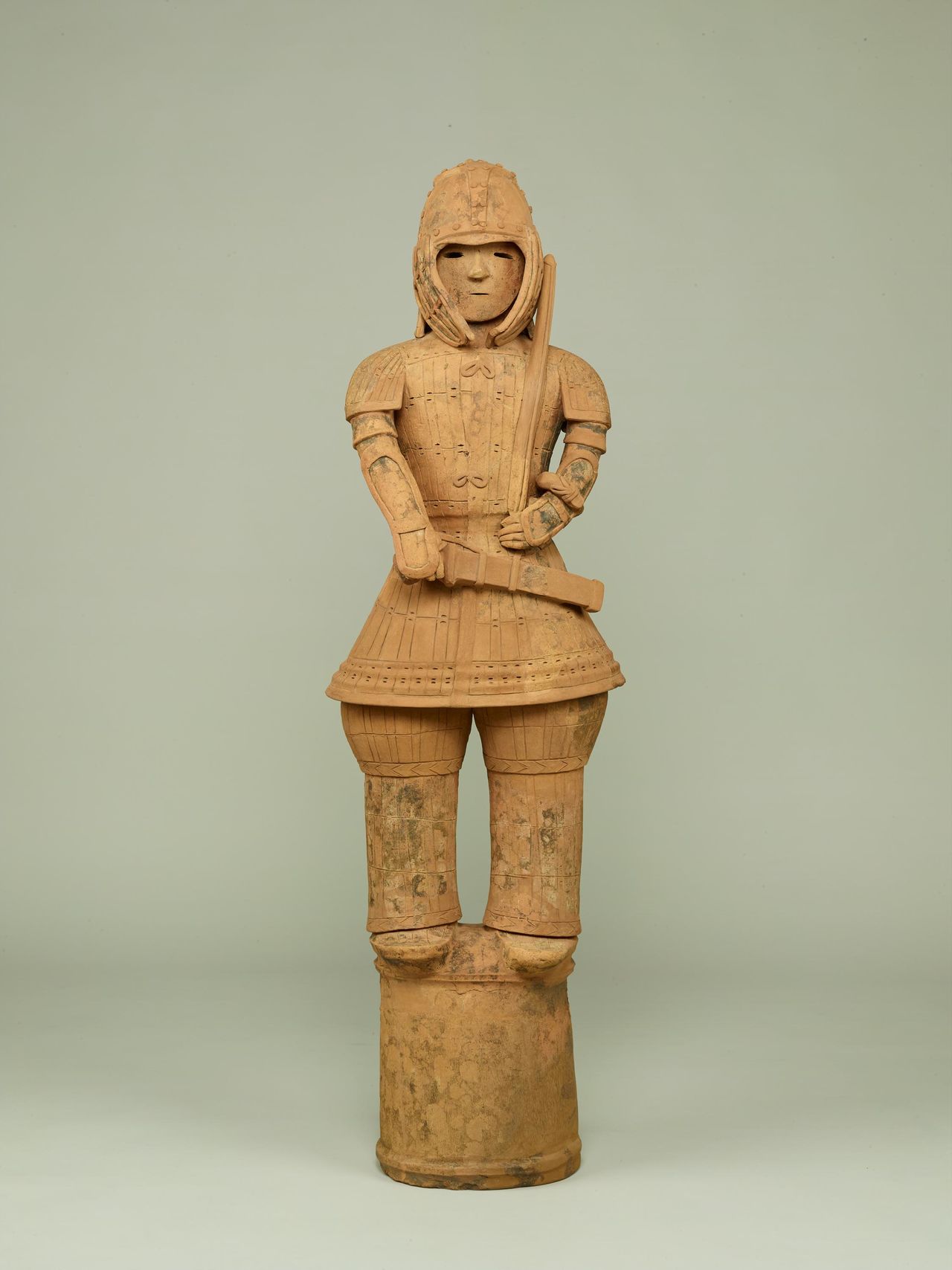
Haniwa warrior in keikō armor. (Courtesy Tokyo National Museum/ColBase)
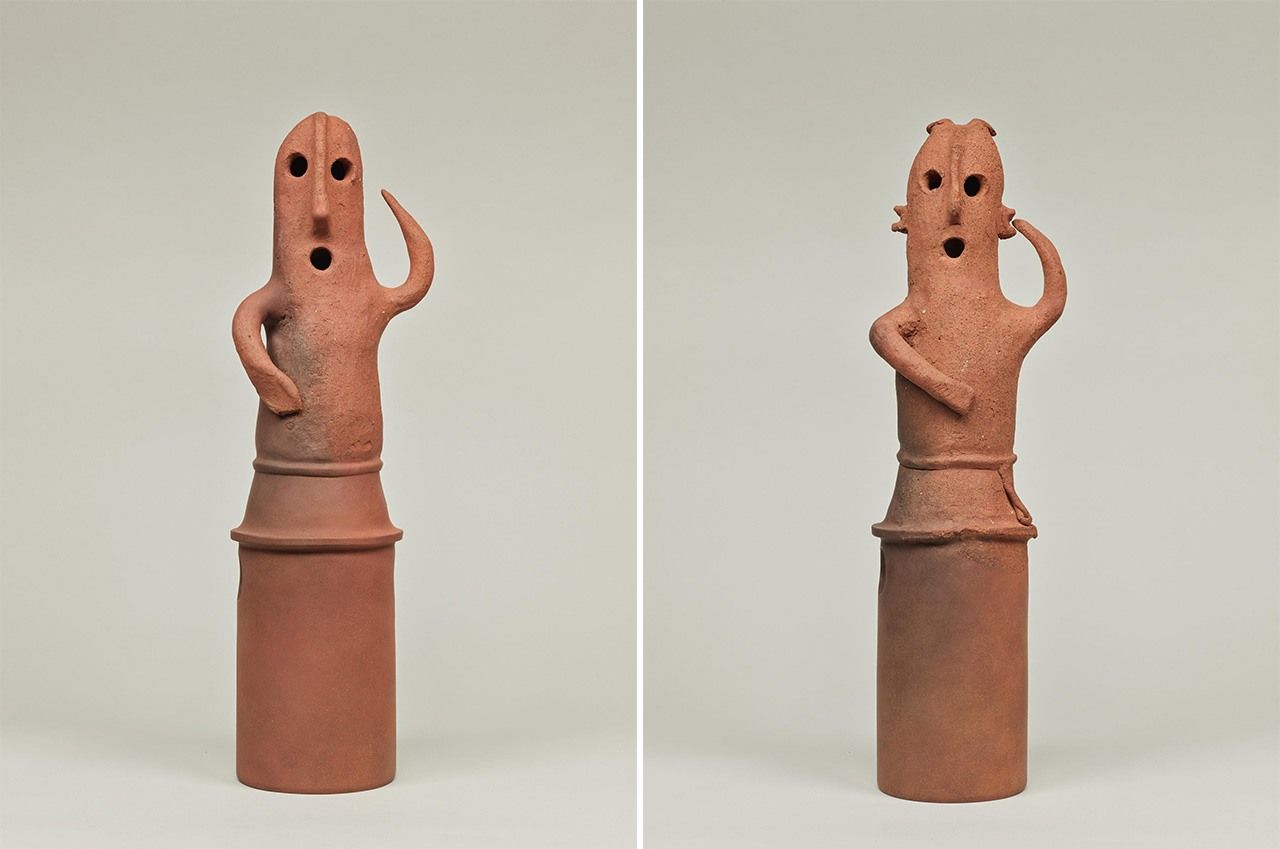
Haniwa dancing people. (Courtesy Tokyo National Museum/ColBase)
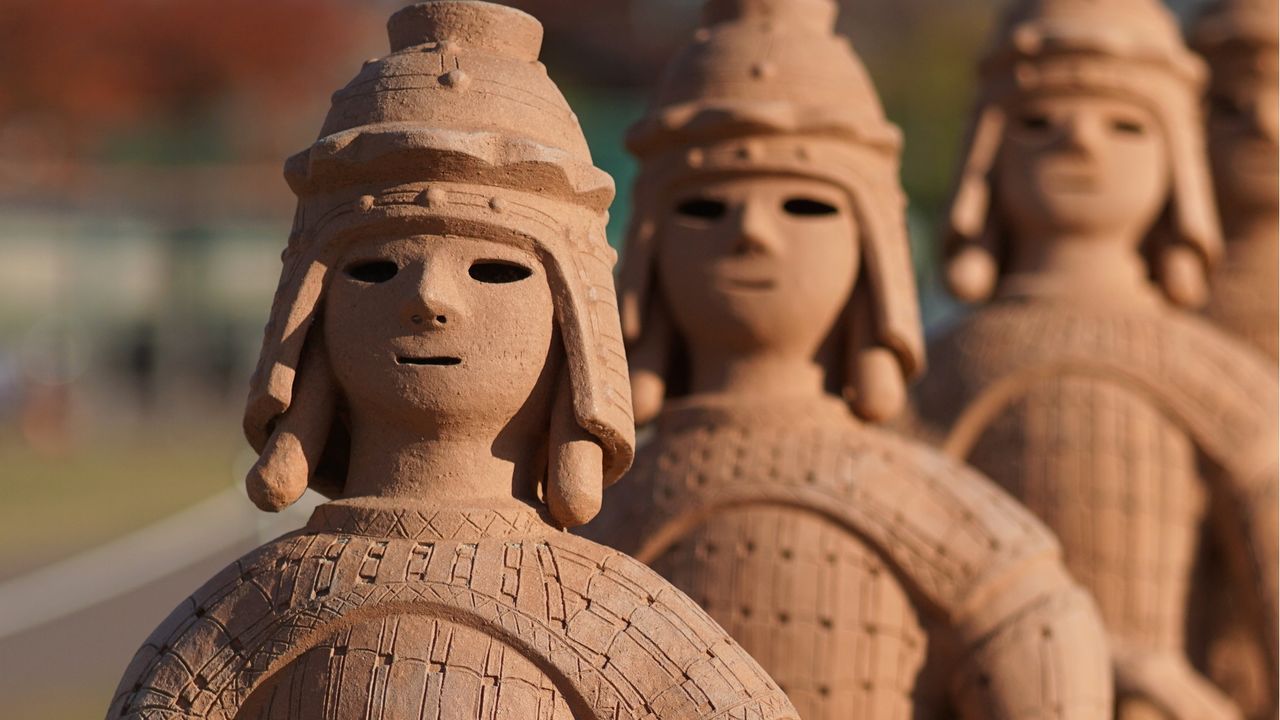
One place to experience haniwa is the Imashirozuka Burial Mound Park in Takatsuki, Osaka. The park has 190 haniwa replicas based on figures found in the Imashirozuka Burial Mound, many of which visitors are allowed to touch.
(Originally written in English. Banner photo: Haniwa replicas at Imashirozuka Burial Mound Park. © Pixta.)