“Hyakunin Isshu”: Japan’s Most Famous Poetry Anthology
Guideto Japan
Culture- English
- 日本語
- 简体字
- 繁體字
- Français
- Español
- العربية
- Русский
Sleeves Wet with Dew
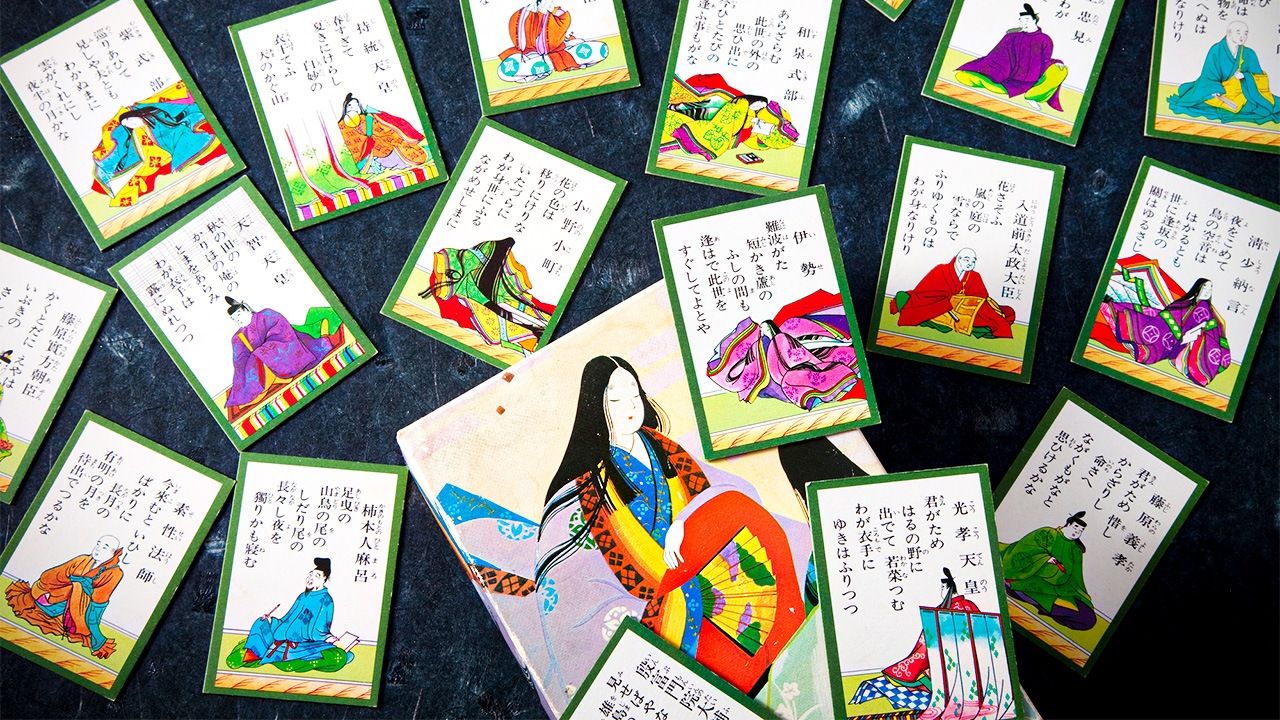
Hyakunin isshu is the most famous of the many anthologies of classic poetry Japan has produced over the centuries. The collection, whose title loosely translates as “one poem each from 100 poets,” features 100 waka poems in roughly chronological order written from the seventh to the thirteenth century. Assembled by the aristocrat Fujiwara no Teika, it has established itself at the heart of the Japanese canon.
The first poem is by Emperor Tenji, but written from the perspective of a farmer—he is said to have been inspired to write it by observing the hardships of the common people.
Aki no ta no / kariho no io no / toma o arami / waga koromode wa / tsuyu ni nuretsutsu
The coarse thatch of the
autumn rice field’s
harvest hut.
My sleeves growing
wet with dew.
The popularity of the anthology in Japanese culture was cemented by its use in a game known as karuta. In the game, two players race to grab cards featuring the second halves of the poems that match beginning phrases of verses read aloud by a reciter. The game was devised in the Edo period (1603–1868) and is still enjoyed today.
(Originally written in English. Banner photo © Pixta.)