Karesansui: Japan’s Dry Landscape Gardens
Guideto Japan
Culture- English
- 日本語
- 简体字
- 繁體字
- Français
- Español
- العربية
- Русский
Observation and Contemplation
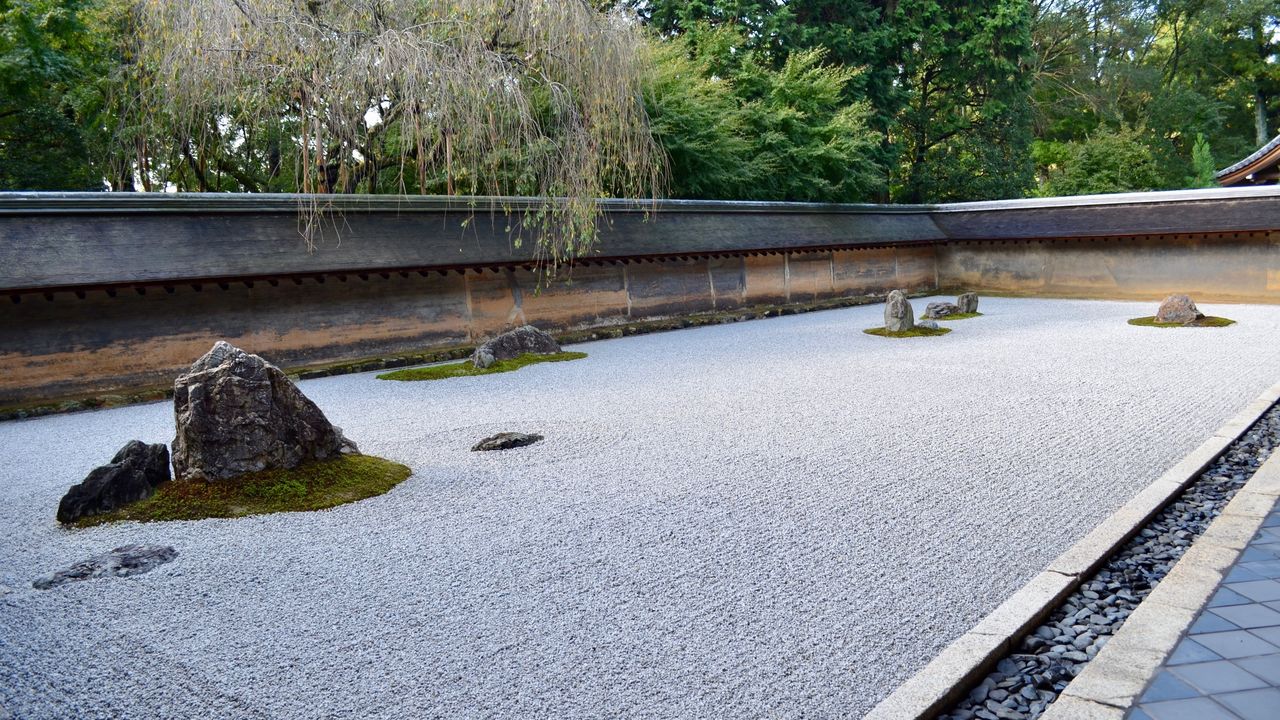
A karesansui, or dry landscape, garden arranges stones and sand, often with moss or other greenery, to represent land and water, although no actual water is used. Suited to observation and contemplation from outside, rather than for strolling through, they first proliferated at Zen temples in the fourteenth and fifteenth centuries.
The garden at the temple of Ryōanji in Kyoto is a classic example of karesansui. The 15 rocks and stones have famously been arranged so that it is not possible to see more than 14, no matter which angle you look from. There is no agreement on the meaning of the garden, although theories include that the rocks are like islands in a sea of gravel or that they represent a tiger and her cubs crossing over water.
(Originally written in English. Banner photo: The garden at the temple of Ryōanji. © Adobe Stock.)