
China Pavilion: Building a Community of Life for Man and Nature—Future Society of Green Development
Guideto Japan
Global Exchange Travel- English
- 日本語
- 简体字
- 繁體字
- Français
- Español
- العربية
- Русский
From Antiquity to the Space Age, All in One Hall
Th pavilion’s design is based on ancient Chinese bamboo writing strips decorated with five different forms of script used to write 119 texts, including Chinese poetry. It is also the largest international pavilion, at about 3,870 square meters.
The interior of the astounding display includes pieces from antiquity on the level of national treasures, sculptures of famed figures like the monk Jianzhen, who helped connect China and Japan, and other items that normally never leave China’s borders, providing visitors the rare opportunity to see such treasures in Japan.
There is also a display with samples of lunar sand taken from the far side of the moon by China’s robotic moon lander Chang’e 6 in June 2024, the first such samples ever collected. This is paired with a sample taken from the light side of the moon by Chang’e 5, making a heady display of China’s Space Age developments.
Using the latest video technology, the pavilion introduces traditional agricultural techniques that preserve ecosystems. When considered alongside the cultural heritage on display, it is clear how the pavilion’s theme of “Building a Community of Life for Man and Nature” is based on ancient ideas.
The China pavilion is located in the Empowering Lives zone. (See the official map for details.) China marks its national day on Friday, July 11, at the Expo National Day Hall.
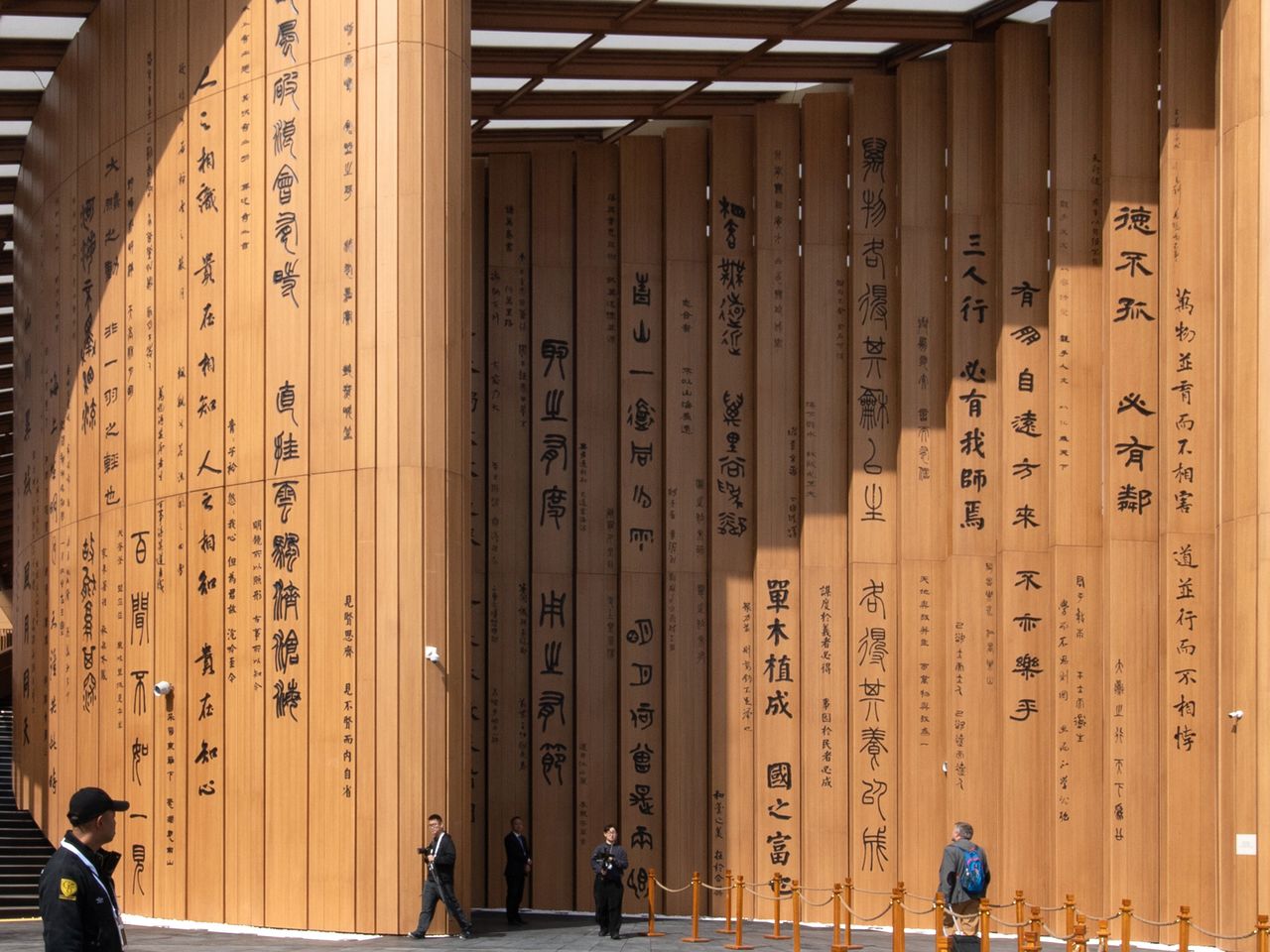
The China Pavilion. (© Nippon.com)
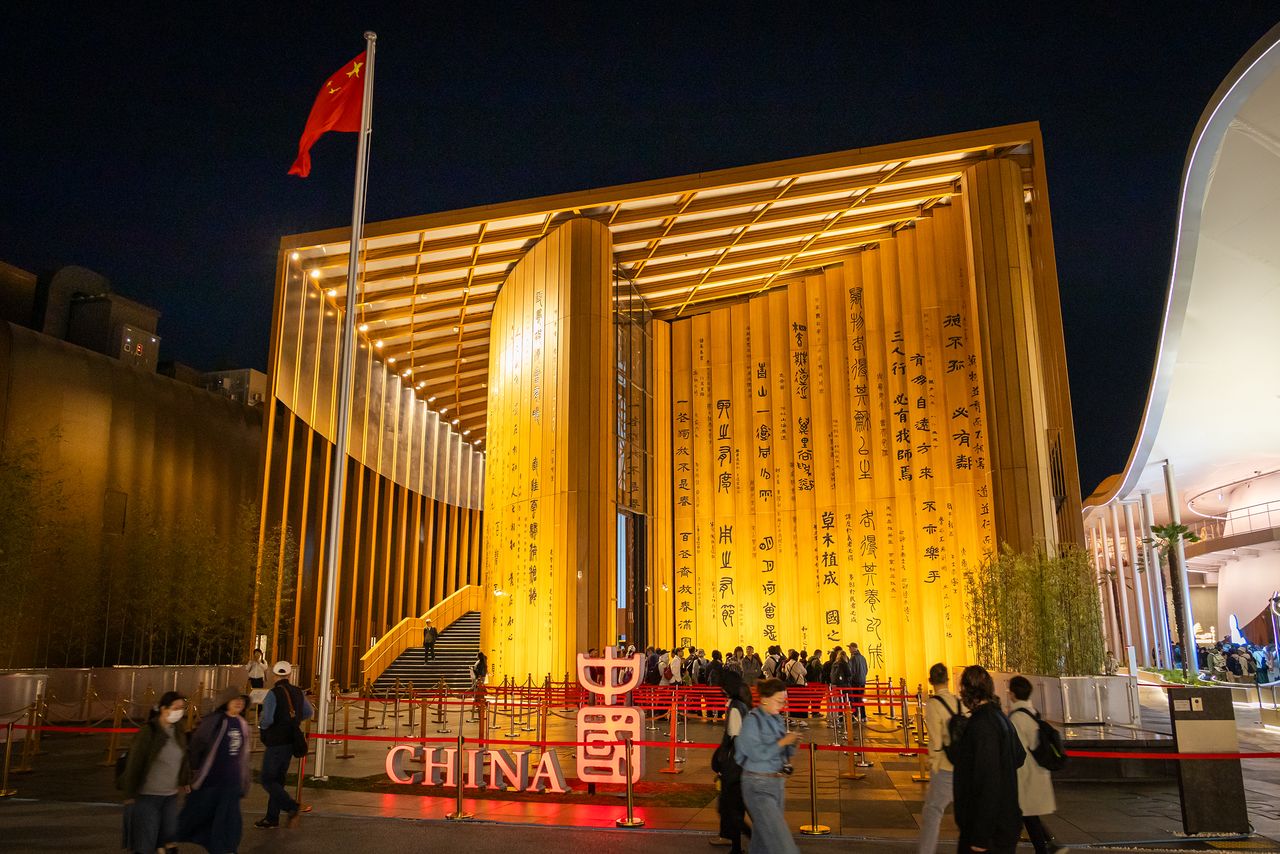
The China Pavilion. (© Nippon.com)
(Originally published in Japanese. Reporting and text by Uchiyama Ken’ichi and Nippon.com. Photographic assistance by Kuroiwa Masakazu of 96-Box. Banner photo © Nippon.com.)