
Brazil Pavilion: Harmonious Coexistence with Nature and Cooperation among Peoples
Guideto Japan
Global Exchange Travel- English
- 日本語
- 简体字
- 繁體字
- Français
- Español
- العربية
- Русский
Traditional Clothing Collaboration with Japan Commemorating 130 Years of Diplomatic Relations
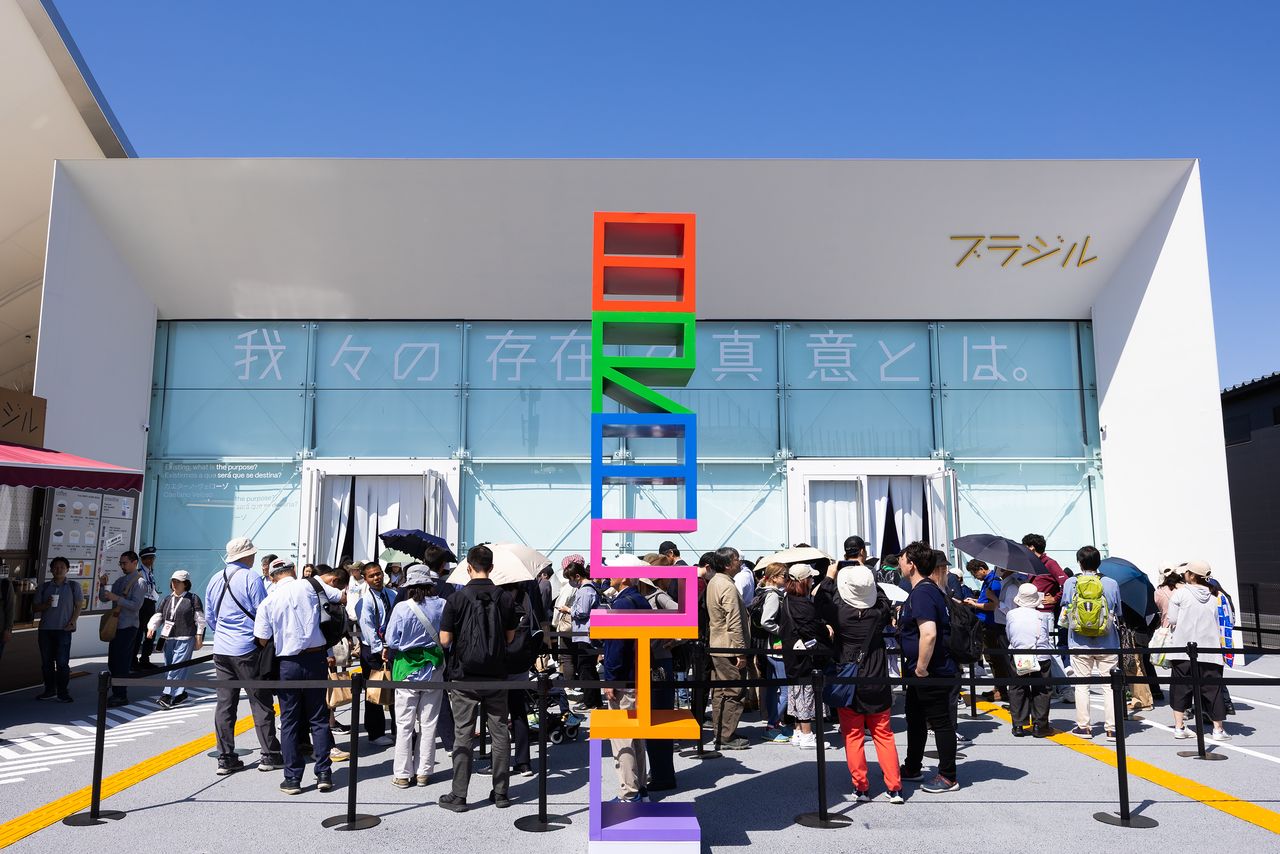
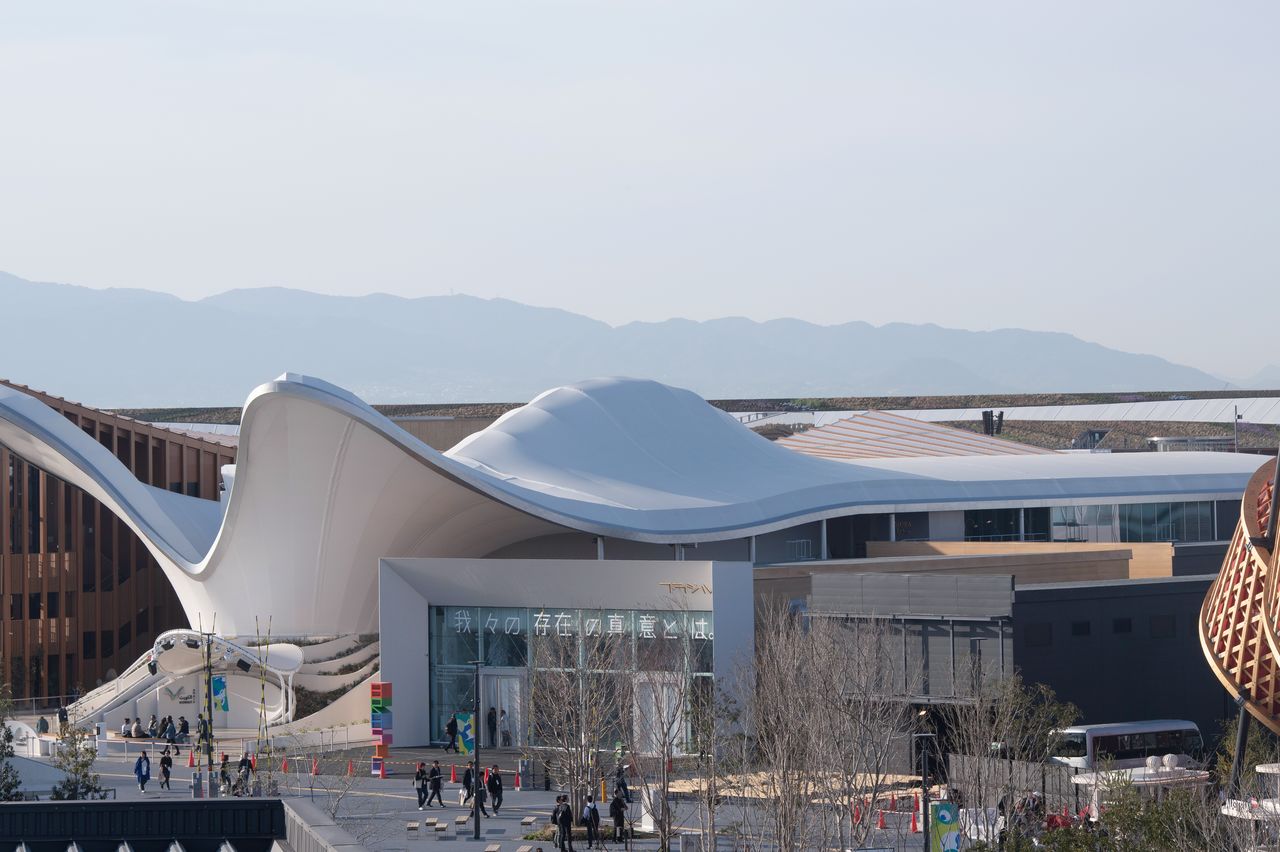
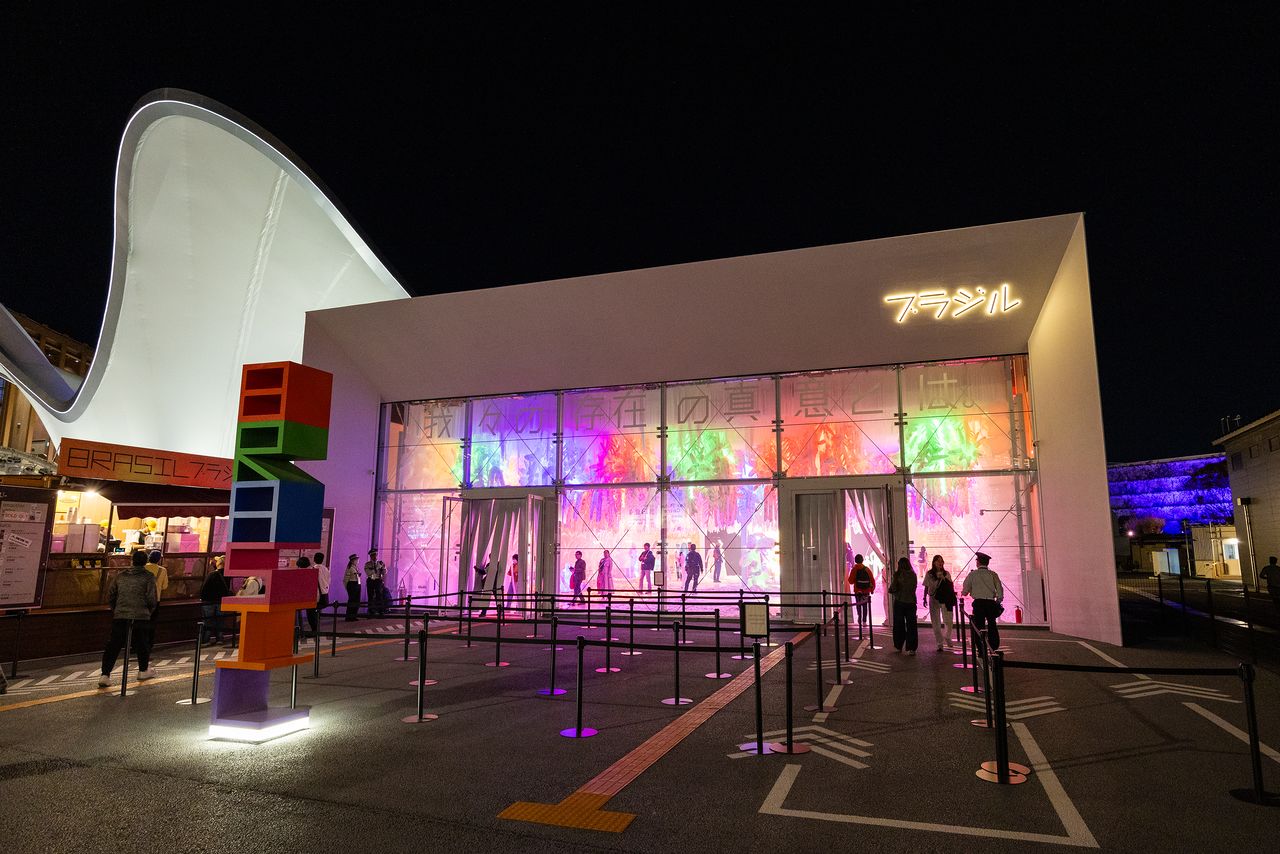
Brazil’s pavilion consists of two adjacent buildings, the first featuring humans and animals, in a curious plant-like artistic display that appears to hang from the ceiling. The spatial art, created from recycled timber and plastic bags, explores the themes of coexistence with nature, and the relationship between humans and the environment. It links the diversity of life on earth with stories of life and death, posing the question, “What is the true meaning of our existence?” (written at the entrance, in Japanese).
This year marks 130 years of diplomatic relations between Brazil and Japan. In 1908, a Japanese ship (the Kasatomaru or Kasadomaru) arrived in São Paolo state, carrying 781 Japanese migrants, the first of around 250,000 who would eventually make their way to the country. Today, Brazil has around 2 million people of Japanese descent, the largest nikkei community in the world.
The Brazil pavilion features parangoromos, a fusion of a Brazilian parangolé, a traditional garment similar to a poncho, with a Japanese hagoromo, in a collaborative production marking the special human connection and friendship between the two countries. In the second building, visitors can try on colorful parangoromos, have their hands and face painted, and become immersed in the artistic display.
The Brazil pavilion is located in the Empowering Lives zone. ( See the official map for details.) Brazil marks its national day on Saturday, June 21, at the Expo National Day Hall.
(© Nippon.com)
(© Nippon.com)
(© Nippon.com)
(Originally published in Japanese. Reporting and text by Uchiyama Ken’ichi and Nippon.com. Photographic assistance by Kuroiwa Masakazu of 96-Box. Banner photo © Nippon.com.)