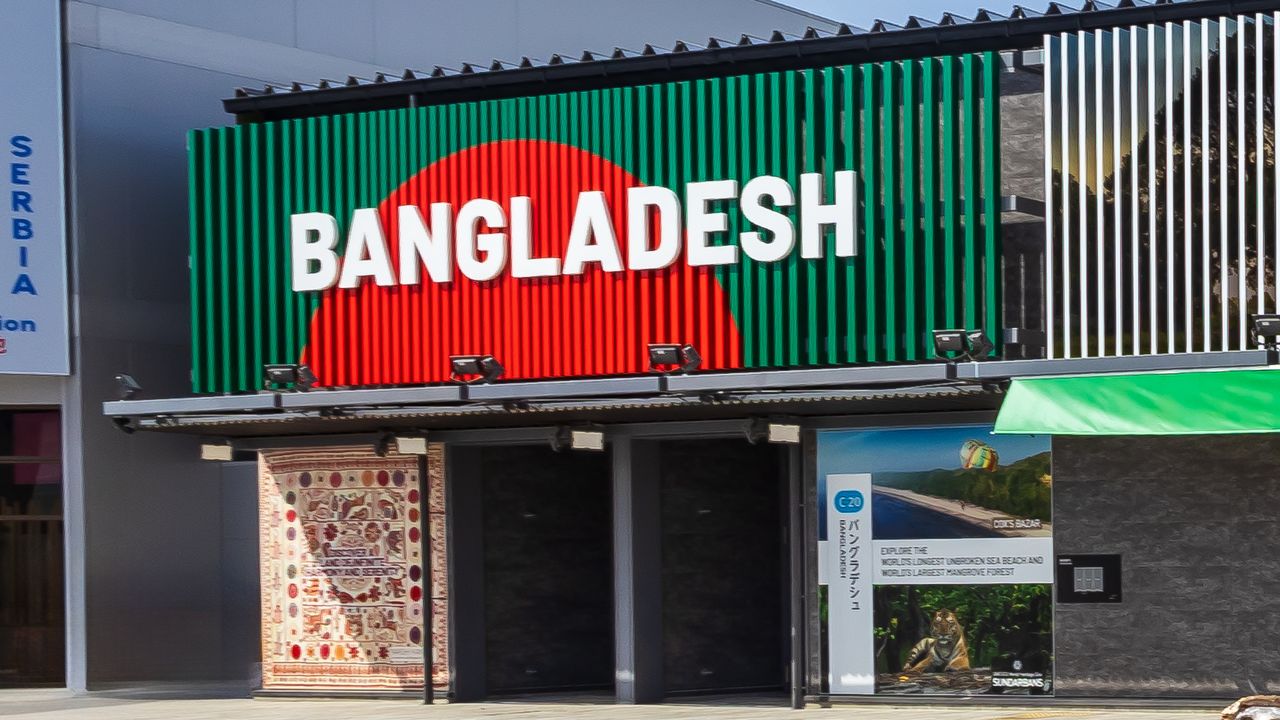
Bangladesh Pavilion: A Symphony of Tradition and Innovation
Guideto Japan
Global Exchange Travel- English
- 日本語
- 简体字
- 繁體字
- Français
- Español
- العربية
- Русский
Celebrating Textile Culture as a Cornerstone for Economic Growth
Bangladesh has a population of more than 170 million in a land area approximately 40% that of Japan’s. Predominantly an agricultural country blessed with fertile soil, it has seen remarkable economic growth in recent years through an increase in exports and migrant workers.
The theme for the pavilion is Connecting Lives: A Symphony of Tradition and Innovation. Images of ancient rice cultivation, festivals, and other customs, along with the depiction of a society that is rapidly developing due to the IT industry can be seen on a giant LCD screen. These are accompanied by detailed miniature exhibits showing the topography of the country, with its radial river patterns, and highlighting past and present ways of life.
The main focus of the pavilion’s exhibits is textile products, which are both traditional crafts and a major export. At the entrance to the pavilion, visitors can discover beautifully patterned and hand-embroidered fabric, nakshi kantha. Also featured are Jamdani weaving, a traditional Bengali hand-weaving technique that creates a delicate fabric, and jute, a local specialty often called the “golden fiber” which has been gaining attention recently as a sustainable material. Japanese brand leather goods manufactured in Bangladesh are on display too, emphasizing the partnership between the two countries.
The Bangladesh pavilion is located in the Connecting Lives zone. (See the official map for details.) Bangladesh marks its national day on Sunday, May 11, at the Expo National Day Hall.
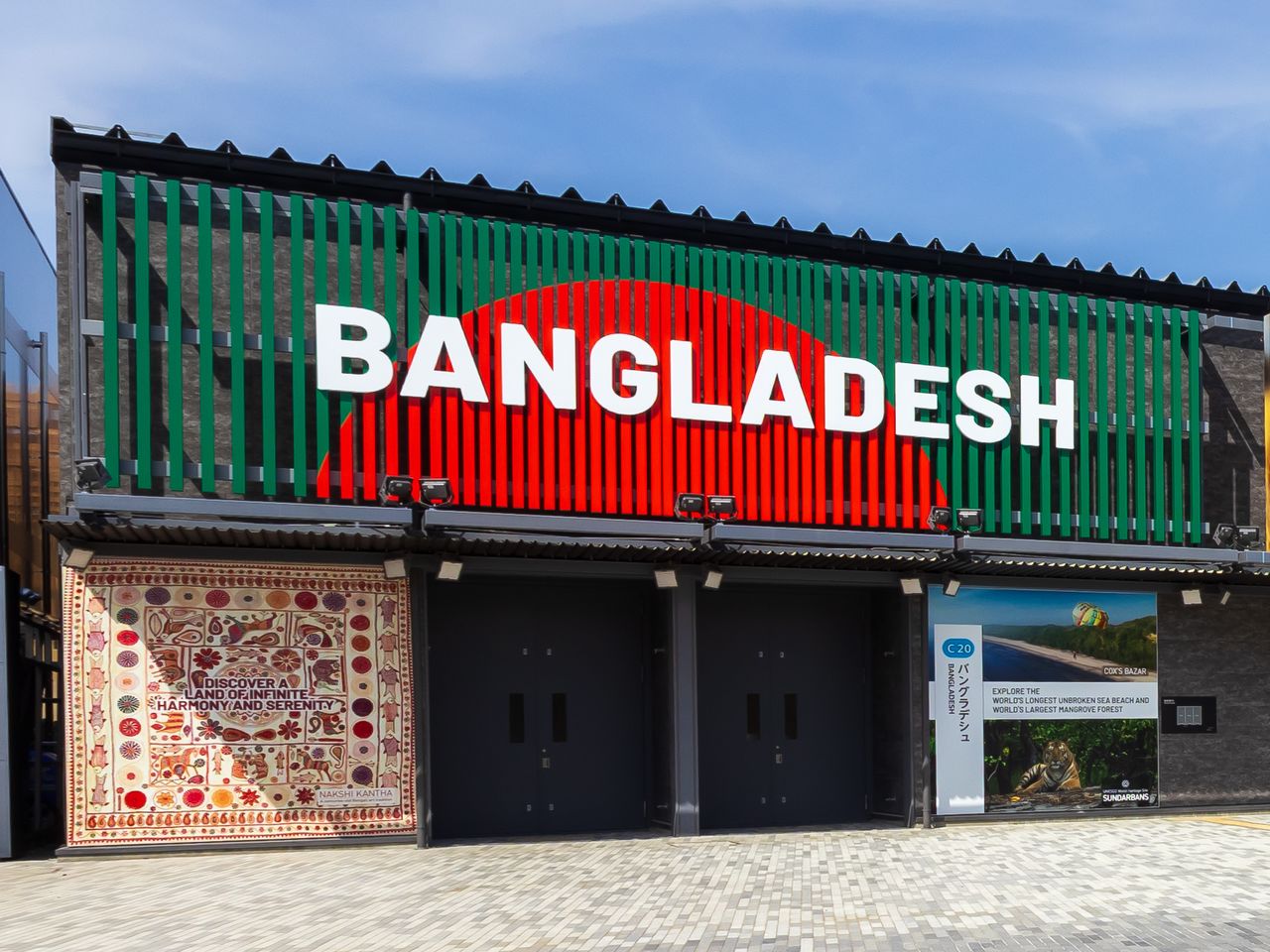
An exterior view of the pavilion. (© Nippon.com)
(Originally published in Japanese. Reporting and text by Uchiyama Ken’ichi and Nippon.com. Photographic assistance by Kuroiwa Masakazu of 96-Box. Banner photo © Nippon.com.)