Breakfast Around Japan: A Culinary Adventure
The World of Restaurateur Ishimura Yukiko: From Nara with Love
Guideto Japan
Food and Drink Lifestyle- English
- 日本語
- 简体字
- 繁體字
- Français
- Español
- العربية
- Русский
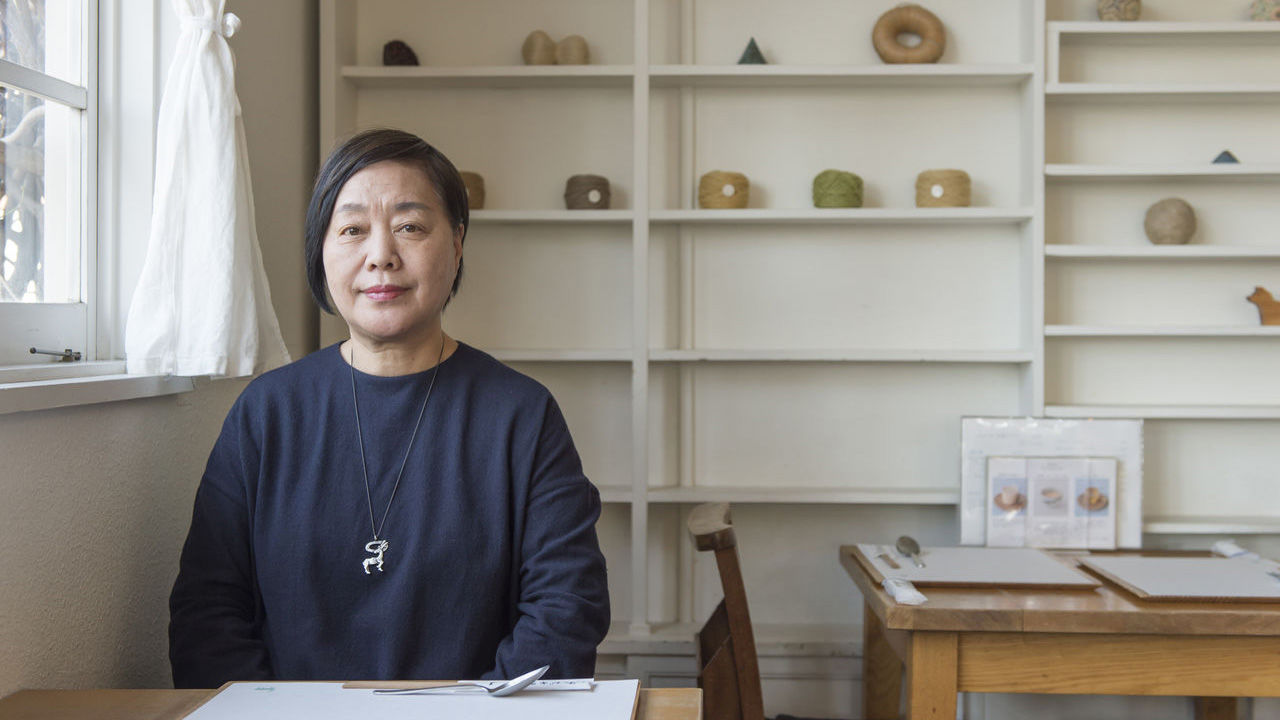
Ishimura Yukiko
Born in Takamatsu, Kagawa Prefecture. Owner and manager of café and general store Kuruminoki (Hōrenchō, Nara), restaurant and gallery Akishino no Mori (Nakayamachō, Nara), the Shika no Fune multipurpose tourist center in Nara, as well as the Nara-themed restaurant-boutique Tokinomori in Tokyo’s Shirokanedai district. Ishimura has also lent her creative talents to community and regional revitalization projects, such as Machi no Schule 963, a retail and cultural complex in her native Takamatsu.
A Chance Encounter
Kuruminoki is not your typical Nara café. It is located away from the town center and the city’s main attractions, in a quaint old wooden structure near a railroad crossing, half-hidden by a screen of trees. Even so, the café has become something of a local institution since it opened in 1984. The Lunch Plate is so popular that customers begin lining up more than an hour before the café opens its doors.
ISHIMURA YUKIKO It’s hard to believe it’s been thirty-four years since I opened Kuruminoki. The time has gone by in a flash. What with the other places I’ve opened in Nara since then [Akishino no Mori and Shika no Fune], as well as Tokinomori in Tokyo, I’ve hardly had time to catch my breath. In this business, even if customers are lining up today, you can’t sit back and take your success for granted. I still approach every day as a challenge.
I was born and raised in Takamatsu in Kagawa Prefecture. I worked for a while on retail store development in Osaka, but I didn’t know the Nara area at all until I got married and settled in a suburb of Kyoto not far from here. At the beginning, everything was so unfamiliar, and I didn’t know anybody here. But it didn’t take long for me to fall in love with the area. You know how the countryside unfolds as you ride the train from Kyoto to Nara? Everything is relaxed and wide-open here, from the ruins of Heijō Palace to the grounds of the old temples like Tōdaiji and Kōfukuji, right in the middle of the city. Whenever I found time on the weekend, I would set off on foot to discover my own little hidden corners of Nara.
When Ishimura married in her early twenties, her ambitions were modest. She planned to work until she was 30, then devote herself to childrearing and household duties. But fate decreed otherwise. One day, while she was out walking, she happened upon a quaint little property that would alter the course of her life.
ISHIMURA There was this little wooden building near a railroad crossing, with hydrangea blooming in the garden. As I was standing there admiring the flowers, a woman who worked there came outside, and we started chatting. Looking at the building, I was suddenly reminded of this dream I had as a child, which I’d described in a joint diary my mother and I used to keep. I had written that when I grew up, I wanted to have a shop that would draw people of all ages, from little children to grandparents, and I drew a picture of it. I said I wanted to call the shop Kuruminoki [Chestnut Tree].
As those memories flooded back, I remarked to the woman, “I would really love to open a shop here.” She answered, “You’re kidding. In an out-of-the-way place like this?” At that time the neighborhood was very undeveloped, with rice paddies all around. But something had flipped a switch inside me. I said, “Yes, that’s right. A secret sort of place. That’s what makes it perfect.”
As it happened, the business that was renting the space was about to vacate it. I got the landlord’s contact information from the woman, and that very same day I went to see the owner, accompanied by my husband. I hadn’t given a thought to practical matters like negotiations and contracts and so forth. Once an inspiration seizes me, I’m like a runaway train.
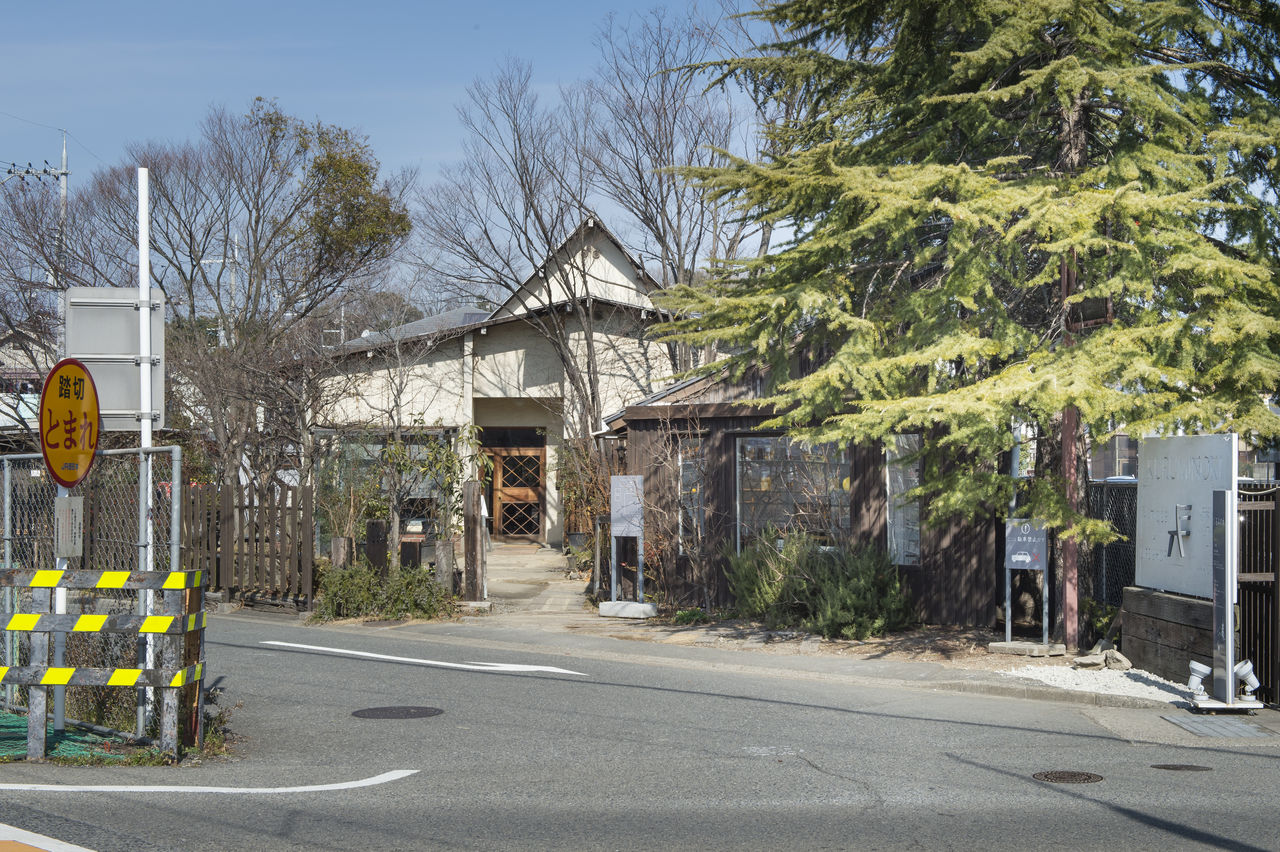 The building that houses the café and store Kuruminoki, near a crossing on the JR Nara line, has the old-time ambience of a village schoolhouse.
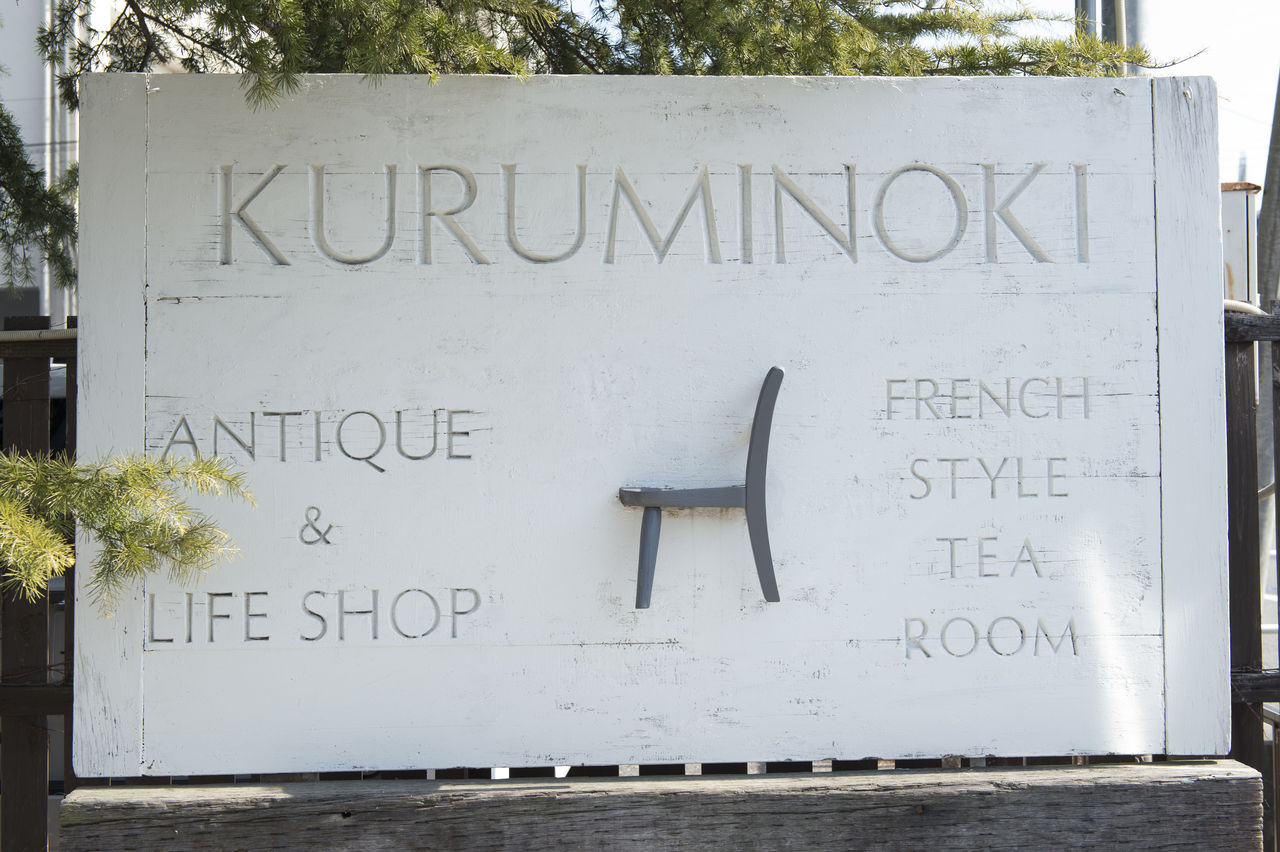 The shop sign has become a symbol of the café.
Not a Quitter
In the early days, Ishimura ran the entire business single-handedly. She arrived in the morning to clean, and when the café opened, she took orders, cooked, cleared tables, washed dishes, and worked the cash register. After closing, she would stay to prep for the next day’s service. Even on days when the café was closed, she was busy purchasing goods to sell in the general store. The weeks flew by.
ISHIMURA When the shop was about to open, I went around introducing myself to the neighborhood. The owner of one nearby establishment scoffed, calling the café “a hobby to keep the missus amused.” That really stung. But there was an element of truth in it. I’d always loved collecting dishware and tablecloths and coordinating my table settings with my own personal style of cooking. And I’d envisioned the café basically as an extension of that hobby. But the reality was a far cry from that pretty picture.
For example, I had the notion of serving my café au lait Parisian-style, in a bowl. You should have seen the baffled looks I got. And then there were the customers who marched in and demanded to know where the sports newspapers were. Or took one look at the flowers I’d arranged in a little vase on the table and said, “Get these weeds out of the way.” These were some of the early clientele.
But I’m not a quitter. I was on the school softball team for years, and I was inculcated with that “never say die” ethic. I wasn’t about to give up. Besides, the neighbors helped me in all sorts of ways. The fish seller would see me working late at night and bring me fish from his shop, already cleaned. It took about three years, but I finally managed to get a decent group of regulars. And after about ten years, that merchant who’d called me a dilettante approached me one day and said, “You’ve really worked hard. I’ve had my eye on you. You look after your health, now.”
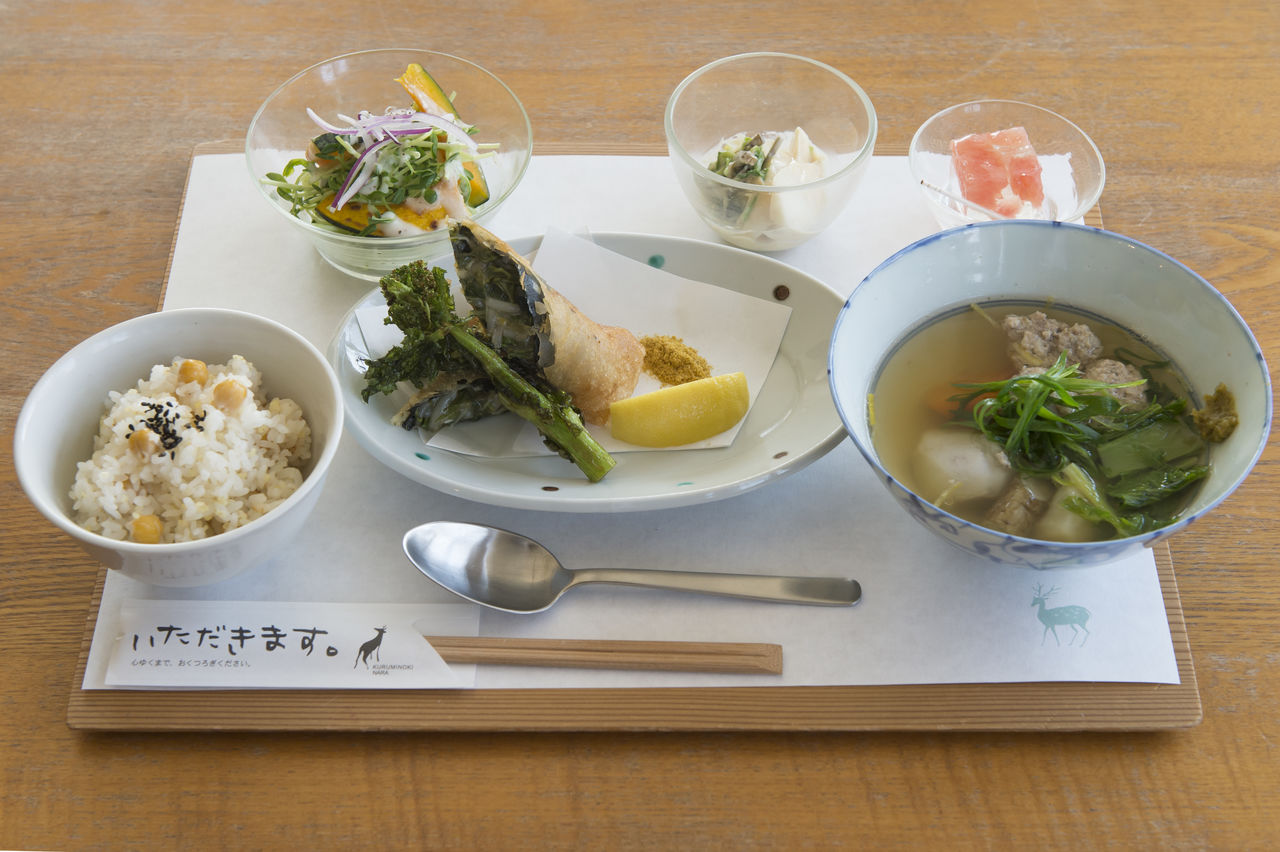 The popular Lunch Plate at Kuruminoki is a weekly special consisting of mixed rice, soup, a main dish featuring seasonal ingredients, a side dish, and dessert.
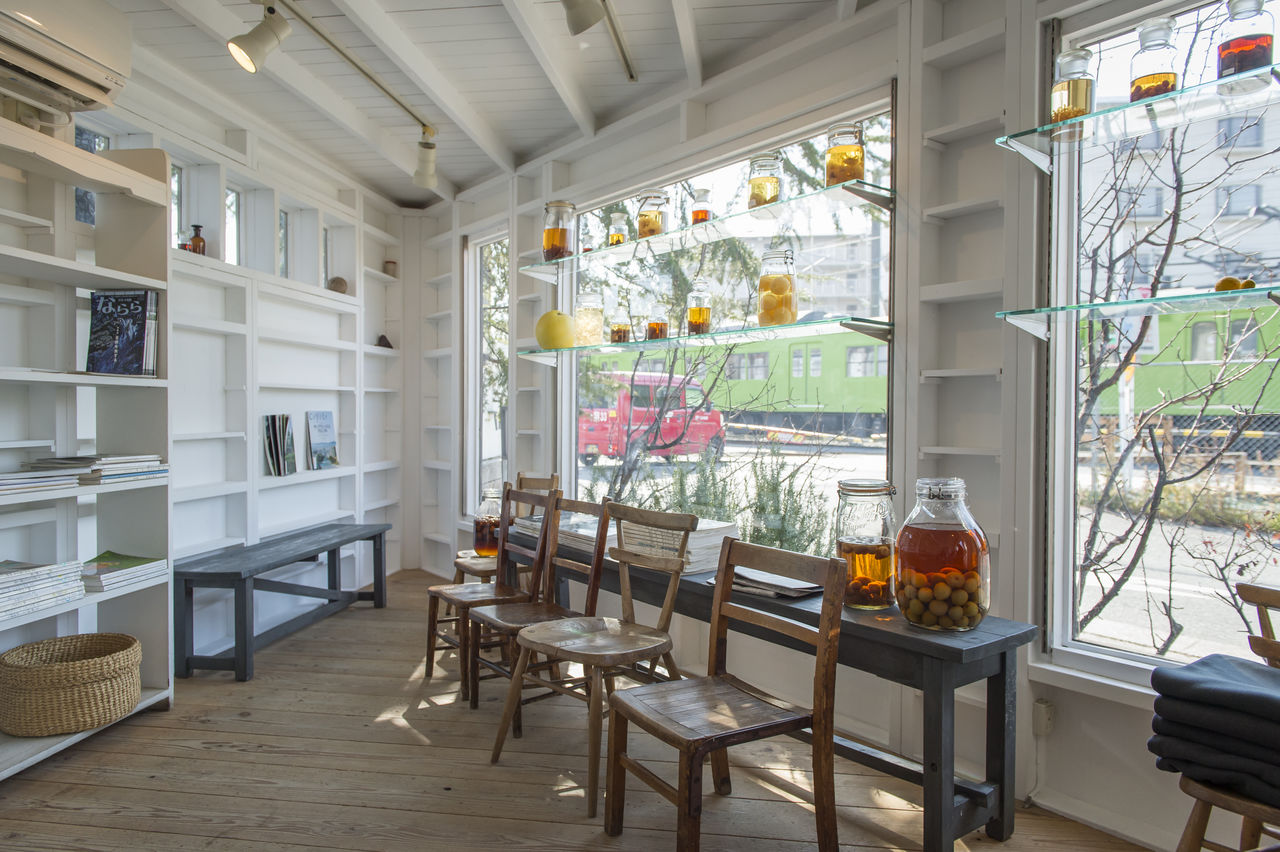 The café has an area where customers can relax while waiting to be seated.
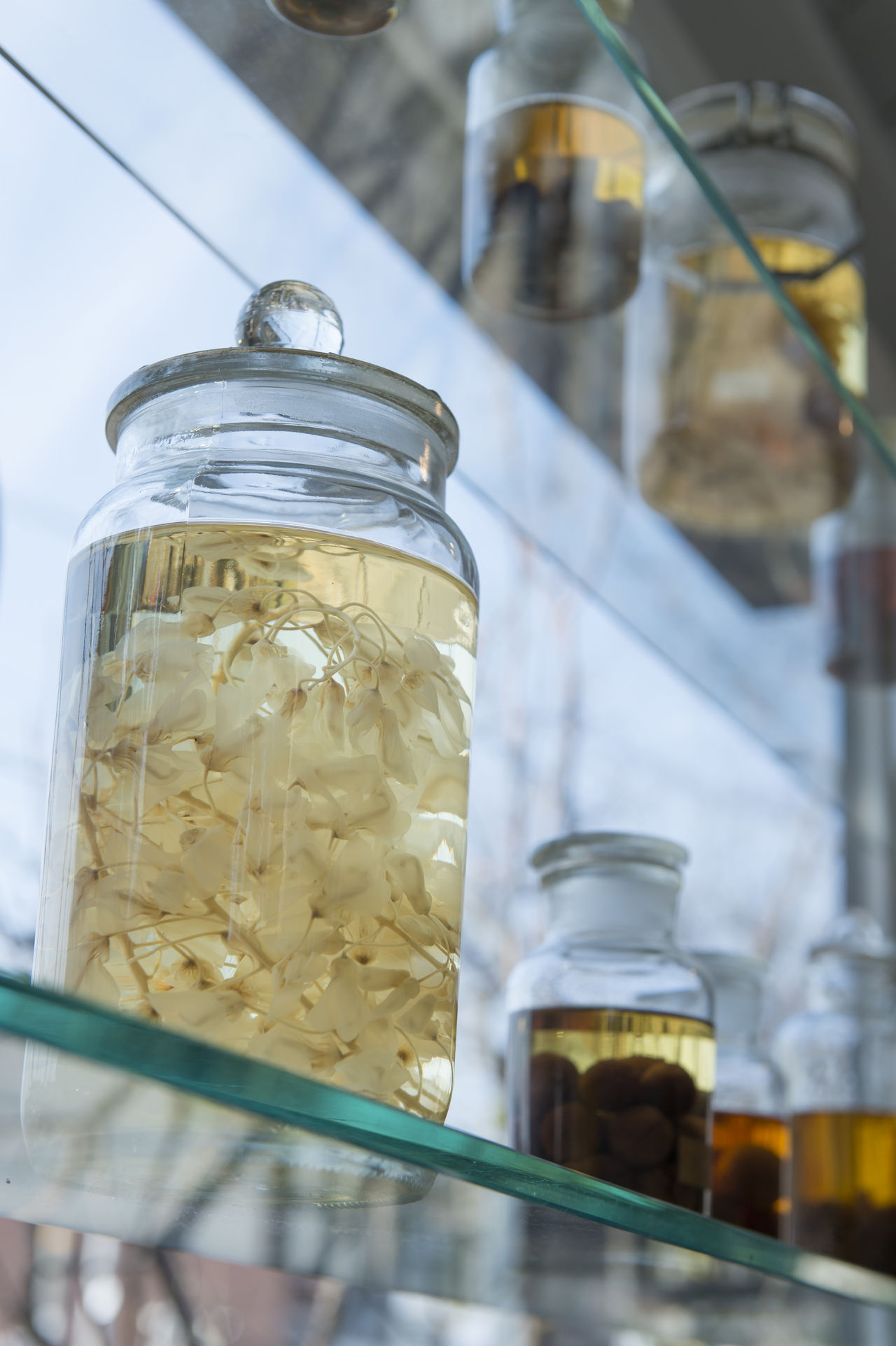 Bottles of homemade liqueur line the windows of the café.
A New Project
The café’s stock gradually rose. Eventually, thanks to magazine articles and Ishimura’s own writings, Kuruminoki captured nationwide attention, and the business grew. The café had been in business almost twenty years when fate intervened again. This time, Ishimura was visiting a gallery in the neighborhood of Akishino-dera temple, even farther off the beaten track.
ISHIMURA The gallery was on a hill with a lovely view. There was little a guest house there, as well. The buildings had a beautiful weathered look to them. On this occasion, the owner told me that he was thinking of closing it all down because the work was getting too strenuous to continue at his age. I said, “Oh, what a shame!” And at that moment, a lightbulb went on in my head. Wouldn’t my customers love it, I thought, if I opened a restaurant and guest house here? My imagination began to run wild. I could grow fruit trees in the garden and serve the fruit at the restaurant . . . In my mind, I could already see my guests dining and relaxing and chatting happily together.
At one time or another, most women probably entertain dreams of owning their own café or shop. But running a restaurant or store is a lot tougher than it looks. Fixed costs like materials, heating and electricity, and rent take a huge bite out of your revenues. Plus, it’s very difficult to mechanize these businesses, so in the end, the profit margin is almost always low. It was an unrealistic scheme, and I’d have abandoned it if I’d had any sense. But of course I charged ahead.
Ishimura named the site Akishino no Mori. There she prepared to open a new restaurant, Nazuna, spotlighting locally grown vegetables in season; a gallery, Tsukikusa, featuring crafts and household furnishings; and a two-room guest house, Hotel Noix-La-Soeur (currently closed for building maintenance). Her daily schedule barely left time for sleep.
ISHIMURA Sometimes I ask myself why I’m such a glutton for punishment. But I’ve always loved entertaining. When I was just a child, the neighbors nick-named me “Don’t go Yukko” because I was always begging our guests to stay a little longer. After I got married, I threw myself into minute preparations to entertain any guests my husband might bring home, buying luxurious guest towels and toothbrushes and pajamas in case people stayed the night. Occasionally I’ve been told that I take my hospitality too far—like the time I laundered the underwear of one of my husband’s coworkers.
I think it all goes back to my childhood. I was basically raised by my grandparents, since my mother and father were very busy. My grandmother, who was born in the Meiji era [1868–1912], was a very loving and dedicated homemaker. I can still see her clearly in her sparkling-clean white smock with her hair neatly tied back in a neat bun. Even for ordinary family meals, she used to go into the garden, pick leaves or flowers, and arrange them carefully on our plates. That fostered a certain sensitivity to the seasons even in a child like myself. I think I inherited this sensibility from my grandmother. That’s why I was inspired to nurture my own little forest at Akishino no Mori, and that’s why I like to collect leaves and twigs to use as chopstick rests.
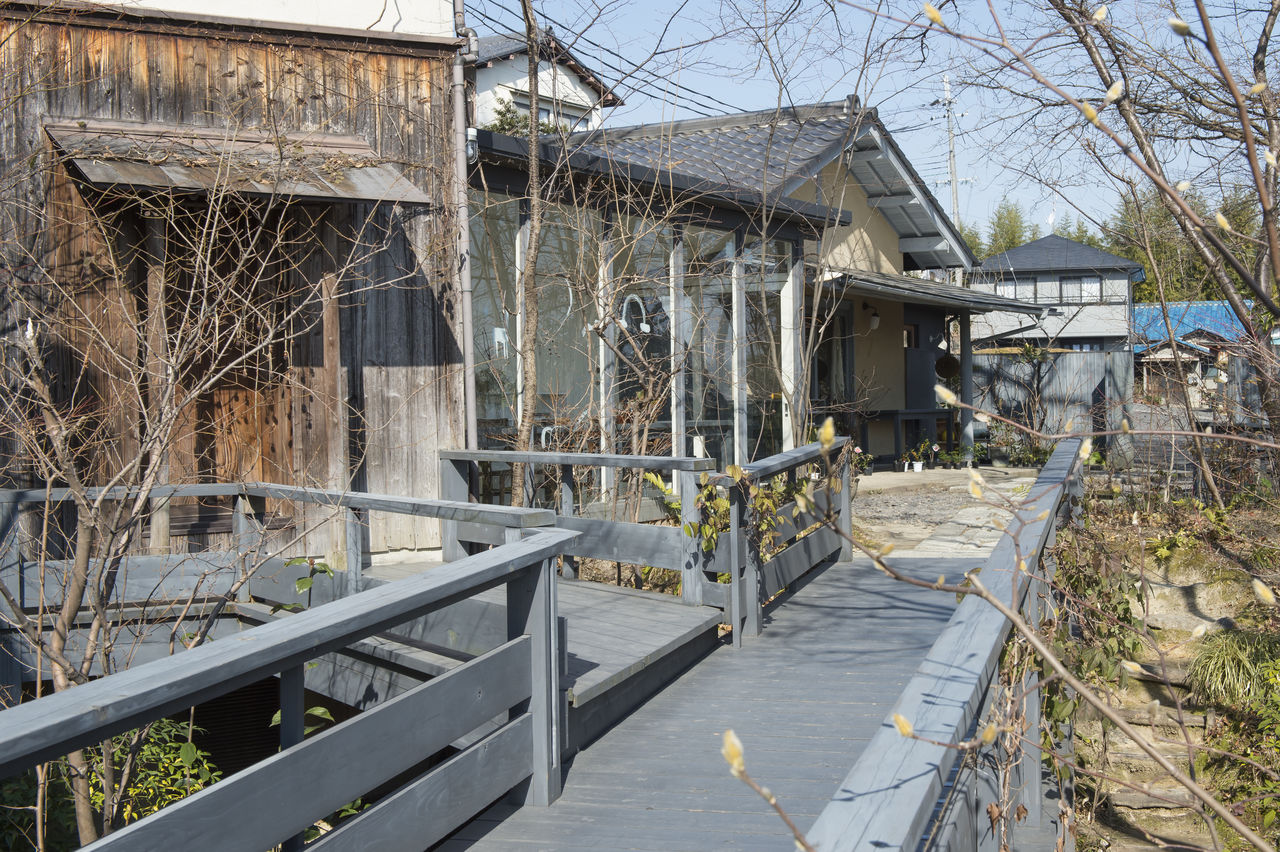 The gallery-boutique Tsukikusa stands right next door to the restaurant Nazuna in Akishino no Mori.
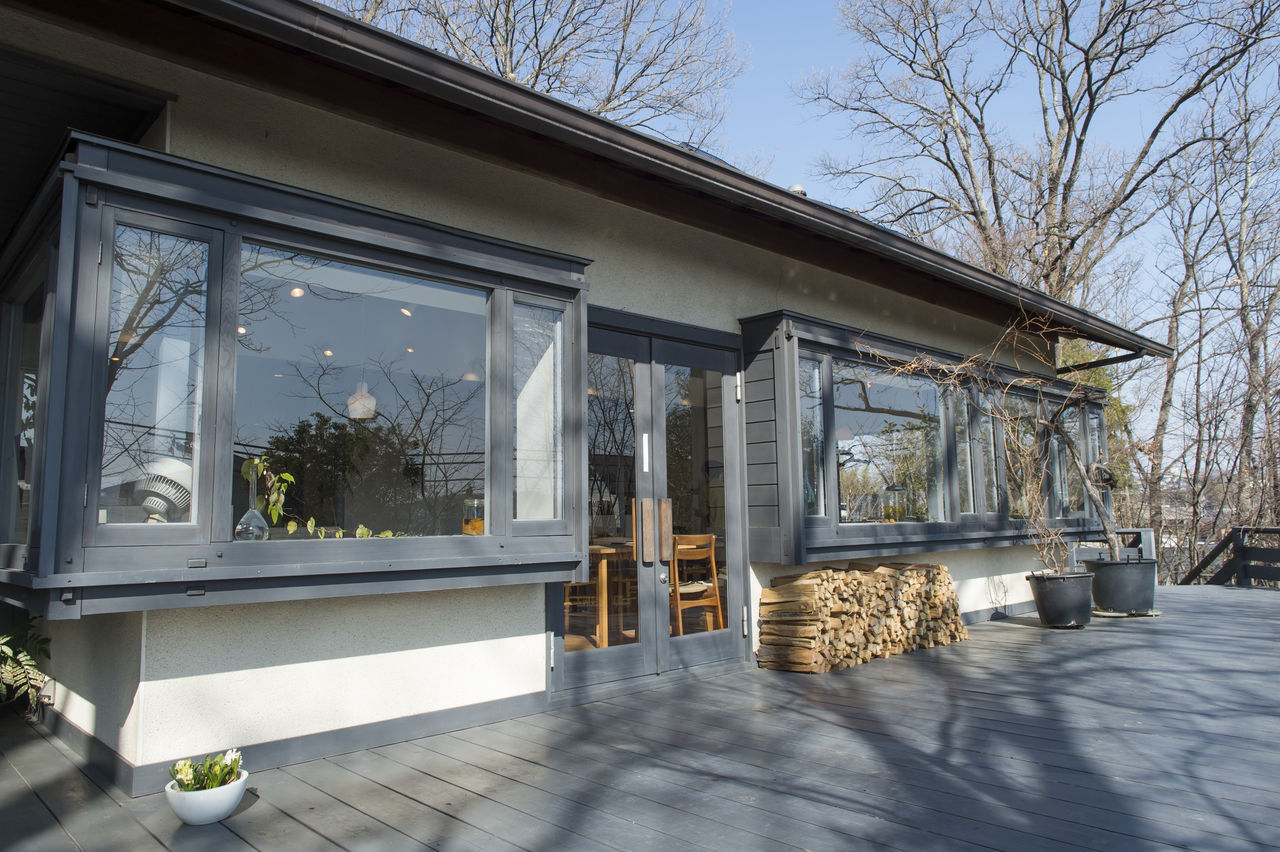 The large windows of Nazuna mirror the surrounding trees and landscape.
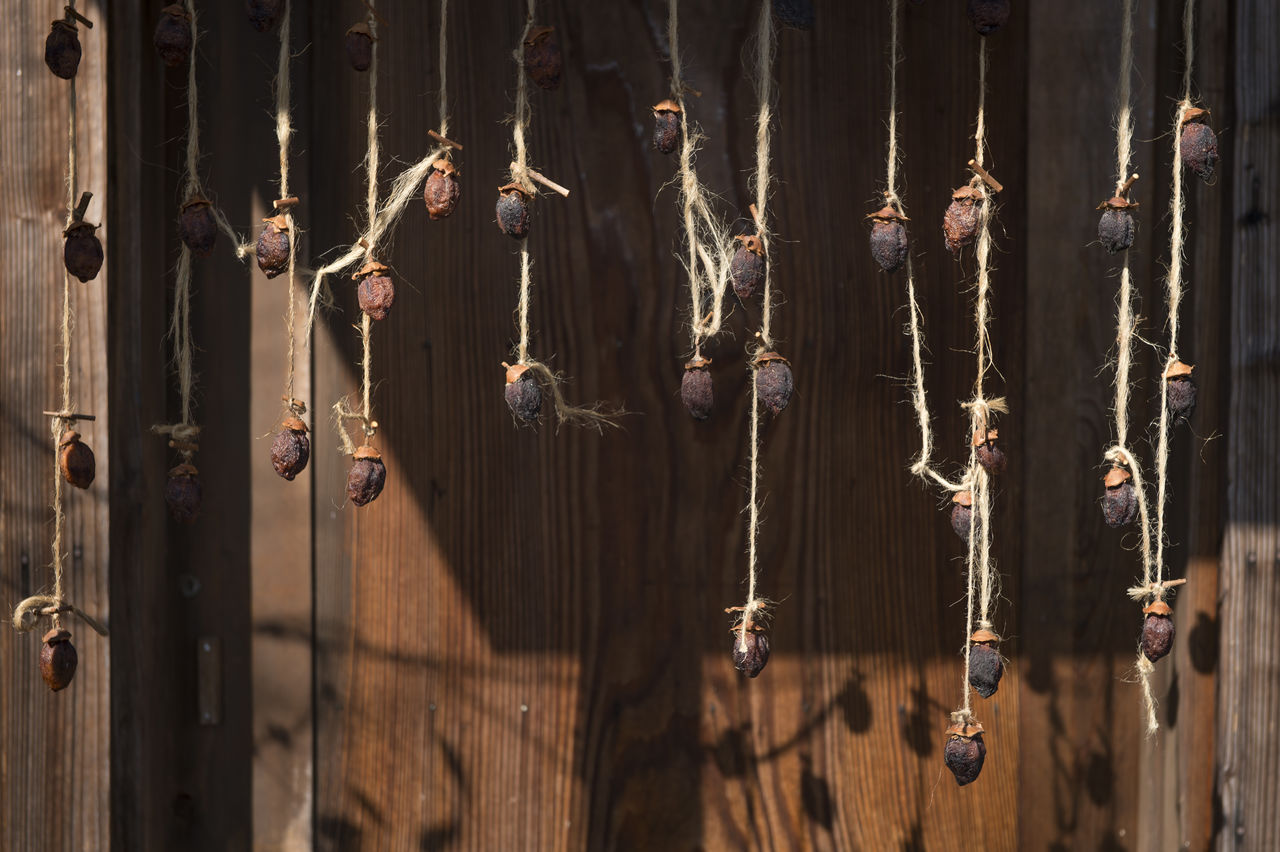 Persimmons harvested from the surrounding gardens are hung to dry from the eaves of an old Japanese storehouse.
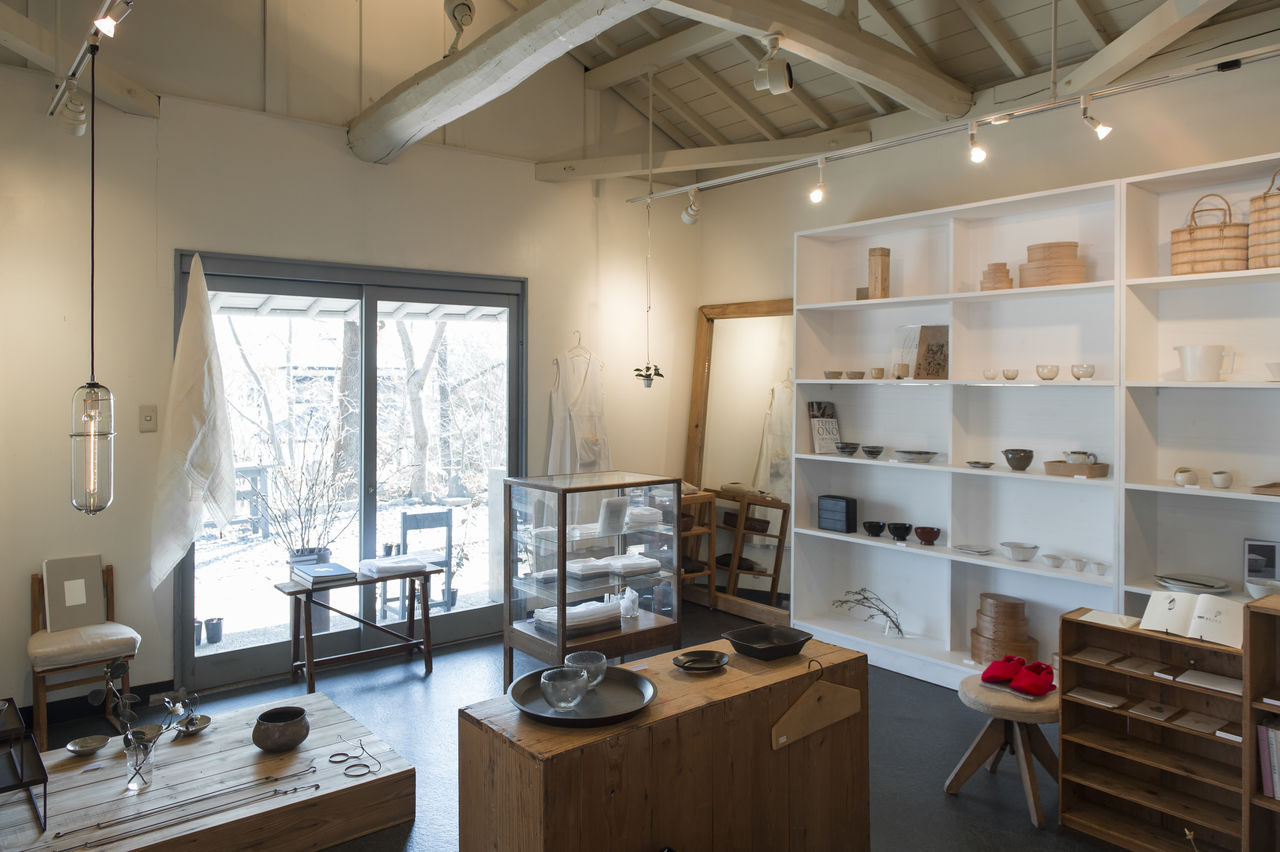 Gallery Tsukikusa exhibits and sell crafts and household furnishings.
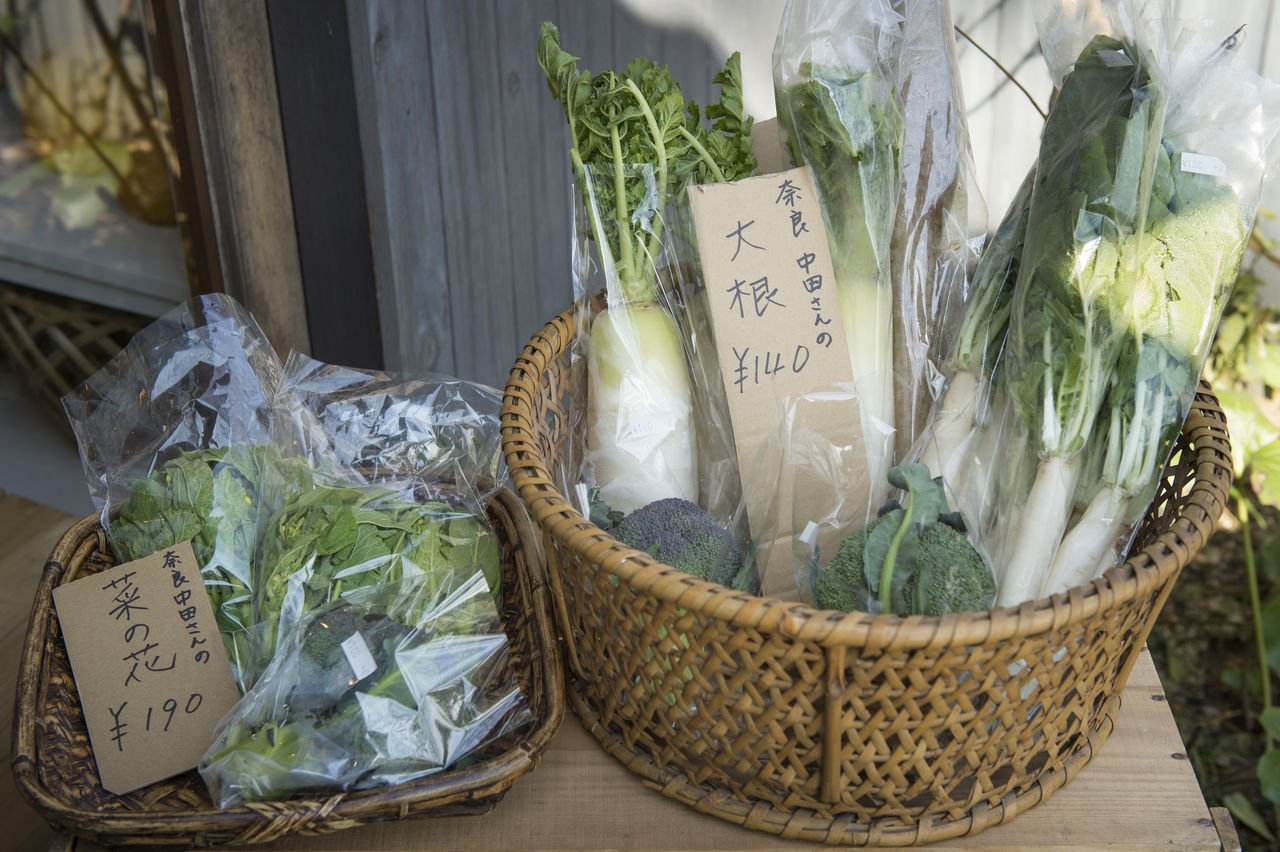 Fresh “Yamato vegetables” from local farms are also for sale at the store.
Graceful Living
In addition to managing her own local shops and restaurants, Ishimura has lent her creative talents to the planning and production of such regional revitalization projects as Shika no Fune, a multi-purpose tourist center in Nara, and Machi no Schule 963, a retail and cultural complex in her native Takamatsu. All exhibit the same tender care and unaffected love for nature and her bounty.
ISHIMURA Shika no Fune is a tourist information center in the neighborhood called Nara-machi, which is known for its traditional townscape. We’ve actually planted paddies and fields on the grounds, where I’ve been cultivating rice and vegetables. It’s a wild idea, but people who visit say it’s like a breath of fresh air, and when my guests are happy, I’m happy. I get all excited thinking about what I’ll plant next.
What drives me? Part of it is wanting to pass on my grandmother’s flair for graceful living—the way she kept everything around her so neat and clean while approaching each household task with such tender loving care. That’s the ideal toward which I always strive.
Another part of it is wanting to spread the word about my beloved Nara.
An amazing amount of care goes into Nara’s products, from its delicious tea, rice, and vegetables to its elegant, user-friendly crafts and household furnishings. But there’s a naturally self-effacing quality about the people here that prevents the products from getting the widespread recognition they deserve. I find it endearing, but also a shame. Those feelings inspire the sort of food I serve at Kuruminoki and Akishino no Mori.
I’m very keen to introduce people to our flavorful heirloom “Yamato vegetables.” Among my favorites are yamato mana [a relative of field mustard], which is an ancestor of komatsuna but larger, and udakin gobō [burdock root], which sparkles because of the mica in the soil where it’s grown. I like to prepare them simply, in a way that highlights their natural flavor, selecting dishware and using the surrounding space to display them to best advantage. I’m always trying out new serving ideas in my mind, all in hopes of hearing my customers say “Wow!” when the food arrives at their table.
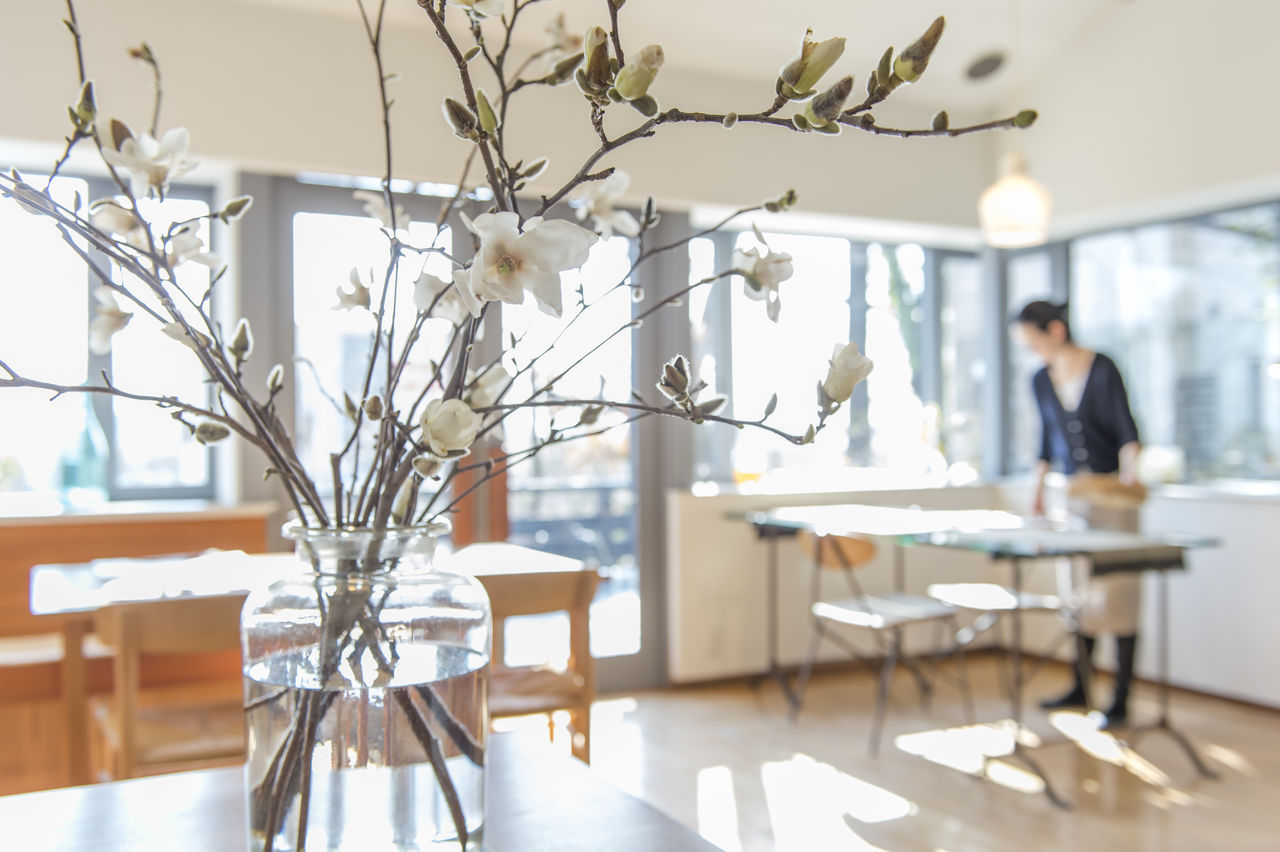
Kuruminoki
Address: 567-1 Horenchō, Nara, Nara Prefecture
Phone: +81-(0)742-23-8286
Website (in Japanese only): http://www.kuruminoki.co.jp/
Akishino no Mori
Address: 1534 Nakayamachō, Nara, Nara Prefecture
Phone: +81-(0)742-52-8560
Website (in Japanese only): http://www.kuruminoki.co.jp/akishinonomori/
A 15-minute taxi ride away from Yamato-Saidaiji Station.
Shika no Fune
Address: 11 Inouechō, Nara, Nara Prefecture
Phone: (Kamado) +81-(0)742-94-5520 / (Saezuri) +81-(0)742-94-9700
Website: http://www.kuruminoki.co.jp/shikanofune/en/
Tokinomori Livrer
Address: 5-17-10 Shirokanedai, Minato-ku, Tokyo
Phone: +81-(0)3-6277-2606
Website (in Japanese only): http://www.tokinomori-nara.jp/livrer/
(Originally written in Japanese. Photos by Inomata Hiroshi.)
Nara tourism food Washoku Tokyo restaurants Breakfast Around Japan: A Culinary Adventure