Marriage-Related Celebrations Foster Community Ties
Guideto Japan
Culture History- English
- 日本語
- 简体字
- 繁體字
- Français
- Español
- العربية
- Русский
Good Wishes for Newlyweds
In earlier times, it was customary for new brides to live with their husbands’ families. Marriage being a rite of passage ensuring posterity and conferring vitality on the community, in some areas everyone turned out to welcome the happy event. Festivals connected with those older types of marriage celebrations continue in some parts of the country, taking place mainly around January 15, a day called koshōgatsu (little New Year).
Koshōgatsu is the time for dondo yaki, when the kadomatsu and rice straw New Year decorations guiding the toshigami New Year deity to homes are burned. After having enjoyed hospitality for two weeks and promised rich harvests and good health to the people, the deity returns to its mountain home on the flames of the bonfires, and ordinary life resumes for those in the human world. It is also an opportunity to celebrate newlyweds in the community. Here we present three sometimes rowdy festivals welcoming new couples and reinforcing marital and community ties.
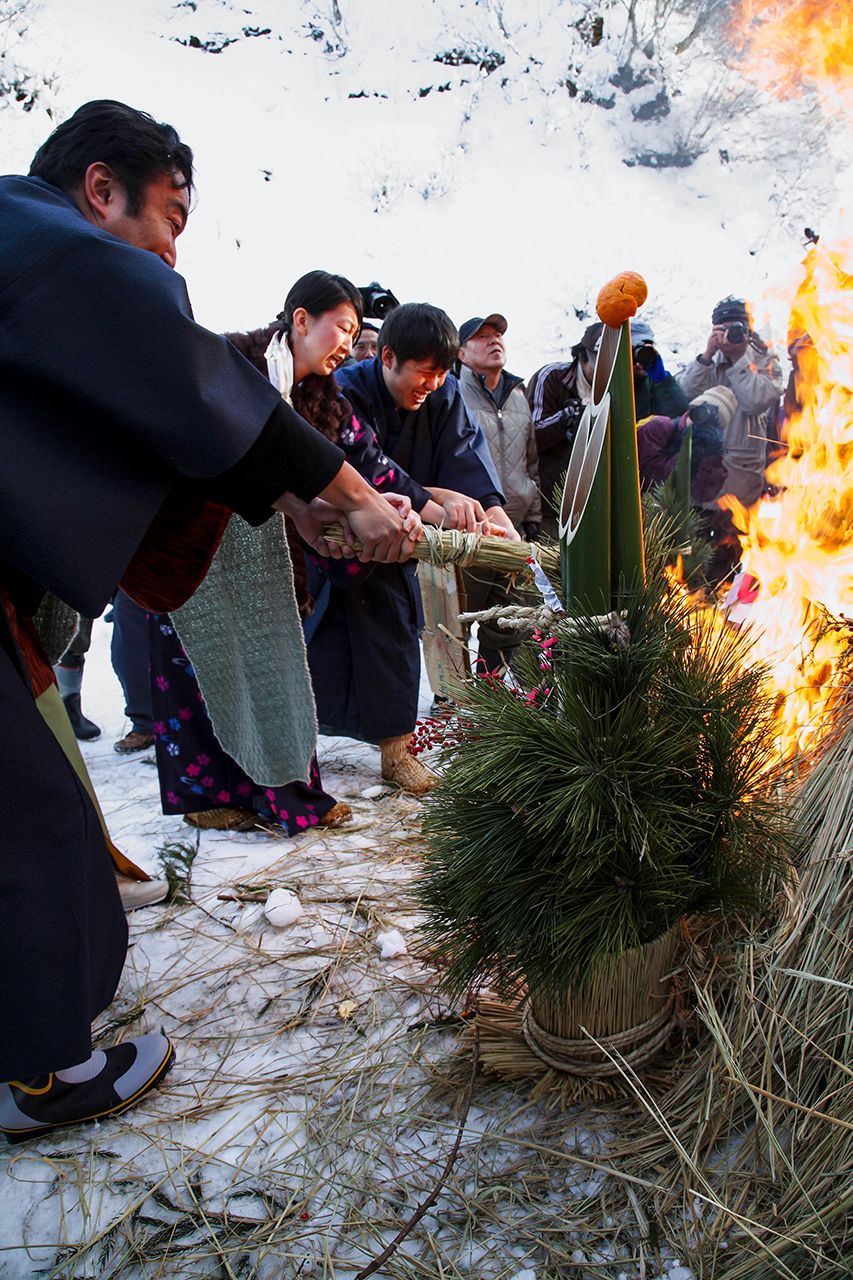
Newlyweds participating in a koshōgatsu celebration in Matsunoyama, Niigata Prefecture. (© Haga Library)
Muko Nage and Muddy Faces
(January 15, Tōkamachi, Niigata Prefecture)
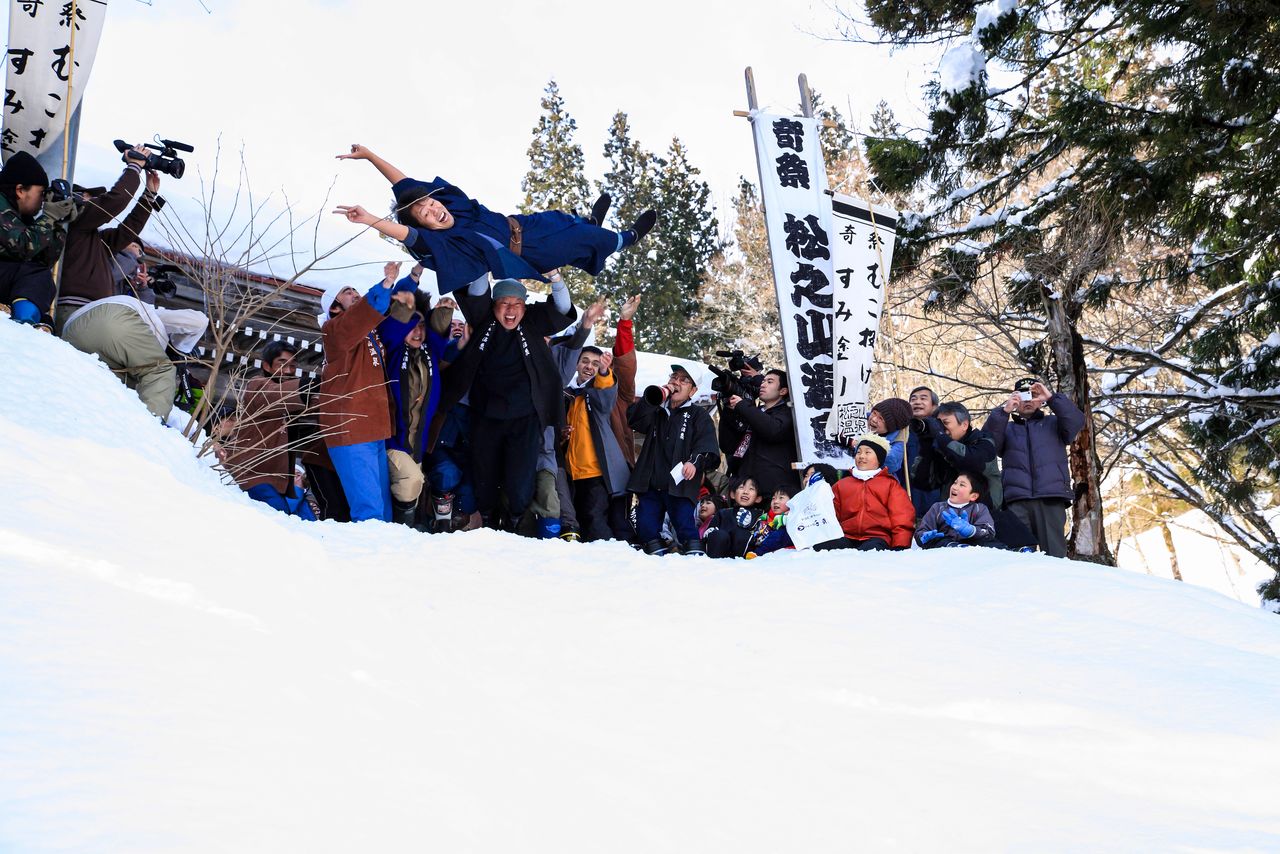
Abundant snow cushions this man as he is thrown down a 5-meter slope. (© Haga Library)
Muko nage (husband throwing) is an unusual celebration that lives on in the Matsunoyama district of Tōkamachi, a Niigata Prefecture city known for deep winter snow. This event, part of which involves throwing a newlywed man down a snowy slope, apparently began some centuries ago, when a man from a neighboring village took a bride and stayed overnight at her parents’ home. The villagers, incensed that someone “from away” had taken the village’s maiden, hauled the man out of the home and threw him into the snow.
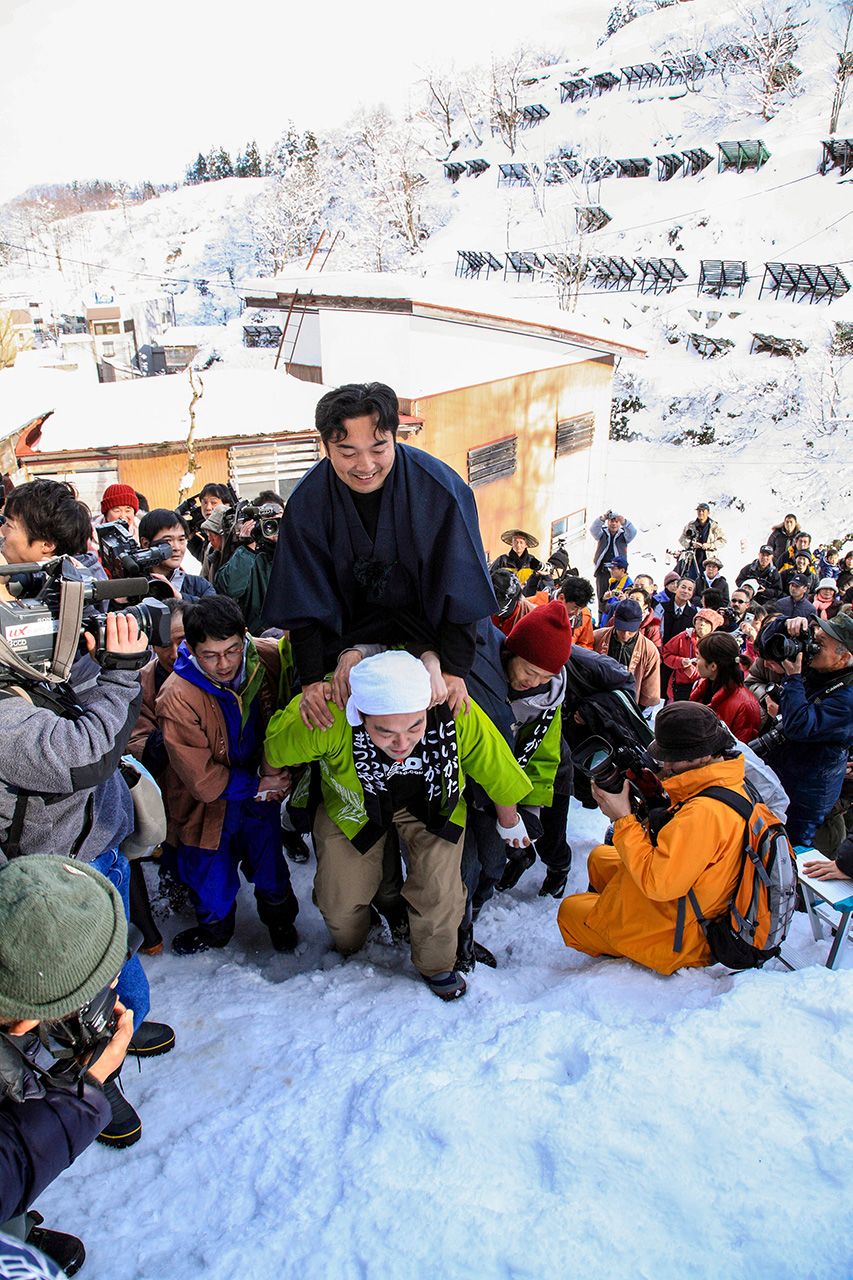
The groom is borne to the slope on the back of a festival participant. (© Haga Library)
On the afternoon of January 15, a new husband clad in kimono is borne on the back of a local man to the district’s shrine, which sits atop a steep slope covered in deep snow. After partaking of sacred sake, the man is tossed in the air and heaved down the slope. Rolling round and round down the hill, he finally lands at the bottom, where his new bride is waiting to embrace him, surrounded by smiling onlookers.
Muko nage originally began when men from other districts who married Matsunoyama women were tossed into the snow. Nowadays, any couple married the previous year can apply to take part, but the ritual symbolizes, then as now, couples overcoming difficulties and growing closer as a result.
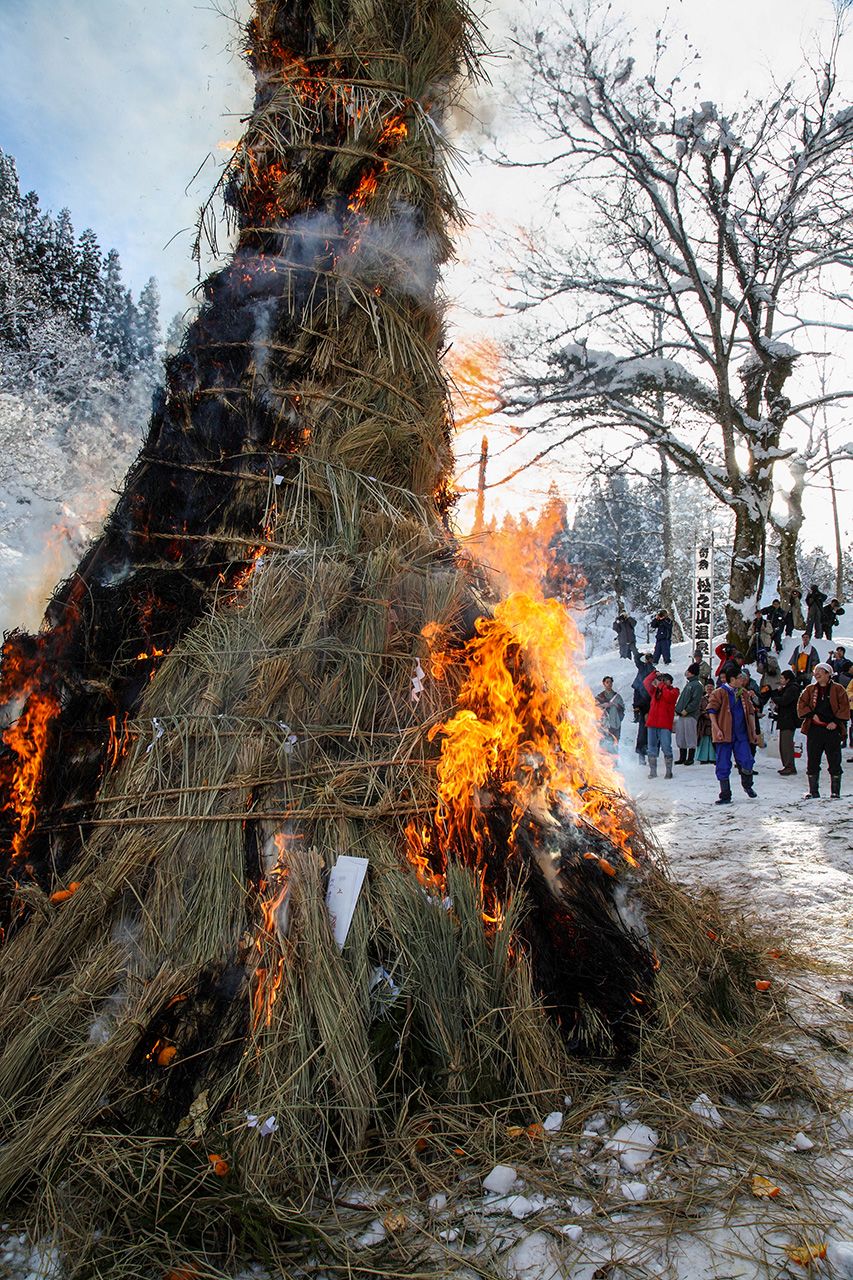
The sai no kami ritual is also part of the festival. (© Haga Library)
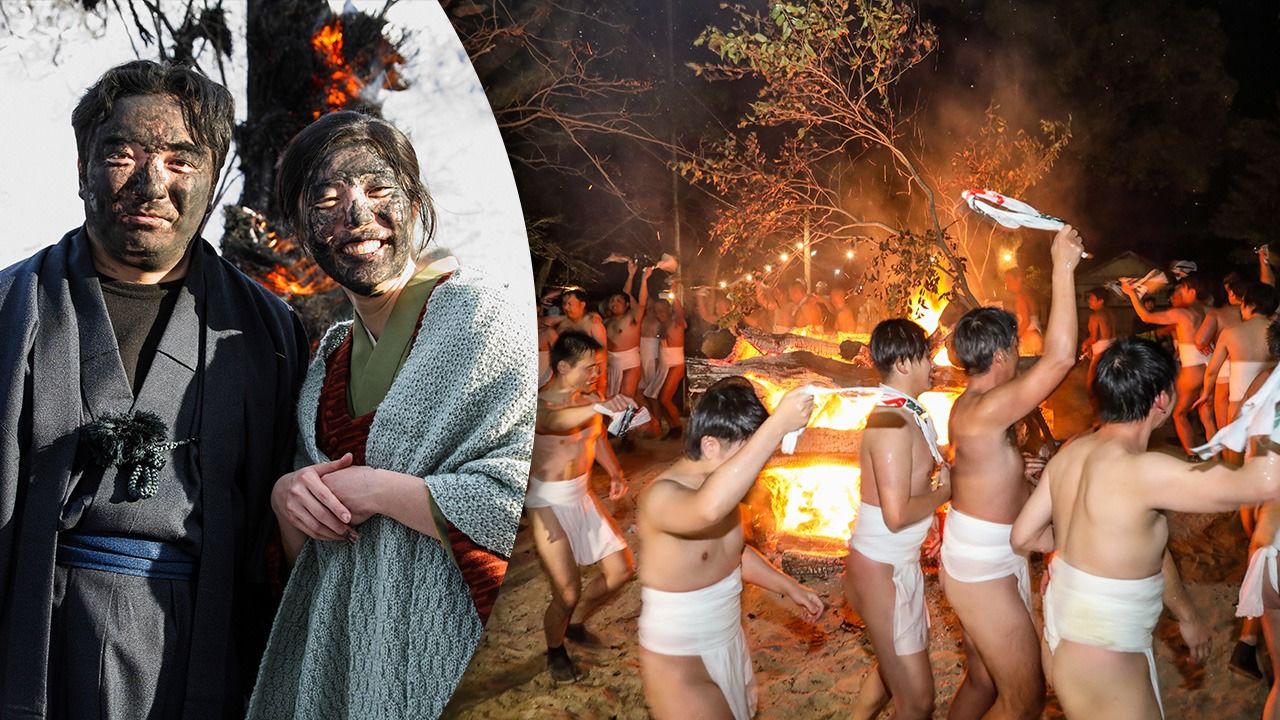
Sai no kami, a ritual bonfire to send off the toshigami deity, begins after muko nage. New Year decorations piled up into a conical shape are set alight, and once the structure has burned down to ashes, the real fun begins. Onlookers chase each other with a mud-like paste made from the bonfire ashes mixed with snow, exchanging hearty shouts of omedetō! (congratulations!) as they give a good smearing to everyone in their path. The ashes, in which the deity is believed to reside, are meant to ward off evil and promise good health.
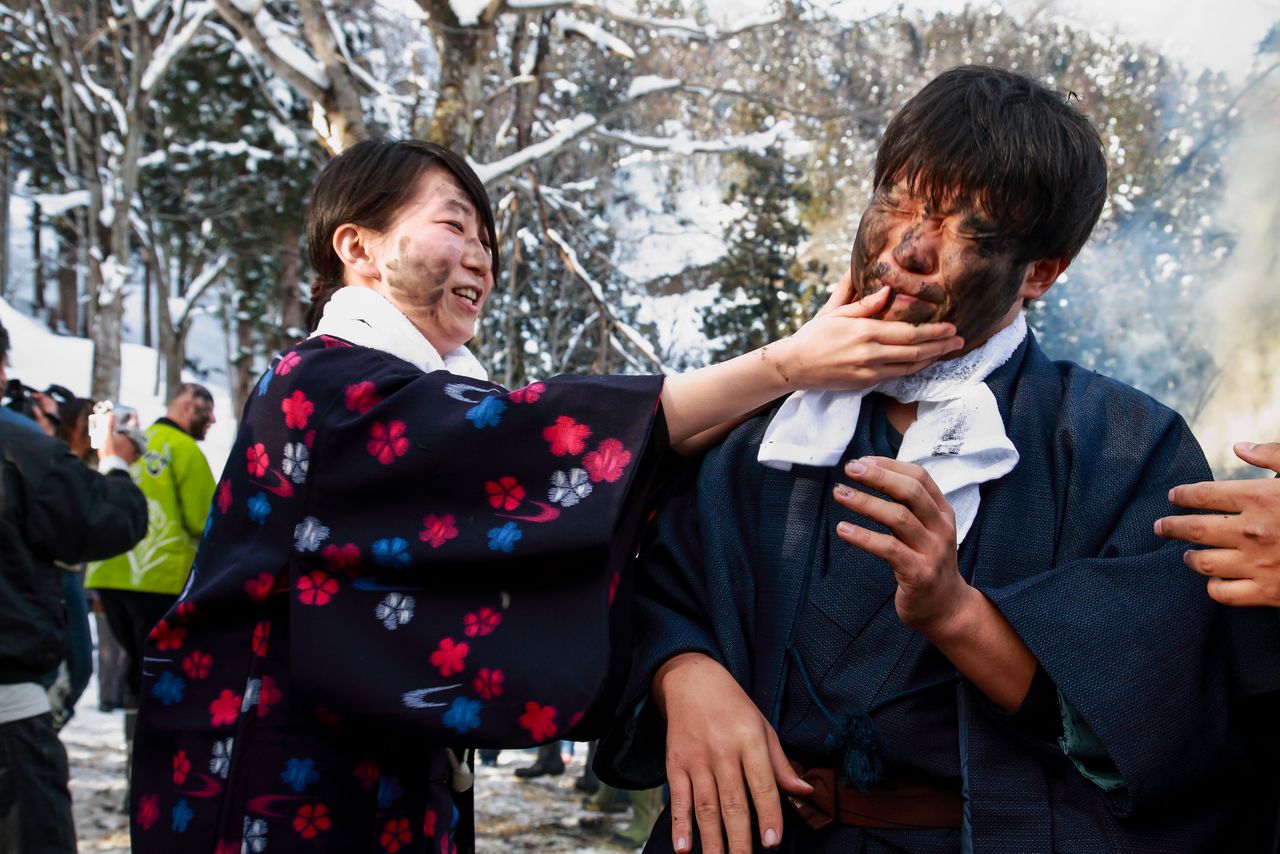
Couples who have been through muko nage also participate. (© Haga Library)
Come matsuri day, everyone from newlywed couples to onlookers, media reporters, and even police officers can expect to come away with blackened faces. This lively festival marking the new year is guaranteed to receive coverage on the local media’s news programs on that day.
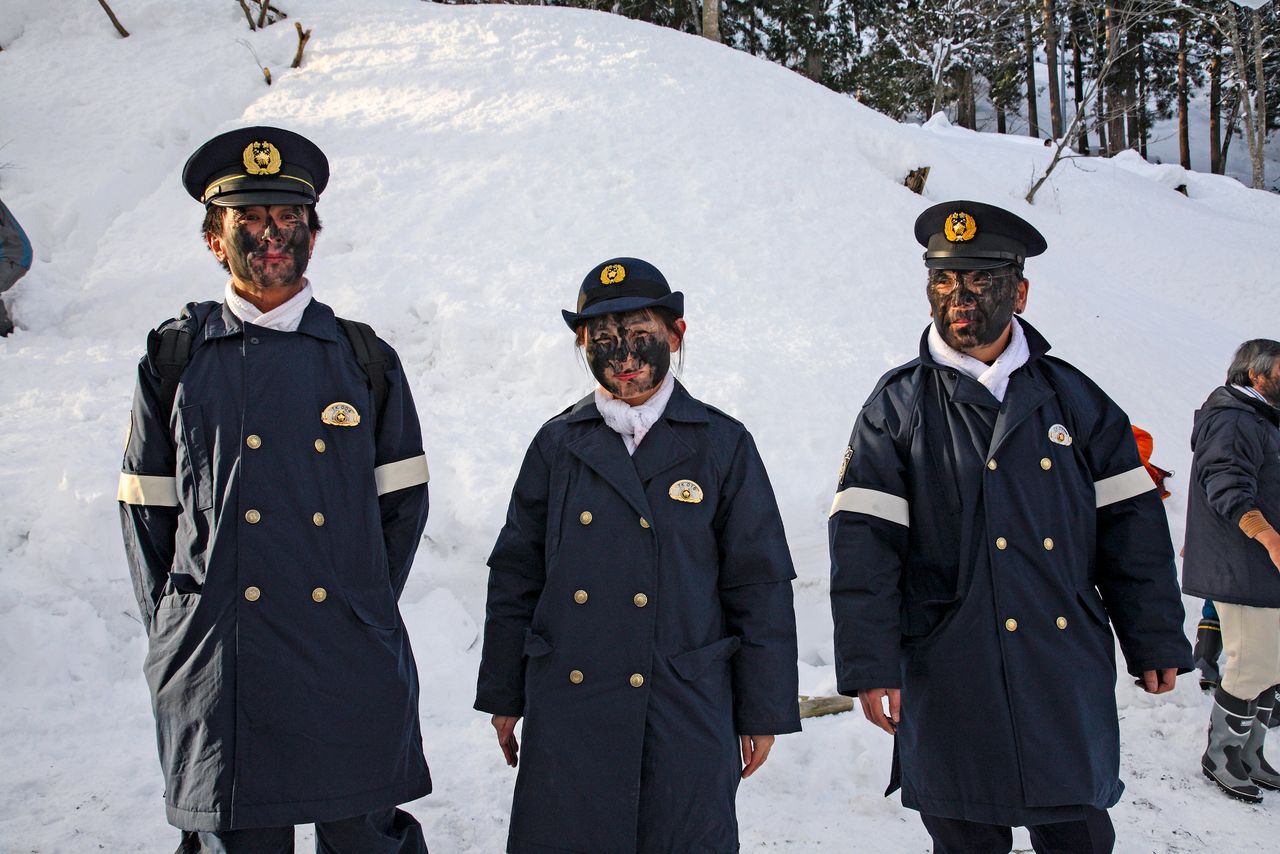
Police officers receive divine favor too. (© Haga Library)
Kasuga no Muko Oshi
(January 14, Kasuga, Fukuoka Prefecture)
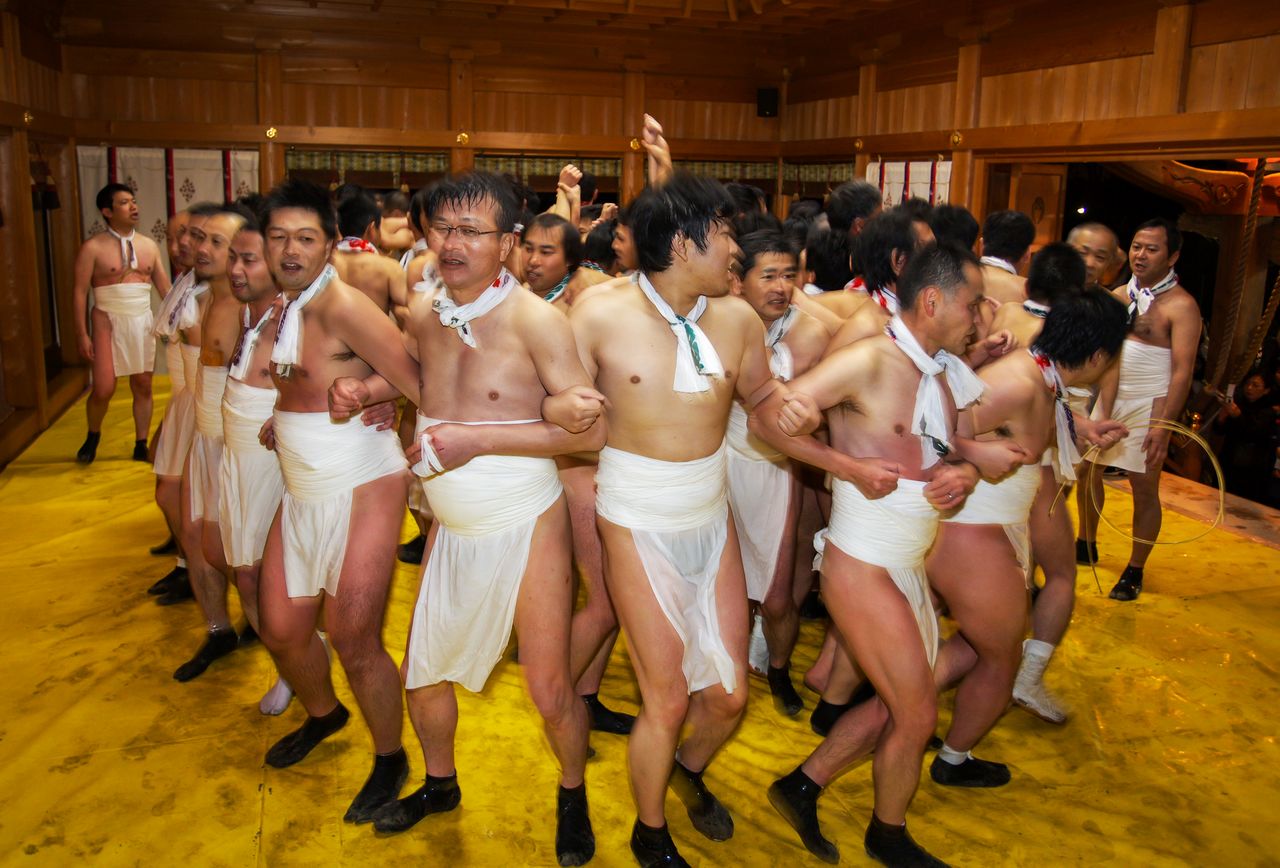
The groom, with only his upraised arms showing, is boxed in on all sides by shrine parishioners. (© Haga Library)
Kasuga, a city near Fukuoka in Fukuoka Prefecture, is famous for the muko oshi (husband crunching) festival held at its namesake Kasuga Shrine. This boisterous event, where a newly married man is surrounded by a mob of loincloth-clad participants, is intended to celebrate couples who have been recently married.
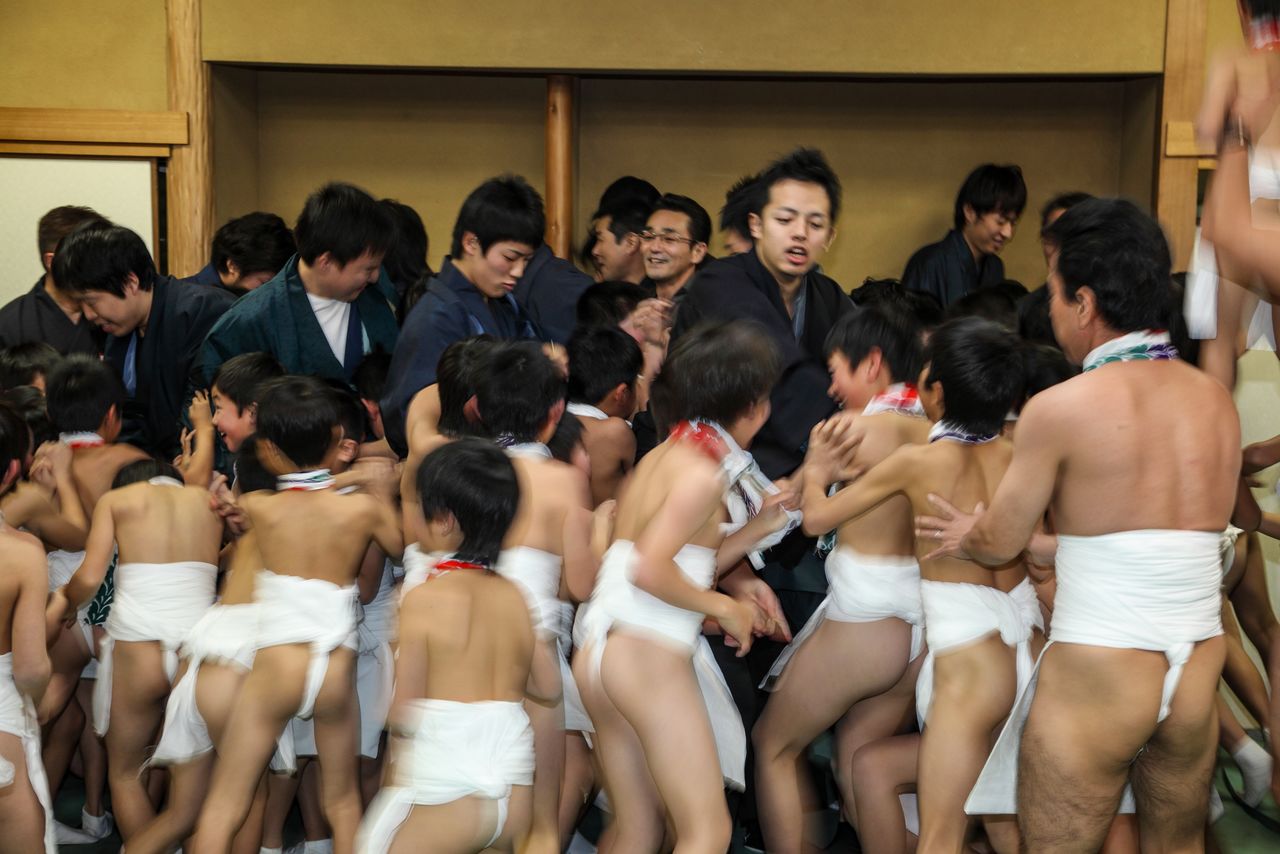
Young boys also take part in the ritual. (© Haga Library)
The ritual burning of New Year ornaments brought by neighborhood households begins at the shrine on the evening of January 14. In the community hall adjoining the shrine, a newlywed couple is introduced. The groom, clad in traditional formal wear, makes a short speech to the assembled parishioners. The bride, wearing a resplendent kimono, enters carrying noshi dried abalone symbolizing longevity, and the pair serve sacred sake to the assembled guests.
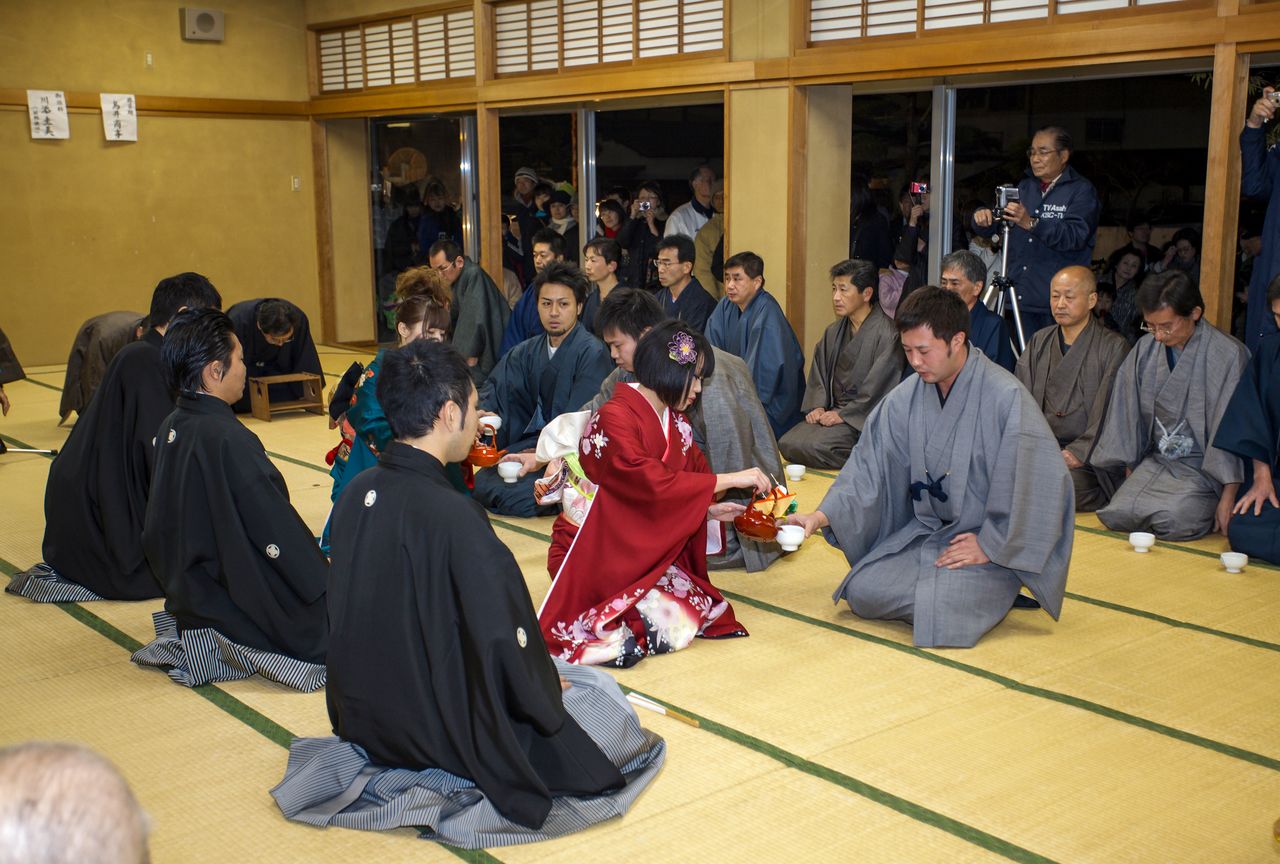
A formal meal welcoming the new couple to the community. (© Haga Library)
While this is taking place, men in loincloths carry a sake barrel from the hall to the shrine to prepare for the festival’s highlight. The groom, shedding his clothes down to his loincloth, joins the crowd as they receive the shrine priest’s blessing and then plunge into a frigid pond in a purification rite. They grapple with the barrel, kicking and stomping on it until it breaks up. The men then compete fiercely to get pieces of the barrel, which are regarded as good luck talismans.
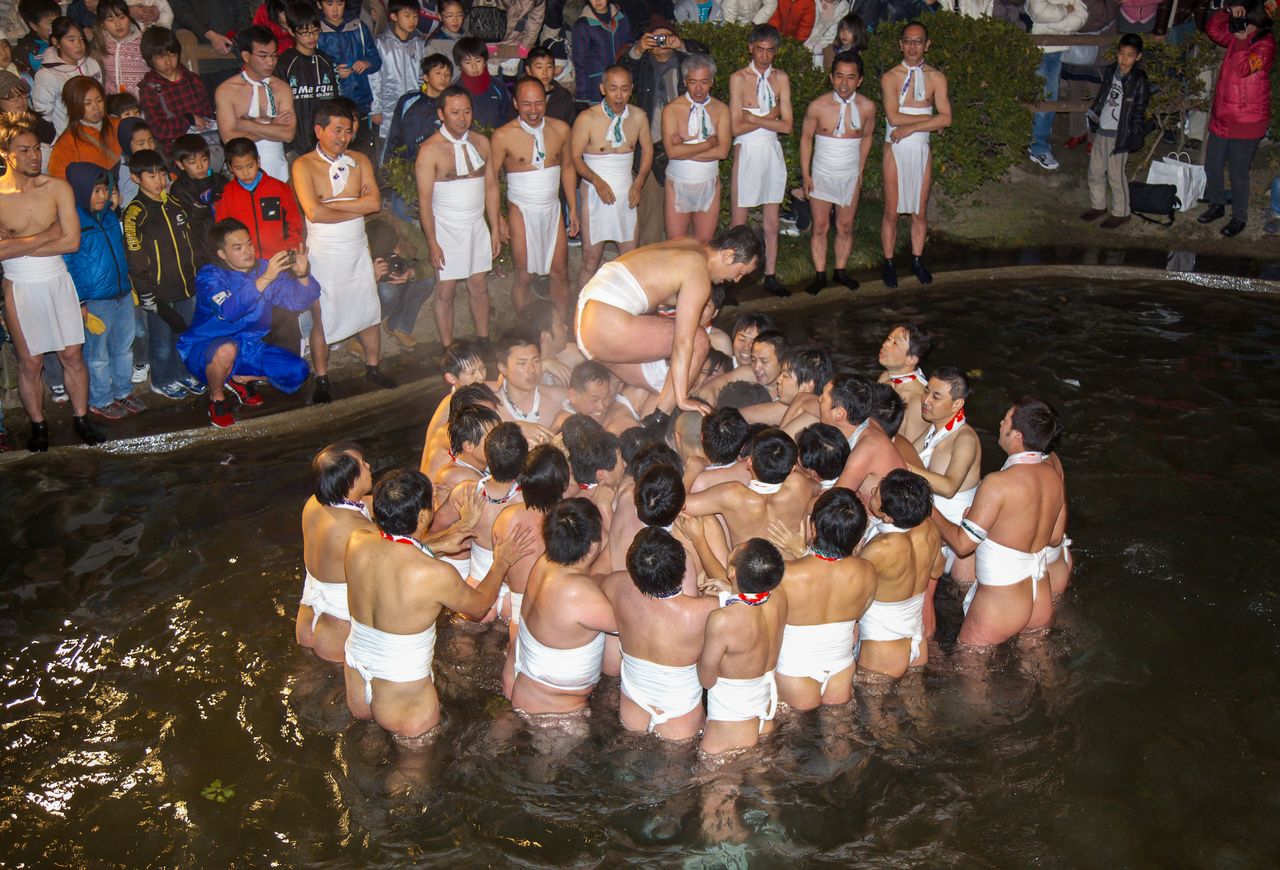
Men breaking up the barrel in the freezing water. (© Haga Library)
Moving on to a nearby river, the men purify themselves with river sand. They return to the shrine’s prayer hall, where the groom is surrounded on all sides by a crush of men going round and round in a circle as they sing a congratulatory song. Meanwhile, the bride prays at the shrine’s main hall, where she is formally accepted as a parishioner.
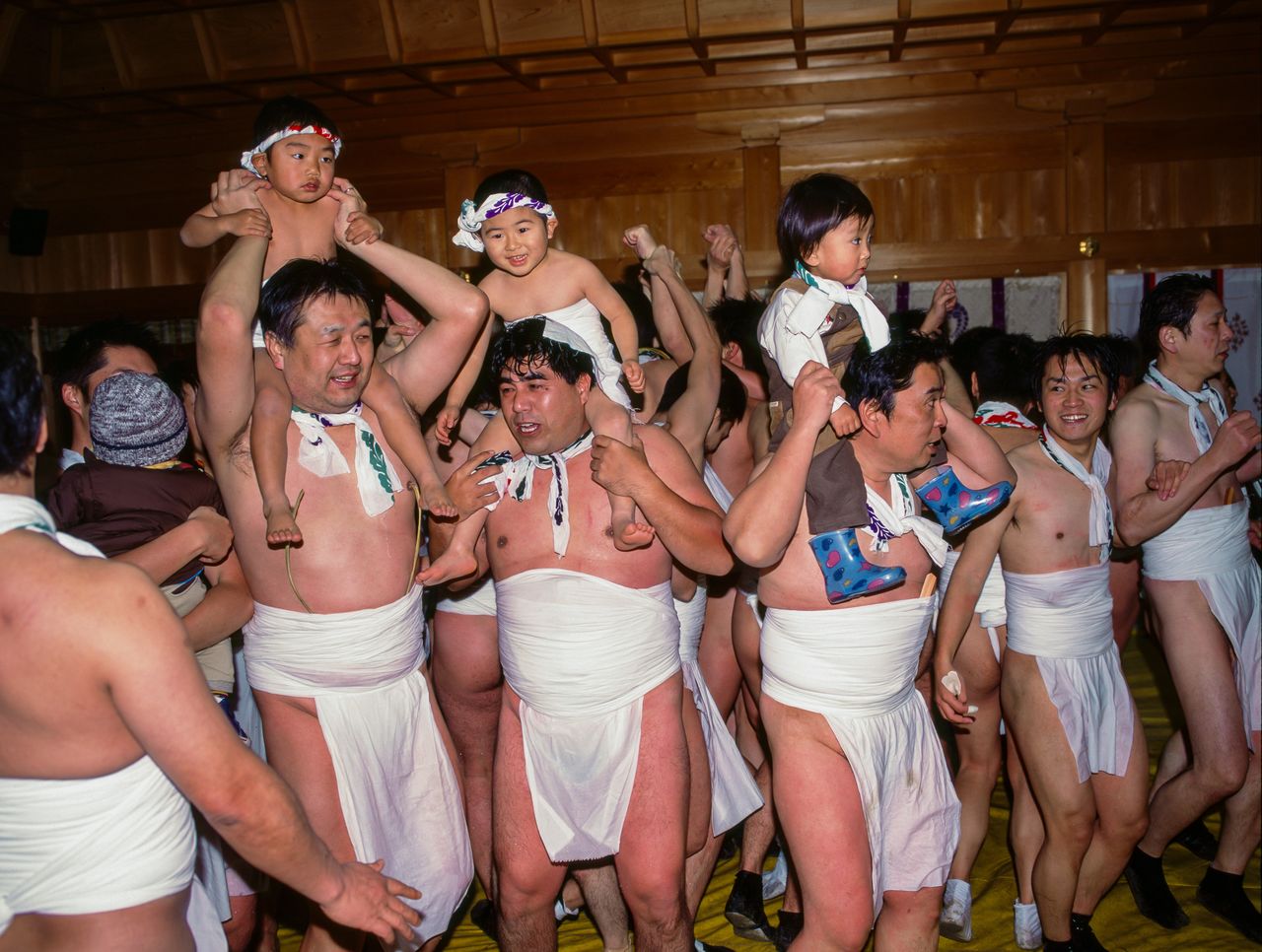
During the celebration, young children are paraded to pray for their healthy growth. (© Haga Library)
After the men have completed a circuit of the shrine precincts, they form a circle in front of the bonfire. This is the festival’s climax. The newlywed man, crouching in the middle, has small towels piled onto his head, and after more singing, he is doused with the wakamizu New Year sacred water. Everyone circles the fire again, clapping hands to pray for the village’s prosperity. This festival is a grand welcome for the couple as members of the community and shrine parishioners.
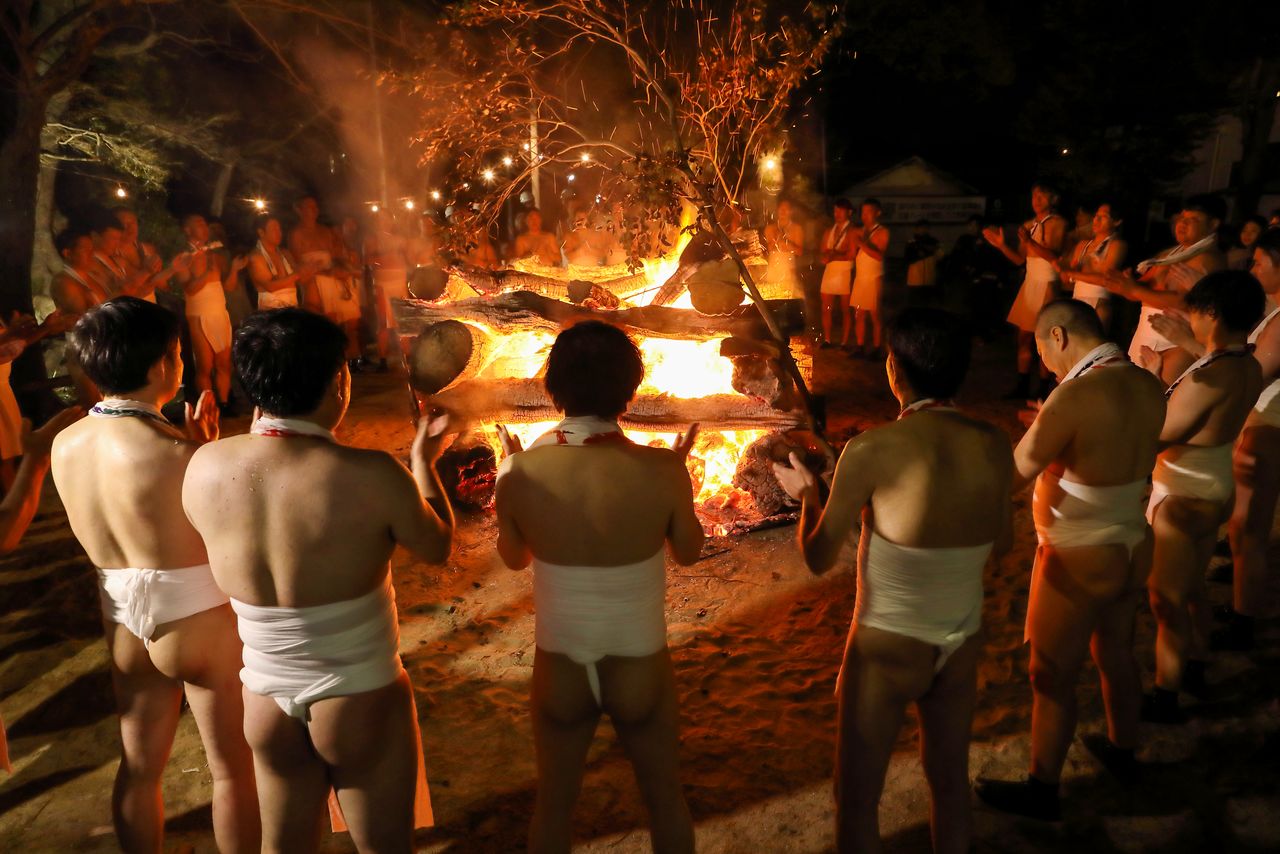
The men circle the bonfire in the finale to an exciting festival. (© Haga Library)
Hara no Okatabuchi
(January 14, Kawakami, Nagano Prefecture)
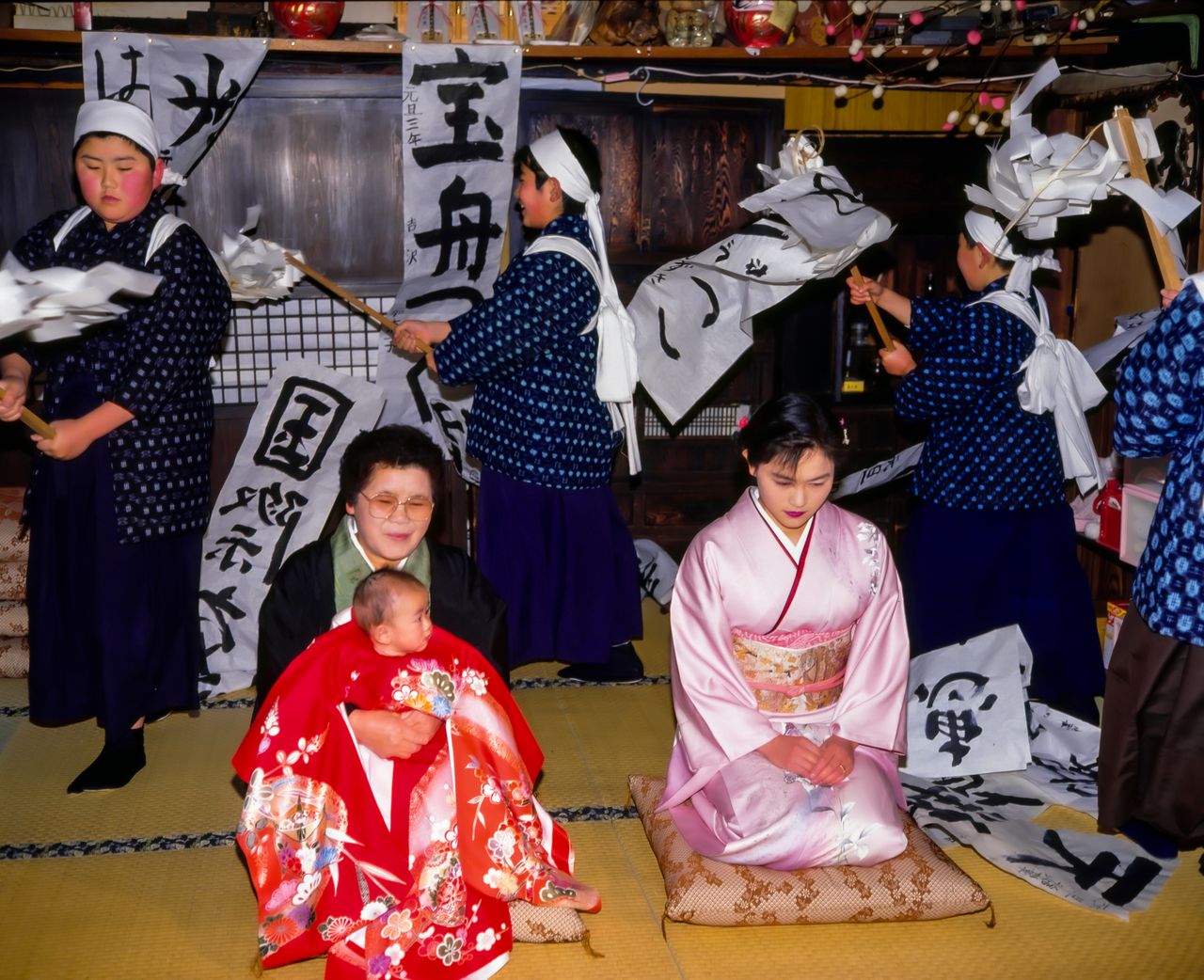
Young boys congratulate the bride and her mother-in-law. (© Haga Library)
The village of Kawakami in Nagano Prefecture is famous for the altitude of its administrative office, 1,185 meters, the highest in the country. The okatabuchi festival, a welcoming ceremony whose name derives from acknowledgement of the position of a new bride in her household, lives on in the village’s Hara district. On January 14, a group of boys, led by the eldest, form a procession that visits homes where recent marriages have taken place.
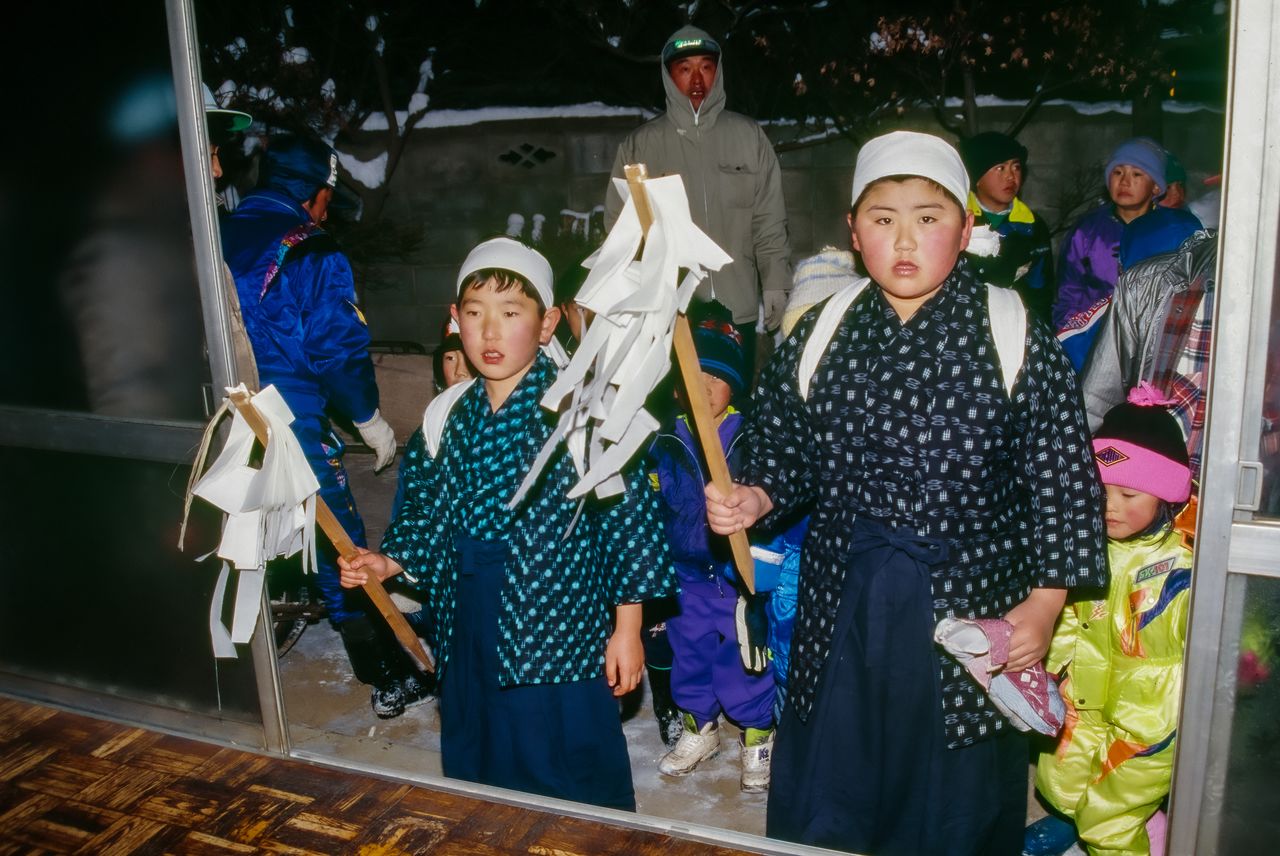
The boys are outfitted in traditional wear, including kasuri (ikat, a form of tie-dying seen across much of Asia) kimono and straw sandals. (© Haga Library)
Households receiving the procession prepare a celebratory meal, and the bride and her mother-in-law don their best kimono. When the boys call on the home in early evening, they are invited in. One of them beats a drum as they circle the women, waving gohei staffs to wish for good health and many offspring for the family.
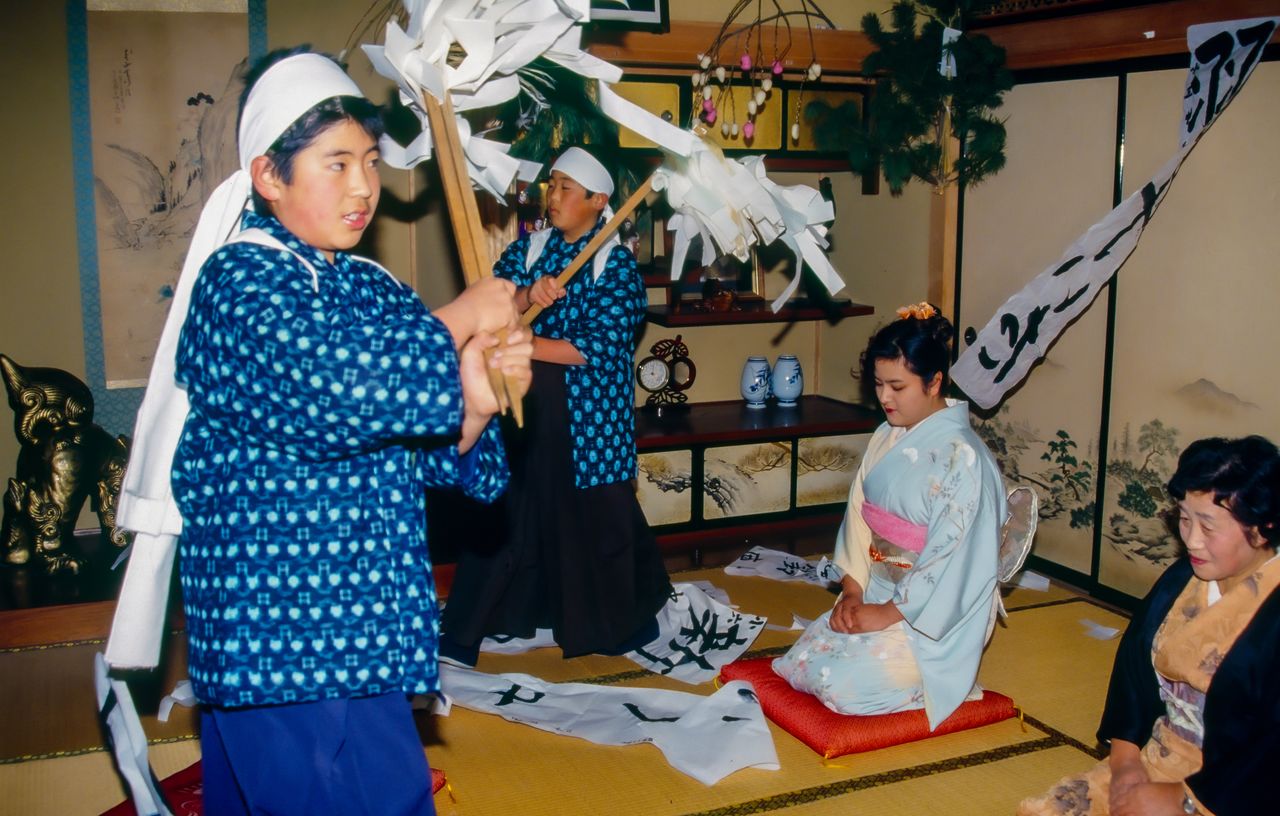
Part of the celebration involves waving the gohei staff to knock down kakizome, papers on which the first calligraphy of the year has been written. (© Haga Library)
Once the ceremony is over, the children partake of the meal while neighbors come to offer congratulations and gently tease the bride. Fewer people marry nowadays and fewer children are born, but this charming custom is one that is worth preserving.
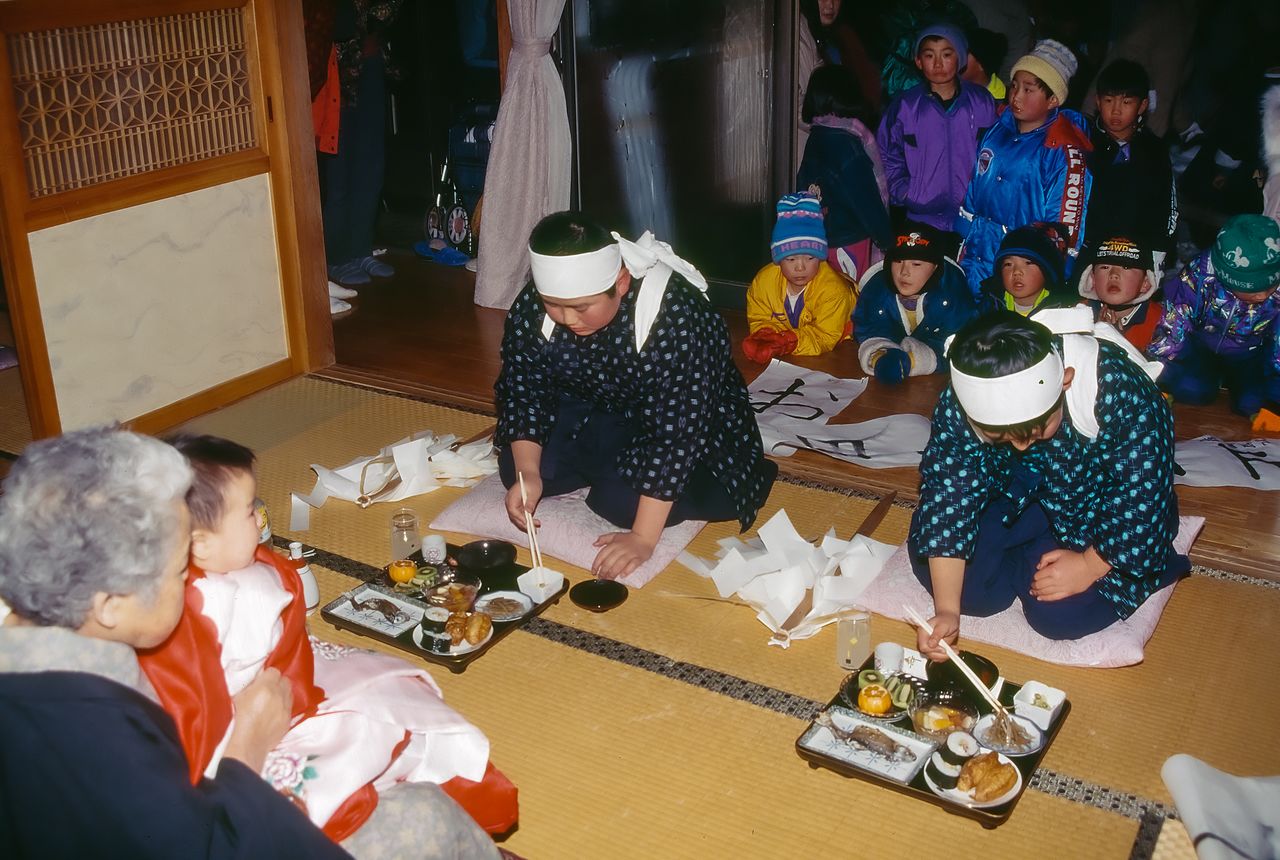
The children are served a meal after the ceremony. (© Haga Library)
(Originally published in Japanese. Dates given are those on which the festivals are usually held. Banner photo © Haga Library.)