Rice-Planting Festivals: Folk Traditions Centering on the Rice Paddy Deity
Guideto Japan
Culture- English
- 日本語
- 简体字
- 繁體字
- Français
- Español
- العربية
- Русский
Beliefs Related to Rice Growing
Japanese have been growing rice since prehistoric times. Rice is the staple food in Japan, but at the same time it is heavy with sacred meaning. Tanokami, the rice paddy deity, is believed to arrive at rice-planting season and to reside in the grain itself. Rites connected with rice cultivation take place in farming communities, from well before the preparation of paddies for planting in spring until the harvest time in autumn and later in the year. These ceremonies are intended to please the tanokami and imbue the rice with life force. At shrines, rice is planted in ceremonial paddies and offered to the deity after harvesting.
Shortly after January 15, the day called koshōgatsu (little New Year), when signs of spring are still far off, ta asobi, ritual performances to pray for a successful rice harvest later in the year, are offered at shrines in some communities. Ta asobi ritually reenacts the various stages of rice cultivation, from scraping and leveling the paddy soil, sowing seeds, and planting seedlings to harvesting the rice and hanging the sheaves to dry, as a kind of spell and preliminary celebration to ensure an abundant harvest.
Ceremonies related to rice cultivation take place at different times of the year everywhere in the country. Here we present three festivals embodying particularly rich local folk customs.
Hachinohe Enburi
(February 17–20, Hachinohe, Aomori Prefecture)
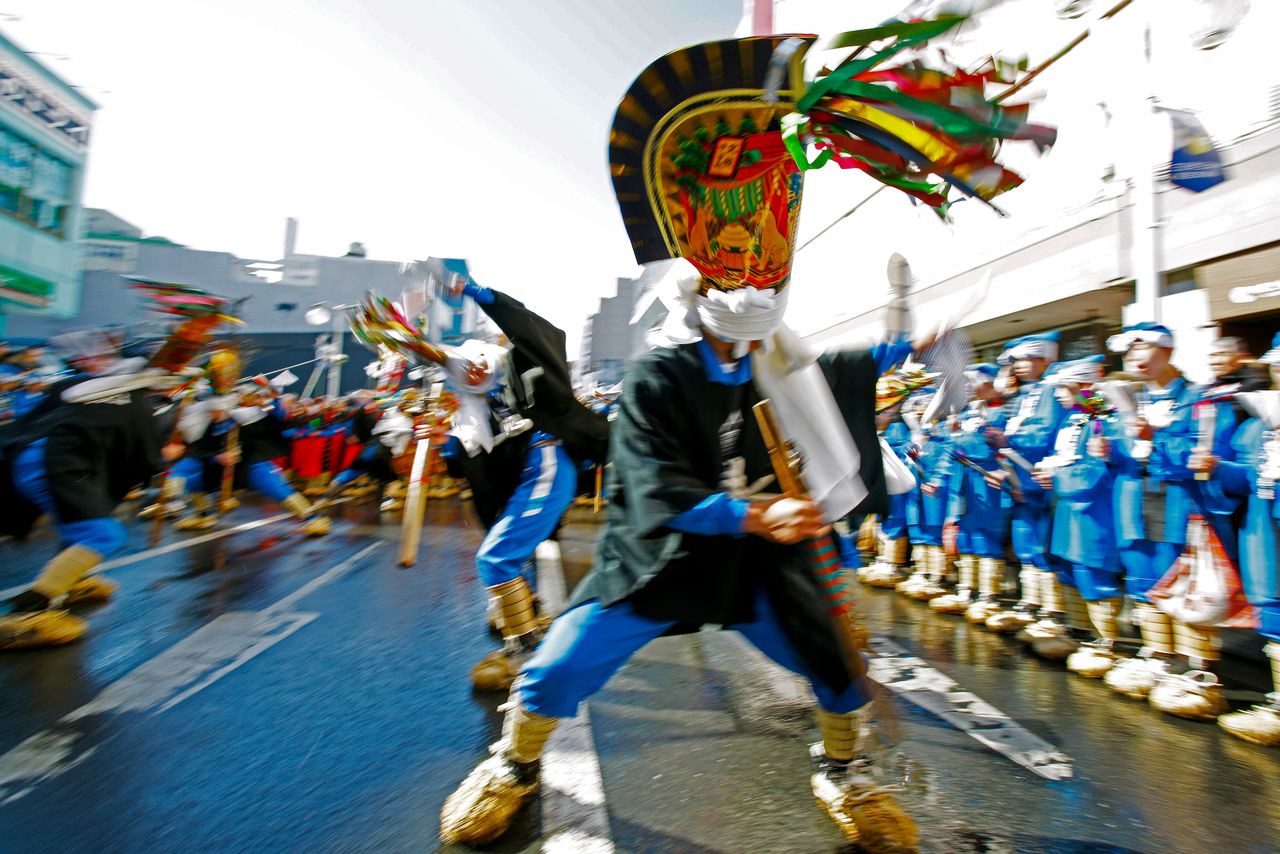
The highlight of the festival’s first day is the issei-zuri dancing by all participants. Costumed dancers prance to make the multicolored tassels on their headpieces swing wildly. (© Haga Library)
Hachinohe, an Aomori Prefecture city on the Pacific coast in the far north of the main island of Honshū, is frozen solid during winter. When February comes around, the community holds the enburi festival, a procession and dancing to rouse the tanokami from hibernation and pray to the deity for a bountiful harvest.
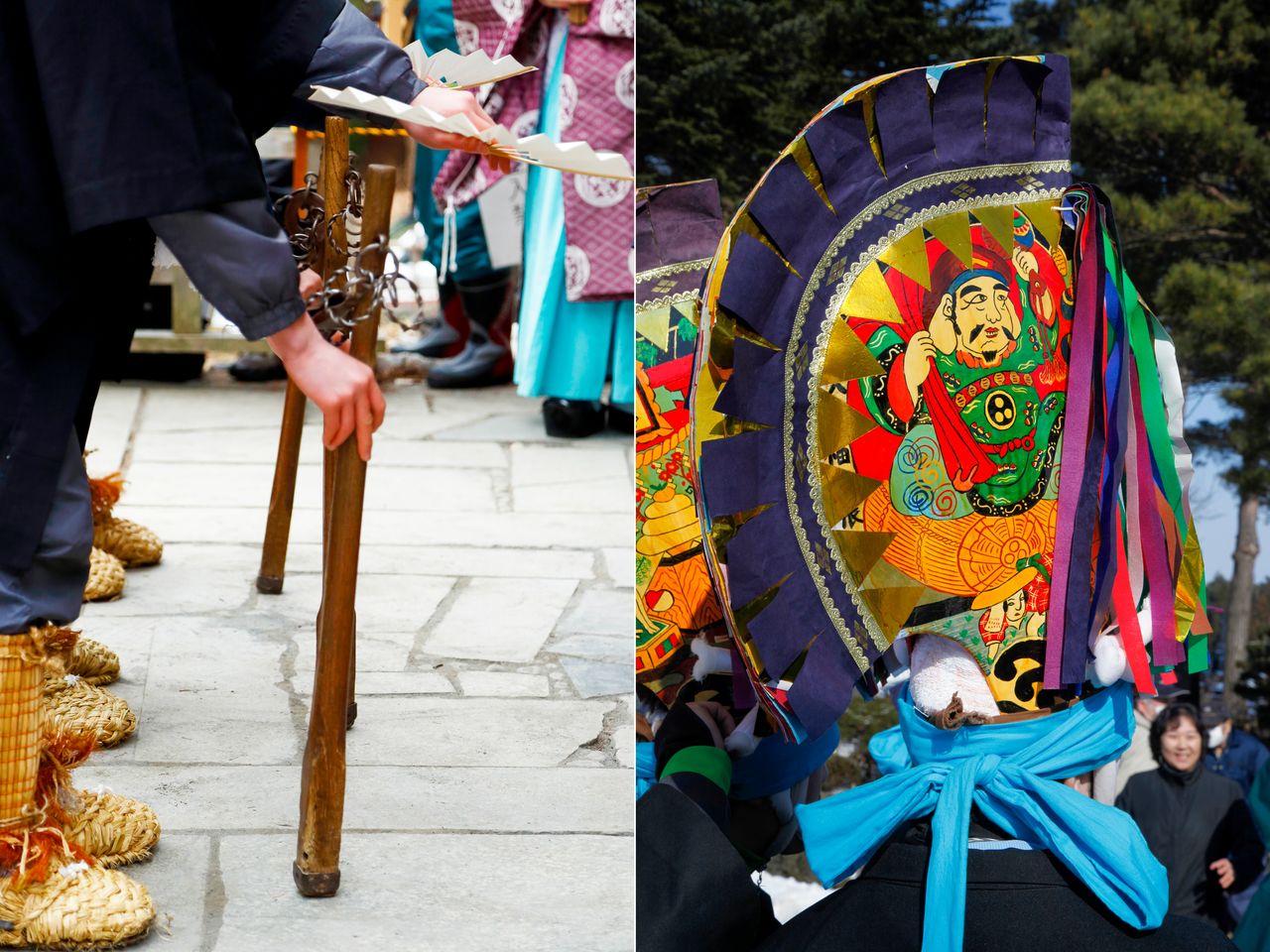
Left: Wooden staffs with metal rings attached are shaken to make noise. Right: A headpiece modeled on a horse’s head is decorated with felicitous motifs, like the deities of fortune Ebisu and Daikoku. (© Haga Library)
The festival’s name derives from eburi, a long-handled, T-shaped wooden farm tool used to scrape and level rice paddies to ready them for planting. The dancing, called suri, is marked by how the dancers strike the ground with wooden staffs to mimic using the eburi. Striking and stomping on the frozen ground is meant to wake the tanokami and bring on spring. The deity supposedly inhabits the dancers as they dance and shake the tassels on their headpieces.
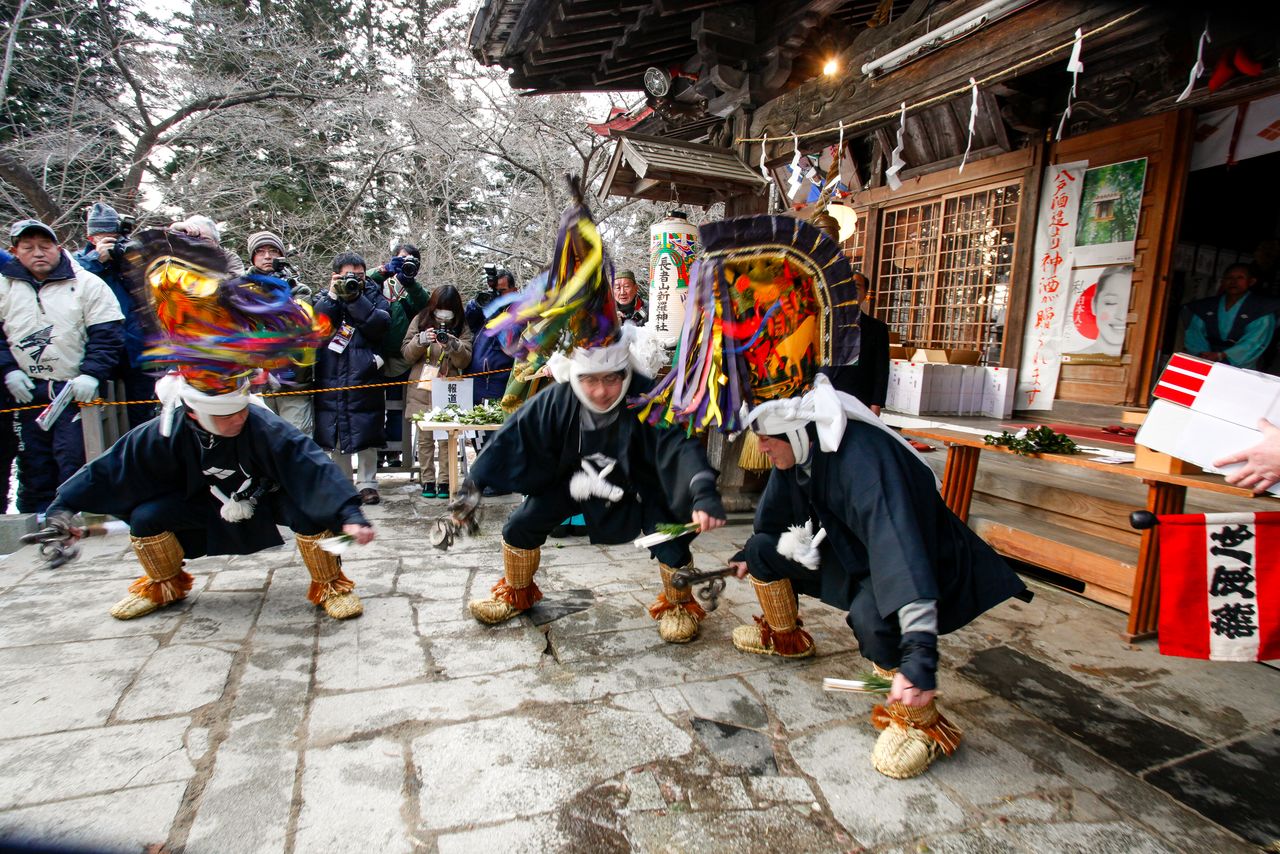
The festival begins when participants offer their dances at Shinra Shrine on the peak of Chōjayama. (© Haga Library)
Over the festival’s four days, over 30 dance teams perform in various parts of the city. The first dance is offered at Chōjayama Shinra Shrine in the city at midnight on the first day, and the procession begins early the next morning. The issei-zuri performed on the main street of Jūsannichi-machi in the heart of the city is truly a thrilling sight.
During the festival, performances take place in the plaza fronting the city hall, at the former castle site of Nejō, and in the gardens at Kōjōkaku, built in 1897 as the home of a local industrialist and financier. Evening performances of enburi by firelight create a distinctive atmosphere.
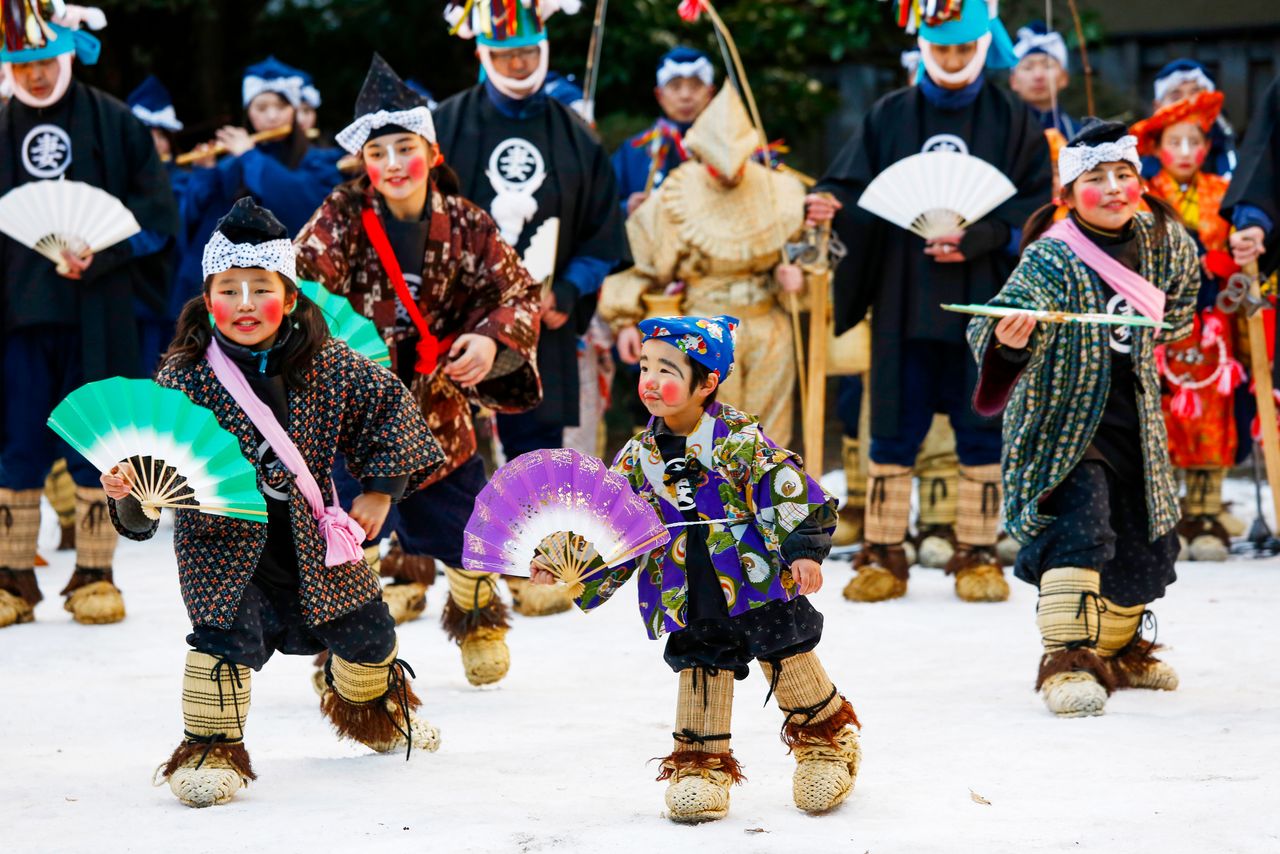
Children also take part in the festival. Their thick padded coats, called dotera, are typical cold-weather wear in the region. (© Haga Library)
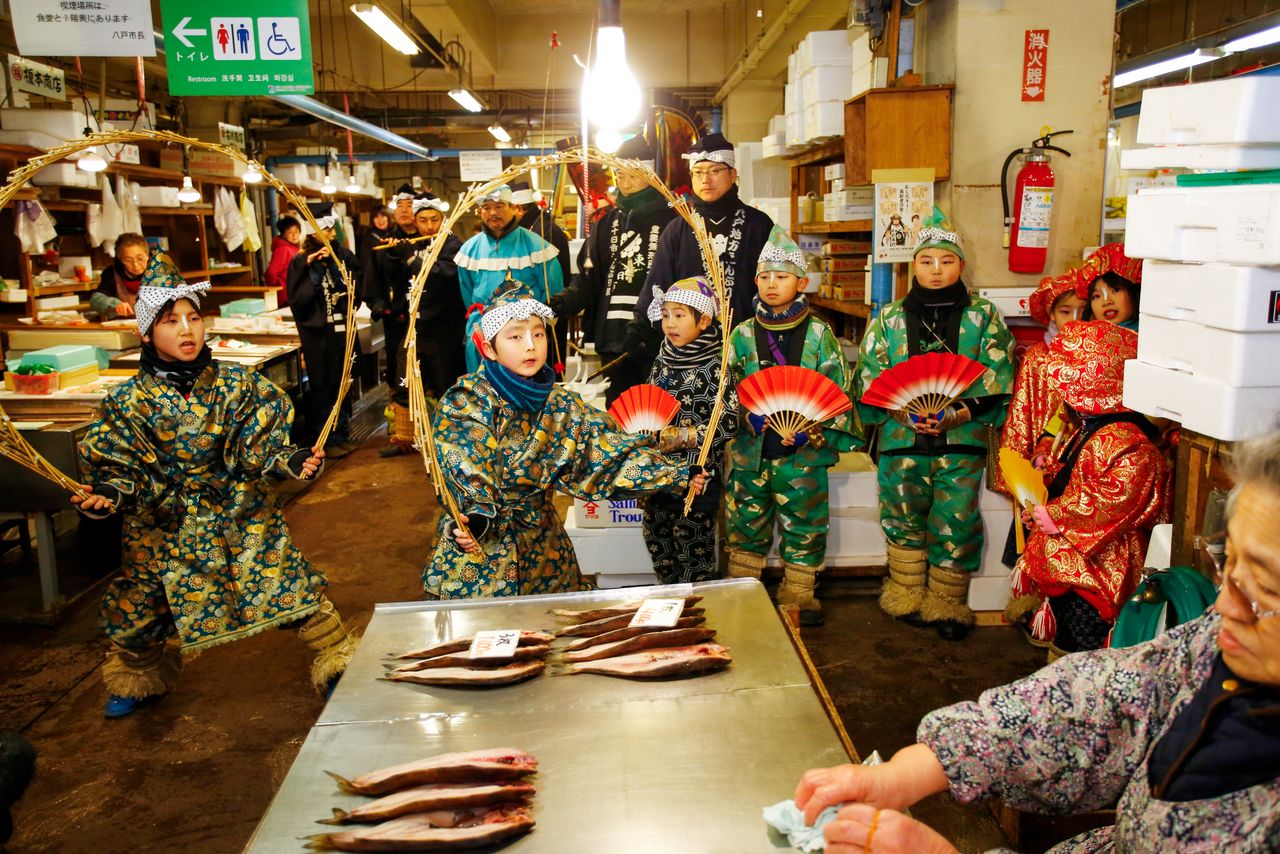
Children also deftly perform tricks with tamasudare, mats made of loosely woven sticks. (© Haga Library)
Celebratory performances put on by children between the enburi-suri dancing are another of the festival’s attractions. Their dances mimic sowing seeds, planting rice or catching sea bream, and the joyful mood in anticipation of plenty at harvest time is enhanced by the amazake, a drink made from fermented rice, and the regional specialty senbei-jiru, a rice cracker and vegetable stew, they serve to spectators.
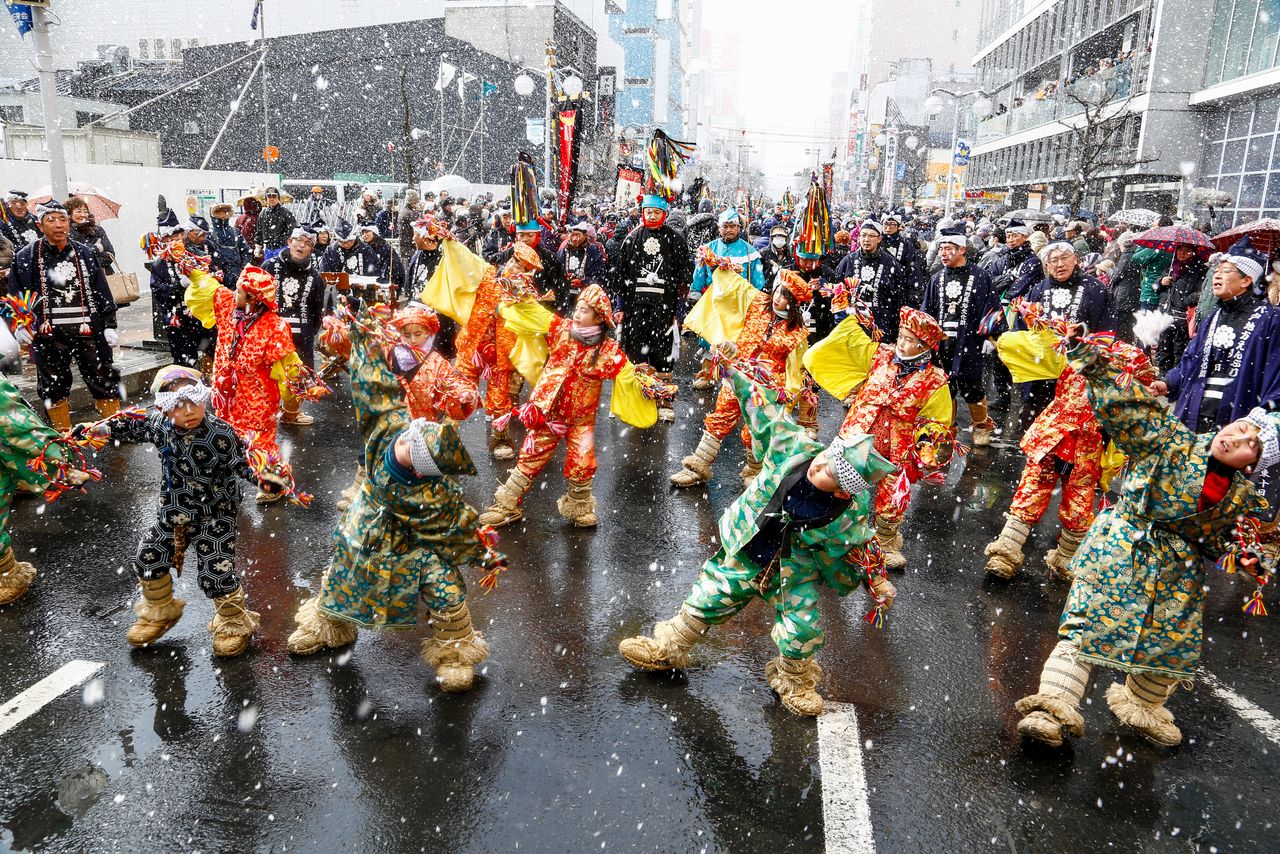
Schools close on the first day of the festival so that children can take part. (© Haga Library)
Taro Taro Matsuri
(Sunday nearest to the fourth day of the second month, according to the lunisolar calendar, Ichiki Kushikino, Kagoshima Prefecture)
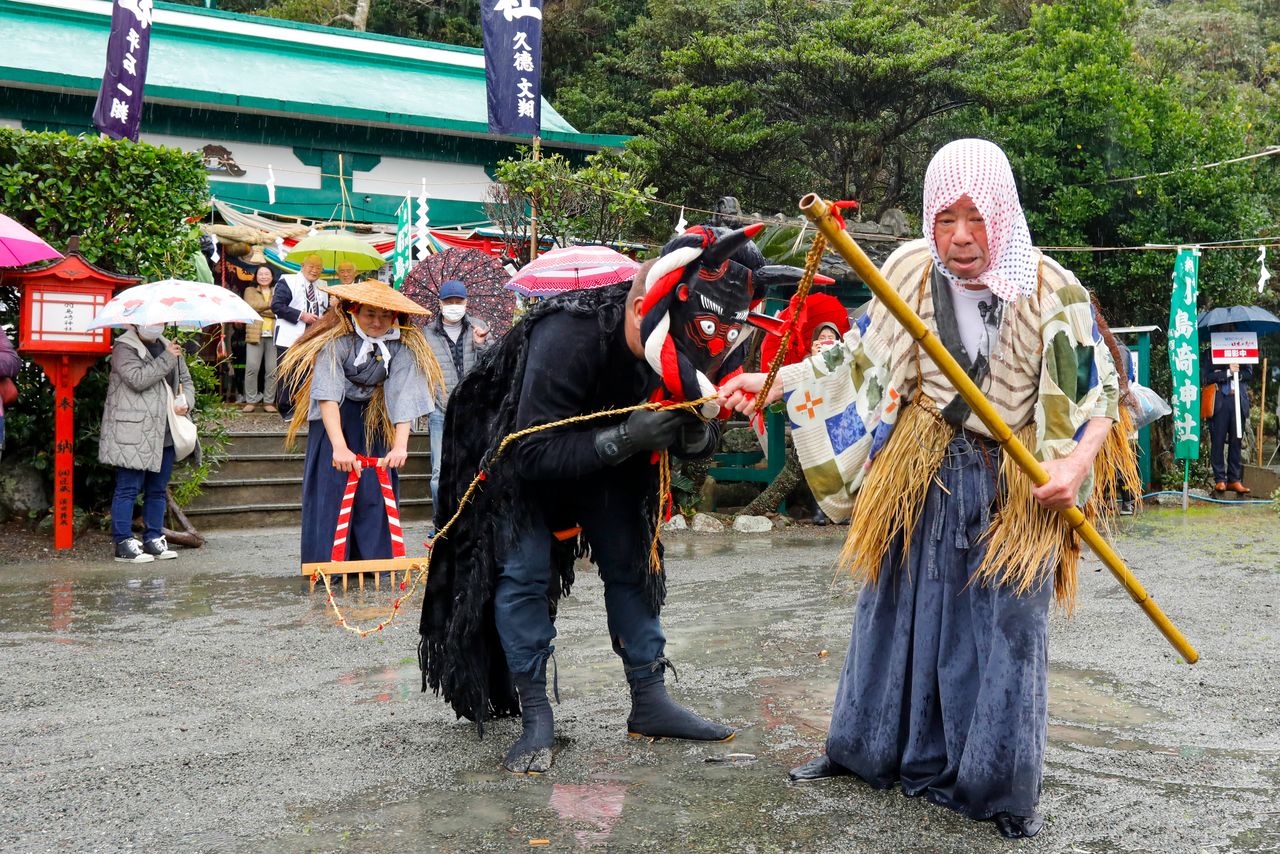
Humorous skits are a highlight of this festival. (© Haga Library)
Hashima, a district in the city of Ichiki Kushikino in the western part of Kagoshima Prefecture, lies between the mountains and the sea. When signs of spring appear, the Taro Taro Matsuri of Hashimazaki Shrine (sometimes pronounced Tarō Tarō, to match the name given to the young male participants) takes place to pray for bountiful harvests and good fish catches.
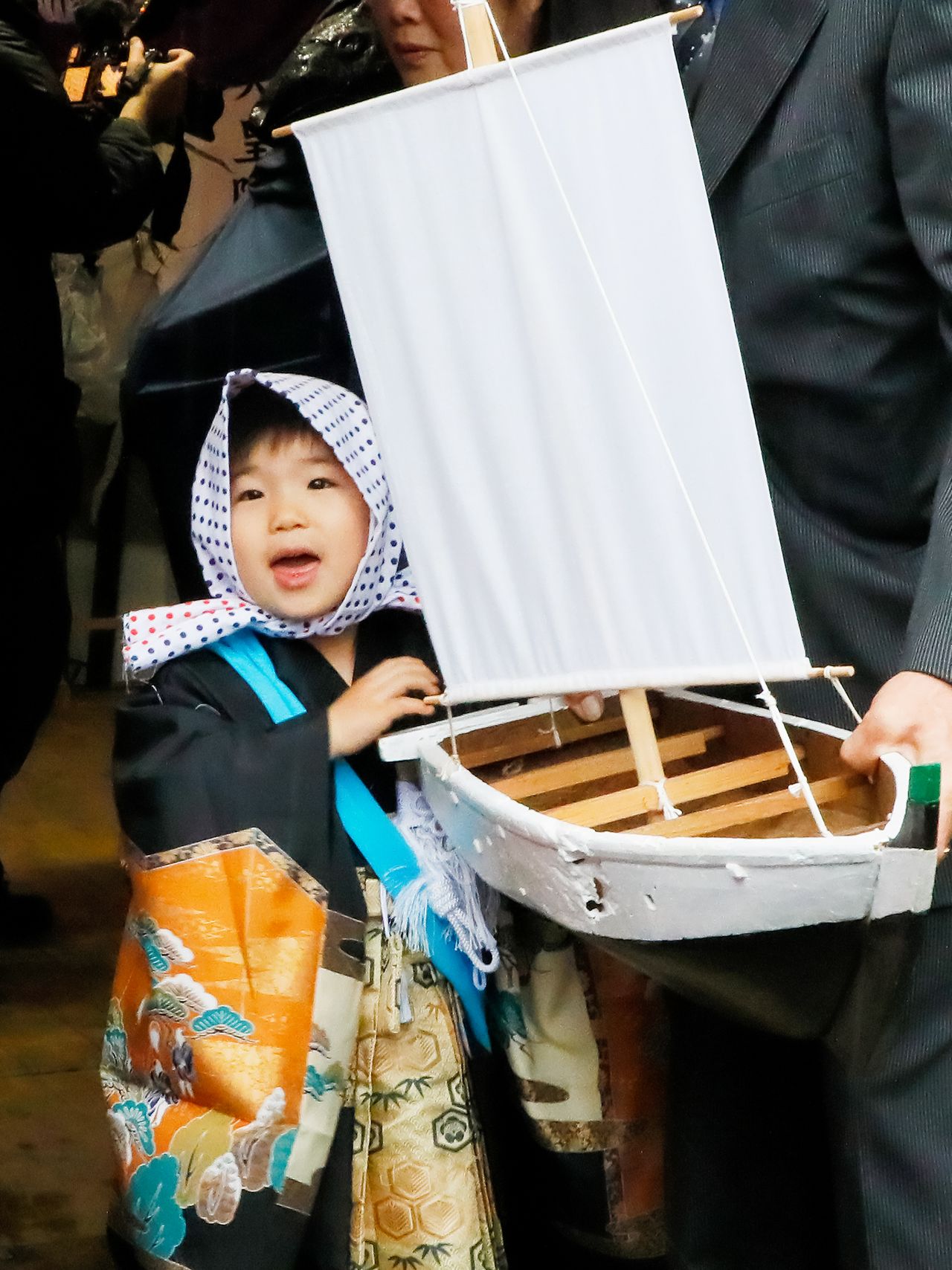
Funamochi is a ceremony to ensure a good harvest; it is also a rite of passage for young children. (© Haga Library)
In the first half of the festival, the shrine precincts are made up to represent the sea, on which a small model of a fishing boat sails. Four-year-olds and their parents carry the model boat around the shrine as men in ceremonial garb sing a boatmen’s song. The ritual prays for plentiful fish catches and celebrates the children’s entry into the community.
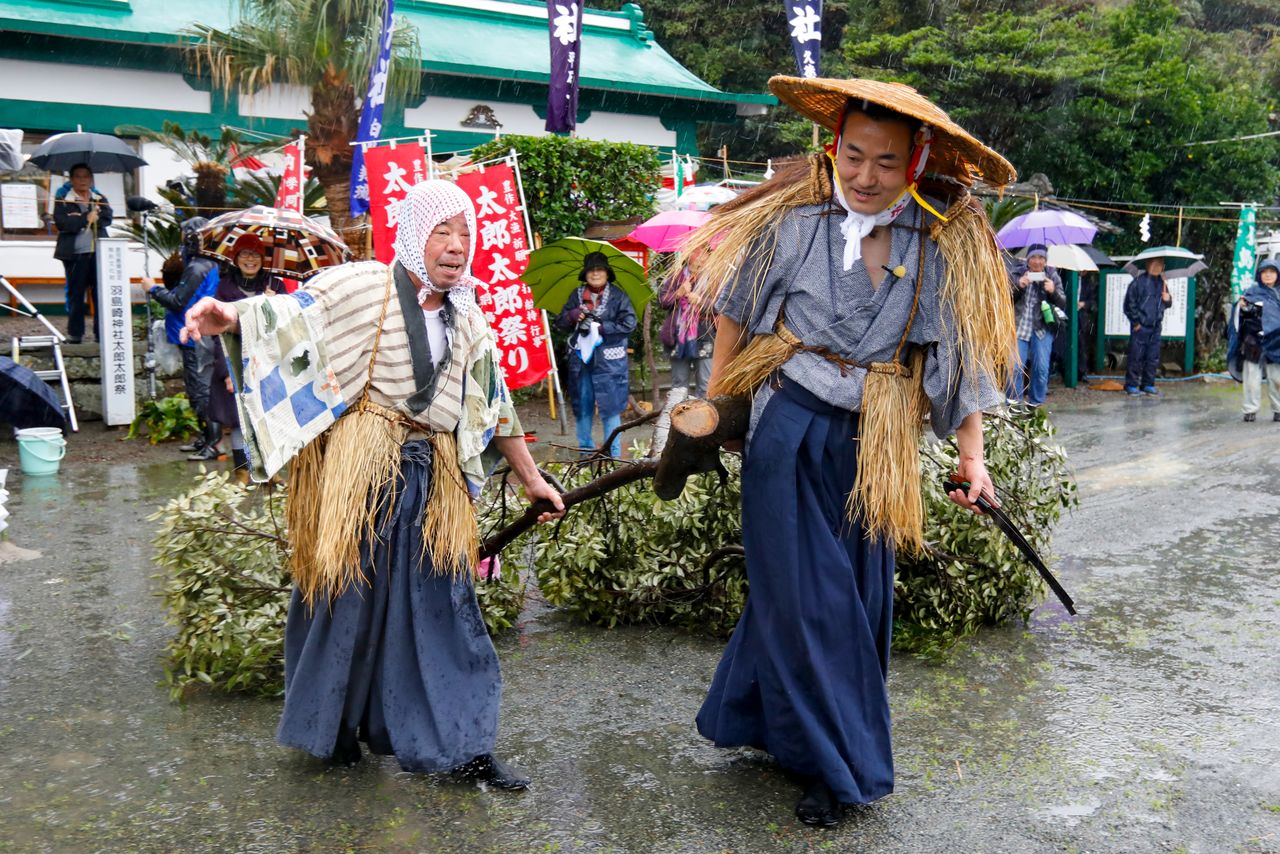
In tauchi, Tarō the paddy tiller (left), and his “father” drag branches around to represent farm tools. (© Haga Library)
This is followed by tauchi prayers for a bountiful harvest. A father and son farmer pair appear, clad in sedge hats and straw rain capes, who engage in improvised comic repartee. They seem to be forecasting the year’s crop, but no one knows for sure, as they are speaking in the broad local dialect. Even so, the skit prompts mirth among the locals, and spectators from elsewhere join in the laughter.
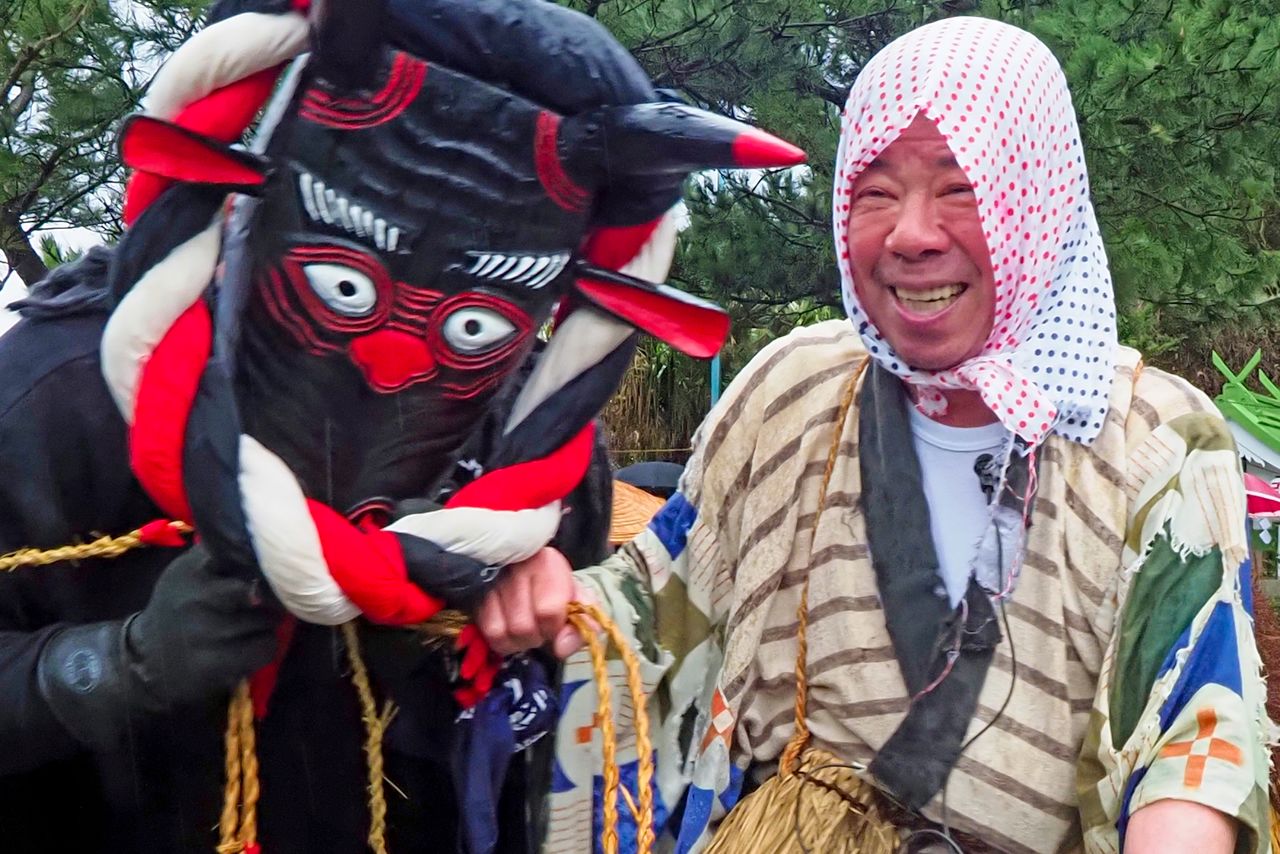
The unruly “ox” is giving the farmer a hard time. The mask bears the date 1781, evidence of the festival’s long history. (© Haga Library)
An ox then appears, which the farmers try to lead without success, as it either stampedes or sits and refuses to budge. Finally, they lead it to the paddy where it goes to work leveling the soil. Children and young women then enter the paddy and mimic planting rice seedlings. The festival concludes with the placing of stones to retain water in the paddy.
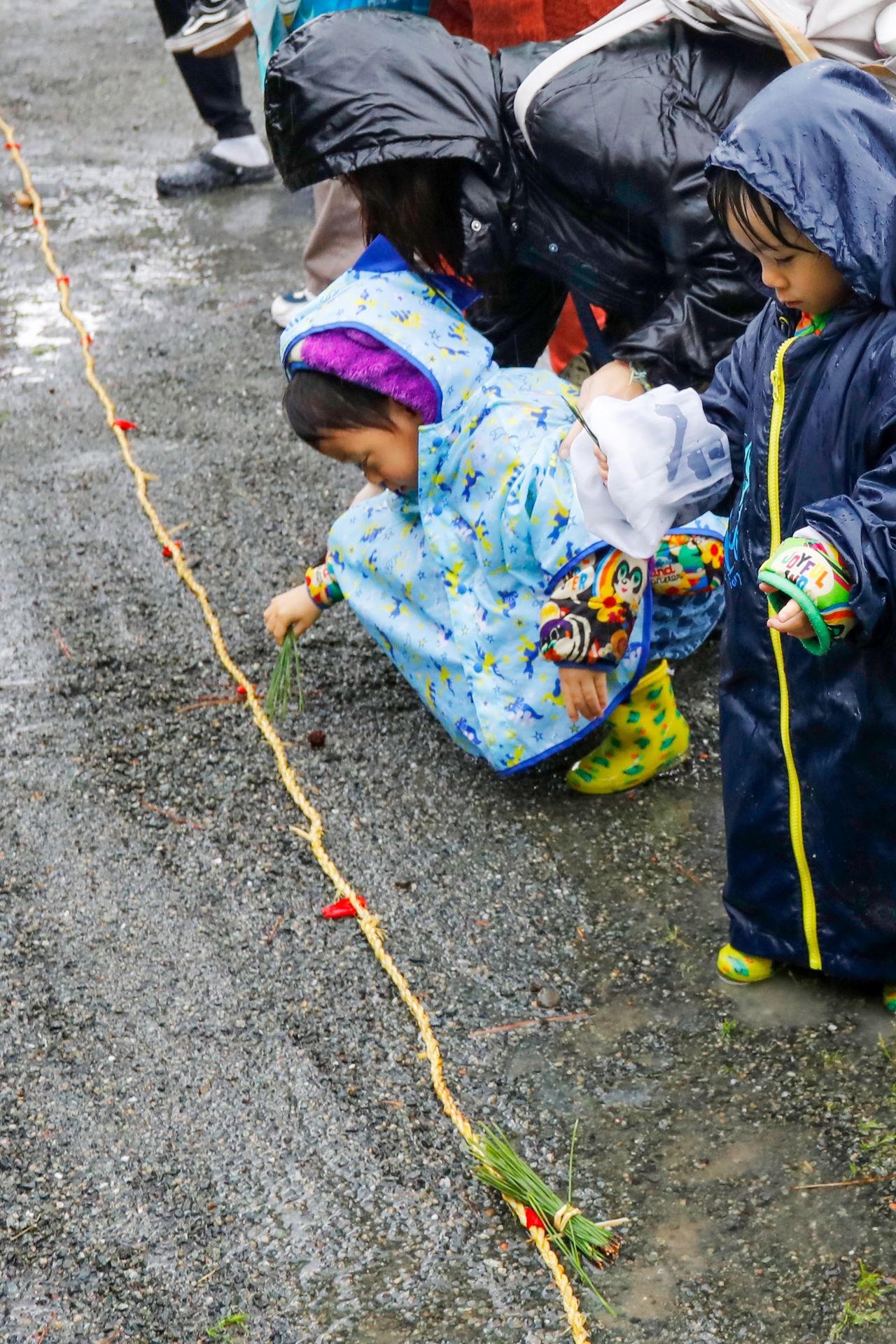
Children plant pine needles bunched to imitate rice seedlings in a mock rice-planting ceremony. (© Haga Library)
Afterwards, families of the children who participated in the festival welcome neighbors for a celebratory meal, further strengthening community ties.
Stone figures of tanokami stand here and there in the district. Inhabitants believe that offering prayers to the deity will ensure protection for the growing rice crop. Although the actors’ dialect may be hard to understand, this kind of simple entertainment brings everyone closer to the original spirit of village festivities.
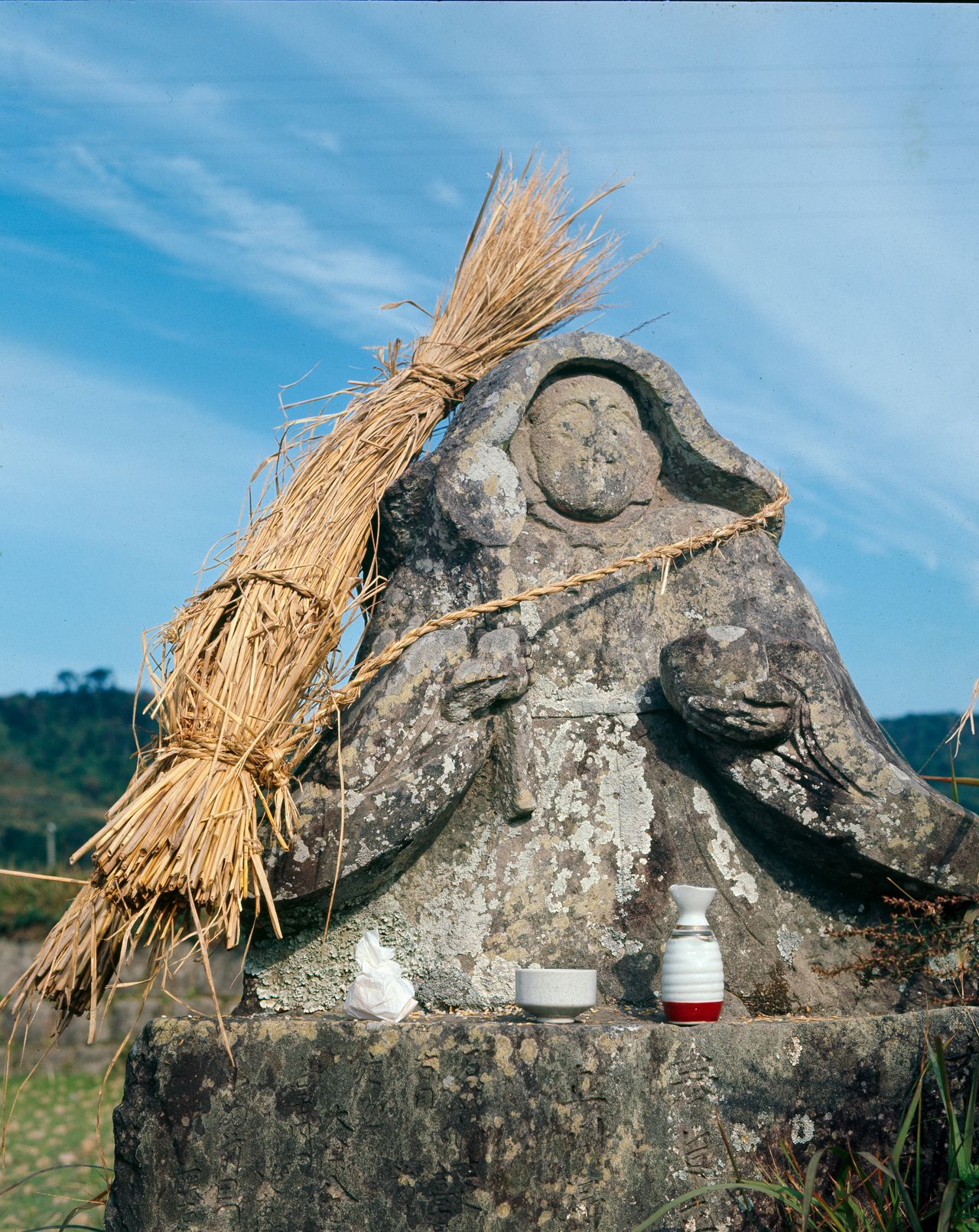
The tanokami watches over the growth of rice and children. (© Haga Library)
Mibu no Hana Taue
(First Sunday of June, Kita-Hiroshima, Hiroshima Prefecture)
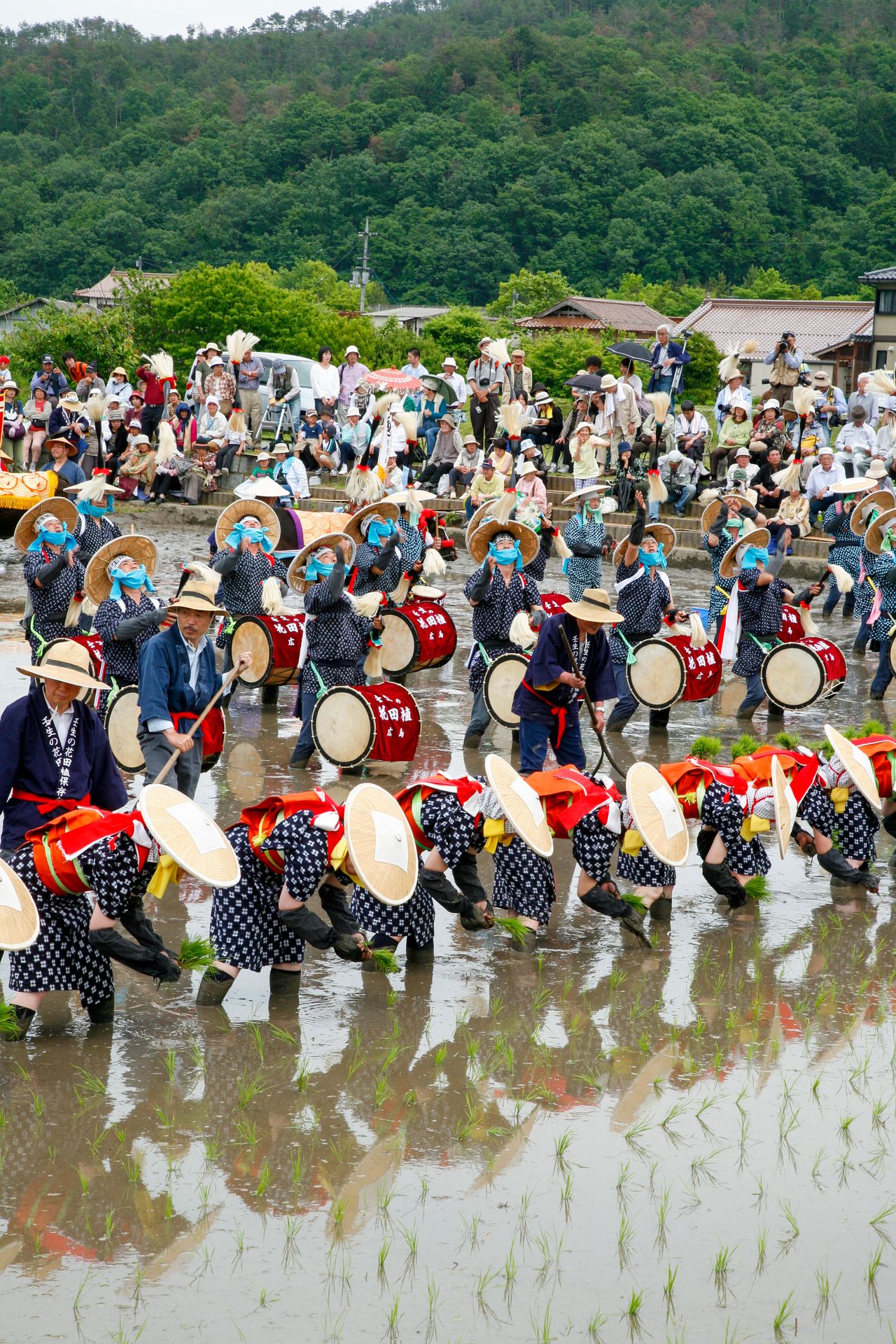
In service to the tanokami, young women plant rice seedlings. (© Haga Library)
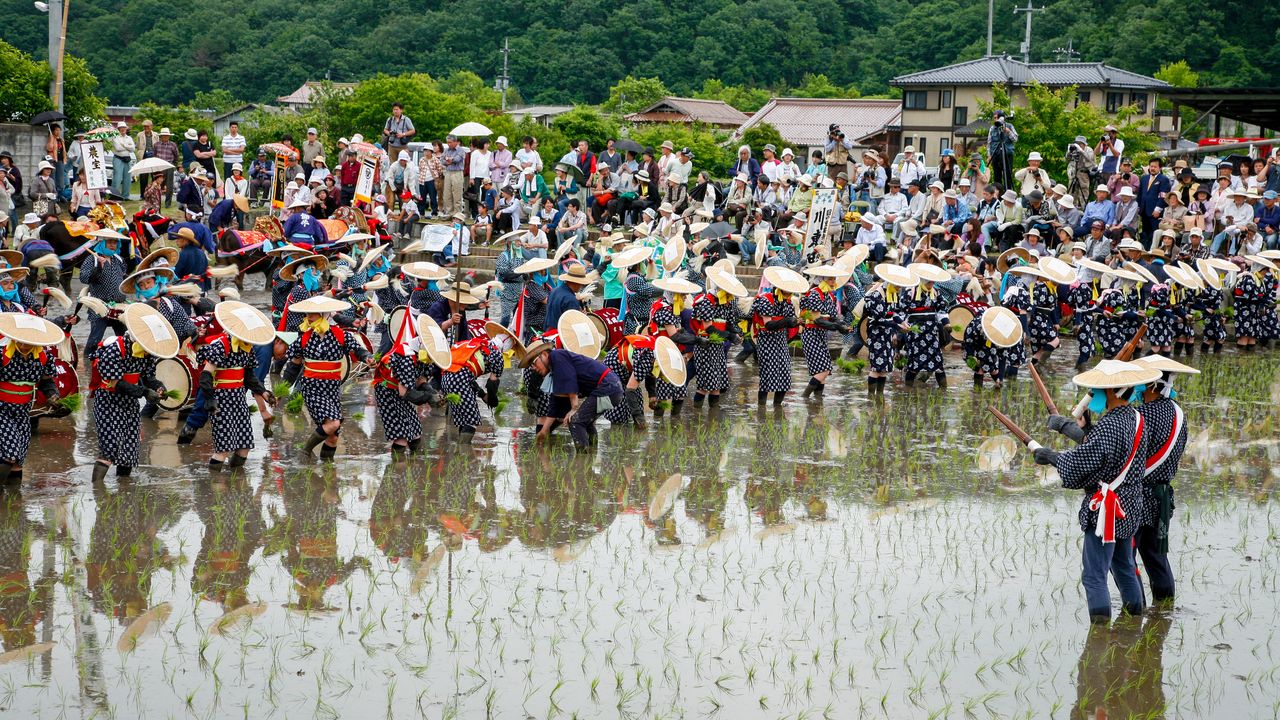
As spring turns into early summer and rice paddies are flooded in preparation for the seedlings, rice-planting festivals take place throughout the country. One of the largest is the Hana Taue festival in Mibu, a district in the prefecture’s northwestern town of Kita-Hiroshima, which attracts close to 100 people to take part in the planting ceremony.
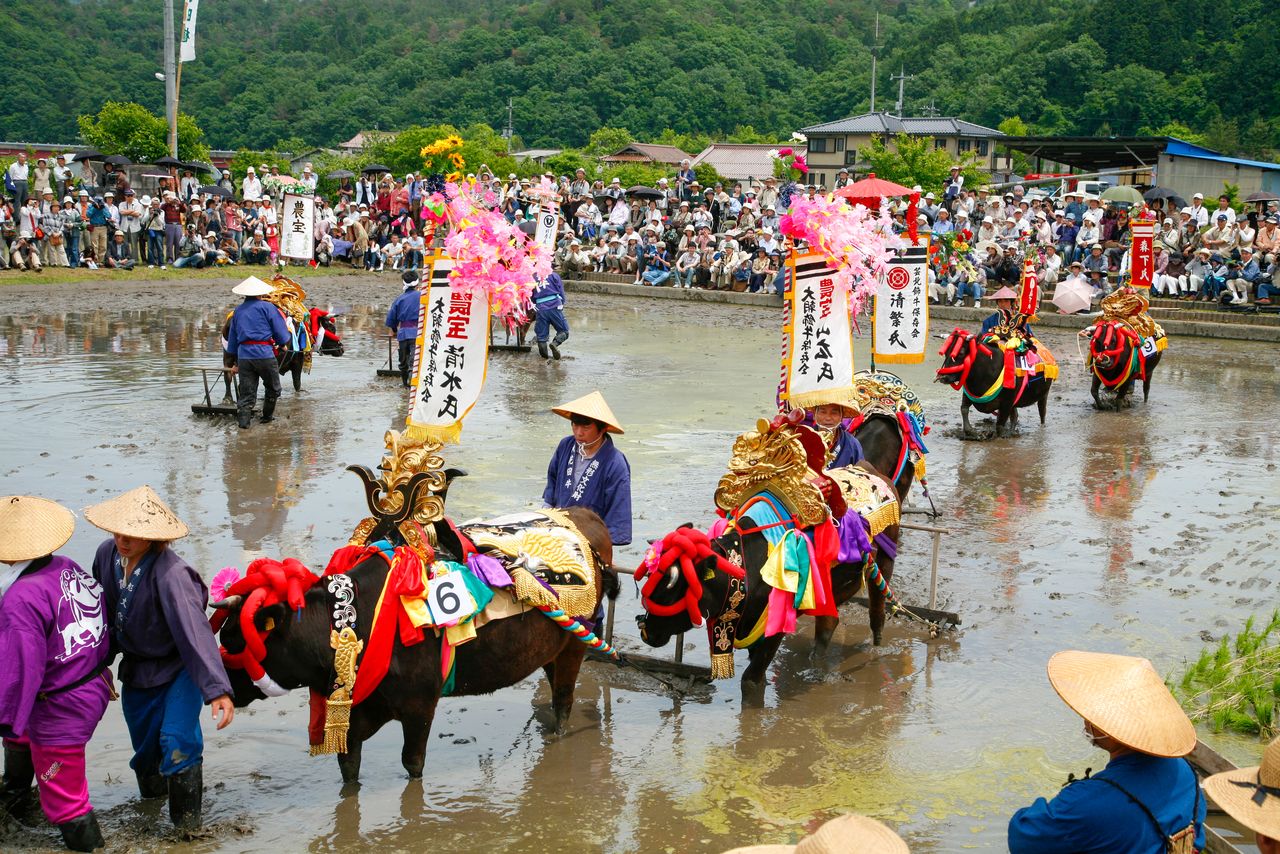
A ceremonial reenactment using oxen to scrape and level a rice paddy. (© Haga Library)
On festival morning, a procession of oxen in livery embroidered in gold and silver and bearing banners parades through the town. Reaching the rice paddy by noon, they get to work scraping it to prepare for planting. After the oxen have gone, a band of musicians with drums, flutes, and gongs plays music. The festival atmosphere enlivens this usually quiet farming area.
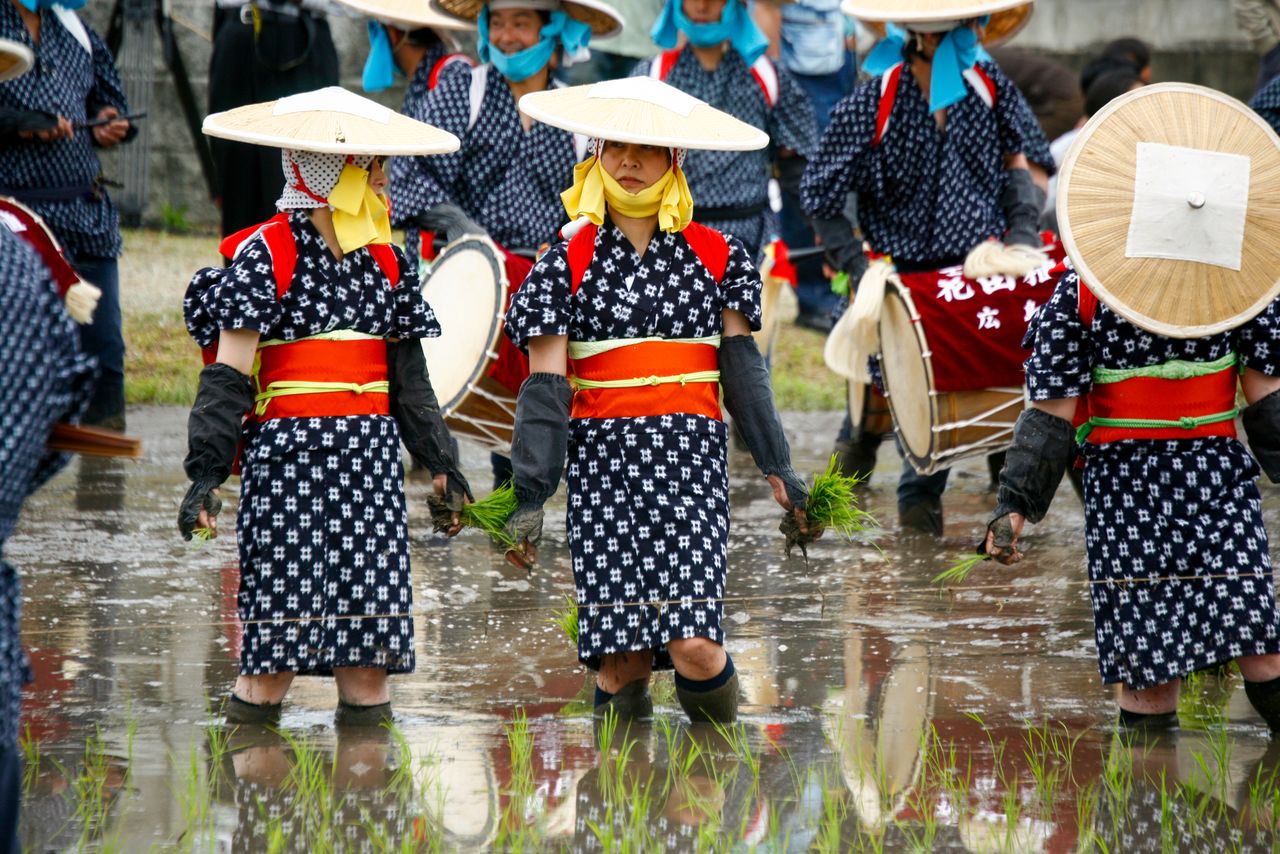
Female rice planters wear sedge hats and kasuri (ikat, a form of tie-dye) kimono. (© Haga Library)
Clad in traditional costumes, young unmarried women called saotome line up in a row and rhythmically plant rice seedlings one by one, in time with the song they sing to welcome the tanokami.
Mibu’s rice-planting song is said to have originated during medieval times, around the Muromachi period (1333–1568). Planting in time with the song’s rhythm supposedly makes the back-breaking work a bit less burdensome. The song’s verses run into the hundreds, and no two verses are repeated during the long days of planting lasting from morning until nightfall.
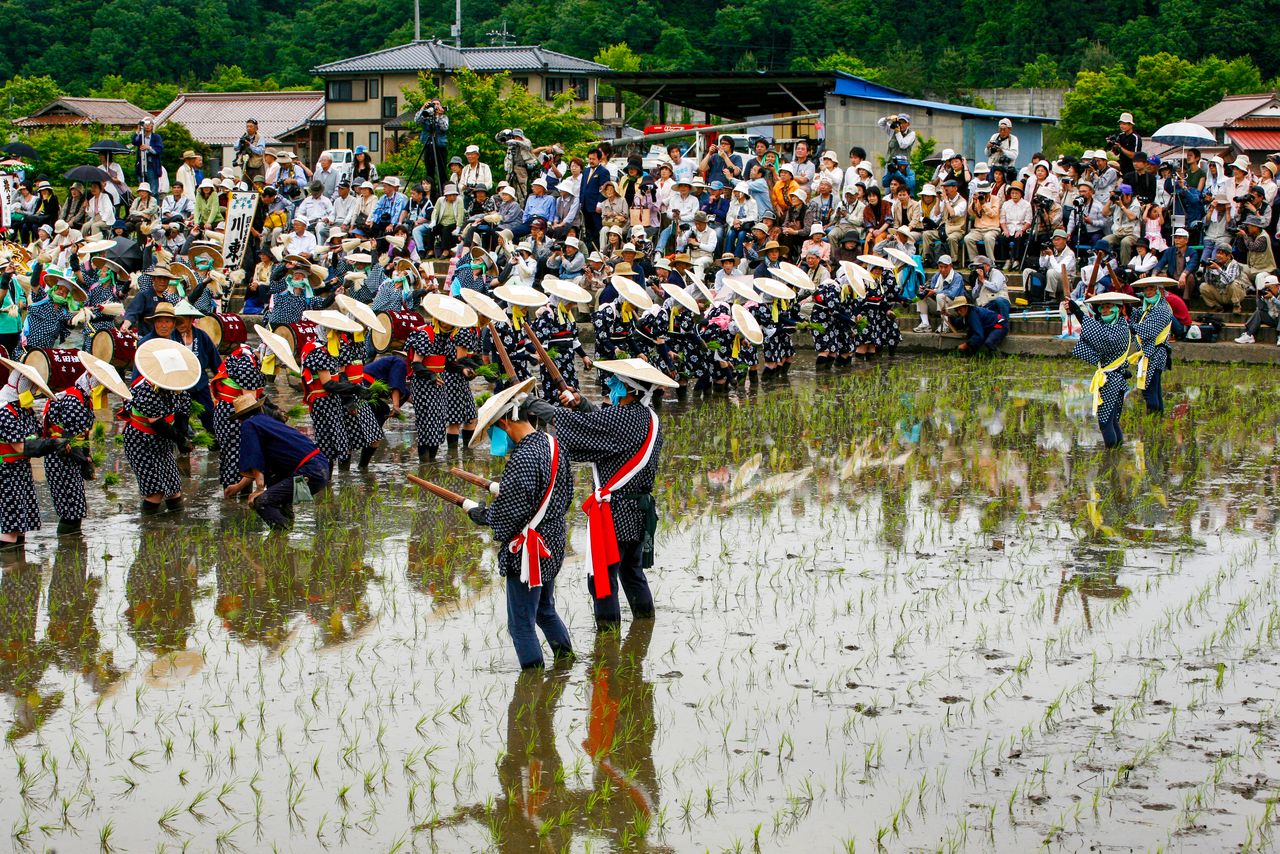
The sanbai-san chorus leaders lead the rice-planting singing. (© Haga Library)
Standing in front of the singers and the planters, sanbai-san embodying the tanokami take charge. Playing the sasara, a type of bamboo instrument, they lead everyone in the rice-planting songs.
During the Edo period (1603–1868), this rice planting ritual involved even more people and took much longer. Although it died out for a time, it was revived in the postwar period, evolving into today’s colorful spectacle, registered by UNESCO as intangible cultural heritage in 2011. This annual early summer event energizing the district harks back to the communal task of rice growing that at one time formed the basis for Japan’s social structure.
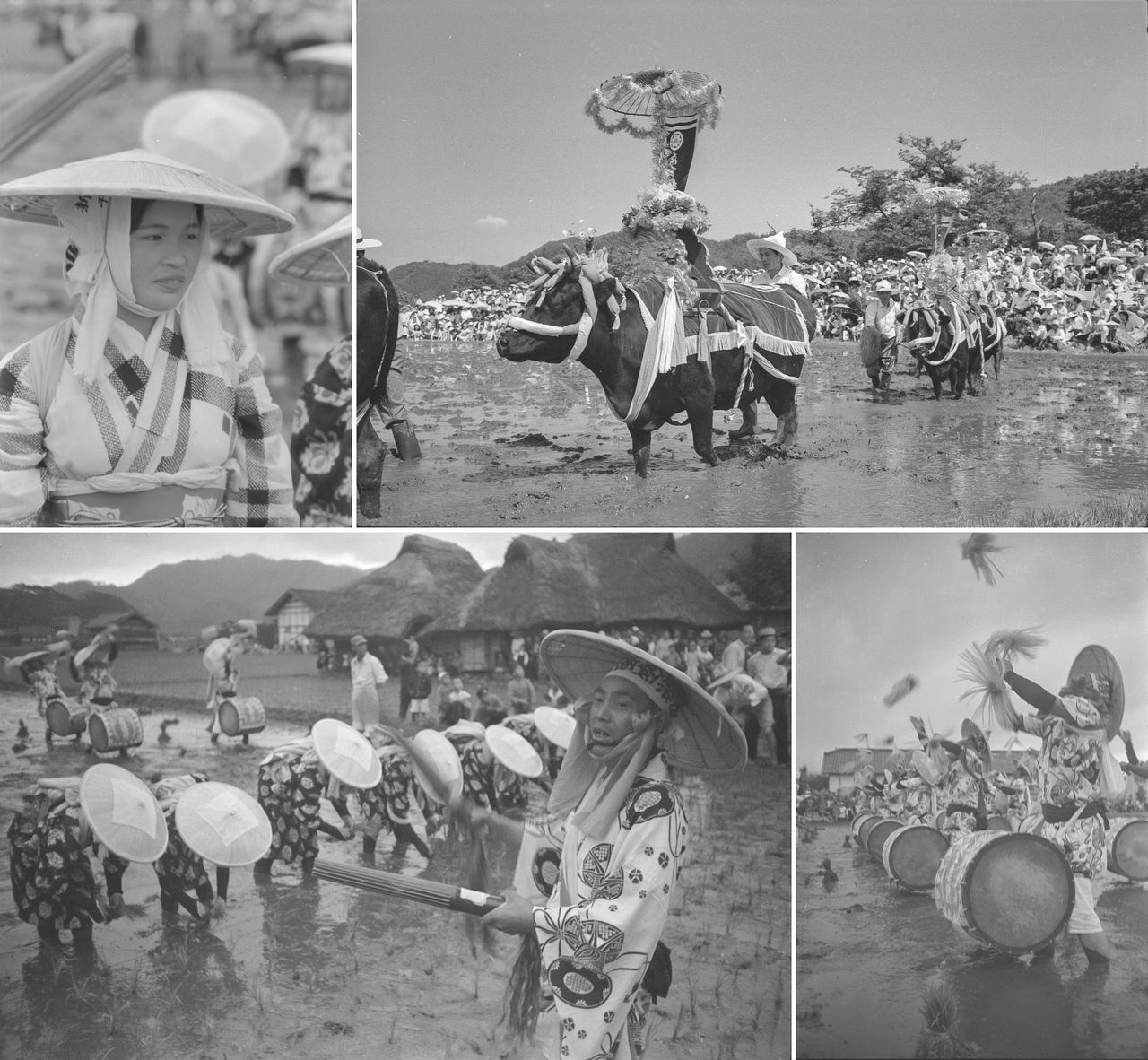
The festival in 1954, photographed by folklore photographer Haga Hideo. At the time, over 200 people participated in the planting. (© Haga Library)
(Originally published in Japanese. Dates given are those on which the festivals are usually held. Banner photo © Haga Library.)