A Basic Guide to Japanese Etiquette
Chopsticks Manners and Traditional Japanese Beliefs
Guideto Japan
Lifestyle Food and Drink Culture Education- English
- 日本語
- 简体字
- 繁體字
- Français
- Español
- العربية
- Русский
Just Chopsticks
Where everyday etiquette is concerned, table manners may be one of the most important elements that come to mind. Traditional Japanese food is usually eaten with chopsticks (hashi), and children learn how to hold them from an early age. But government statistics have found that approximately half of all Japanese are not using chopsticks properly; the technique is not easy to master.
How to Hold Hashi
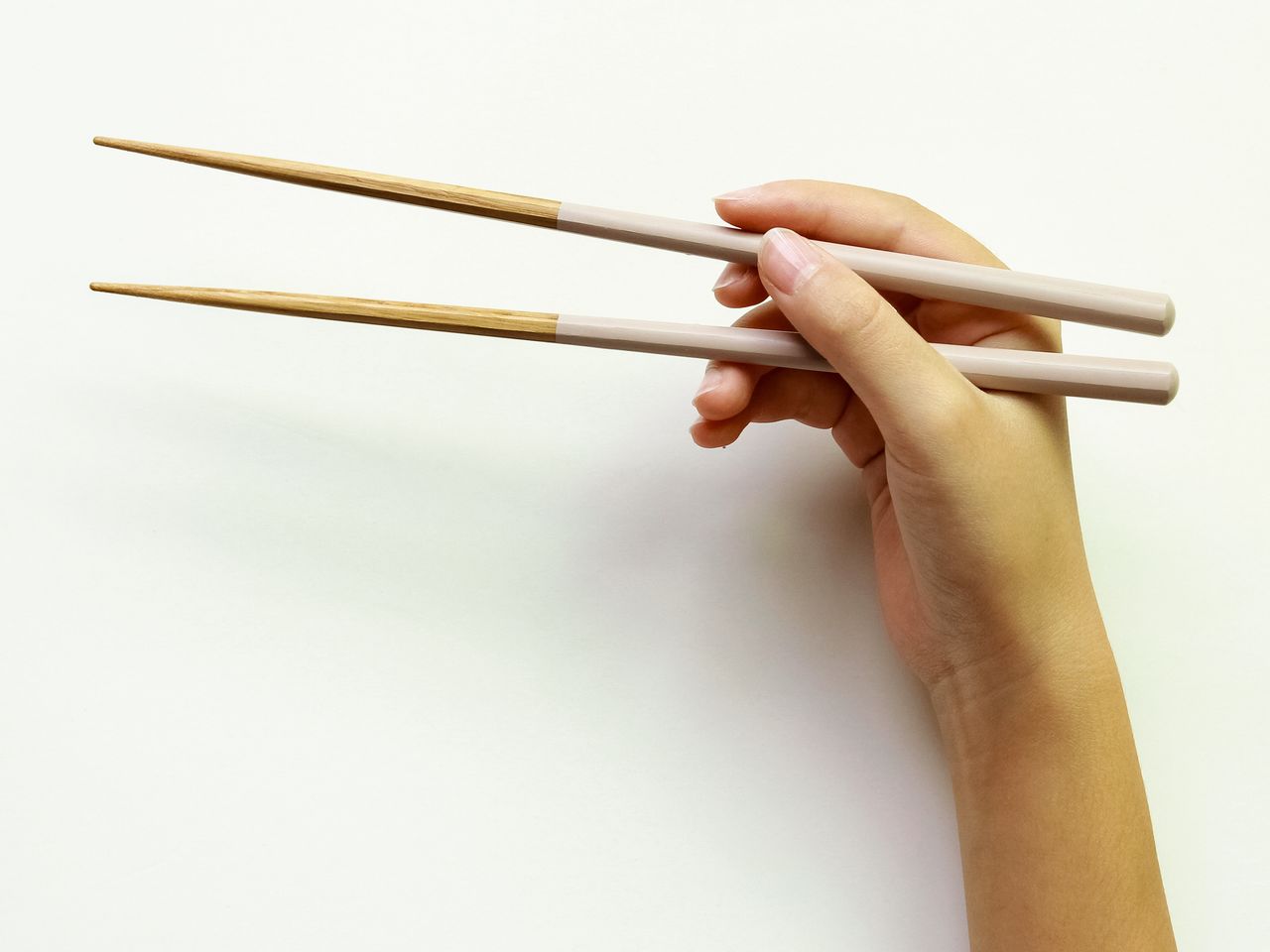
Hold the top of the pair as you would a pencil, between thumb and forefinger, and lightly rest the bottom one between the base of your thumb and against your ring finger. (© Pixta)
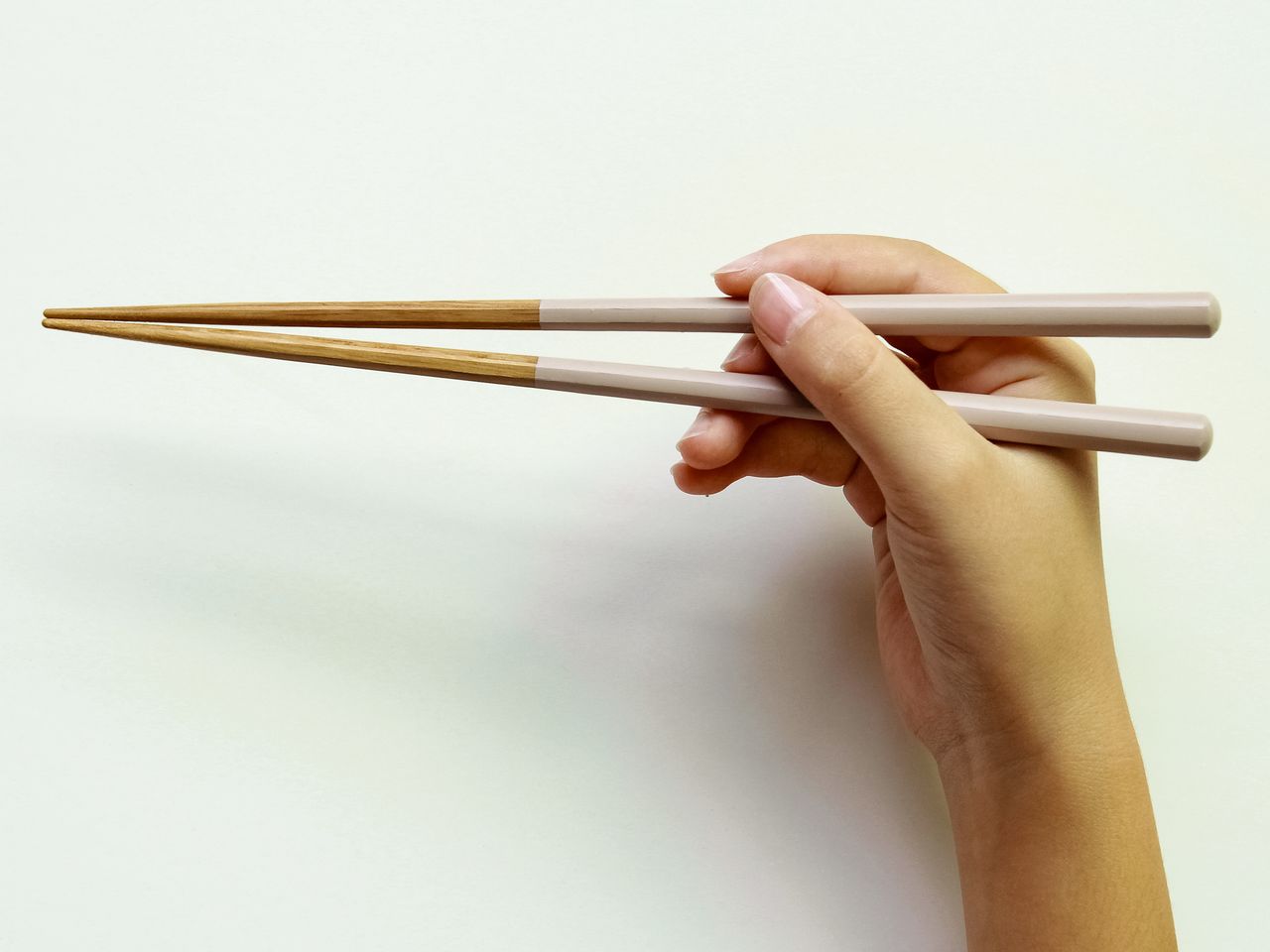
Next, bring the tips of the chopsticks together so that they meet neatly. (© Pixta)
* Take care to hold the chopsticks loosely with the fingertips, not by making a fist. It’s also important to keep the chopsticks apart at their back end, without letting them cross over each other as you grasp your food.
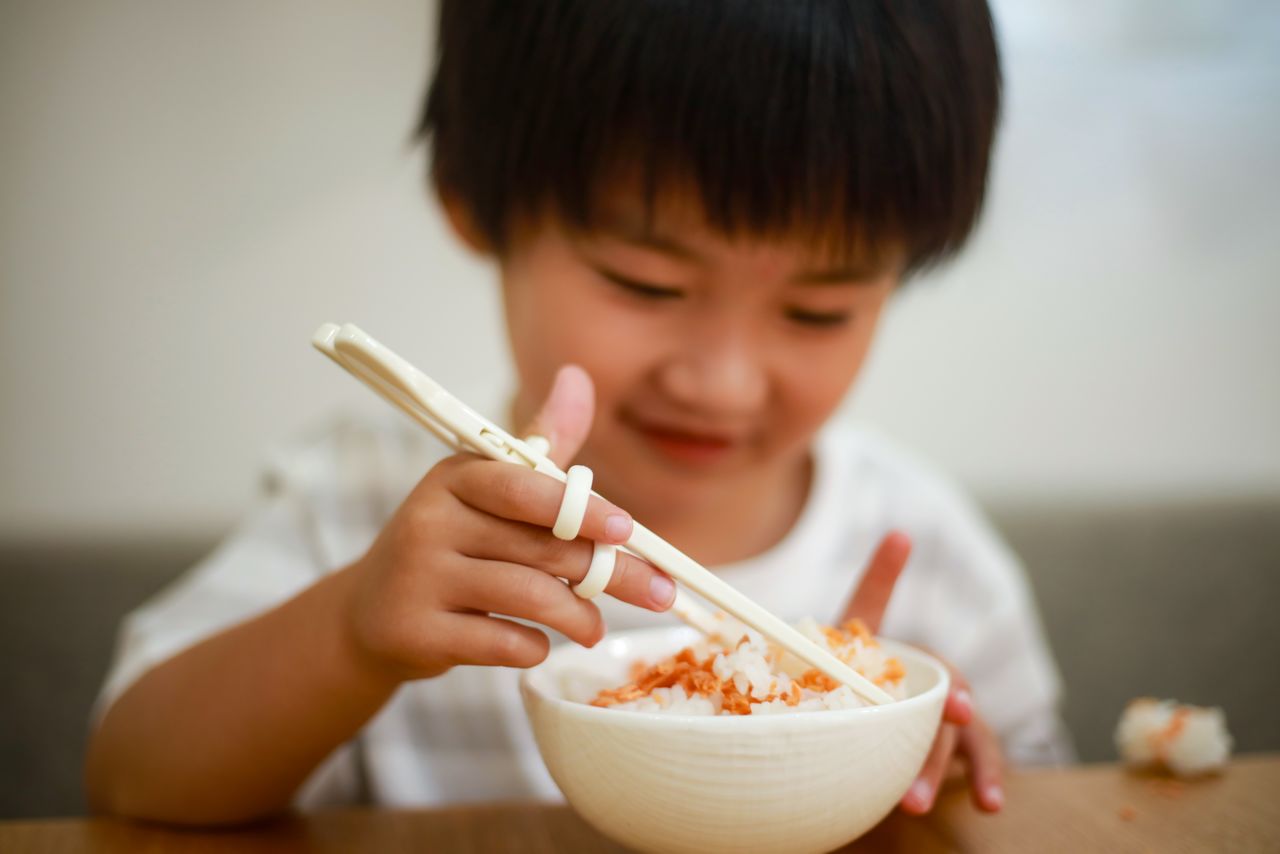
Children often learn how to use hashi properly with training chopsticks. (© Pixta)
Chopsticks originated in China and were transmitted to Japan around the third century. Initially, they were V-shaped, like tongs, and were used to arrange the food served to the deities. Around the beginning of the seventh century, Japanese emissaries to China brought back the practice of eating with paired chopsticks, which began to be used as an eating utensil at the imperial court during the Heian period (794–1185).
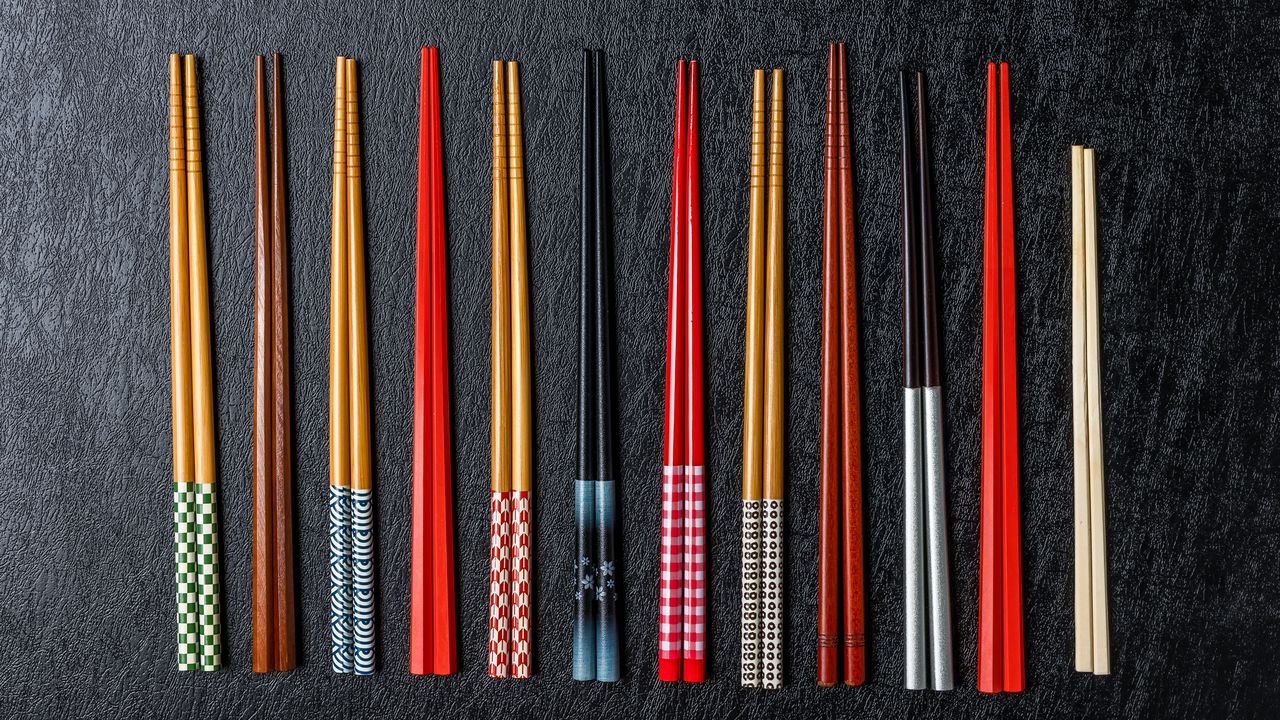
In China, food was usually served in large platters from which everyone helped themselves; chopsticks were long in order to facilitate this. In Japan, however, food was generally portioned out and served in small dishes on individual trays; shorter chopsticks worked better for that. Chopsticks were generally made of wood, with tapered ends, to facilitate eating fish, which was the main dish. As they allow the diner to grasp, break up, or stir food, these multifunction chopsticks are the only utensil necessary for eating washoku.
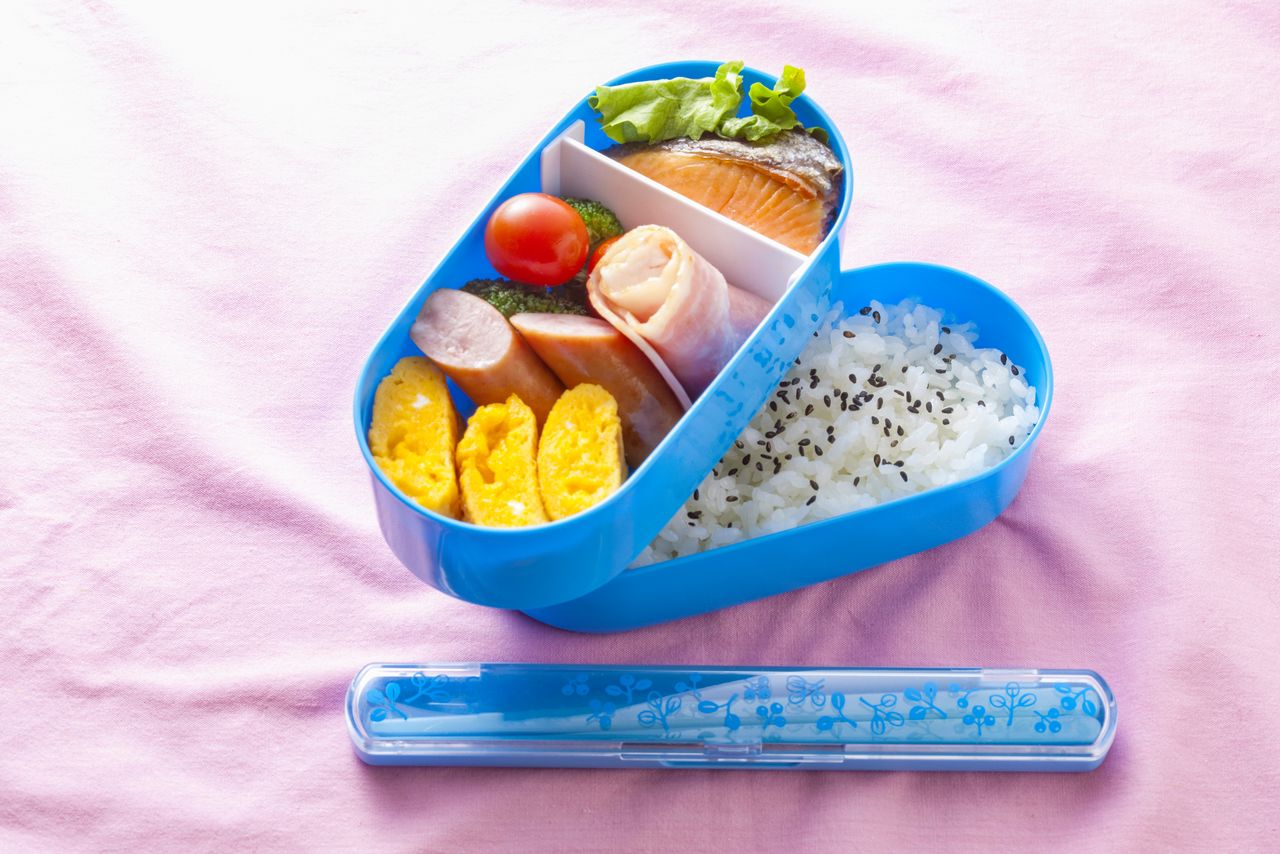
Box lunch containers usually come with a matching set of chopsticks. Everything in the meal, from rice to the main item, can be eaten with chopsticks. (© Pixta)
Lacquered chopsticks began to appear in the early Edo period (1603–1868). Today, many are coated with synthetic resin paint or are made of plastic, to make them more durable and sanitary. In the modern era, disposable wooden chopsticks are commonly used, mainly in restaurants. They are also available free of charge at convenience stores and other outlets selling takeaway meals.
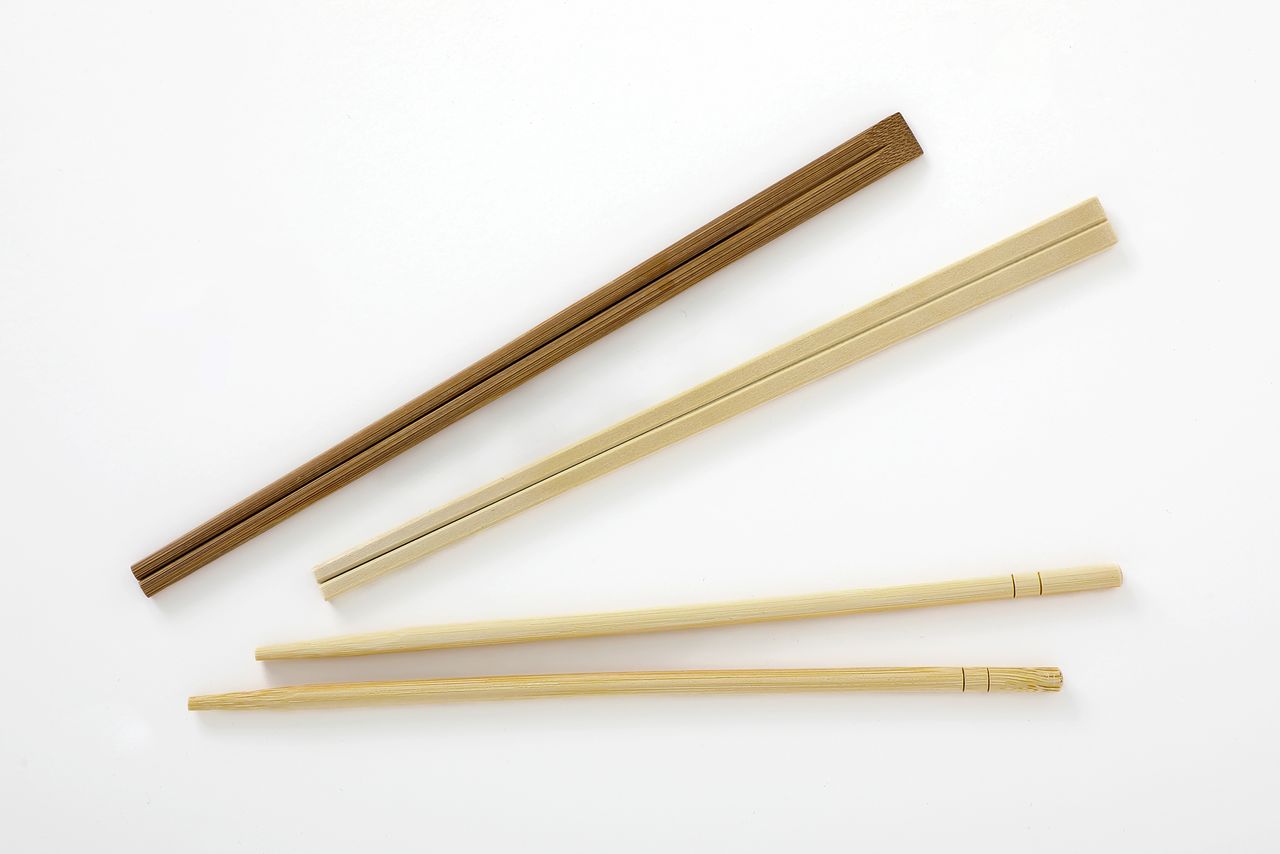
Disposable chopsticks are mass-produced using culled timber or offcuts. (© Pixta)
Used as Ritual Implements
Japan’s chopstick culture originated in ceremonies for the deities, which give them a ceremonial aspect. This is most evident in the use of yanagibashi, chopsticks made of willow wood, which are used at New Year’s and other celebratory occasions.
Yanagibashi are distinctive in that they are tapered at both ends, supposedly because spirits are present in them and they are a means of symbolically sharing food with the deities. For this reason, it is believed that reversing the chopsticks, using the end that has not been brought to the mouth, to offer New Year’s osechi ryōri foods or to serve from a large platter, interferes with “feeding” the deities. Instead, toribashi serving chopsticks should be used.
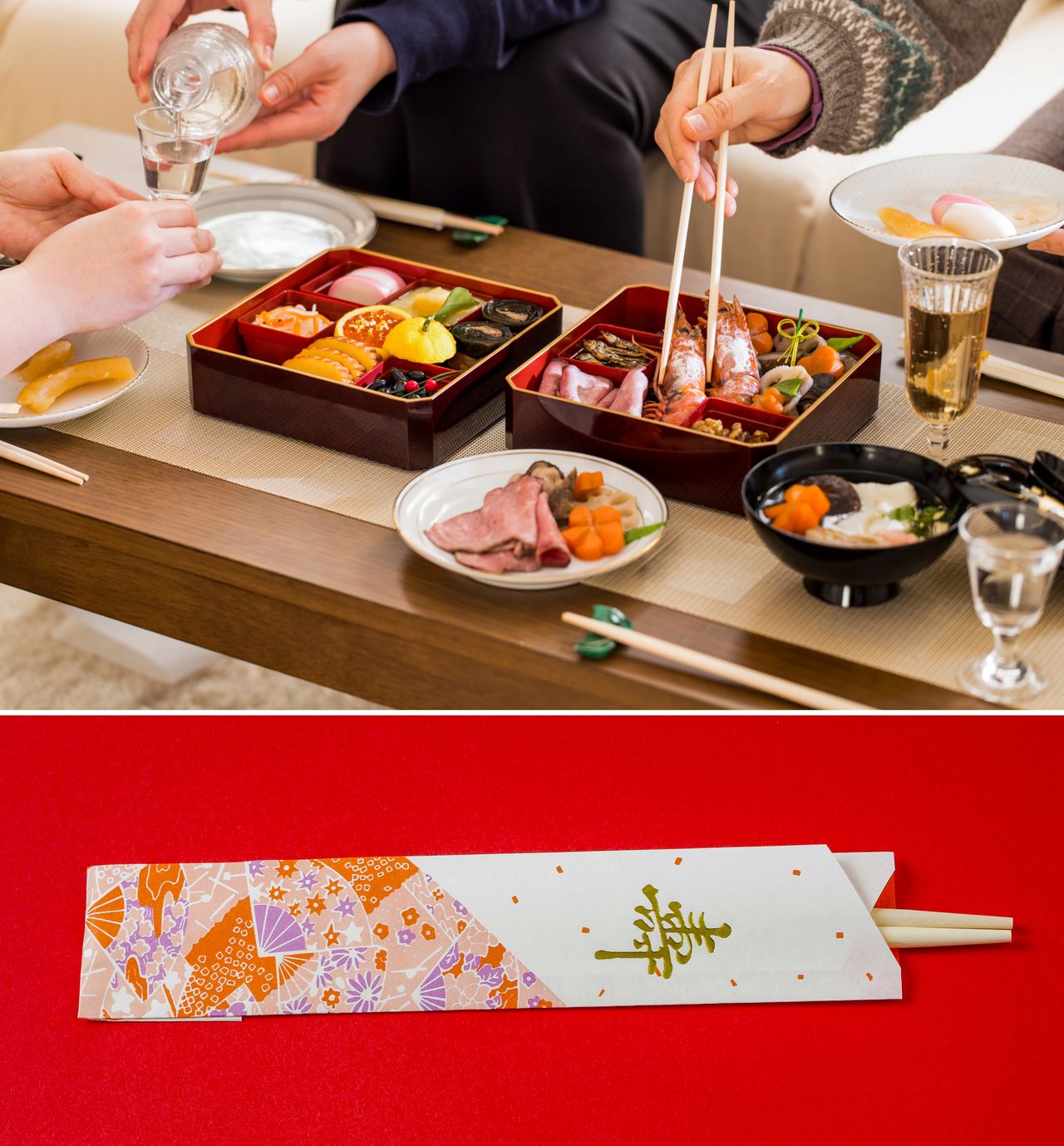
Yanagibashi are made of plain wood, which is considered free from impurities. These chopsticks are tapered at both ends. (© Pixta)
There is an element of animism connected to chopsticks: a person’s soul is said to reside in them. That is why in many families, each person has his or her own set. This thinking also survives in the practice of serving meals on individual trays, which is rooted more in the concept of ritual purity, as seen in the practice of offering new, unsullied banknotes on felicitous occasions, than sanitary reasons.
People are not bothered by the idea that, in restaurants, other patrons before them have used the cutlery provided, since they understand intellectually that washing will make it clean. But there is a psychological barrier to using someone else’s chopsticks. When guests visit a home for a meal, it is more considerate of the host to offer them disposable chopsticks.
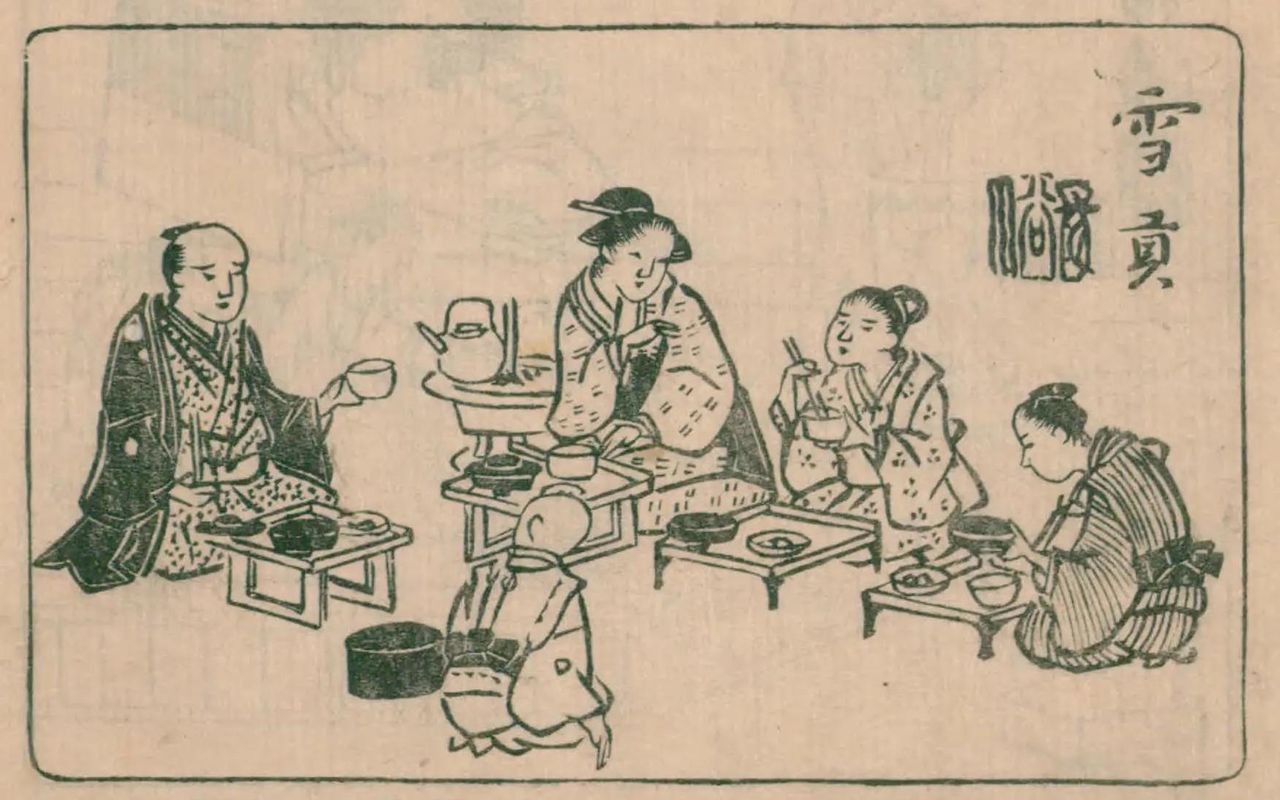
Serving food on individual trays was the norm until modern times, but even now, in some families everyone has their own chopsticks and rice bowl. Higoto no kokoroe (Everyday Knowledge), 1833. (Courtesy the National Diet Library)
Essential Item
There is a saying among Japanese that “life begins and ends with chopsticks.” Not only are they used for eating every day, they also appear at important milestones. For example, at the beginning of life they are used to convey food to the mouth of an infant, and at the end, they are used to gather the cremated remains of a loved one.
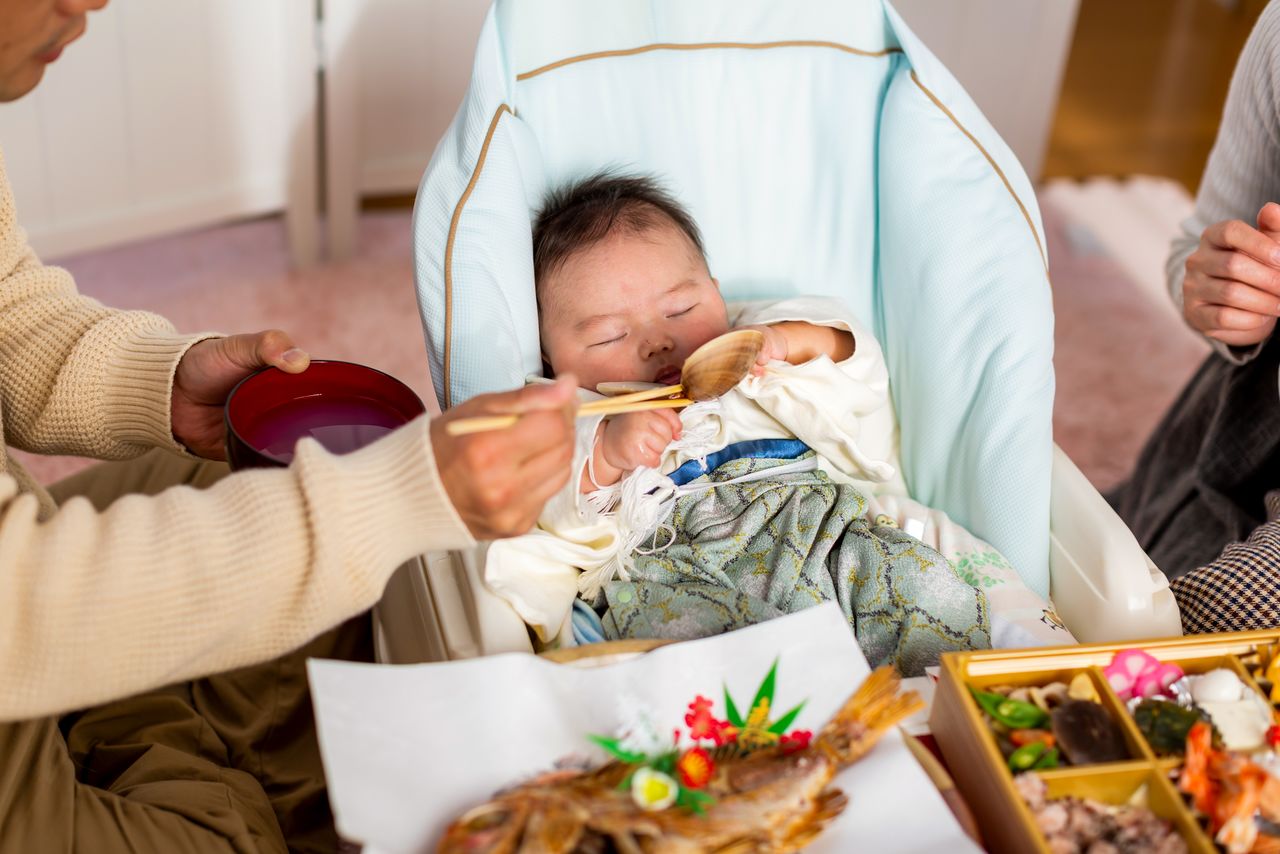
Okuizome celebrates the one-hundredth day after a baby’s birth. Felicitous foods are symbolically offered to the child, to ensure that it will never go hungry. (© Pixta)
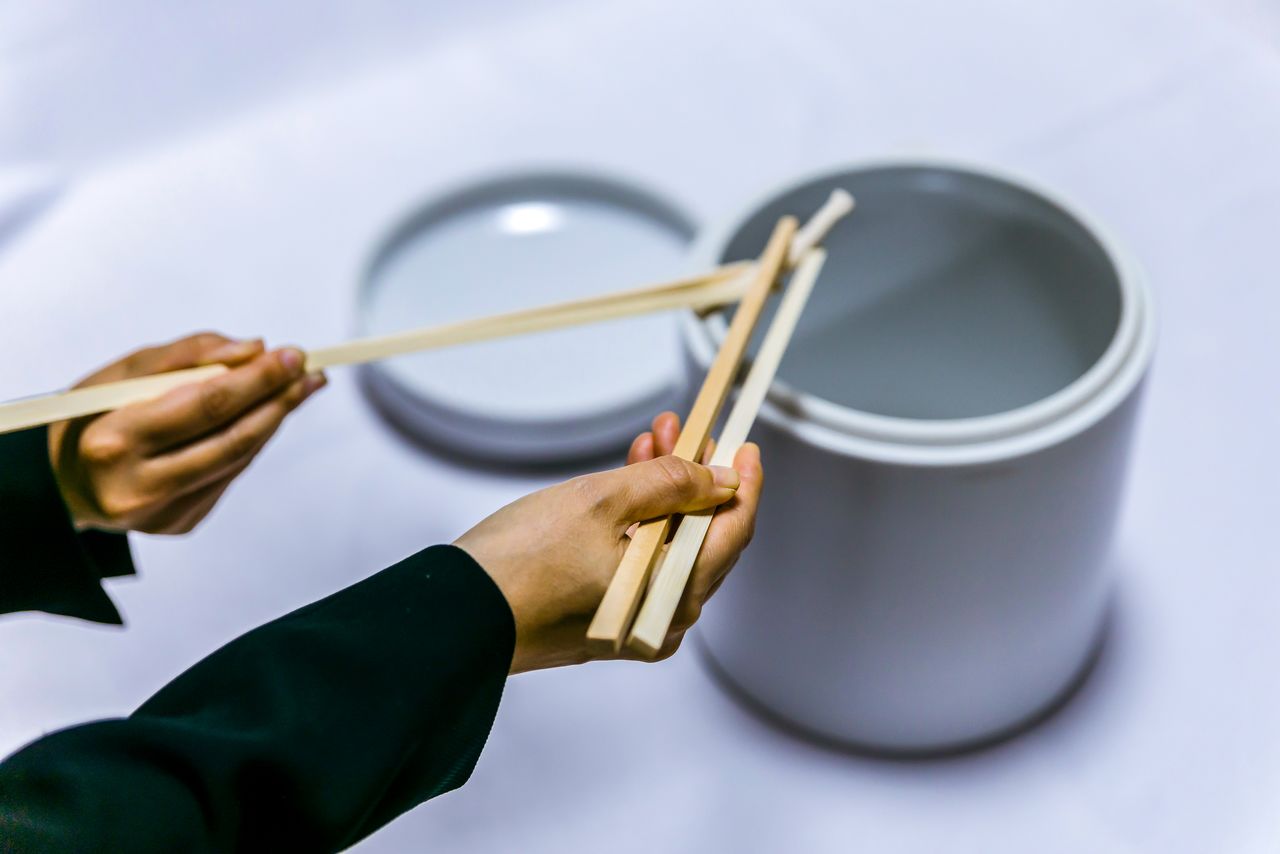
Okotsuage: After the deceased is cremated, family members and other attendees take turns, in pairs, to place the bones in an urn using long chopsticks. (© Pixta)
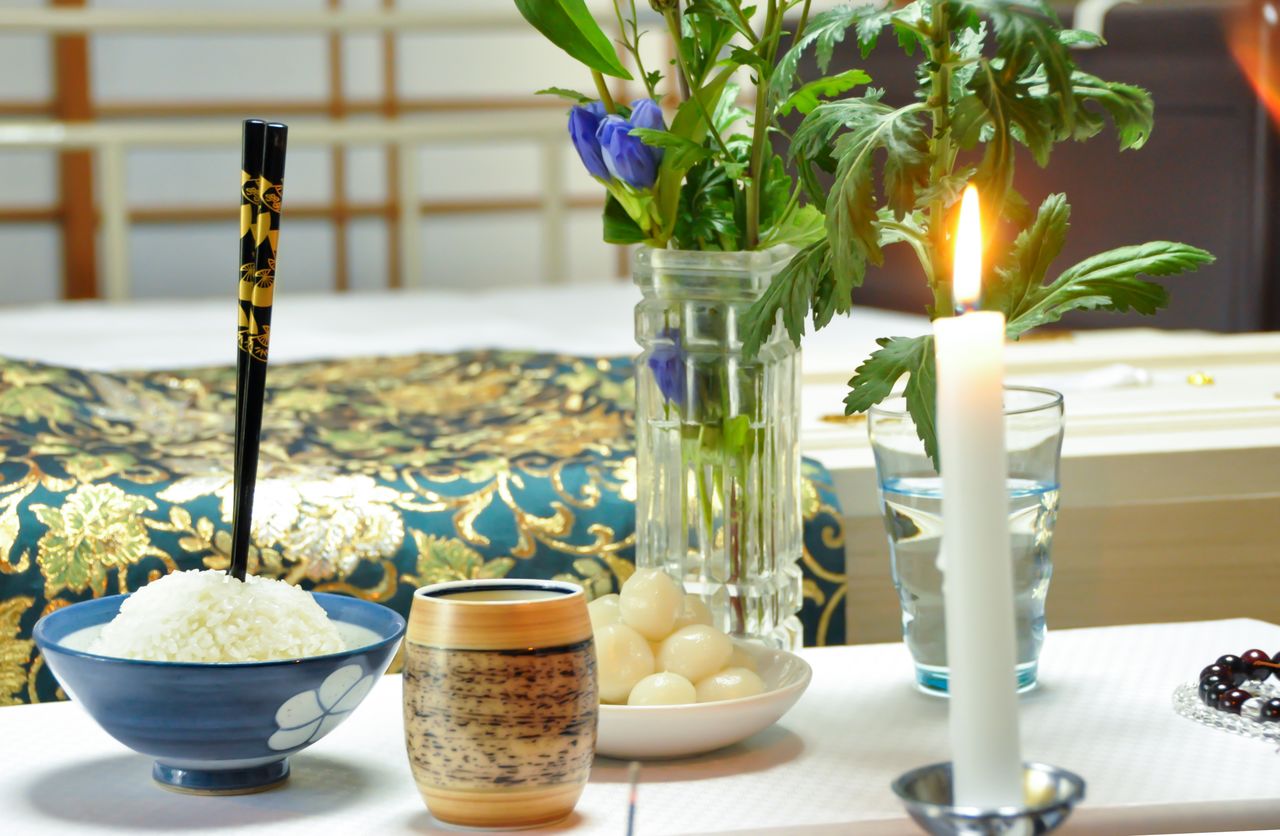
An offering to the deceased, with chopsticks upright in a bowl of rice. (© Pixta)
After cremation, pairs of mourners use chopsticks together to transfer the deceased person’s bones to the urn. Because of this association with funerals, it is thus simply not done for one person to pass food to another’s chopsticks. Similarly, chopsticks should never be stuck upright in a bowl of rice; this is done only for an offering made to the deceased.
There are dozens of taboos relating to the use of chopsticks. No other household article comes with so many rules, a sign of the importance of chopsticks in everyday culture.
How Not to Use Chopsticks
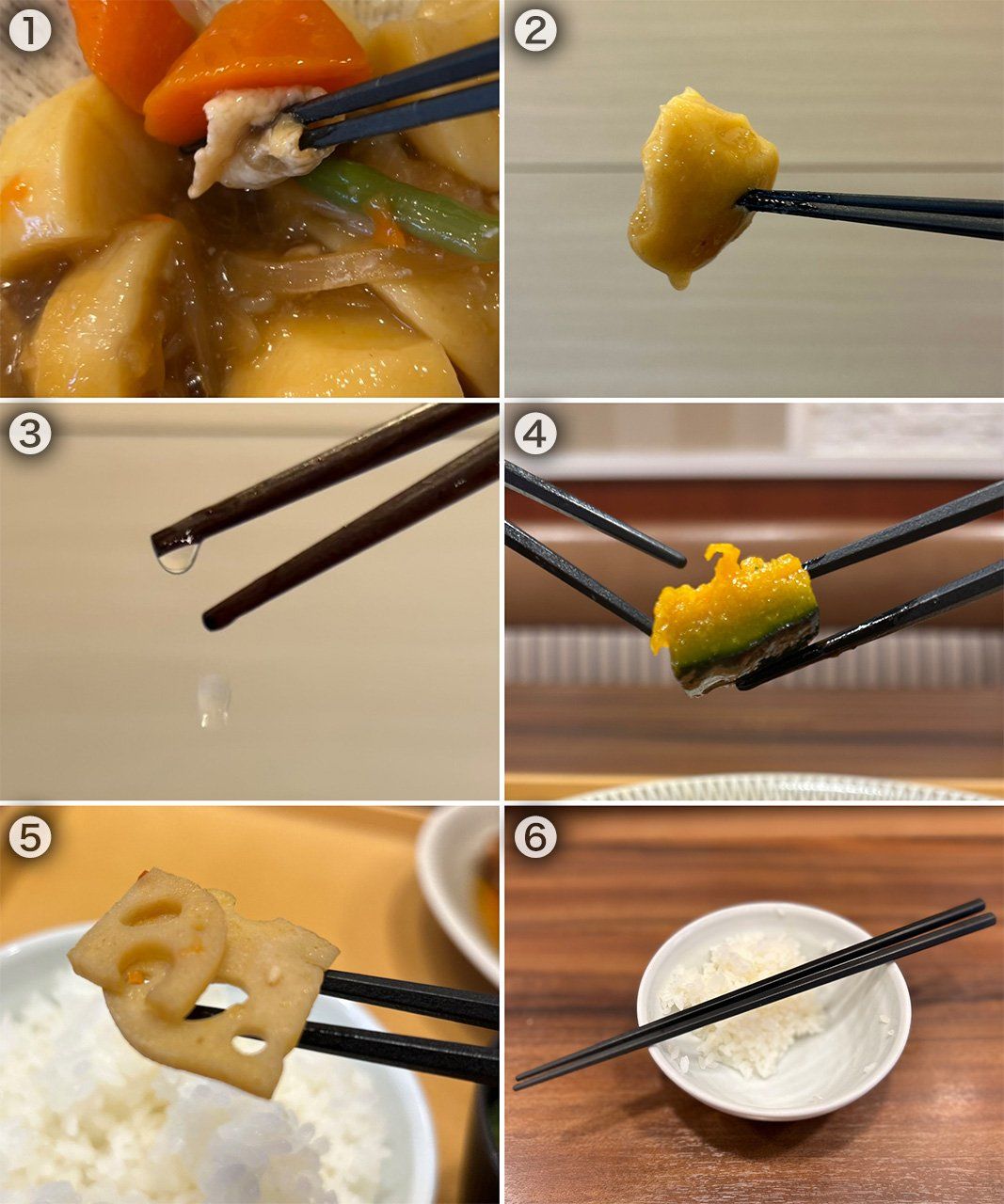
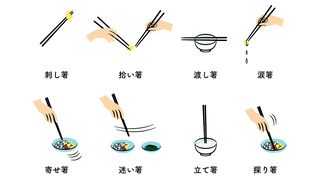
Avoid these common missteps when using chopsticks. (© Nippon.com)
- Do not use chopsticks to poke through the contents of a dish, as if searching for a particular ingredient.
- Do not spear food with chopsticks.
- Avoid dripping liquid from the tips of chopsticks.
- Do not pass food directly to another person with your chopsticks.
- Avoid using chopsticks to scoop food up.
- Avoid resting your chopsticks across a plate or bowl.
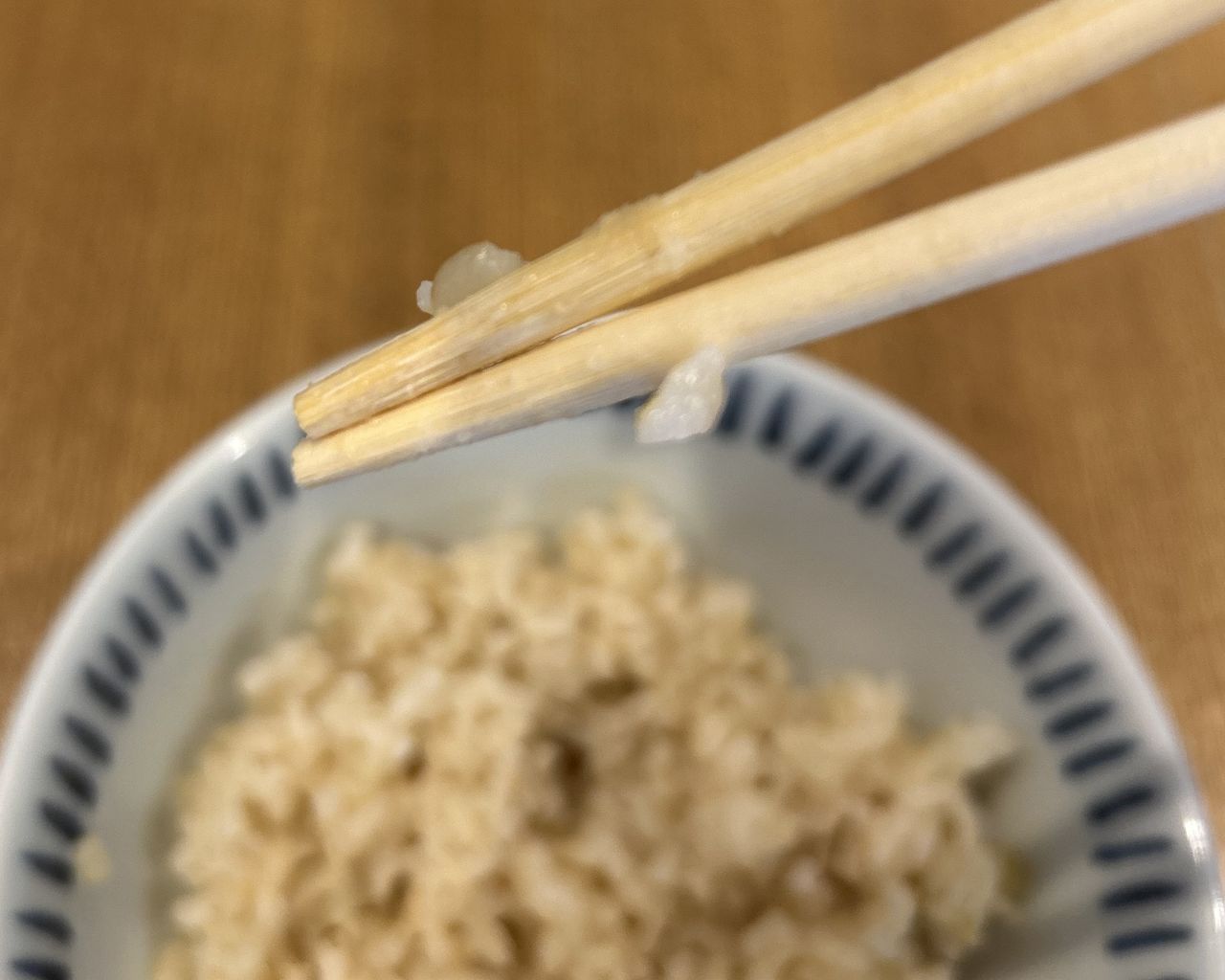
Grains of rice stuck to a chopstick are unsightly. If that happens, don’t try removing them with your lips. Simply reload your chopsticks with rice and bring the full portion to your mouth. (© Nippon.com)
In restaurants, patrons are often seen resting their chopsticks on a plate or bowl. This is not a major faux-pas, but one of the chopsticks might fall onto the table or the floor. The method of taking up and laying down chopsticks, described below, helps avoid this pitfall.
How to Take Chopsticks into Your Hand
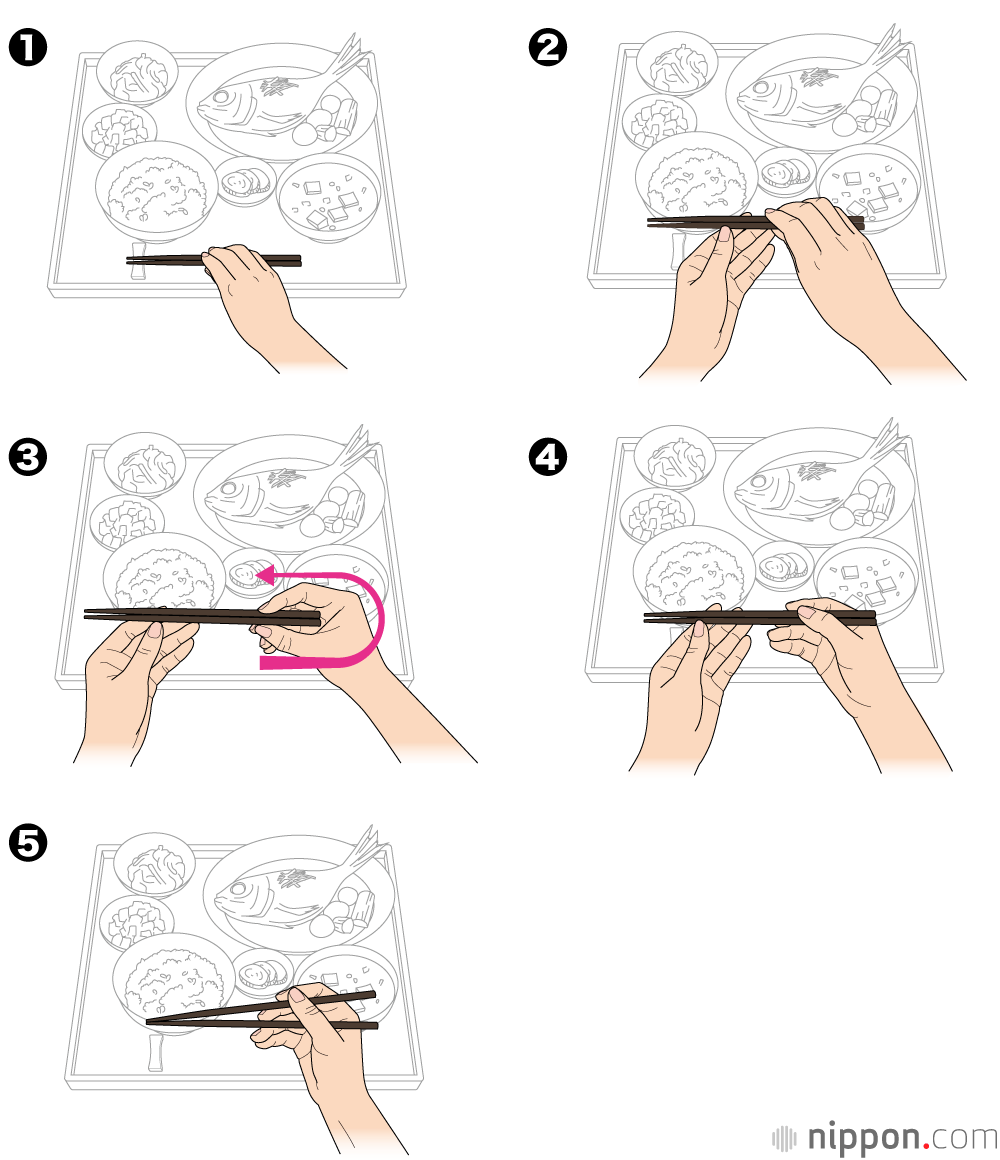
Illustration by Satō Tadashi
- Grasp the chopsticks by the middle and hold them up.
- Support them from below with the left hand.
- Move the right hand to the top of the chopsticks and then underneath.
- Transfer the chopsticks from the left hand to the right.
- Remove the left hand.
* Reverse the above actions when laying the chopsticks down.
In Japan, chopsticks are not simply for feeding oneself. They have a spiritual element, expressed by saying “itadakimasu” (I partake), “gochisōsama” (thank you for the meal), and putting one’s hands together in a gesture of prayer before eating. These practices are expressions of gratitude for the bounty of nature and toward the deities who reside there, for the life of the ingredients, and for the people who grow and prepare the food that we eat. Chopstick etiquette exists to make eating pleasurable and ensure that food is treated with respect.
(Originally published in Japanese. Supervised by Shibazaki Naoto, associate professor at Gifu University, who specializes in manners education from a psychological perspective, works to guide etiquette educators, and is an instructor in Ogasawara-ryū etiquette. Illustration by Satō Tadashi. Banner photo © Pixta.)