A Basic Guide to Japanese Etiquette
Ichijū Sansai: The Standard Elements of a Typical Japanese Meal
Guideto Japan
Lifestyle Food and Drink Culture Education- English
- 日本語
- 简体字
- 繁體字
- Français
- Español
- العربية
- Русский
Logical Food Placement Rules
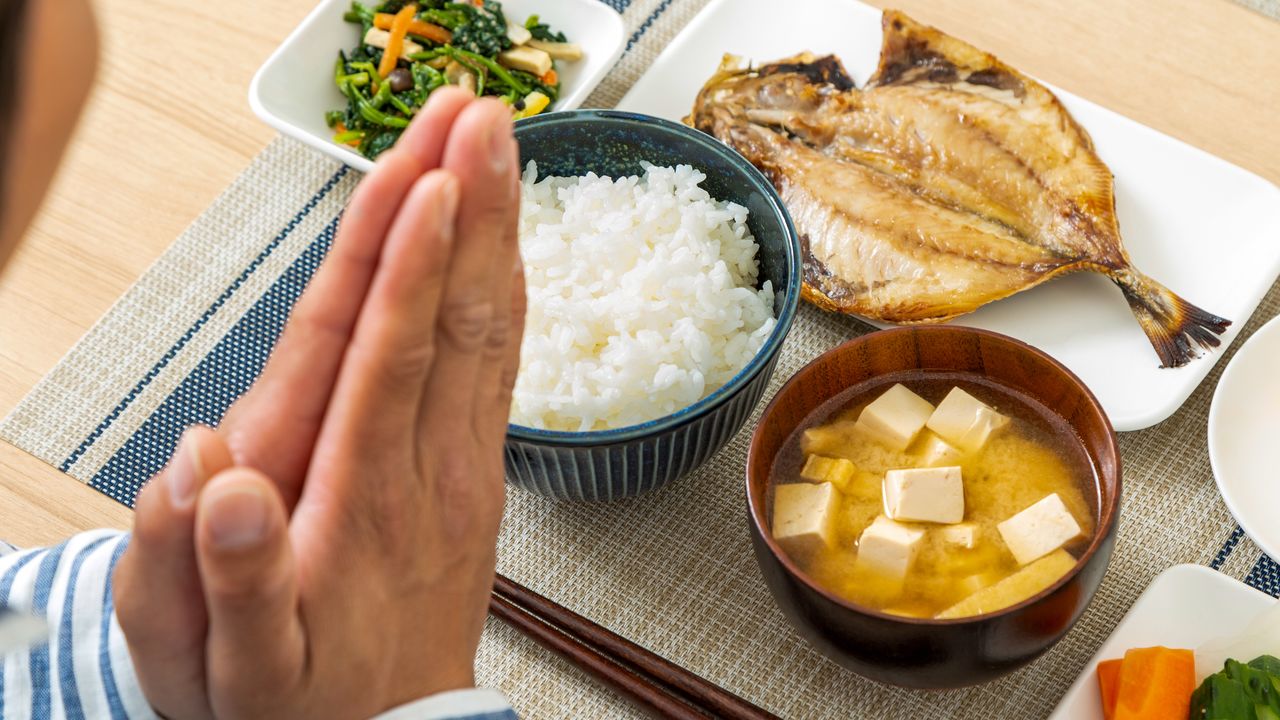
The standard elements of washoku Japanese cuisine, recognized as an intangible cultural heritage by UNESCO, consist of ichijū sansai (“one soup, three dishes”). This refers to rice as the staple, some kind of soup, a main dish of fish or other protein, and two mainly vegetable-based side dishes. In the past, everyday meals were served on individual trays on which these dishes were placed.
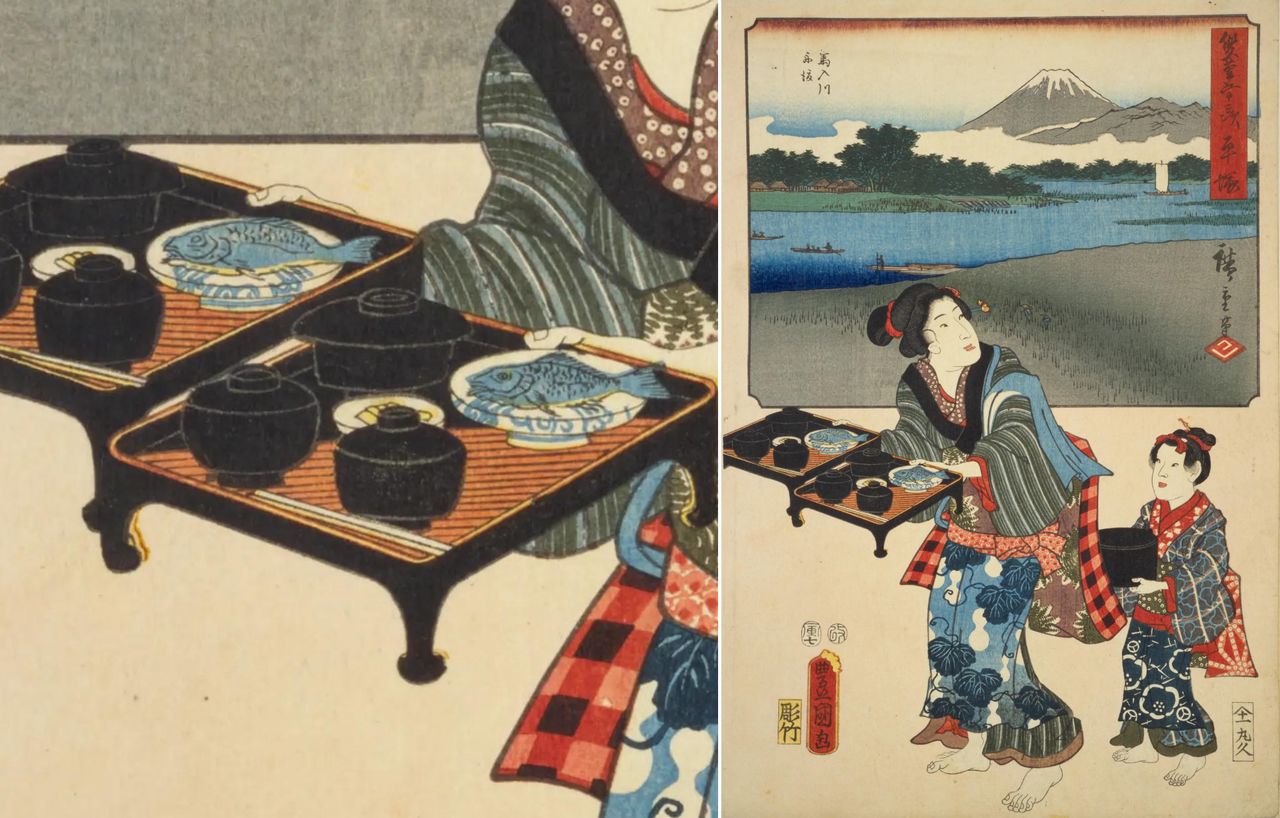
A woodblock print showing the arrangement of dishes on a footed tray. The Fifty-Three Stations by Two Brushes: Hiratsuka, Utagawa Hiroshige and Utagawa Toyokuni III, 1854. (Courtesy the National Diet Library)
There are various rules relating to the placement of washoku dishes at the table. These are practical accommodations that work well for right-handed individuals, who form the majority of the population.
The Basic Ichijū Sansai Arrangement
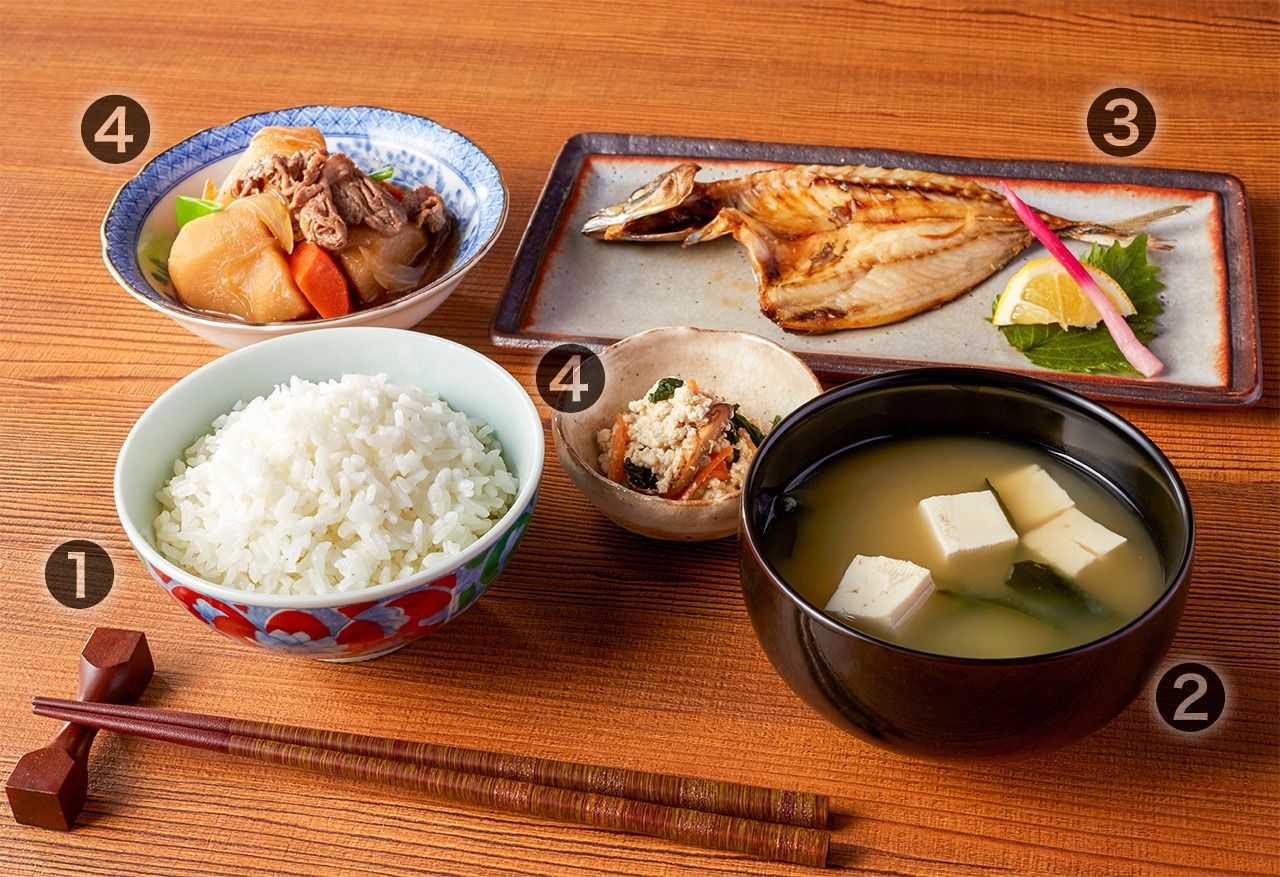
Placement of rice and main/side dishes. (© Pixta)
- Front left: Rice.
- Front right: Soup (miso soup, clear soup, etc.).
- Rear right: Main dish (fish, etc.).
- Rear left or center: Side dishes (mainly vegetables, other small dishes).
The bowl for soup, which is raised to the mouth for consuming, is placed front right. The rice bowl is placed to the left, to facilitate lifting and putting it down. Soup spills can be a major disaster, so the bowl is placed on the right-hand side to minimize risk. Liquid to the right is also the basic layout for other foods, for example, cold soba buckwheat noodles and dipping sauce, or coffee or tea accompanying a slice of cake.
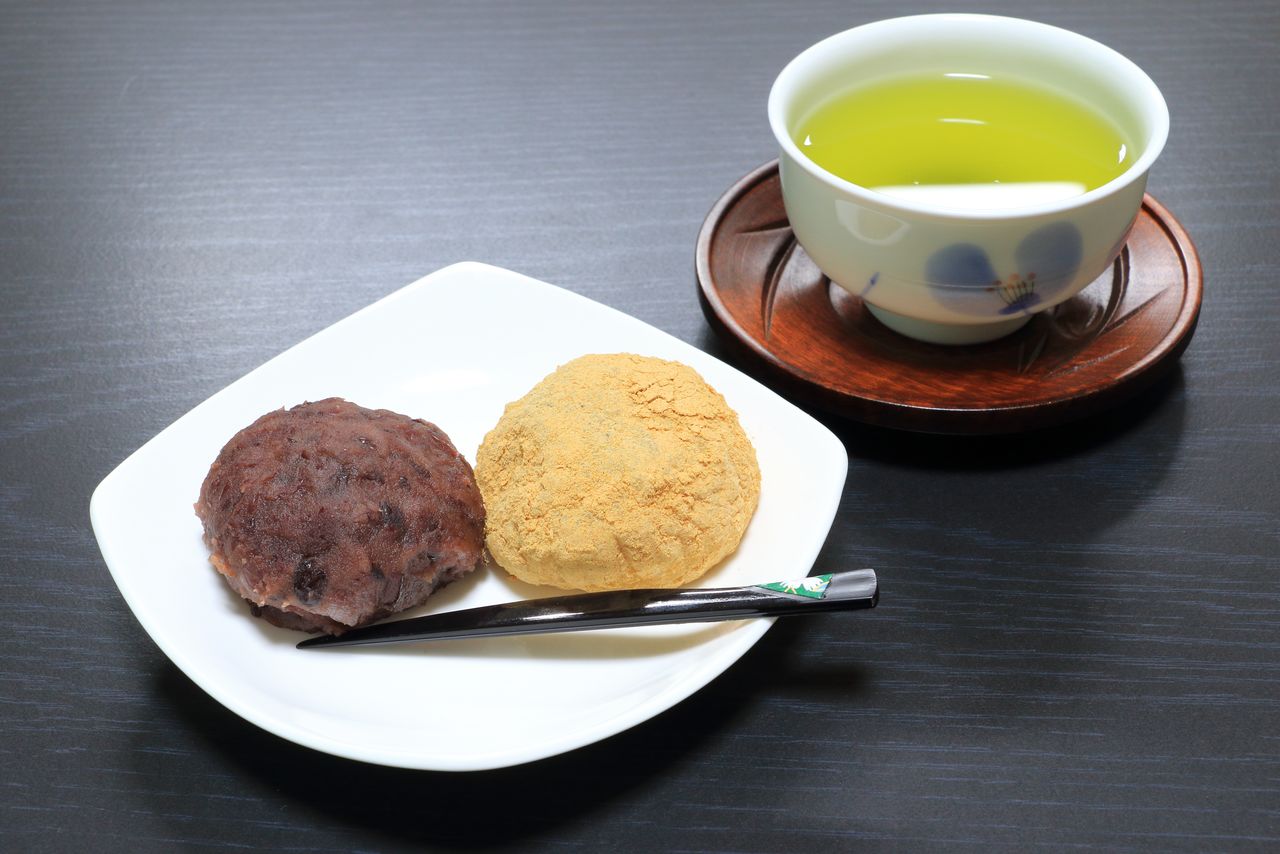
The beverage goes to the right of the food. (© Pixta)
The main dish occupies the rear of the place setting. Since it takes several bites to eat, placing this dish on the right is convenient for right-handers. Smaller side dishes sit in the center or rear left. Pickles or other condiments should be positioned near the rice. This is the basic arrangement, which can be modified to take color or other factors into account.
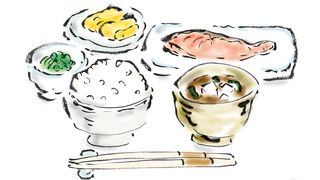
A set of chopsticks (hashi), the eating utensil used for the meal, is placed in front of the dishes, tips pointing left. This convention is based on ancient Chinese philosophy, not to mention that this makes it easier for right-handed diners to pick them up.
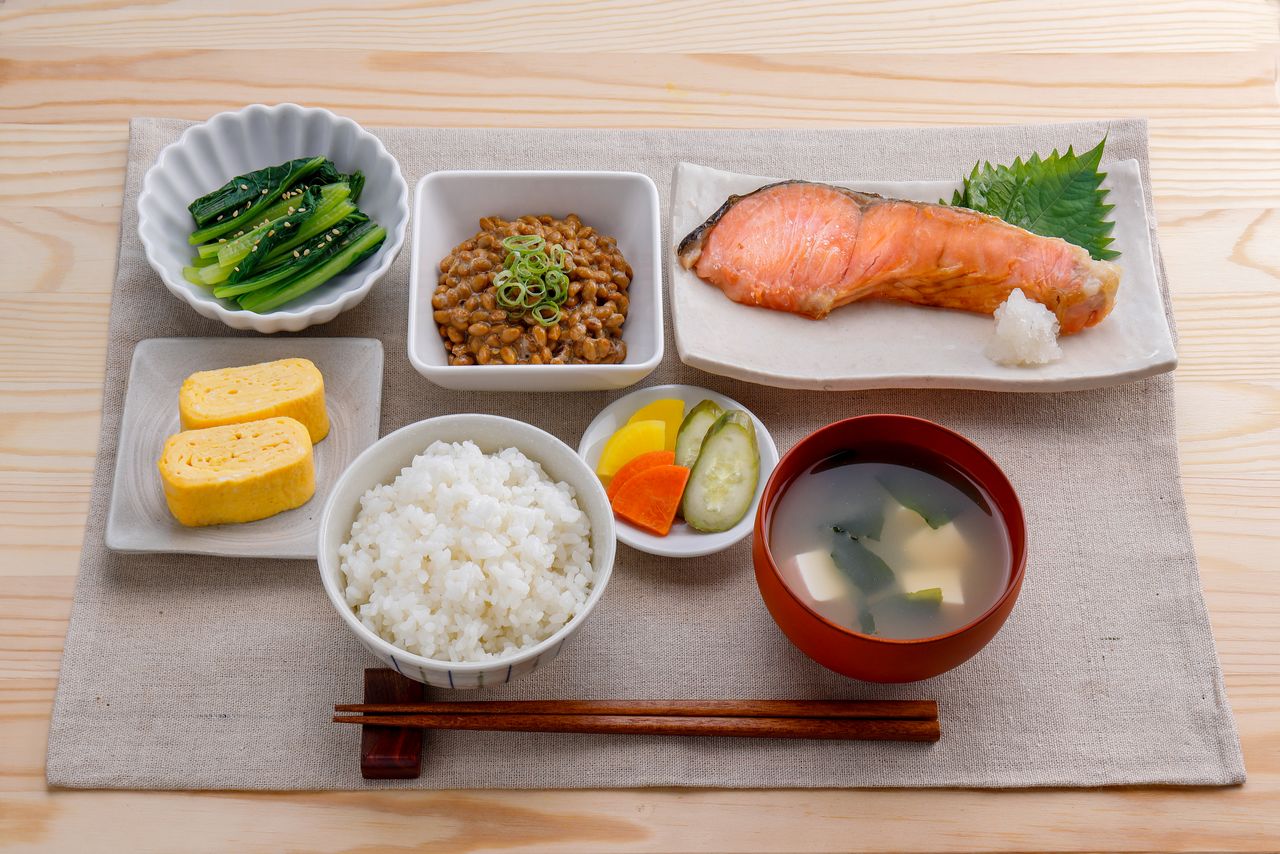
Fish should be arranged on the plate with the widest part to the left and the skin facing the rear. Pickles are not considered a principal meal element; they can be placed near the rice. (© Pixta)
Why Diners Eat Directly from Soup Bowls
Soups are consumed by lifting the bowl to the mouth. This rather unusual method developed as bowls made of wood, which is light and stays cool to the touch, came into regular use. In the Edo period (1603–1868), techniques for coating the wood with lacquer were perfected, which created a smooth, water-repellent surface. Lacquered chopsticks also started to be used.
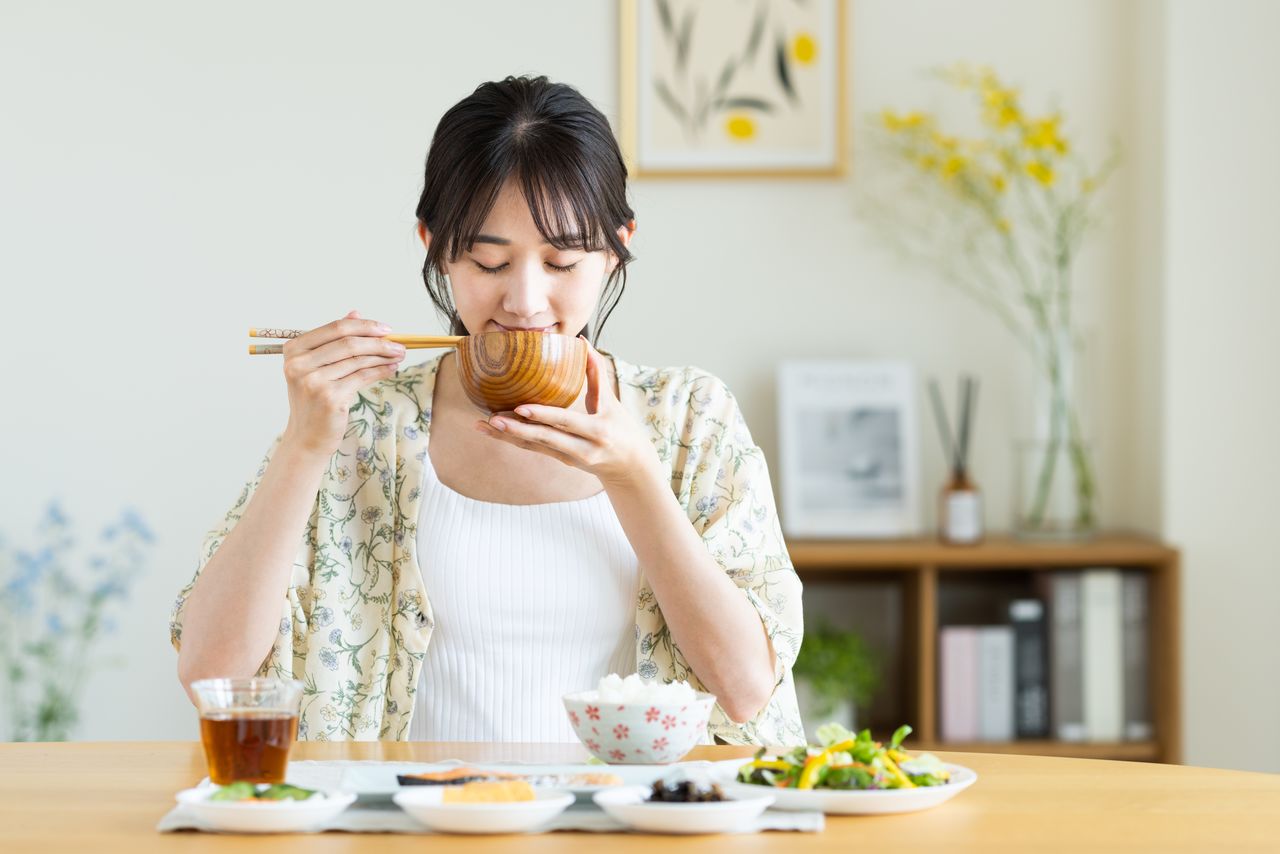
Soup is consumed by lifting the bowl to the mouth. (© Pixta)
When traditional washoku is served, ingredients can be separated or broken up into small pieces with chopsticks alone. This cuisine does not include thick cuts of meat, and even tough foods are cut up into bite-size pieces or simmered until tender, so knives and forks are unnecessary. Lacquered bowls were used to hold soups, and since they were lifted to the mouth, the contents did not require a spoon to eat. Every part of the meal can be consumed with chopsticks.
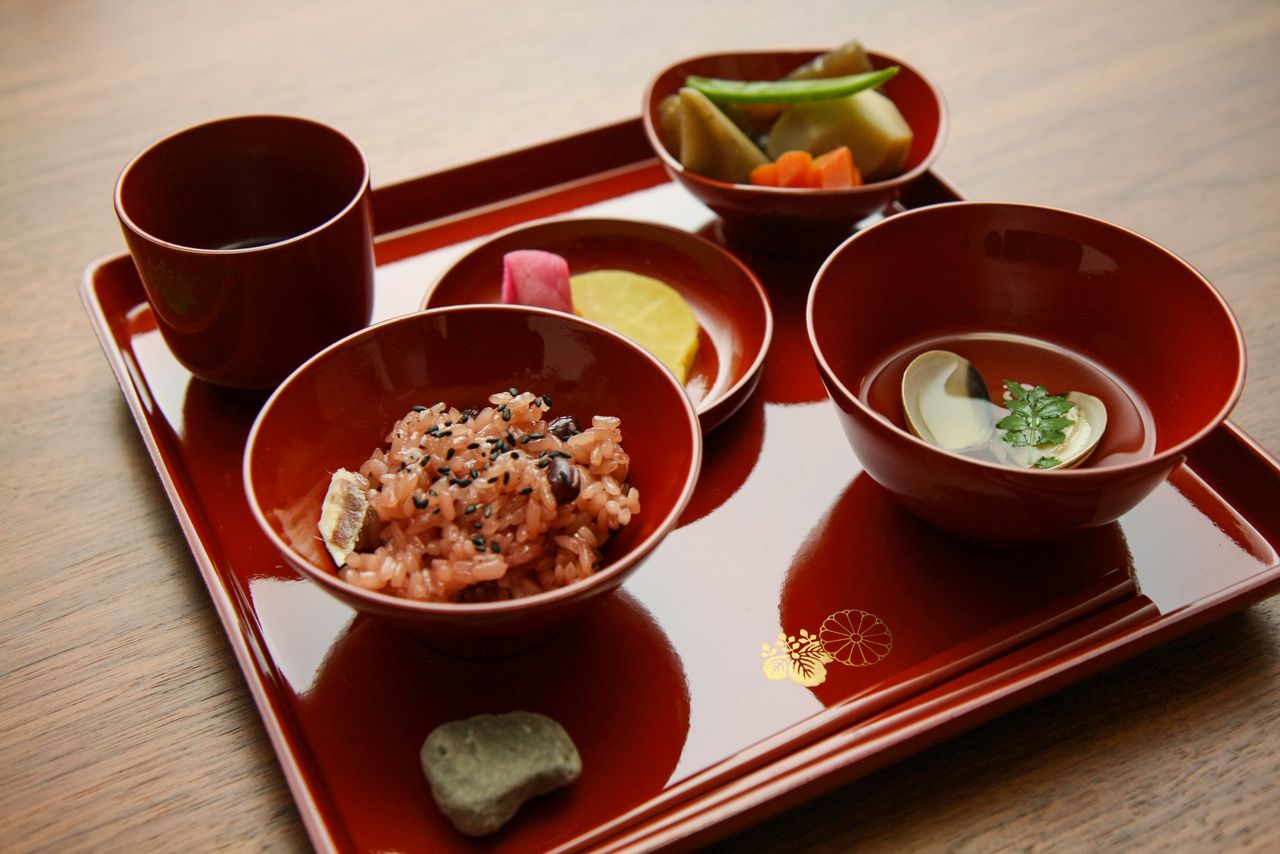
Lacquerware, sometimes called “Japan” in English, is a proud craft tradition. (© Pixta)
There are manners pertaining to how to hold a soup bowl. Picking up the bowl, which sits on the right, with only the left hand, can lead to accidents, so it should be handled with both hands. Chopsticks should only be handled once the bowl is held firmly in the left hand. Similarly, chopsticks should be laid down before the bowl is set back on the table with both hands. But repeating this with each sip from the soup bowl is time-consuming, so it is acceptable to pick up and lower soup and rice bowls while keeping chopsticks in hand.
How to Lift a Bowl
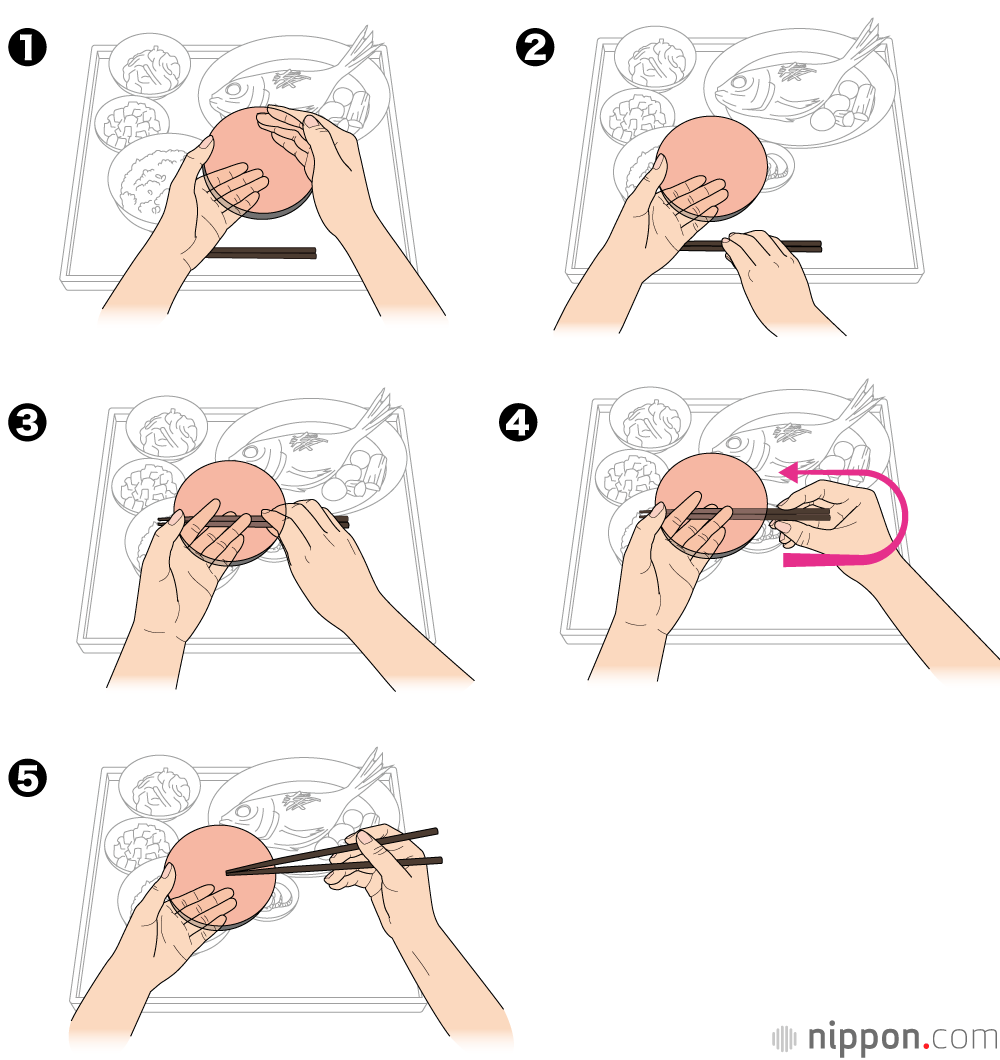
Illustration by Satō Tadashi
- Pick the bowl up with your right hand and support it with your left.
- Remove your right hand and use it to pick up the chopsticks.
- Move the middle finger of your left hand away from the bottom of the bowl to hold the chopsticks in place.
- Bring your right hand around to hold the chopsticks.
- Release your middle finger from the chopsticks.
* When setting the bowl back on the table, do the reverse, using both hands. Once the bowl is on the table, release your left hand and then your right.
Transferring the Bowl (Abbreviated Method)
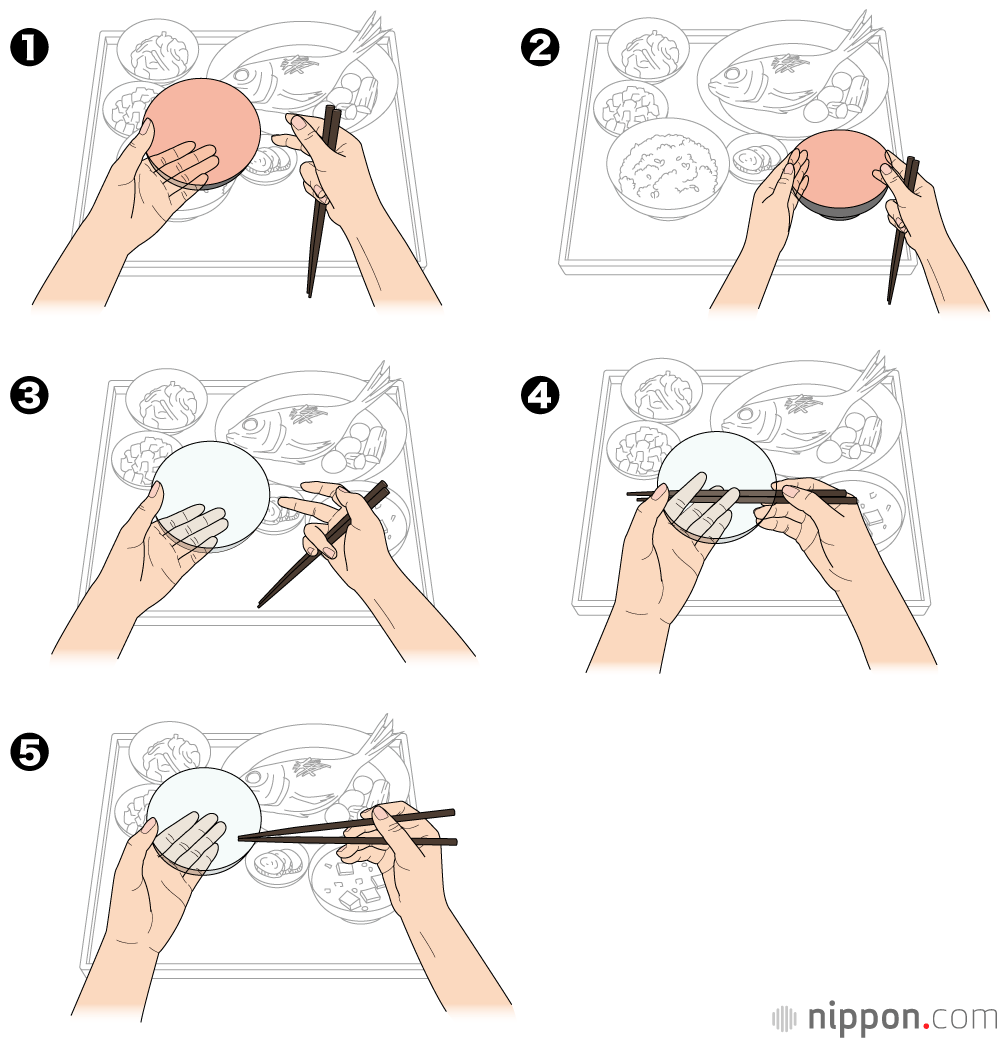
Illustration by Satō Tadashi
- Hold the chopsticks between the ring finger and little finger of your right hand. The tips of the chopsticks should be pointed toward you.
- Transfer the soup bowl, held in your left hand, steadying it with the thumb, index finger, and middle finger of your right hand to place it on the table.
- Lift a different bowl with both hands, placing the fingers of your left hand against the bottom of the bowl. Remove your right hand.
- Move the middle finger of your left hand away from the bottom of the bowl to hold the chopsticks in place.
- Release the chopsticks from your left hand.
Enhancing the Rice
After saying “itadakimasu” (I partake), begin the meal by stirring the soup with your chopsticks and bringing the bowl to your mouth. Sip some of the liquid, to moisten your mouth and prep your taste buds. Wetting the chopsticks also helps prevent rice grains from adhering to them. Sip the soup, eat rice, and eat the solids in the soup. Eat rice and the main dish, alternating bites of each, to enjoy the flavor variations of the food.
In some parts of the world, people may eat one dish at a time, but in washoku, this is not done. The rule is to alternate between rice and the various dishes served, to meld the flavors in the mouth and fully appreciate each of the dishes in contrast to the rice. Based on this tradition, children are taught to continually “rotate” between rice, main dish, and side dishes until everything is eaten.
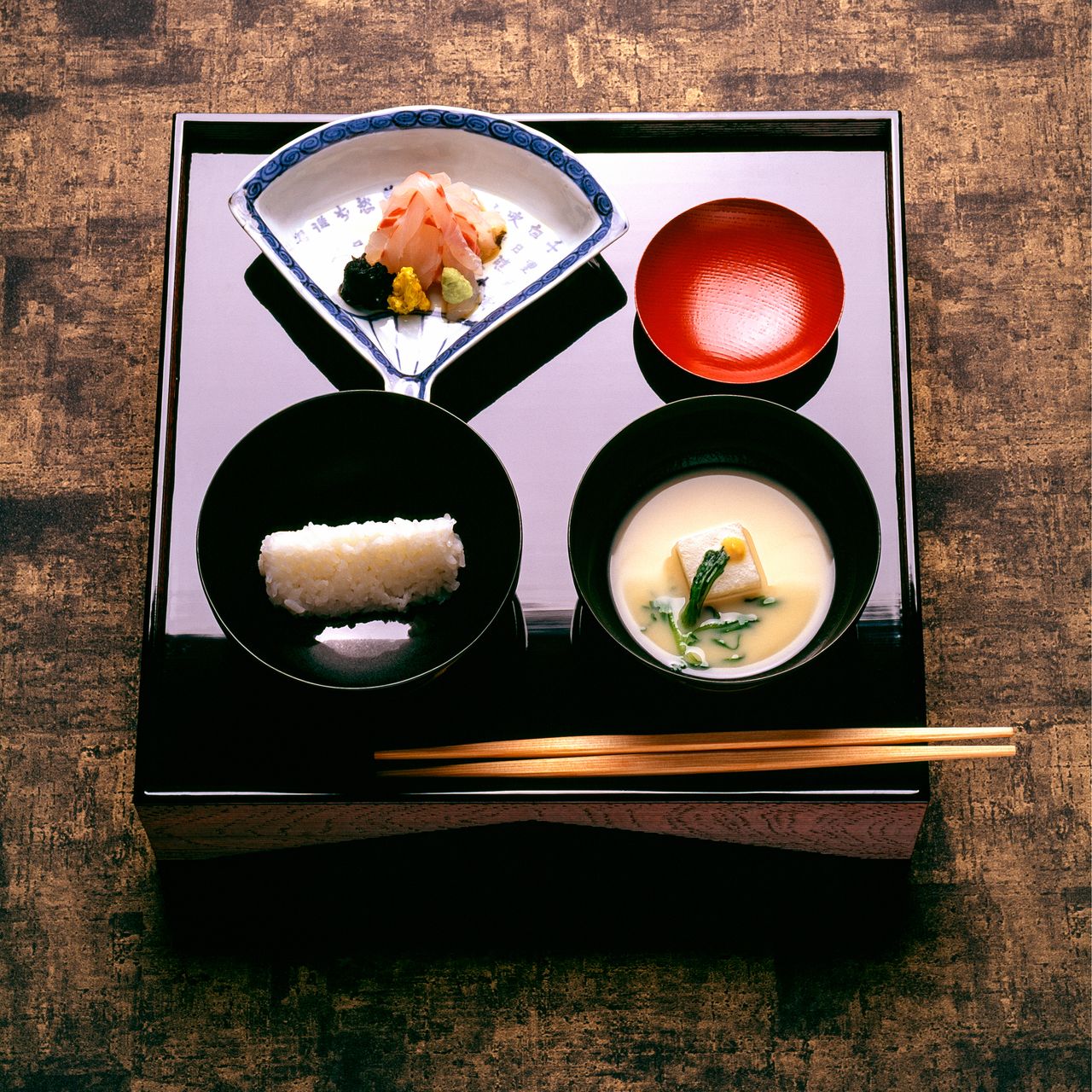
Chakaiseki, a light meal served with the tea ceremony, also consists of ichijū sansai but is served in the order of rice, soup, sashimi or vinegared dish, simmered dish in clear broth, and fish. (© Pixta)
Since prehistoric times, Japanese have grown rice and offered the harvest to the deities. Rice is viewed not merely as food but as sacred nourishment. As in the saying “seven deities reside in each grain of rice” taught to children, rice is viewed as the product of water, soil, sun, clouds, winds, insects, and those who plant and nurture it, for which thanks should be offered.
Appreciating a meal and eating everything served demonstrates gratitude toward the rice deity. Paying attention to the melding of flavors in the mouth will stimulate the appetite and might even have you asking for seconds.
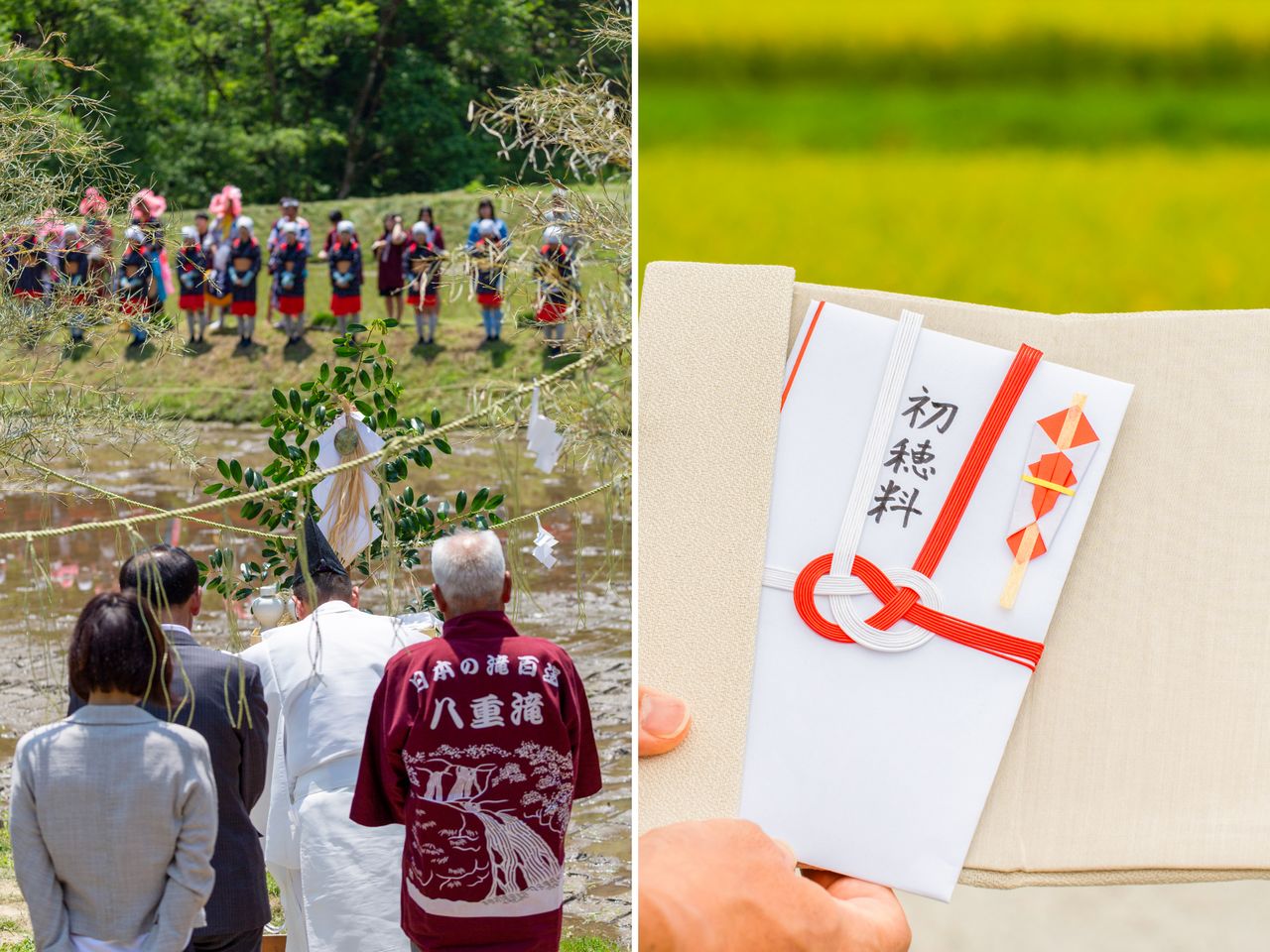
For millennia, Japanese have prayed for bountiful harvests before rice planting and thanked the deities by ceremonially presenting the first ears of rice at harvest time. (© Pixta)
Formal meals no doubt require close attention to all the intricacies of washoku table manners, from how to pick up chopsticks to how to remove and replace the lid on lidded dishes. Wavering between which dish to start with, with chopsticks in the air, or picking up an item and then putting it back in the dish, are just two of the many faux-pas to avoid.
Although washoku comes with many unique rules, treating food with respect and making the meal a pleasant occasion are practices universal to all cuisines and cultures. Good manners enhance the flavor of the food, and enjoying every last morsel expresses gratitude to the rice deity.
(Originally published in Japanese. Supervised by Shibazaki Naoto, associate professor at Gifu University, who specializes in manners education from a psychological perspective, works to guide etiquette educators, and is an instructor in Ogasawara-ryū etiquette. Illustration by Satō Tadashi. Banner photo © Pixta.)