A Pilgrimage in Black and White
Sēfa Utaki: Okinawa’s Most Sacred Site
Guideto Japan
Images Culture Art- English
- 日本語
- 简体字
- 繁體字
- Français
- Español
- العربية
- Русский
Built by a Goddess, Revered by Kings
In Okinawa, the word utaki (sacred grove) is used to refer to a place where deities and the spirits of the ancestors descend to our earthly plain. In the Chūzan Seikan, a historical chronicle compiled in 1650, an account of “the beginnings of Ryūkyū” states that the ancestral deity Amamiku (also known as Amamikiyo) came to earth and created seven utaki.
One of these was Sēfa Utaki, located in what is now part of the city of Nanjō. During the time of the Ryūkyū Kingdom (1429–1879), this was the most important of the sites visited by the king on his ceremonial eastward pilgrimage of the holy places in his kingdom (agari-umāi). This was also where the enthronement of the Kikoe-Ōkimi, the highest priestess in the indigenous Okinawan religion, used to take place. I visited Okinawa to experience the atmosphere of a site that has been regarded for centuries as a home of the divine.
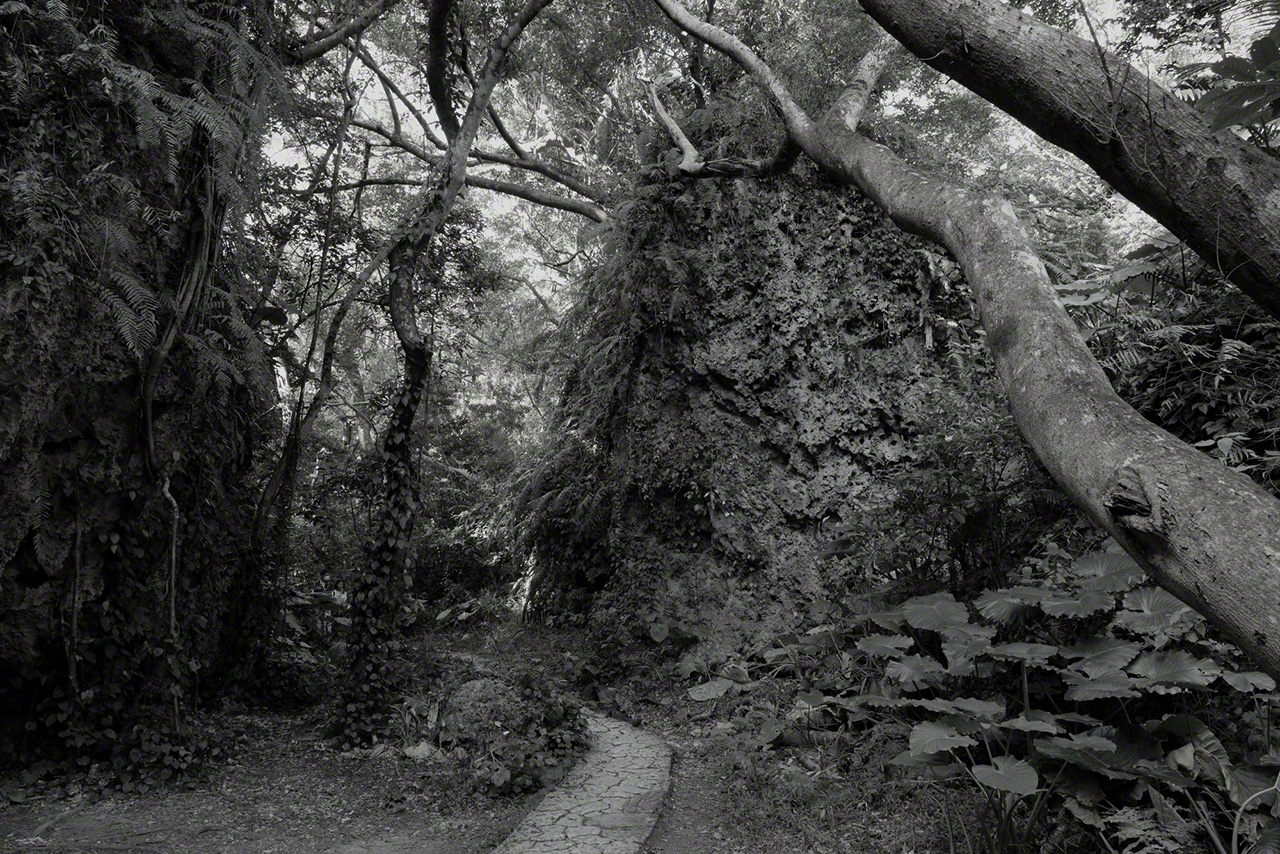
Within the sacred sanctuary, ferns take root in Ryūkyū limestone. (© Ōsaka Hiroshi)
Reverence for Nature
In the days of the Ryūkyū Kingdom, only women associated with the royal family were permitted to pass beyond the Ujōguchi gate at the entrance to the Sēfa Utaki. Everyone else prayed from the gate, barred from entering the sanctuary itself.
From the gate, cobblestoned pathways lead to six ibi or prayer sites, flanked on both sides by dense forest. In olden times the groves were so thick that even at noon little sunlight reached the ground. Logging and the devastation of war wrought considerable damage to the site in modern times, but today the trees have grown back, spreading their branches overhead, and a solemn atmosphere of shaded peace is gradually returning.
Following the stone path past the first ibi (Ufugūi), I come to a junction where the trail branches left and right. Turning left, I see a huge, oddly shaped rock formation at the end of the path. A large stalactite hangs down, and in the overhang is an altar formed from a carefully arranged pile of stones. The site is called Yuinchi. In the language of the royal court, the word normally referred to kitchens, but here it is thought to have meant a place where fertility and plenty gather. Priestesses and shamans would come here to divine the year’s harvests using horse-shaped stones.
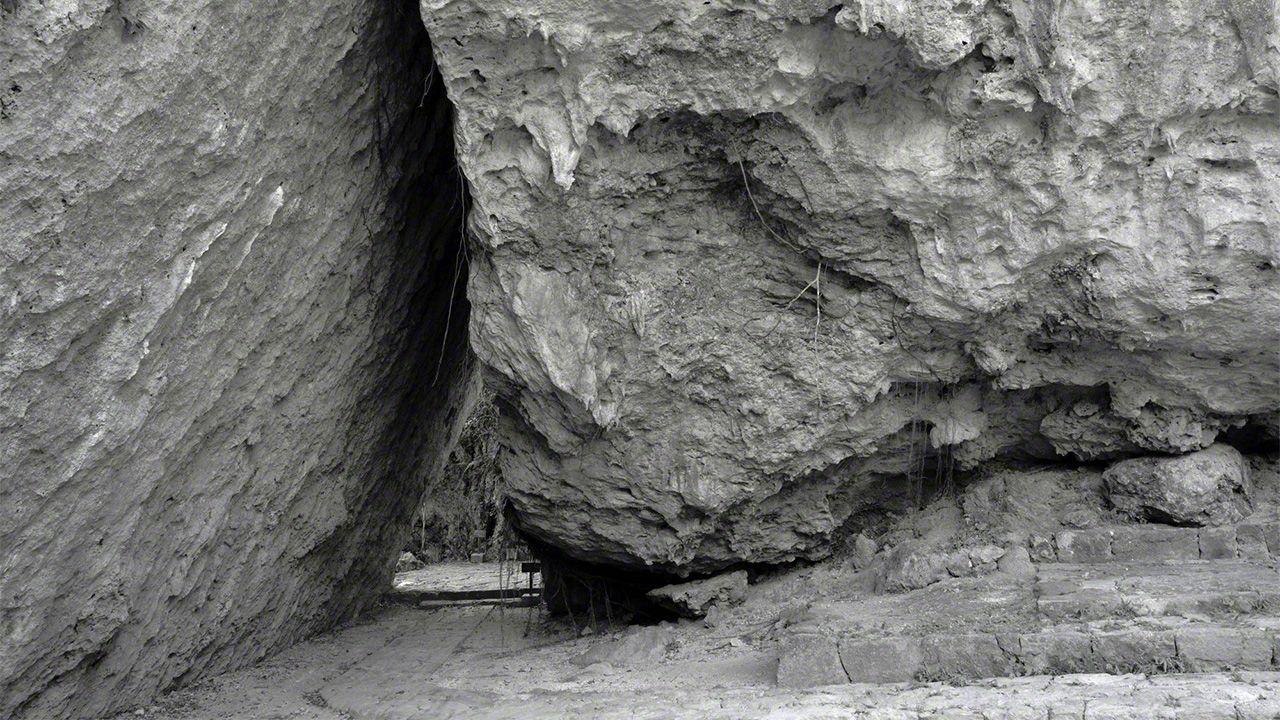
Returning to the main path, I continue until I reach a pair of massive rocks leaning together to form a triangular opening known as the Sangūi. On the walls here remains the Chōnohana, said to have been the vantage point from which the goddess surveyed heaven and earth, and the place from which the sacred island of Kudakajima is revered from afar. Today, however, entry is forbidden to protect the sanctity of the site.
I notice a mother and her child, presumably locals, pressing their hands together in prayer before the sacred opening. Even though Sēfa-Utaki is now a tourist destination, it remains a living sacred site for the people of Okinawa, carrying on a tradition of faith and local culture that endures unbroken from the days when the islands were an independent kingdom.
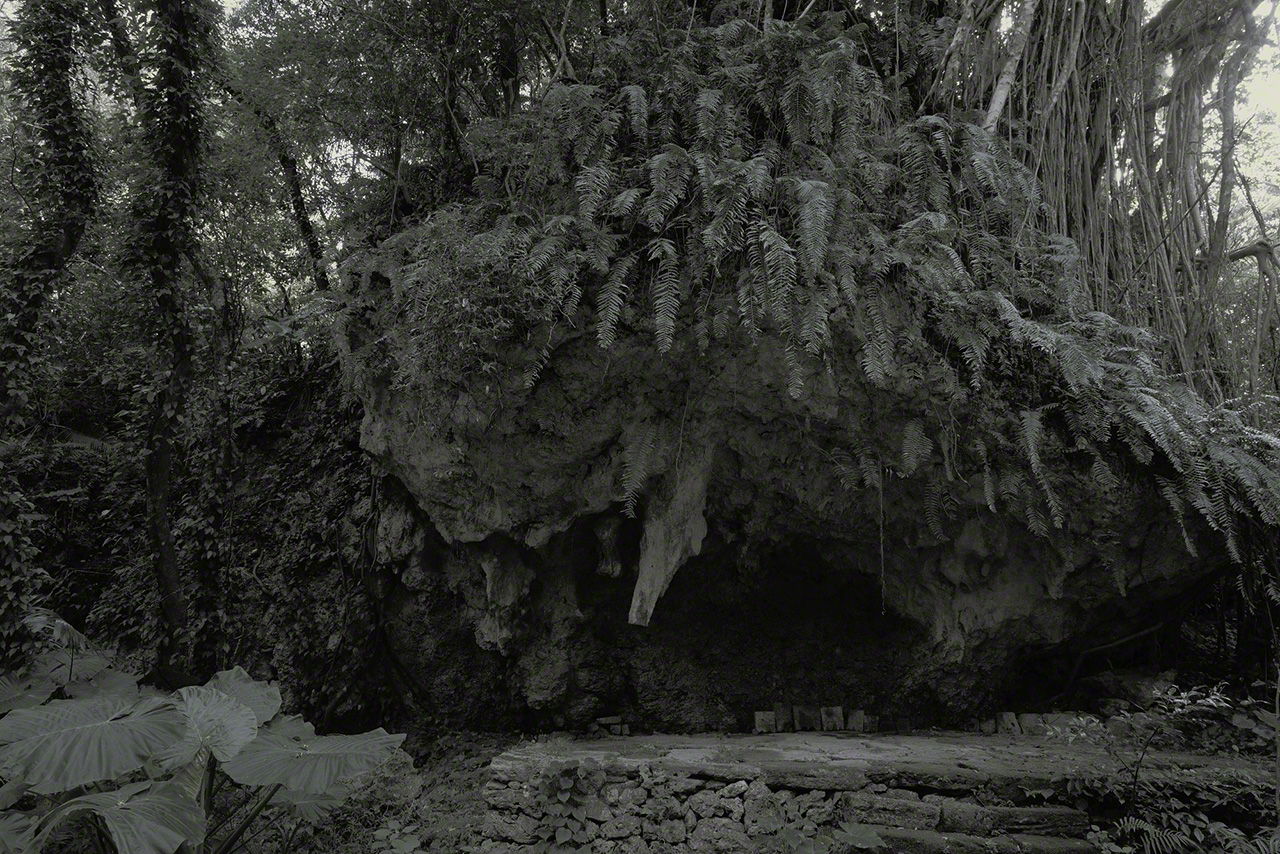
At Yuinchi, people would pray for a plentiful harvest. (© Ōsaka Hiroshi)
Sēfa Utaki
- Address: 539 Kudeken, Chinen, Nanjō City, Okinawa
The most sacred site on the royal agari-umāi pilgrimage during the time of the Ryūkyū Kingdom. Within the complex are six places of prayer, which can be visited in a little under an hour: Ufugūi, Yuinchi, Amadayuru Ashikanubī, Shikiyo Dayuru Amaganubī, Sangūi, and Chōnohana. Sunlight filtered through the giant rocks and subtropical vegetation falls on the altars and sacred places, instilling a sense of awe and solemnity and offering a vivid reminder of the power of ancient nature worship.
In 2000, the site was inscribed as part of the UNESCO World Heritage property “Gusuku Sites and Related Properties of the Kingdom of Ryūkyū.” Since then, it has become one of Okinawa’s best-known tourist destinations, attracting around 400,000 visitors a year from Japan and overseas. For local people who keep the memory of the agari-umāi tradition alive, however, it remains a living connection with the past and a spiritual home of great significance.
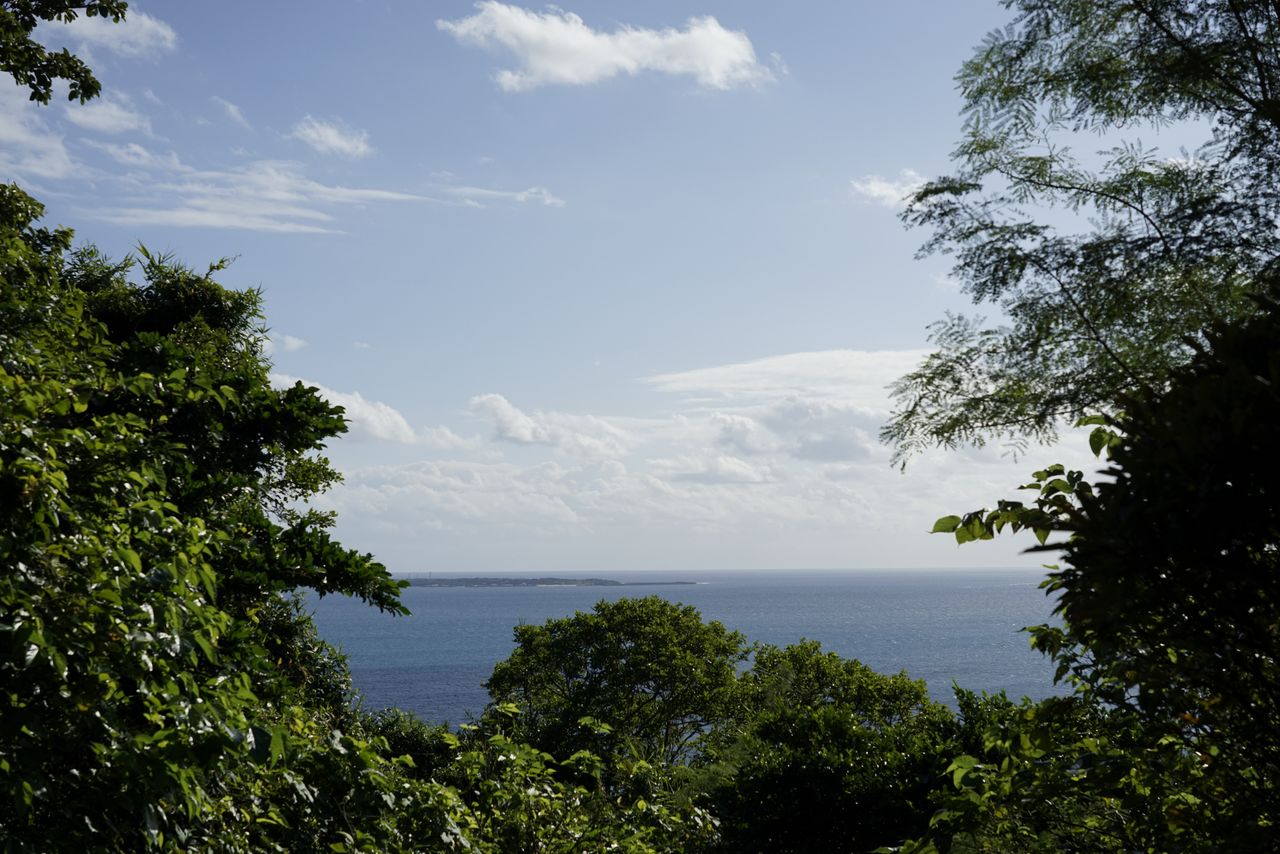
From Sēfa Utaki, people would pray in the direction of Kudakajima, where the ancestral goddess first descended to earth. (© Ōsaka Hiroshi)
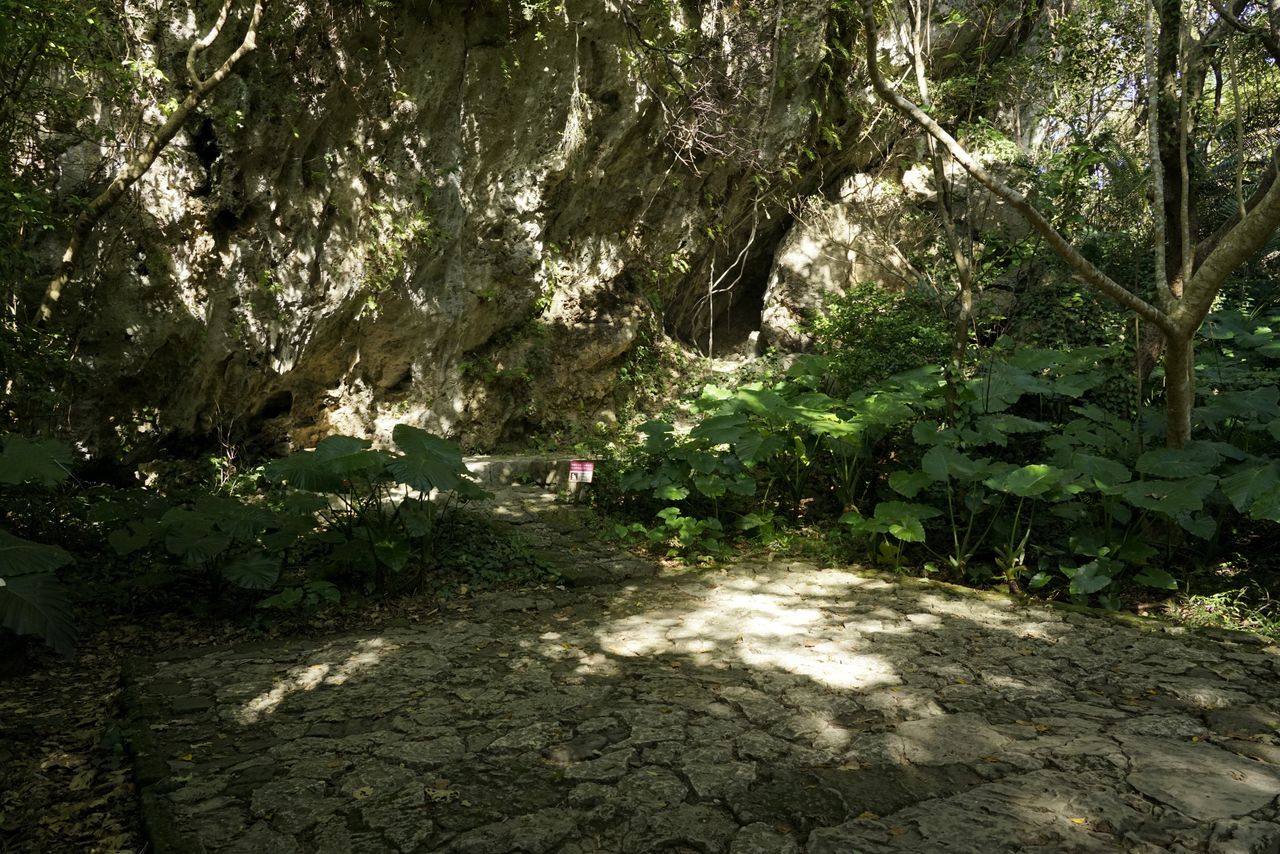
The Ufugūi site’s name means “Great Hall.” The area in front of the rock was a place of prayer. (© Ōsaka Hiroshi)
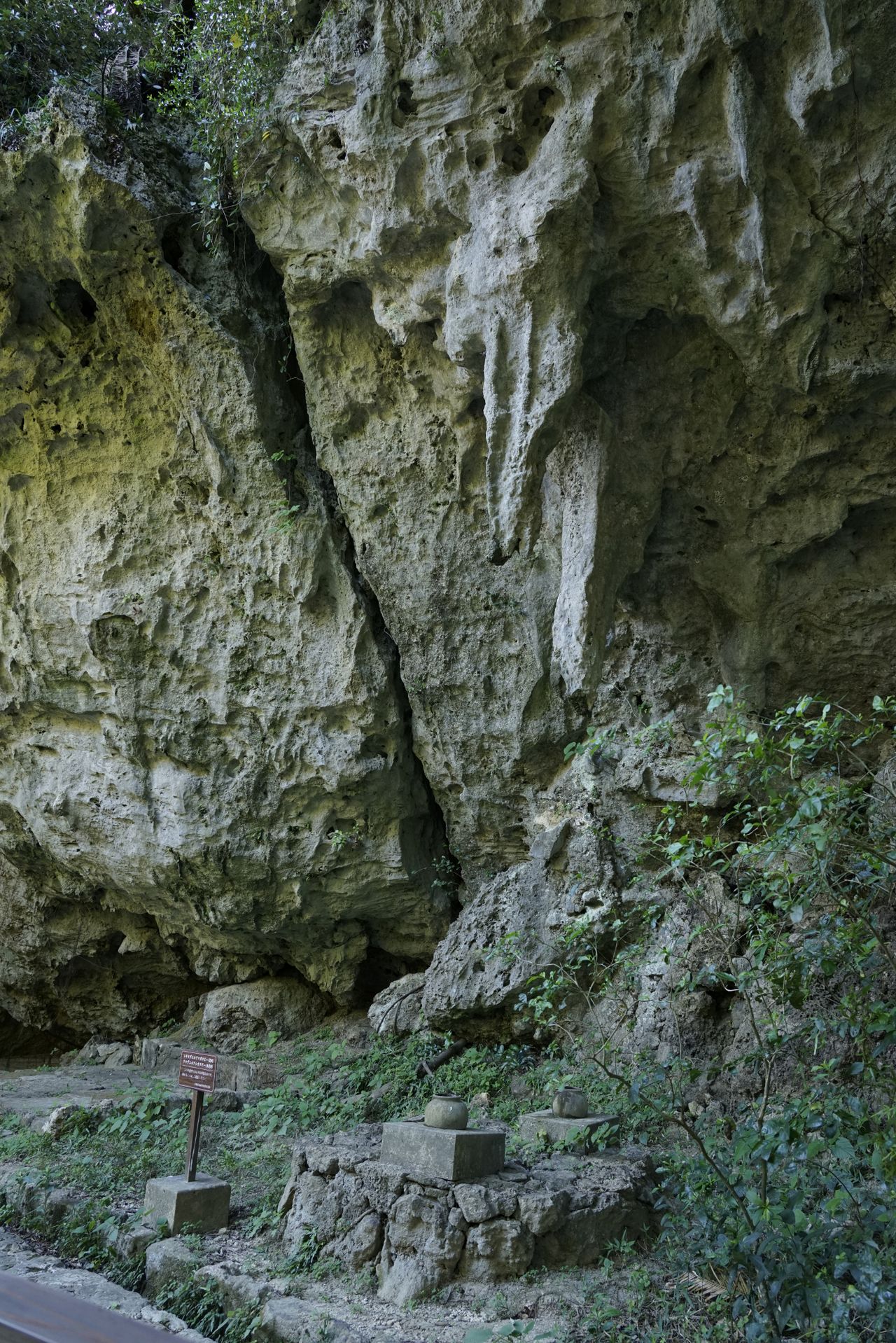
In front of the Sangūi, holy water drips from two stalactites into jars, which are revered as places of prayer. (© Ōsaka Hiroshi)
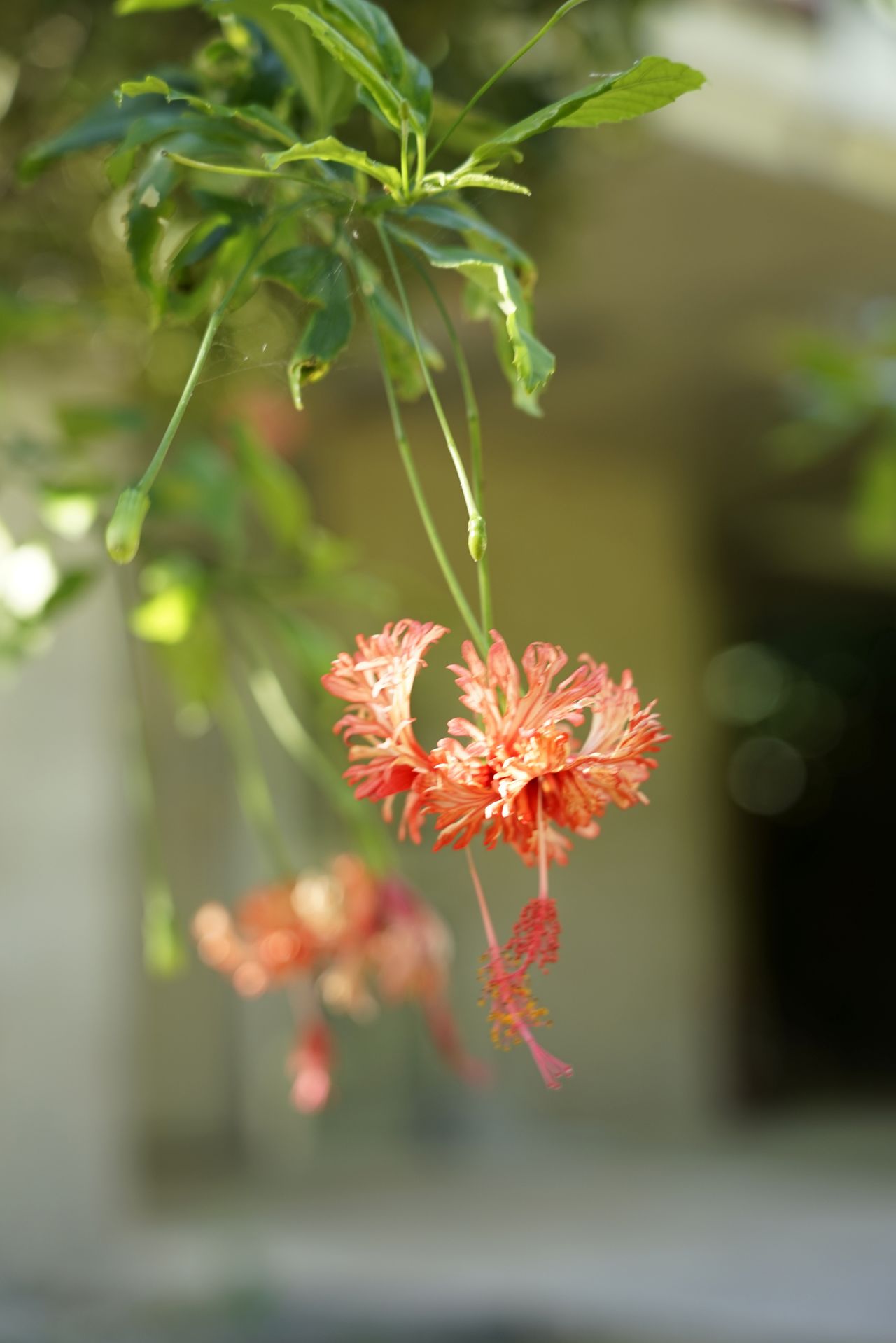
Fūrin bussōge (lantern hibiscus) flowers in bloom by the entrance into the sacred sanctuary. In Okinawa, hibiscus flowers are often used in religious ceremonies and to decorate sacred sites. (© Ōsaka Hiroshi)
(Originally published in Japanese. Text and editing by Kitazaki Jirō. Banner photo: The Sangūi, the best-known symbol of the Sēfa Utaki site. © Ōsaka Hiroshi. With thanks to Nanjō City Board of Education.)