A Pilgrimage in Black and White
Okinawa’s Valley of Gangala: Paleolithic Remains and Ancient Prayer Sites
Guideto Japan
Images Environment Culture- English
- 日本語
- 简体字
- 繁體字
- Français
- Español
- العربية
- Русский
A Limestone Cave Complex
Numerous limestone caves lie along the path of the Yūhigawa River as it flows through the city of Nanjō in southern Okinawa. One of the best known of these is the Valley of Gangala, formed by the gradual collapse of a cave system over hundreds of thousands of years. Inside the valley is an ancient forest that covers an expanse of some 48,000 square meters. At the entrance stands the giant Sakitari Cave, an archeological site where excavations continue today. Items unearthed here range from pottery fragments to human remains. Among the most noteworthy discoveries is the world’s oldest known fishing hook, dating back approximately 23,000 years. These relics of the past bear witness to human activity here over tens of thousands of years.
Passing through the cave and following the Yūhigawa through the subtropical forest, it becomes clear that the valley does not merely carry the reminders of ancient everyday life. The space has also been shaped by an unbroken tradition of prayer. Two caves on either side of the river, in particular, have long been revered as sacred sites. In the Inagu Cave, stalactites resembling female breasts hang from the ceiling, and the cave is associated with prayers for good marriages and safe childbirth. The Ikiga Cave, by contrast, dominated by rows of phallic stalactites, has traditionally been the site of prayers for the birth and growth of life. Although there are no shrine buildings, prayers are still offered to the sacred valley here as they have been for millennia.
A Sacred Banyan Revered as Lord of the Valley
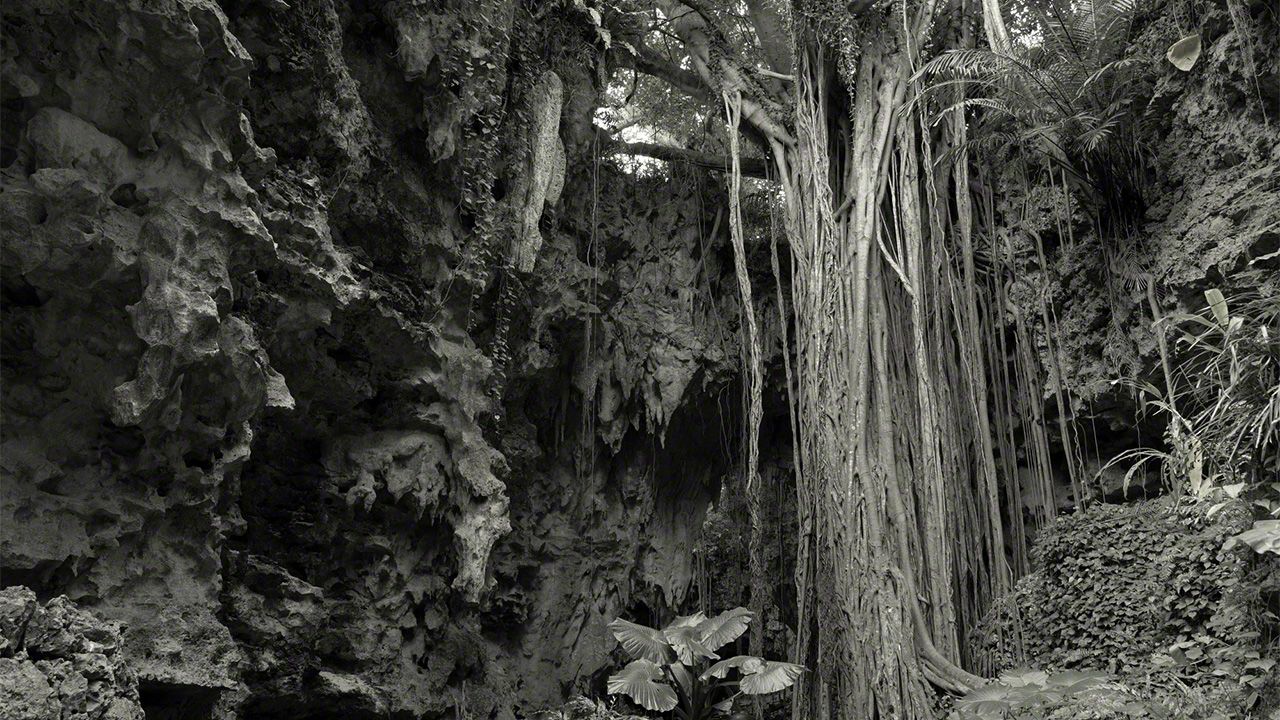
Venturing deeper into the forest, we reach a clearing where the signs of a collapsed cave are still clearly visible. Growing out of the rocky cliffside is a huge banyan tree, from which countless aerial roots hang down. (These strand-like roots grow from the trunk and branches and collect moisture and oxygen from the air.) Known as the Ufushu Gajumaru, the tree is revered as the “master” or “lord” of the valley. It is estimated to be about 150 years old and reaches a height of 20 meters. Seen up close, the massive tree is an awe-inspiring presence.
Despite their wispy appearance, the aerial roots are strong enough to penetrate asphalt and concrete. If they grow into prop roots, it becomes difficult to tell them apart from the main trunk. Looking at the tree’s form, so full of vitality and quiet majesty, it is easy to imagine why people in ancient times felt compelled to offer prayers here to the forces of nature that go beyond human understanding.
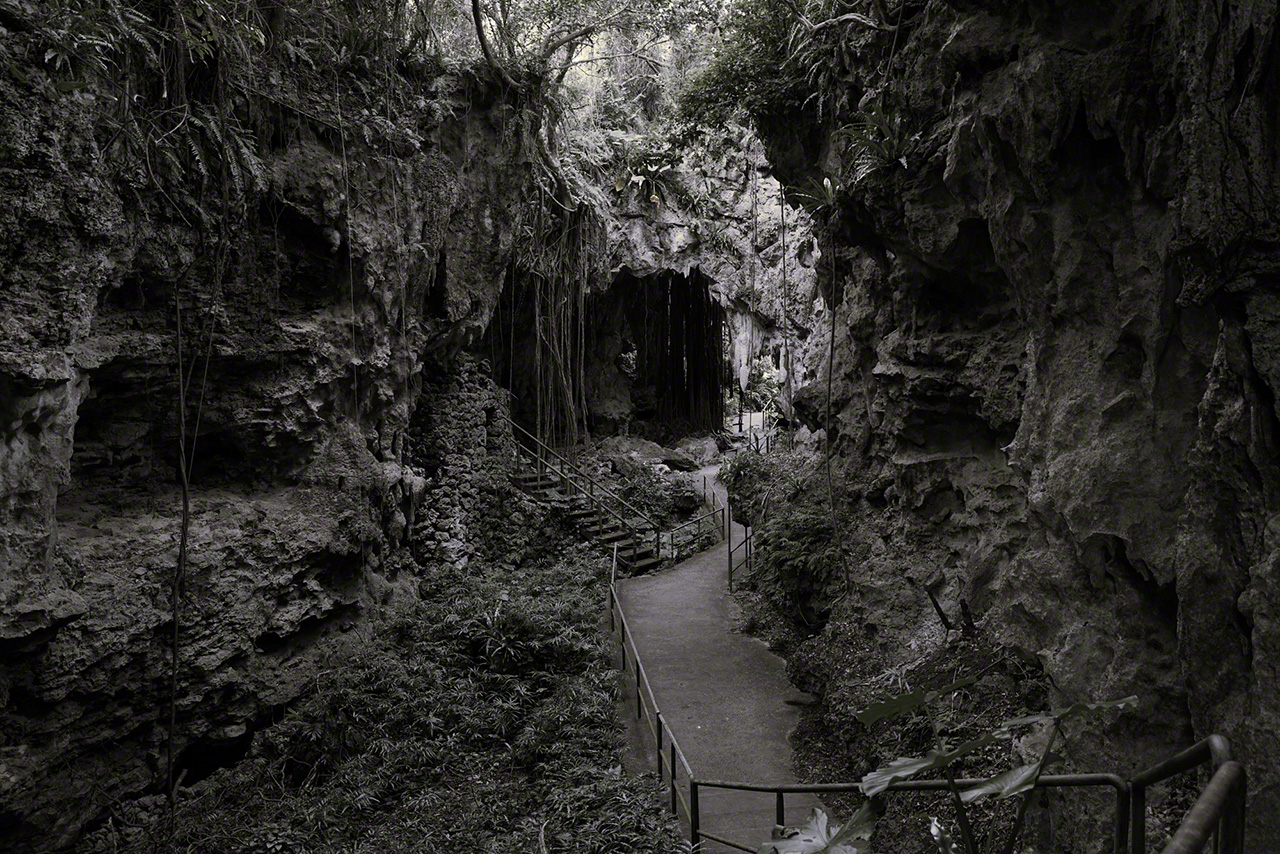
Giant trees growing from the cliff face overlook a place of prayer. (© Ōsaka Hiroshi)
Valley of Gangala
- Address: Tamagusuku Maekawa 202, Nanjō, Okinawa
For admission prices and reservations, see the official website: https://gangala.com/en/
Formed by the collapse of an ancient limestone cave system, the Valley of Gangala offers the chance to encounter an unusual natural landscape while learning about human history and ancient traditions of prayer. Entry to this popular attraction is possible only on a guided tour, which must be booked in advance. Combined with a visit to the adjacent Okinawa World theme park, it offers an ideal introduction to the history, culture, and rich natural environment of Okinawa in a single day.
The starting point for the tour is the Sakitari Cave archeological site, which houses a café. Paleolithic human remains and other artifacts have been excavated here. The cave’s mysterious atmosphere heightens anticipation for the tour, which lasts approximately an hour and twenty minutes. As you make your way through the ancient forest, guides explain the results of excavations and ongoing research, creating the sense that you are exploring an archeological site firsthand.
Layering dramatic limestone formations, traces of prehistory, and a long-standing culture of prayer, the Valley of Gangala is an outdoor museum waiting to be explored on foot, rich in tranquility and discovery.
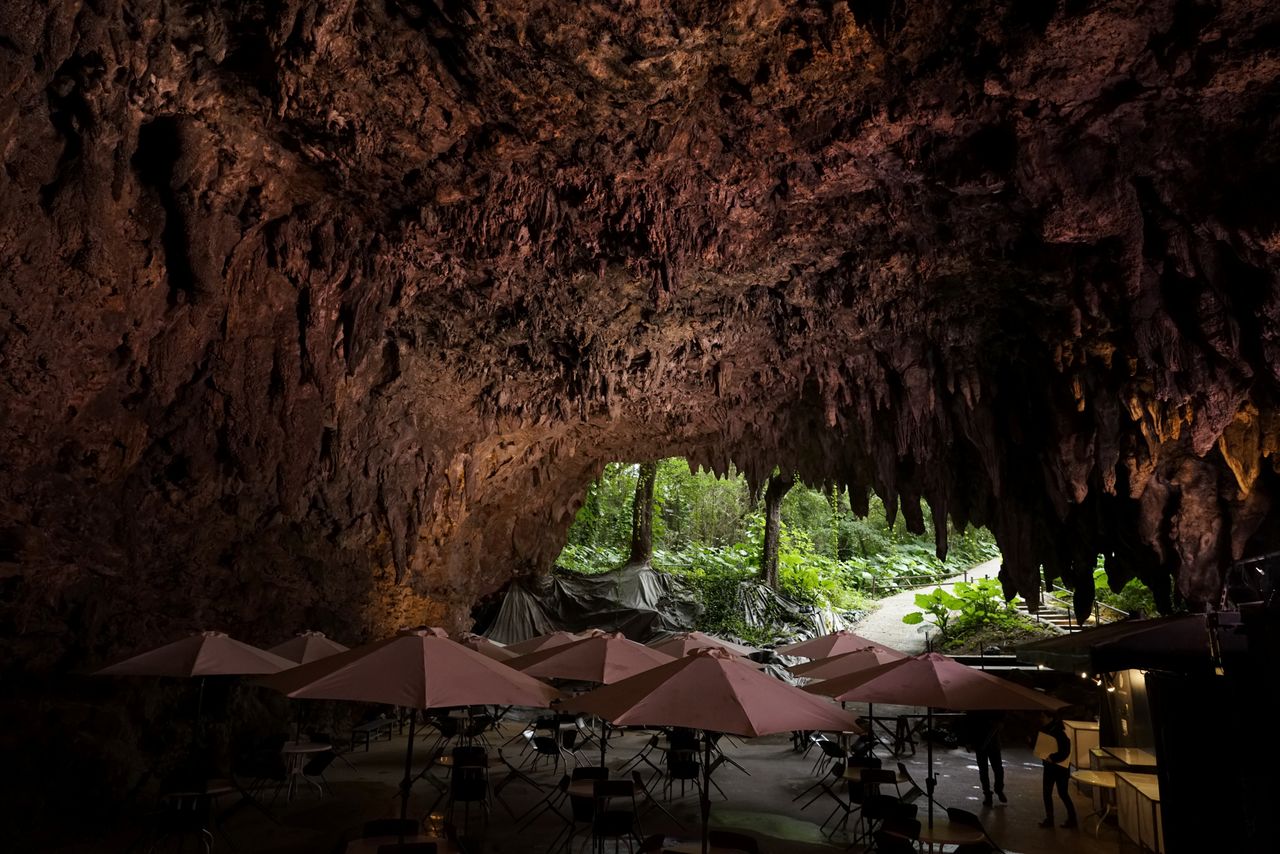
Near the entrance to the Sakitari Cave archeological site is the Cave Café, where visitors can soak up the atmosphere before or after their tour. (© Ōsaka Hiroshi)
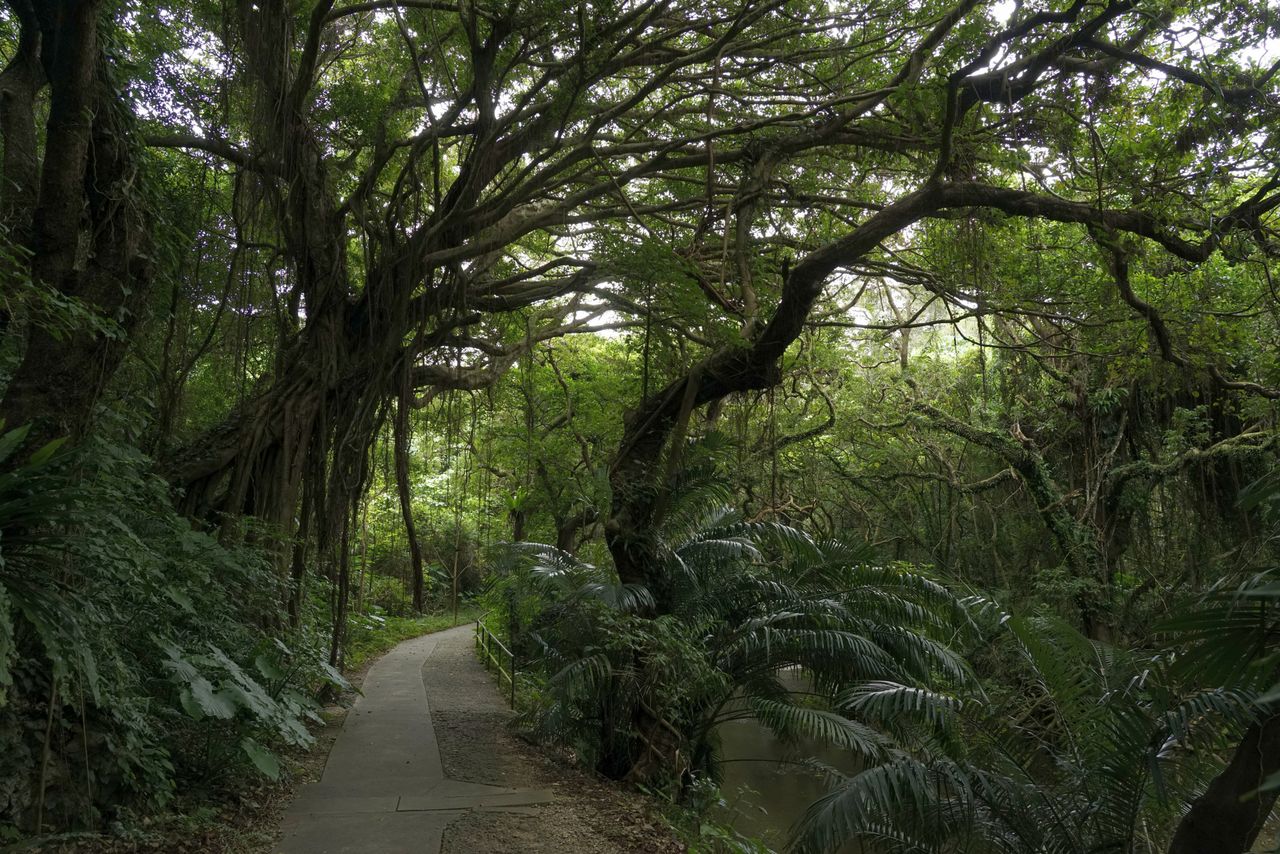
The path through the valley is covered with tropical vegetation, evoking the atmosphere of an ancient forest. (© Ōsaka Hiroshi)
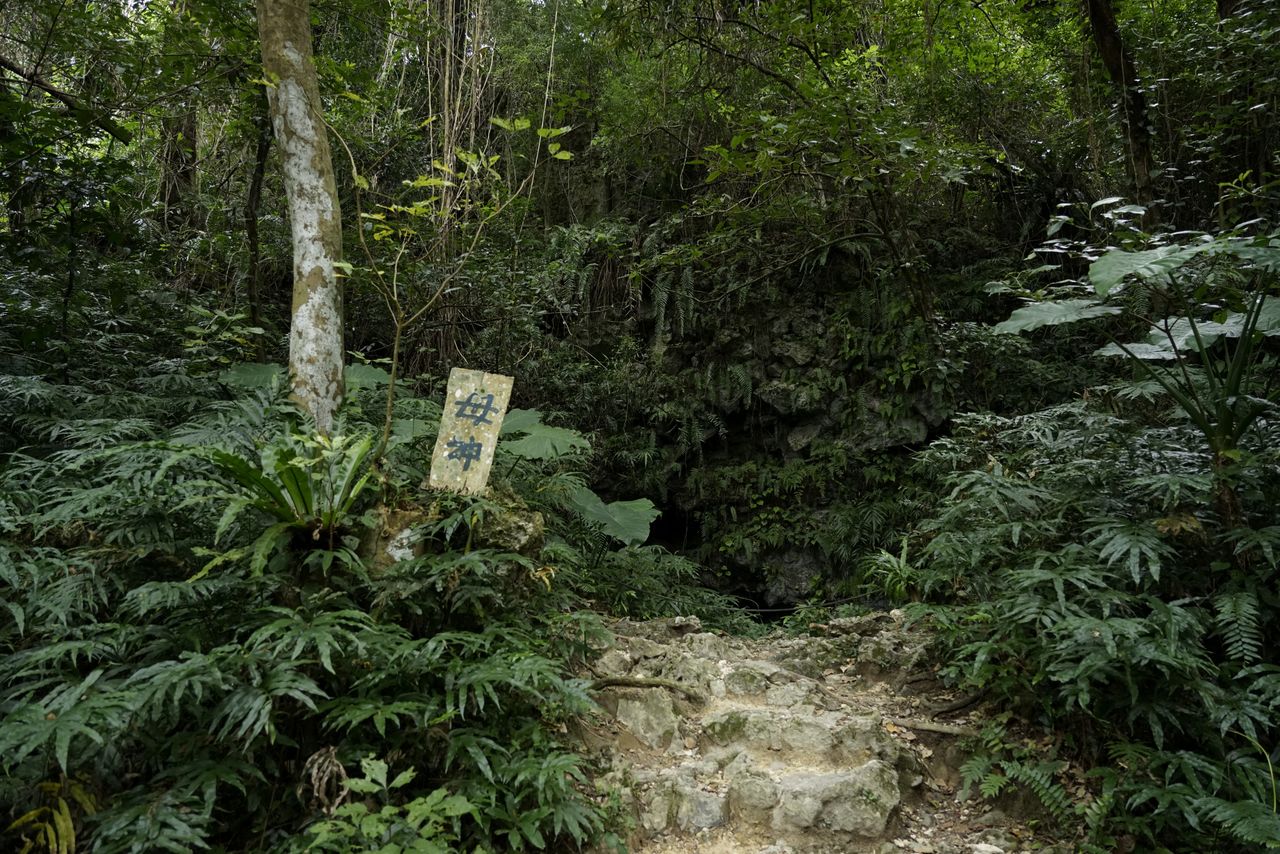
The entrance to the Inagu or “female” cave. Visitors are not allowed to enter the interior of the cave, notable for its mammiform stalactites, because of the risk of collapse. (© Ōsaka Hiroshi)
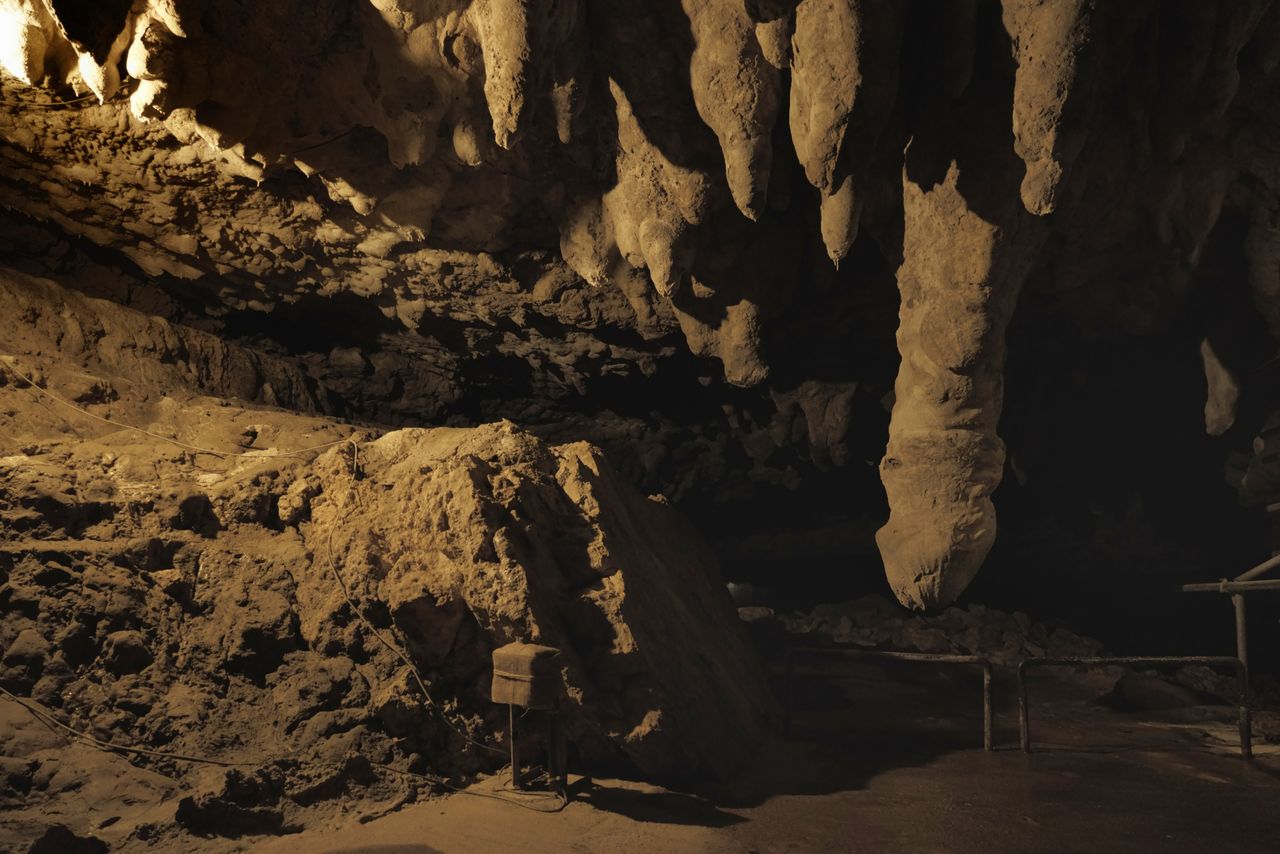
In the Ikiga (male) cave, visitors walk beneath rows of phallic-shaped stalactites, adding a hint of adventure to the experience. (© Ōsaka Hiroshi)
(Originally published in Japanese. Text and editing by Kitazaki Jirō. Banner photo: The Ufushu Gajumaru tree towering over Gangala Valley. © Ōsaka Hiroshi.)