A Pilgrimage in Black and White
Naminoue Shrine and the Sacred Ryūkyū Cliff Promising Passage to the Land of the Gods
Guideto Japan
Images Culture- English
- 日本語
- 简体字
- 繁體字
- Français
- Español
- العربية
- Русский
A Direct Link to the Source of Life
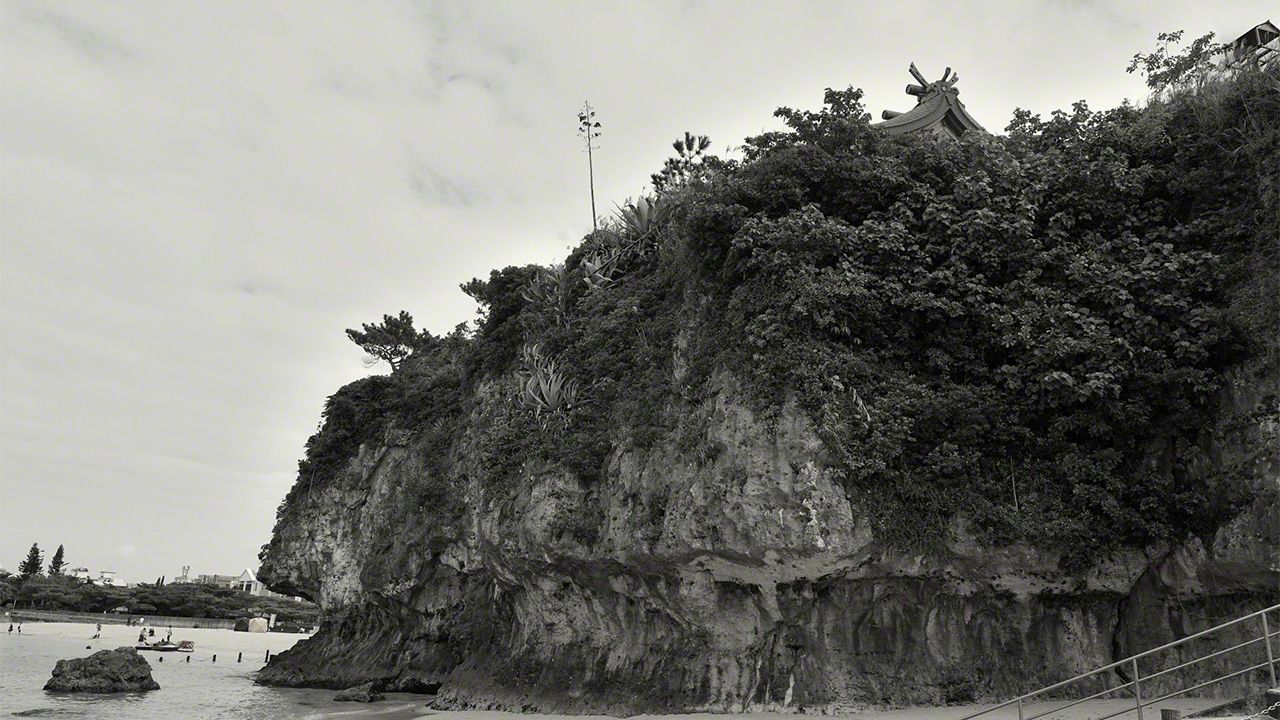
Along Okinawa’s western coast just north of Naha Airport is a high cliff that juts out from the beach into the sea. Perched atop it is Naminoue Shrine—affectionately called Nanmin-san by locals. It was the highest-ranked shrine of the Ryūkyū Kingdom (1429–1879), though the exact date of its founding remains unknown.
The cliff was a place of prayer long before the shrine was built. Walking along the beach toward its base, one can see how centuries of rough waves have carved deep hollows into the stone.
At first glance the exposed rock appears stark and bare, but a closer look reveals what appears to be an altar. The air is solemn, almost forbidding. Since ancient times, the people of Ryūkyū believed that abundance, happiness, and life itself came from Nirai Kanai, the realm of the gods far across the sea.
One corner of this cliff is a sacred site called Ryūgū—a spot believed to offer a direct link to Nirai Kanai. Even today, women make ritual rounds of the sacred sites, praying for the community’s prosperity, household safety, and good health, offering prayers at Ryūgū as well.
During the Ryūkyū Kingdom, trade flourished with mainland Japan, China, Korea, and the southern islands, and the port of Naha prospered. Naminoue Shrine became a center of worship, as ships entering or leaving the harbor would turn toward the great rock to pray for a safe voyage. Foreign residents in Ryūkyū are said to have placed incense burners atop the cliff and prayed in the direction of their distant homelands.
Today, the Naminoue Bridge stretches across the sea in front of the cliff. From the railing, pedestrians can view the massive rock thrusting into the water and the shrine rising above it like a castle. During the Ryūkyū Kingdom, the rock was called Hanagusuku, meaning “flower castle.” Facing the sea, it projected dignity worthy of a sacred place for offering prayers to Nirai Kanai.
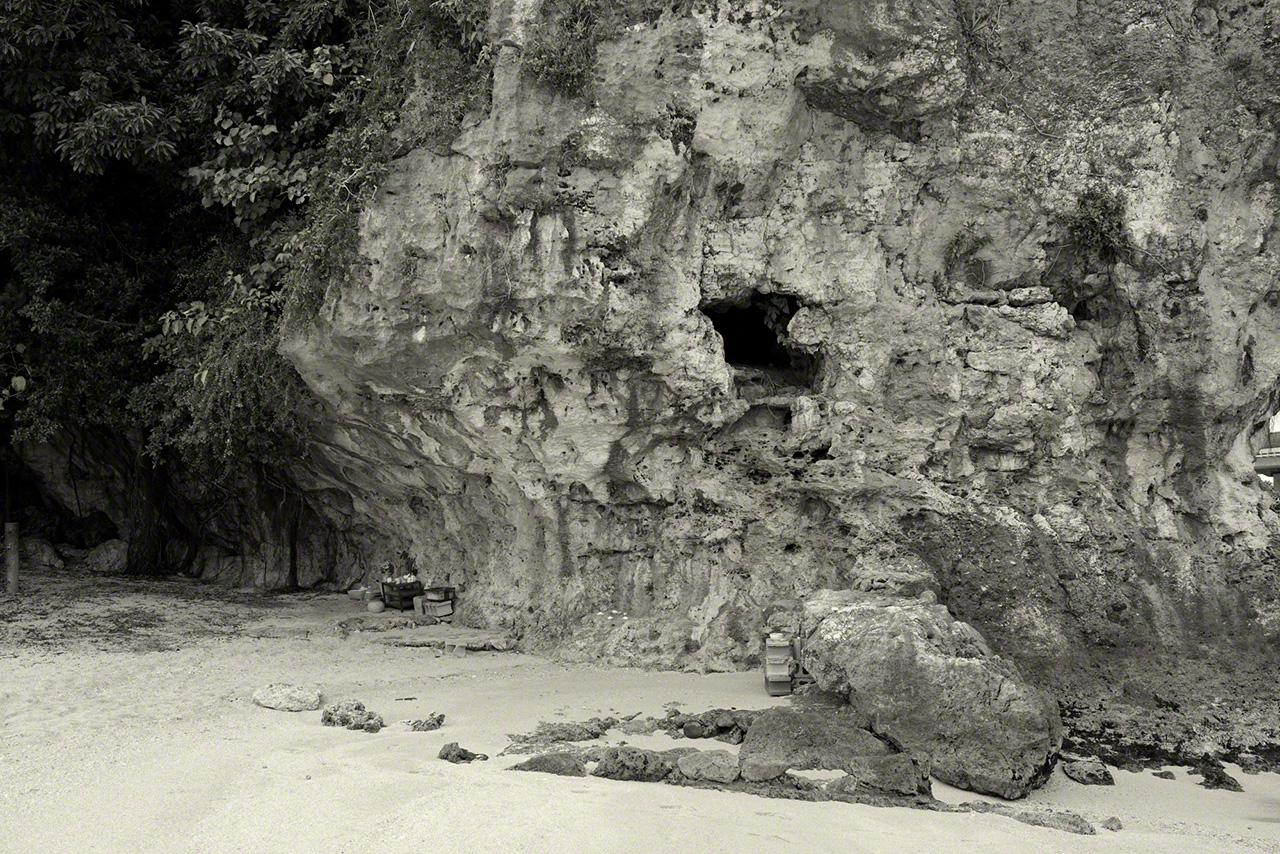
The cliff facing the sea has been a sacred site since ancient times. (© Ōsaka Hiroshi)
Naminoue Shrine
- Address: 1-25-11 Wakasa, Naha, Okinawa
- Deities enshrined: Izanami no Mikoto, Hayatama O no Mikoto, Kotosaka O no Mikoto
Naminoue Shrine is dedicated to the Kumano deities of mainland Japan, introduced during the Ryūkyū Kingdom. Worshippers pray here for maritime safety, abundant harvests, and the prosperity of descendants. The vivid vermilion shrine buildings and guardian shīsā lions evoke the spirit of Okinawa, and its location facing the city’s only beach makes it popular with visitors.
The limestone cliff on which the main hall stands has been a sacred site of Nirai Kanai worship since before the shrine was built. Human remains dating from the fourteenth to sixteenth centuries have been excavated from caves in the cliff, suggesting it once served as a burial site. It is a place where Ryūkyūan folk beliefs and mainland Shintō intersect.
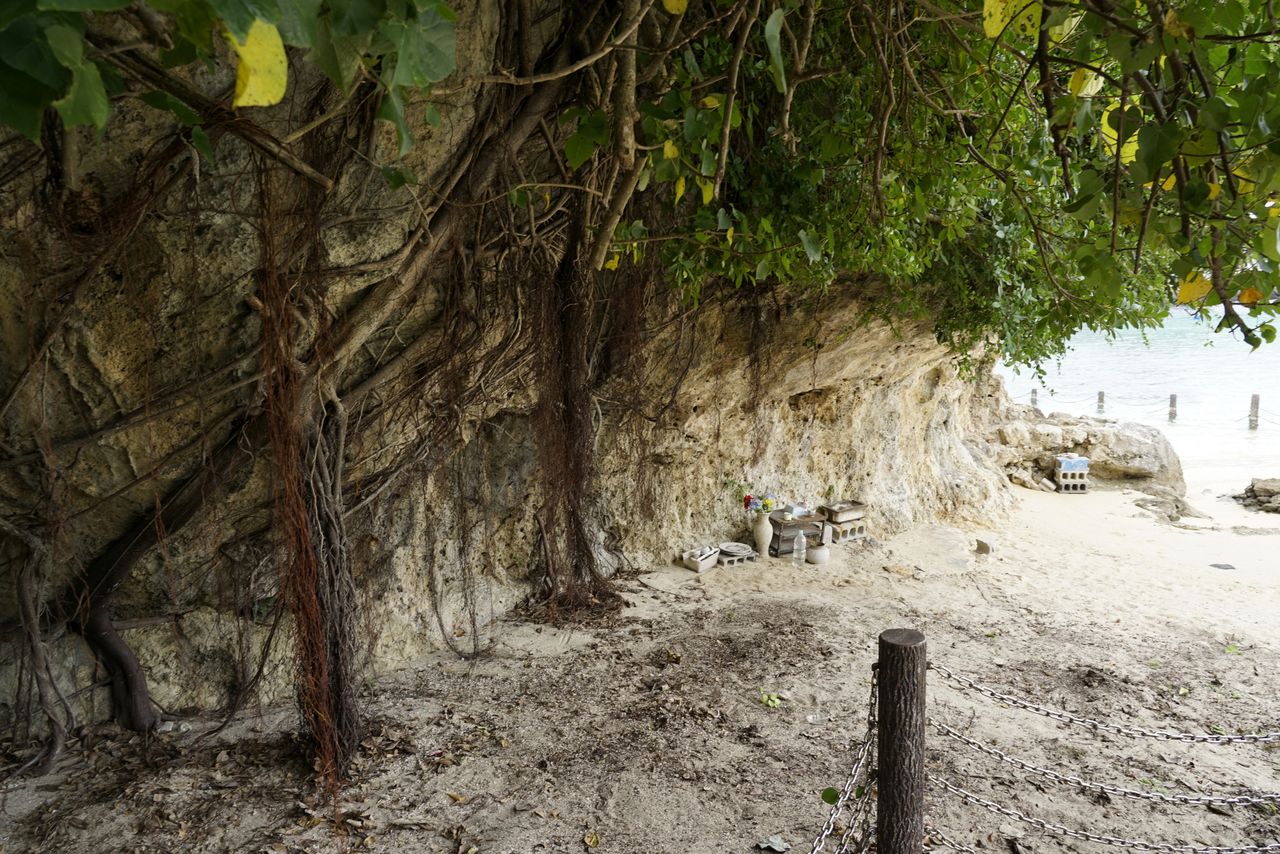
The sacred site known as Ryūgū, believed to provide a direct link to Nirai Kanai. (© Ōsaka Hiroshi)
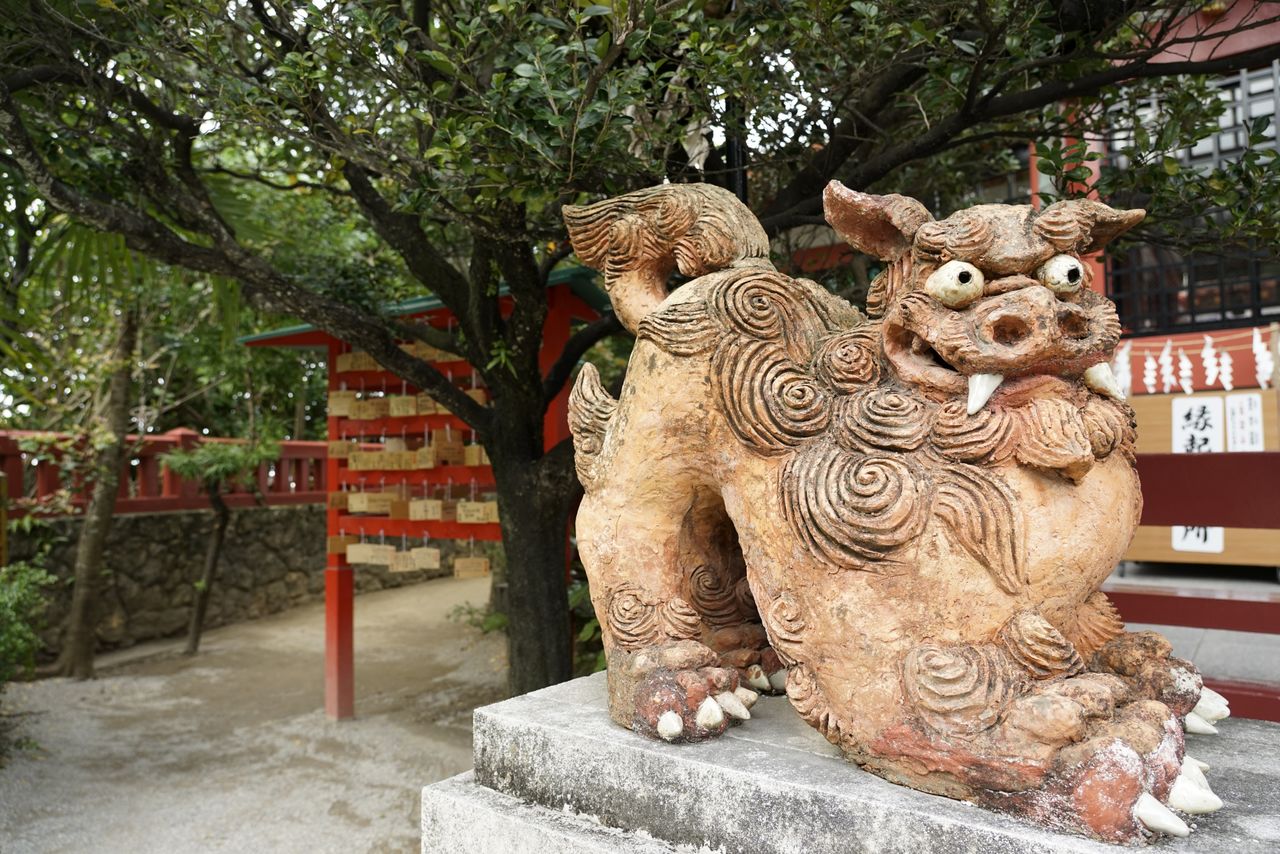
Naminoue Shrine was revered by the Ryūkyū monarchy, with the king himself visiting every New Year. (© Ōsaka Hiroshi)
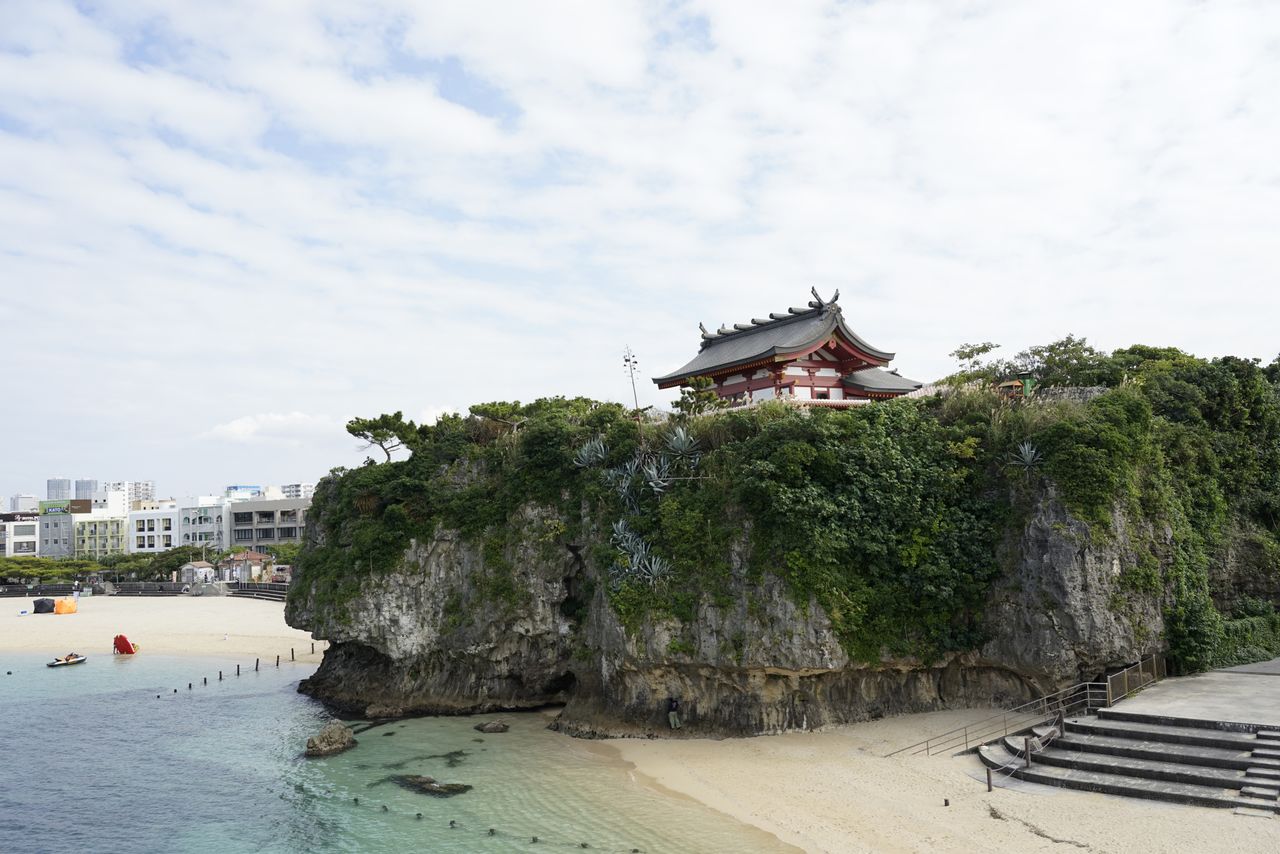
A view of Naminoue Shrine from the Naminoue Bridge. (© Ōsaka Hiroshi)
(Originally published in Japanese. Text and editing by Kitazaki Jirō. Banner photo: The cliff on which Naminoue Shrine stands. © Ōsaka Hiroshi.)