Welcome to Kabukiza: The Allure and Magic of Ginza’s Legendary Stage
Guideto Japan
Culture Art Entertainment
Nakamura Takanosuke
Kabuki actor. Born Watanabe Dai in Tokyo in 1999. Eldest son of Nakamura Tomijūrō V, a kabuki actor and living national treasure. In 2001, at age two, was given the name Nakamura Dai and took the stage for the first time. In 2005 made his debut performance as Takanosuke in the drama Kuramayama homare no wakataka (The Famed Hawk of Mount Kurama). Earned a degree in economics from Gakushūin University.
- English
- 日本語
- 简体字
- 繁體字
- Français
- Español
- العربية
- Русский
A Kabukiza Role: Every Actor’s Goal
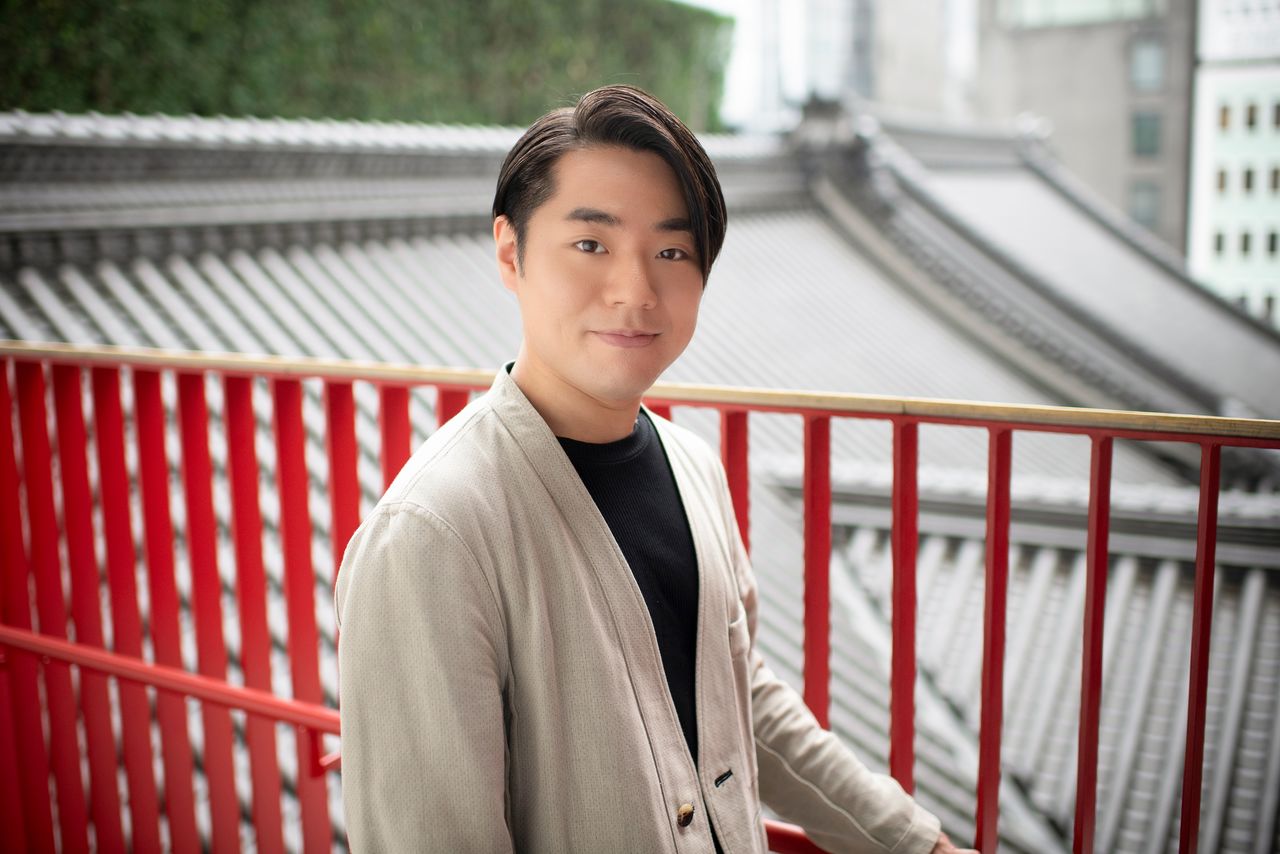
Nakamura Takanosuke poses on a rooftop balcony at Ginza’s Kabukiza. (© Matsuda Tadao)
For kabuki actors, Tokyo’s Kabukiza theater represents the pinnacle of their profession. “It’s the largest venue for kabuki and really the heart of the tradition today,” says Nakamura Takanosuke. “Every actor dreams of gaining recognition here. The roles and plays in which you appear represent major milestones in an actor’s career.”
Takanosuke recently brought two roles to life in productions of iconic plays on the Kabukiza stage. In May, he performed in Kanjinchō as Suruga Jirō, a loyal retainer to the tragic hero Minamoto no Yoshitsune. The following month, he appeared in the classic kabuki drama Sugawara Denju Tenarai Kagami portraying Matsuōmaru, one of the triplet brothers who is in the service of the enemy and is torn between duty and family. With bold makeup and a dramatic mie pose, he brought intense energy to the role.
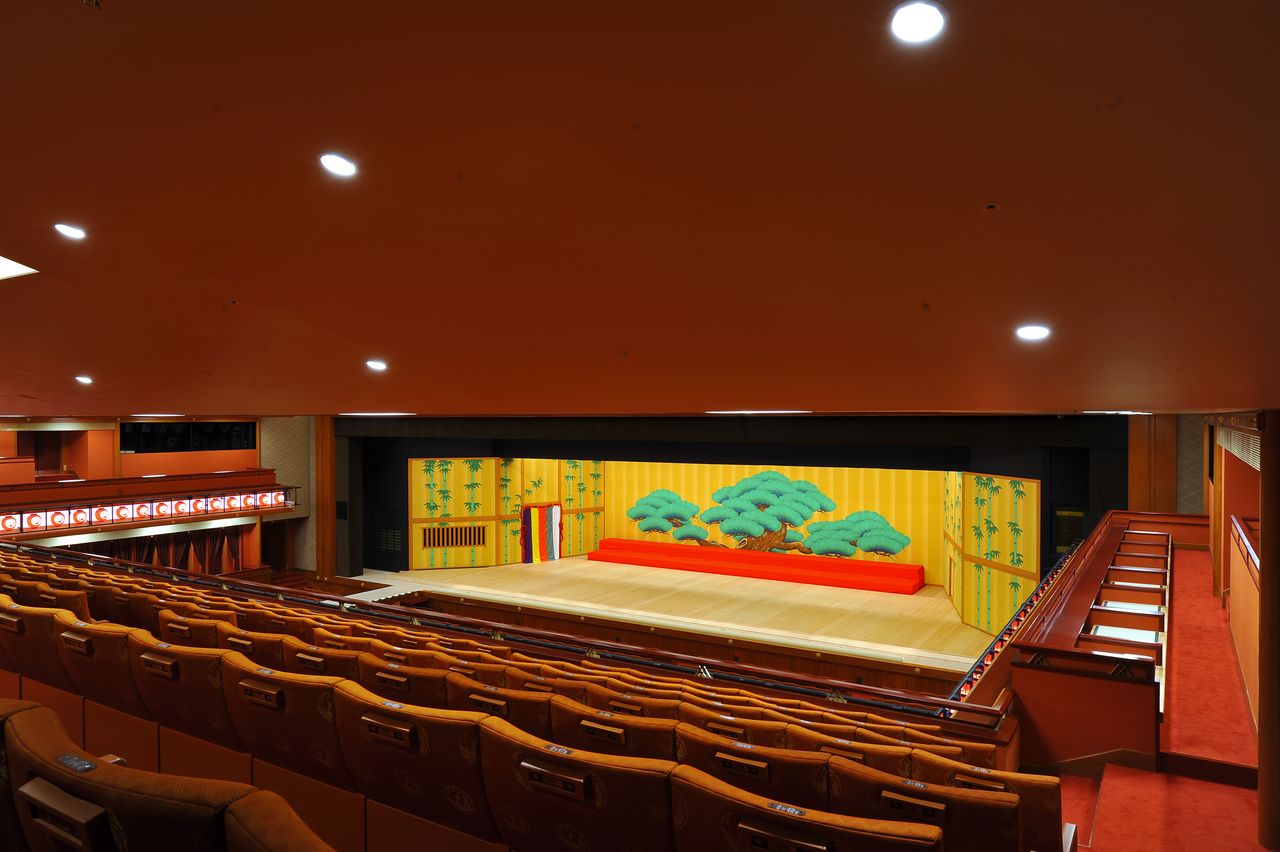
A view of the Kabukiza stage from the balcony seating. (Courtesy Shōchiku)
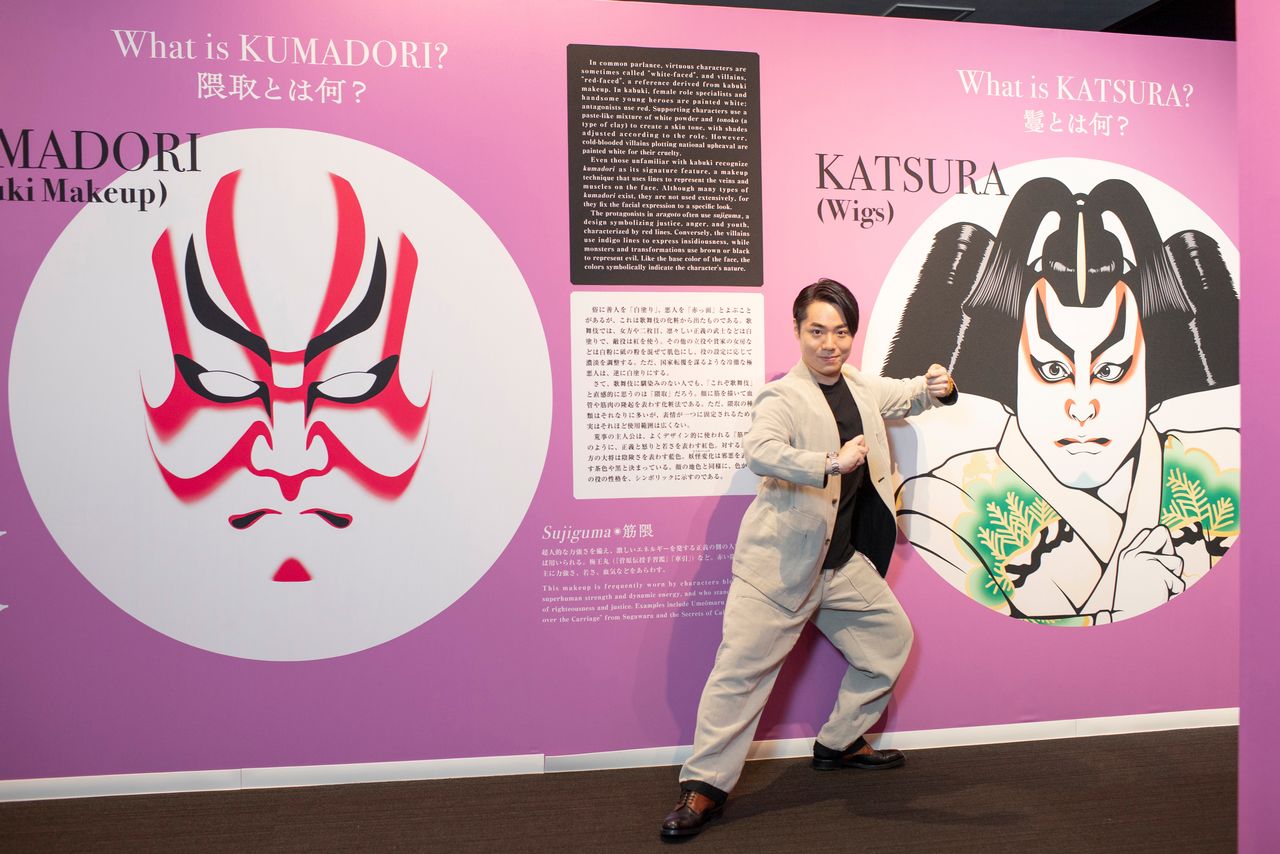
Nakamura displays the mie pose in front of a display featuring his Matsuōmaru character on the theater’s fifth floor. (© Matsuo Tadao)

A Theater Enshrining Generations Past
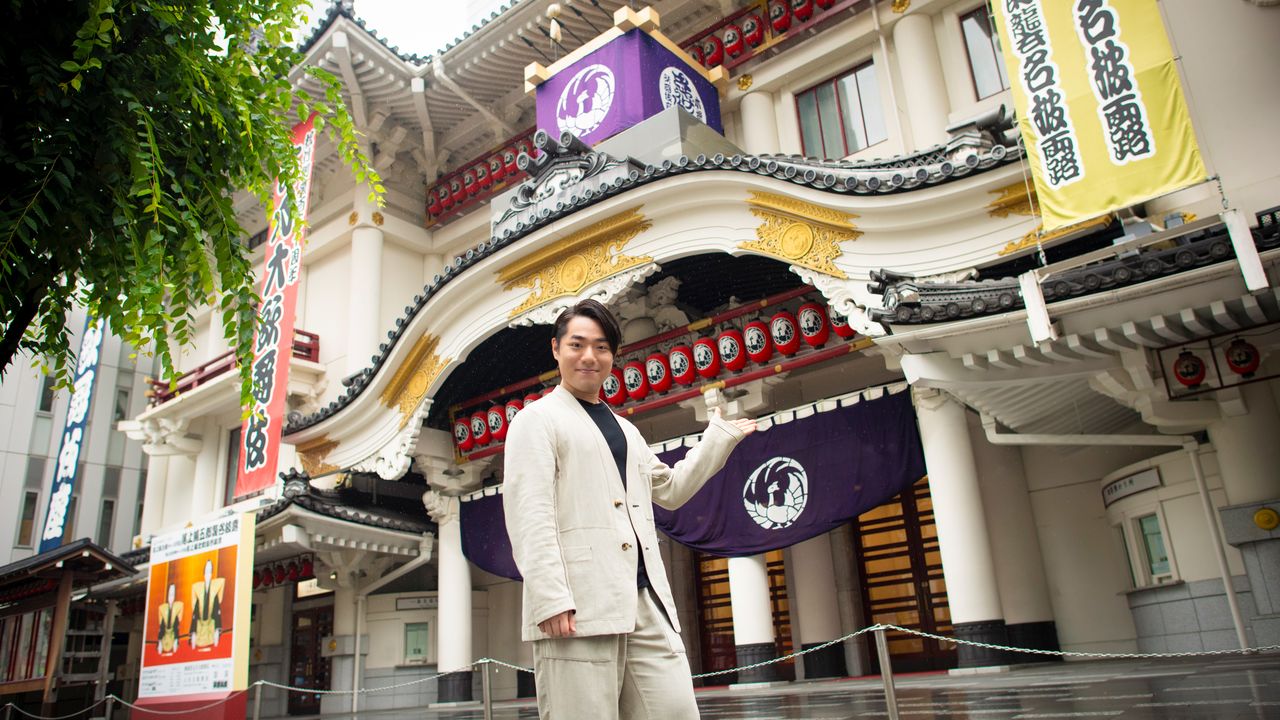
Kabukiza first opened in 1889 in Kobikichō, the former name of the Tokyo neighborhood where it now stands. After four reconstructions, the current, fifth-generation building opened in 2013. Designed by architect Kuma Kengo, it masterfully blends the elegance of traditional Japanese architecture—like the curved karahafu gables and tiled roofs—with a sleek office tower rising behind it.
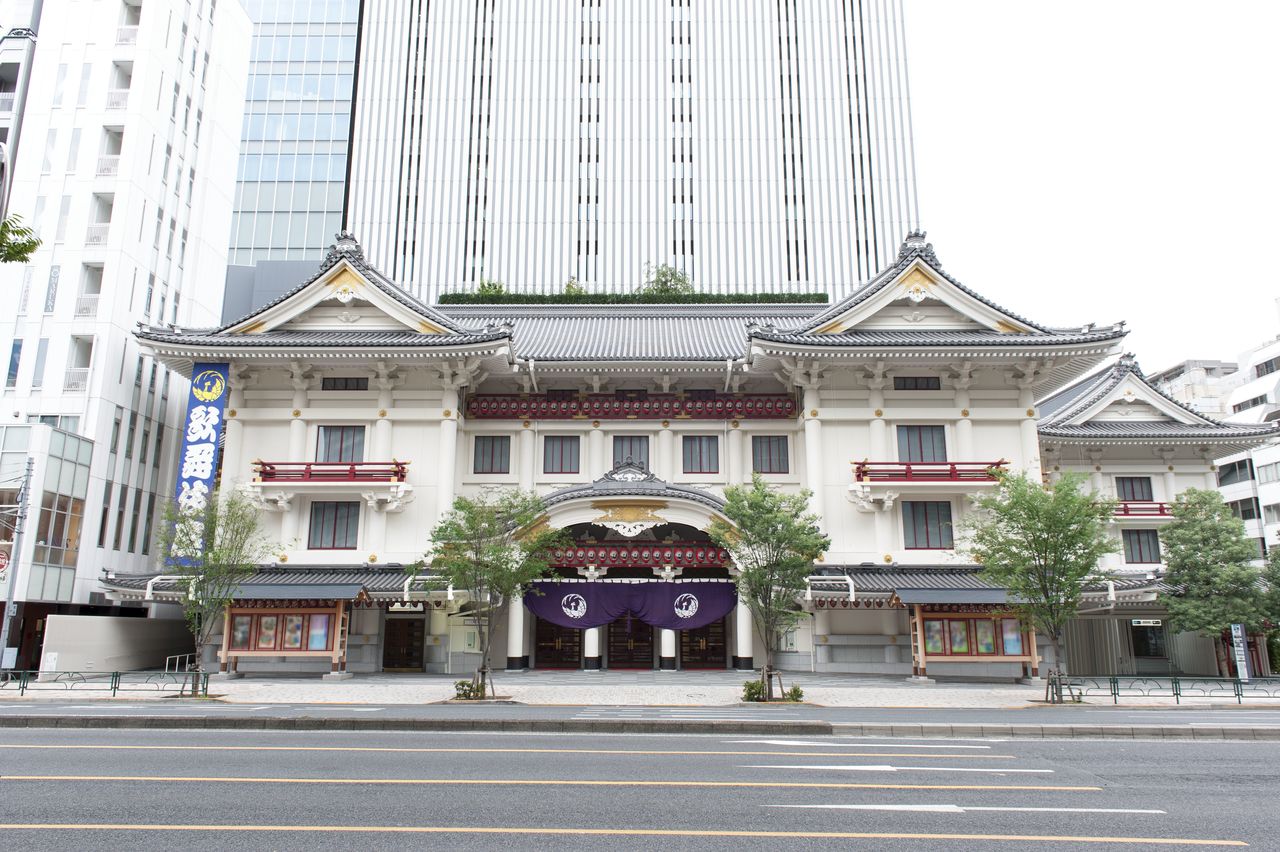
The theater façade sits in front of the 29-story Kabukiza Tower, newly added in 2013. (Courtesy Shōchiku)
“This theater has hosted legendary performers for over 130 years,” says Takanosuke, “and it’s steeped in collective memory. You can feel the presence of generations past.”
He jokingly says, “It’s a little like The Phantom of the Opera. A spirit might come to admonish you if you’re not taking your art seriously. It can be intimidating, but at the same time, the atmosphere can be very supporting. When I performed Funabenkei here two years ago at a memorial event for my father”—Nakamura Tomijūrō V, who passed away in 2011 at the age of 81—“I was incredibly nervous. But the energy of the space gave me strength and pushed me beyond what I thought I could do. There’s definitely something magical about this place.”
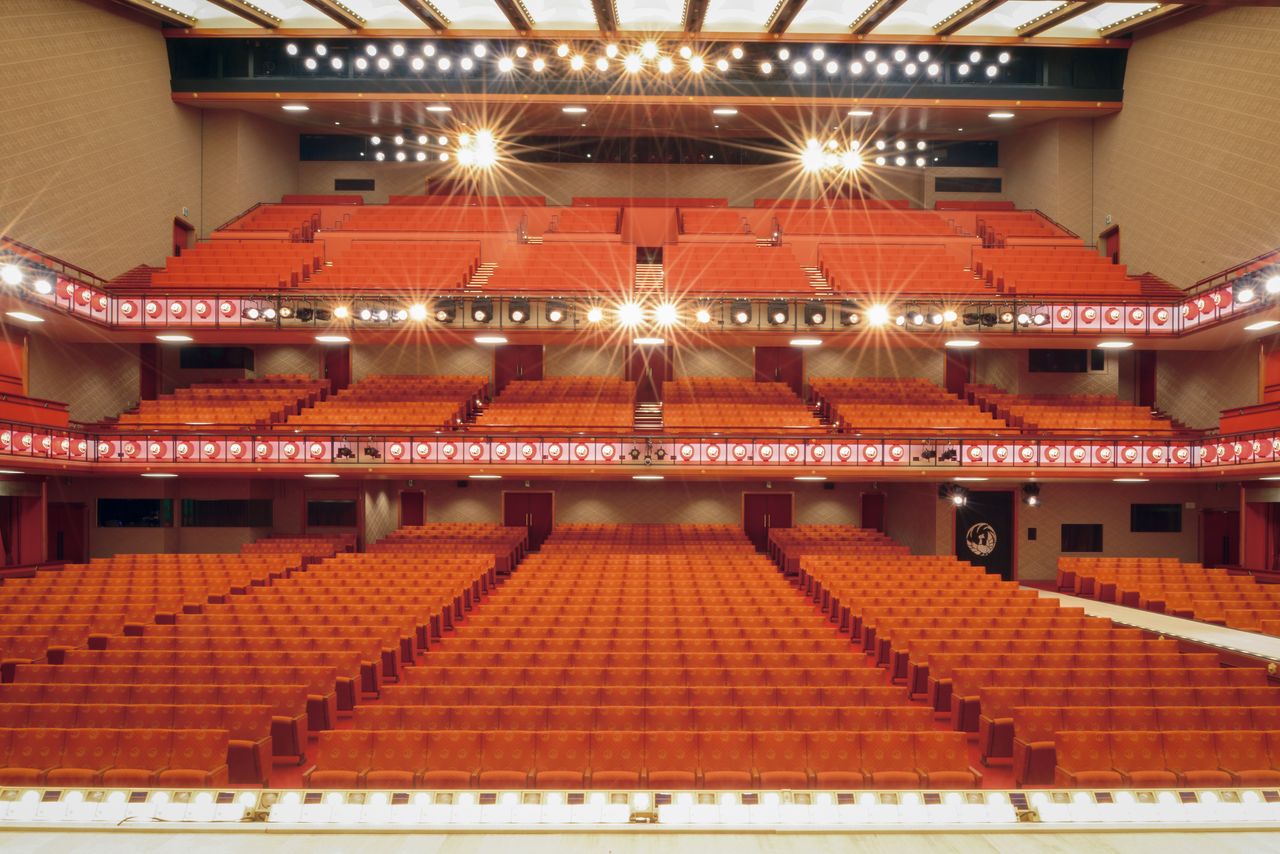
The theater seats 1,904 guests in all. (Courtesy Shōchiku)
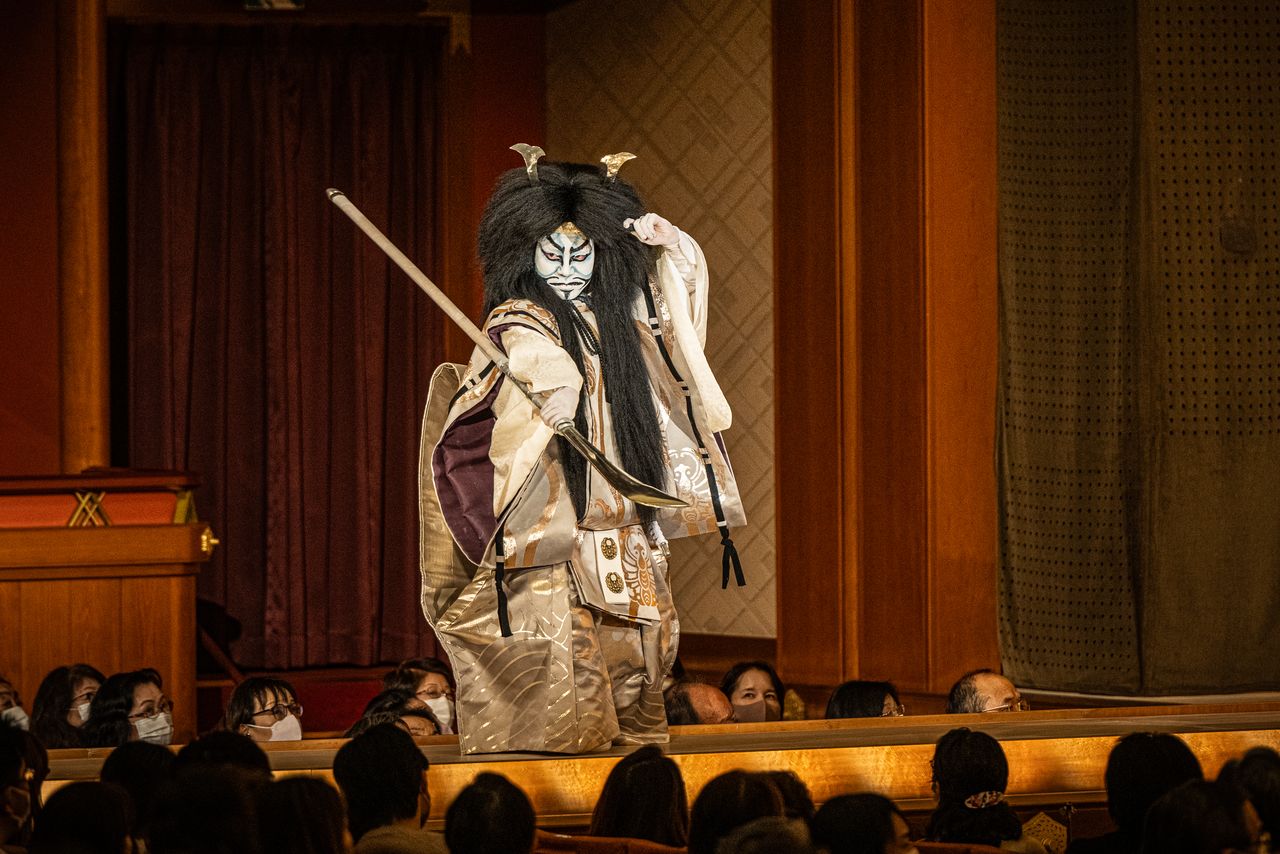
Takanosuke performs in Funabenkei in February 2023 at Kabukiza as a special act marking the thirteenth year since his father’s passing. (© Matsuda Tadao; courtesy Shōchiku)
Feels Like Home
Takanosuke says that for kabuki actors, Kabukiza is more than a theater; it feels more like home. “When I was born, my father brought me straight from the hospital to the theater and introduced me to everyone backstage. As a kid, I often played in the dressing rooms and hallways, so every time I perform here, it feels like a family reunion—though with all the ‘relatives’ watching, I feel I always have to do my best.”
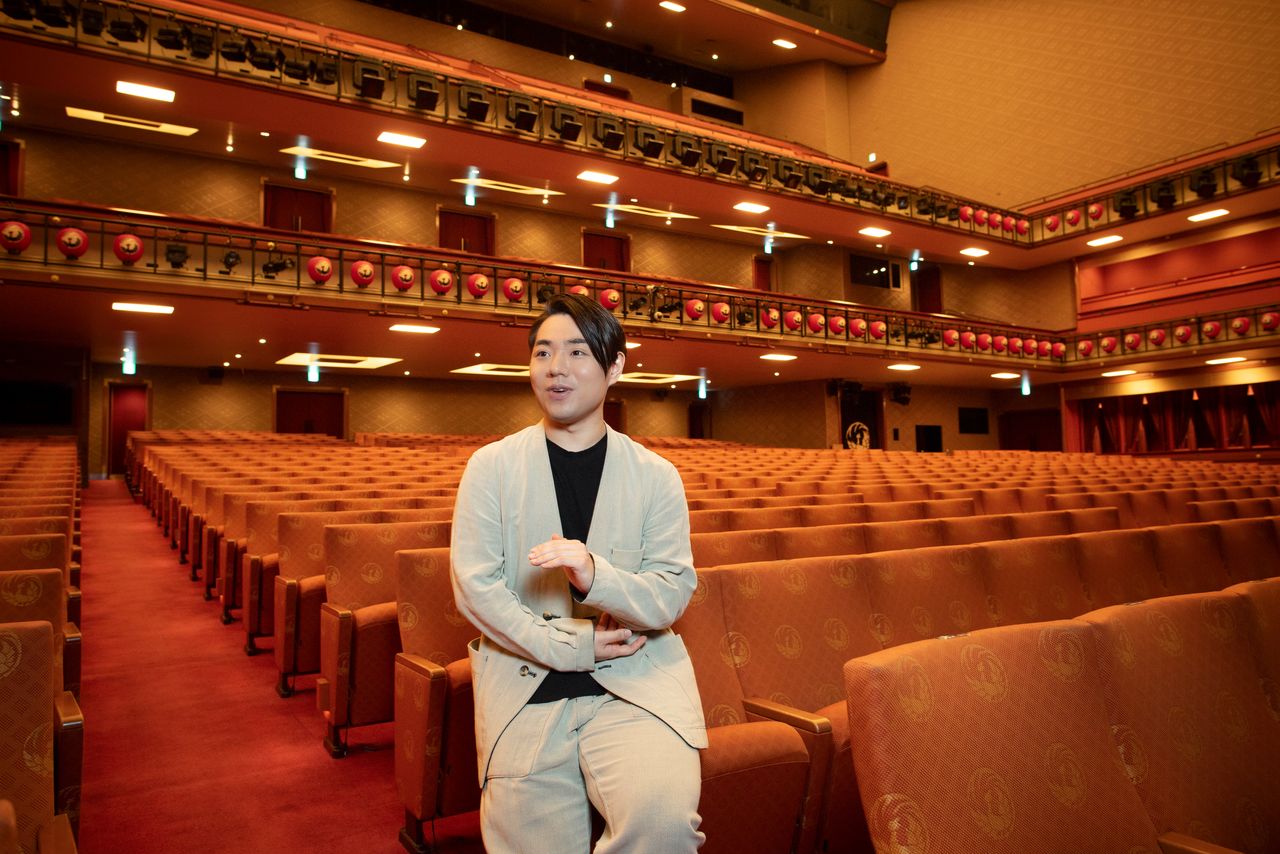
Takanosuke reminisces in the seats of the theater he calls “home.” (© Matsuda Tadao)
In 2009, Takanosuke had an opportunity to share the stage with his father—a living national treasure who was renowned for his dancing skills—at performances commemorating his father’s eightieth birthday. Then only 10 years old, Takanosuke played the role of Yoshitsune in Kanjinchō and also appeared in the classic Renjishi dance drama about parent and child lions.
“Looking back,” he says, “I now realize there were many things my father wanted to convey to me through those performances. His portrayal of Benkei in Kanjinchō was probably the culmination of his artistic career, and I now regard that role as my biggest goal. The artistry I felt up close will be my compass, but I also want to develop my own style for the role—and for that, I’ll need a lot more experience.”
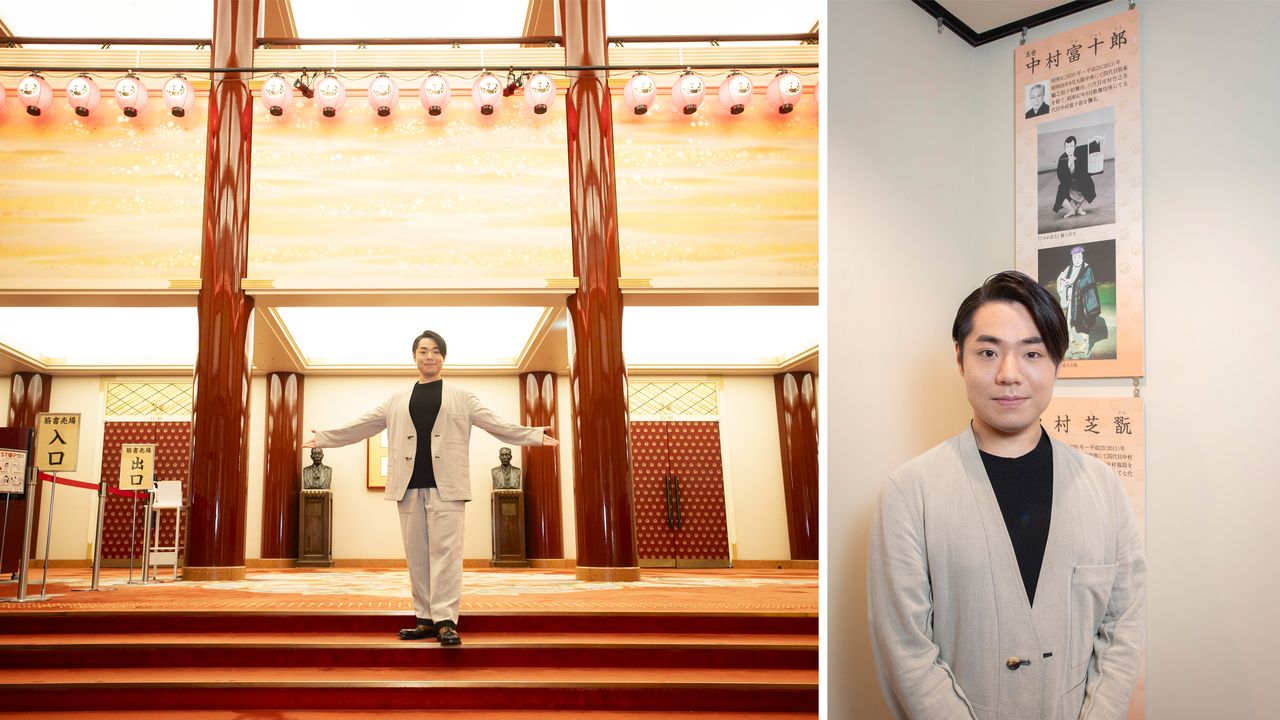
At left, Takanosuke in the grand lobby of the theater; at right, posting with a fourth-floor display commemorating his father’s accomplishments. (© Matsuda Tadao)
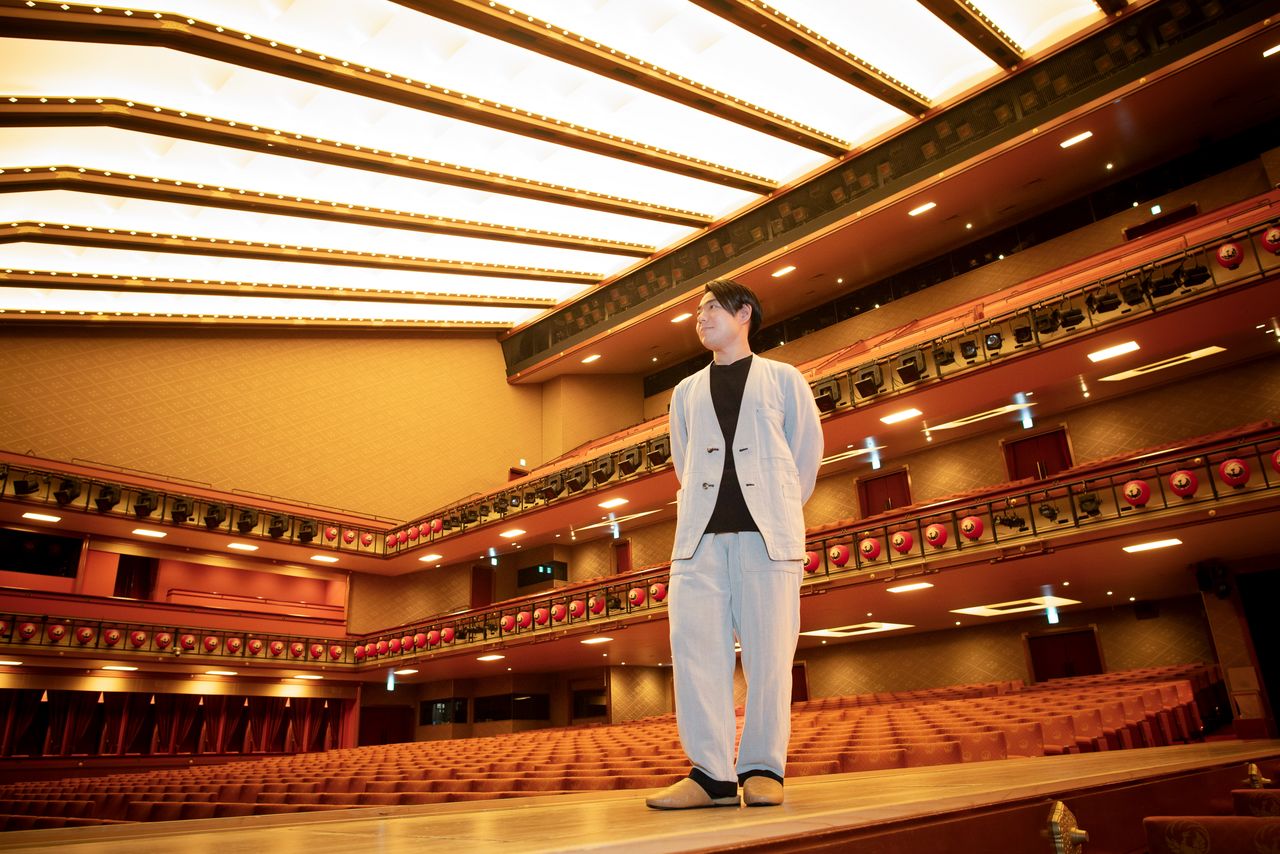
Dreaming of the day he can rival his father’s Kanjinchō performance on the Kabukiza stage. (© Matsuda Tadao)
Many Ways to Enjoy a Day at Kabukiza
Kabukiza in its current, fifth incarnation is a cultural hub that boasts many charms, even for those who are not theatergoers.
“The theater has excellent subway access, and it’s designed for universal use,” says Takanosuke. “Even if you don’t see a play, you can enjoy shopping at Kobikichō Square, relax at the rooftop garden, or have a drink at the café.”
Linked directly to Higashi-Ginza Station on the Toei Asakusa and Tokyo Metro Hibiya Lines, Kobikichō Square on the second basement floor of Kabukiza Tower is ornamented with large paper lanterns and has the lively feel of a traditional festival, with shops offering kabuki-themed goods, Japanese sweets, and crafts.
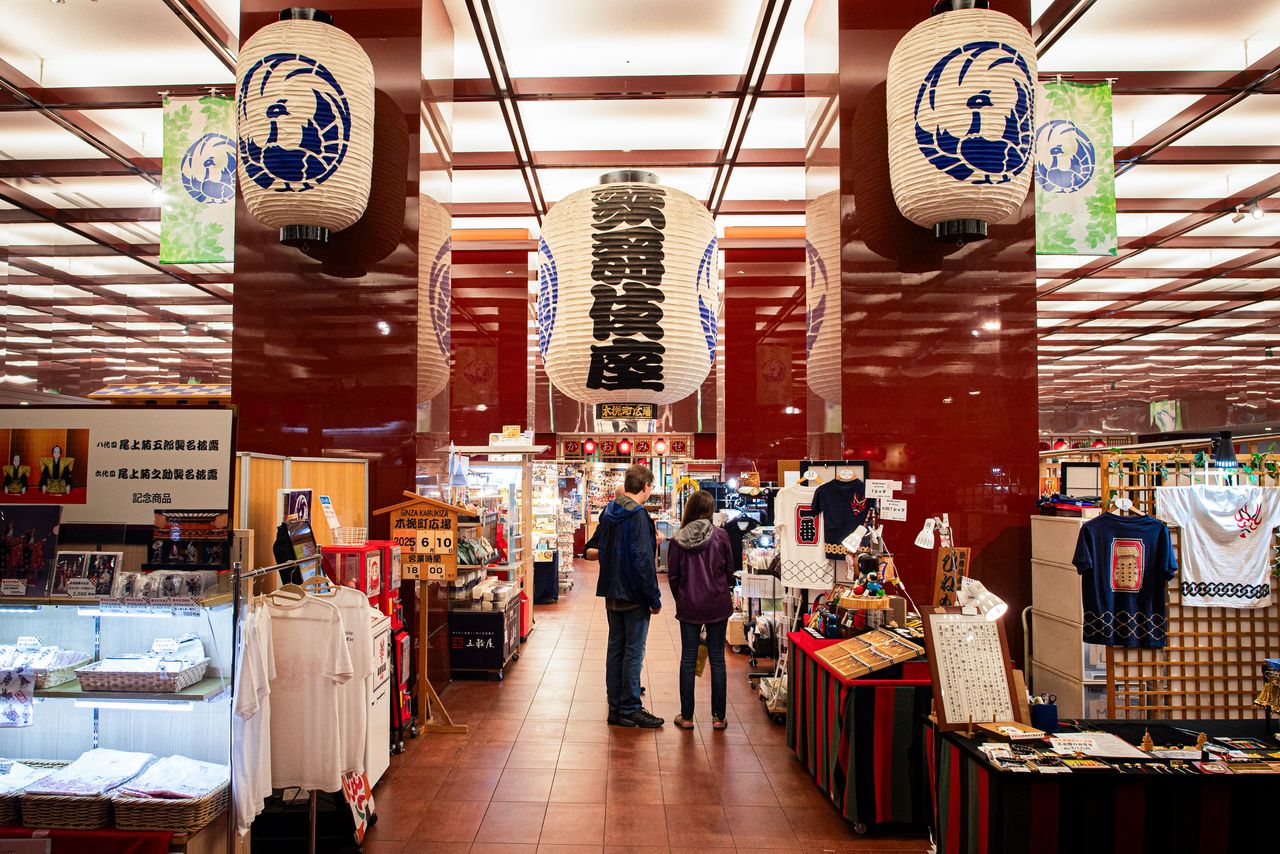
Kabuki-themed snacks and souvenirs are plentiful in the shopping arcade beneath the theater. (© Matsuda Tadao)
Popular with foreign visitors is the Kabuki Inari Shrine, standing beside the main entrance, where prayers are offered for successful performances and the safety of theater personnel. Just behind it is the Kobukichō gift shop, where Takanosuke recommends two personal favorites: tencha throat lozenges, popular among performers for soothing the voice, and Ekijutō, a Kyoto sweet once loved by his late father.
“The lozenges are hard to find elsewhere, so even when I’m performing at another venue, I come here to buy them. And Ekijutō is only available while I’m performing at Kabukiza. So I hope people who come for the show drop by the gift shop to pick some up while I’m on stage.”
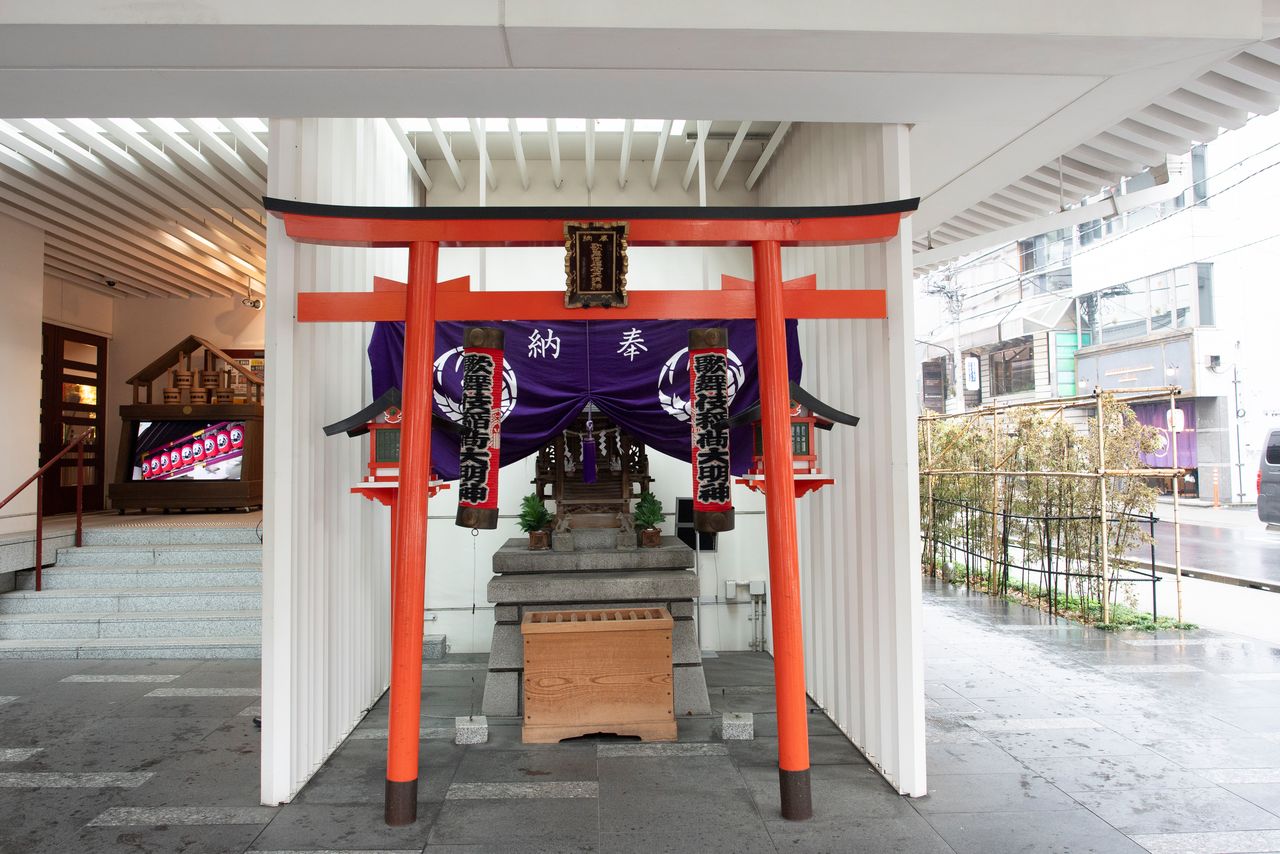
The Kabuki Inari Shrine on the premises is a popular stop among fans. (© Matsuda Tadao)
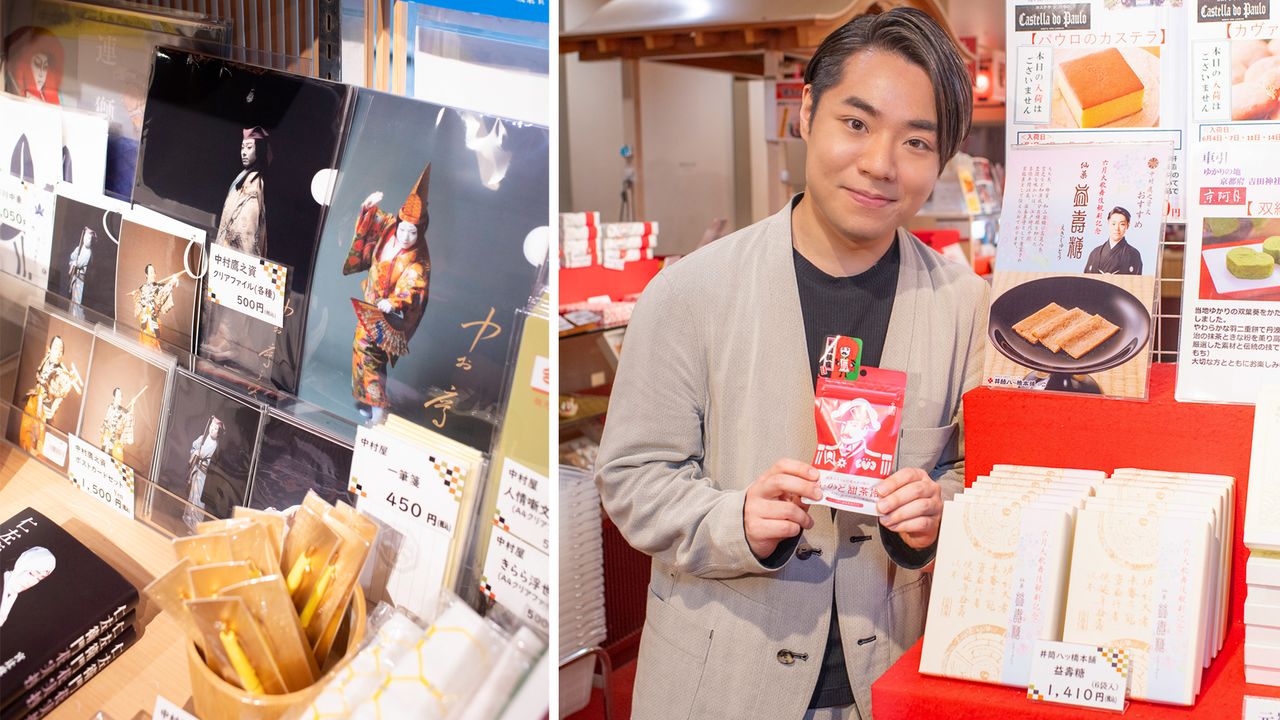
At left, some of the stationery supplies emblazoned with images of Takanosuke that are available at the shops; at right, Takanosuke with his favorite tencha lozenges next to a display of the Ekijutō sweets available while he is performing. (© Matsuda Tadao)
Visitors can view scale models of past Kabukiza buildings and displays featuring legendary actors along the fourth-floor corridor. From there, they can take the Goemon Staircase to the rooftop Japanese garden—one of Ginza’s best-kept secrets. There is no charge for admission to this tranquil retreat, featuring a stone lantern from the estate of the late-Edo, early-Meiji kabuki playwright Kawatake Mokuami.
The tea shop Jugetsudō, designed by Kuma Kengo, offers matcha and sweets in a modern, bamboo-lined space overlooking the garden. The adjacent Kabukiza Gallery offers an introduction to kabuki with colorful panels in both Japanese and English—making it a great stop for international visitors.
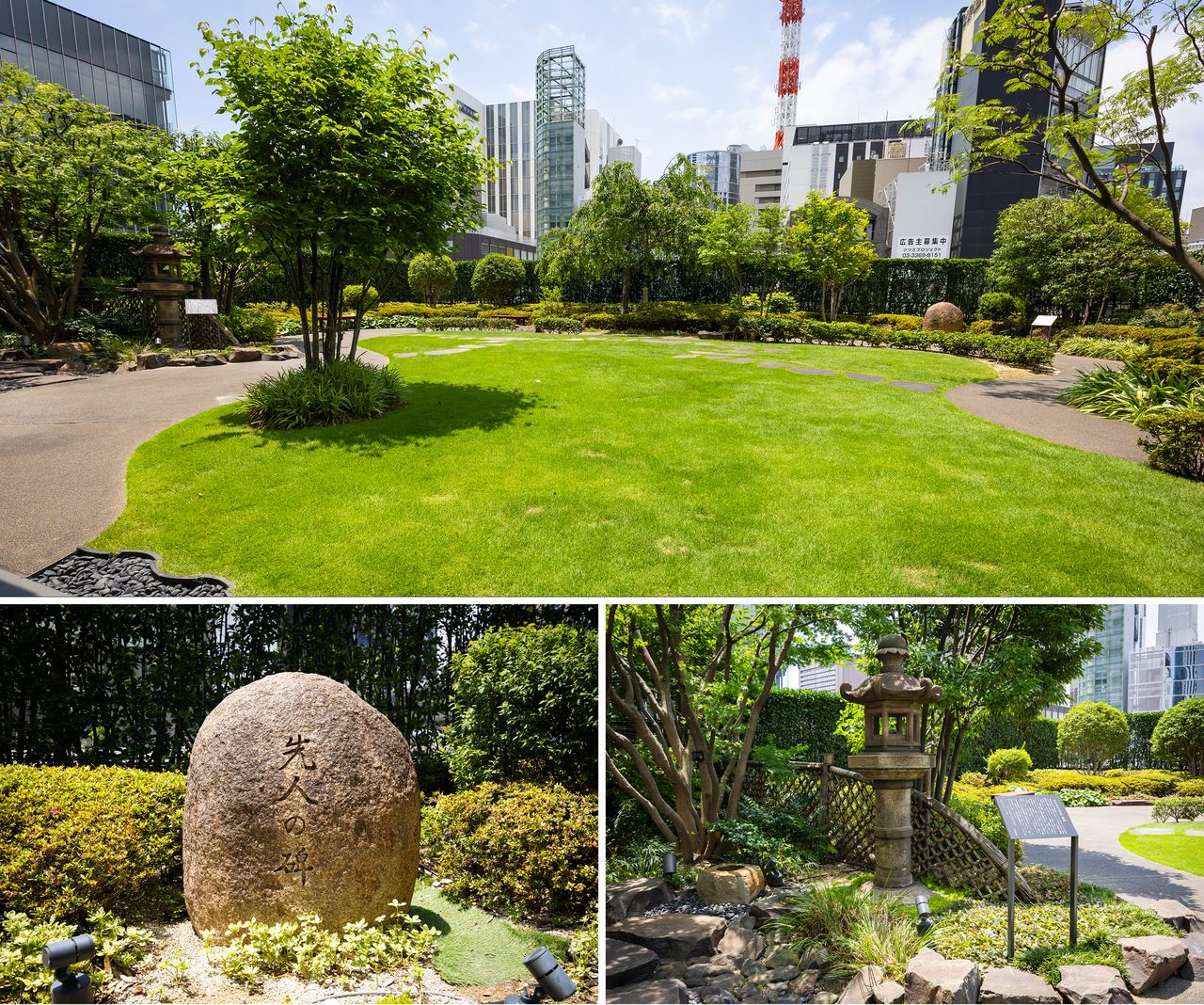
Clockwise from top: the rooftop garden, a stone lantern relocated from Mokuami’s estate, and a stone monument commemorating the achievements of historical figures who built the art of kabuki. (© Nippon.com)
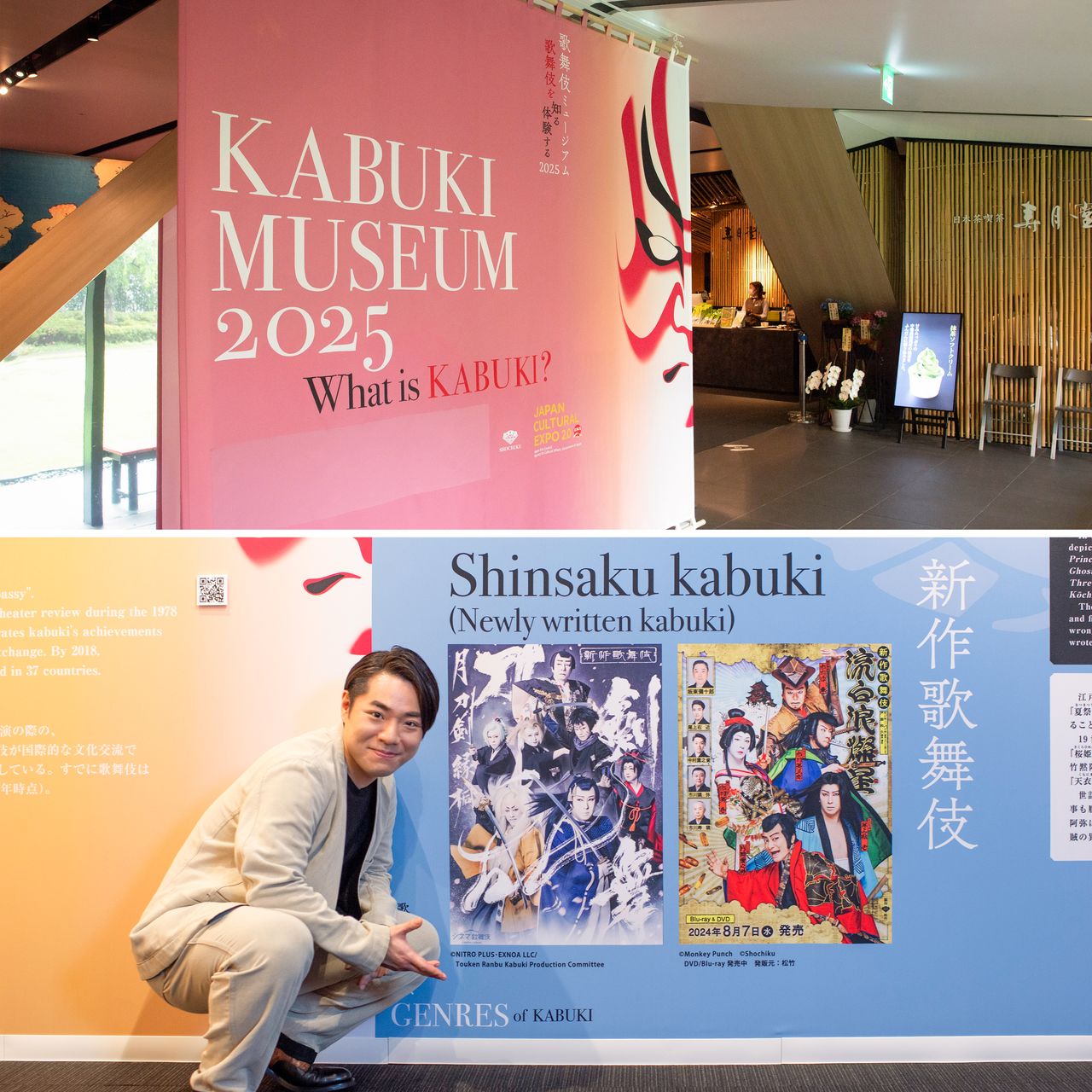
The Kabukiza gallery (at top) is at the entrance to Jugetsudō, where Takanosuke poses with posters advertising “new kabuki” features, including (at left) a 2023 show he starred in based on the popular video game/anime property Tōken Ranbu. (© Matsuda Tadao)
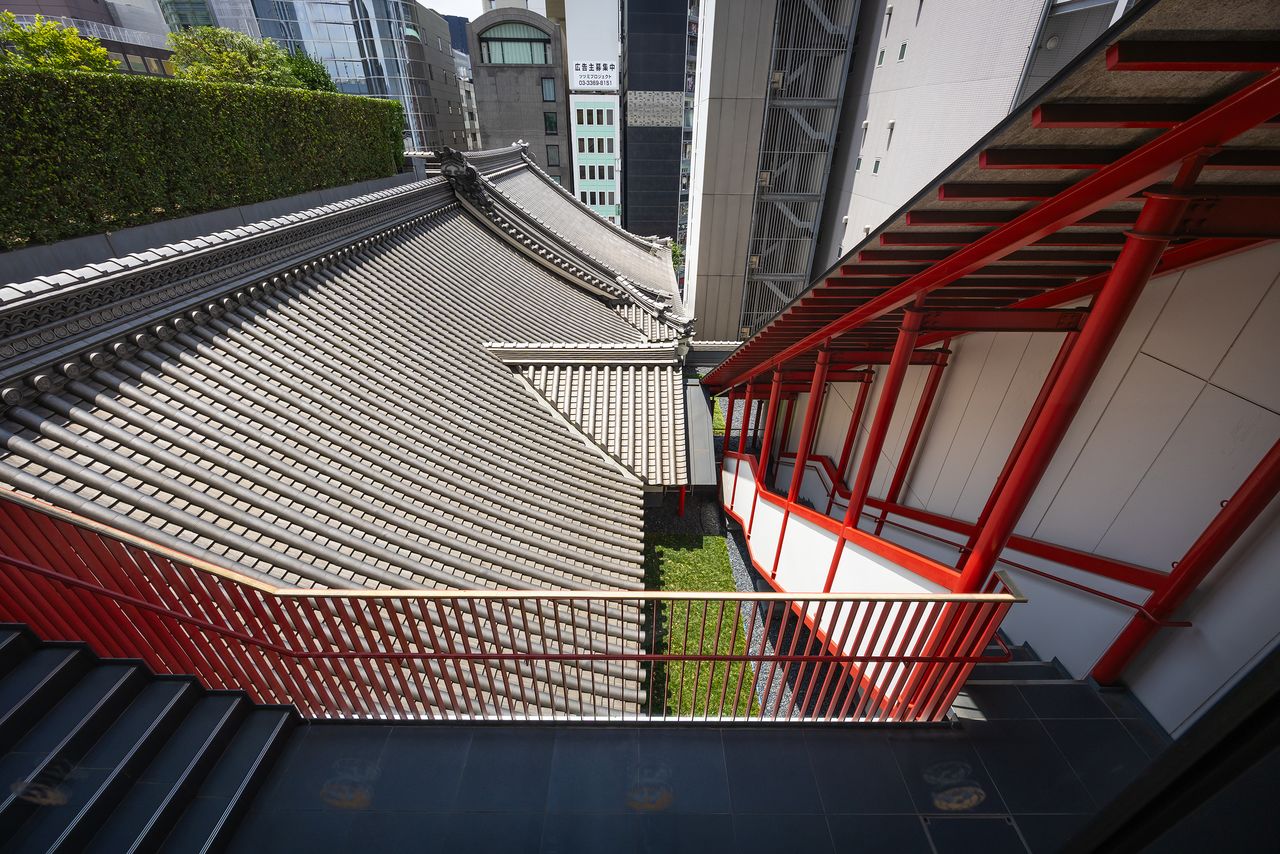
The Goemon Staircase connects the fourth-floor corridor and the rooftop space. It offers splendid views of the theater’s tiled roof, calling to mind the “O what a splendid sight!” line from the famed bandit and kabuki character Ishikawa Goemon. (© Nippon.com)
Time for the Show
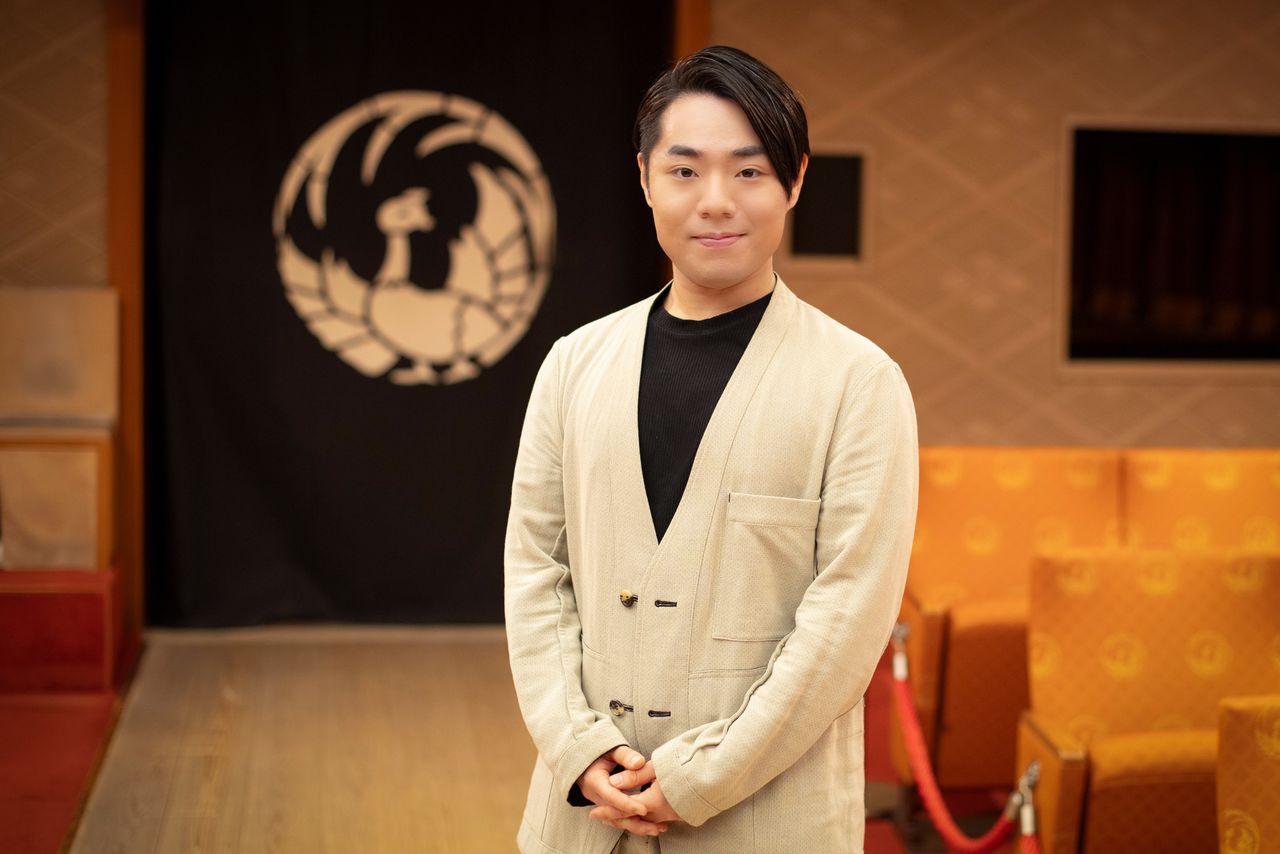
Takanosuke looks forward to new achievements on stages across Japan. (© Matsuda Tadao)
Takanosuke has a busy season ahead, appearing in the kabuki adaptations of the popular online game and anime Tōken Ranbu in July–August, as well as the manga and anime series Lupin III in September. He will also host his tenth Shōnokai recital this October, performing at the Asakusa Public Hall in two plays, including one alongside kabuki star Nakamura Kankurō in a dynamic, festival-themed dance piece that features fast-paced costume changes.
Even newcomers can fully enjoy kabuki through these special performances. While most Kabukiza programs run for four hours, staged daily in the afternoon and early evening, first-timers might reserve single-act tickets for ¥1,000 to ¥2,000. These are available online from noon the day before the performance, with a limited number of same-day tickets also offered at the box office.
Takanosuke hopes more people will discover Kabukiza—and perhaps realize that the 400-year-old theatrical art form showcased there is far more accessible than many people imagine.
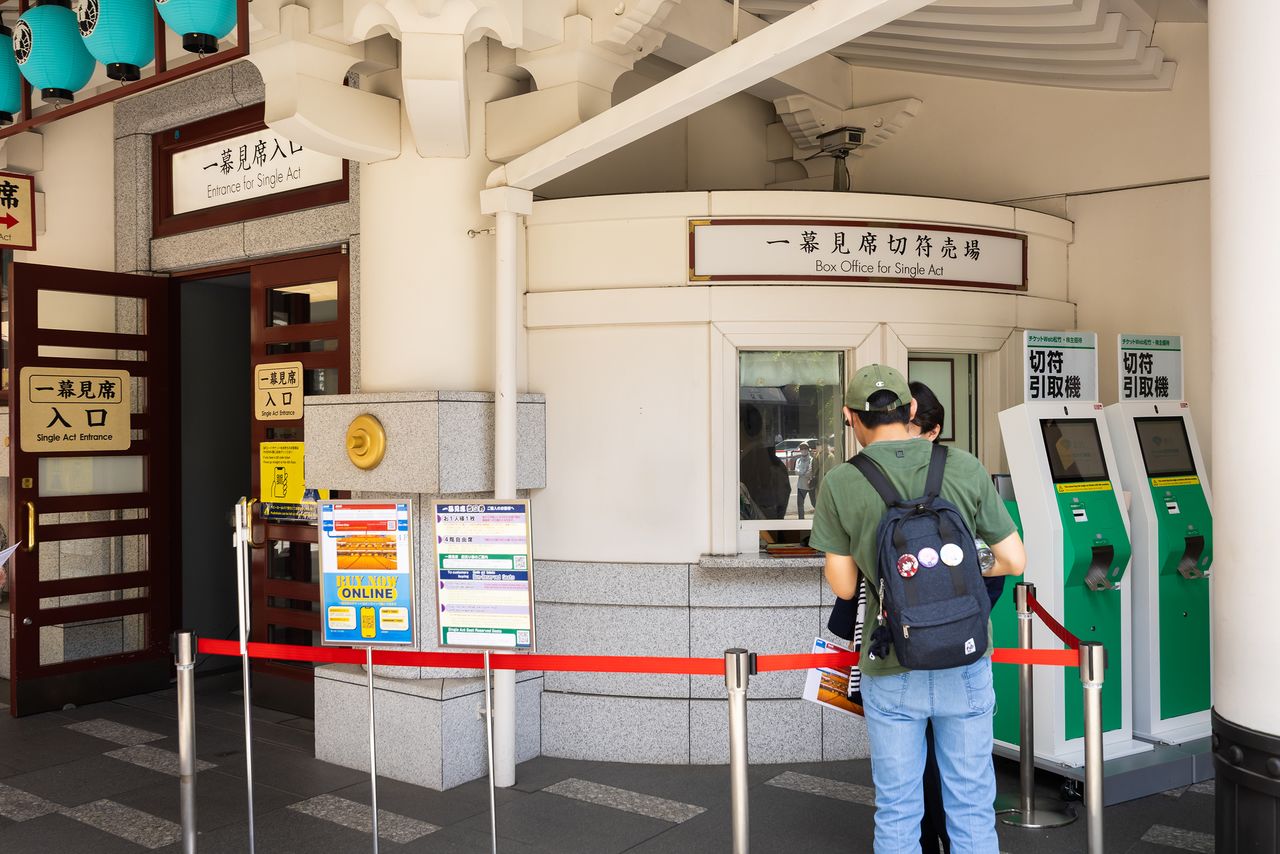
The Kabukiza ticket booth at the theater entrance. (© Nippon.com)
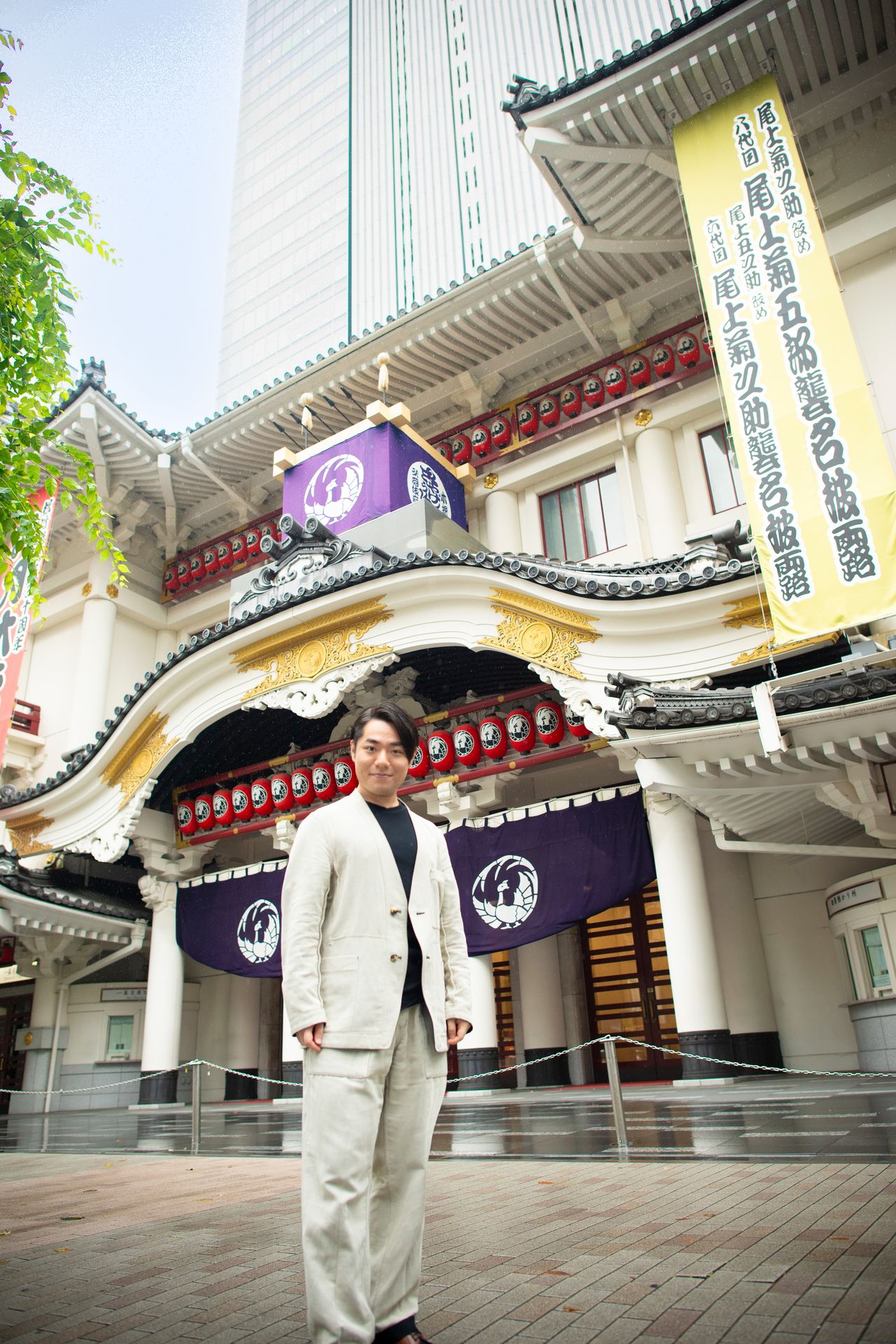
Takanosuke at the entrance to Kabukiza, expressing his hope that visitors to Tokyo will make it part of their trips. (© Matsuda Tadao)
Kabukiza Theater
- Location: 4-12-15 Ginza, Chūō, Tokyo
- Access: Enter directly from Exit 3, Higashi Ginza Station (Tokyo Metro Hibiya Line, Toei Asakusa Line), or walk 5 minutes from Ginza Station on the Tokyo Metro Hibiya, Marunouchi, and Ginza Lines
- Admission: Free entry to rooftop garden and Kabukiza Gallery (note that exhibits are changed regularly)

(Originally written in Japanese by Itakura Kimie of Nippon.com. Styling and makeup for Nakamura Takanosuke by Yamaguchi Kōichi of Slang. Banner photo: Takanosuke welcomes visitors to Kabukiza in Ginza, Tokyo. © Matsuda Tadao.)