Experiencing Ancient Zen Culture at Kamakura’s Kenchōji
Guideto Japan
Travel Culture History- English
- 日本語
- 简体字
- 繁體字
- Français
- Español
- العربية
- Русский
A Temple at the Heart of a Historical Religious Capital
Cradled by mountains on three sides and overlooking Sagami Bay, the compact city of Kamakura is home to a surprising number of shrines and temples: 123 in total. Of these, about one-third belong to the Rinzai school of Zen Buddhism, which flourished under the Kamakura shogunate (1185–1333).
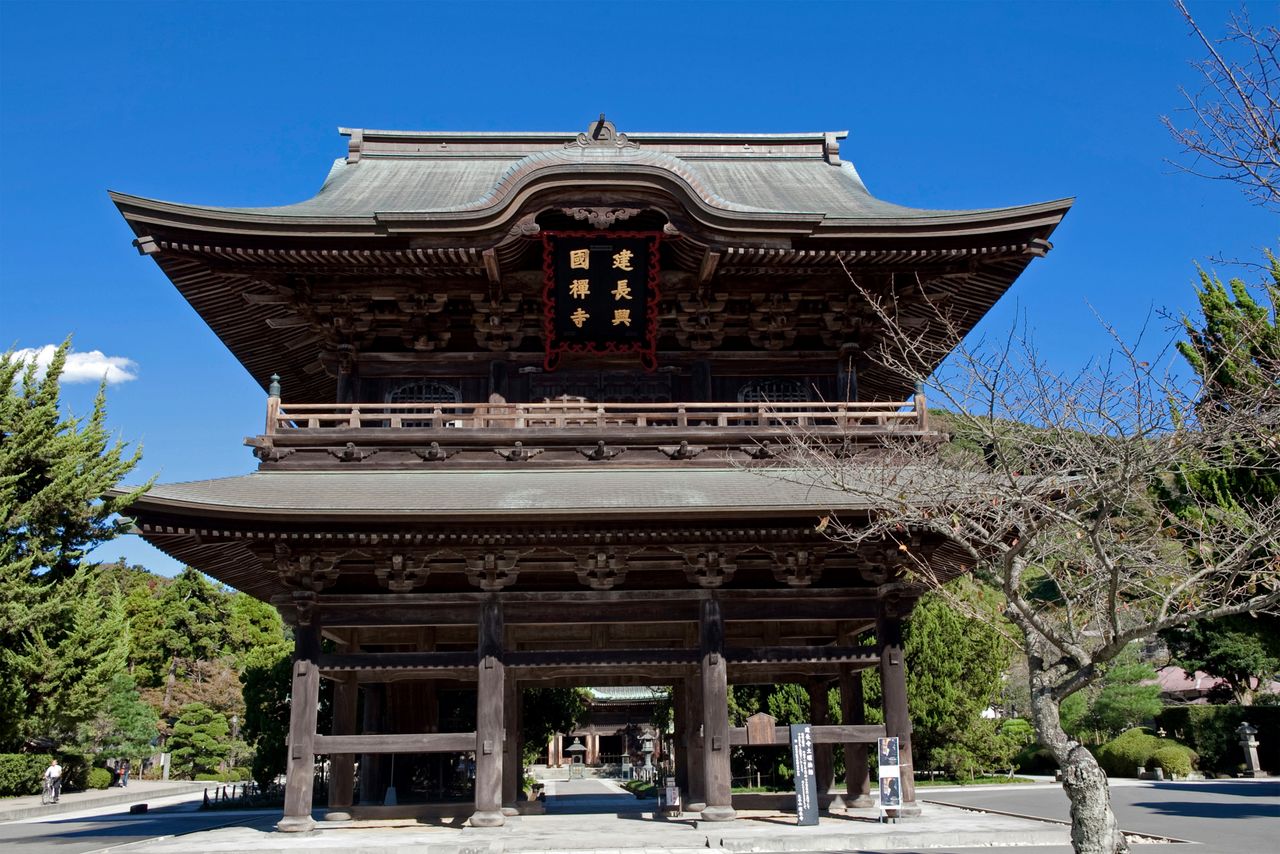
The main gate of Kenchōji is designated a National Important Cultural Property, along with the main hall, lecture hall, and elaborately decorated karamon gate behind it. (© Harada Hiroshi)
Zen Buddhism in Japan consists of three main schools: Rinzai, Sōtō, and Ōbaku. While Rinzai is the oldest, all three emphasize zazen (seated meditation) as a path to enlightenment. Under the Kamakura shogunate, five temples (gozan) were given special rank, with Kenchōji at the top, followed by Engakuji, Jufukuji, Jōchiji, and Jyōmyōji.
All five gozan temples still stand today, but Kenchōji remains the most prominent. Established in 1253 as Japan’s first dedicated Zen dojo (training center), it retains the spiritual and architectural traditions of its founding era.
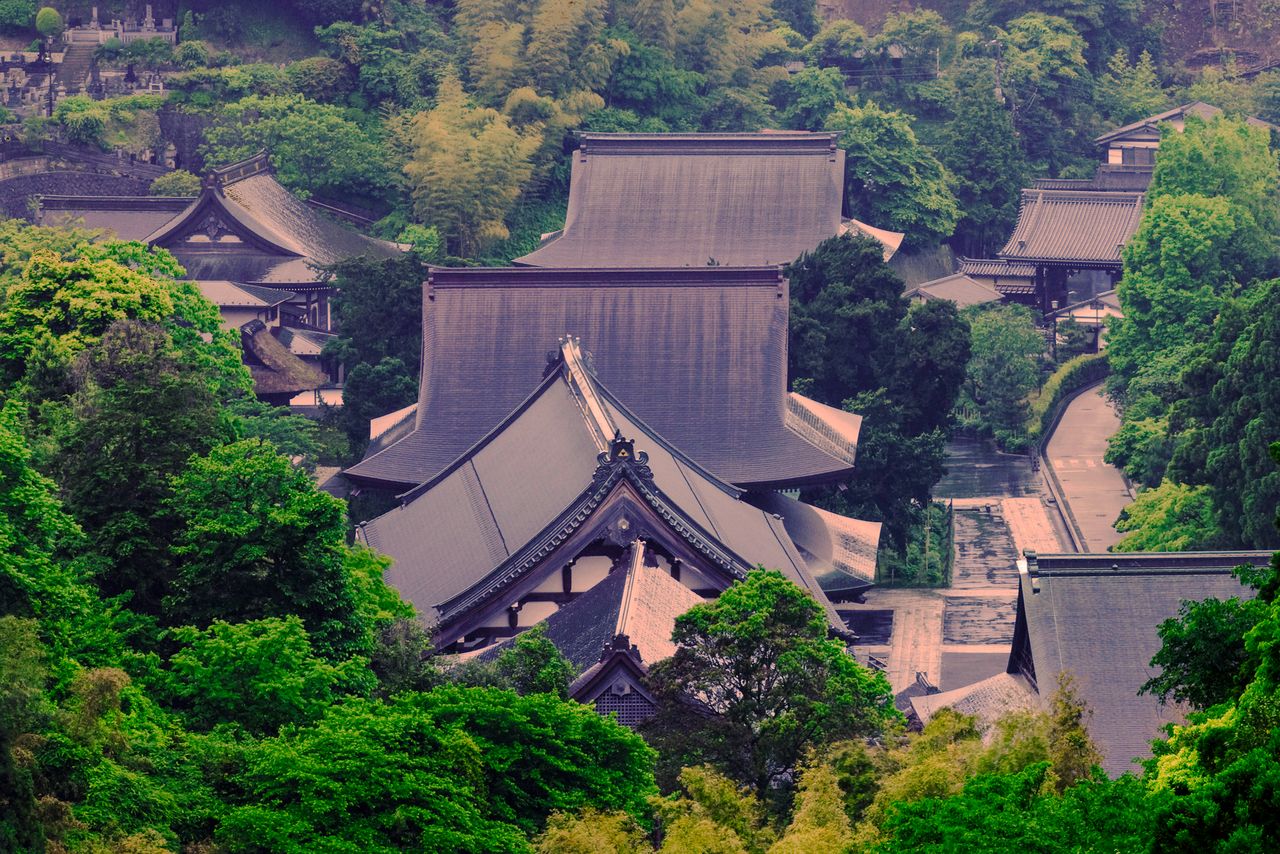
The row of temple buildings viewed from the elevated, far back area of Kenchōji’s grounds. (© Harada Hiroshi)
A visit to Kenchōji offers a vivid sense of Zen temple design, where the main structures are positioned in a straight line—a style inherited from Chan Buddhist temples in China.
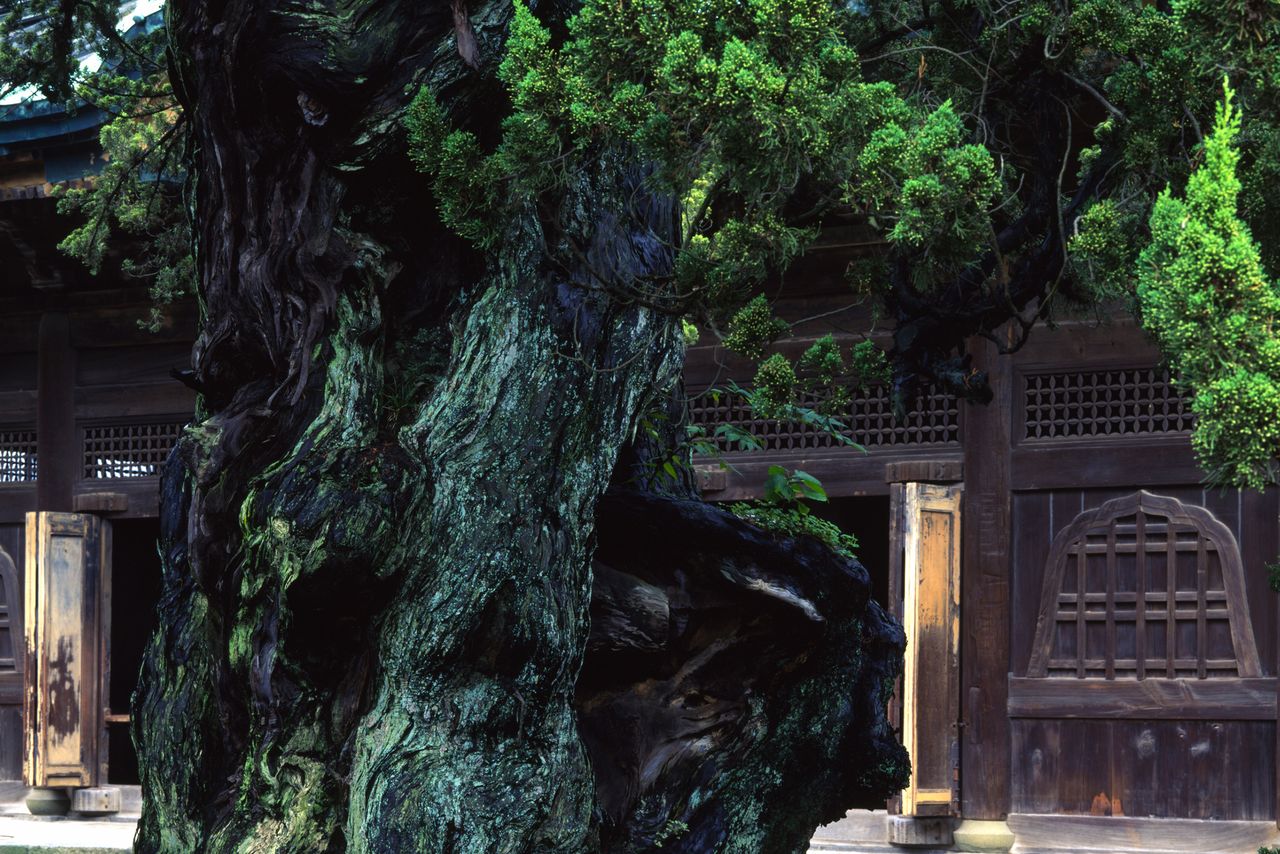
Giant Chinese juniper trees line the temple’s approach. (© Harada Hiroshi)
Ancient Chinese junipers—part of the cypress family and known for their resistance to cold—line the approach to the main hall. Revered in Chinese Chan for their vitality, they were brought here as saplings during the Southern Song Dynasty by Kenchōji’s founder, Chinese monk Rankei Dōryū (Lanxi Daolong). Today, these towering trees, now over 760 years old and 7 meters around, are a living testament to the temple’s history.
On the right side of the approach stands the bonshō (temple bell), cast in 1255 and designated a national treasure. The bell has an ancient elegance in its form and is counted among the Three Famed Bells of Kamakura, alongside those at Engakuji (also a national treasure) and Jōrakuji (the oldest in the city).
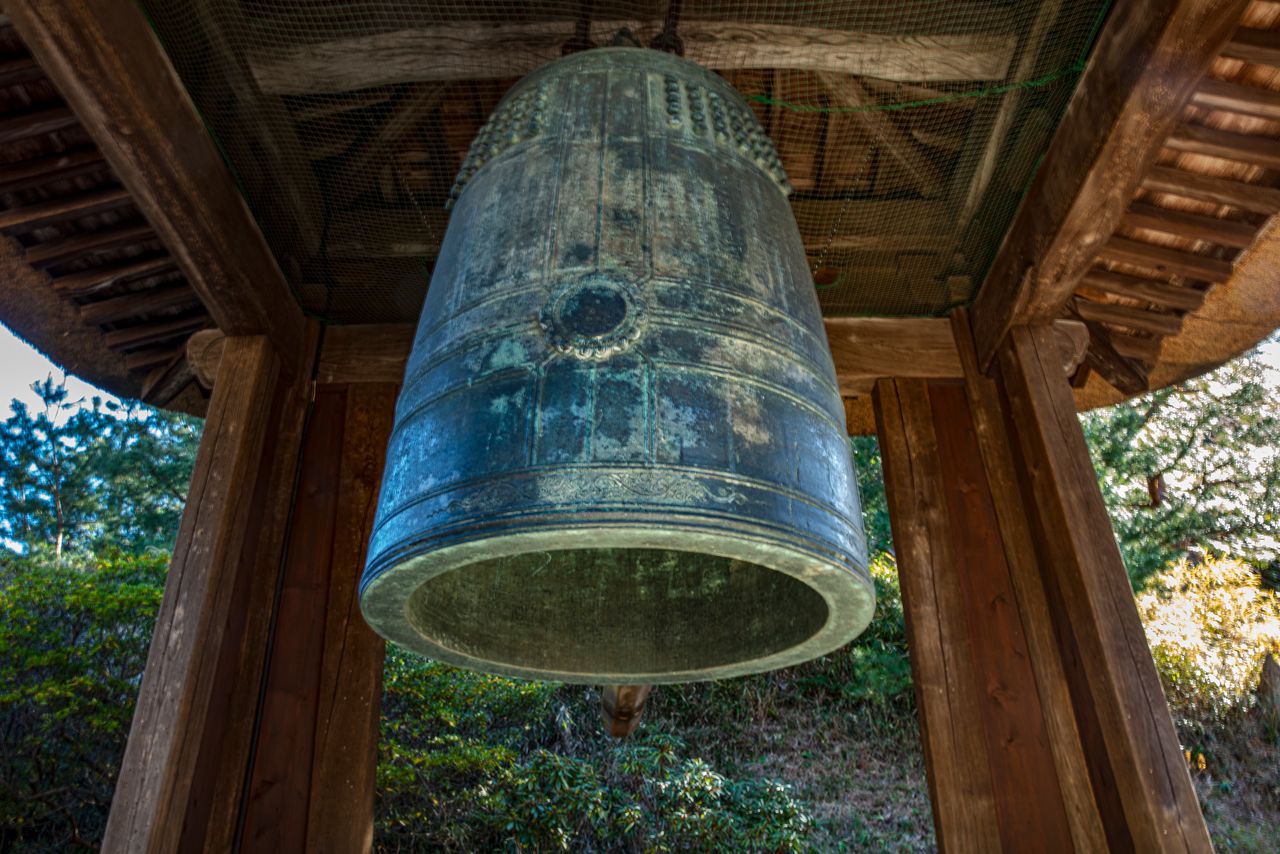
The thatched-roof belfry and its national treasure bell. (© Harada Hiroshi)
The main hall, or butsuden, houses a statue of Jizō, the bodhisattva known for guiding souls in the underworld. This is an unusual choice for a Zen temple, where the principal image is typically Shakyamuni Buddha.
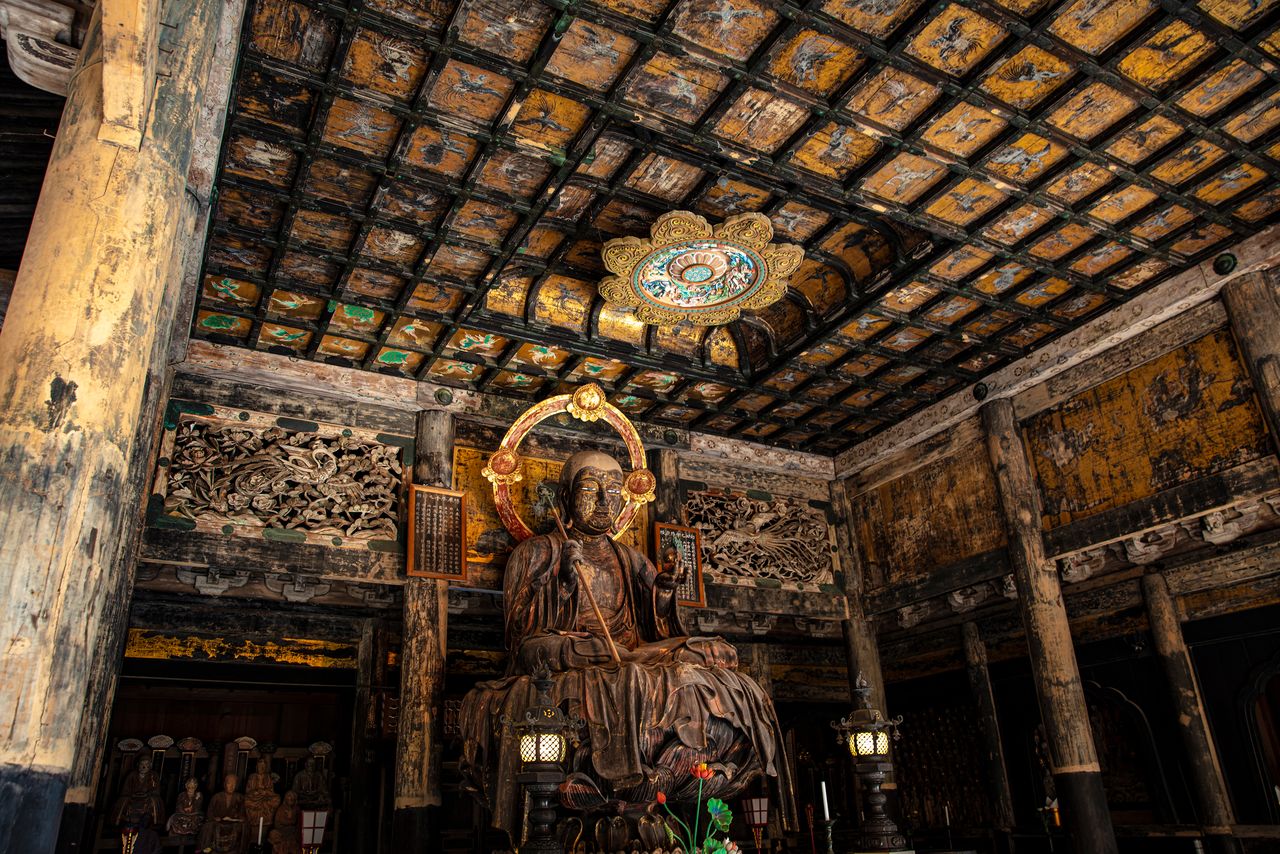
The Jizō statue in the butsuden is around 5 meters tall, including the pedestal. (Note: The hall is currently closed for repairs through July 2027.) (© Harada Hiroshi)
At the rear of the temple grounds lies the hōjō, once the abbot’s quarters. The garden behind it is centered on a pond surrounded by a carefully maintained lawn—an ancient feature that predates the moss gardens popularized in the Edo period (1603–1868). The temple restored this historic lawn garden with the help of landscape experts.
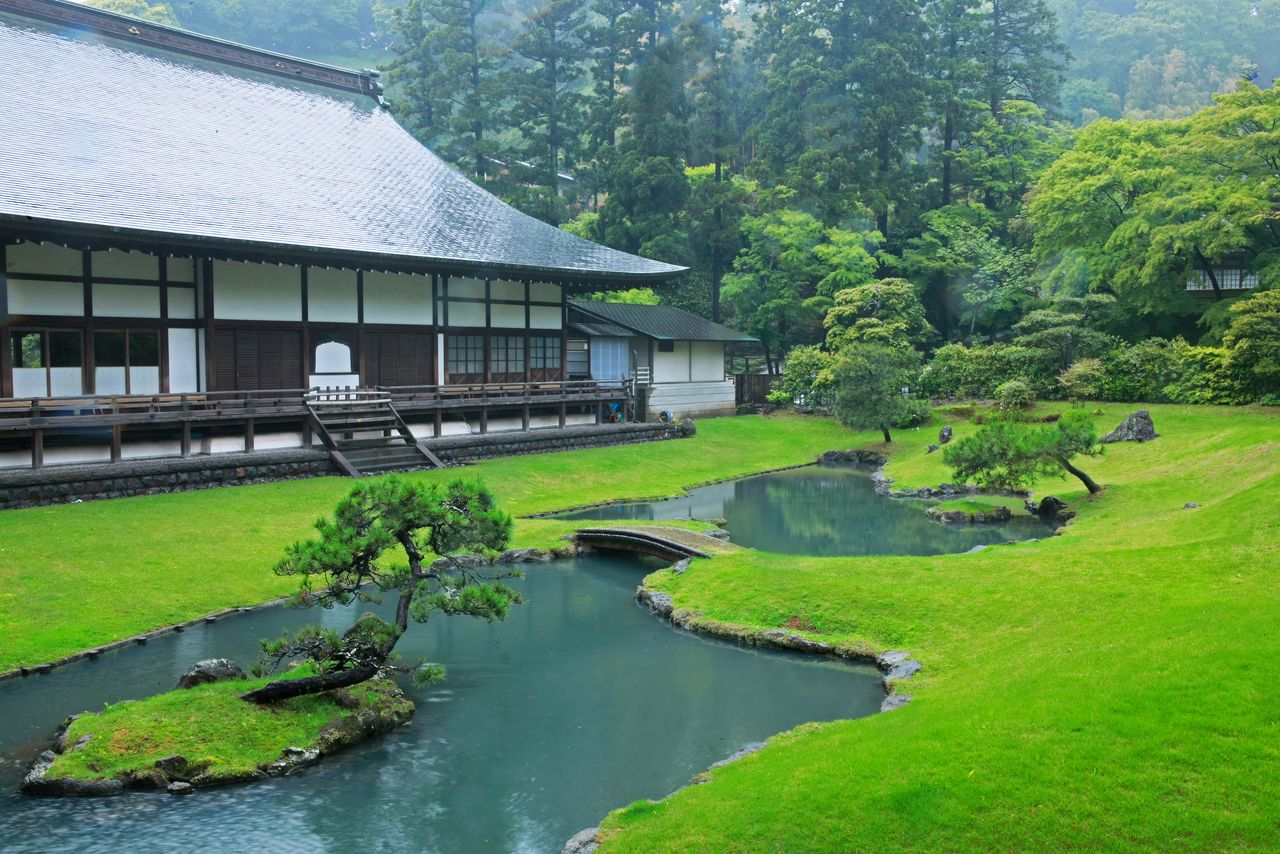
Kenchōji’s garden, centered on a pond, is a nationally recognized landmark. The bridge in the photo has since been removed. (© Harada Hiroshi)
Zen Training: More Than Just Meditation
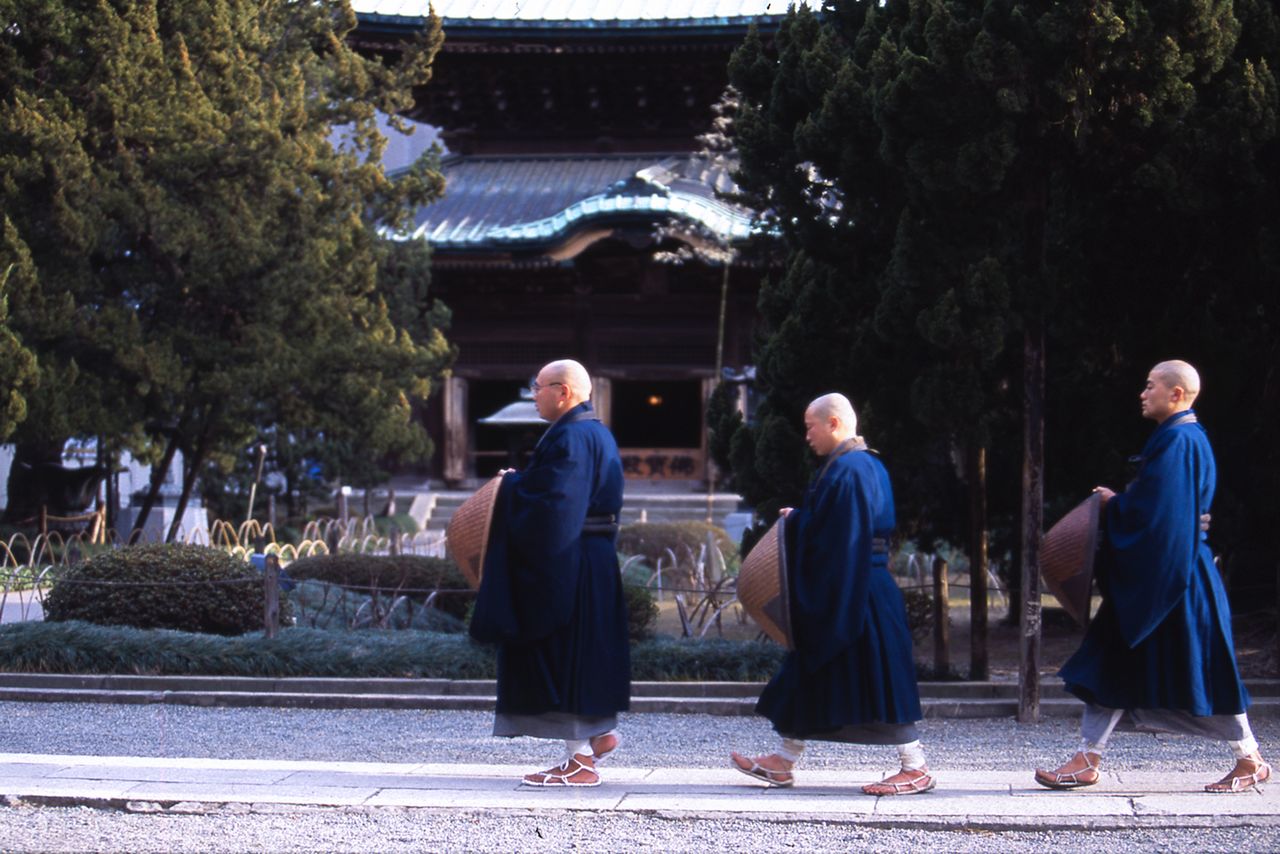
Perched atop a hillock in the temple’s eastern precincts, the dojo is where monks continue to undergo rigorous training, practicing not only seated meditation but also disciplined eating. Their meals are strictly vegetarian—usually a single dish along with rice and soup, with only plant-based condiments.
The nourishing tofu-and-vegetable kenchin-jiru soup uses stock made from shiitake mushrooms and kombu kelp. Kenchin-jiru is now a familiar dish throughout Japan, but it is believed to have originated at the temple, where it was known as kenchō-jiru.
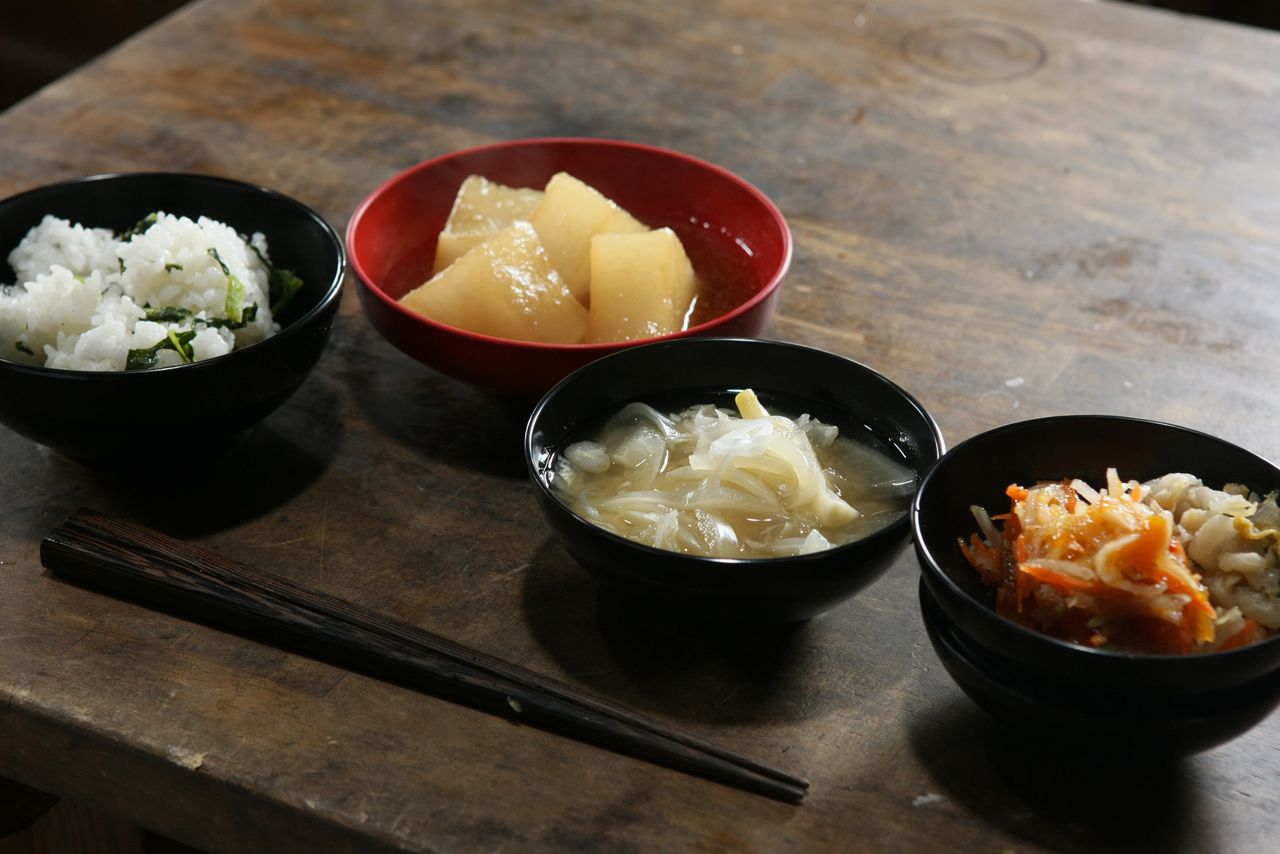
Daikon is another staple in the monks’ simple meals. (© Harada Hiroshi)
Meals always include takuan (pickled daikon). To ensure that no grain of rice is wasted, monks pour hot water into their rice bowls at the end of the meal, using the takuan to gather every last bit of rice. This ritual reflects the Zen reverence for all living things and the practice of reducing waste.
Takuan is made from daikon donated to visiting monks each January by farmers in nearby Miura Peninsula. (© Harada Hiroshi)
To preserve the sanctity of the meditation hall, visitors are usually prohibited from entering its approach. Exceptions are made each late spring when the tree peonies are in full bloom, however, giving visitors a rare chance to glimpse this sacred site.
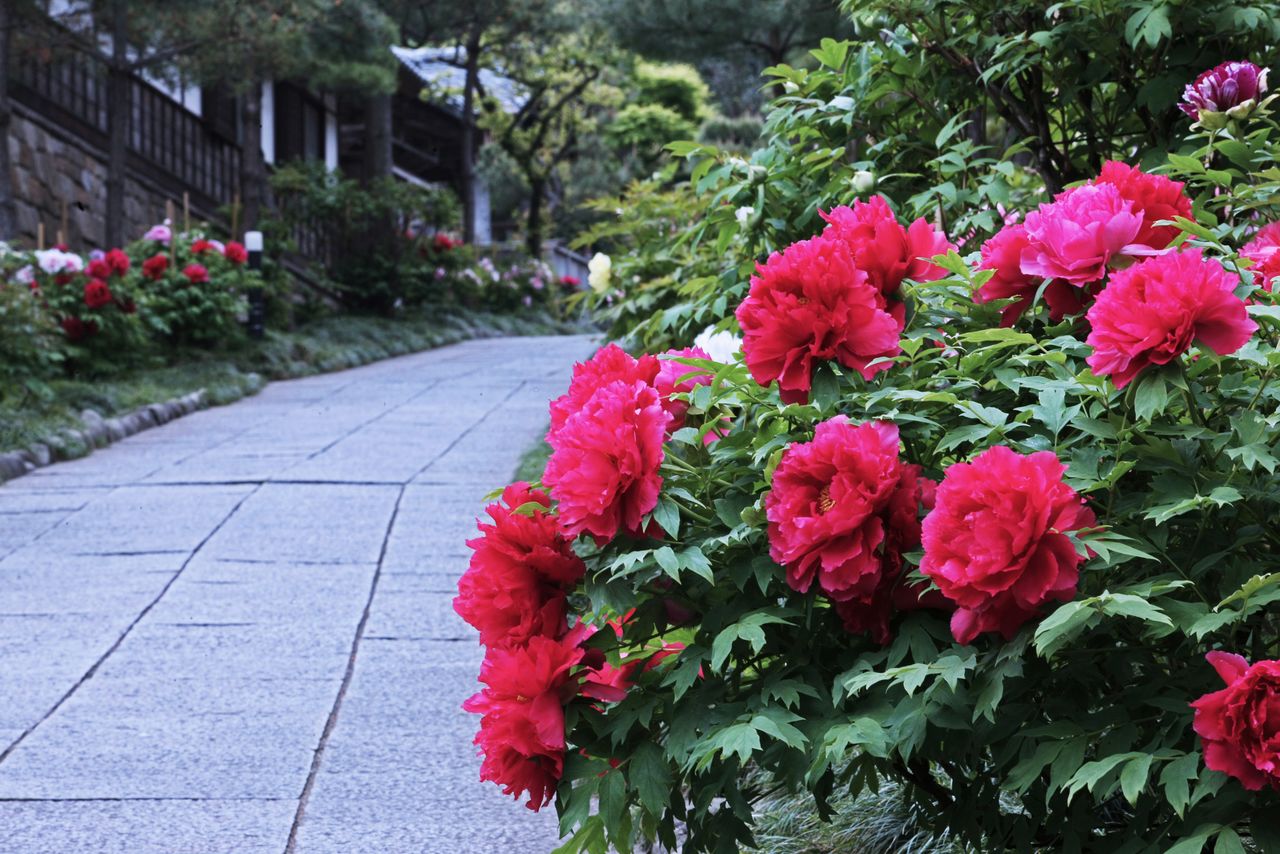
The path to the meditation hall opens to the public briefly in spring when the tree peonies are in bloom, allowing visitors a rare view of this usually private space. (© Harada Hiroshi)
Kenchōji offers many ways to experience Zen Buddhism, but none is more important than zazen. During these seated meditation sessions—held every Friday and Saturday—even beginning participants can discover the calming, introspective power of Zen. With one’s back straight and breath steady, zazen can ease daily worries and refresh the spirit.
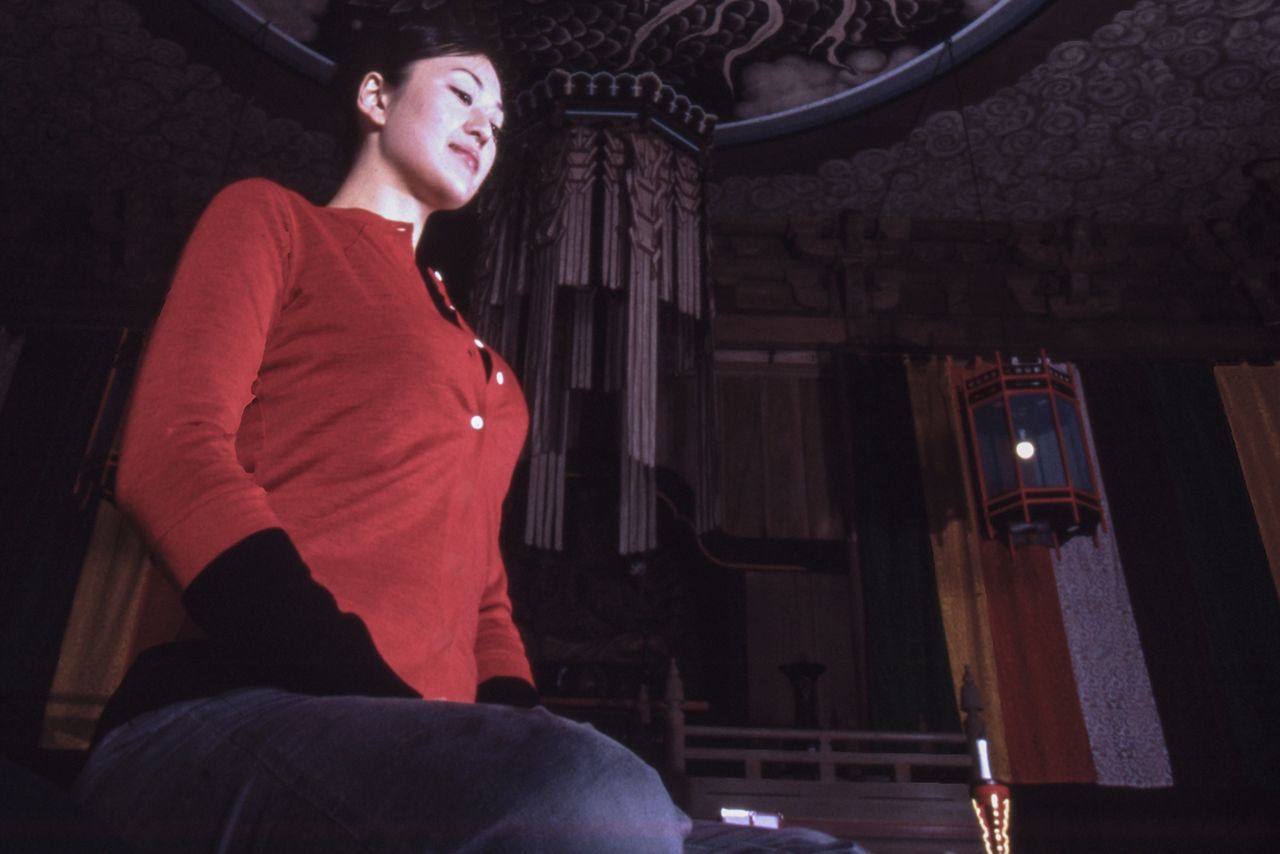
Zazen sessions are held from 3:30 pm each Friday and Saturday (arrive 15 minutes early). No reservations required; only the temple entry fee applies. Chair seating for those unable to sit on the tatami flooring is available upon request. (© Harada Hiroshi)
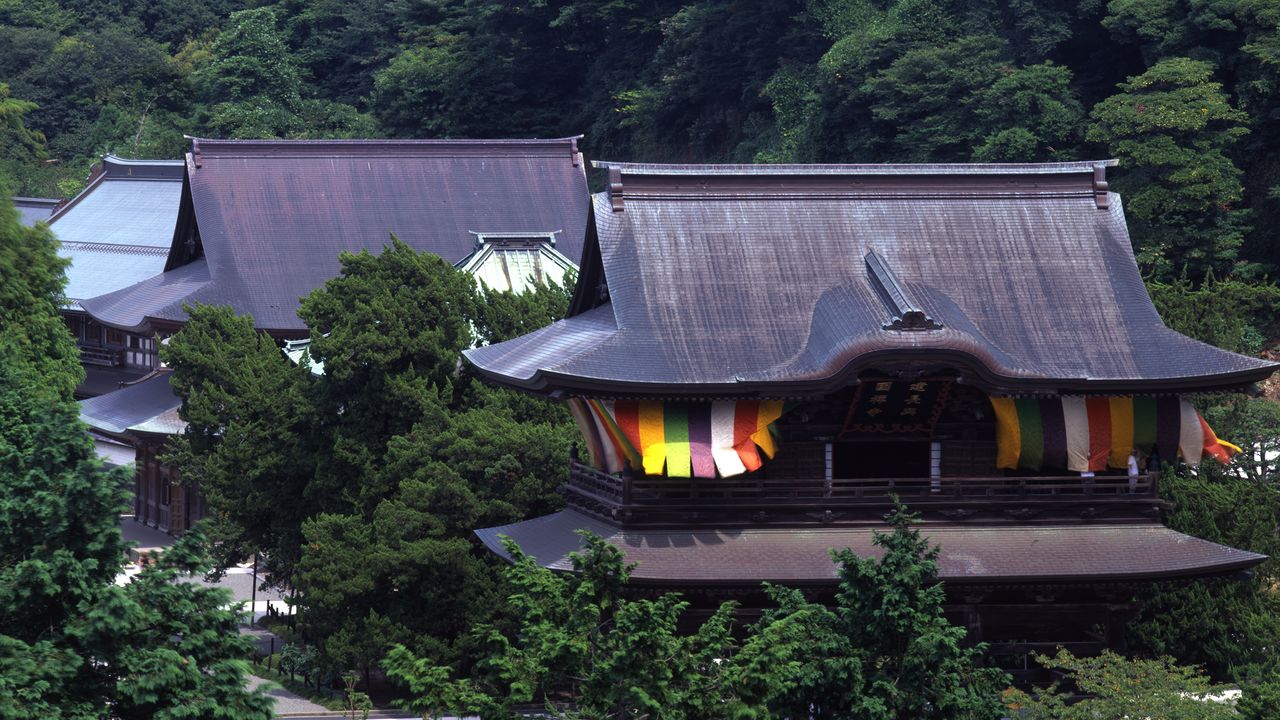
(Originally published in Japanese. Banner photo: Temple buildings seen from near the entrance to Kenchōji. © Harada Hiroshi.)