Kamakura and the Sea
Guideto Japan
Culture Travel History- English
- 日本語
- 简体字
- 繁體字
- Français
- Español
- العربية
- Русский
From Ritual Purification to Surfing
Kamakura, one of Japan’s three major former capitals, is notable for its harmonious blend of historic shrines and temples with a seaside location.
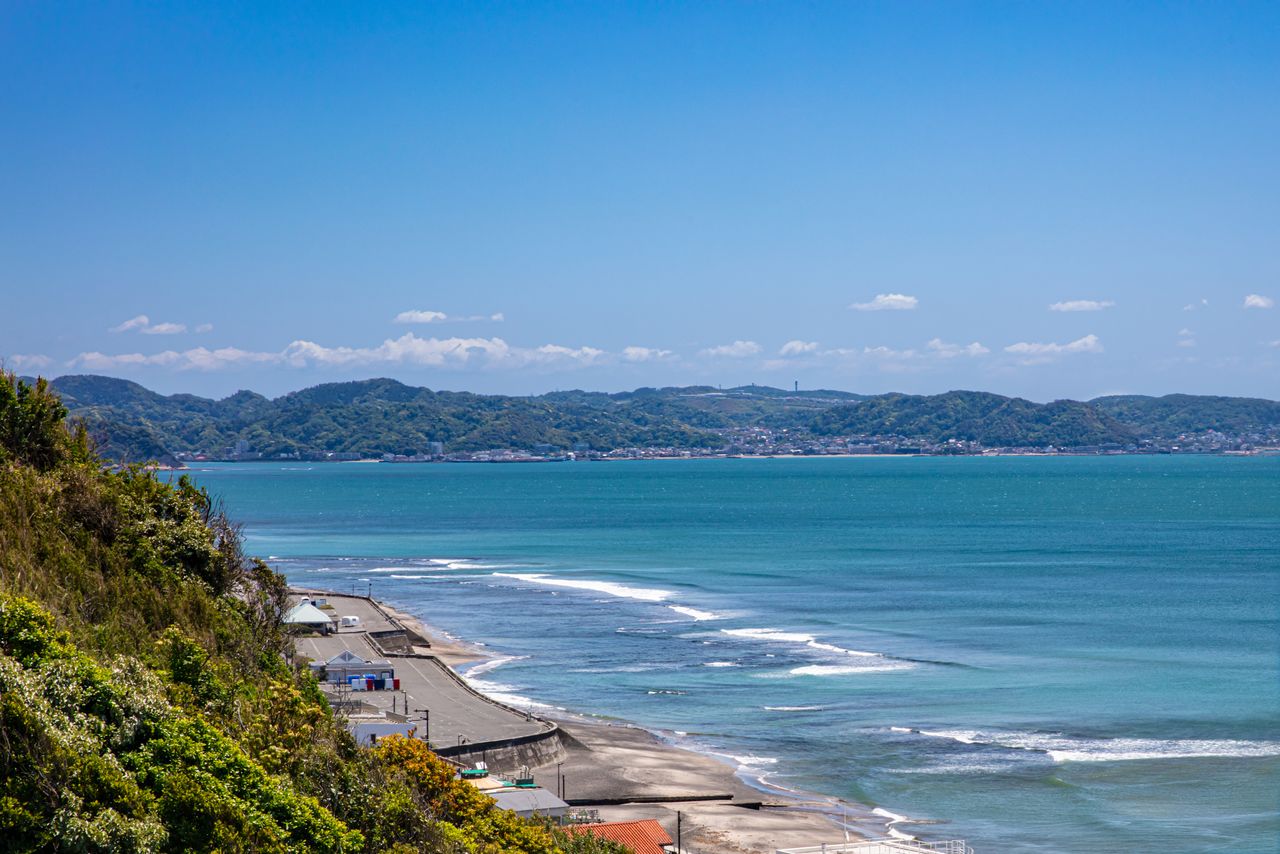
Looking toward the Miura Peninsula from Shichirigahama. (© Harada Hiroshi)
Purification called misogi or mizugori has been an important religious ritual among the faithful since ancient times. Misogi is sometimes abbreviated by dousing the body with water from a bucket, but in its original form, it involves bathing in a river or the sea.
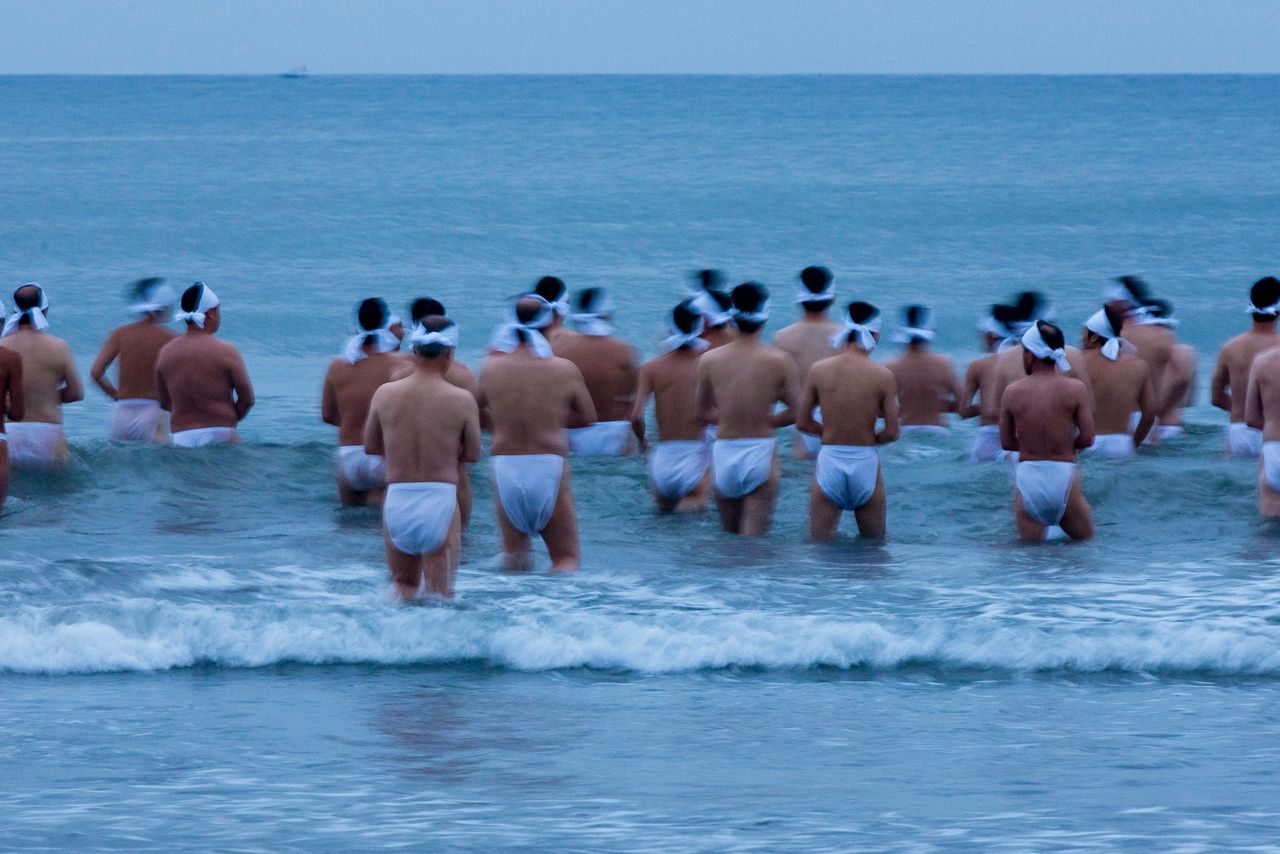
Shrine priests performing ablutions in the sea. (© Harada Hiroshi)
Founder of the Kamakura shogunate Minamoto no Yoritomo (1147–99) was a fervent supporter of the Hakone and Izusan shrines. Whenever he visited them, he would perform ablutions at Maehama, today’s Yuigahama. Even today, shrine priests bathe in the sea at Yuigahama at dawn on the first day of the Tsurugaoka Hachimangū shrine’s Reitaisai festival, which takes place from September 14 to 16 each year.
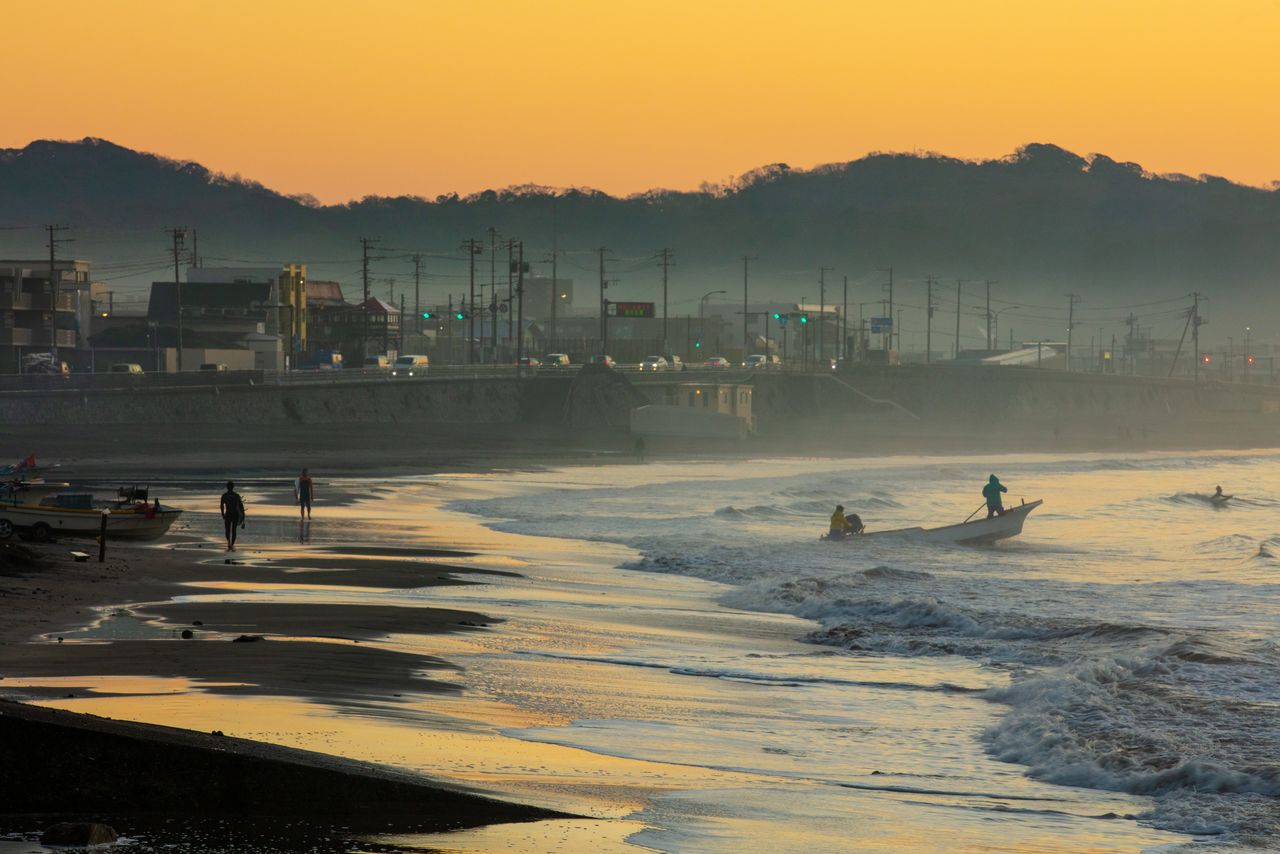
Fishers and surfers silhouetted at daybreak in Yuigahama. (© Harada Hiroshi)
The scene at Yuigahama is ordinarily one of fishing boats setting out at dawn to fish for whitebait or harvest wakame seaweed. In typical fishing village fashion, racks are set up on the beach to dry the wakame.
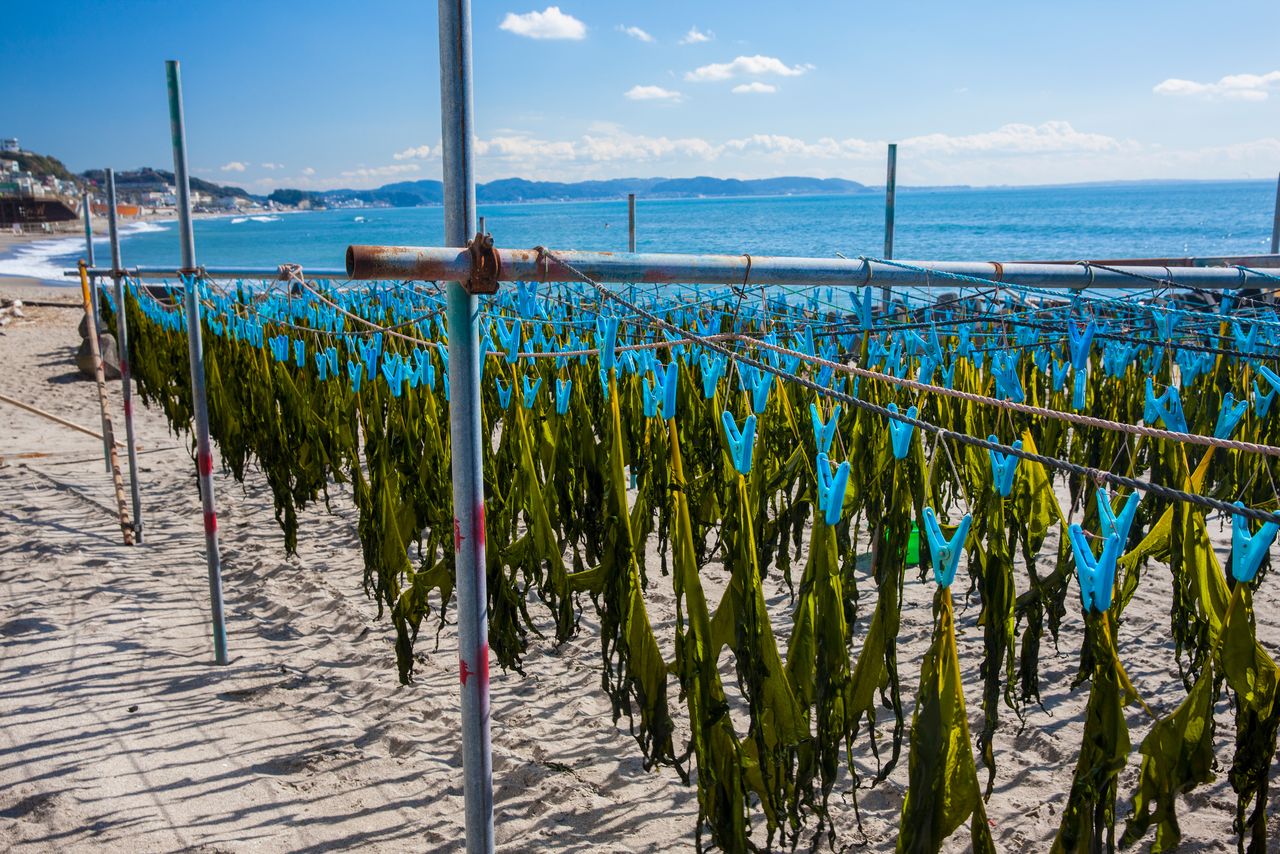
Wakame seaweed drying at Koshigoe Beach. (© Harada Hiroshi)
The Shōnan coast, as the area is known, is also a popular spot for yachting, surfing, and other marine sports. Stretching from Kamakura to Ōiso, Shōnan is the birthplace of sea bathing in Japan, and one of the country’s top surfing locations. It is not unusual for avid surfers to go and catch the waves in the morning before setting off for work.
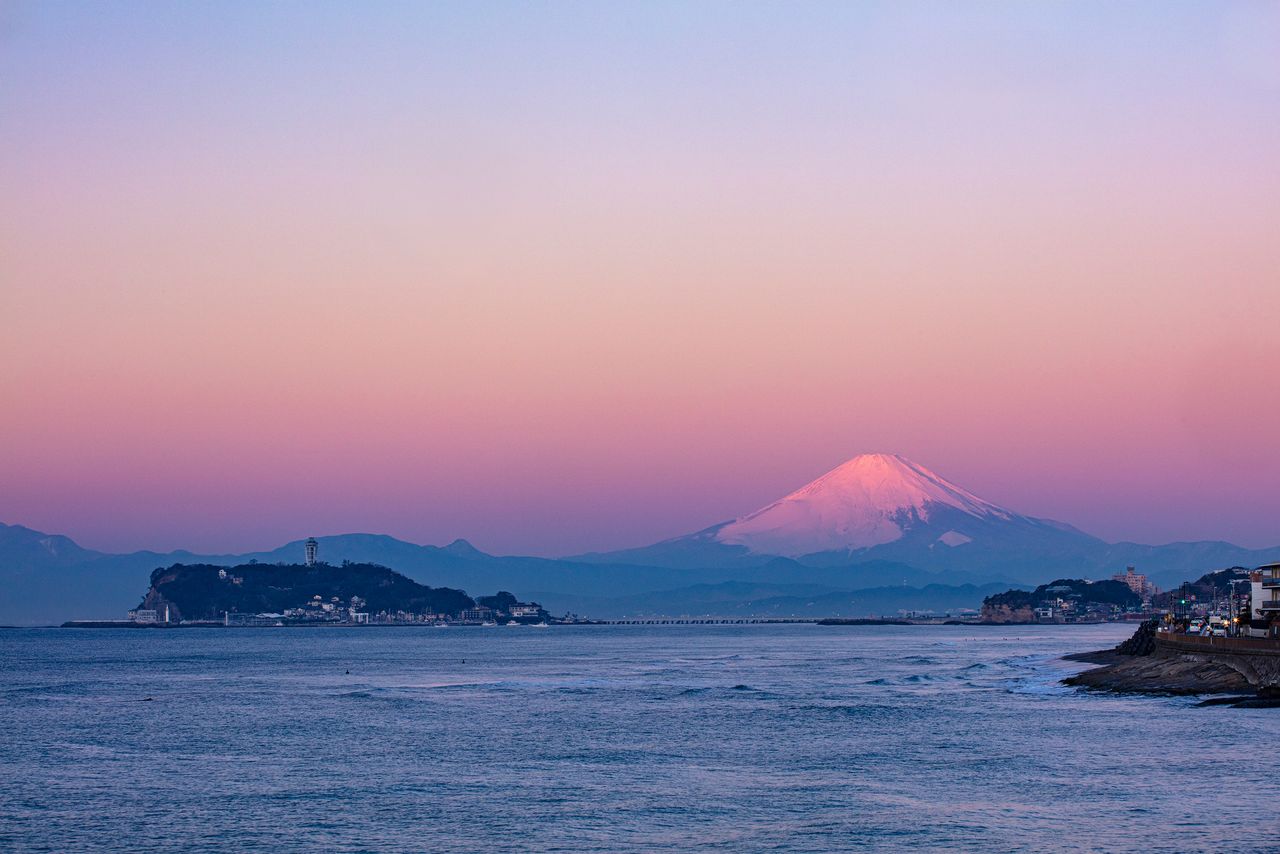
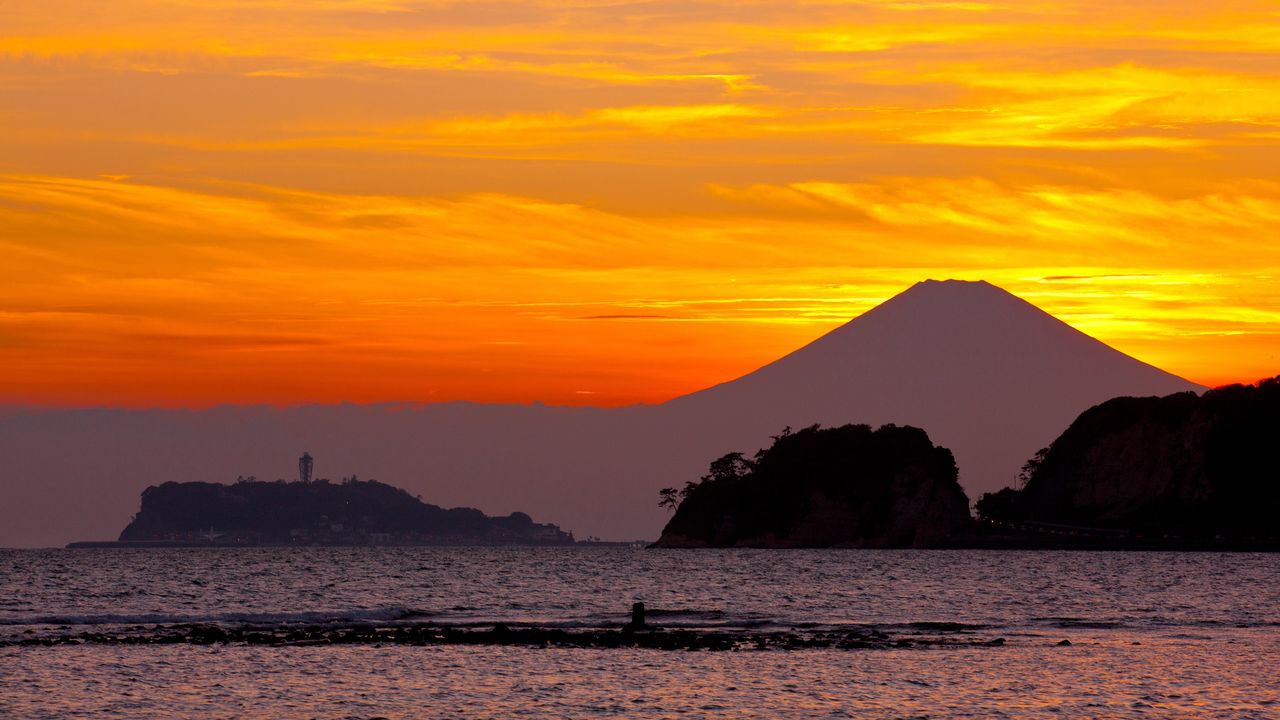
In fine winter weather, “Crimson Fuji” is visible beyond Enoshima. (© Harada Hiroshi)
At daybreak, Kamakura Kaihin Park at Inamuragasaki offers a splendid view of Enoshima and Mount Fuji bathed in morning light. In winter, the mountain’s snowy peak is sometimes tinged with color in a sight known as “Crimson Fuji.” Even after the sun has risen, the sight of white surf breaking against the rocks refreshes the soul and makes one forget the passage of time.
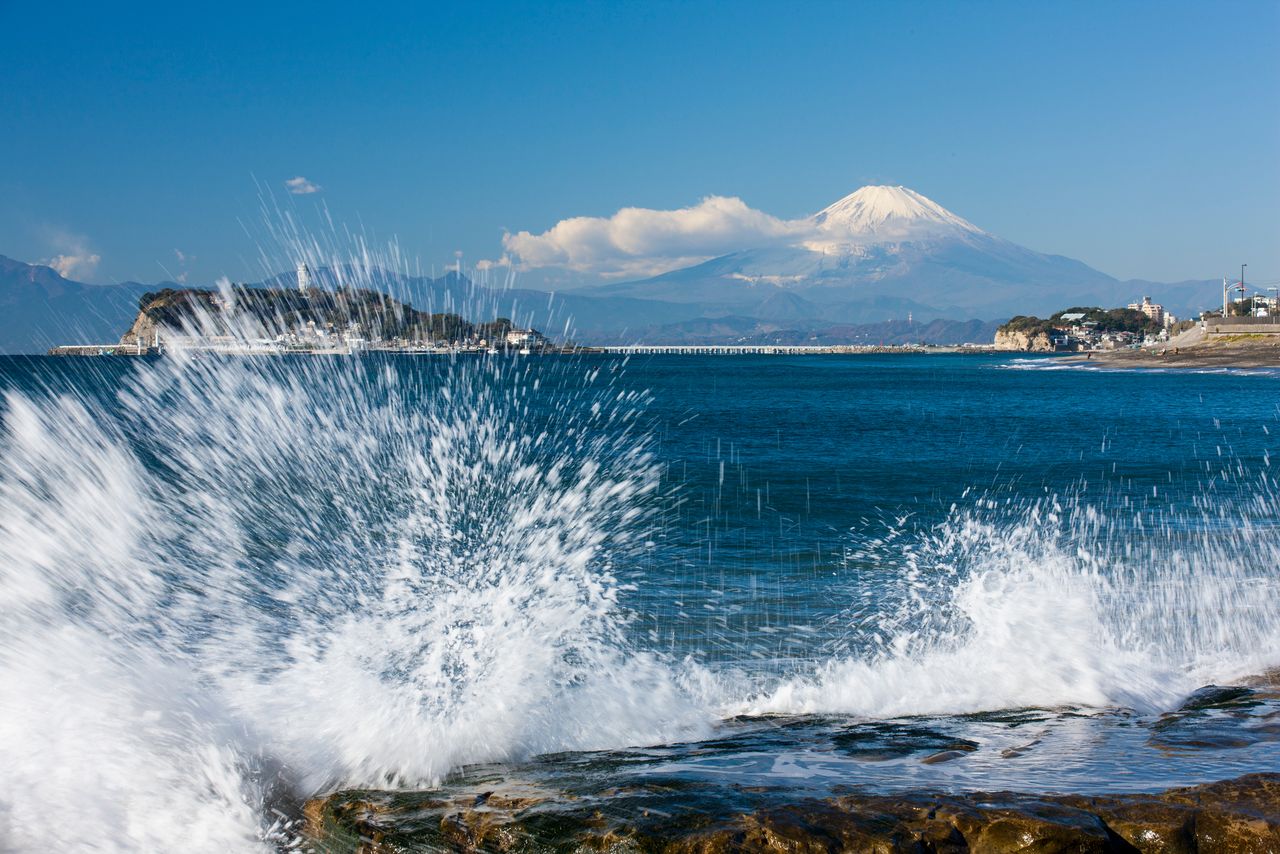
Surf breaking at Shichirigama. (© Harada Hiroshi)
Underwater Fireworks
In the southeast of Kamakura, at the southern end of Zaimokuza Beach, an island-like assemblage of stones appears some two hundred meters offshore at low tide. This is all that remains of Wakaenoshima, the oldest surviving artificial harbor in the country. Constructed in 1232 during the Kamakura period (1185–1333), it functioned until the Edo period (1603–1868), but today, rounded stones are all that remains. As a historical site, there is not much to see, but during spring low tides, it attracts many families who enjoy rock pooling there.
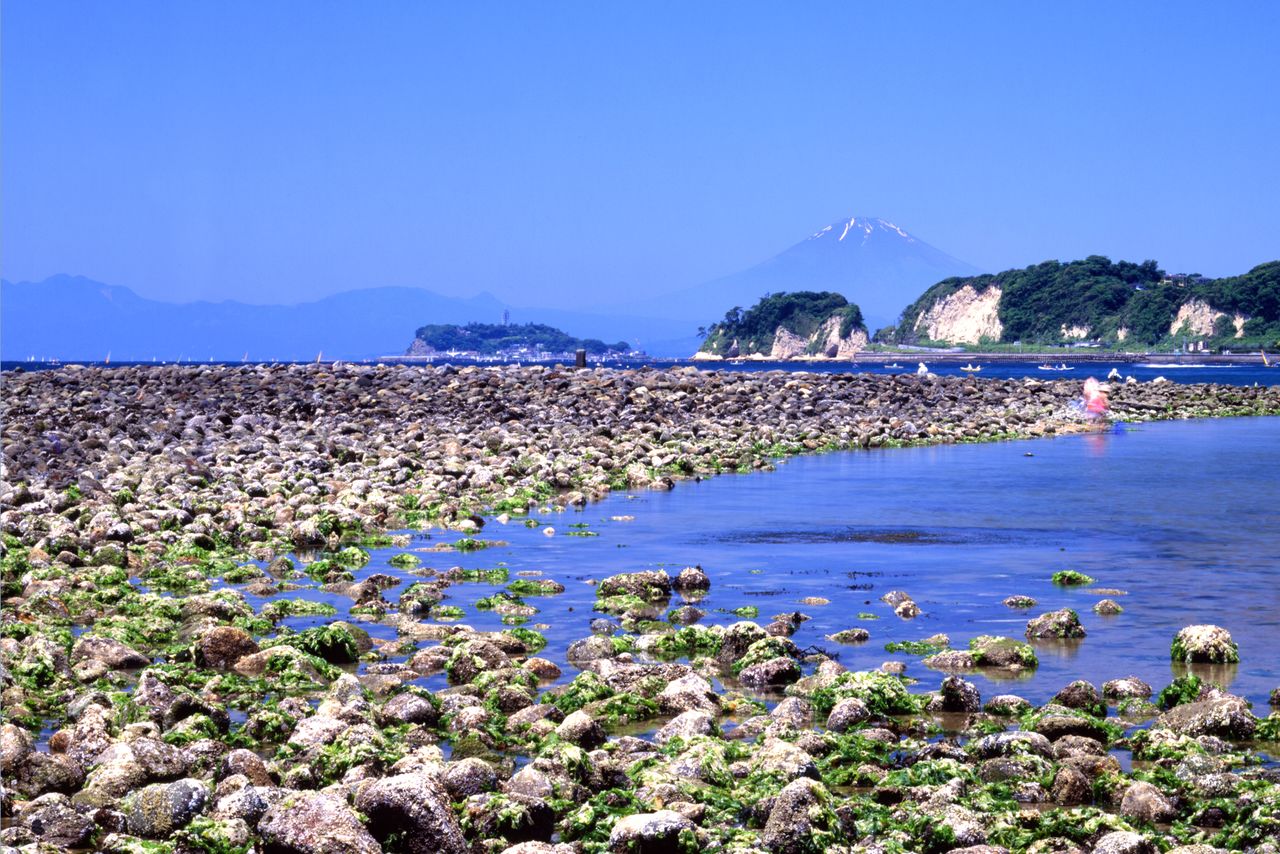
National historical site Wakaenoshima. (© Harada Hiroshi)
Summer by the sea in Kamakura means fireworks, which undoubtedly attract the largest crowds to the area. Several Shōnan-area cities, from Kamakura and Zushi to Hayama, Enoshima, Chigasaki, and Hiratsuka, hold fireworks displays at various times during the season. While the Kamakura fireworks display is by no means the largest, huge crowds gather every year to watch its unusual underwater fireworks. These fireworks, released from fishing boats offshore, are engineered to go off in an explosion of color when they float to the sea’s surface. Ocean waves make launching the fireworks difficult and the crowds on the beach enjoy this rare display of pyrotechnic skill.
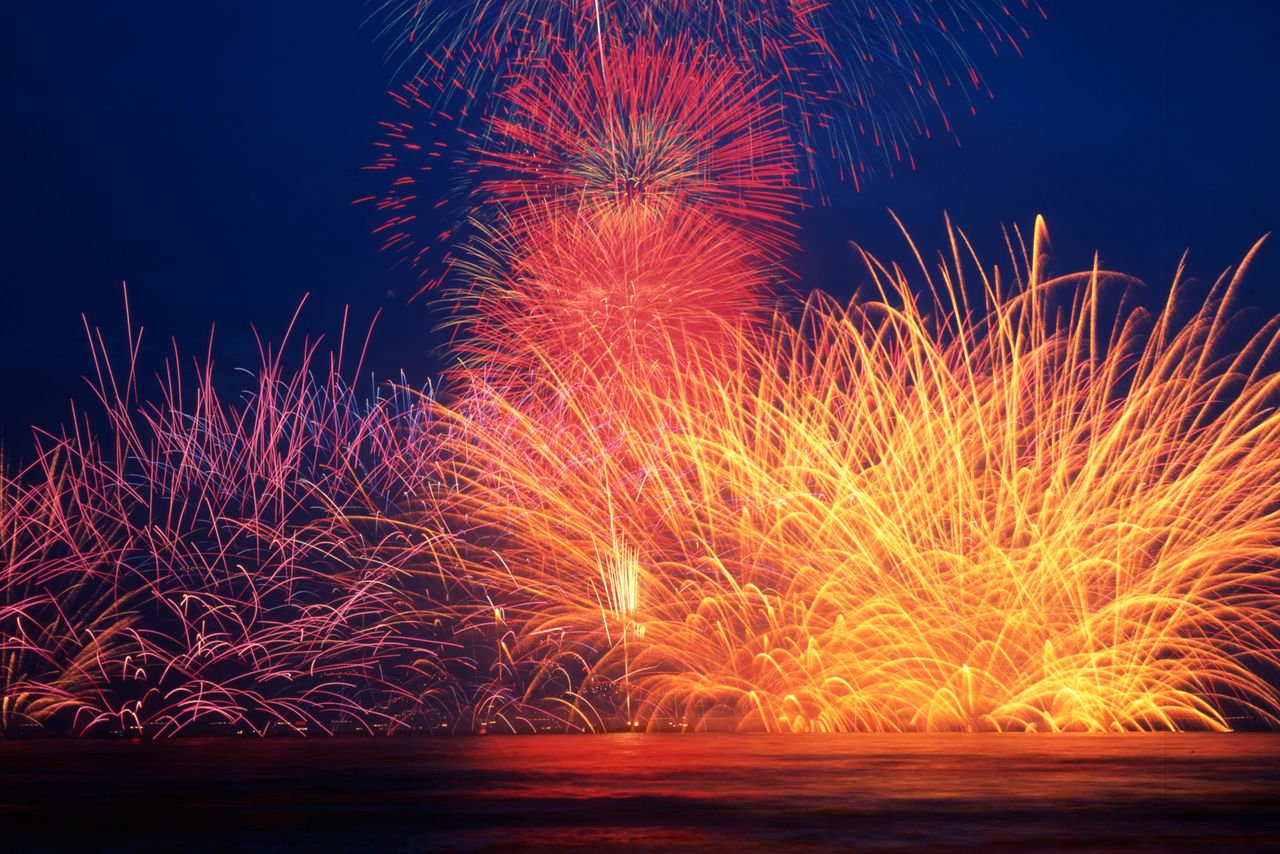
The Kamakura fireworks display; the fireworks create arcs on the surface of the water. (© Harada Hiroshi)
Once summer is over, the crowds fade away and quiet returns to the coast. Autumn arrives, bringing with it breezes moving through clumps of pampas grass and spectacular sunsets. Over winter and into spring, tranquility reigns, giving visitors ample opportunities to enjoy Kamakura, Japan’s ancient capital by the sea.
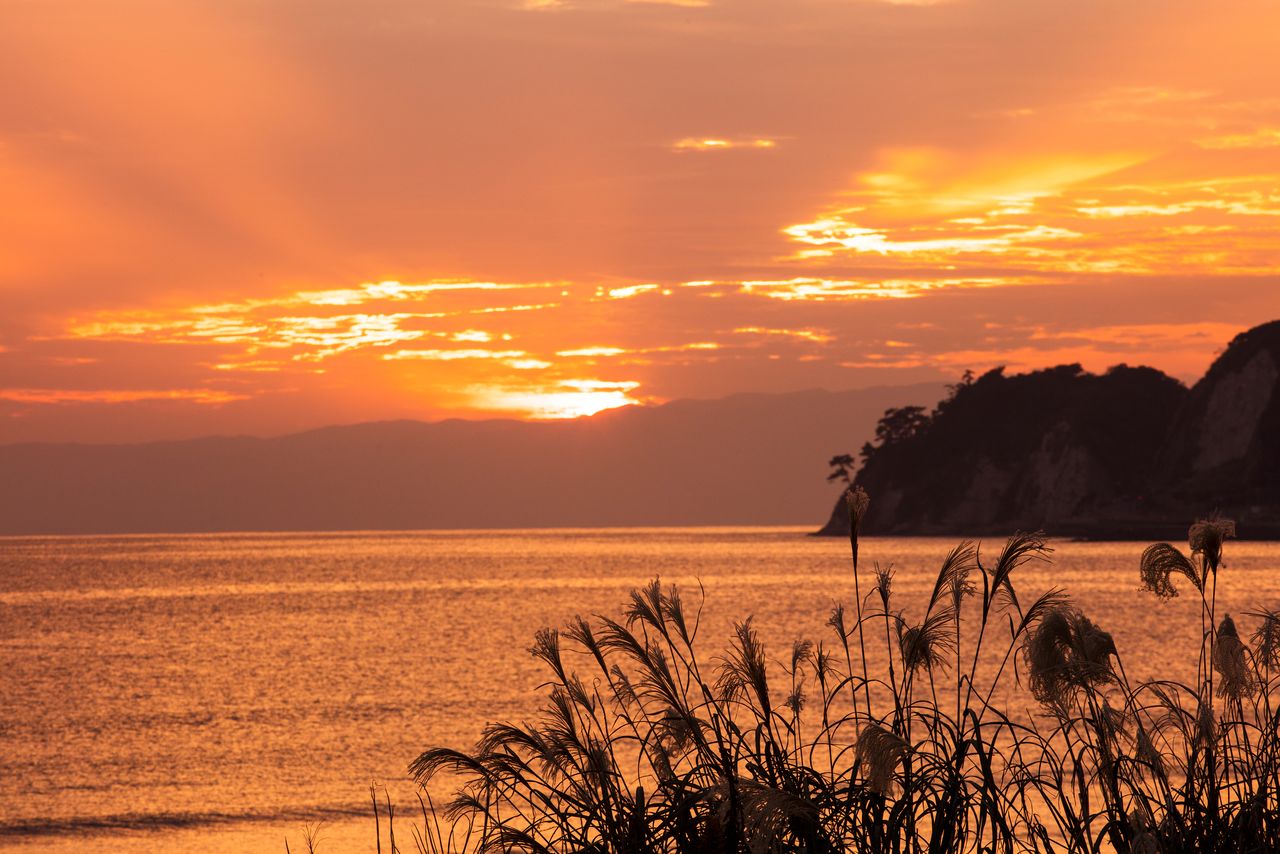
Evening calm at Yuigahama. (© Harada Hiroshi)
(Originally published in Japanese on July 17, 2025. Banner photo: Evening glow over Zaimokuza Beach, with Wakaenoshima, Enoshima, and Mount Fuji in the distance. © Harada Hiroshi.)