Kamakura’s Ten’en Hiking Trail: Nature, History, and Seasonal Foliage
Guideto Japan
Travel History Culture- English
- 日本語
- 简体字
- 繁體字
- Français
- Español
- العربية
- Русский
Kamakura from a Different Perspective
Kamakura, surrounded by hilly terrain on three sides and facing the sea to the south, has surprisingly little flat land for a city that was the seat of government 800 years ago during the Kamakura period (1185–1333). But those hills offer a wealth of hiking trails close at hand and opportunities to enjoy nature walks.
The Ten’en hiking trail to the north of the city mostly follows the ridges of Ōhirayama, at 159 meters the tallest elevation in Kamakura. The trail, roughly 4 kilometers long, takes about three hours to cover. Starting at the temple Kenchōji, one of Kamakura’s five Zen Buddhist temples given special status by the shogunate, it runs along ridges popularly known as the Kamakura Alps and ends at Zuisenji temple, famed for its flowers in all seasons. Along the way, hikers can view historic sights associated with this ancient former capital.
Here and there along the trail are yagura, Kamakura-period tombs carved into the rock faces along the path. Overlooking the city and offering fine views of Mount Fuji, the trail’s ruins and natural vistas provide a different experience than the usual tours of Kamakura’s numerous temples.
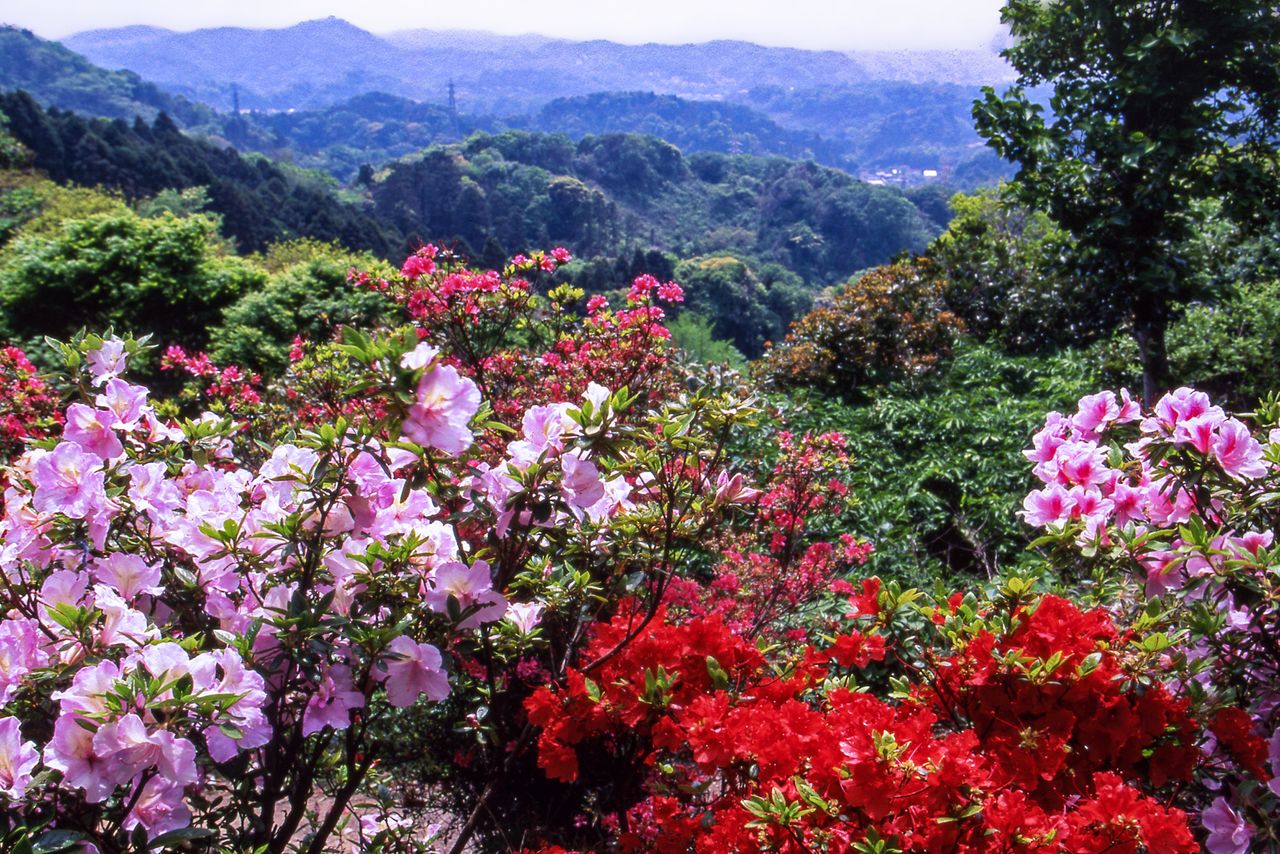
Ten’en Pass in early summer. (© Harada Hiroshi)
From Kenchōji to Jūō-iwa
There are several entrances to the Ten’en hiking trail, but a fine place to start is Kenchōji. A long, steep stairway at the rear of the precincts brings you to the temple’s Hansōbō Daigongen protector shrine. From here, there is a good view of Kenchōji below, laid out in a straight line according to the principles of Chinese Zen Buddhism.
Walk further along to reach the summit of Shōjōken, behind Kenchōji, where there is an observation deck. Pause for another great view of the temple precincts and the city spreading out below before picking up the trail again.
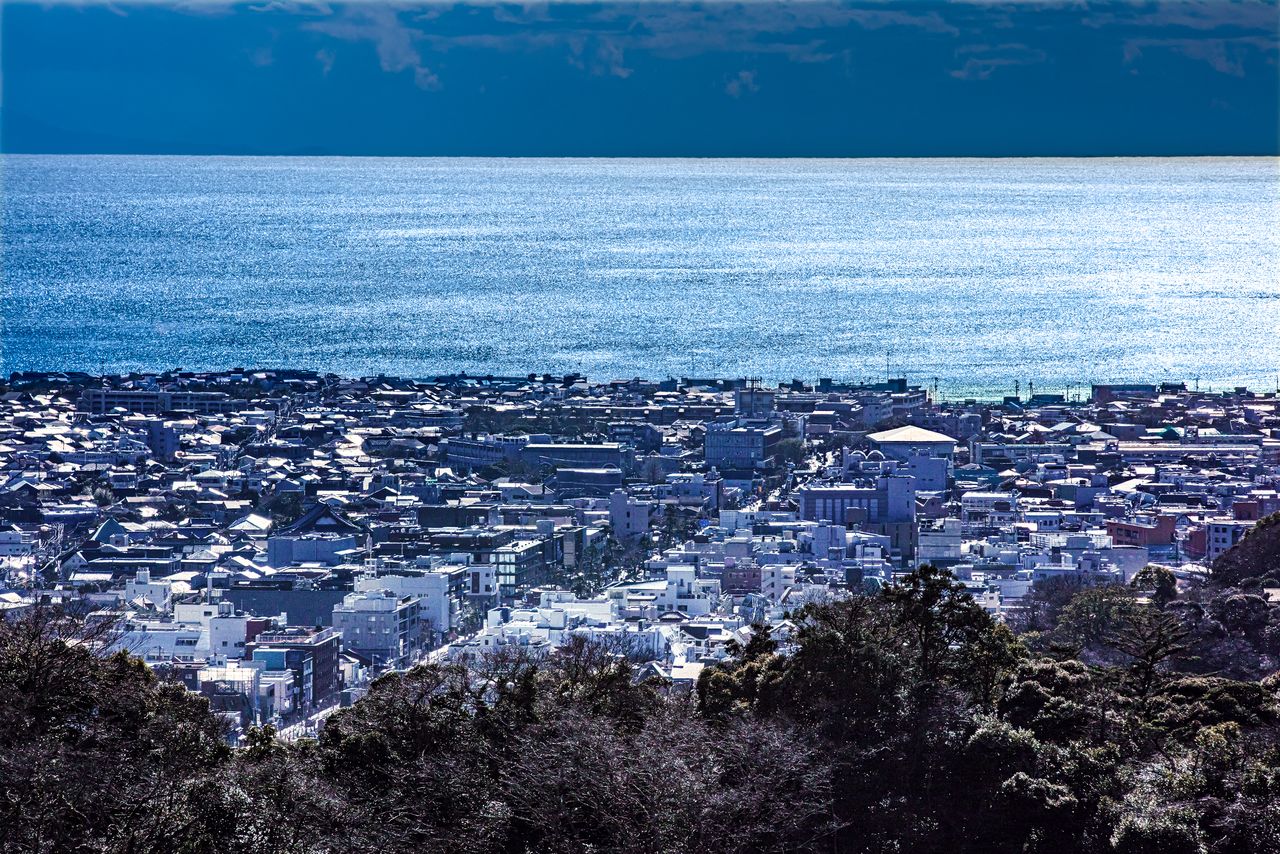
Sweeping views of Kamakura below. (© Harada Hiroshi)
Heading east, a five-minute walk brings you to a collection of weathered stone effigies on higher ground to the left. These are the Jūō-iwa, which were originally stone figures of demon king Enma and nine others who judge the dead in the underworld, set into niches in the tomb. The tomb itself has collapsed and only three of the carved figures remain. From here, there is a wonderful view of Wakamiya Ōji, the approach to Tsurugaoka Hachimangū shrine stretching all the way to the sea, and the roofs of the city’s buildings to the left and right.
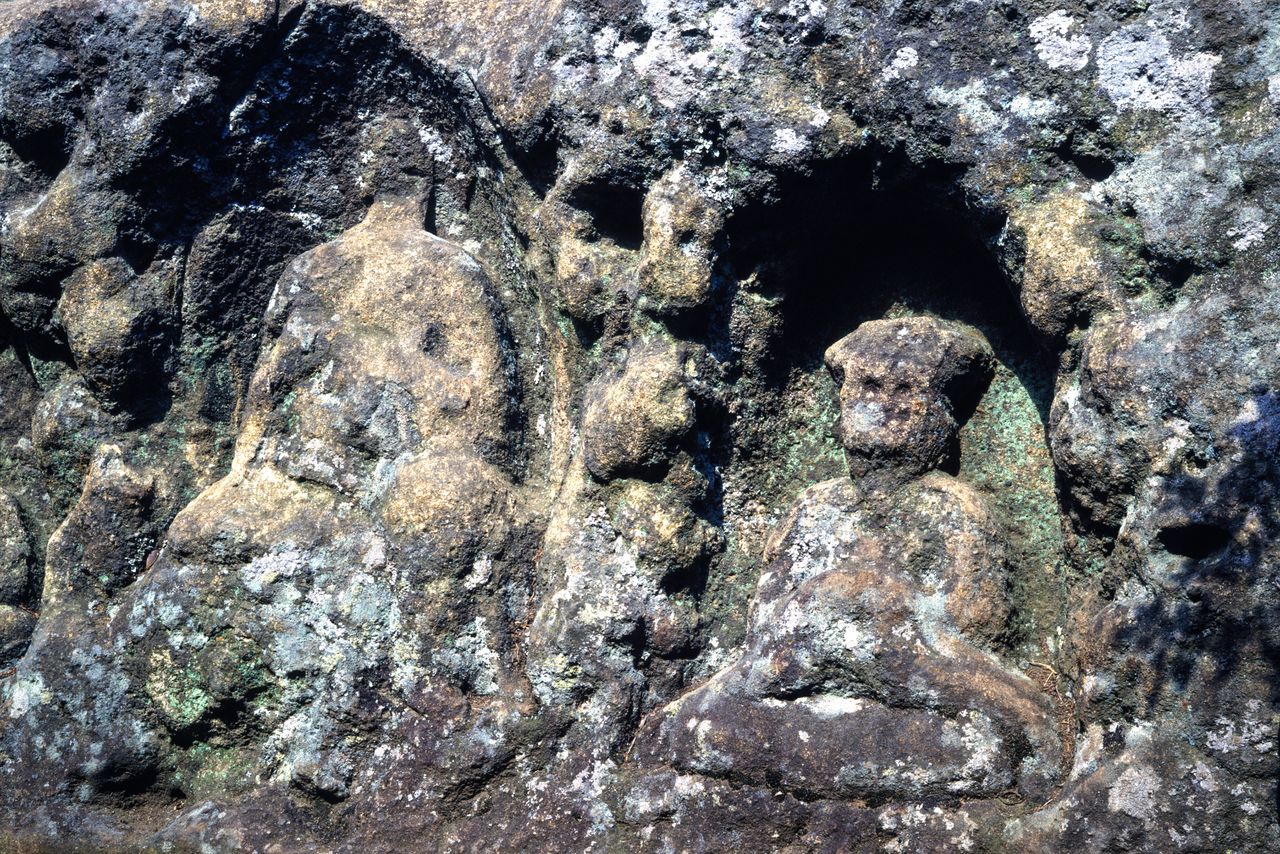
The weathered Jūō-iwa underworld judges. (© Harada Hiroshi)
Unique to Kamakura
Immediately past the Jūō-iwa is an unobtrusive narrow path heading downhill. Nestled in the vegetation is another stone tomb, whose roof bears faint lines traced in red ochre. This is Shudaruki Yagura; pillars supporting the roof and eaves carved into the stone simulate wooden architecture.
During the Kamakura period, burials were forbidden within the city. Instead, yagura cave tombs were carved into the soft stone of the surrounding hills, many of them mimicking wooden ossuaries. Even today, over 1,000 of these cave tombs remain around Kamakura.
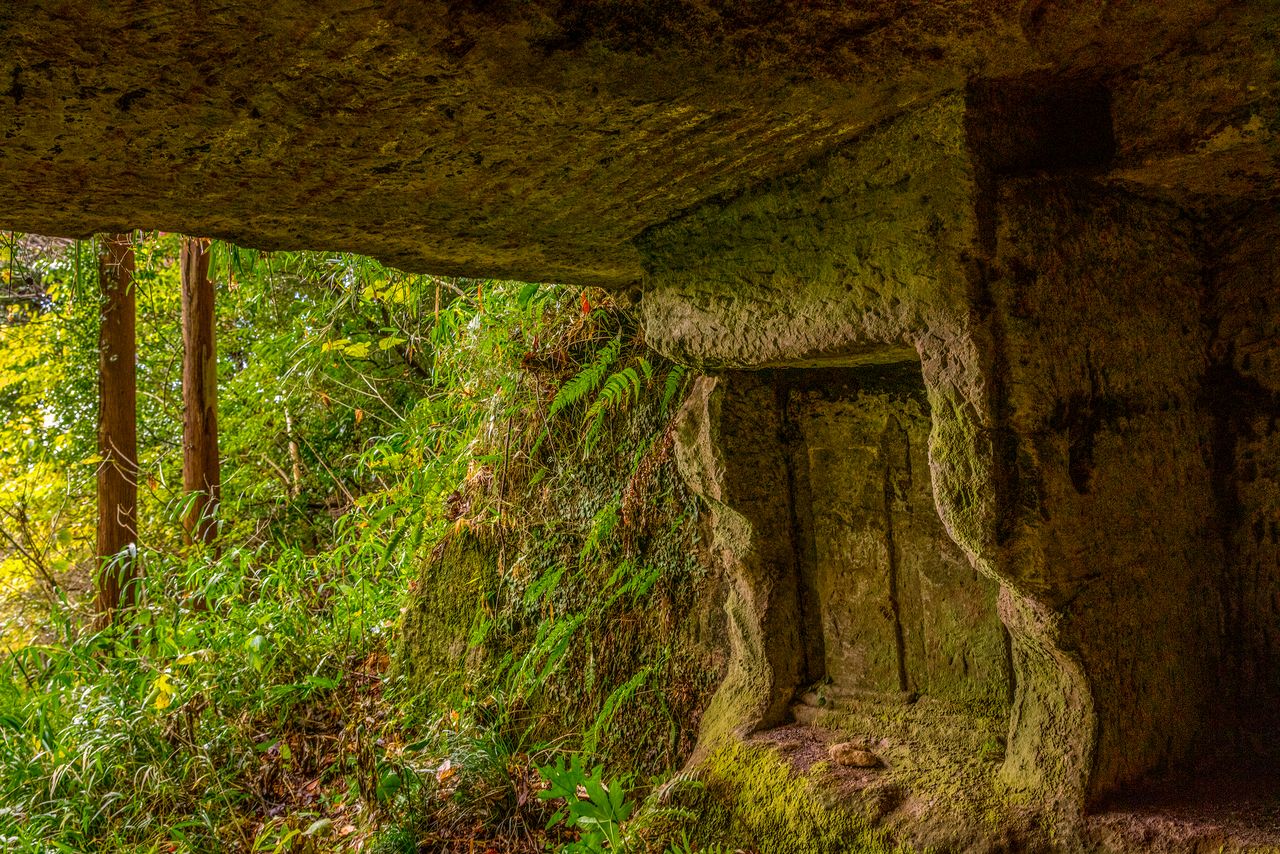
Shudaruki Yagura. Faint traces of red ochre remain on the tomb’s ceiling. (© Harada Hiroshi)
Back on the hiking trail, a fork branches off in three directions. The path straight ahead leads to Ten’en Pass, while the one on the right leads down to Kakuonji temple. A little way along the right-hand path is Hyakuhachi Yagura, the largest grouping of stone tombs in Kamakura. Hyakuhachi (“108” in Japanese) derives from Buddhism’s 108 earthly desires and is probably meant to evoke “a large number.” There are in fact around 180 tombs here, whose walls are decorated with carvings of buddhas, Sanskrit characters, five-ring pagodas, and hōkyōintō cenotaphs.
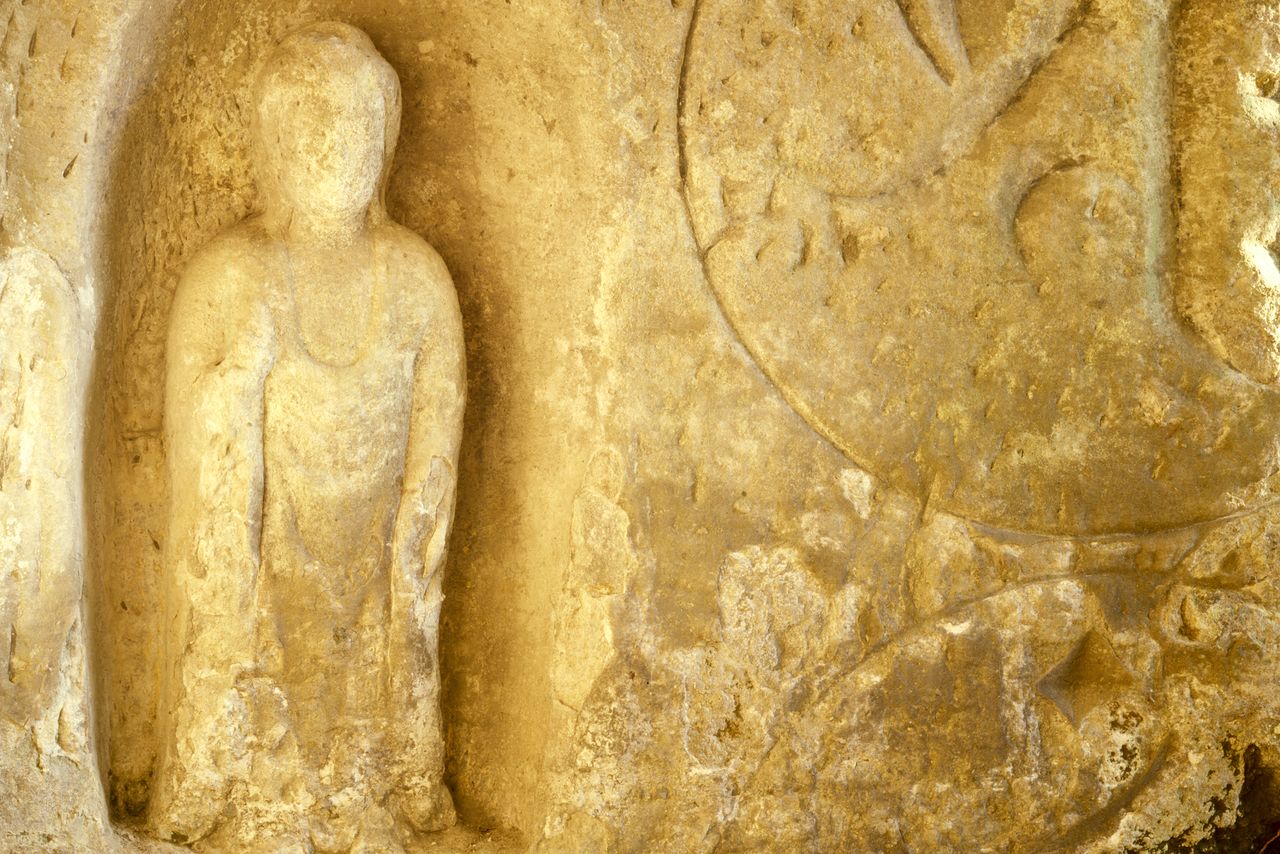
Buddhist motifs common in Kamakura are in evidence at Hyakuhachi Yagura. (© Harada Hiroshi)
From the Ten’en Pass to Zuisenji Temple
Following the path’s steep ups and downs brings you to the trail’s highest point, Ōhirayama. Farther on is the Ten’en Pass, with a rest spot and observation point. The pass was dubbed Ten’en (“heavenly garden”) by Tōgō Heihachirō, naval hero of the Russo-Japanese War of 1904–1905, for its sweeping views of the Kantō plain and the Izu Peninsula.
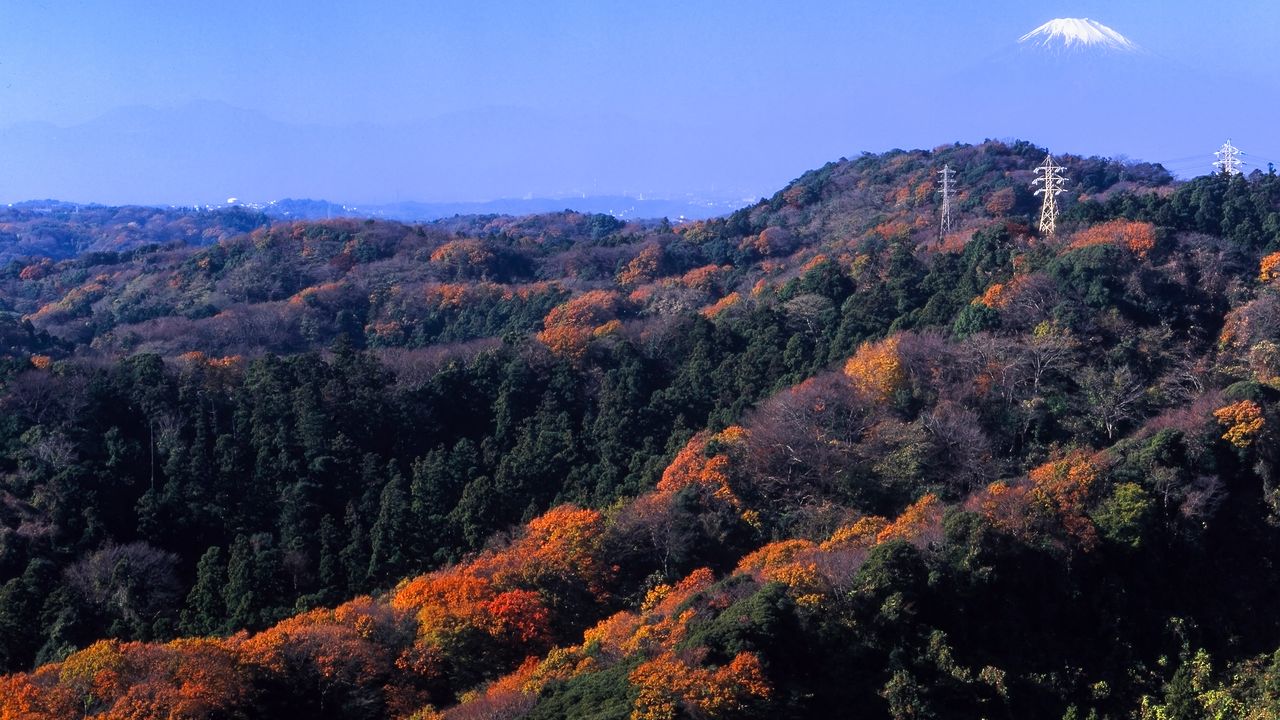
Immediately below the Ten’en Pass is a valley of gingko trees, whose brilliant yellow leaves contrast with Mount Fuji freshly clad in snow in late autumn. In foliage-viewing season, visitors can enjoy descending the heights through a carpet of fallen leaves. Proceeding south, the trail leads to Hōjō Kubi Yagura on the hill at the rear of Zuisenji temple. This is supposedly where remains of ruling Hōjō clan members were hidden after their overthrow, which signaled the end of the Kamakura shogunate.
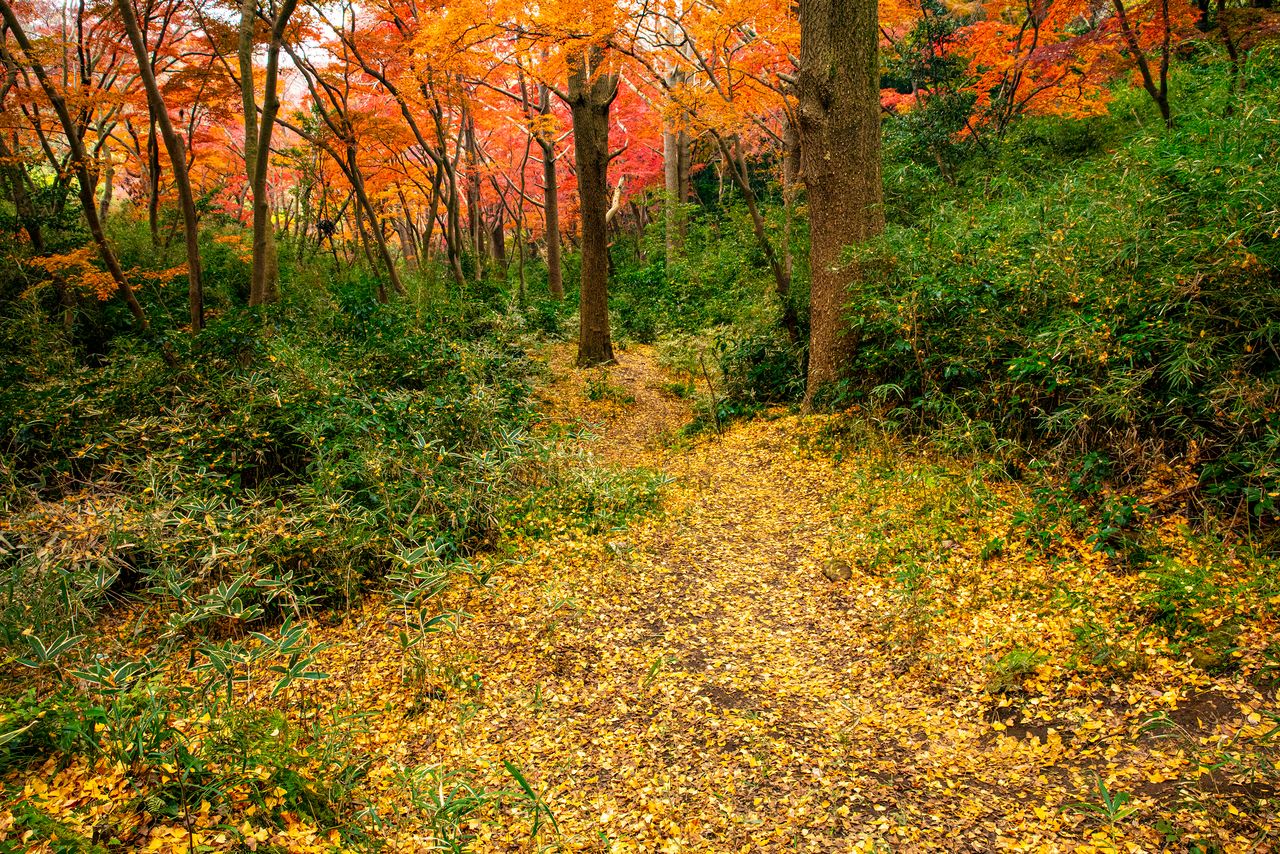
Fiery leaves in the Shishimai Valley just below the Ten’en Pass. (© Harada Hiroshi)
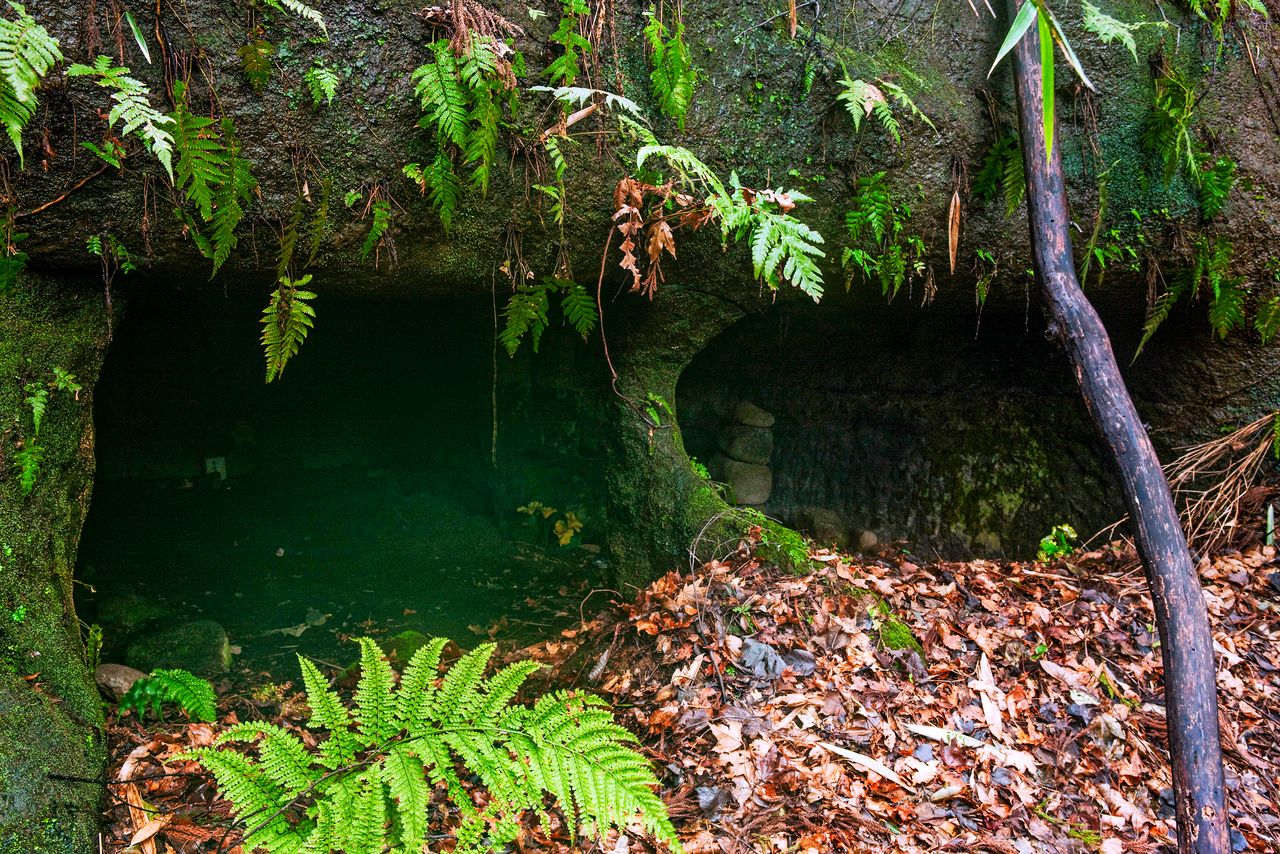
Hōjō Kubi Yagura, where the remains of Hōjō clan leaders were concealed. (© Harada Hiroshi)
The hiking trail ends at Zuisenji, whose expansive grounds are known for flowers and autumn foliage. Another attraction here is the rock garden created by Zen monk Musō Soseki, the temple’s founder. Famed as a garden designer, Soseki hewed a pond out of the rock to represent the sea, incorporating all the necessary elements of a Zen garden. Modeled on the gardens found on samurai estates, this garden is a historic site, and another example, like the yagura, of how rock was shaped by artisans in Kamakura.
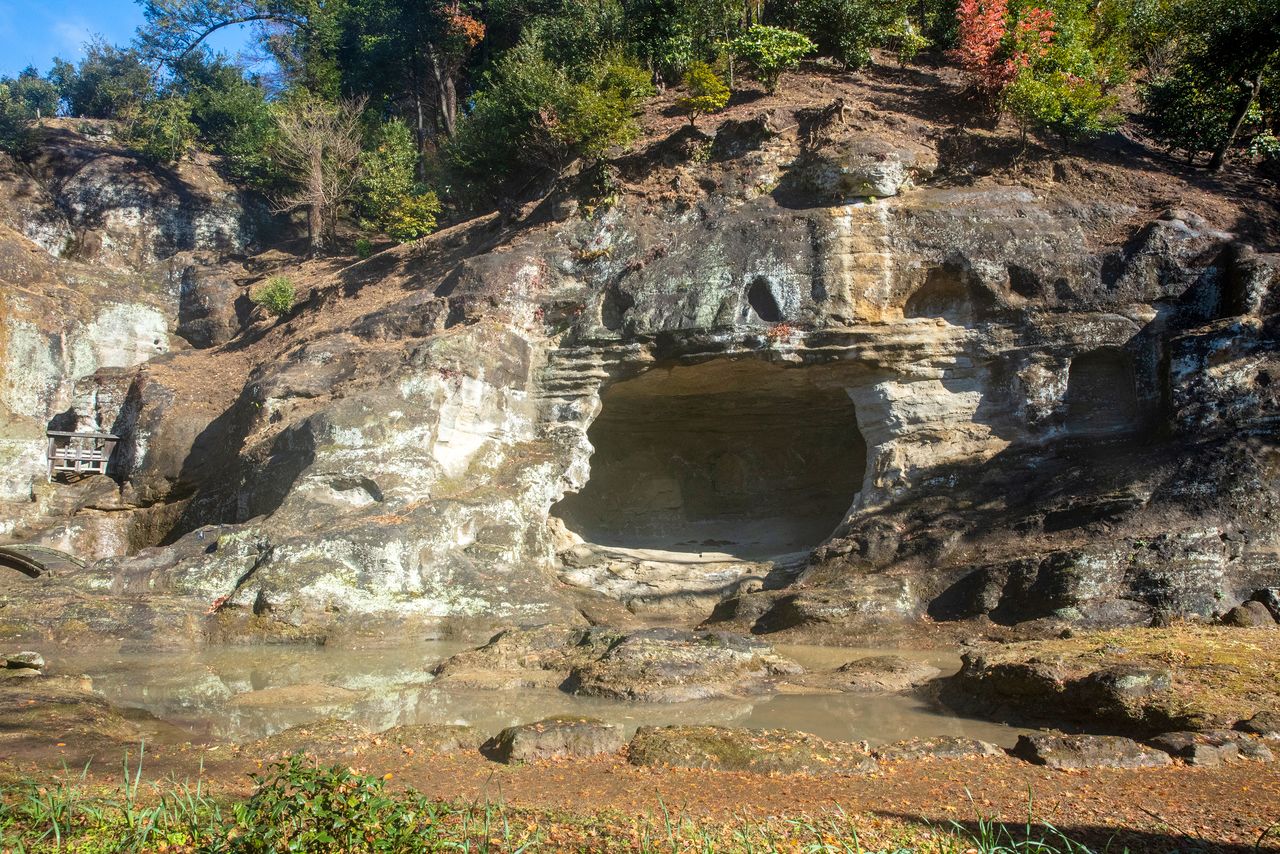
The impressive rock garden at Zuisenji, in place since the Kamakura period, is a nationally designated place of scenic beauty. (© Harada Hiroshi)
(Originally published in Japanese on September 7, 2025. Banner photo: Autumn colors and snow-clad Mount Fuji as seen from Ten’en Pass. © Harada Hiroshi.)