An Autumn Stroll in Kamakura: Aglow in Crimson and Gold
Guideto Japan
Travel History Images- English
- 日本語
- 简体字
- 繁體字
- Français
- Español
- العربية
- Русский
Seasonal Hues Around Kita-Kamakura
The grounds of Kamakura’s shrines and temples are rich in color throughout the year. As summer fades, bush clover and red spider lilies bloom, followed by the golden glow of ginkgo trees and the fiery red leaves of maple.
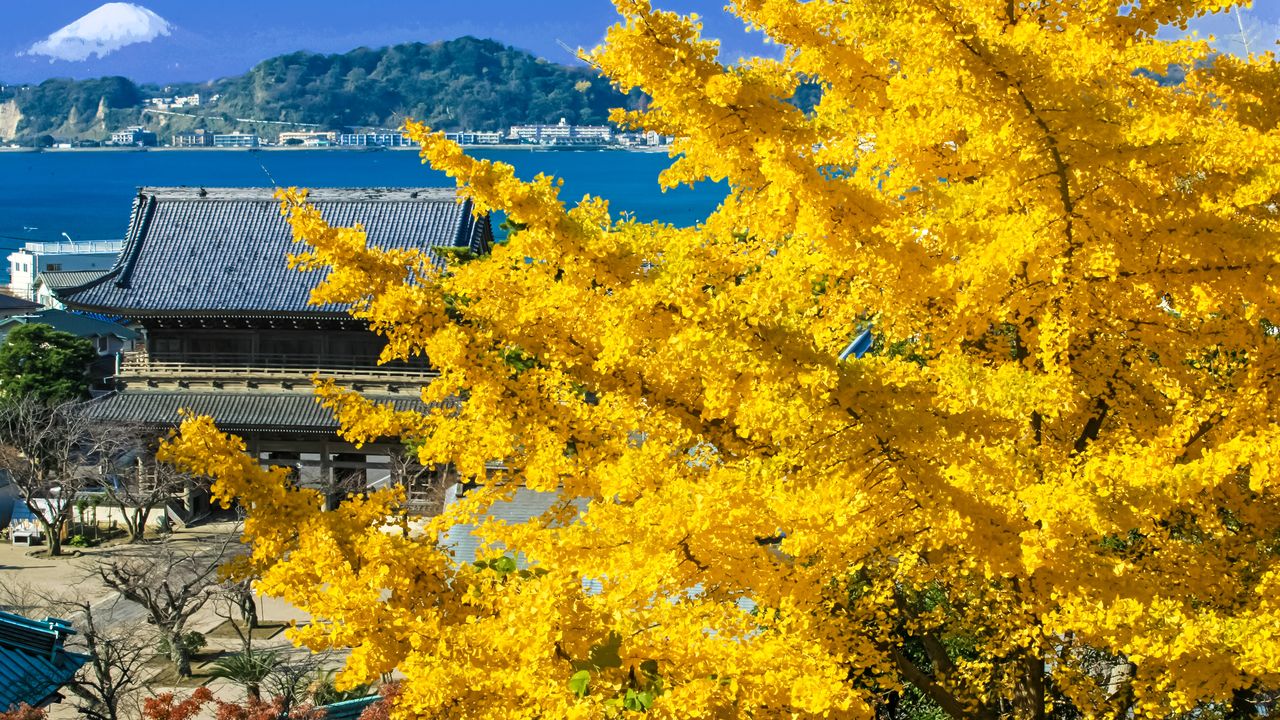
Begin your autumn stroll through Kamakura at Jōchiji, the fourth of Kamakura’s five great Zen temples (gozan), just a short walk from JR Kita-Kamakura Station. In front of the main hall is a golden sea of ginkgo leaves—a luminous carpet just as beautiful as the shimmering foliage on the trees backlit by the sun. By not sweeping away the fallen leaves, the temple invites visitors to enjoy the view.

A golden carpet of ginkgo leaves spreads before Jōchiji’s main hall. (© Harada Hiroshi)
Across the railroad tracks is the approach to Meigetsuin, a temple famed for its hydrangeas in early summer. Just as enchanting is the autumn view framed by its iconic circular “window of enlightenment.” There are long lines in June, but the vista is less crowded in the fall—offering photographers a perfect opportunity to capture the scene in vivid seasonal hues.
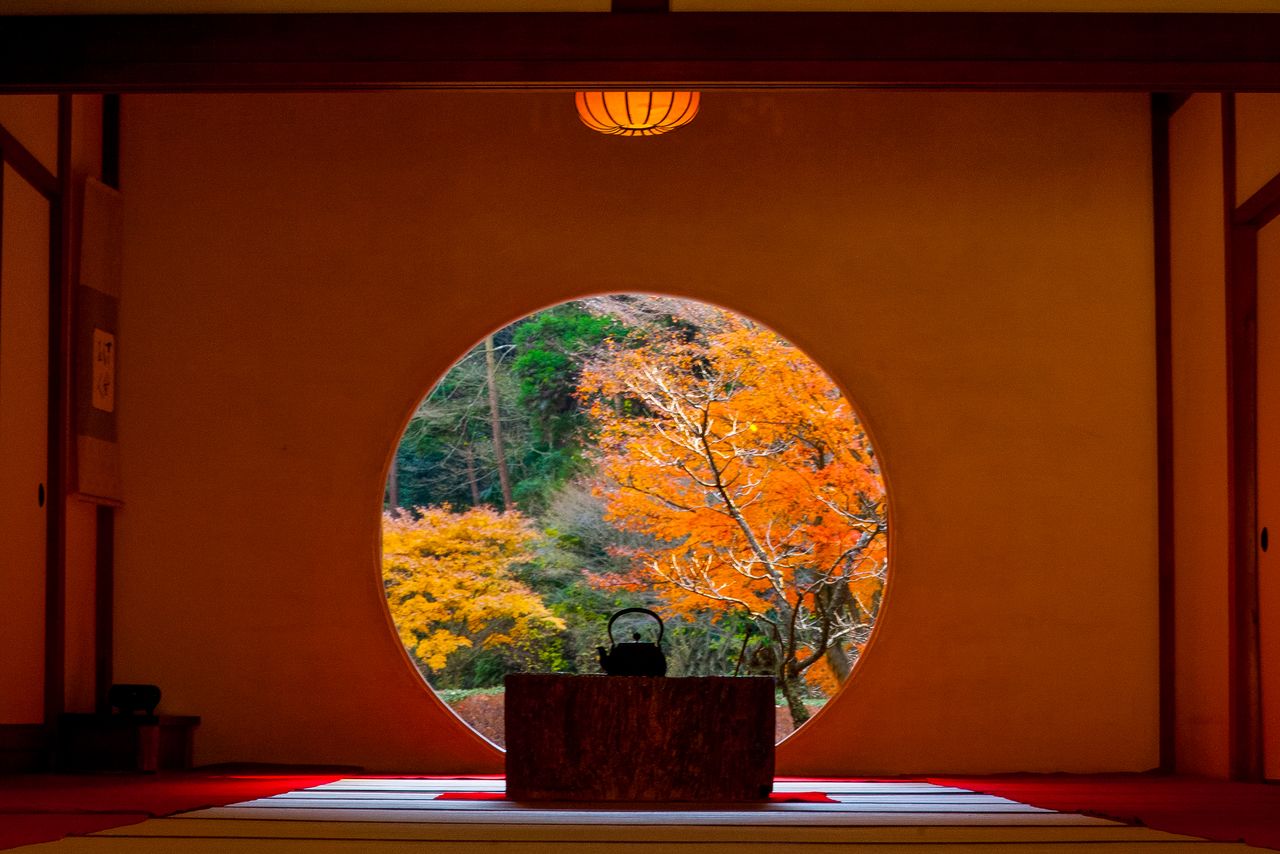
Autumn’s brilliant colors glow through Meigetsuin’s “window of enlightenment.” (© Harada Hiroshi)
Return to the main road and continue past the crossing to reach Kenchōji, Japan’s first full-scale Zen training monastery founded in 1253 and ranked highest among Kamakura’s gozan temples. Follow the side path to the left, where clusters of maple trees glow in the rays of the autumn sun.
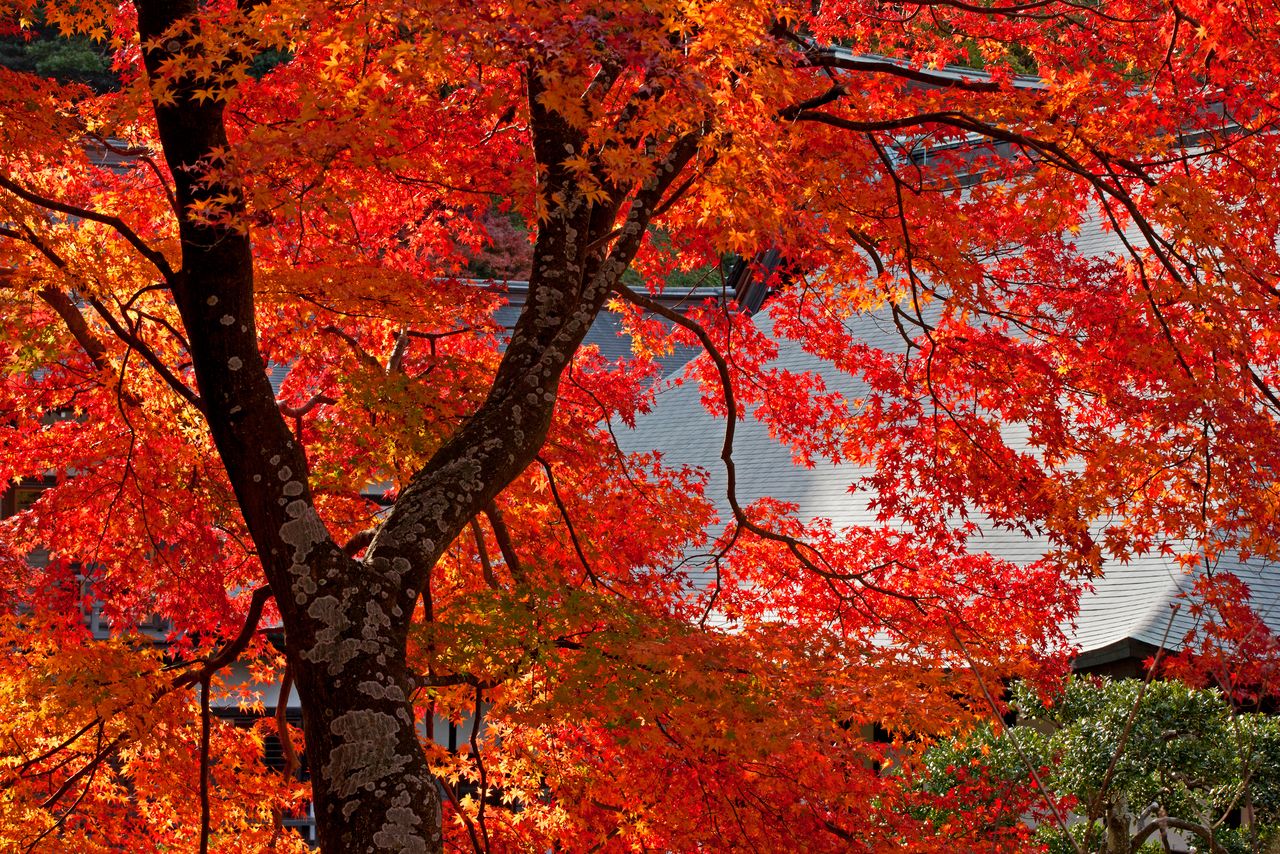
A blaze of maple leaves against the backdrop of Kenchōji’s main hall. (© Harada Hiroshi)
Autumnal Sanctuaries in the Eastern Hills
Head next to the shrines and temples nestled in Kamakura’s green eastern hills. A 10-minute bus ride from Kamakura Station brings you to Kamakuragū, a relatively new shrine built around 160 years ago that hosts popular performances of takigi (firelight) nō each autumn. Visit at dusk to see the vivid crimson maples near the shrine office lit up by the soft glow of lanterns.
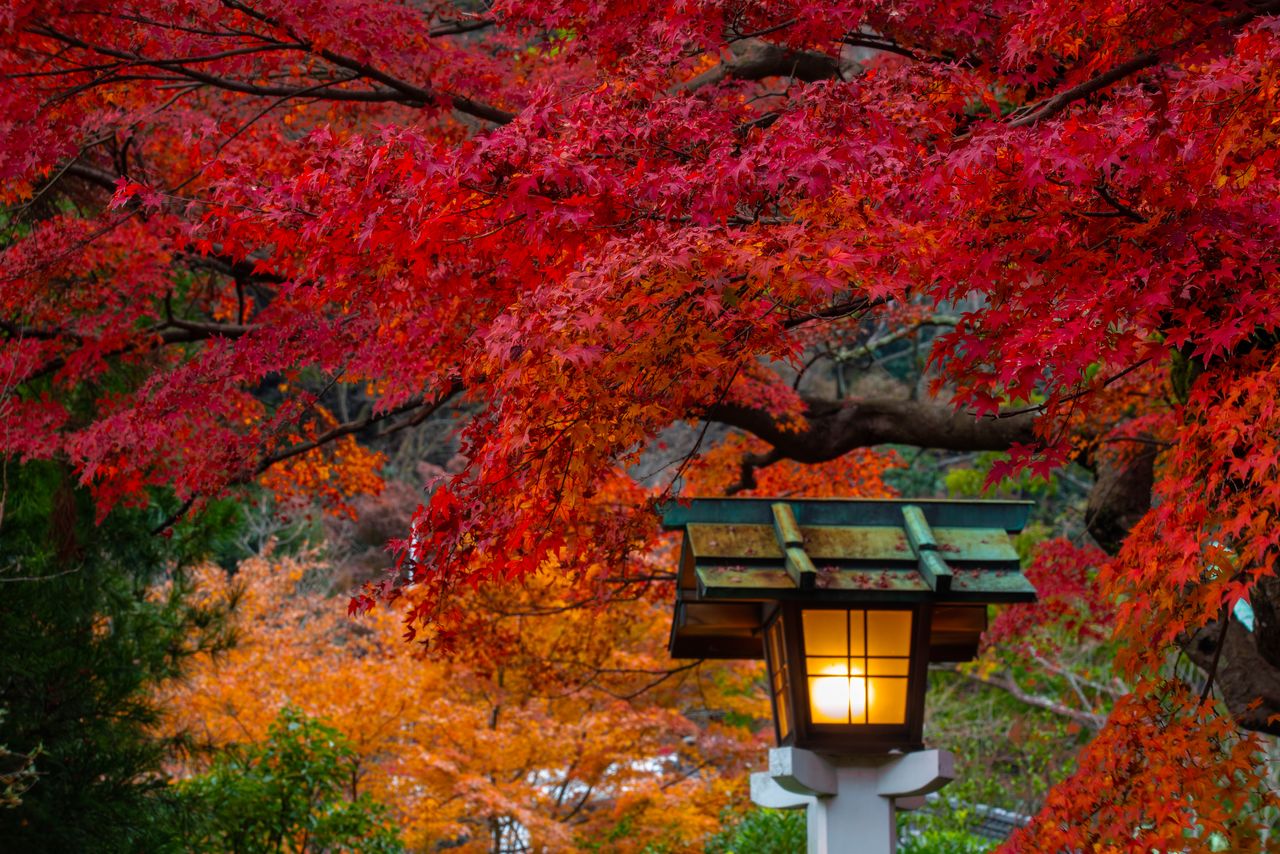
Flame-red maples surround the shrine office at Kamakuragū. (© Harada Hiroshi)
From there walk northeast along a gentle slope to Zuisenji, a secluded temple tucked into forested hills ablaze with autumn color. Founding monk Musō Soseki (1275–1351) is said to have chosen the site for its scenic harmony with Zen ideals.
Pass through the gate to the main hall, surrounded by red and gold maples. The temple is particularly beautiful after rain, as the fallen leaves create a vivid mosaic. Behind the hall is a rare rock garden carved directly into a massive cliff face. Designed by Soseki himself, it is a nationally designated scenic site and a masterpiece of early Zen garden design.
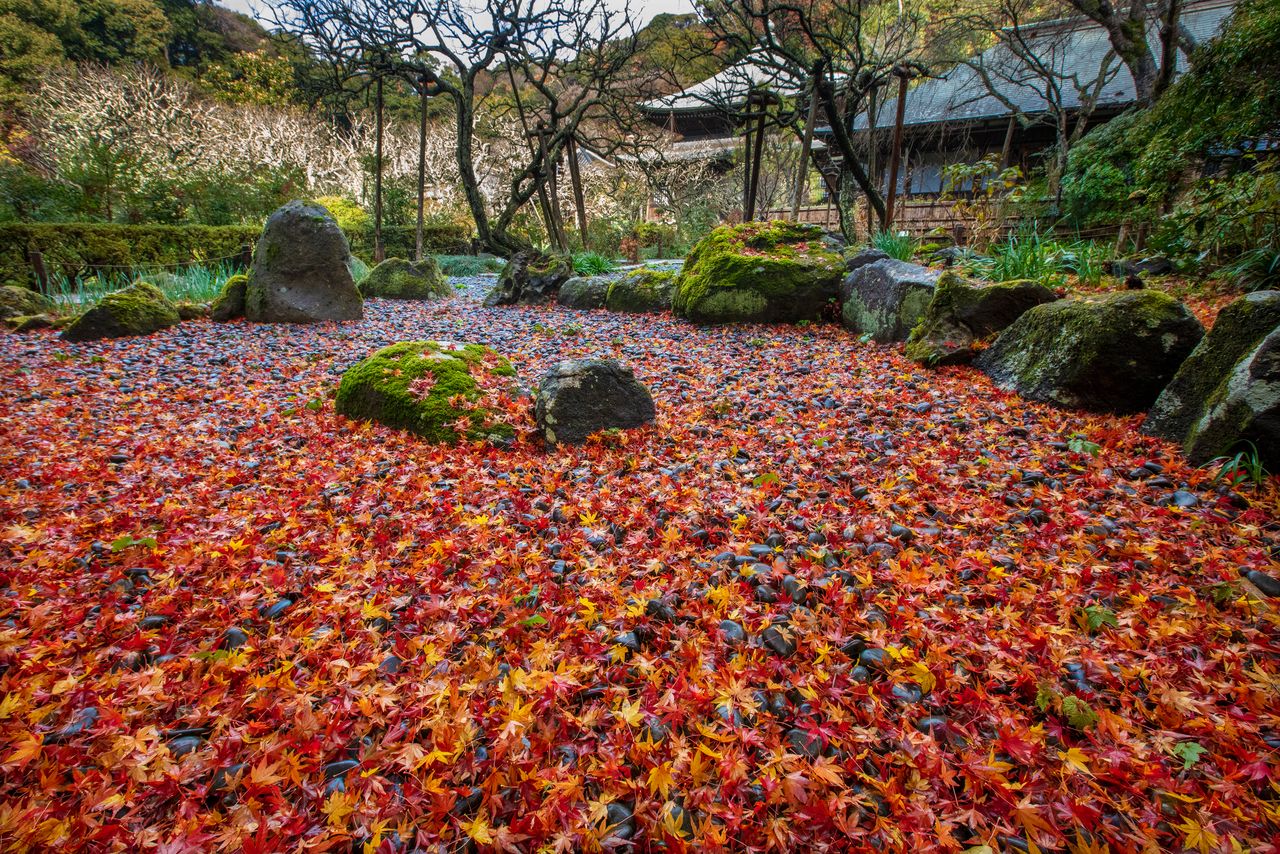
Zuisenji’s stone garden, covered by fallen leaves, is especially beautiful after rain. (© Harada Hiroshi)
Slightly south of Zuisenji is Jōmyōji, the fifth of Kamakura’s five great temples. Once a sprawling complex with seven major halls, today only the main hall remains, its grand copper roof a vestige of the temple’s former glory.
The garden is a year-round delight, featuring plum blossoms in early spring, peonies in late spring, and crape myrtle in summer. In autumn, the golden leaves of a towering ginkgo tree glow against the expansive roof of the main hall. Stop by Kisenan, a teahouse on the grounds, to enjoy matcha while gazing out at a dry landscape garden. Also worth visiting a short distance away is Hōkokuji—a temple with the city’s largest bamboo grove.
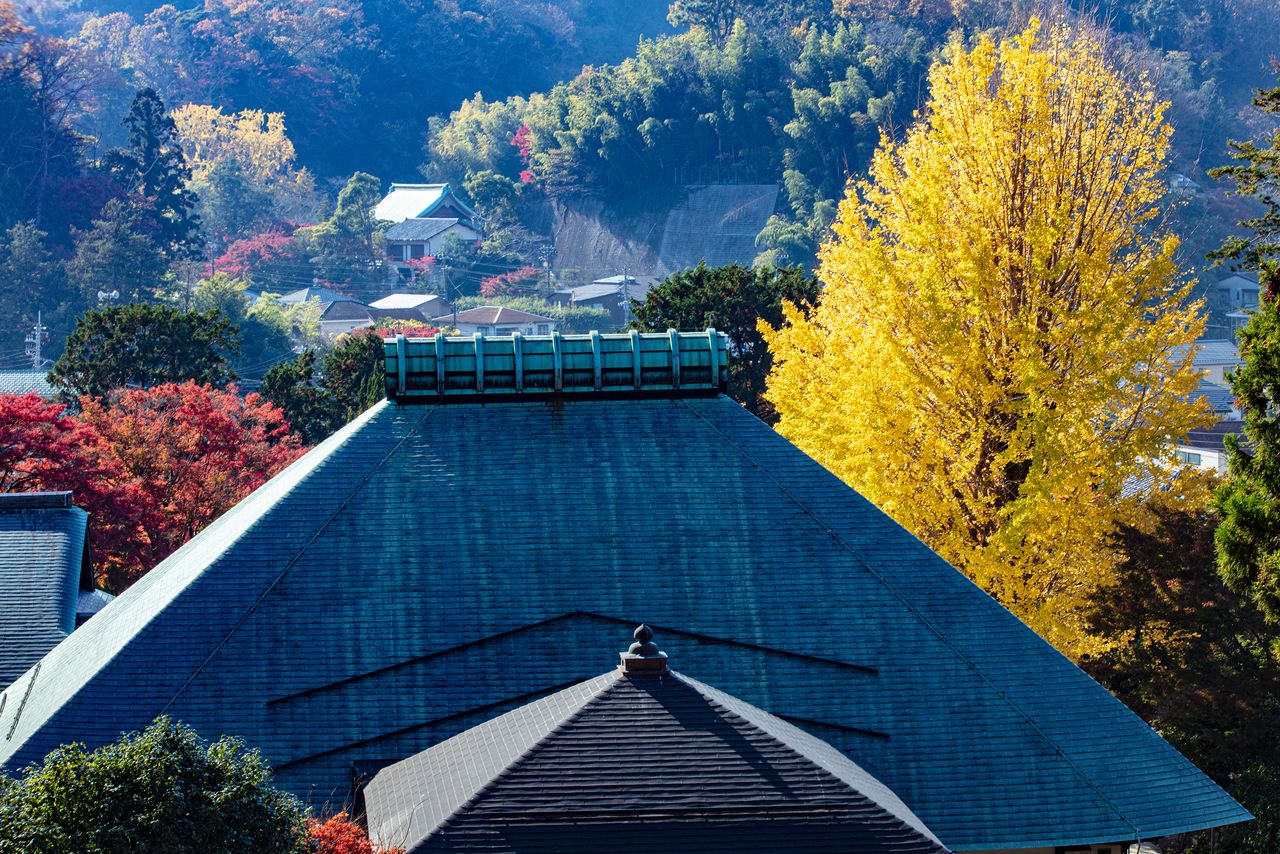
A golden ginkgo tree behind the copper roof of Jōmyōji’s main hall. (© Harada Hiroshi)
Bamboo Groves and Nighttime Viewing
North of Kamakura Station on the western side of the tracks is another popular autumn destination—Eishōji, the city’s only surviving temple led by female clergy. Like many Kamakura landmarks, it offers seasonal delights year-round: plum blossoms in early spring, cherry and wisteria in mid-spring, hydrangeas in early summer, and red spider lilies in early autumn. The temple is also known for a bamboo grove second in scale only to Hōkokuji. In autumn, vivid foliage glimpsed through tall green bamboo creates a striking contrast.
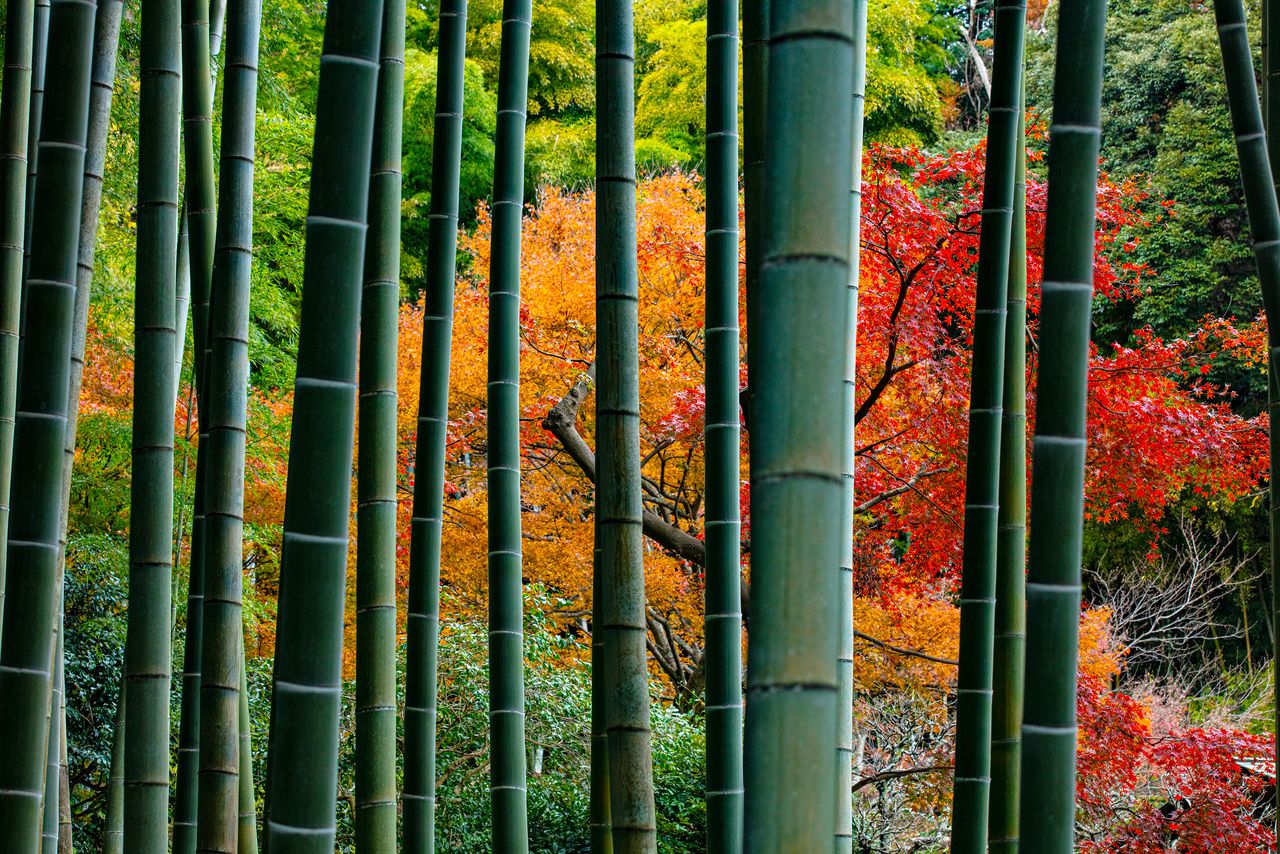
Eishōji’s bamboo paths offer glimpses of autumn leaves from various angles. (© Harada Hiroshi)
End your autumn stroll at Hasedera, a short ride from Kamakura Station on the Enoden Line. Known as the Temple of Flowers, it is home to one of Japan’s largest wooden statues—the 9.18-meter-tall 11-headed Kannon. In recent years, the temple has also gained fame for its dazzling autumn colors.
The spacious grounds feature a pond garden surrounded by maples, with more found around the main hall above stone steps. A towering golden ginkgo tree adds color, its height rivaling the building itself. Also not to be missed at Hasedera is Kamakura’s only autumn illumination display—an enchanting, nighttime experience offering a different view from the daytime.
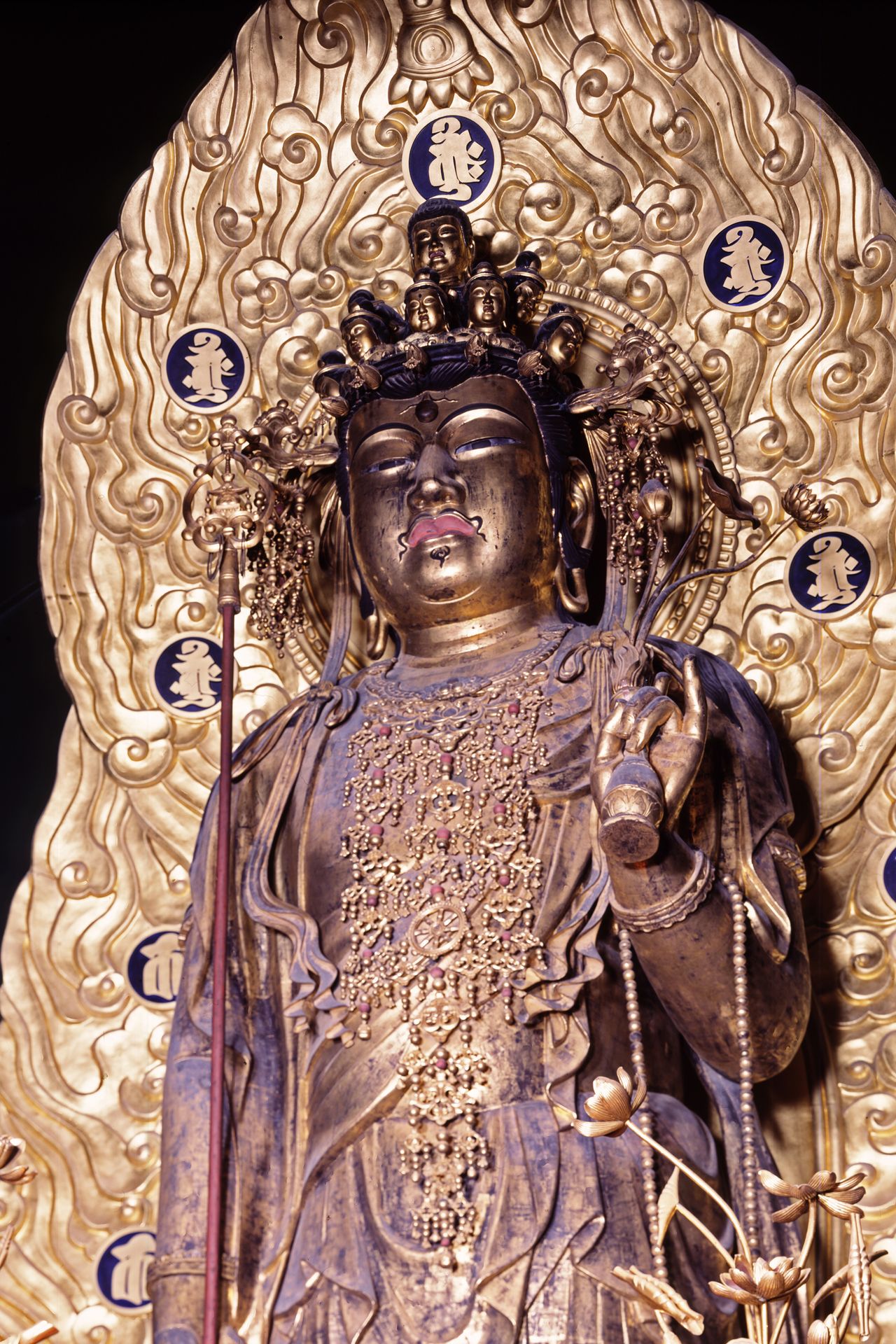
Hasedera’s gilded Kannon is one of Kamakura’s iconic statues, alongside the Great Buddha of Kōtokuin. (© Harada Hiroshi)
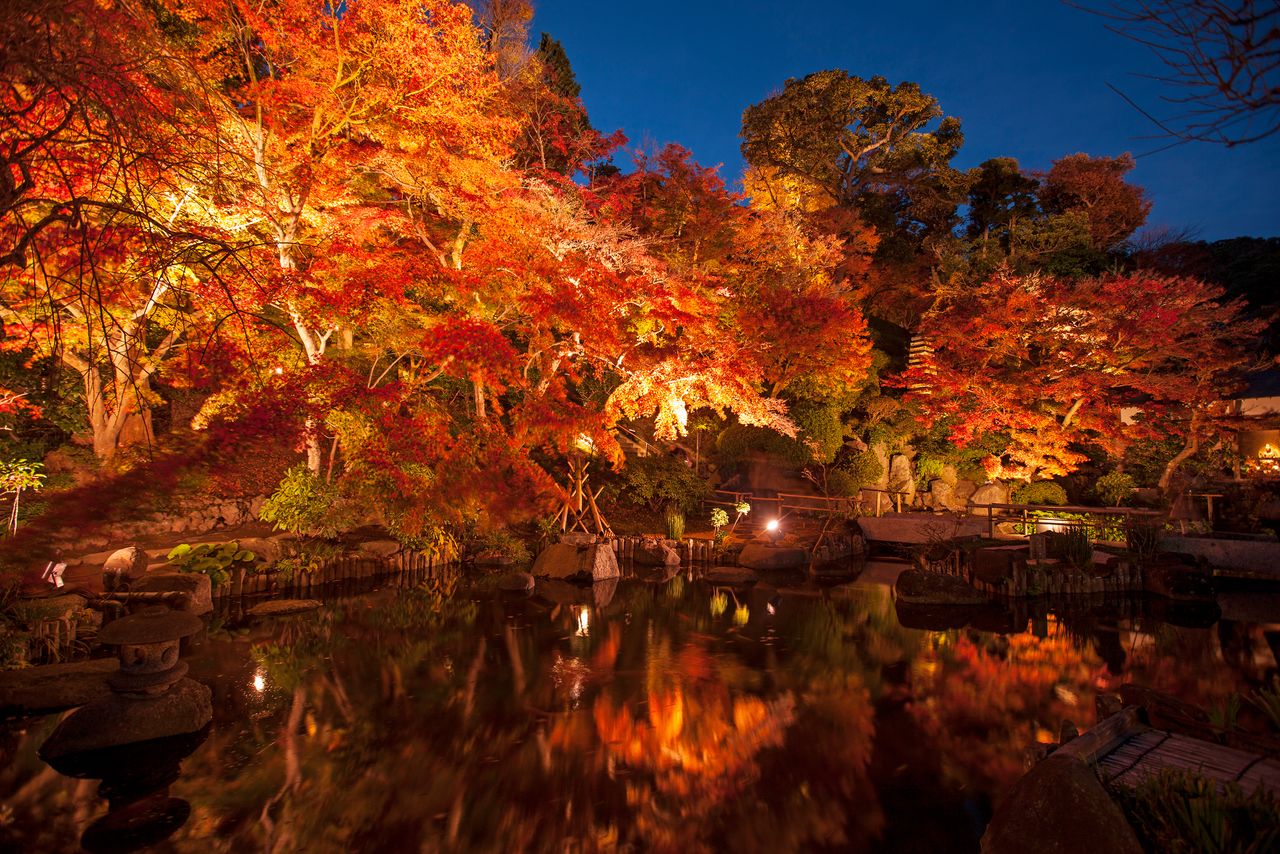
Illuminated maples surround the temple pond. (© Harada Hiroshi)
(Originally published in Japanese. Banner photo: Mount Fuji is seen beyond a curtain of golden ginkgo leaves at the temple of Kōmyōji. © Harada Hiroshi.)