The Great Buddha of Kamakura: A Splendid Sight for All Seasons
Guideto Japan
Travel History- English
- 日本語
- 简体字
- 繁體字
- Français
- Español
- العربية
- Русский
Surviving Adversity
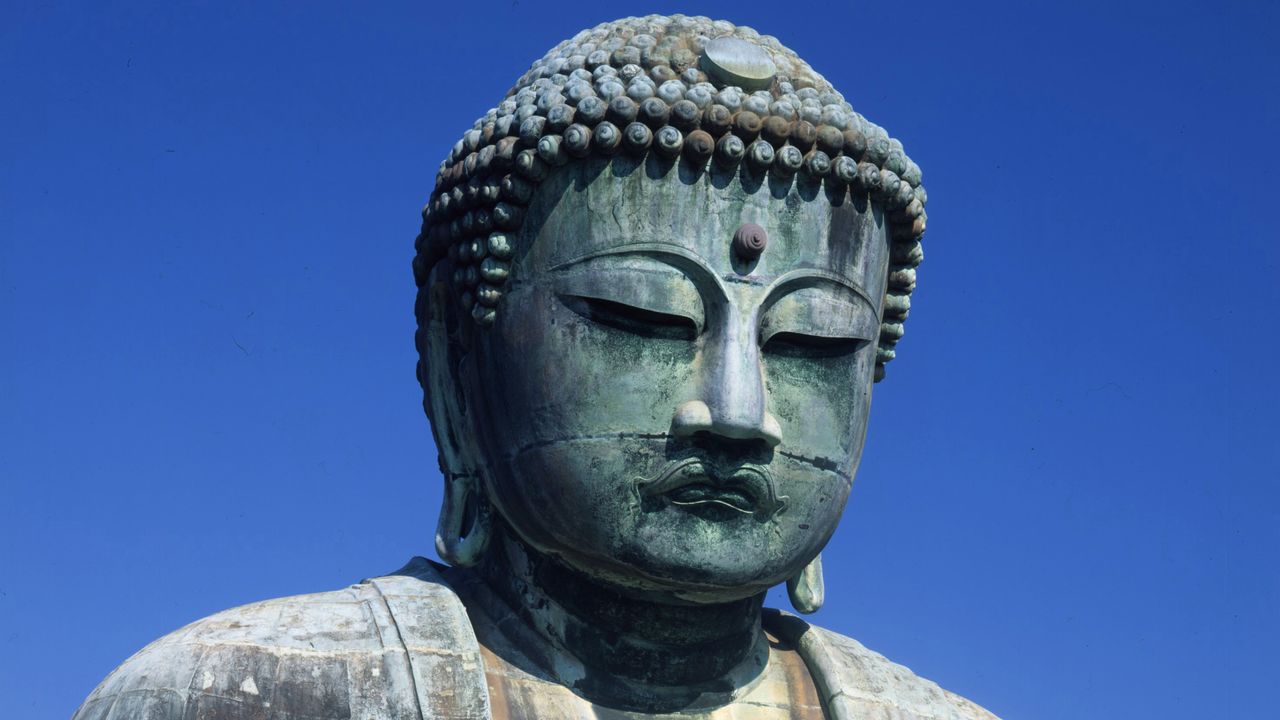
Among the numerous statues of Buddha in Kamakura, the seated bronze statue of Amida Nyorai (Amitābha) at the temple Kōtokuin is the only one designated a national treasure. Familiarly known as the Kamakura Daibutsu (Great Buddha) and a major draw for worshippers, it is a symbol of this ancient capital. Measuring 13.35 meters and weighing 121 tons, this gilt bronze statue is one of the two greats, along with Tōdaiji’s Nara Daibutsu.
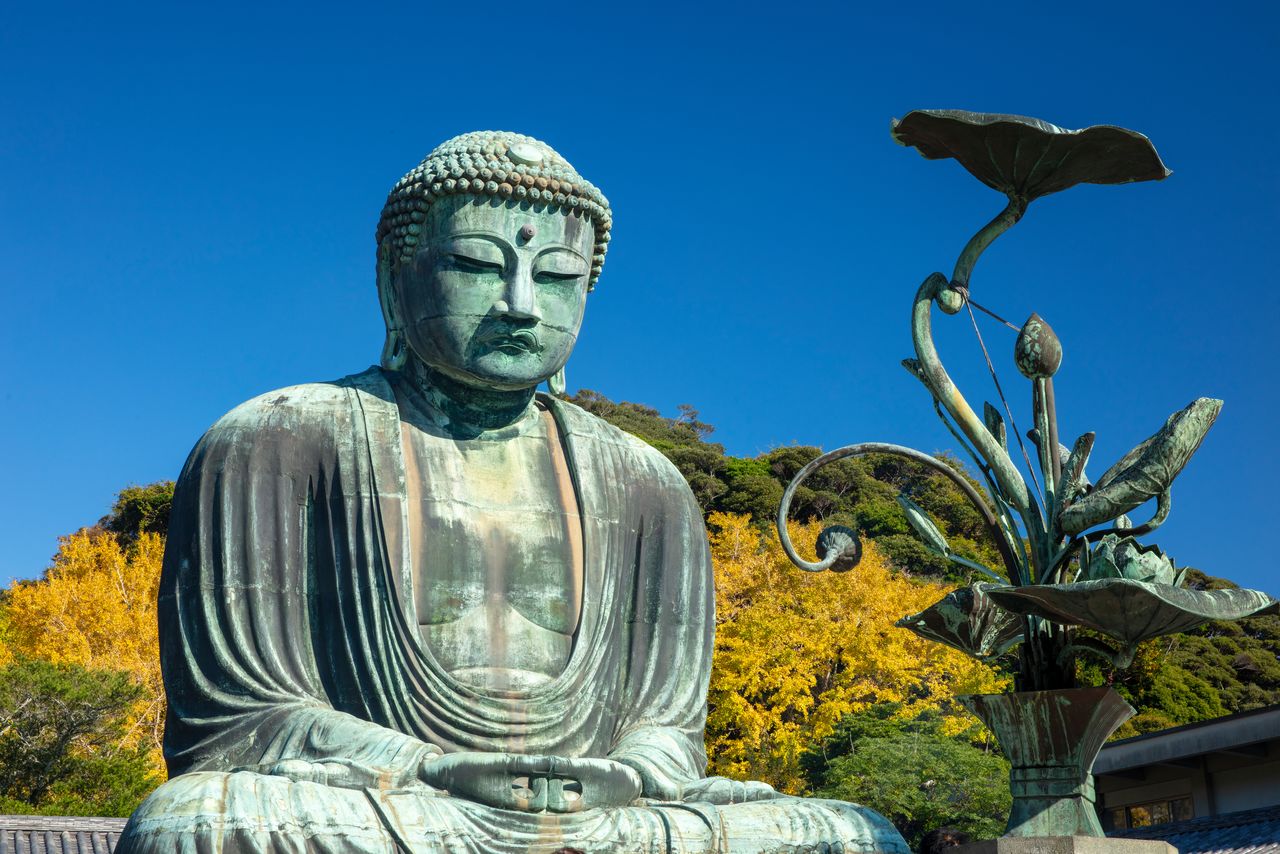
Autumn view of the Kamakura Daibutsu, with vibrant yellow ginkgo trees in the background. (© Harada Hiroshi)

While the Nara Daibutsu sits inside a building, the Kamakura Daibutsu is in the open air. A structure had been built to house the Kamakura Daibutsu when it was cast in the mid-thirteenth century, but after that was destroyed in storms and an earthquake in the fourteenth and fifteenth centuries, it was never rebuilt. Gigantic stones around the perimeter, which visitors often use to sit on, are the foundations on which the temple building rested.
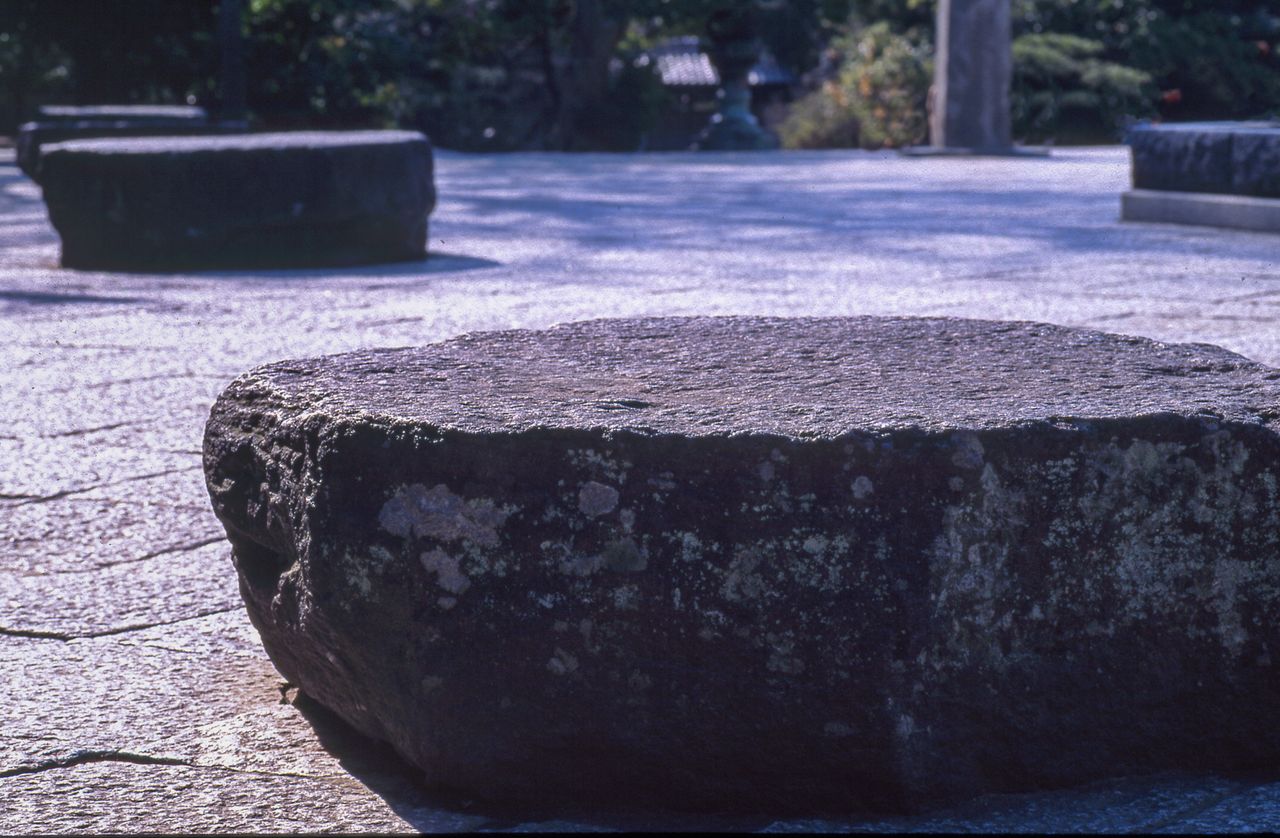
The temple building’s foundation stones are two meters across. (© Harada Hiroshi)
Heavy construction equipment did not exist when the Daibutsu was created, and the method used to construct such a large statue had long been a mystery. Recent excavations have revealed that the statue was cast in seven stages, beginning at the bottom. The work was done in sections; each completed section was covered with earth for hardening, and the process was repeated until the figure was complete. The statue, hollow inside, can be entered from the base. Within the statue, the seams from the casting are clearly visible, and it is believed the windows in the back were provided for the purpose of removing earth and tools after casting was completed.
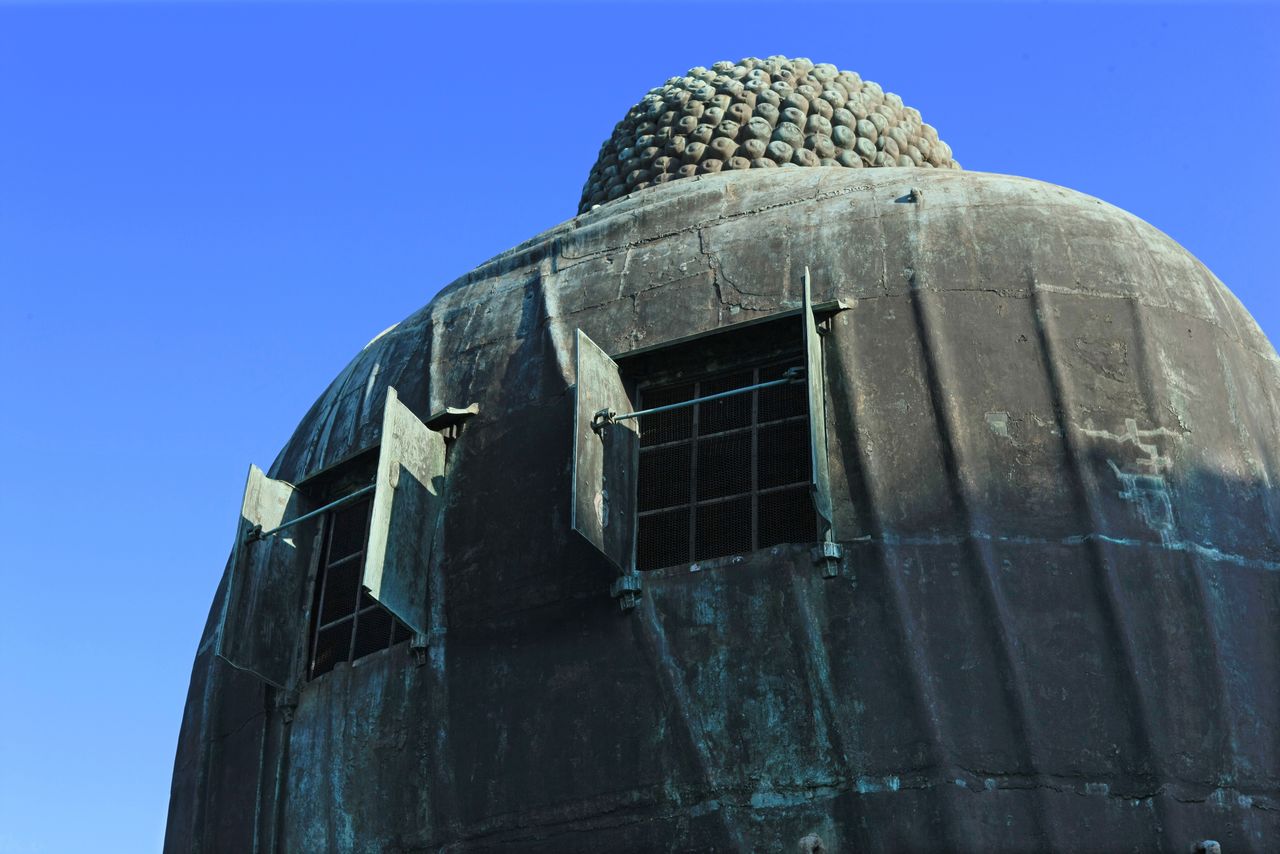
The windows in the back of the statue now let light in. (© Harada Hiroshi)
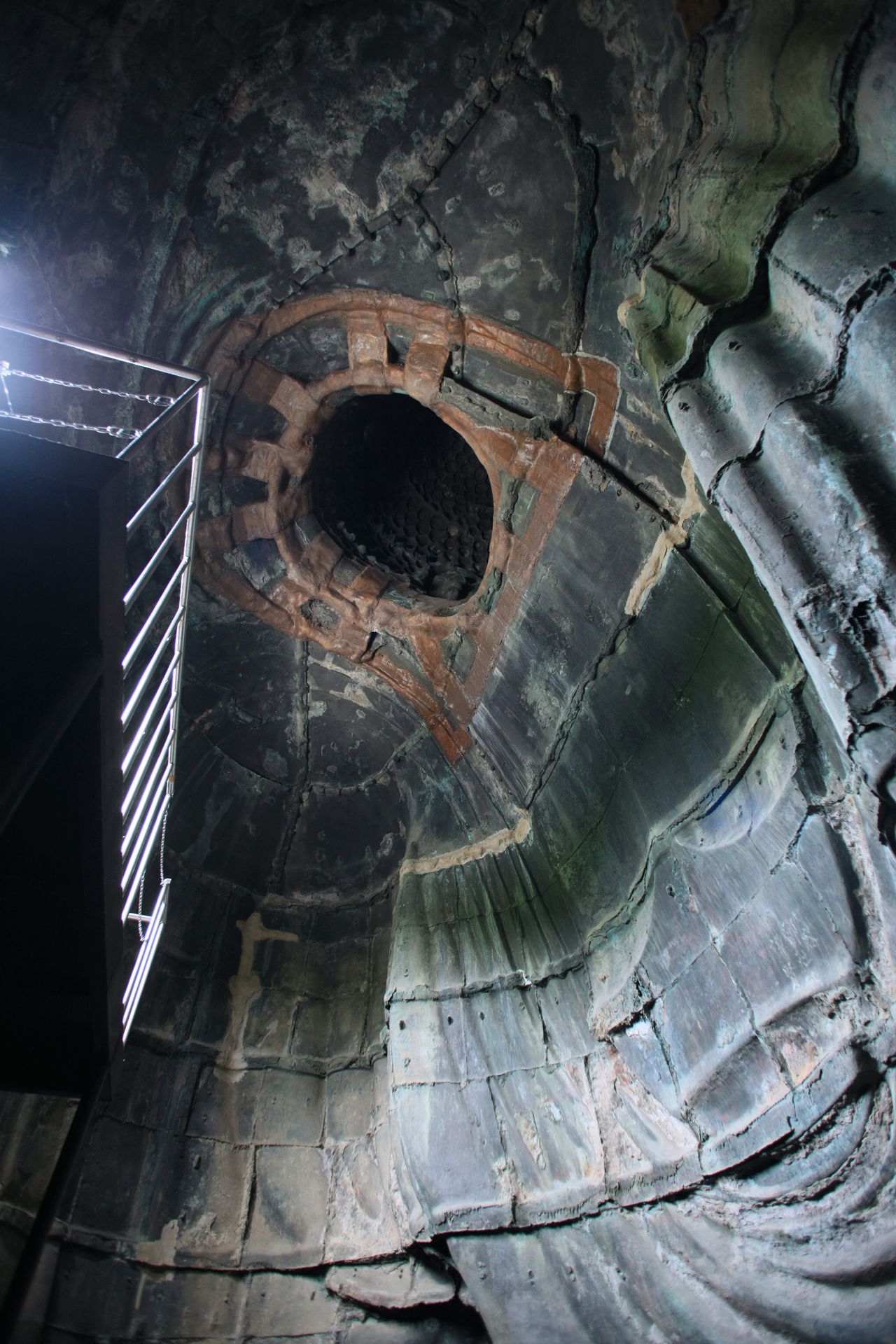
Inside the statue, seams from casting are clearly visible. (© Harada Hiroshi)
The statue was originally covered in gold leaf, which gradually wore away due to exposure to the elements. The figure developed a bronze patina, although a sliver of gold remains around its right ear, a reminder of its original grandeur.
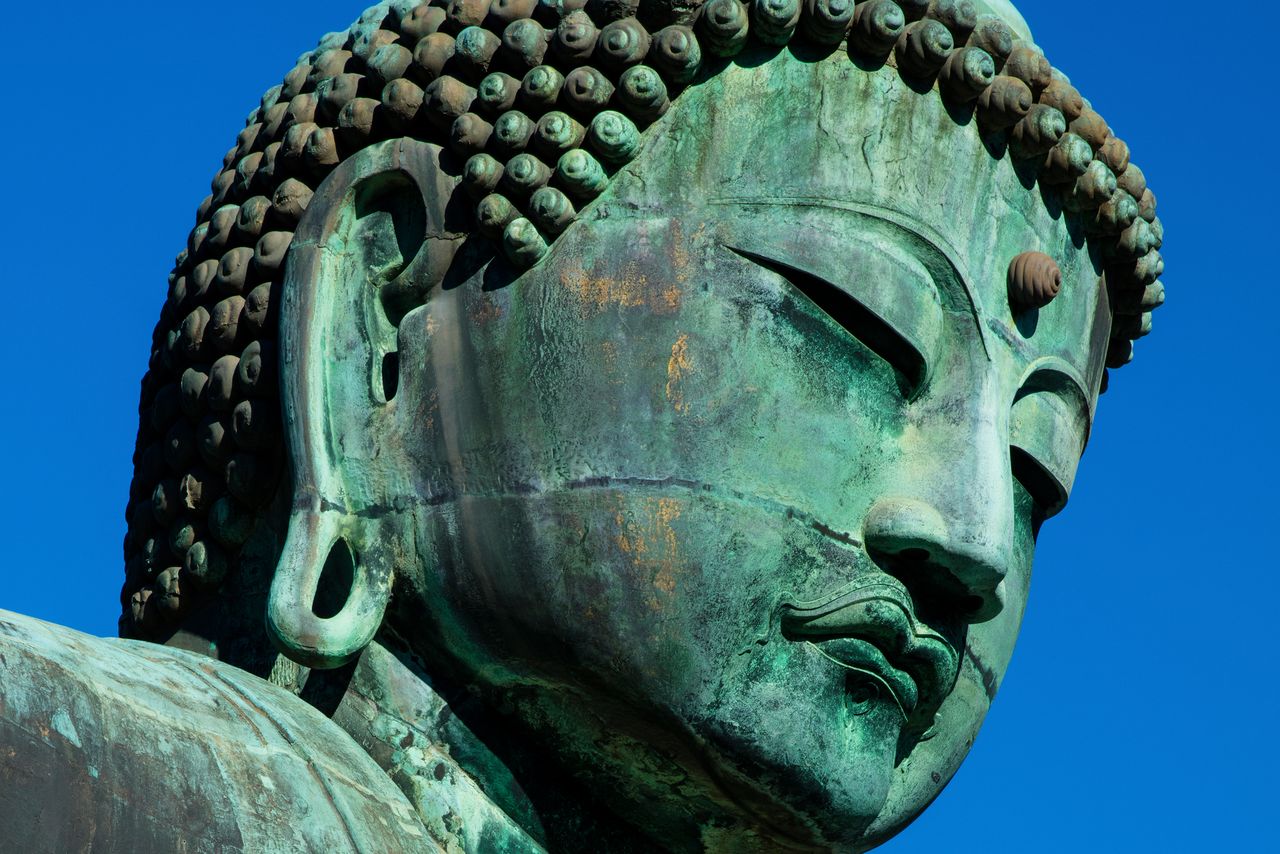
Faint traces of gold leaf linger on the Buddha’s face. (© Harada Hiroshi)
Majestic Beauty in Nature
The Daibutsu may have lost its majestic golden luster, but nature enlivens its setting throughout the year: cherry blossoms in spring, crepe myrtle in summer, and golden ginkgo and fiery red maple leaves in autumn appear like seasonal offerings.
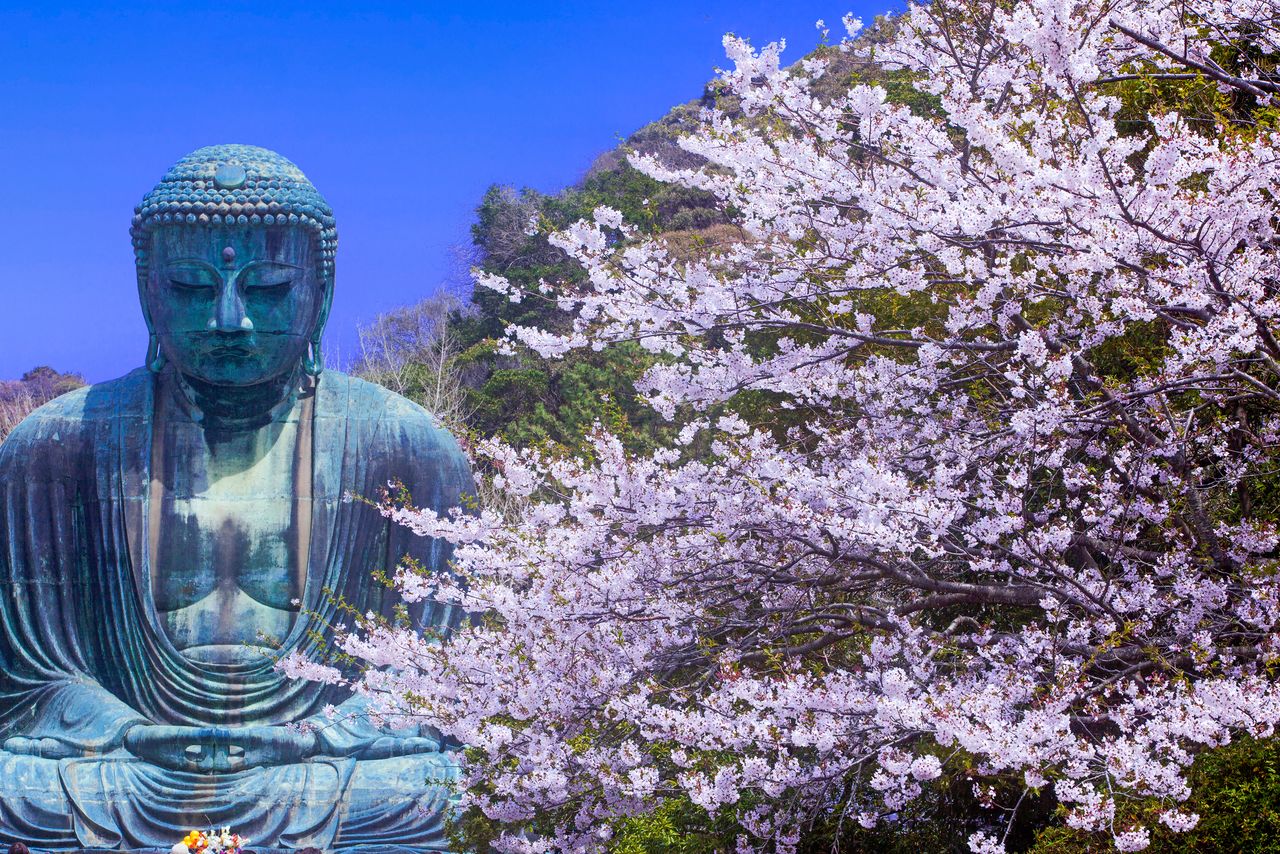
Cherry blossoms in spring. (© Harada Hiroshi)
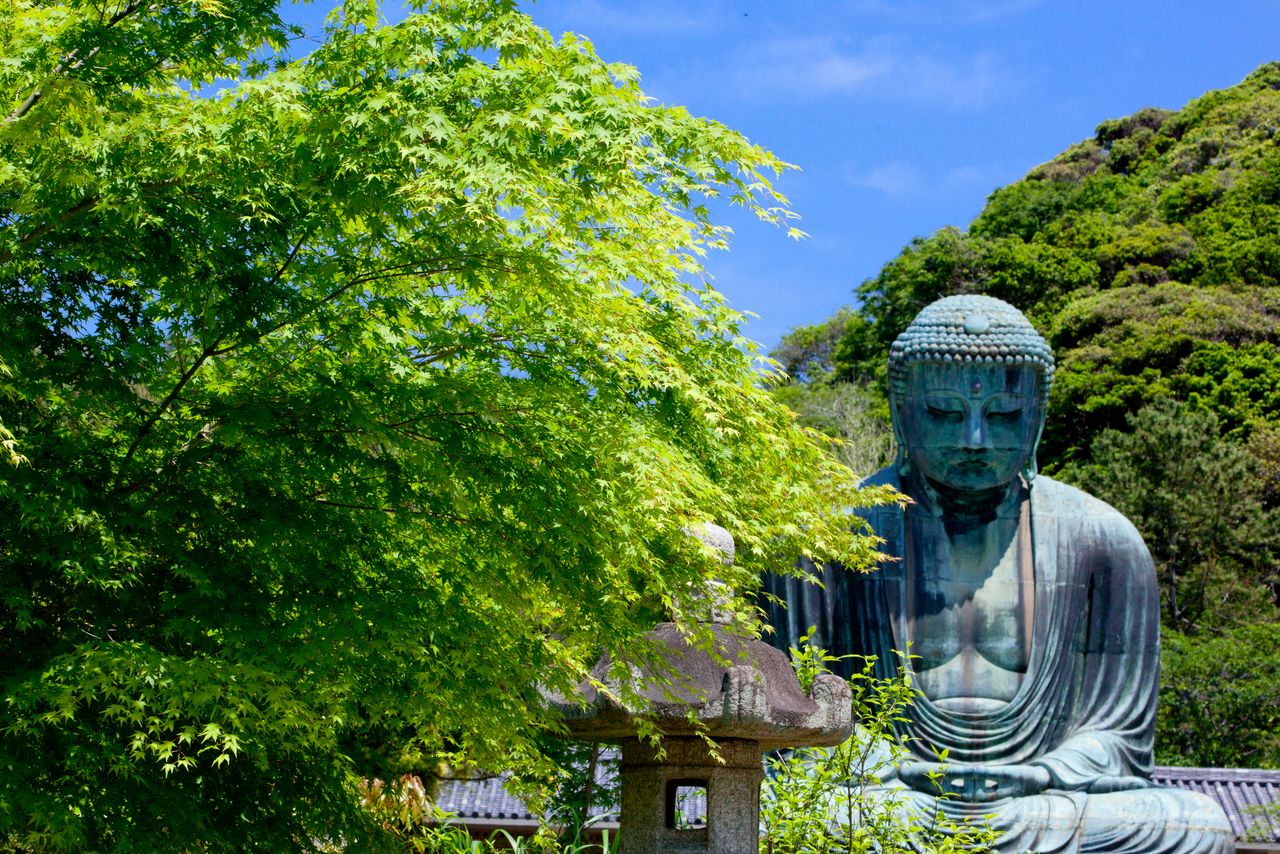
The fresh green foliage of early summer. (© Harada Hiroshi)
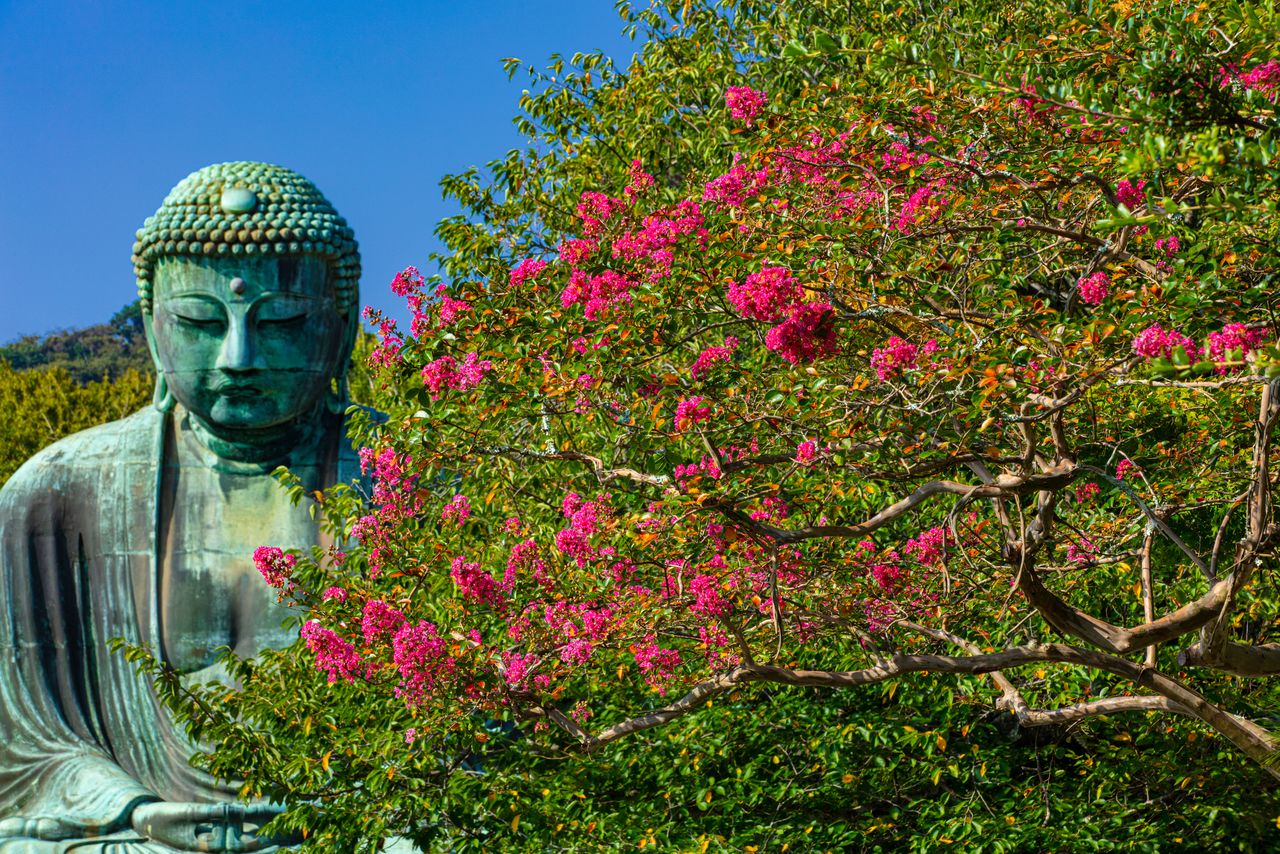
Blooming crepe myrtle in high summer. (© Harada Hiroshi)
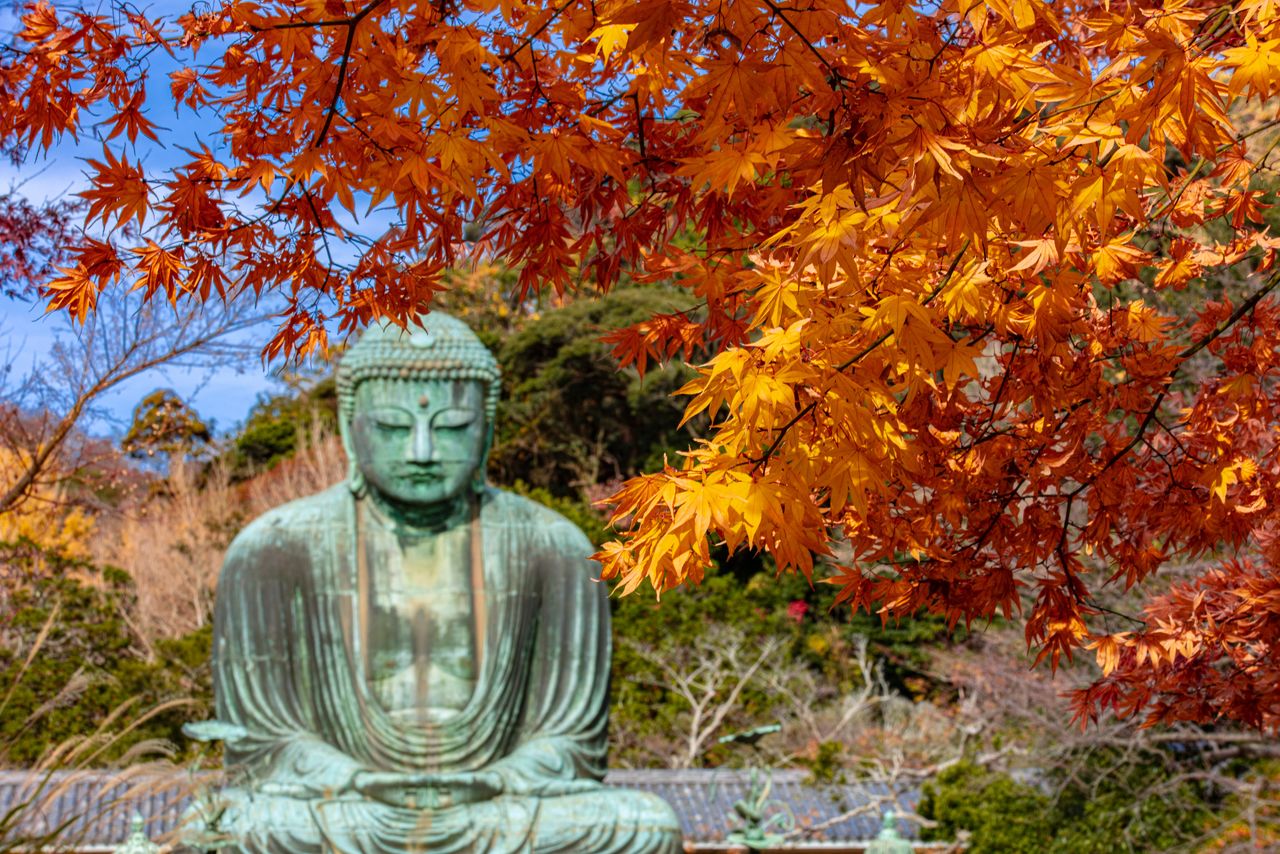
Brilliantly colored maples in autumn. (© Harada Hiroshi)
The Daibutsu’s appearance also changes with the weather. It is usually depicted under a dazzling blue sky, but in the rain, it exudes solitary grandeur. Snow does not often fall in Kamakura, but under a mantle of white, the Daibutsu has a solemn presence.
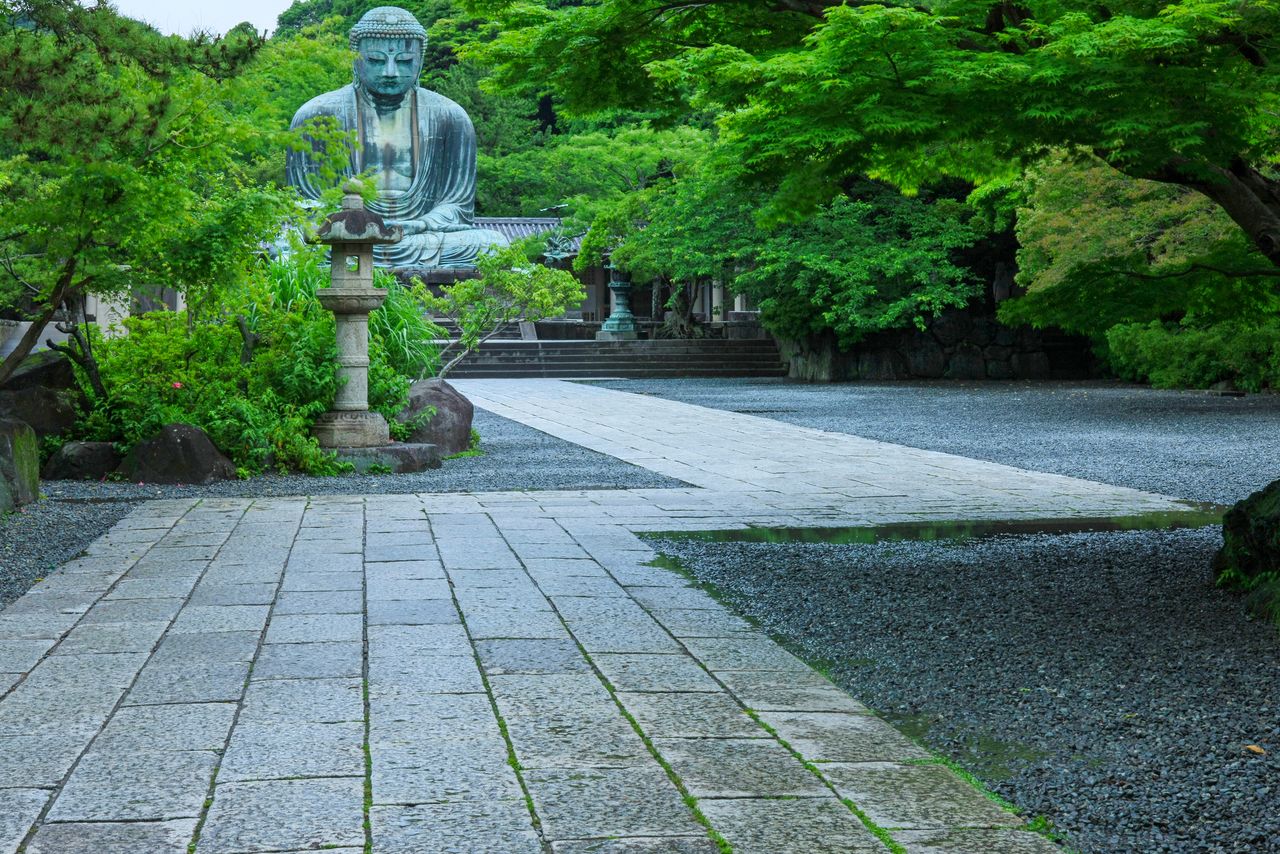
The main approach in gentle rain. (© Harada Hiroshi)
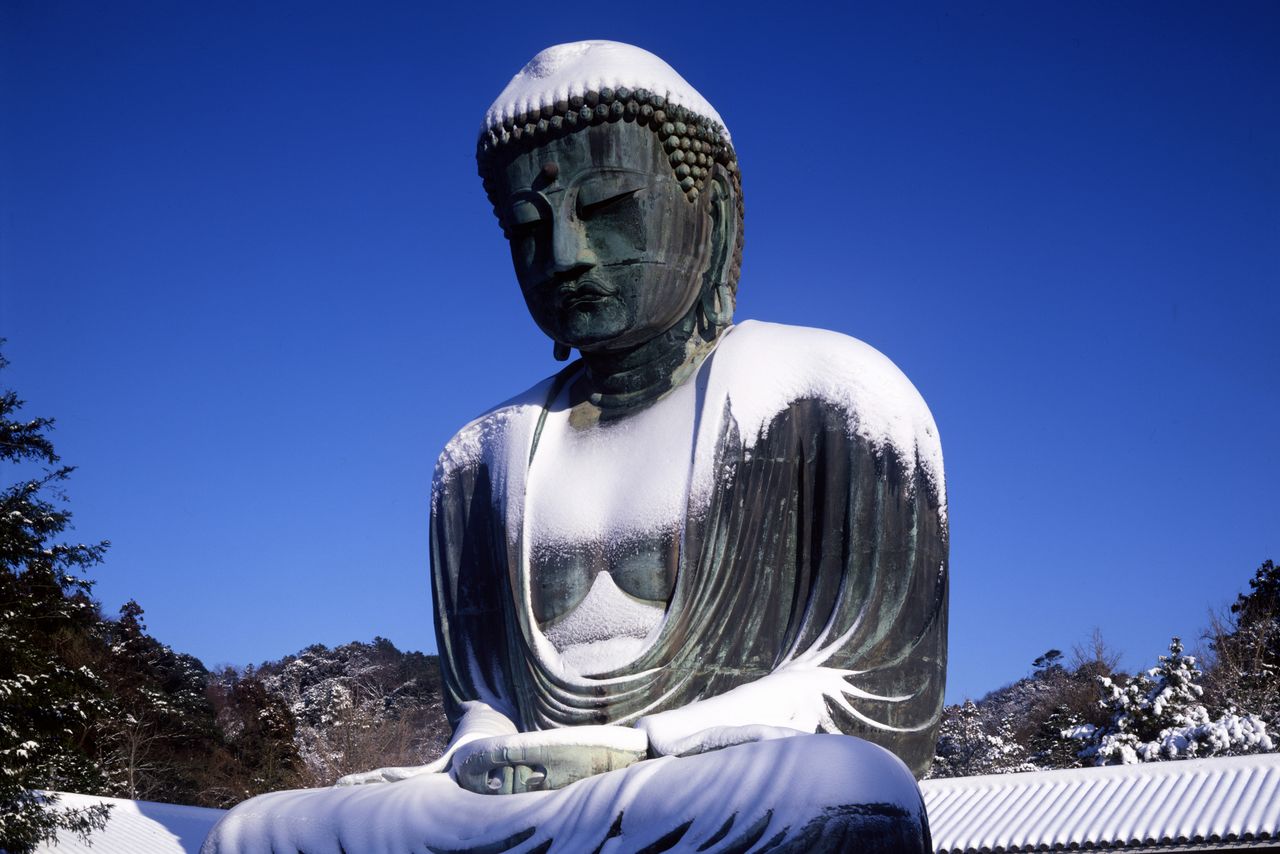
In winter, some lucky visitors may see a snow-clad Daibutsu. (© Harada Hiroshi)
The Daibutsu also presents different aspects depending on the time of day. When sunlight hits the statue’s face in the afternoon, its right cheek glints with faint traces of its original gold leaf decoration. In winter when the days are short, visitors can see the Daibutsu lit up against the evening sky in the brief time before the gates close.
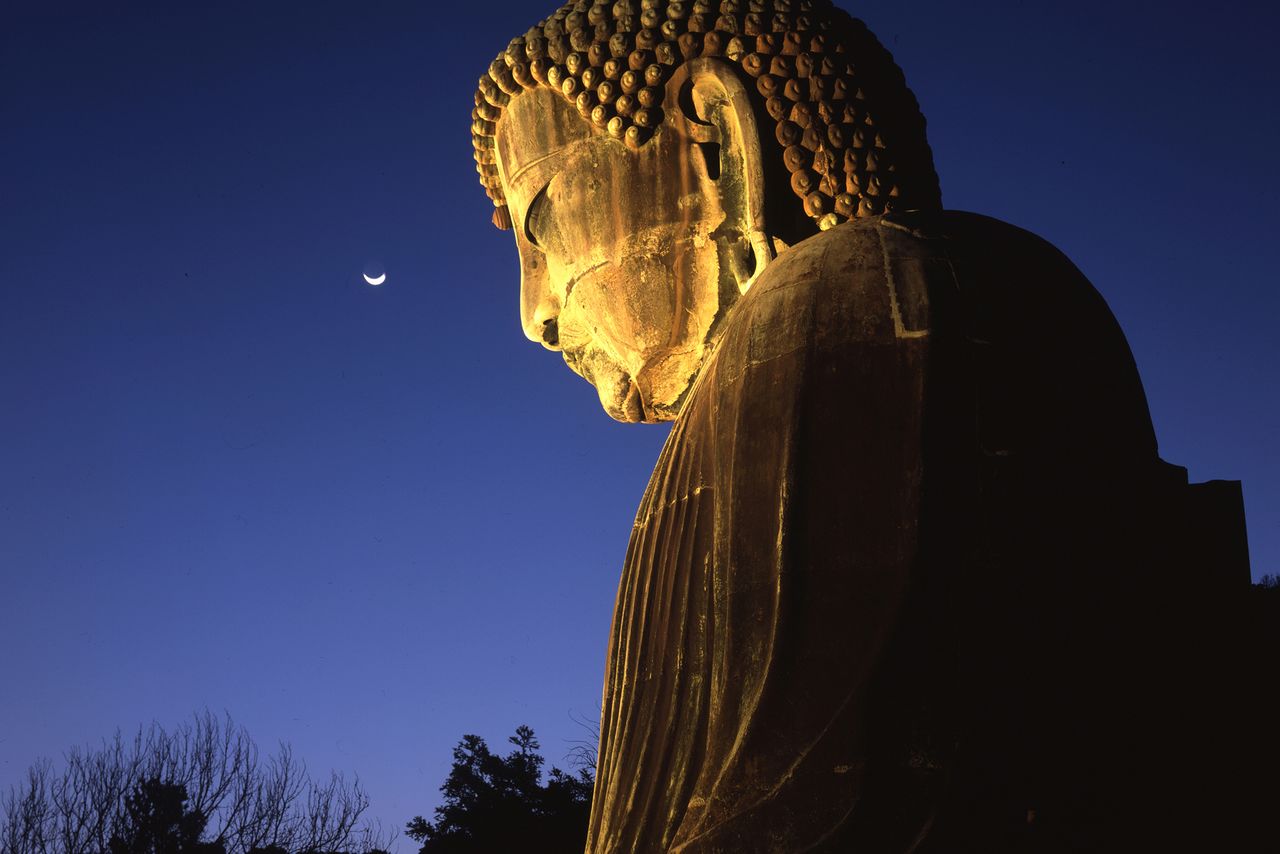
The illuminated Daibutsu, with a new moon in the distance. (© Harada Hiroshi)
(Originally published in Japanese. Banner photo: The Great Buddha of Kamakura against the blue sky. © Harada Hiroshi.)