Mille-feuille, Skewers, and Parfaits: New Takes on Seafood Bringing Diners Back to the Table
Guideto Japan
Food and Drink Travel- English
- 日本語
- 简体字
- 繁體字
- Français
- Español
- العربية
- Русский
Striking Seafood Visuals
Japan’s kaisendon seafood bowls are known for overflowing toppings of morsels like tuna, salmon, sea urchin, and scallops over white rice. Unlike simple servings of nigirizushi, their popularity has traditionally based as much on their visual impact as their satisfying volume. In recent years, though, a new wave of kaisendon has appeared that is making waves for “cuteness.”
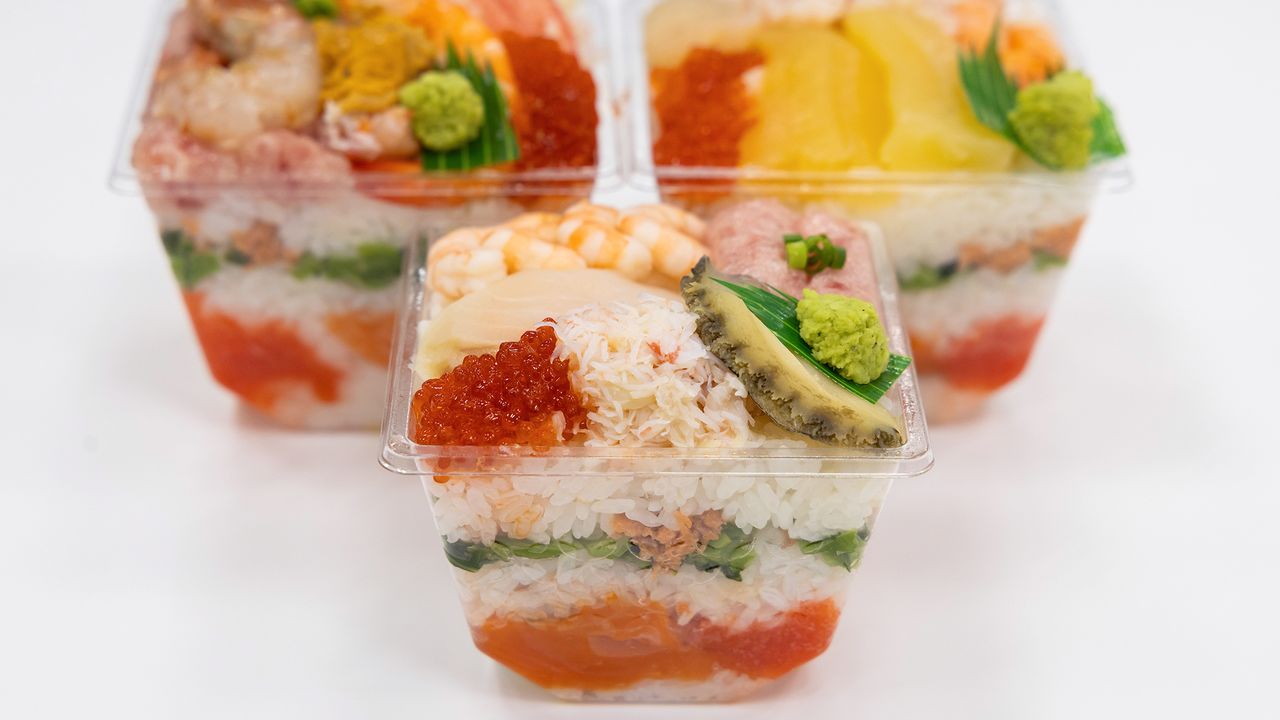
The icon of this new wave is not found at some seaside port but in the middle of Tokyo, in the underground floor of Daimaru Tokyo department store, where restaurant Sōsaku Sushidokoro Takimoto serves up Dream Pretty Mille-feuille (¥1,695; all prices in this article include consumption tax) kaisendon. The name might be a bit over the top, but the clear square dish packed with layers of fresh seafood and rice truly feels like a “treasure chest of the sea.”
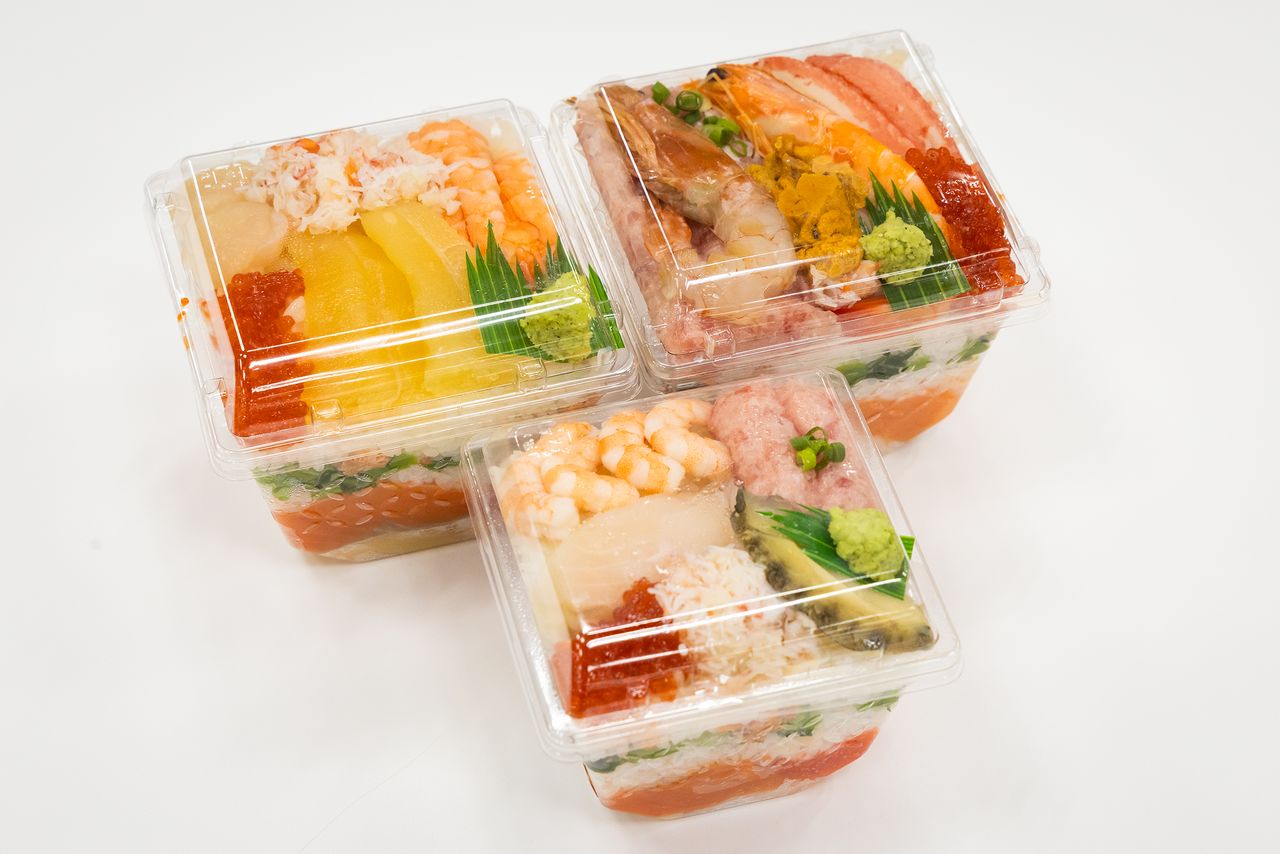
Pictured at bottom is the standard Dream Pretty Mille-feuille. At top left is the Zeitaku (Extravagant) Mille-feuille (¥2,100), with the Crab, Sea Urchin, and Roe Premium Mille-feuille (¥2,980) at right. (© Nippon.com)
This kaisendon comes in seven layers. The top layer has luxurious ingredients like abalone, salmon roe, and crab. Below that, standing in for the cake and custard of the namesake dessert are layers of vinegared rice interspersed with salmon, cod, mustard greens, cloud ear mushrooms, and more.
The clear container lets you see the beautiful layering from every side, making it perfect for going viral on Instagram.
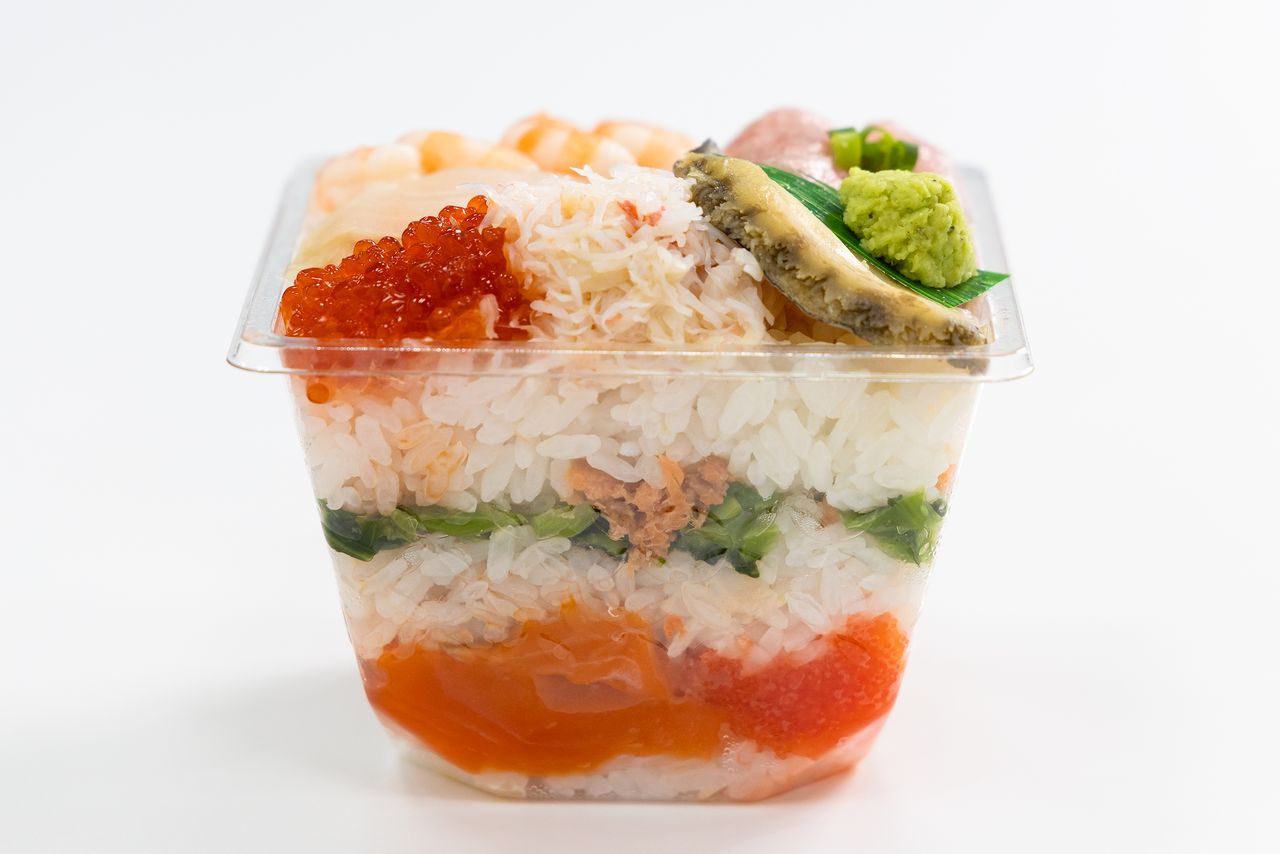
The beautiful green layer weaves mustard greens and salmon. The bottom is lined with pickled, sliced ginger. (© Nippon.com)
Four Years as Top Seller
Daimaru Tokyo’s underground food floor Hoppetown connects to the Tokyo Station Yaesu exit. It forms a 60 meter long “obentō street” lined with shops drawing travelers looking for meals to take on their long-haul train trips. The floor as a whole sells over 1,000 different types of bentō boxes year-round.
And for four years in a row, the champion of this station lunch battleground has been the Dream Pretty Mille-feuille. In 2024, over 60,000 were served.
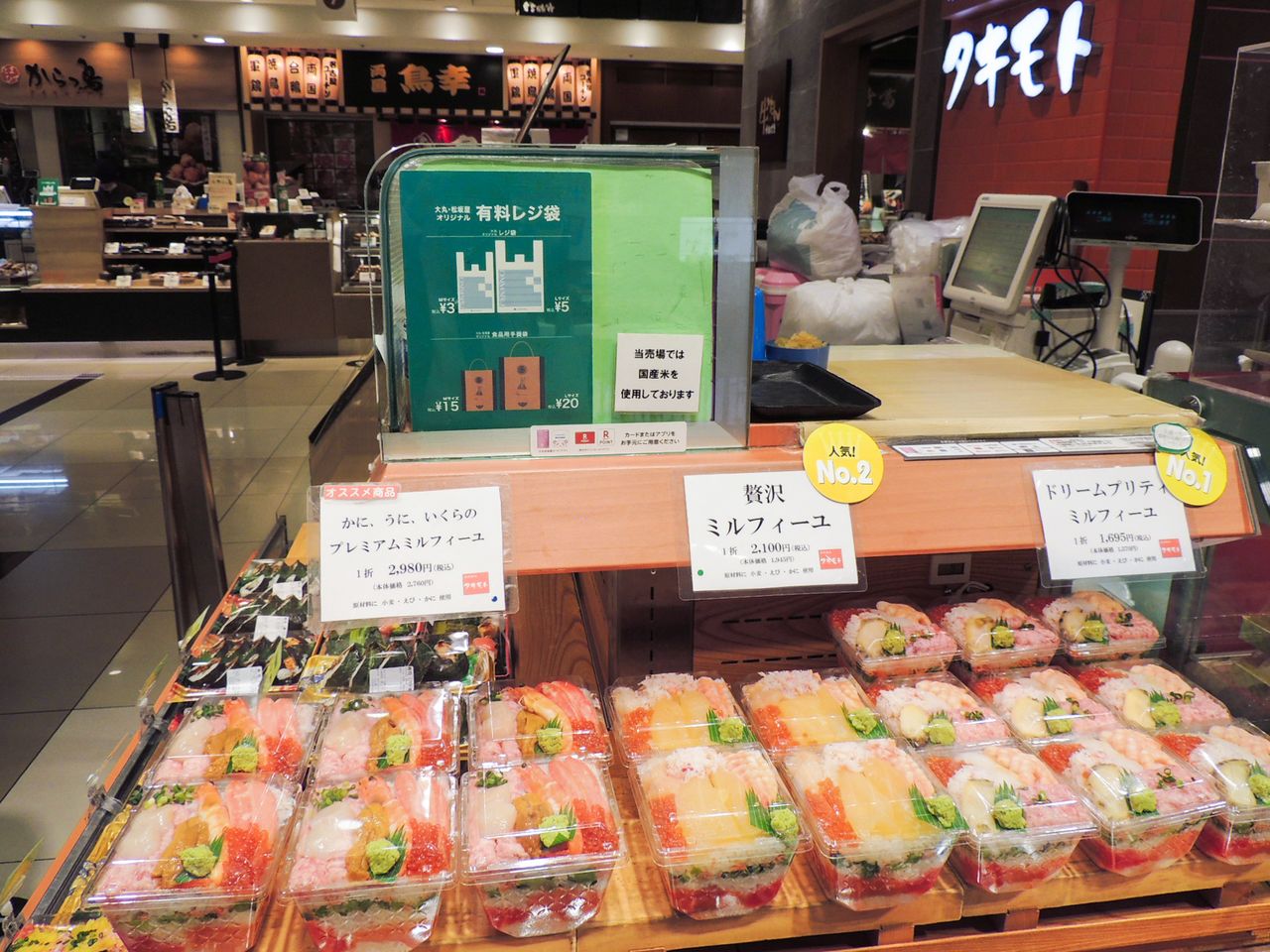
The shopfront is lined with mille-feuille sushi. (© Kawamoto Daigo)
Takimoto’s Daimaru Tokyo branch manager Deguchi Noboru explains the dish’s popularity, saying with pride, “The appearance is important, of course, but the rice and each topping is also properly seasoned, so I think it’s also satisfying to eat. It’s not just about the looks!”
The shop started selling a pricier ¥2,100 Zeitaku Mille-feuille in 2010. Word of mouth helped popularity grow, but when the slightly smaller and more affordable Dream Pretty option appeared around five years ago, it became a huge hit with social media-savvy younger women. It is now a long-selling hit with repeat customers, so it is no mere fad.
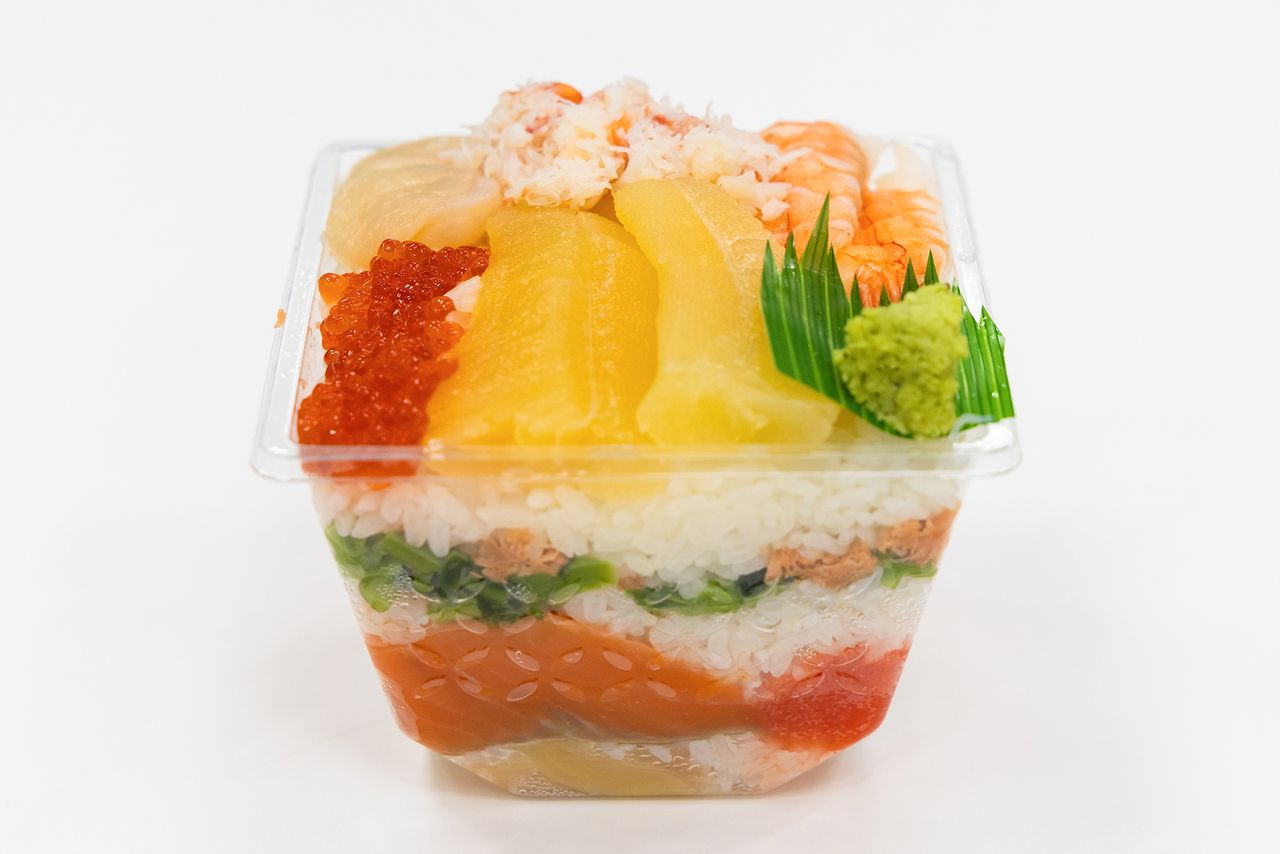
The Zeitaku Mille-feuille, with its heaping serving of herring roe, is also a steadfast seller. (© Nippon.com)
If the toppings overflow the dish, it makes it hard to eat on a moving train, explain Daimaru Tokyo PR staff. “The dish lid can be used as a plate, so we recommend sharing out the toppings bit by bit. It’s also a treat to mix up the mille-feuille layers and eat them together.” A pouch of soy sauce is attached, but the dish itself is well seasoned, so many people do not seem to need it.
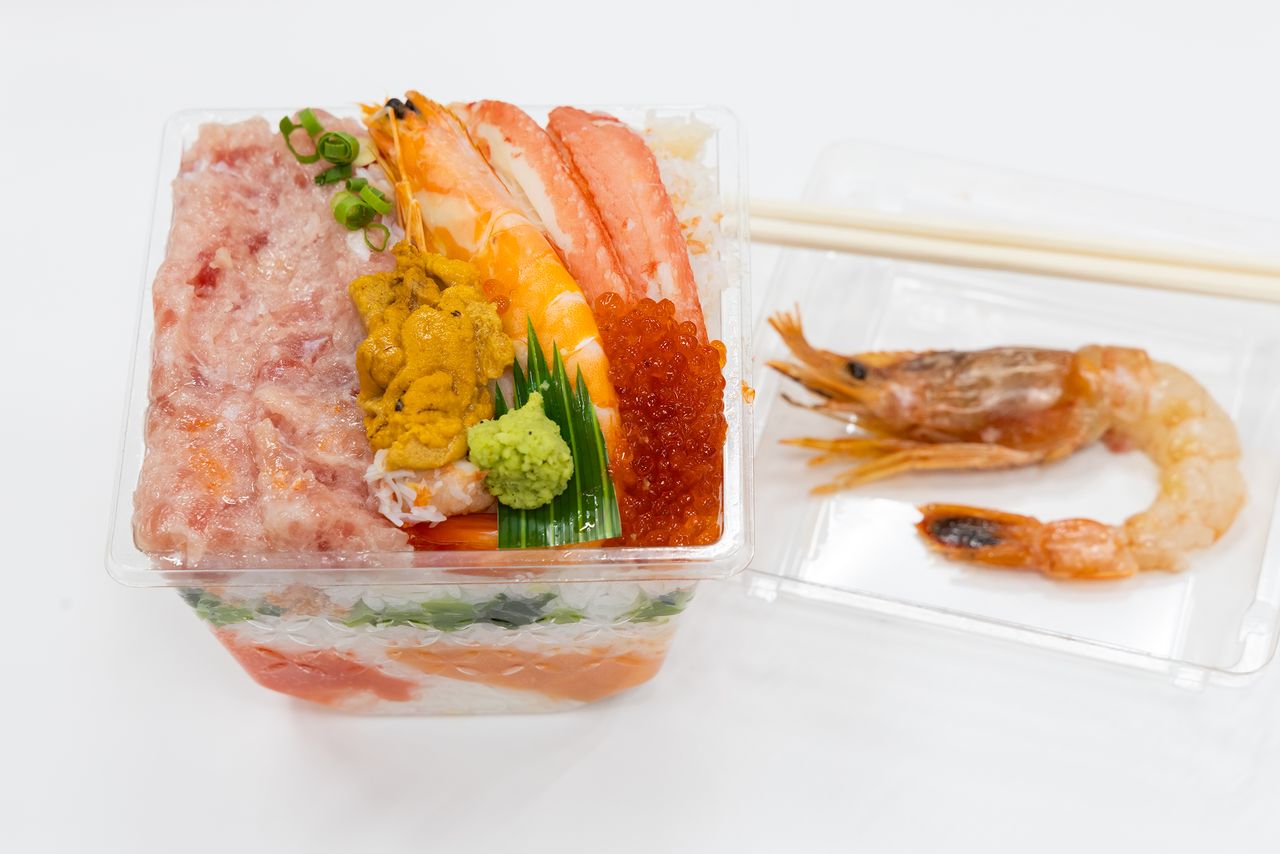
Making good use of the lid is key, whether for picking through toppings or holding soy sauce. (© Nippon.com)
From Sashimi Skewers to Sushi Parfaits
Sushi Café Kanno, in the Tsukiji Outer Market, has the vibrant atmosphere of a trendy Shinjuku crepe shop. It is popular for serving up sets of salmon and tuna nigiri with a drink as a casual snack.
One of Tsukiji’s famous treats is the kushitama, a skewer of tamagoyaki rolled omelet, but this shop’s flagship product is the Osashimi-gushi, a skewer of tuna and salmon selling for ¥500. Younger customers seem to love snapping pics of the colorful array.
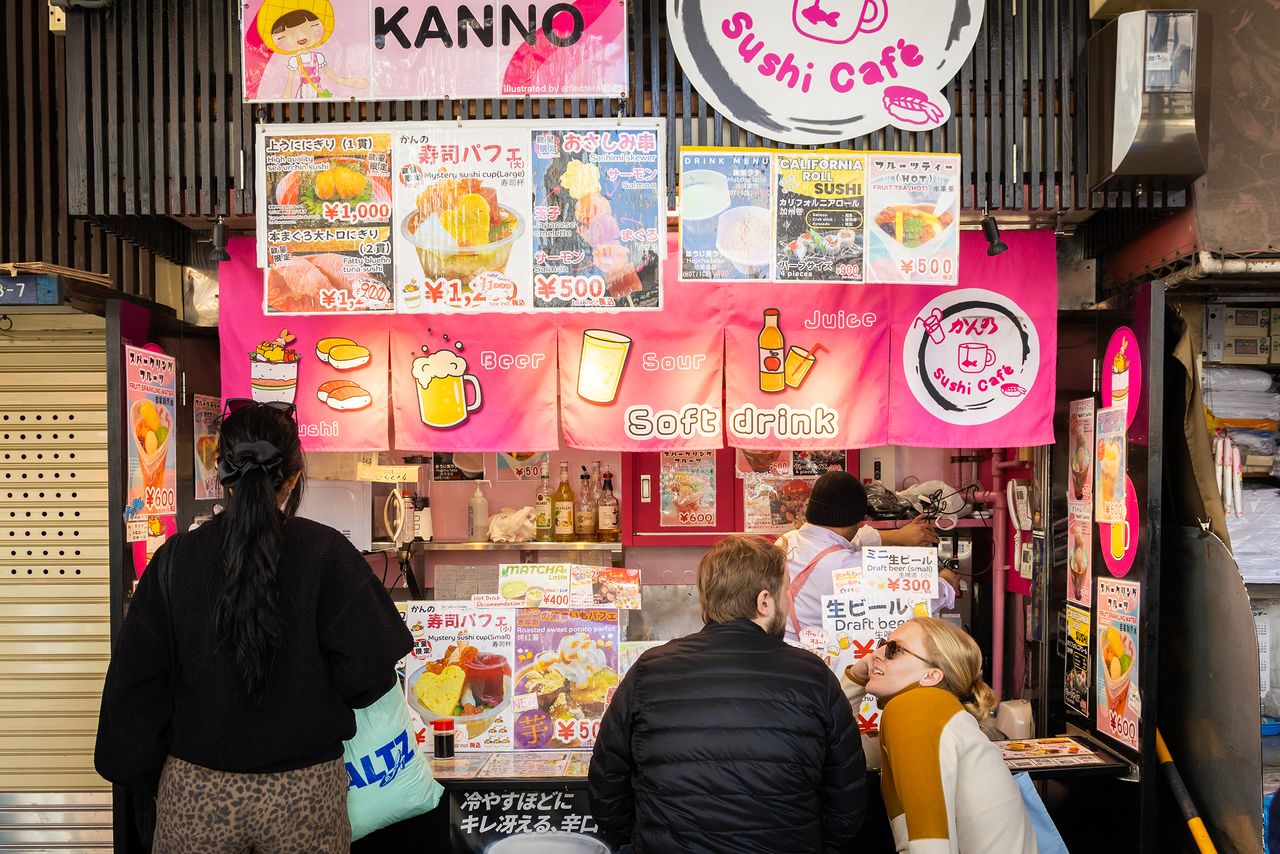
Sushi Café Kanno stands near the Monzeki-dōri entrance near the Tsukiji 4-chōme intersection. (© Nippon.com)
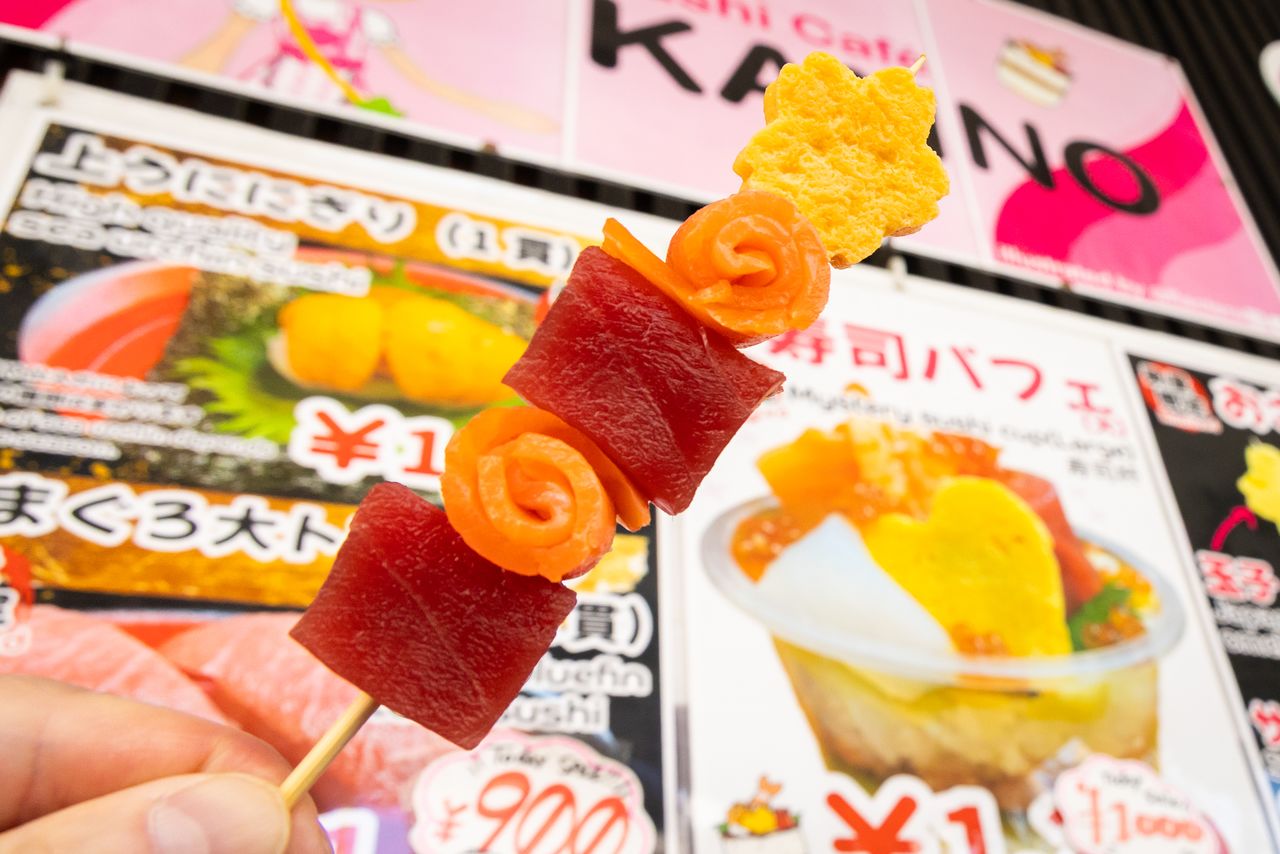
Osashimi-gushi is perfect for snacking and strolling. (© Nippon.com)
The shop’s other recommendation is the Sushi Parfait, which comes in large (¥1,000) and small (¥500) versions. It has heart-shaped tamagoyaki over tuna, shrimp, salmon, and squid, and is sprinkled with roe. It’s a hit with customers of all ages.
This outlet is connected to the more orthodox shop Tsukiji Kanno, which serves sushi and kaisendon, so the quality of its seafood is never in doubt. Owner Kanno Miho says, “We opened it to let international tourists and young people enjoy delicious seafood at reasonable prices, with no preconceptions.” Despite the dishes’ compact sizes, they offer satisfaction going well beyond the low prices. She says, with a laugh, “Profitability isn’t what we’re after here.”
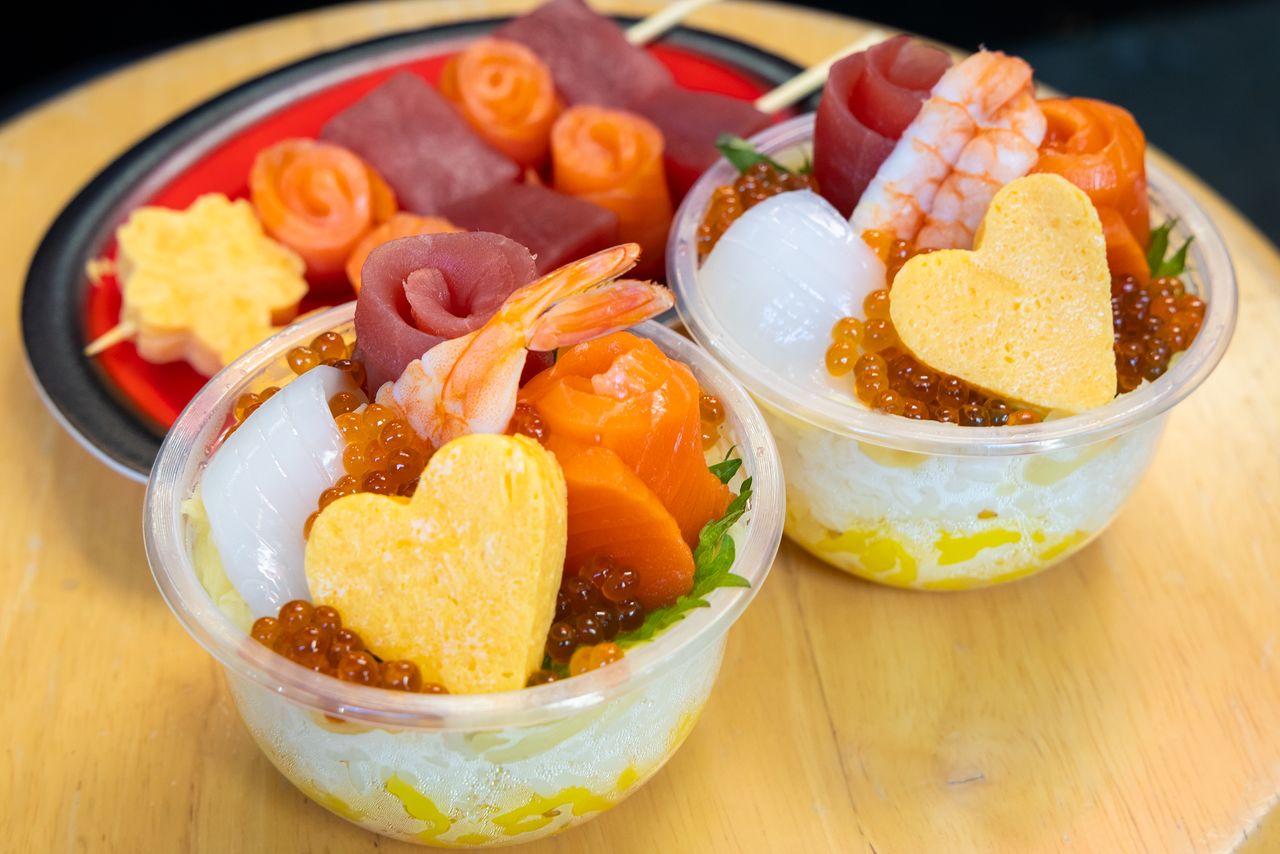
Osashimi-gushi and small Sushi Parfait, both ¥500, hold incredible value for the prices. (© Nippon.com)
Playful Mini-Sushi Merch
From time to time at Tsukiji Outer Market, the unusual sushi shop Tsukiji 1935 shows off a huge crowd. They’re not there to eat sushi, but to wear it.
Yokaze Natsuko says she grew to love sushi so much, she had to turn it into accessories. The super miniature figures, smaller than a grain of rice, are used to decorate adorable items like necklaces, earrings, cellphone straps, and ballpoint pens.
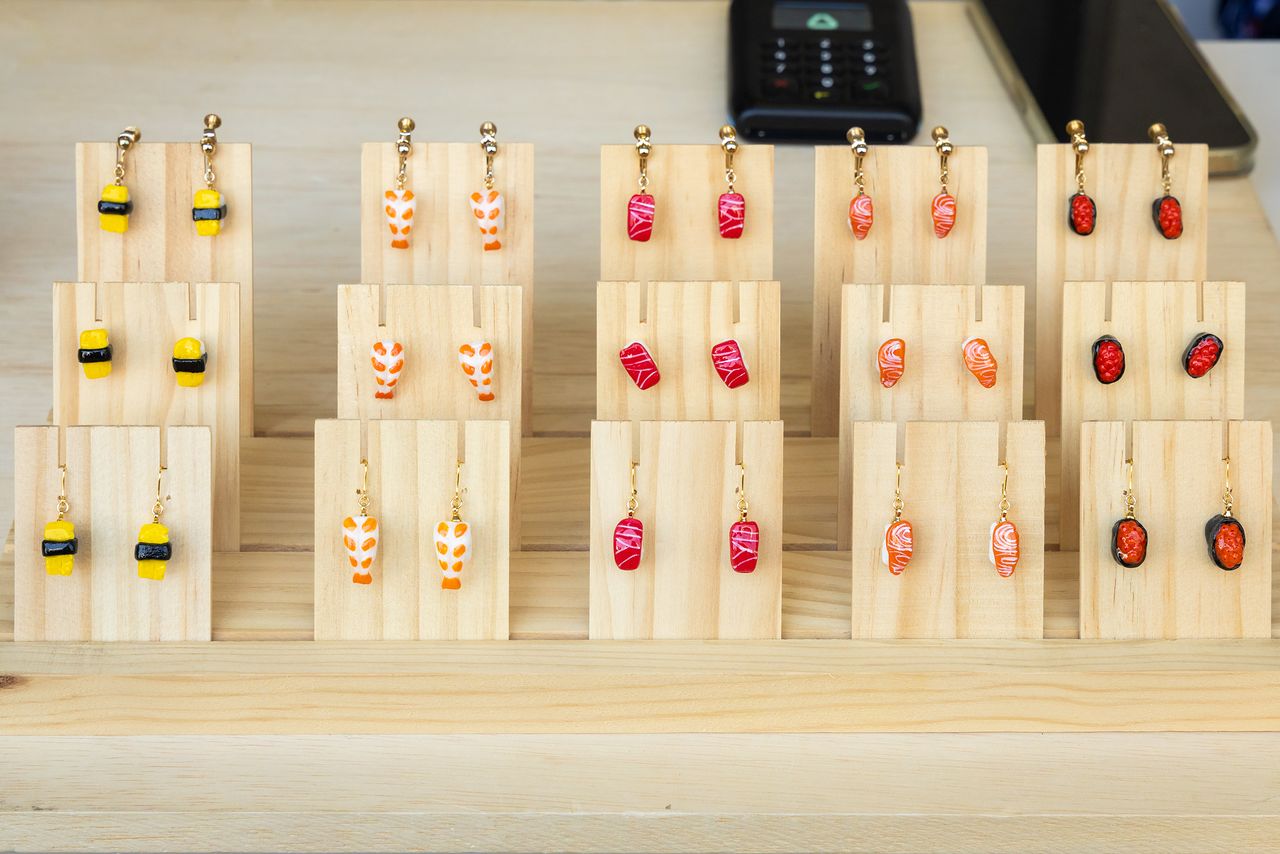
Nigirizushi earrings (¥2,200). (© Nippon.com)
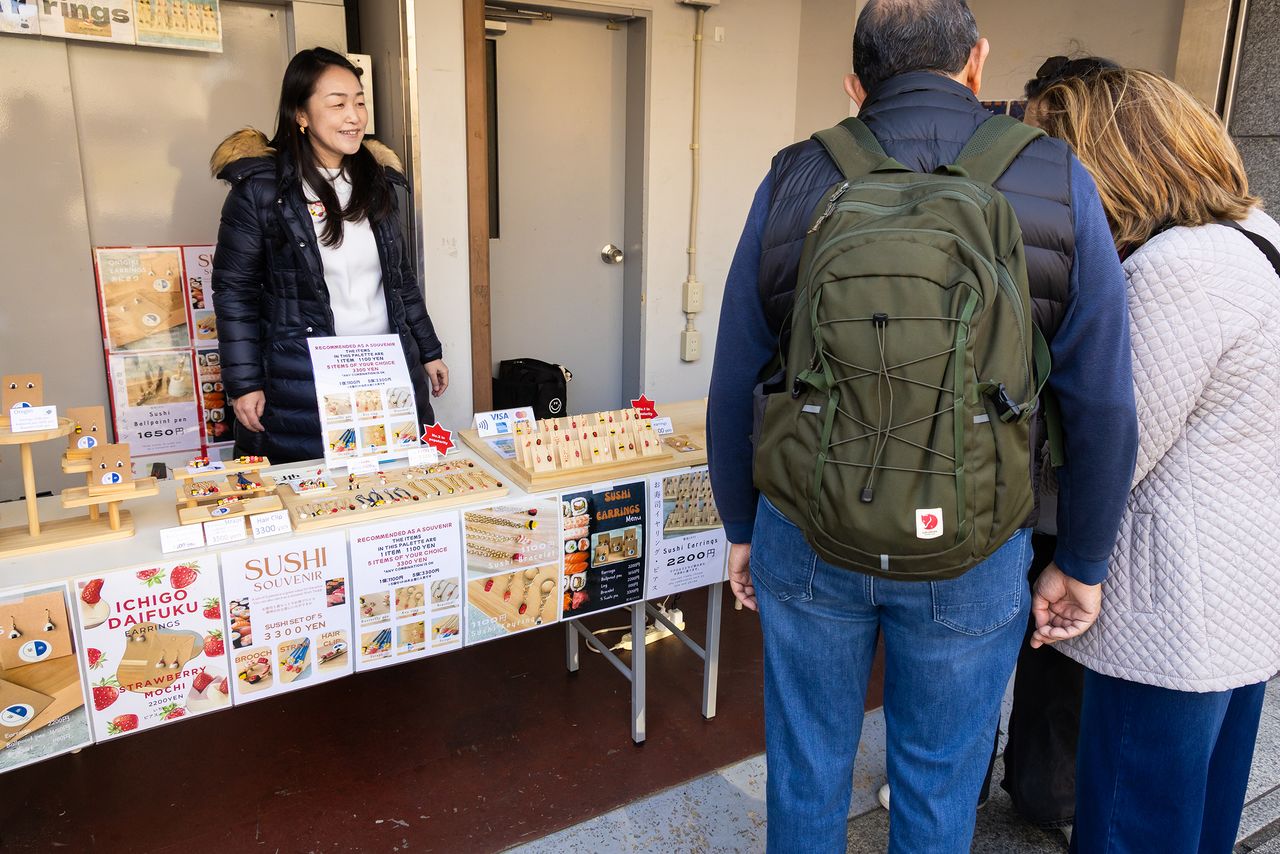
Yokaze shares the joys of sushi with customers. (© Nippon.com)
There are gunkanmaki topped with ikura, and nigiri with tuna, salmon, shrimp or egg. All are colorful sushi staples. Customers who have just enjoyed a taste of fresh seafood seem drawn to stop by the shopfront, and many buy in bulk for fun Tsukiji souvenirs.
Japan is seeing a trend in young people eating less seafood, but these kinds of highly visual tricks could well help bring some of them back to the fold. As new dishes add enjoyment for the eyes to enjoyment for the tongue, we could well see a resurgence in seafood consumption on the horizon.
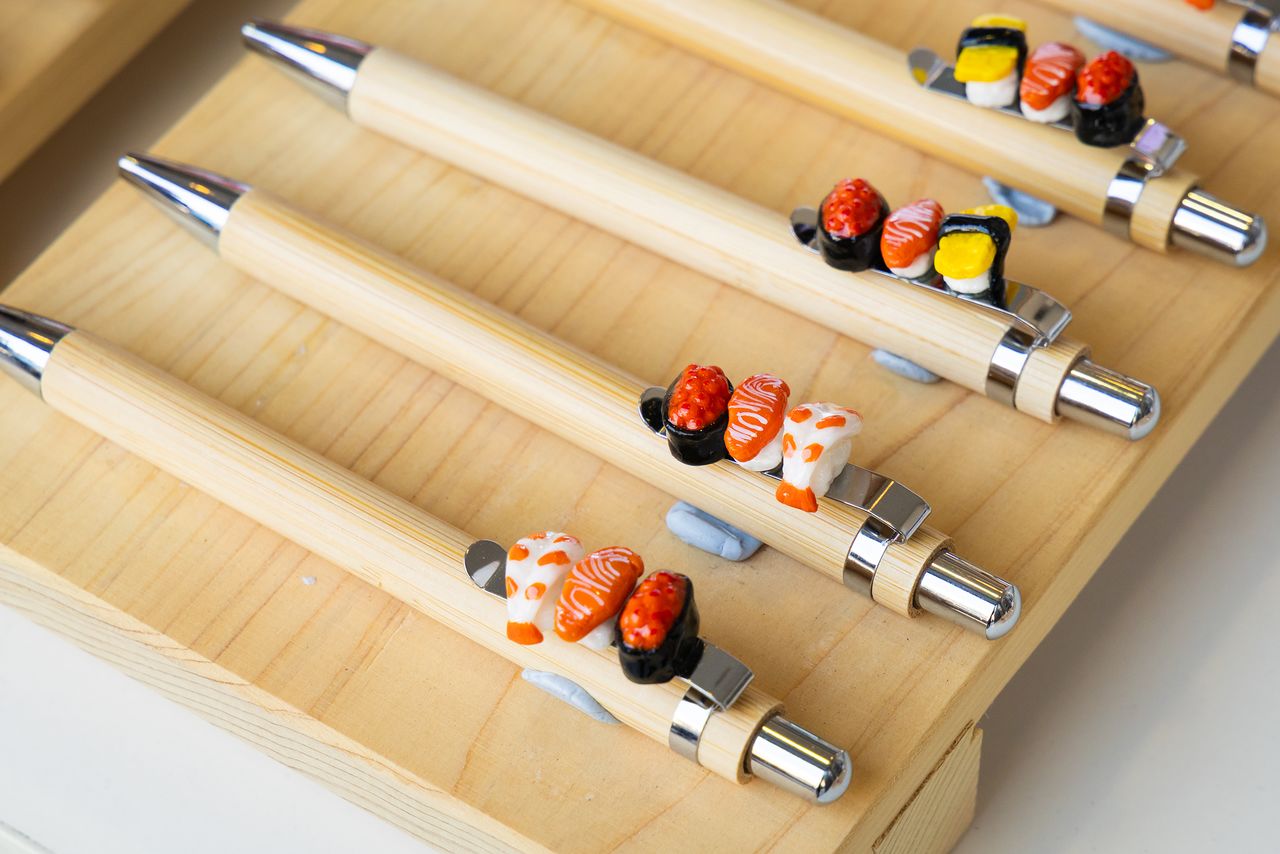
This popular sushi pen is a lovely accent for your shirt pocket (¥1,650). (© Nippon.com)
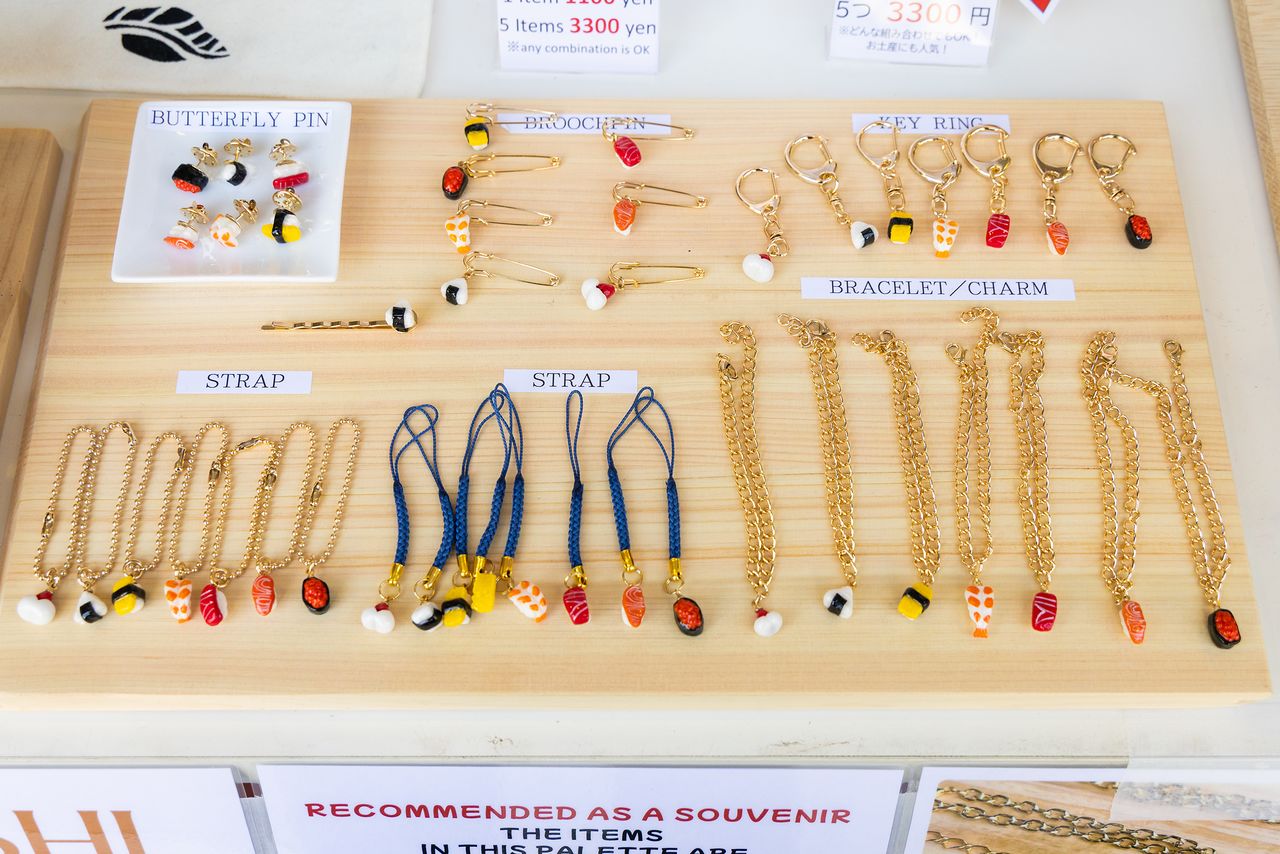
Small items like keychains run ¥1,100 each or five for ¥3,300, so bulk buying is common. (© Nippon.com)
(Originally published in Japanese. Banner photo: This “mille-feuille” seafood bowl is a hit with Tokyo Station visitors. © Nippon.com.)