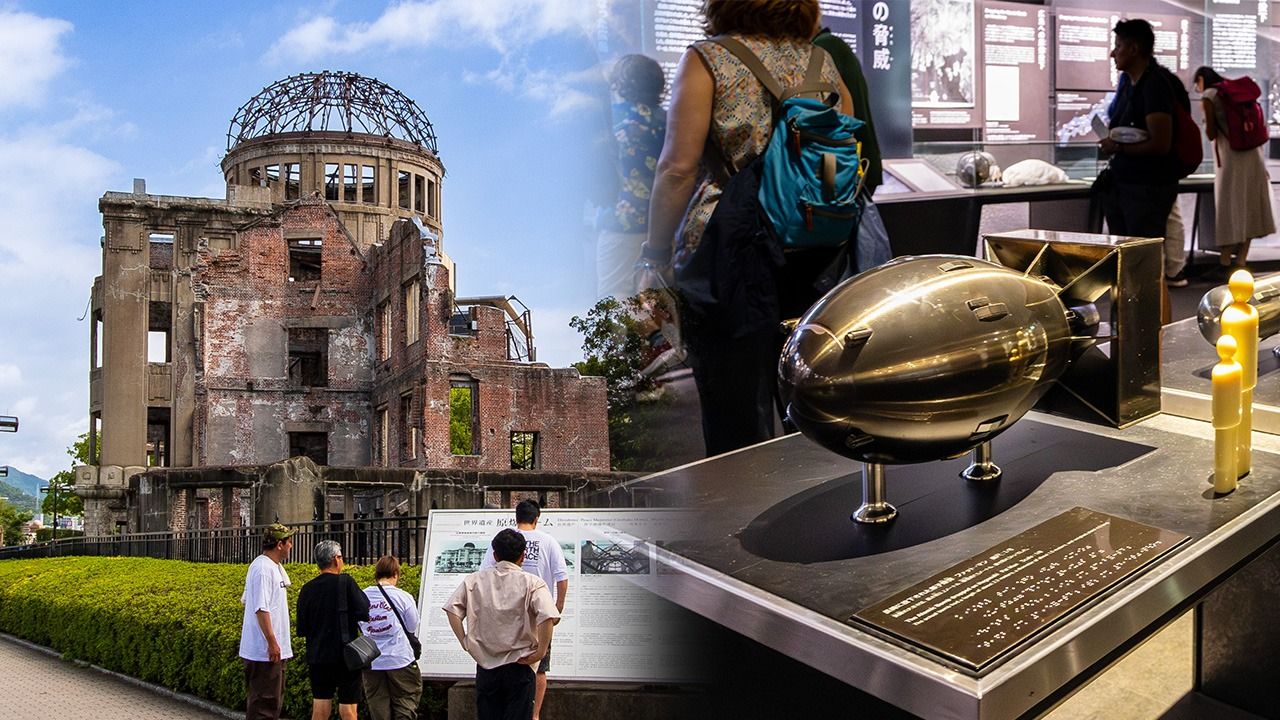
Eight Decades On: Praying for Peace at Hiroshima’s Bomb Memorials
Guideto Japan
History Travel- English
- 日本語
- 简体字
- 繁體字
- Français
- Español
- العربية
- Русский
Still Standing: The A-Bomb Dome
The A-Bomb Dome, on the north side of Hiroshima’s Peace Memorial Park, is one of the few structures left standing near the hypocenter of the August 6, 1945, atomic bomb blast that leveled the city. The dome and the rest of the park are regular stops on the itineraries of field trips taken by Japanese schools across the nation. Since 1996, when it was inscribed as a UNESCO World Heritage site, the A-Bomb Dome has also been a key destination for foreign visitors to western Japan.
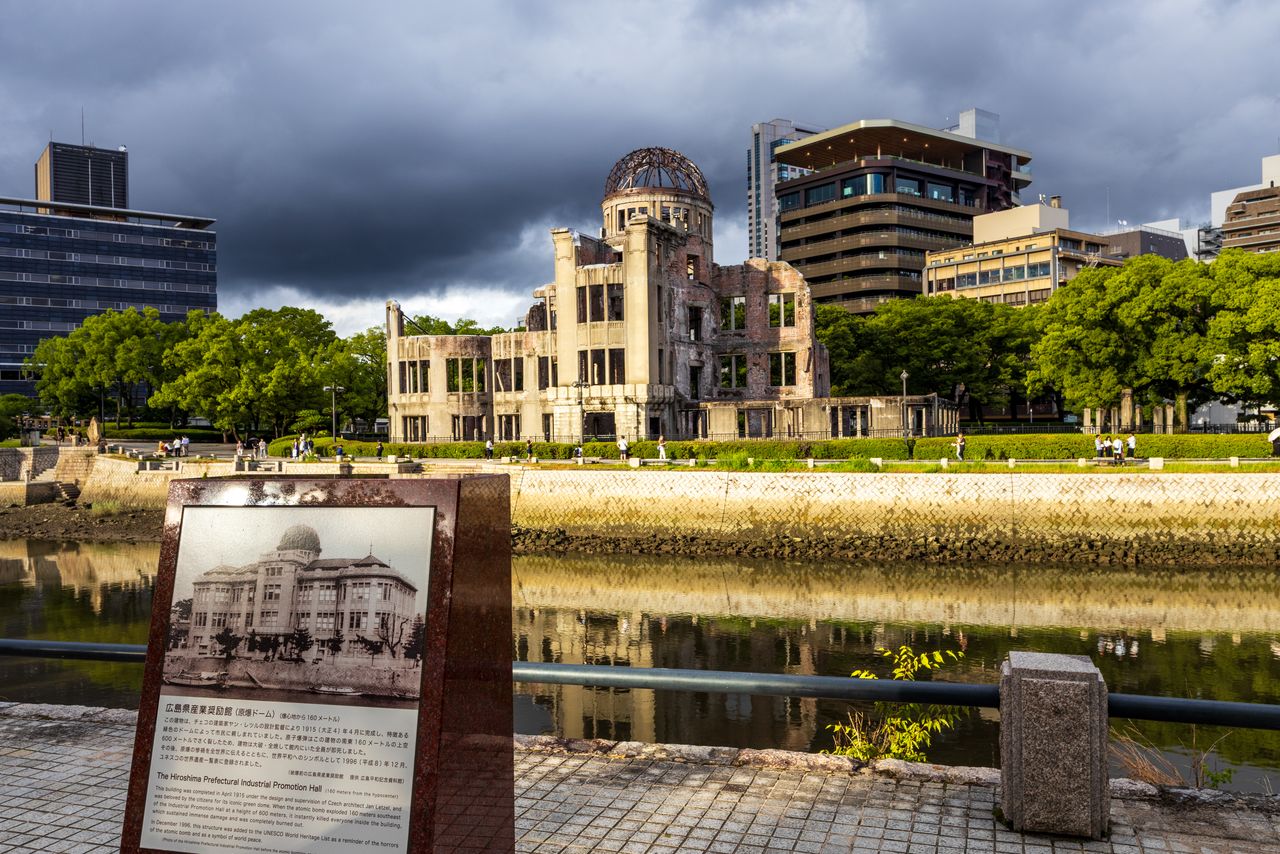
The A-Bomb Dome viewed across the Motoyasu River. The Orizuru Tower, seen in the background, offers an observation space on its upper floors. (© Nippon.com)
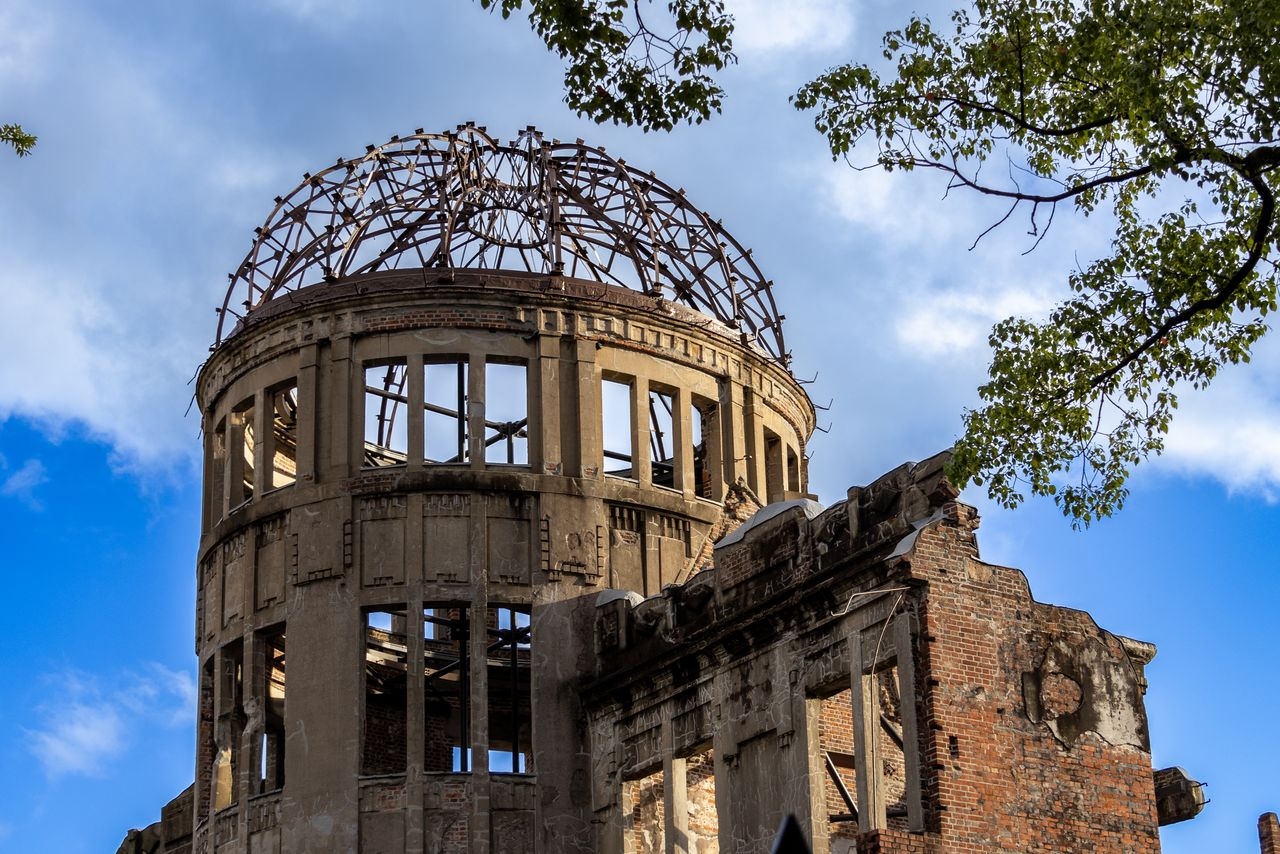
Much of the structure’s brick facade and the copper plating on the dome are gone, leaving the underlying structure plain to see. (© Nippon.com)
Originally built in 1915 as the Hiroshima Prefectural Commercial Exhibition Hall, the modern-looking domed structure was designed by the Czech architect Jan Letzel. The hypocenter of the blast, the point directly below where the Little Boy atomic bomb went off just under 600 meters above ground, lies only 160 meters or so to the southeast.
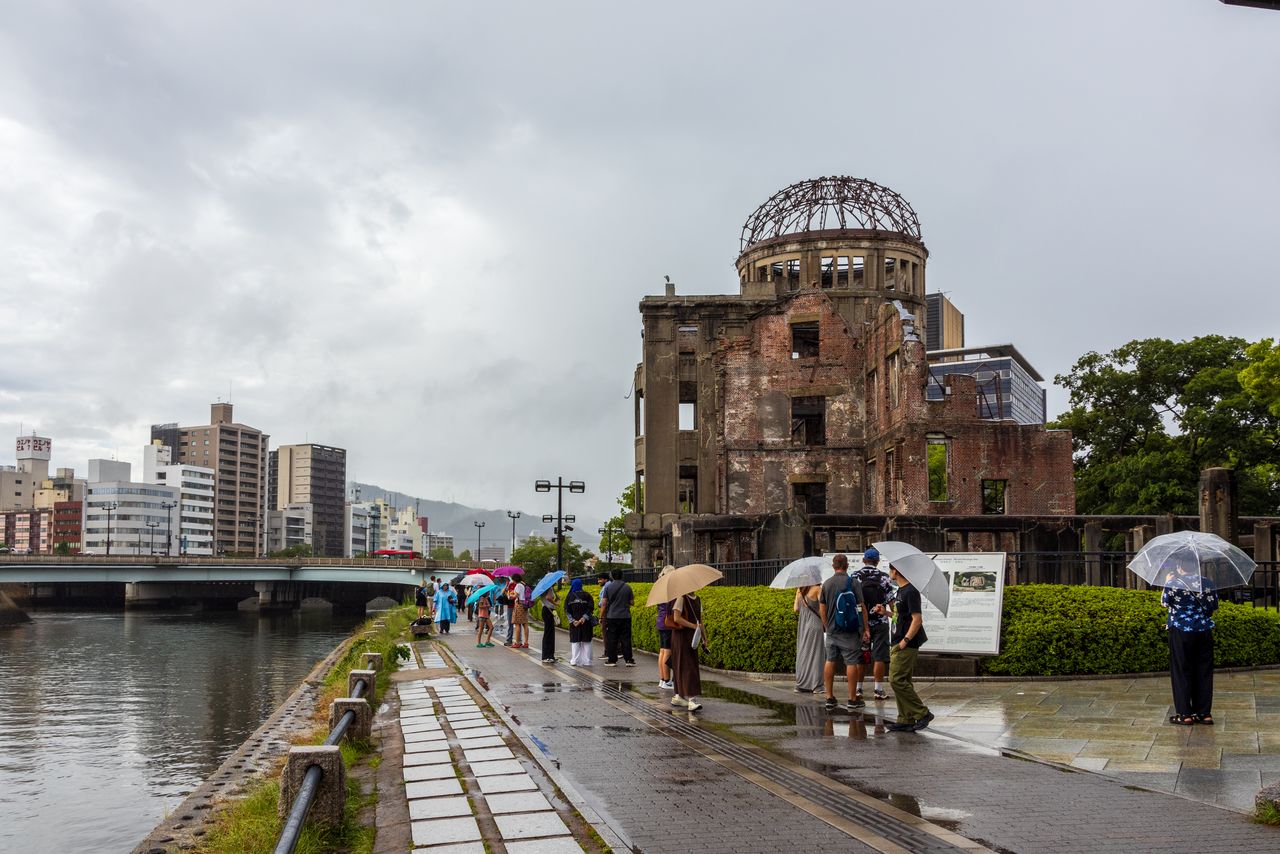
Visitors flock to the site year-round, rain or shine. (© Nippon.com)
During the years immediately following the war, memories of the more than 140,000 lives lost here were still fresh, and there were frequent calls to tear down the old exhibition hall as a memory of the painful past. In the 1960s, though, as the nuclear arms race between East and West heated up, a consciousness grew of the importance of the structure as a symbolic message to the world about the threat of these new weapons. A movement to preserve the dome gained momentum, and work began on reinforcement to keep the framework from collapsing.

A memorial cenotaph erected on the east side of the dome. (© Nippon.com)

The remnants of a fountain on the lawn to the south of the structure, a space that was once the exhibition hall’s Western-style garden. (© Nippon.com)
Today the A-Bomb Dome is not structurally safe enough to allow visitors inside, but views of the interior can be had from the walkway on the west side, along the river. The lush greenery of the surrounding lawns and trees contrasts sharply with the bruised remnants of the building, serving as yet another reminder of the destruction of that day in 1945.

The dome illuminated after dark. (© Nippon.com)

Rubble lies where it fell in the building’s interior. (© Nippon.com)
Museum Exhibits Drive the Message Home
In the south of the park lies the Hiroshima Peace Memorial Museum. For 70 years, ever since its opening in 1955, it has shared messages on the horror of war and nuclear weapons through its exhibits of photos and memorabilia of the victims of the blast.
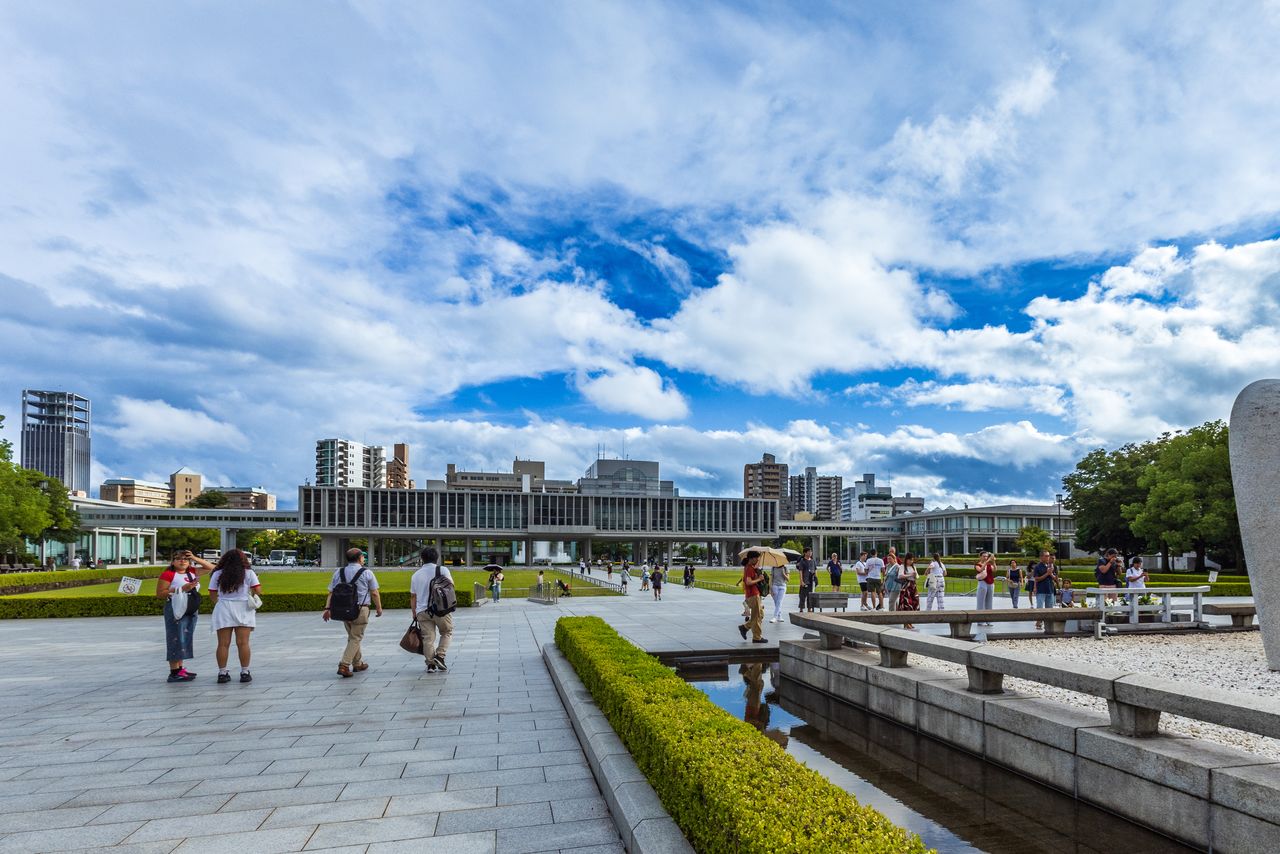
The two main museum structures are connected to the International Conference Center Hiroshima. (© Nippon.com)
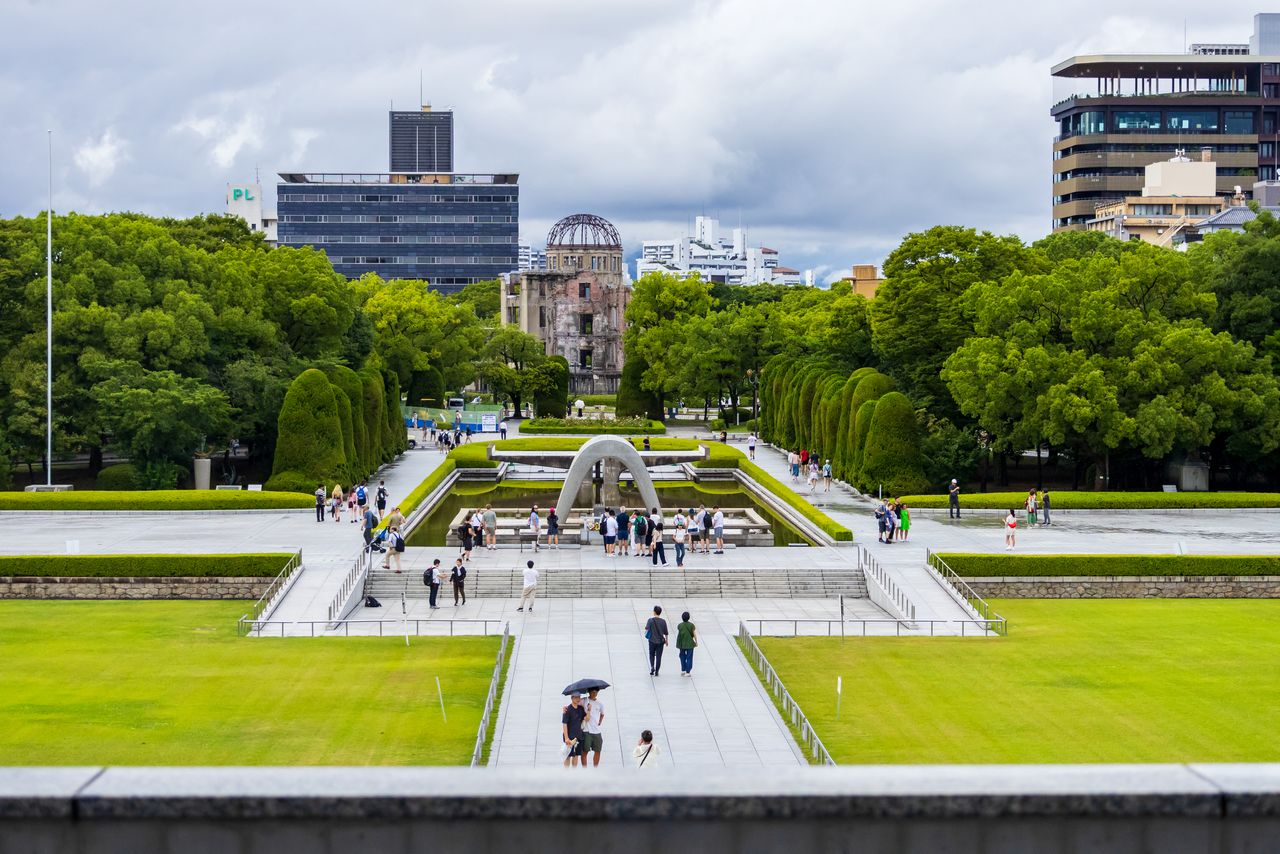
Looking north from the museum toward the Cenotaph for the A-Bomb Victims and the dome beyond. (© Nippon.com)
Recent years have seen a resurgence in interest in the Hiroshima site, accompanying the Group of Seven summit that took place in the city in 2023 and the awarding of the 2024 Nobel Peace Prize to Nihon Hidankyō, the Japan Confederation of A- and H-Bomb Sufferers Organizations. During fiscal 2024 (April 2024 through March 2025) total visitors to the museum topped 2.26 million, with around a third, or 720,000, coming from abroad—both all-time records.
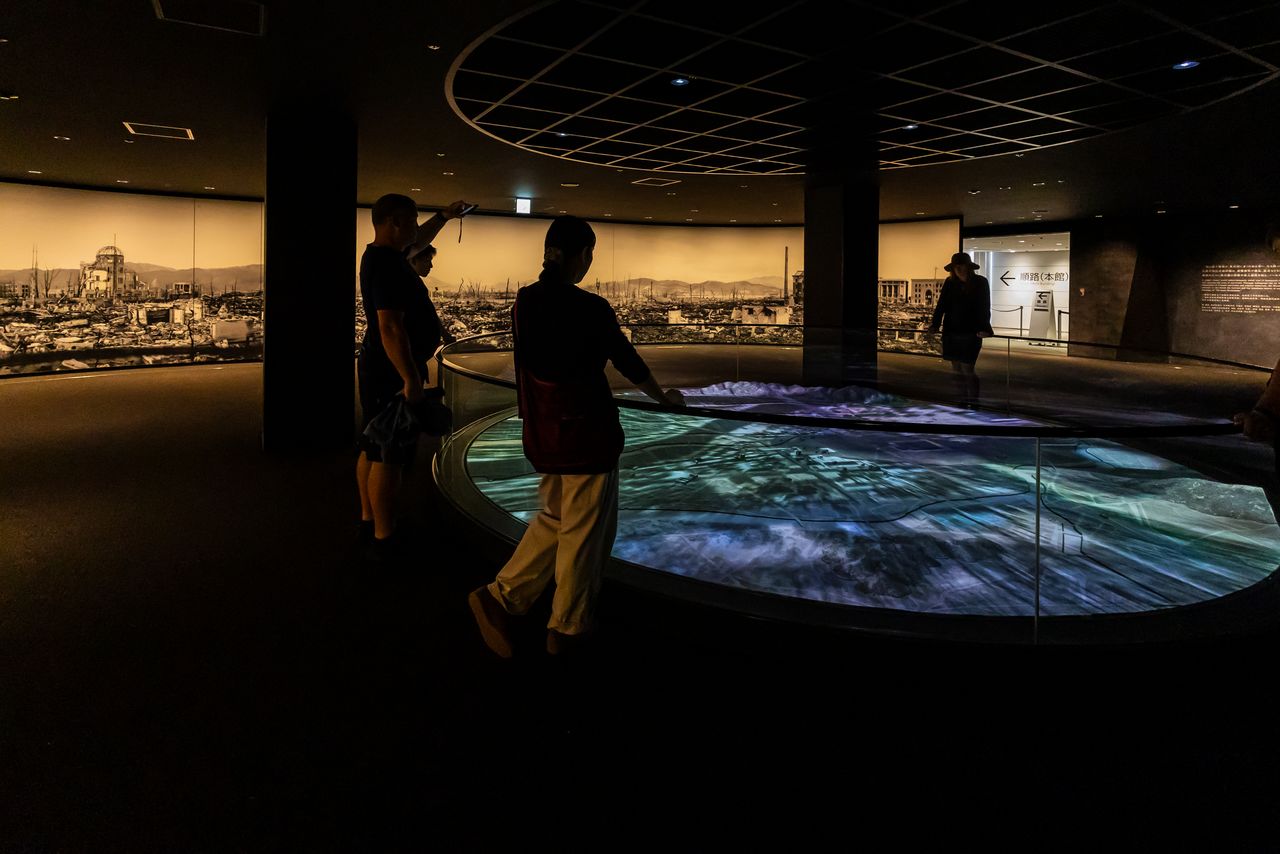
The Introductory Exhibit space shows how the blast impacted the city. (© Nippon.com)
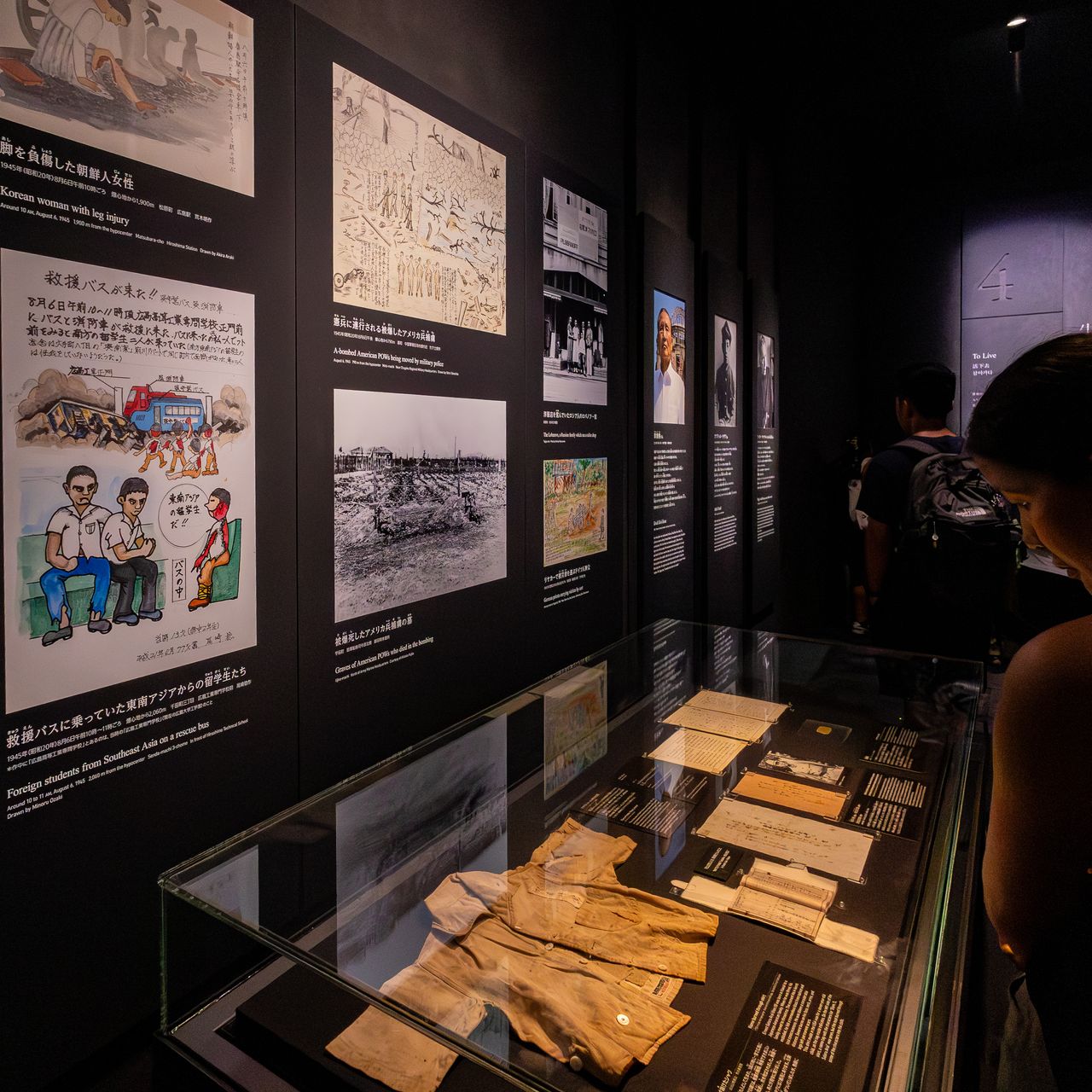
A new permanent exhibit displays artifacts related to non-Japanese victims of the bombing. (© Nippon.com)
A major renewal of the museum in 2019 brought fresh angles to its collection and exhibit spaces. The focus is now on stories of the individuals who fell victim to the bomb that day, without respect to their nationality or cultural background, in an effort to paint a full, more human picture of the history of the event.
Visitors view personal belongings of people in Hiroshima on August 6, 1945: a charred school uniform, a clock stopped precisely at 8:15 am, when the blast went off, and much more, all accompanied by photos and stories of the people involved. The tales of those who did not die in an instant are also moving, such as that of a woman who died some years later of disease related to the radiation released by the bomb.

The exhibits tell personal tales, complete with names, photos, and episodes from the lives of those lost. (© Nippon.com)

Exhibit information is available in languages including English, Chinese, and Korean, and Japanese sign language is added to much of the video content. (© Nippon.com)
The Introductory Exhibit space in the museum’s east wing launched in 2017, ahead of the full-scale renewal. It includes a massive diorama of Hiroshima as it stood up through the summer of 1945, overlaid with a computer-graphic display of the impact of the blast. Additional museum sections focus on the dangers of nuclear weapons and the history of the city of Hiroshima, from the wartime era up through the antinuclear movement of the present day. Touch-panel photographic displays and video material make for a gripping and highly accessible learning experience.
Making their way through the exhibits, visitors can in a brief time experience the broad sweep from the charred earth of the end of the war through the city’s rebirth to the present day. Through it all, though, the message remains clear: We must not let such a war happen again. The museum is an encapsulation of Hiroshima as a symbol of this desire for lasting peace.

The museum route takes visitors from the Introductory Exhibit through an exploration of the blast’s impact and the threat of nuclear weapons (above) and the history of Hiroshima. (© Nippon.com)

A tactile exhibit allows the sight-impaired to experience the Hiroshima Prefectural Commercial Exhibition Hall as it once stood (at right) and the A-Bomb Dome today. (© Nippon.com)
Other Sites in the Peace Memorial Park
In the plaza to the north of the museum lies the arch-shaped Cenotaph for the A-Bomb Victims. Designed by the celebrated architect Tange Kenzō, along with the museum itself, this monument houses a chest containing the names of all who perished due to the bomb, and is inscribed with the phrase: “Let all the souls here rest in peace, for we shall not repeat the evil.”

The cenotaph’s stone chest beneath an arched roof was inspired by Japan’s prehistoric haniwa pottery once used to decorate tombs. (© Nippon.com)
To the north of the cenotaph, with the dome in the background, burns the Flame for Peace, lit on August 1, 1964, and flickering eternally as a symbol of the hope for peace and a world free of nuclear arms.
Just to the east of the flame stands the Hiroshima National Peace Memorial Hall for the Atomic Bomb Victims; still farther north is the Atomic Bomb Memorial Mound, containing some of the remains of some 70,000 unidentified victims of the blast. The park as a whole is a place for mourning and quiet reflection.
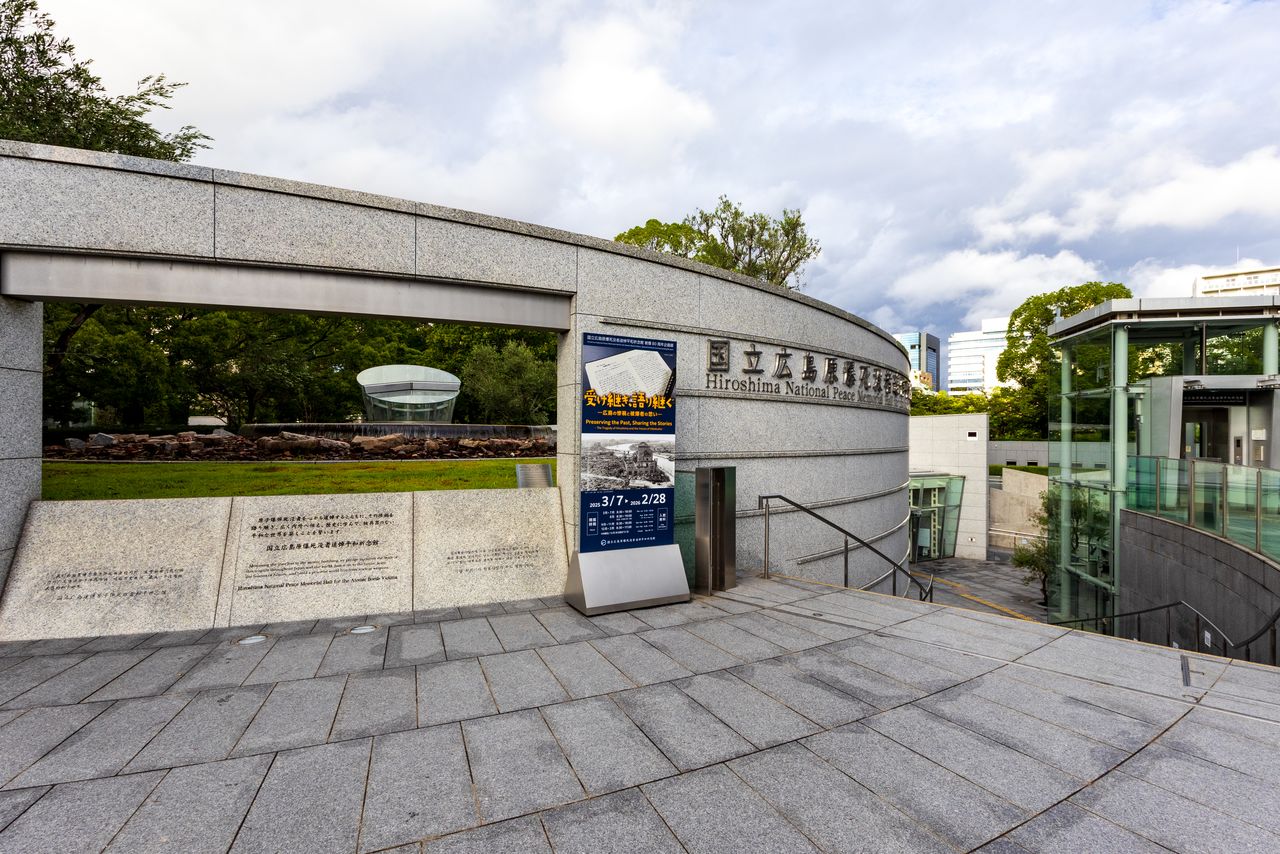
The memorial hall houses video and written records of the experiences of people who lived through the bombing. (© Nippon.com)
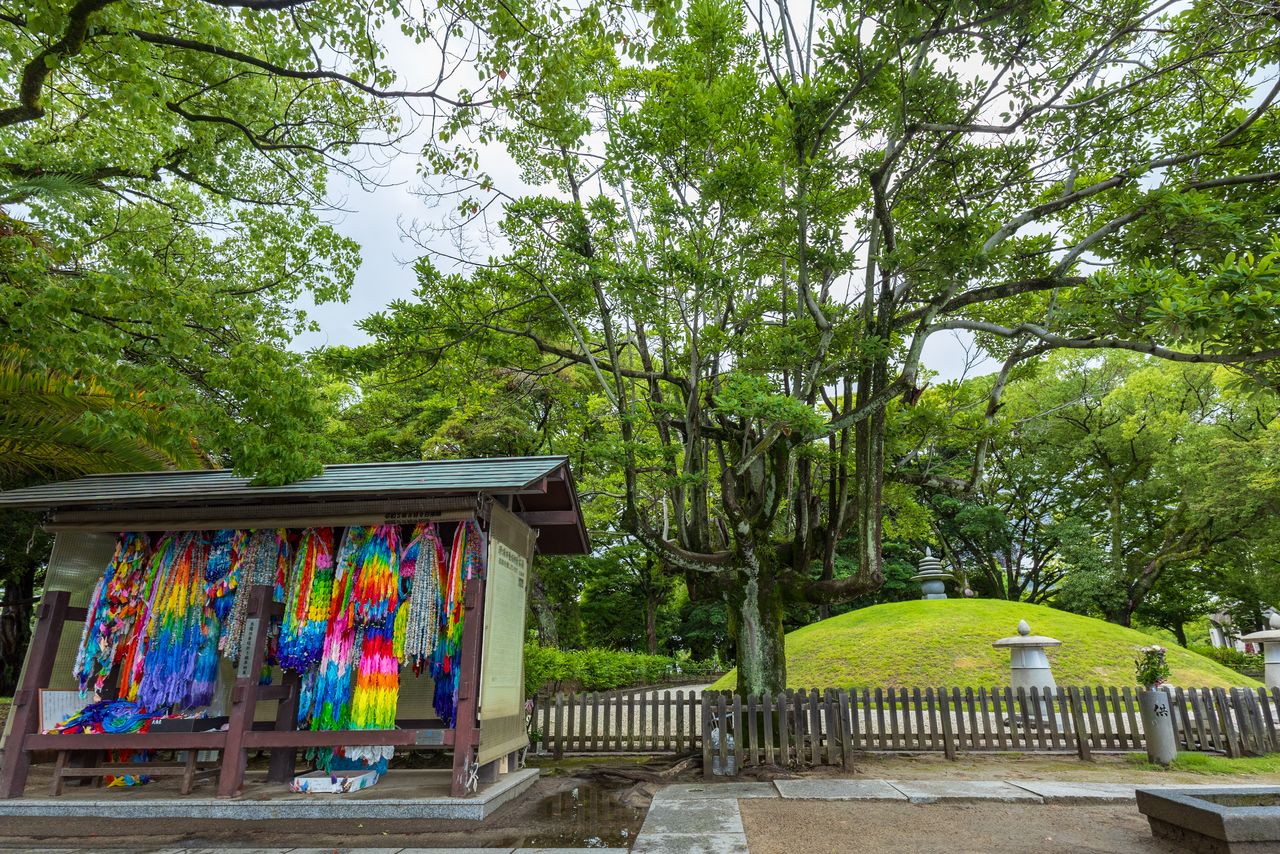
Visitors’ donations of origami cranes hang before the burial mound. (© Nippon.com)
The Peace Memorial Park occupies more than 120,000 square meters on the northern tip of a river island in the heart of Hiroshima. Once a bustling entertainment district home to around 4,400 people, today it houses the monuments and facilities described above, along with many more—monuments to children, students, Korean residents, soldiers, and others affected by the bombing among them. A leisurely walk around the park brings a deeper understanding of the many ways in which these people continue to tell their stories to this day.
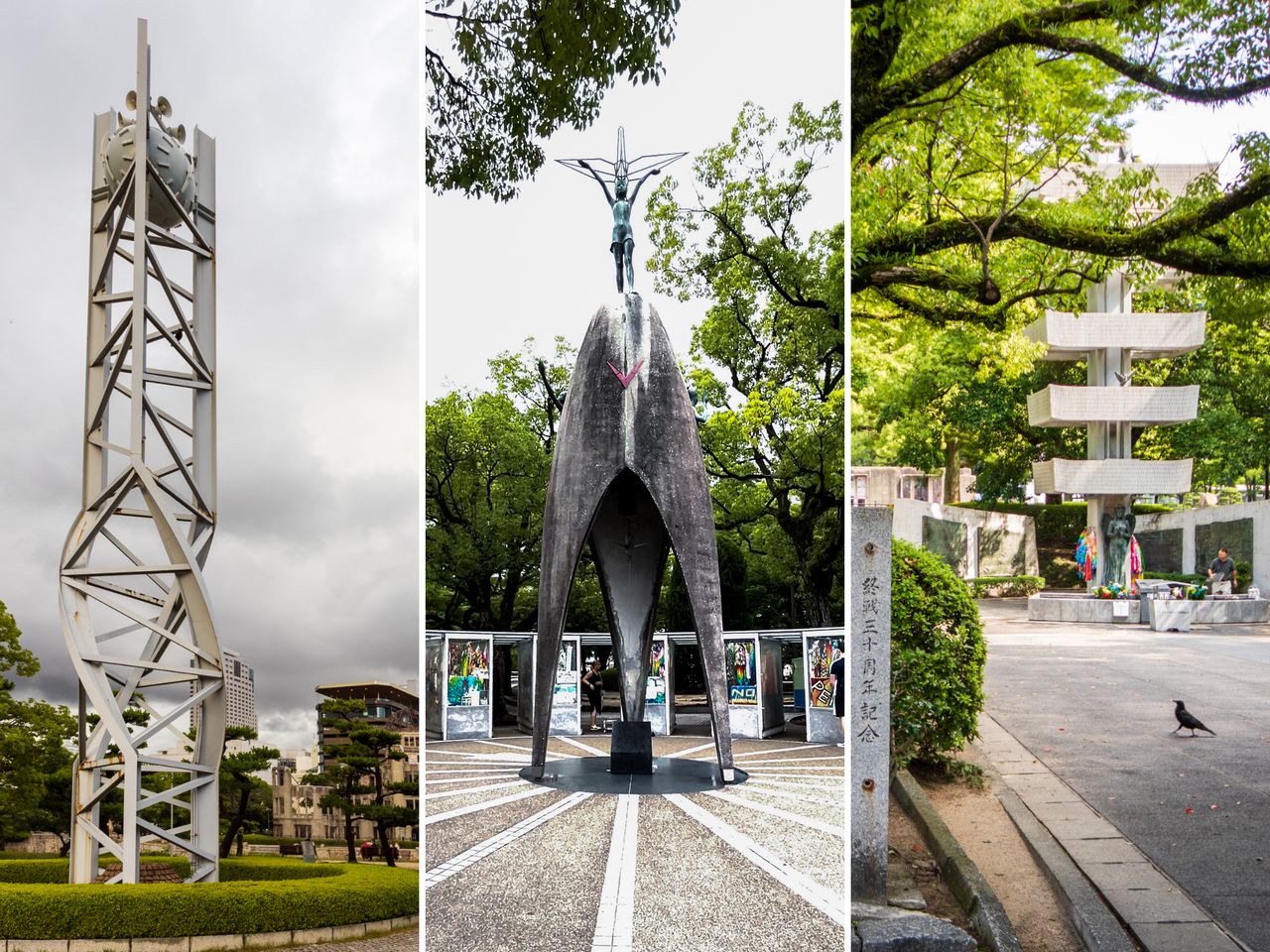
From left: the Clock Tower of Peace, which chimes at 8:15 each morning; the Children’s Peace Monument, dedicated to young victims of the bombing and the radiation-related sickness that followed; and the Memorial Tower Dedicated to Mobilized Students, memorializing more than 6,000 who lost their lives. (© Nippon.com)
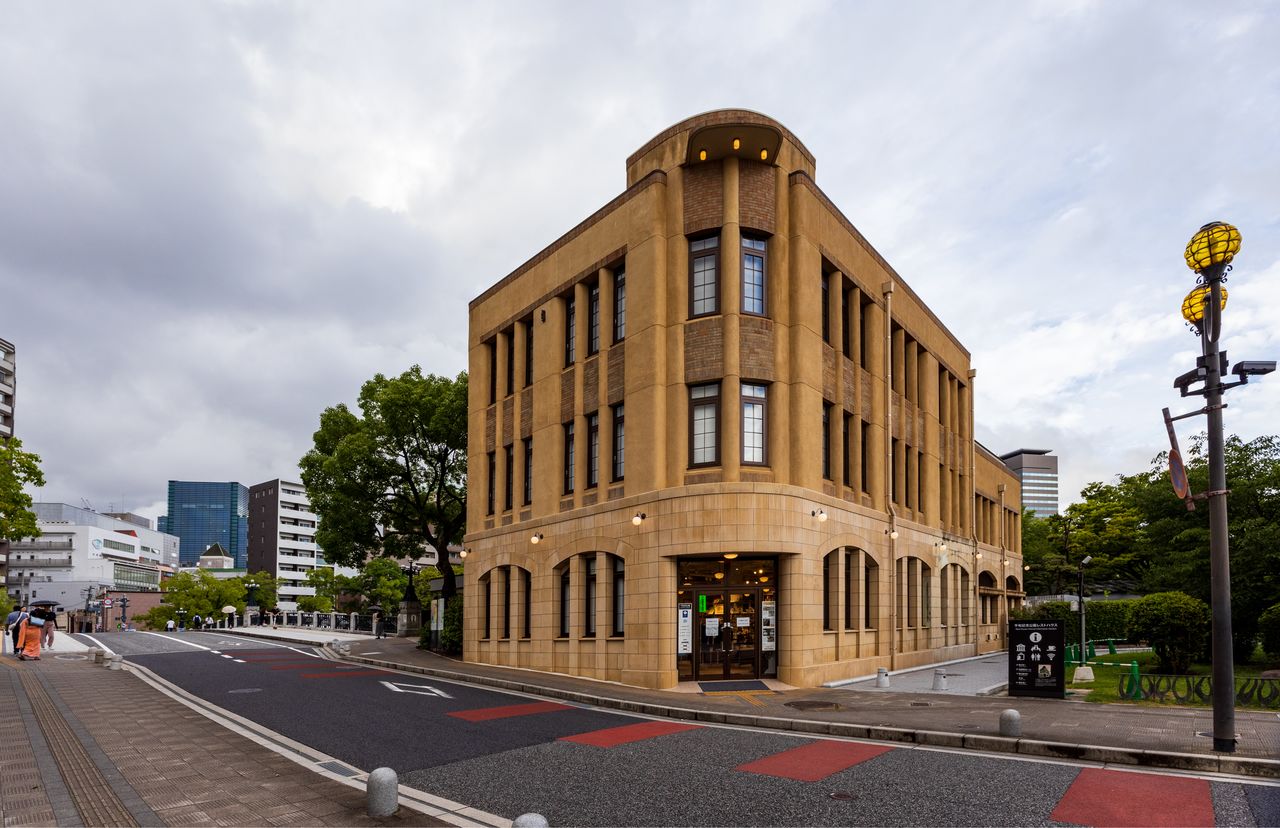
The Peace Memorial Park Rest House, built around the ruins of a structure destroyed in the bombing, exhibits its still-intact basement area and historical displays, as well as housing a café and gift shop. (© Nippon.com)
(Originally written in Japanese. Banner photo © Nippon.com.)