Saitama’s Koma Shrine: Legacy of Historical Ties with the Korean Peninsula
Guideto Japan
Travel History- English
- 日本語
- 简体字
- 繁體字
- Français
- Español
- العربية
- Русский
Just 80 minutes northwest of Tokyo, in the wooded foothills of Hidaka, Saitama Prefecture, stands Koma Shrine—a name evoking ties to the ancient Kingdom of Goguryeo (c. 37 BCE to 668), which once spanned northern Korea and northeastern China.
With a legacy stretching back over 1,300 years, the shrine is believed to bring good fortune in career and business. Some visitors reported on social media that they were overwhelmed by its spiritual energy. It is also popular for its charming omamori (protective amulets) and floral-themed goshuin (seal stamps).
Exchange with Ancient Korea
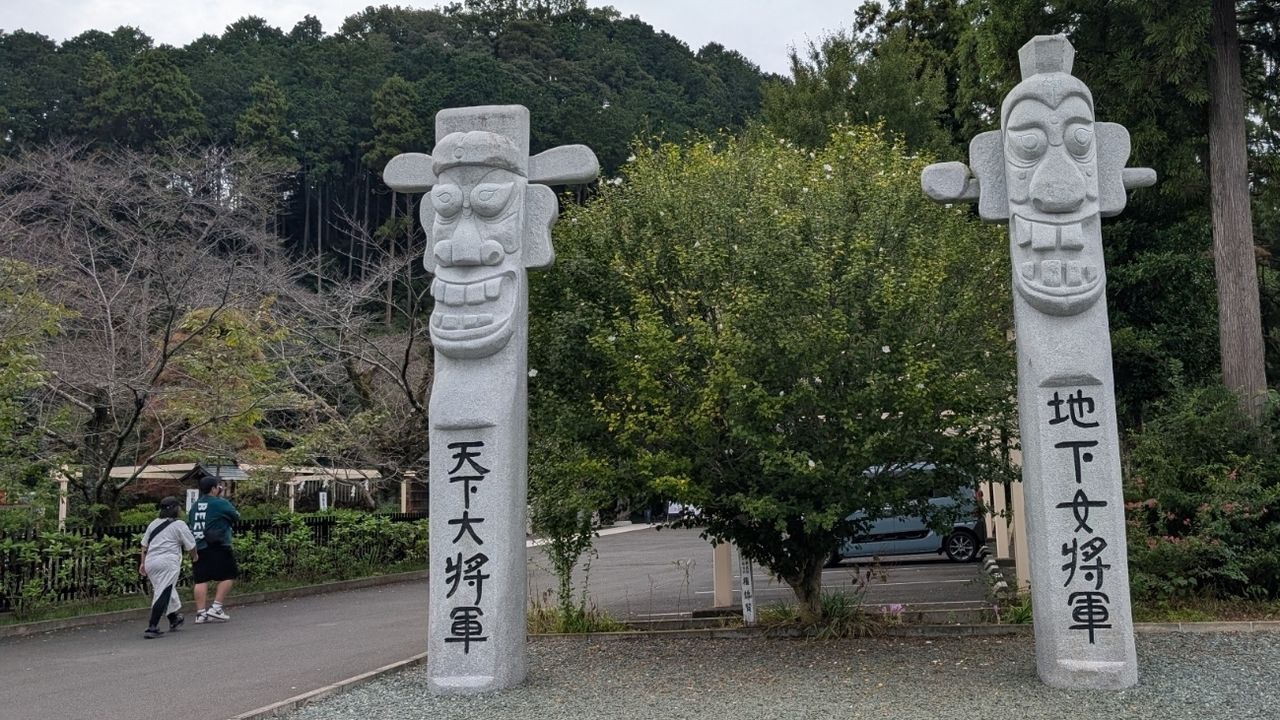
The shrine grounds reflect a history of exchange between Japan and the Korean Peninsula. Just past the first torii gate stand a pair of towering stone guardians with wide eyes and open mouths. Styled after traditional Korean village jangseung totems, they were donated in 2005 by the Korean Residents Union in Japan (Mindan) to mark the fortieth anniversary of normalized relations between Japan and South Korea.
In spring, the stone path beyond the first gate becomes a tunnel of cherry blossoms.
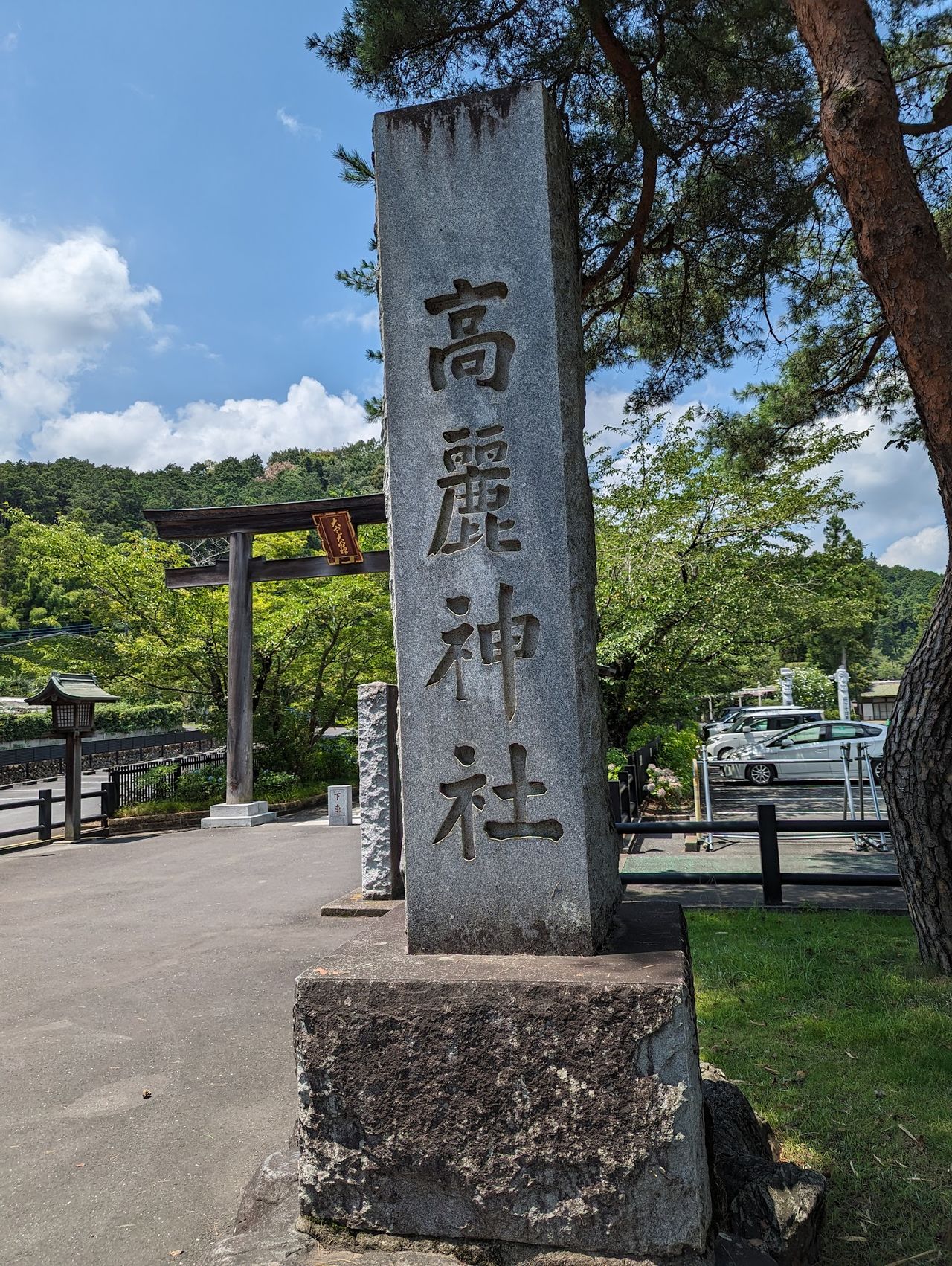
The entrance to Koma Shrine. (© Gomi Yoji)
A short walk leads to a second gate, where a commemorative monument marks the 1,300th anniversary of the local district’s founding. Erected in 2016 by a Japan-Korea friendship group, the monument recounts the shrine’s long history. Nearby, trees planted by Korean ambassadors over the years symbolize hopes for continued bilateral friendship.
Beyond the second torii lies the chōzuya, where visitors purify their hands and mouths before proceeding to the main hall. Towering trees line the path, lending a sacred, hushed air.
Climbing the steps to the main hall, visitors offer prayers. On weekends, lines often form as people seek blessings for career and business success. The shrine also attracts a notable number of young visitors.
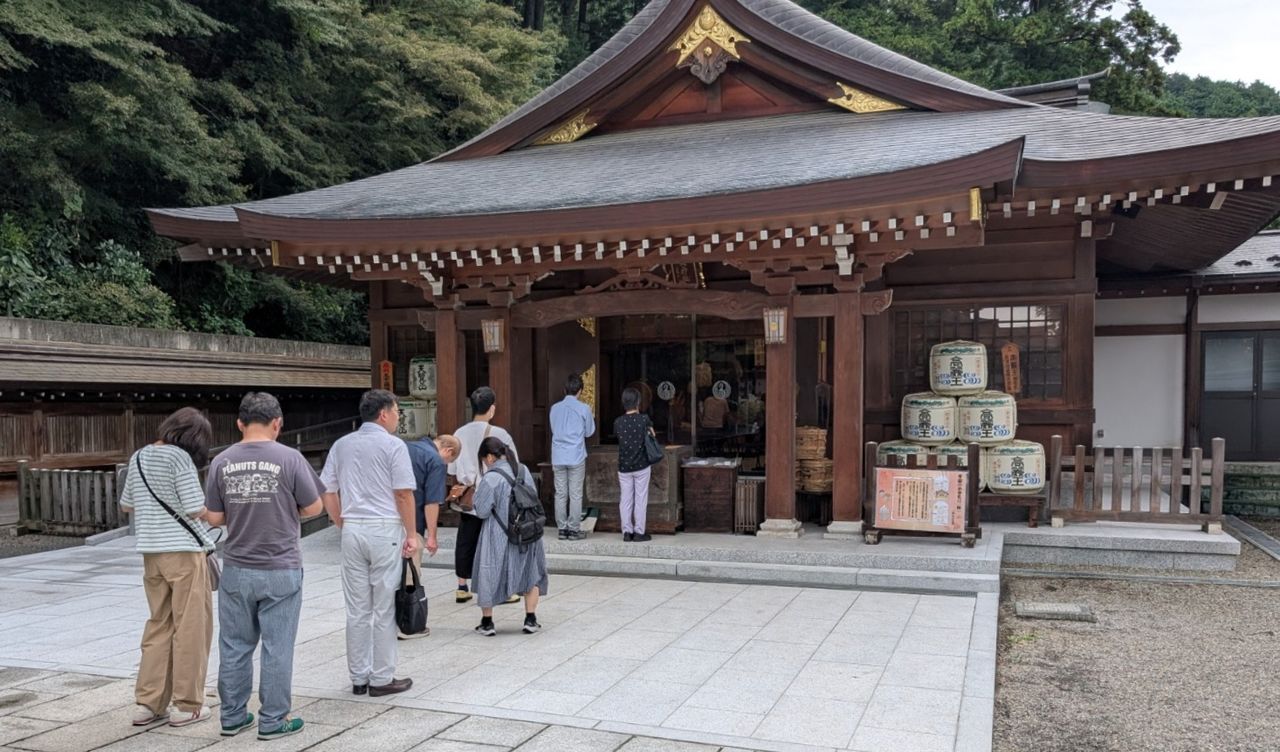
Worshippers waiting in line to pray at the outer hall of Koma Shrine. The inner sanctuary, built in 1552, is a designated cultural property of Saitama Prefecture. (© Gomi Yoji)
Votive plaques placed outside the main hall feature motifs of Korean guardian totems—a unique blend of Japanese and Korean traditions. One variety features an inscription in Hangul, reading: “Praying for good health in 2026.”
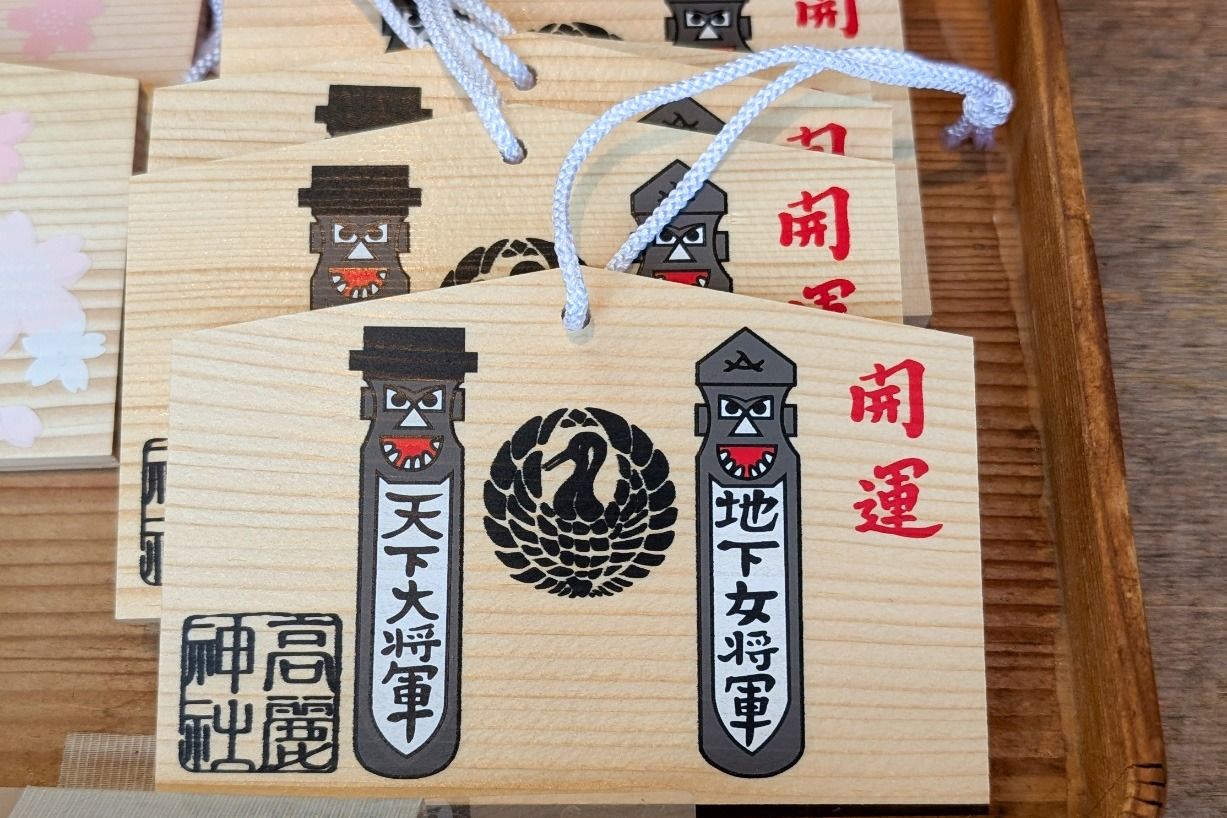
Distinctive votive plaques featuring jangseung motifs. (© Gomi Yoji)
While the layout follows traditional Japanese shrine design, Korean elements are subtly woven throughout.
Migrants from Goguryeo
The shrine’s origins go back to the fall of Goguryeo to Tang and Silla forces in the late seventh century. Among those who fled to Japan was Prince Jakkō (Yak’gwang), who arrived as an envoy but remained after his homeland’s collapse.
Historical records show that in 716, Japan’s imperial court relocated some 1,800 Goguryeo migrants to the district of Koma (modern-day Hidaka), hoping to harness their knowledge and skills.
Jakkō was appointed leader of the group and oversaw the settlement’s development, being enshrined as Koma’s guardian deity following his death. His legacy as a pioneer who took on new roles in a foreign land has continued to inspire later generations, with his resilience coming to symbolize career success and good fortune.
Behind the main hall stands a thatched-roof house that once served as the residence of the Koma family—Jakkō’s descendants. Built over four centuries ago, it is flanked by a weeping cherry tree of similar age that still blooms each spring.
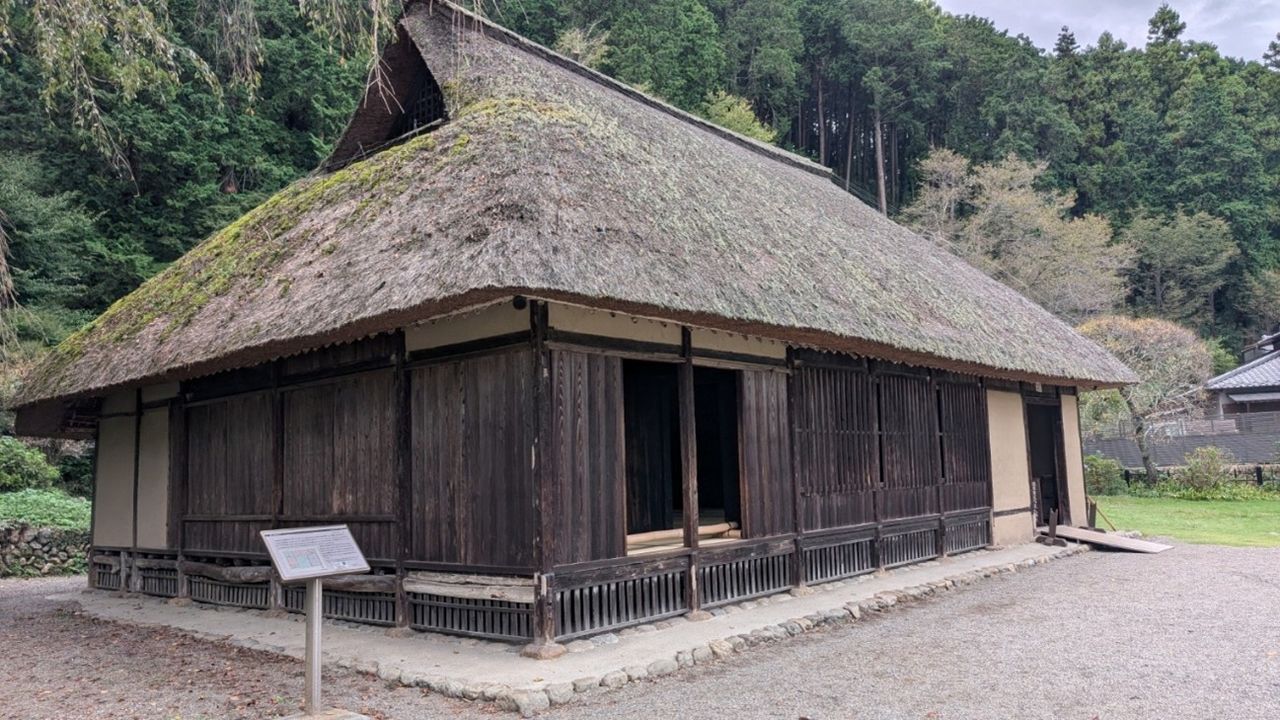
The Koma family residence, a nationally designated important cultural property. (© Gomi Yoji)
A Shrine of Rising Fortunes
Koma Shrine began gaining national attention in the early twentieth century after several politicians who visited—Saitō Makoto, Wakatsuki Reijirō, Hamaguchi Osachi, and Hatoyama Ichirō—went on to become prime ministers. Wakatsuki, notably, entered office just four months after his visit. Literary giants such as Dazai Osamu, Sakaguchi Ango, and Dan Kazuo also paid their respects, as did Kawashima Yoshiko, a princess of the Qing court known for her espionage activities in male disguise.
Top investigators from the Tokyo District Public Prosecutors Office have also visited, often before major political cases, prompting reporters to ask shrine officials whether any prosecutors had recently stopped by.
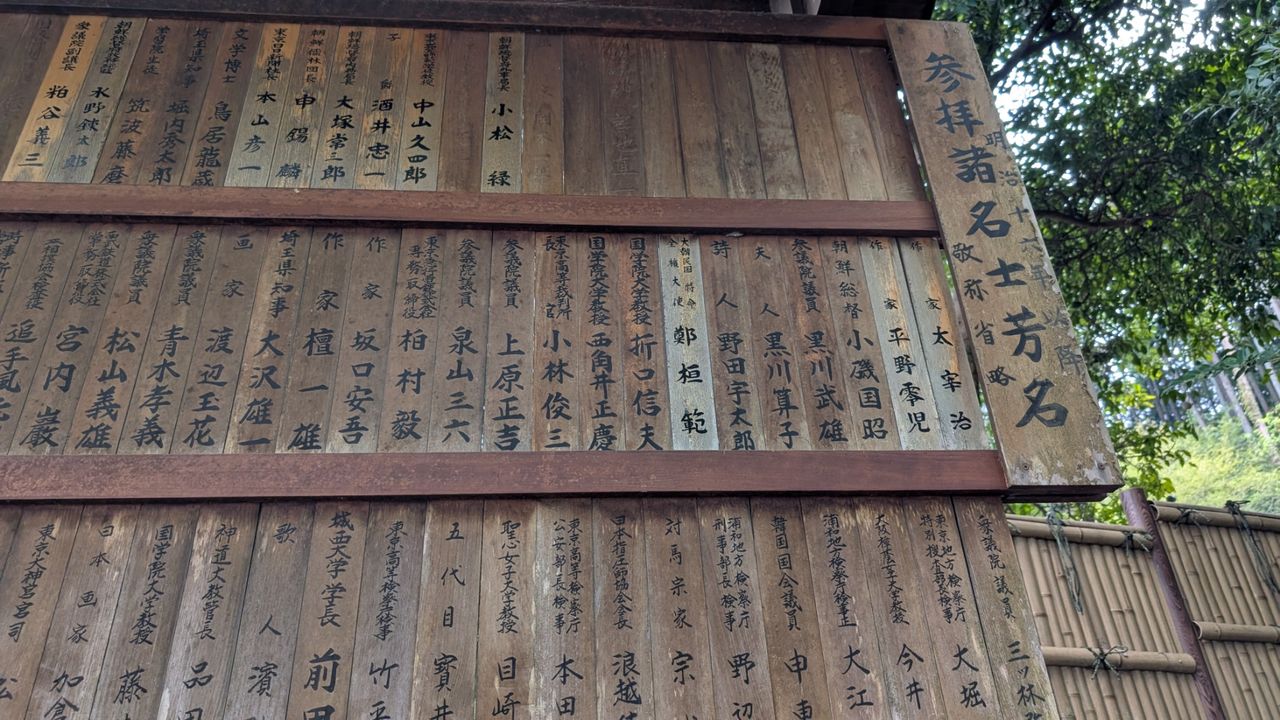
A panel listing the names of notable visitors from politics, business, and literature. (© Gomi Yoji)
Imperial Interest in a Shared Heritage
In 2017, then Emperor Akihito and Empress Michiko made a private visit to the shrine. Media reports noted that the emperor, known for his interest in migration history, asked whether more migrants had come from Goguryeo or Baekje—two ancient Korean kingdoms.
Earlier, during a 2001 press conference, Emperor Akihito remarked, “I, on my part, feel a certain kinship with Korea,” saying that it is recorded in the eighth-century Shoku Nihongi chronicle that the mother of Emperor Kanmu (r. 781–806) was of the line of King Muryong (r. 501–23) of the Kingdom of Baekje.
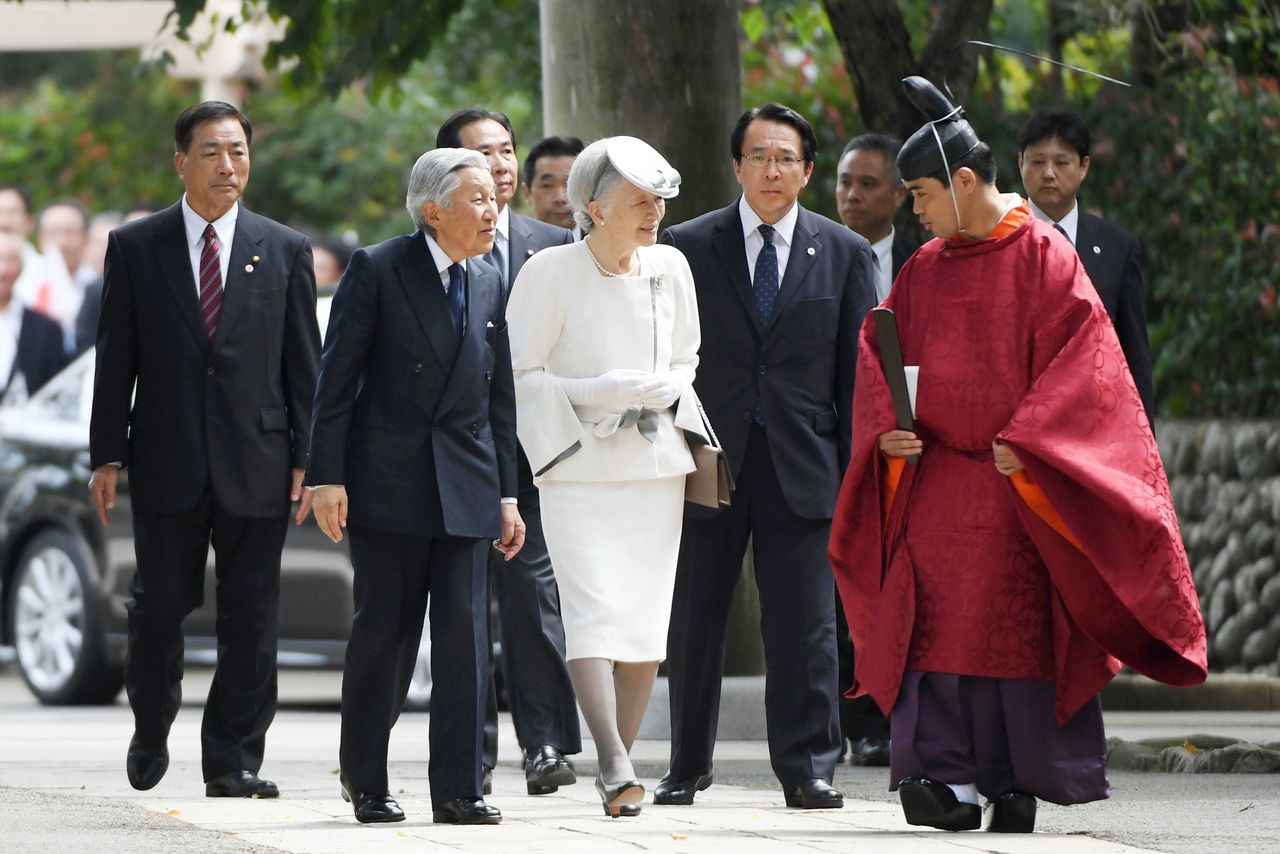
Emperor Akihito and Empress Michiko visiting Koma Shrine in September 2017. (© Jiji)
Rituals Bridging Cultures
Many of the shrine’s events feature a mix of Japanese and Korean elements. During the annual festival on October 19, children receive sacred forehead marks in a lion dance ritual. Other traditionally Japanese ceremonies are also observed, such as blessings for family milestones, safety, and rice planting.
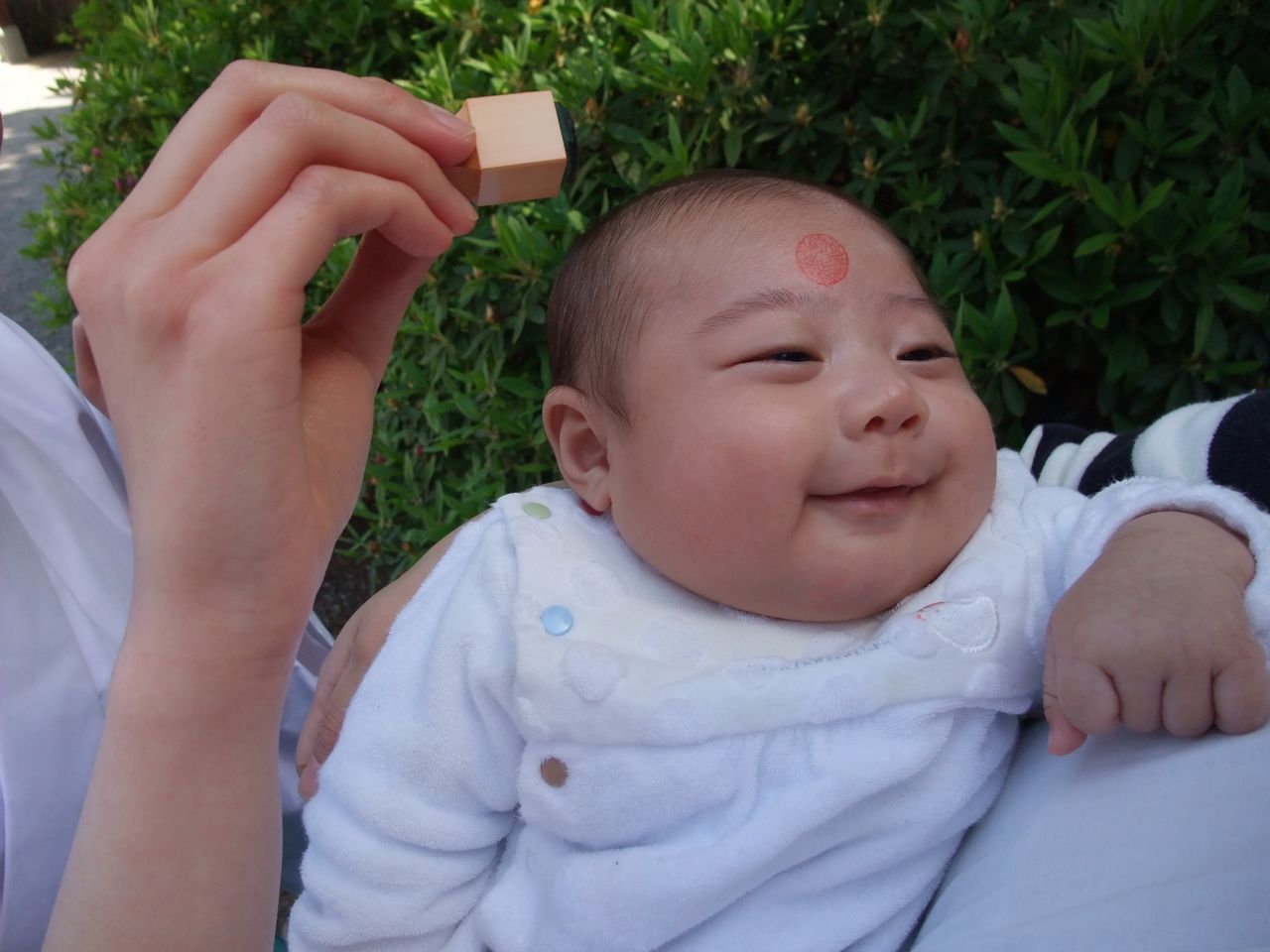
Ritual marking of children’s foreheads during the autumn festival. (Courtesy Koma Shrine)
Korean-themed events, meanwhile, include January and September parades featuring ancient court attire and the October Madang festival, which offers Korean food, souvenirs, and performances of traditional music.
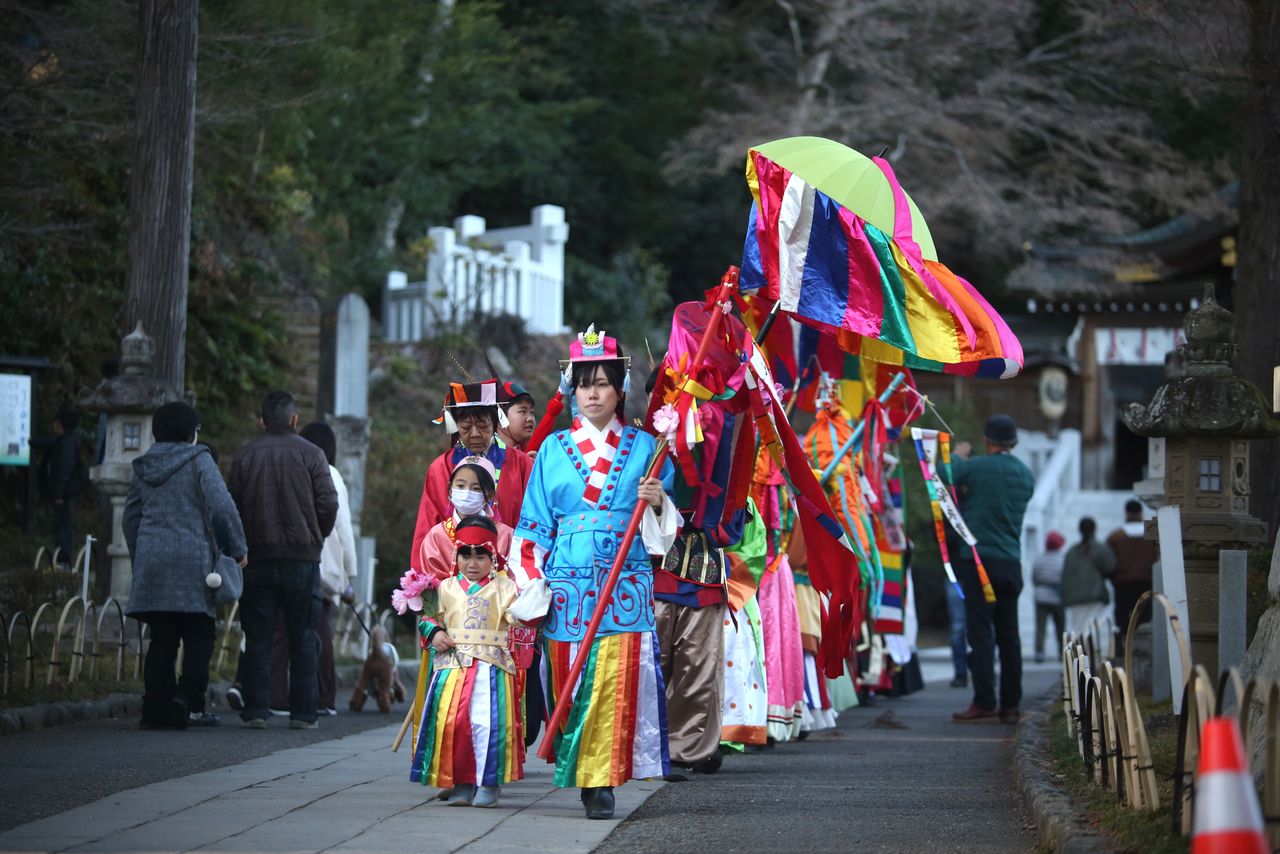
A parade in ancient court attire. (Courtesy Koma Shrine)
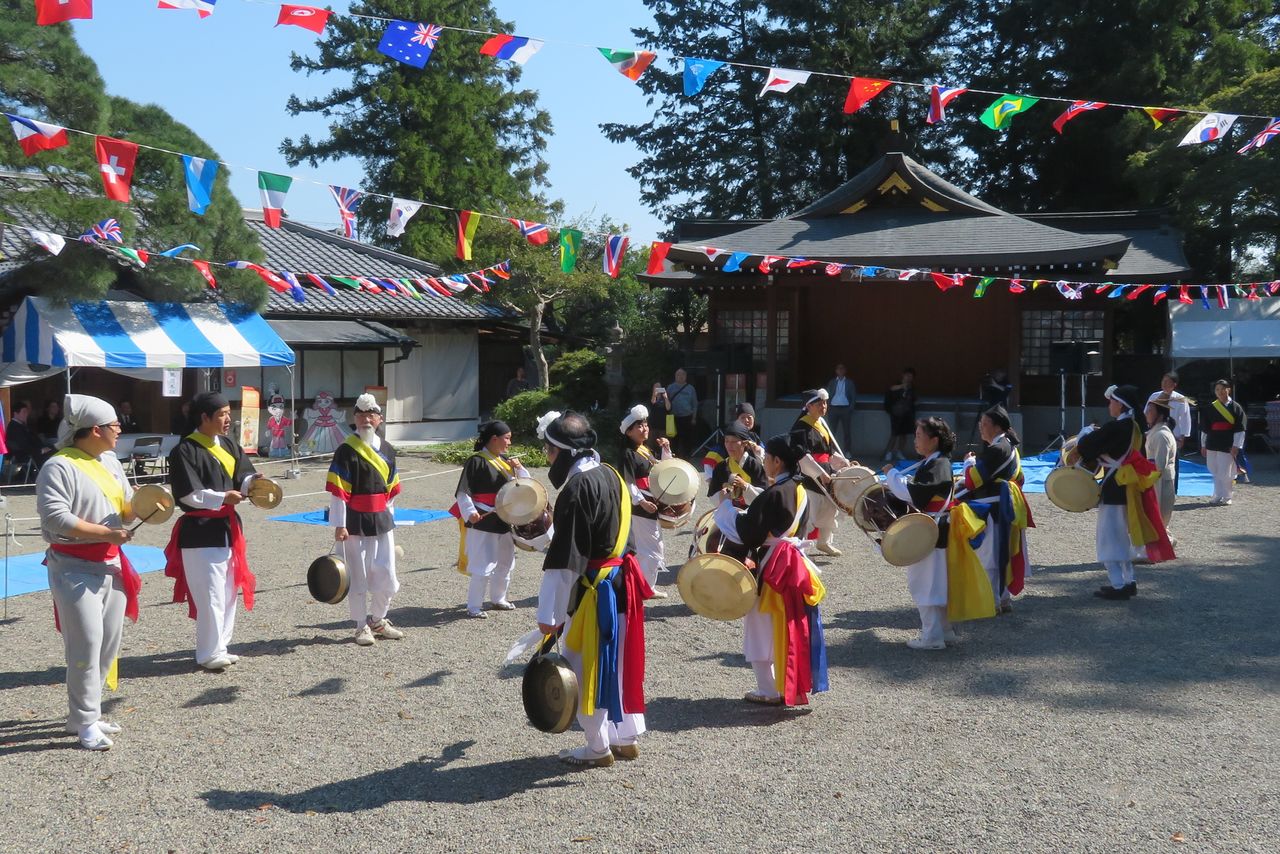
Each October, the shrine grounds host performances of samulnori percussion music and other Korean-themed acts. (Courtesy Koma Shrine)
Cross-Cultural Amulets
The shrine’s omamori include designs featuring the three-legged crow, a symbol of royal authority in Goguryeo. A sleek black version, resembling a police badge, is said to be popular with investigators.
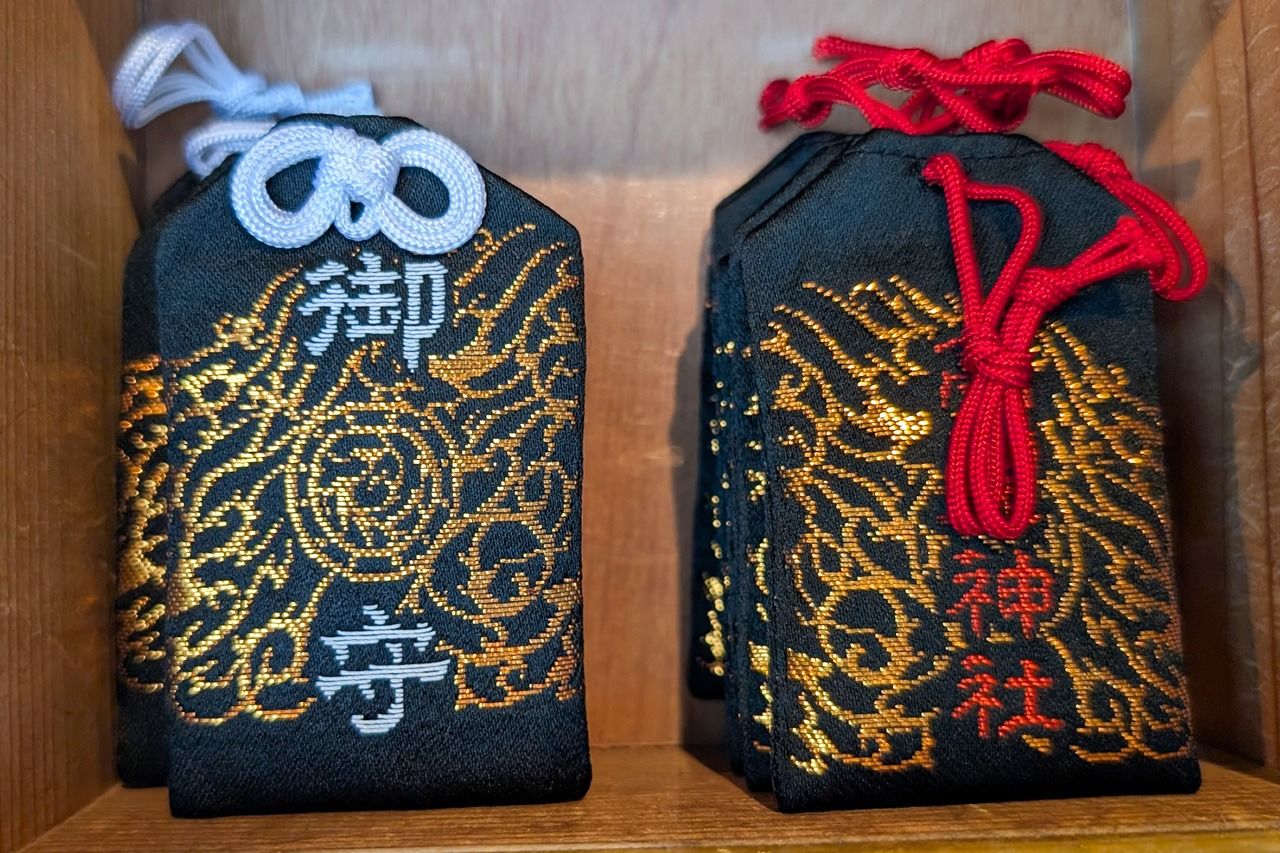
Black amulets with a three-legged crow motif. (© Gomi Yoji)
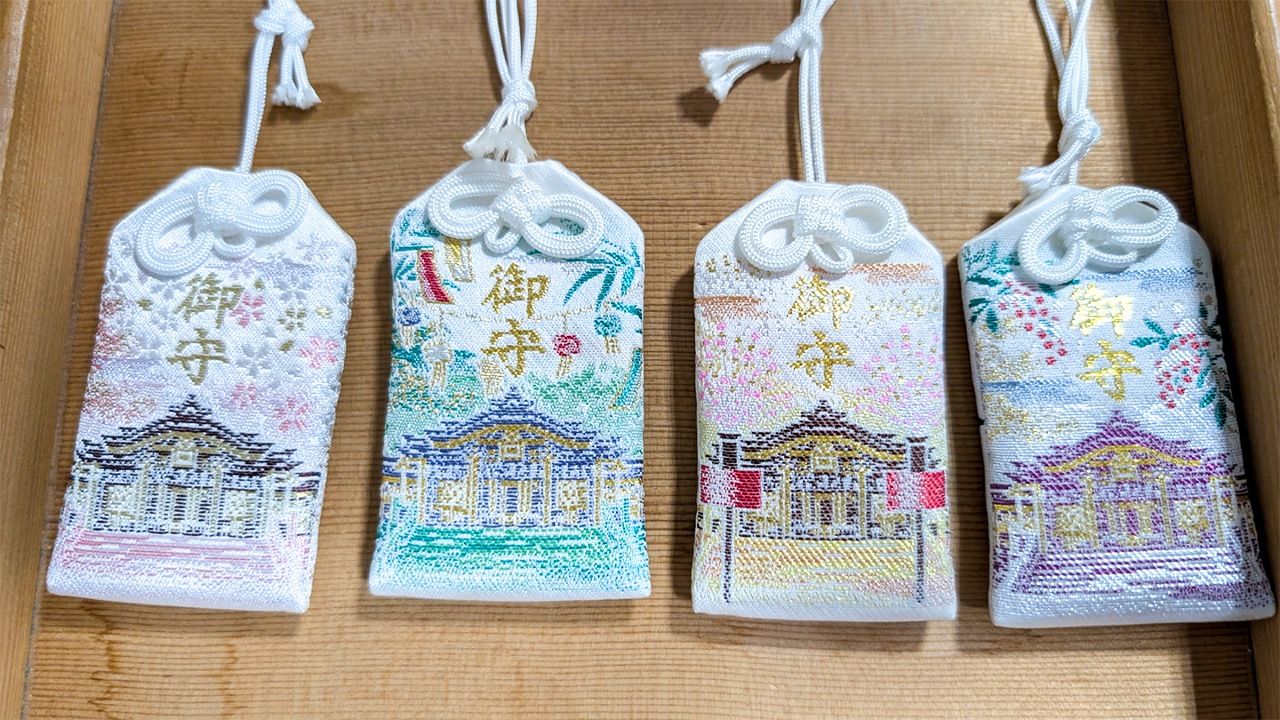
The design features of some omamori change with the seasons. (© Gomi Yoji)
Deep Community Roots
The shrine is deeply rooted in the community. To mark the 1,300th anniversary of the Koma district, it helped create a kimchi-flavored hotpot of local vegetables and Korean ginseng. It also launched an initiative for farmers to grow napa cabbage for Korean restaurants. Events are held where schoolchildren at a Korean school join locals in making kimchi. The shrine also hosts history lectures focused on the founding of the Koma district and ancient East Asian migration.
Continuing a Legacy of Hope
The history of Koma Shrine reveals a long tradition of bilateral exchange that transcends political differences. The current chief priest, Koma Fumiyasu, is a direct, sixtieth-generation descendant of Jakkō. “Japan-Korea relations have had their challenges over the centuries,” he reflects, “but that’s only natural among neighboring countries. And I hope we’ll continue to maintain good neighborly relations in the future.”
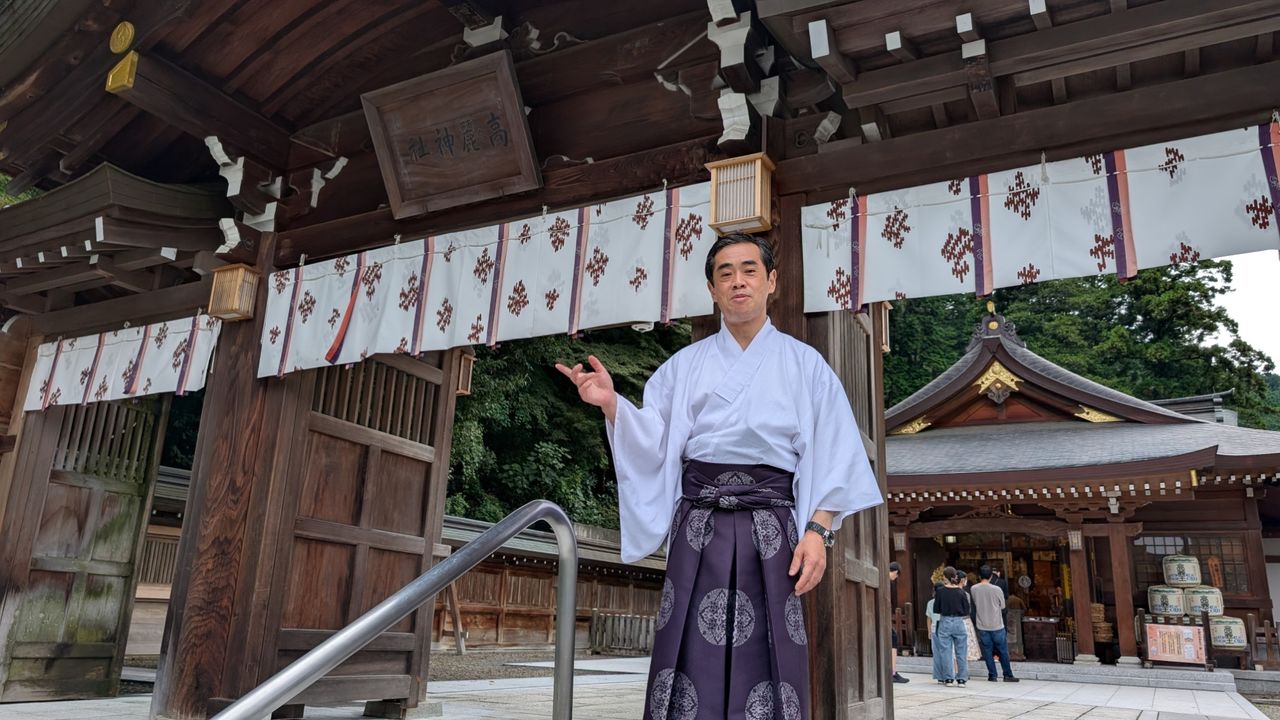
Koma Fumiyasu in front of the main hall. (© Gomi Yoji)
Koma Shrine remains a symbol of a shared cultural and historical heritage between Japan and the Korean Peninsula. And its story should continue to unfold as a source of rising fortunes—and enduring links—for both countries.
Koma Shrine
- Access: 20 minutes on foot from Komagawa Station on the JR Kawagoe Line, or 20 minutes by taxi from Hannō Station on the Seibu Ikebukuro Line
- Website: https://komajinja.or.jp/korean-html/
(Please check the official website for event dates.)
(Originally published in Japanese on November 8, 2025. Banner photo: Traditional Korean jangseung at Koma Shrine. In Korea, these were erected at the entrances of villages or temples as guardians and waymarkers. © Gomi Yoji.)