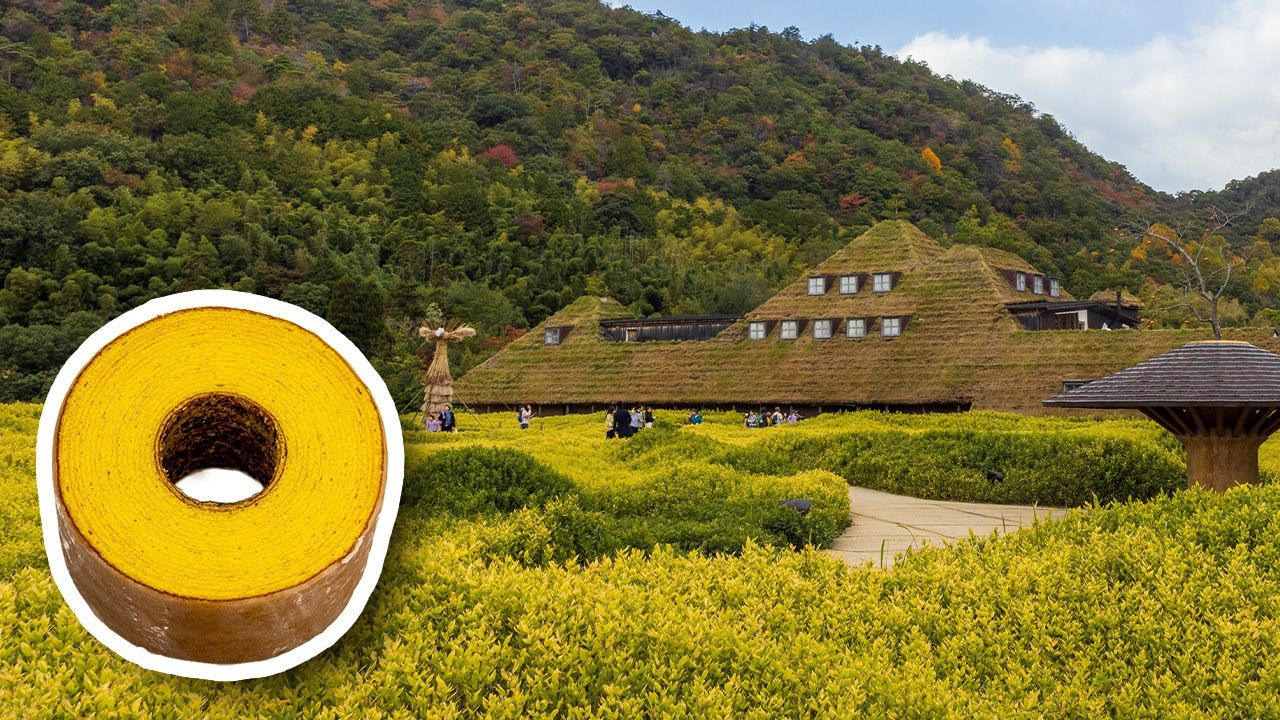
La Collina Ōmihachiman: A Sweet Sensation in a Tranquil Rural Setting
Guideto Japan
Travel Food and Drink Environment Architecture- English
- 日本語
- 简体字
- 繁體字
- Français
- Español
- العربية
- Русский
Views out of a Ghibli Anime
La Collina Ōmihachiman, at the base of Mount Hachiman, southeast of Lake Biwa, is a sweets shop with a difference. First opened in 2015, the establishment has ranked as the number-one tourist facility in Shiga Prefecture for nine consecutive years. It is popular with both domestic and inbound visitors, and received a Cool Japan Award in 2025.
Nestled in natural surroundings on an 11.5-hectare property, La Collina is the flagship store of Taneya Group, a sweets manufacturer founded in 1872. Originally the company was known for its traditional Japanese confections, including kuri-manjū (buns filled with chestnut and white bean paste), monaka (bean jam in wafers), and dorayaki (bean paste sandwiched between small pancakes). Following World War II, it expanded its product range to include Western-style sweets, and from the 1980s, it opened outlets in department stores across Japan. Its Club Harie brand specializes in Baumkuchen, a traditional German cake, along with other cakes and cookies, with shops and up-market cafés around the country. La Collina (Italian for “the hill”) is a paradise for sweet tooths. This outlet showcases the company’s line-up of treats, as well as offering factory tours that give insight into its fastidious production processes.
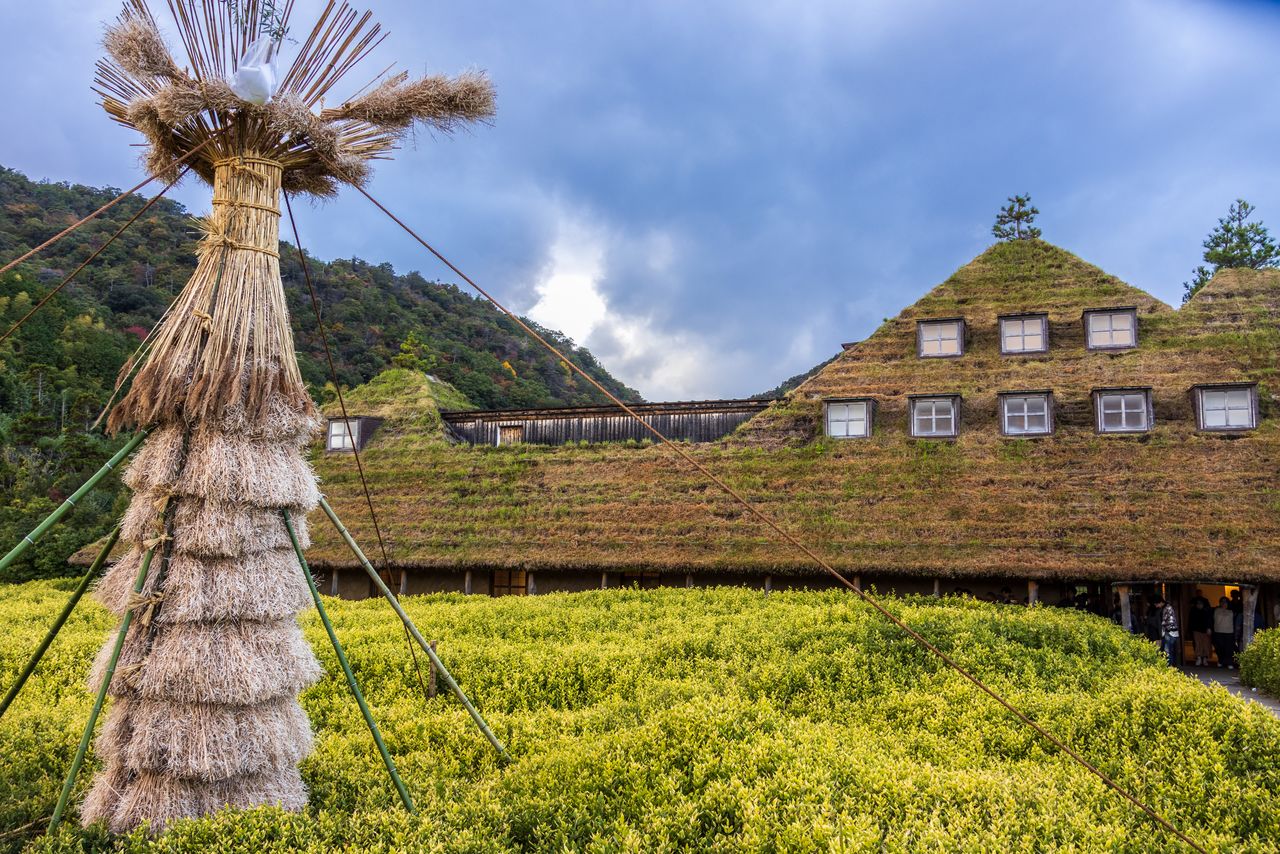
The entrance and main shop. (© Nippon.com)
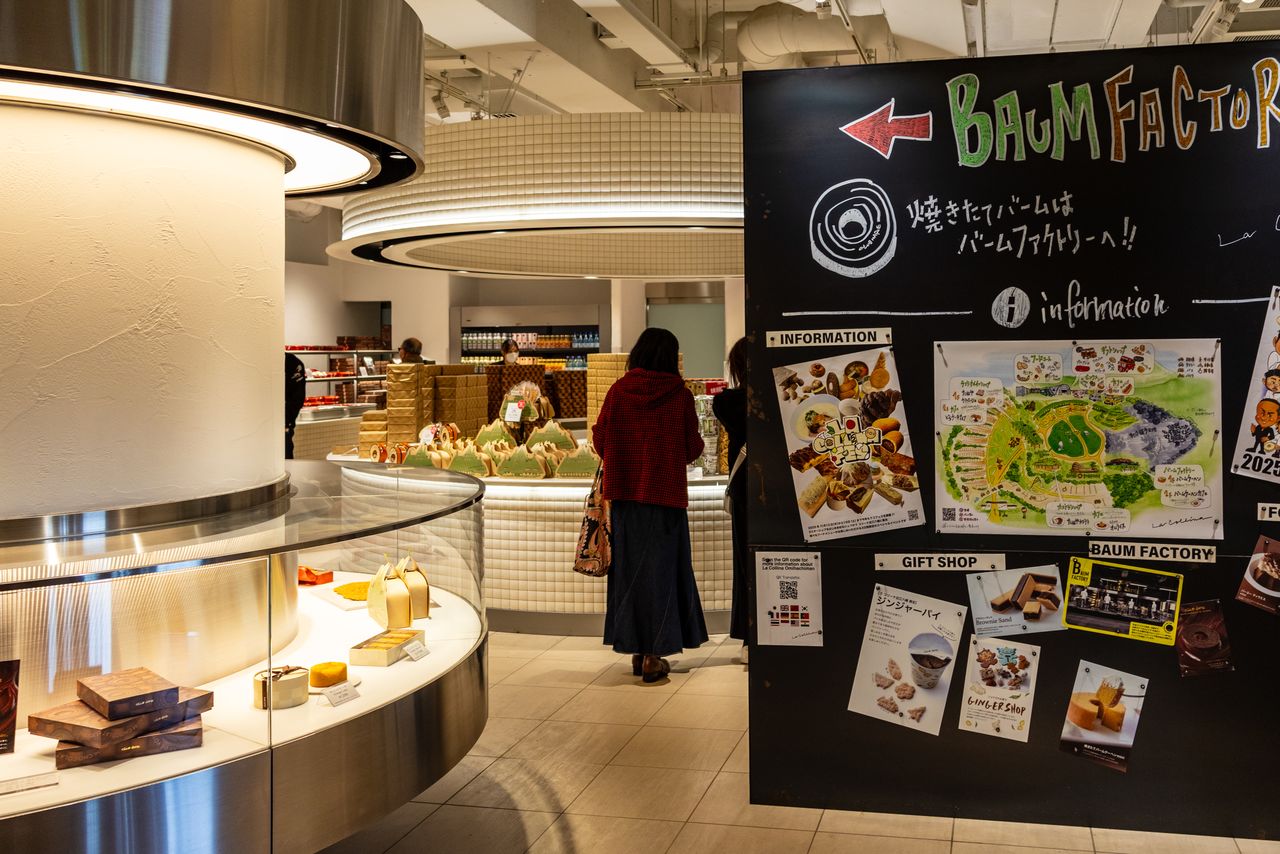
A display in the shop shows the different sweets available around the property. (© Nippon.com)
Another feature of La Collina is its unique architecture and art works. The architect and architectural historian Fujimori Terunobu designed the structures to blend in with the mountains and surrounding rural landscape—the roof of the entrance and main shop is even covered in grass. Inside, the shop offers a wide range of Taneya and Club Harie sweets, while the café upstairs serves fresh dorayaki and drinks. The extensive assortment of souvenirs on offer will surely prolong any visit.
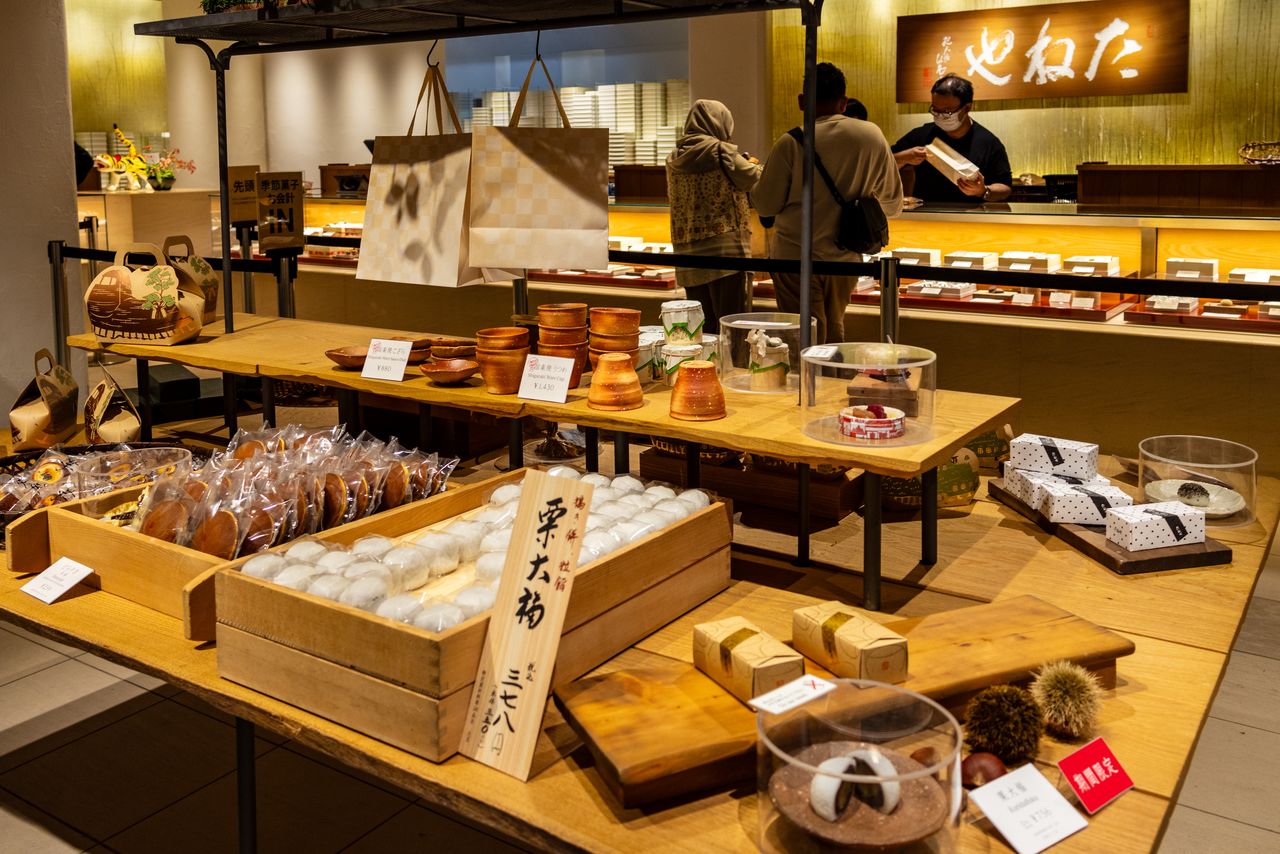
Taneya’s traditional Japanese sweets make excellent souvenirs. (© Nippon.com)
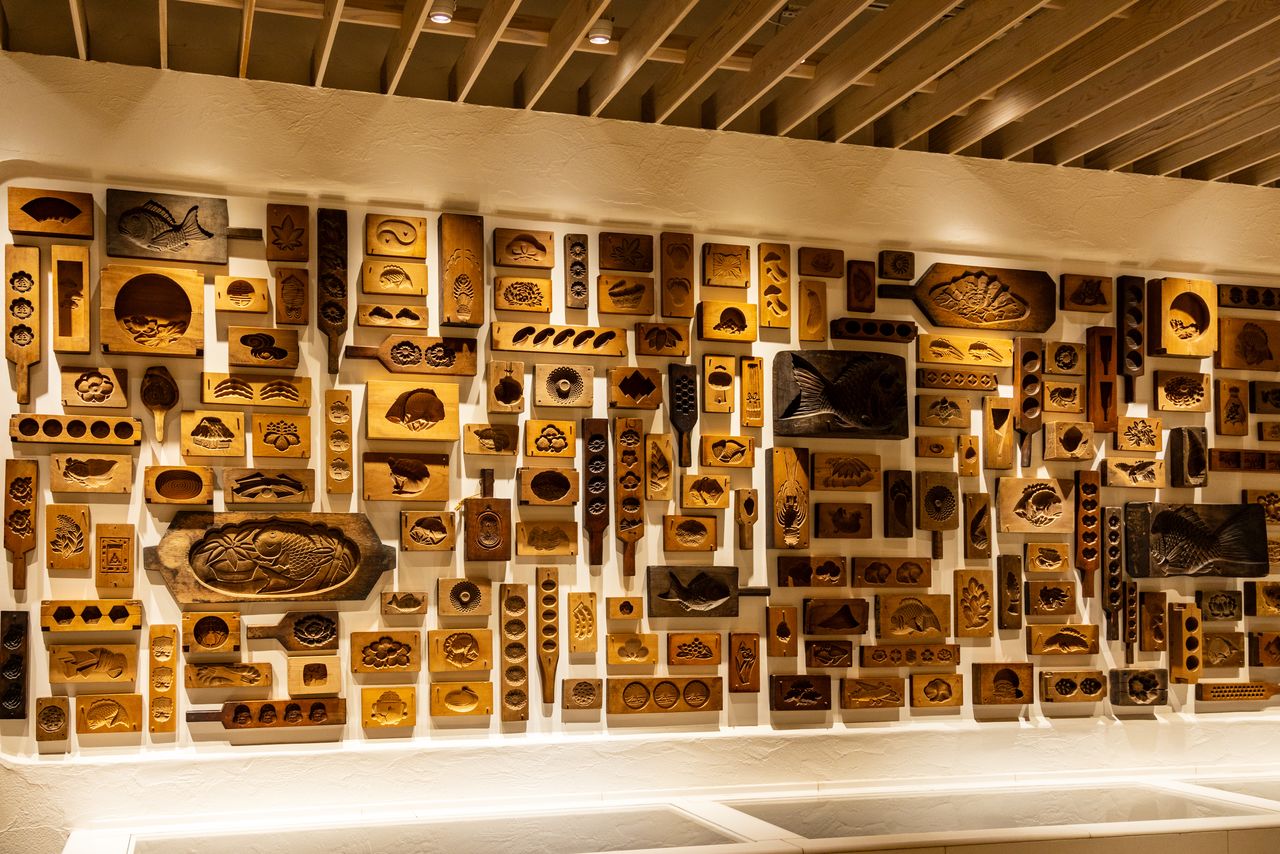
Wooden molds used in sweet-making are displayed like works of art. (© Nippon.com)
Beyond the main shop, the spacious property contains numerous buildings, many grass-covered, set among terraced rice fields and rice paddies. Unique structures dot the grounds, including the cylindrical factory, which resembles a slice of Baumkuchen, the head office, topped with a distinctive copper roof, and curious earthen towers with tiny doors and windows. On social media, the fairy-tale-like scenery is often described as like a Studio Ghibli anime.
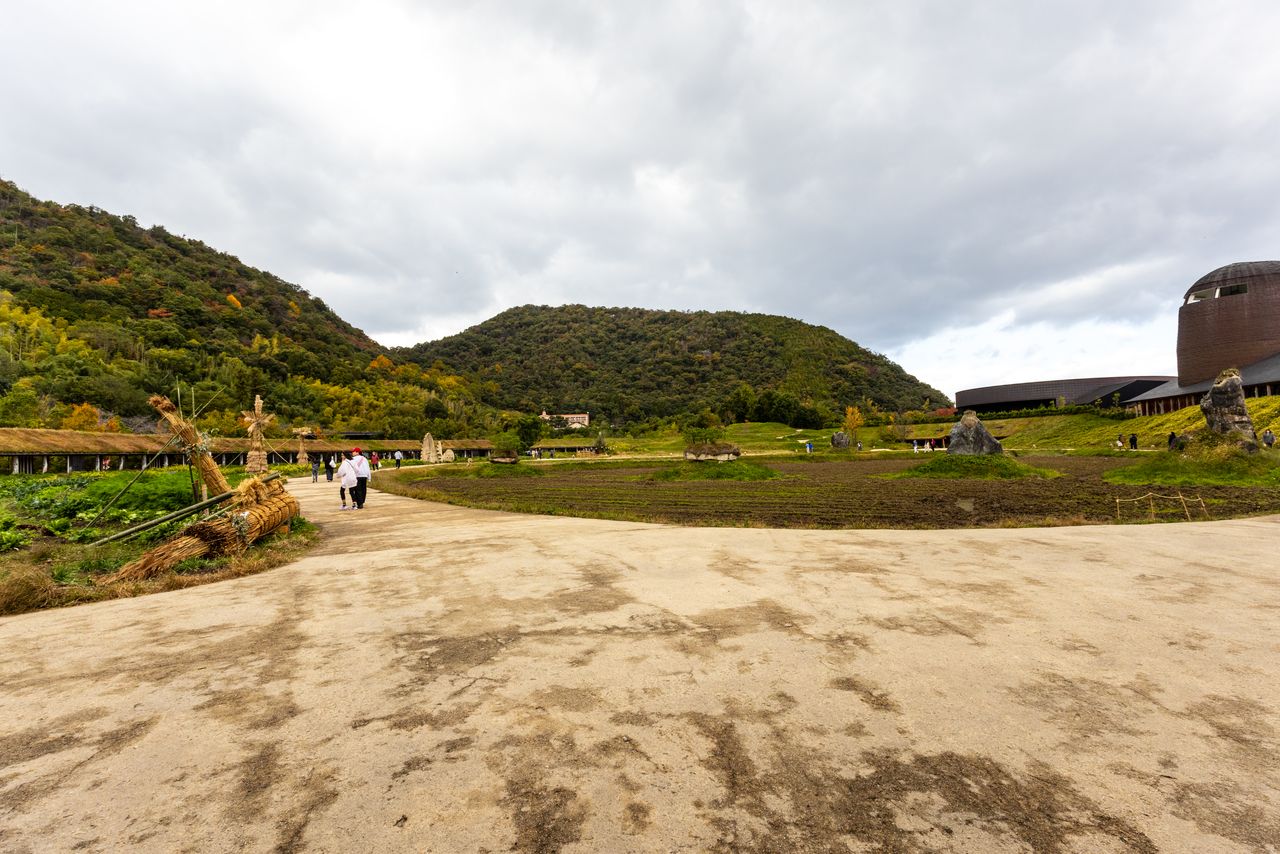
Pathways throughout the grounds seem like tracks on a farm. (© Nippon.com)
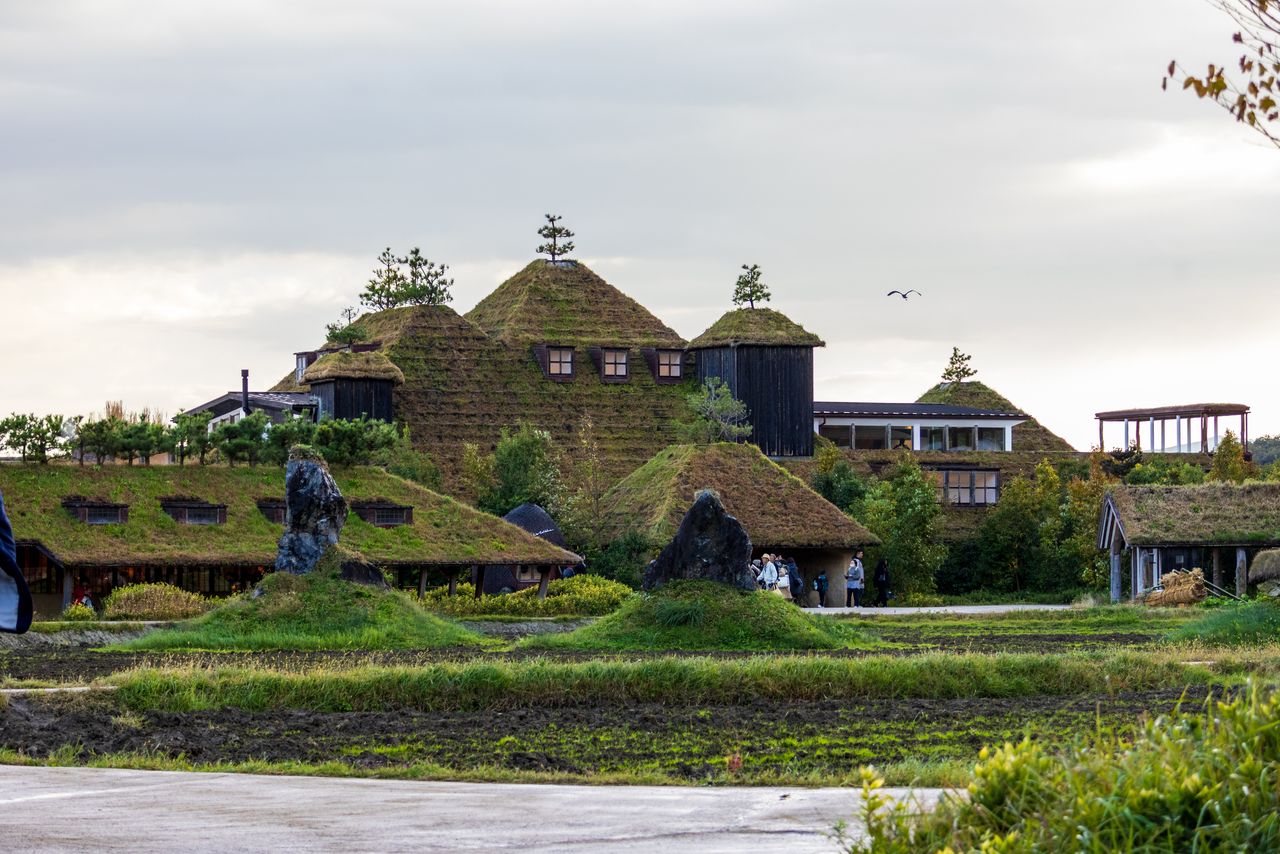
Grass-clad buildings blend into the natural landscape. (© Nippon.com)
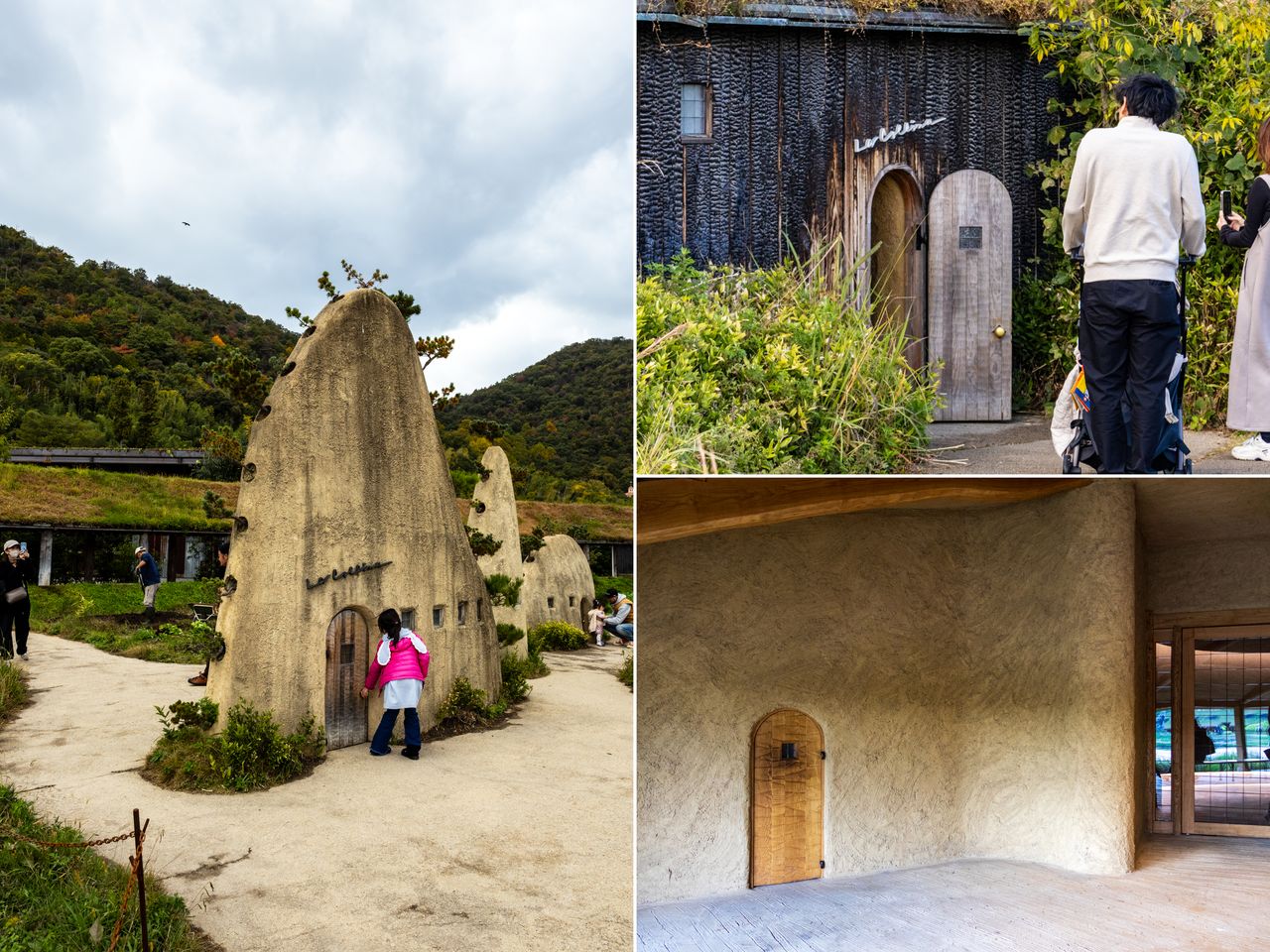
Tiny, photogenic doorways abound. (© Nippon.com)
Tasty Factory Tours
The best-selling item at La Collina is their freshly baked mini Baumkuchen. A favorite from the beginning, since 2023, with the opening of the Baum Factory, visitors can now enjoy them fresh off the spit.
Baumkuchen, which means “tree cake” in German, is famous for its layered cross-section, resembling growth rings of a tree. The cake batter is spread thinly onto a cylinder that rotates within the oven, with more batter progressively added in layers.
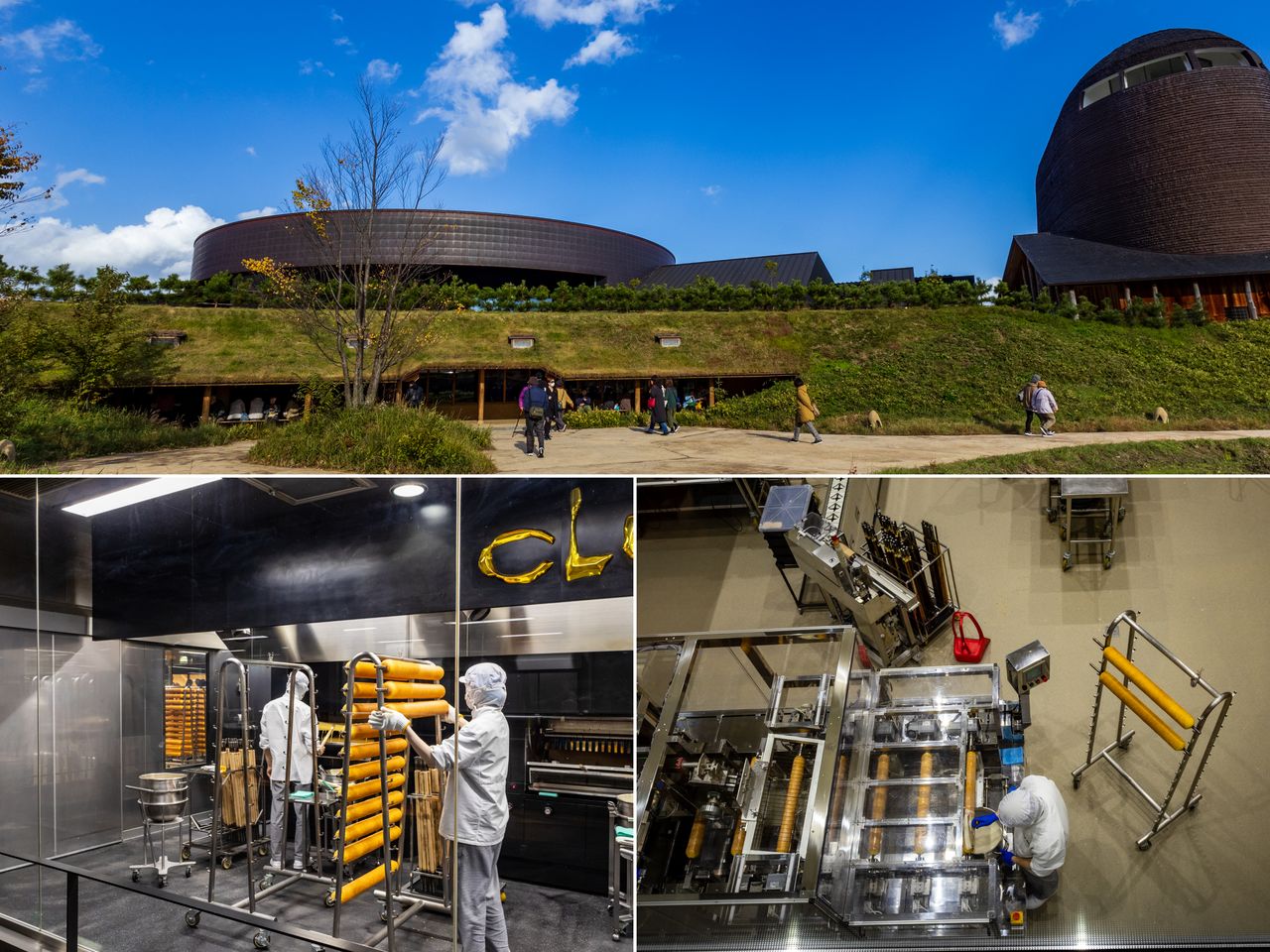
The dedicated Baum Factory (top) produces around 1,000 mini Baumkuchen per day. Visitors can see the entire process, from making the batter through to packaging, through glass windows. (© Nippon.com)
Club Harie’s Baumkuchen are left overnight to moisten, but fresh from the oven, they have a light, fluffy texture. This is a taste that can only be enjoyed directly from the factory, on the day, and visitors will appreciate it more after seeing the painstaking processes involved first-hand.
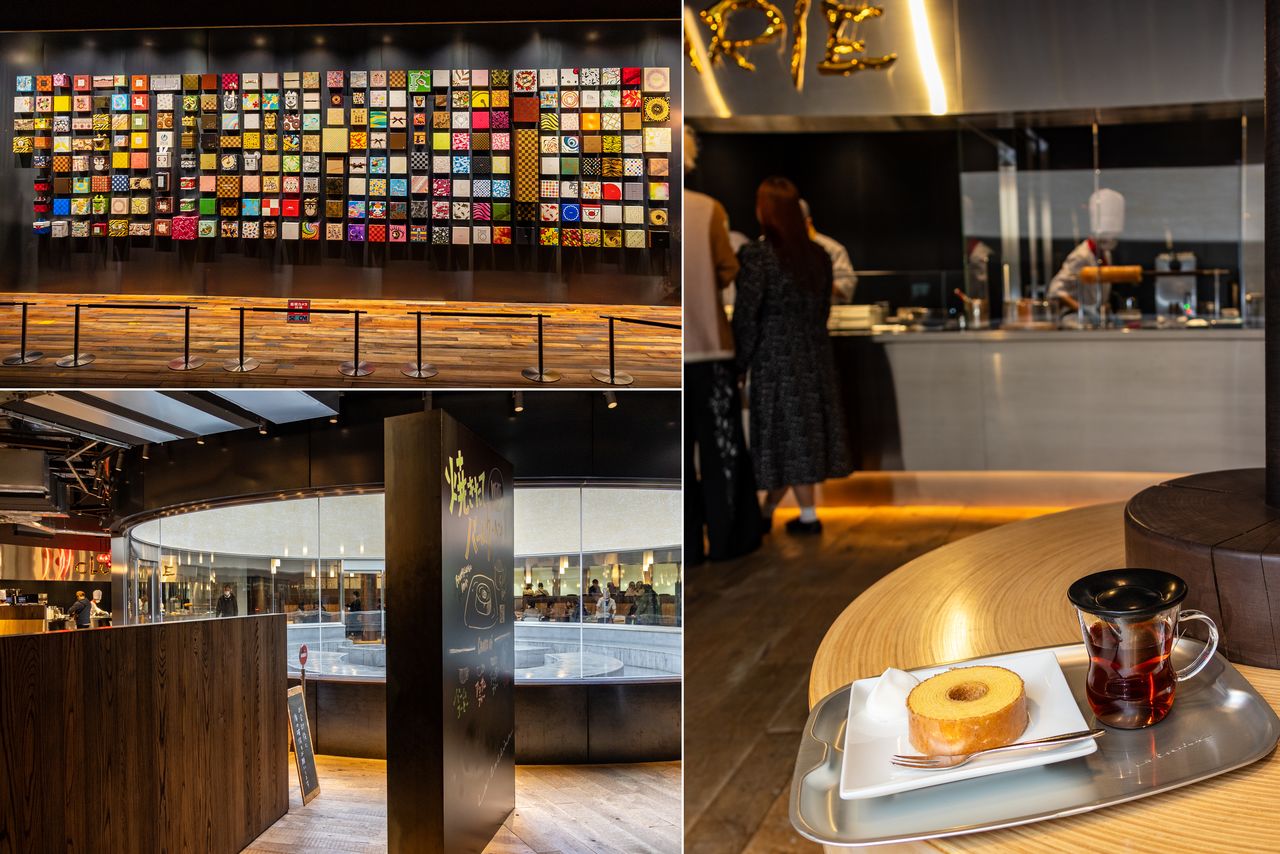
Clockwise from top left: Packaging from the past is displayed along the tour route; the famed cake and a cup of tea; at the upstairs café; the architecture of the space itself resembles a slice of the cake. (© Nippon.com)
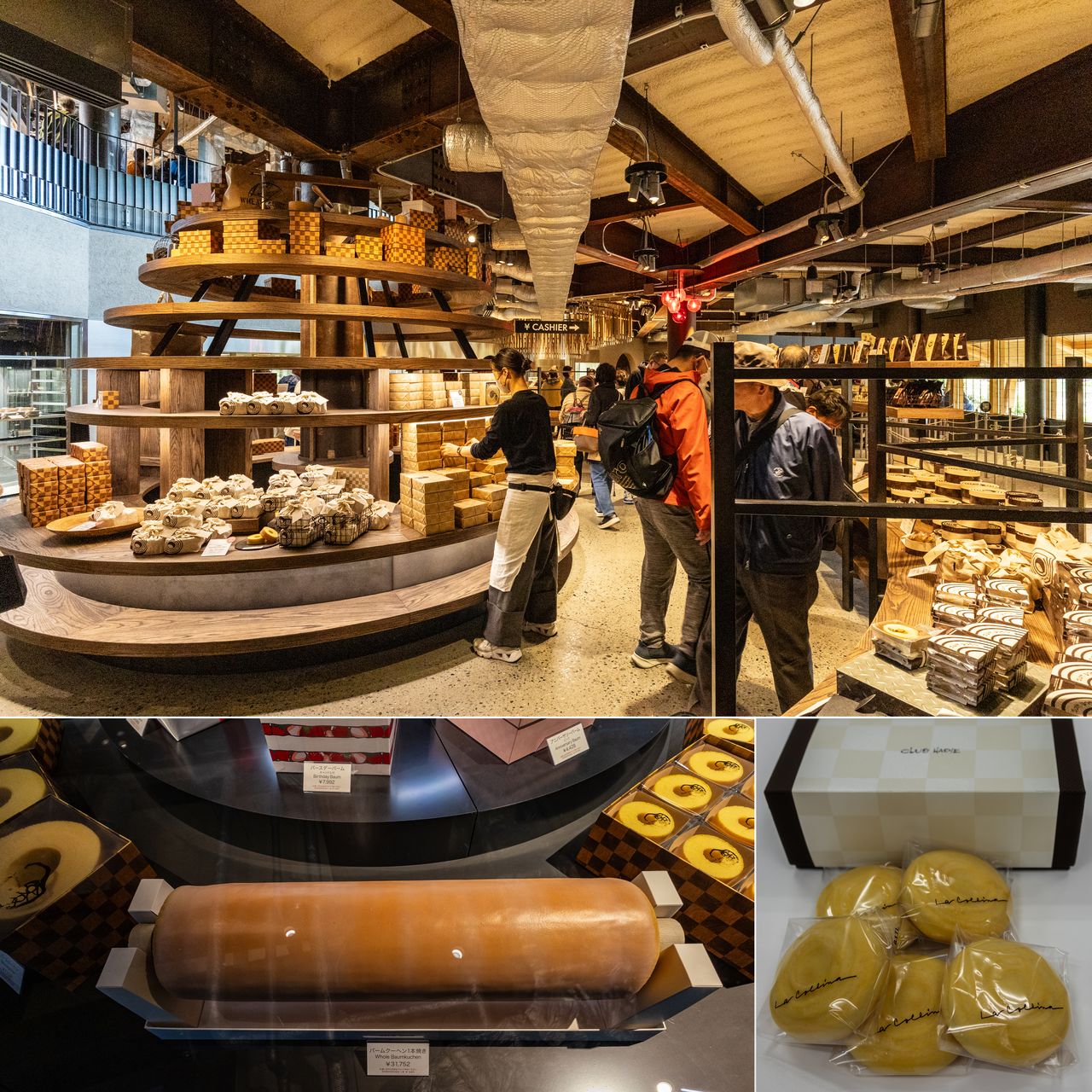
Clockwise from top: The ground floor shop stocks a wide range of sweets; a popular pick is the unusual Baum-man, a manjū that contains Baumkuchen in the batter; true fans of the treat can buy a giant, whole Baumkuchen. (© Nippon.com)
The gift shop, which resembles a garage, is home to an outlet of J’Oublie le Temps, Club Harie’s bakery in the city of Hikone. Next door is a food court and kitchen van, serving a diversity of savory and sweet dishes, including okowa (steamed glutinous rice) topped with Ōmi beef, red konnyaku soup, a local specialty, soft-serve ice cream, and drinks. A light lunch here leaves just enough room to feast on sweets for the remainder of the visit.
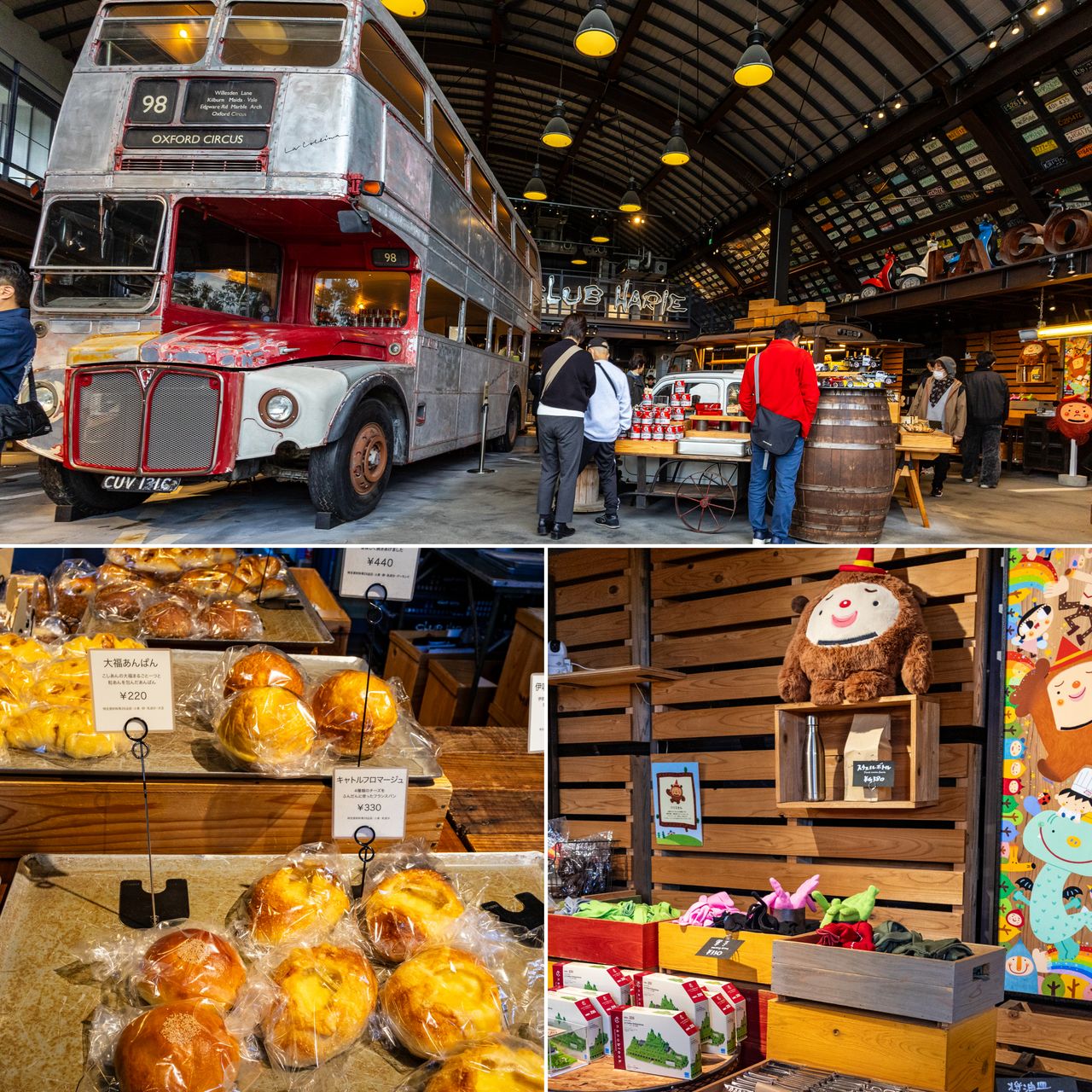
Clockwise from top: A double-decker bus from London dominates the gift shop floor; the shop sells a host of knick-knacks; the sweet treats on offer include items flavored with cheese and an bean paste. (© Nippon.com)
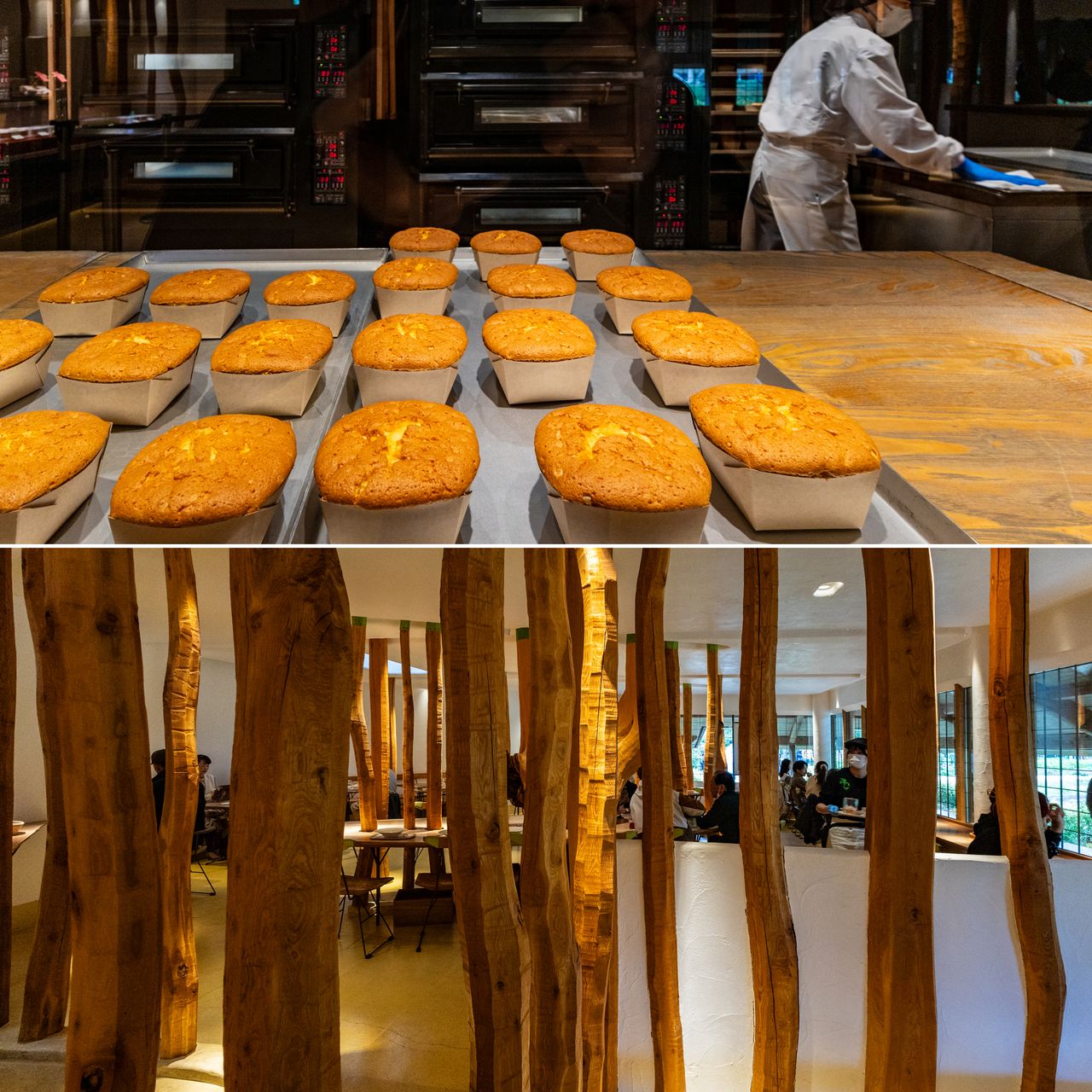
A café by Kurihyappon, a brand specializing in the Portuguese-influenced sponge cake castella (lined up at top), is decorated with beams of chestnut wood (a reference to the brand name). (© Nippon.com)
The outdoor seating, surrounded by fields, provides a relaxing setting to savor the delicious sweets on offer. According to public relations representative Uehara Yūka, visitors delight in the natural scenery, which changes dramatically with the seasons. This no doubt entices many tourists back to La Collina.
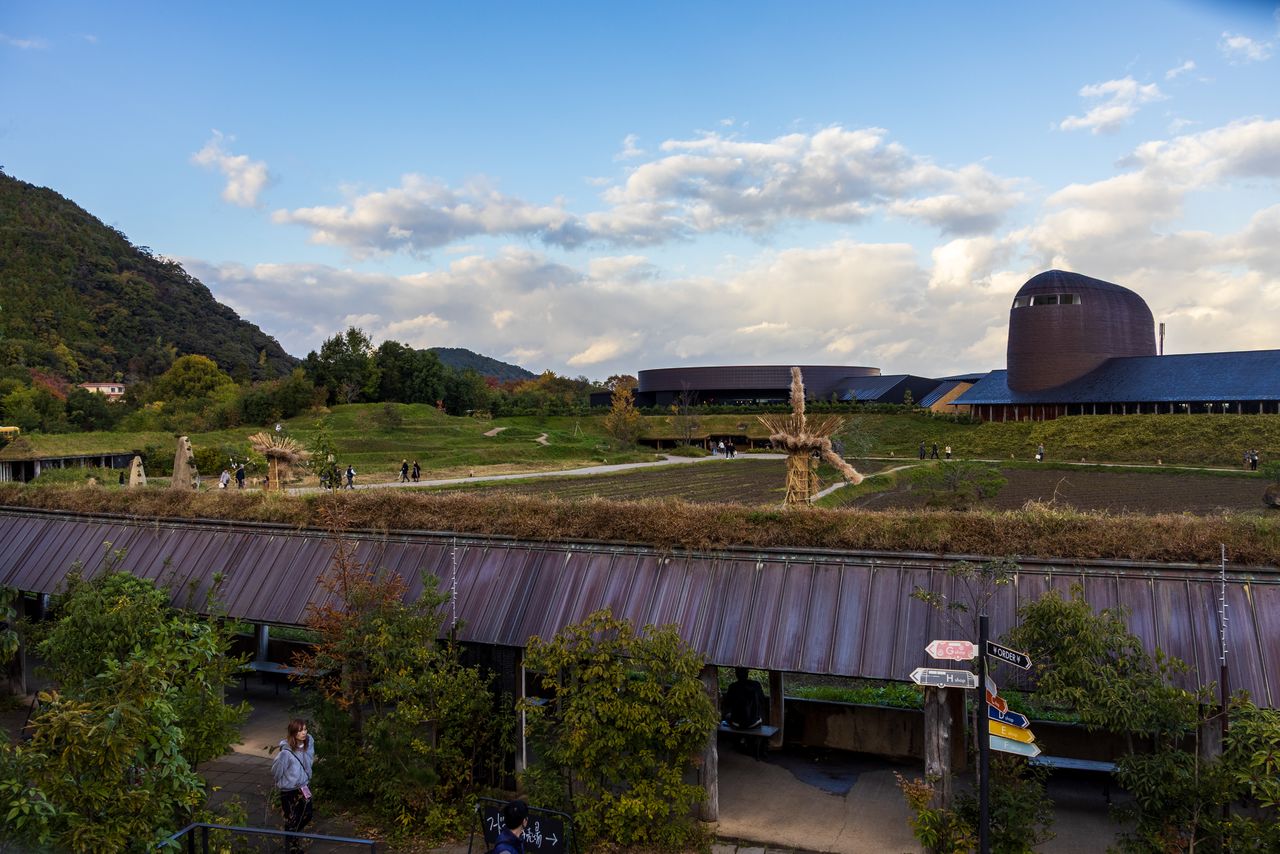
The park and the mountain backdrop viewed from upstairs in the food court. (© Nippon.com)
A Successful Formula of Appreciation for Nature
La Collina is located on a property that, until 2009, was home to a resort operated by Japan’s public pension fund, with a hotel, golf driving range, and swimming pool. The creation of La Collina began with a restoration of the natural rural village setting, based on a belief that learning from nature is essential for continuing to produce safe food. The entire property was first cleared, then the soil was plowed and planted repeatedly.
Now, employees cultivate organic rice and over 450 varieties of wild plants by hand. The property also hosts various tours and workshops to give people opportunities to experience tree planting, terrace rice farming, and more. La Collina is more than just a sweets paradise; it allows visitors to appreciate nature with all the senses. With the recent growing interest in sustainability, it is little wonder that it has become Shiga’s leading attraction.
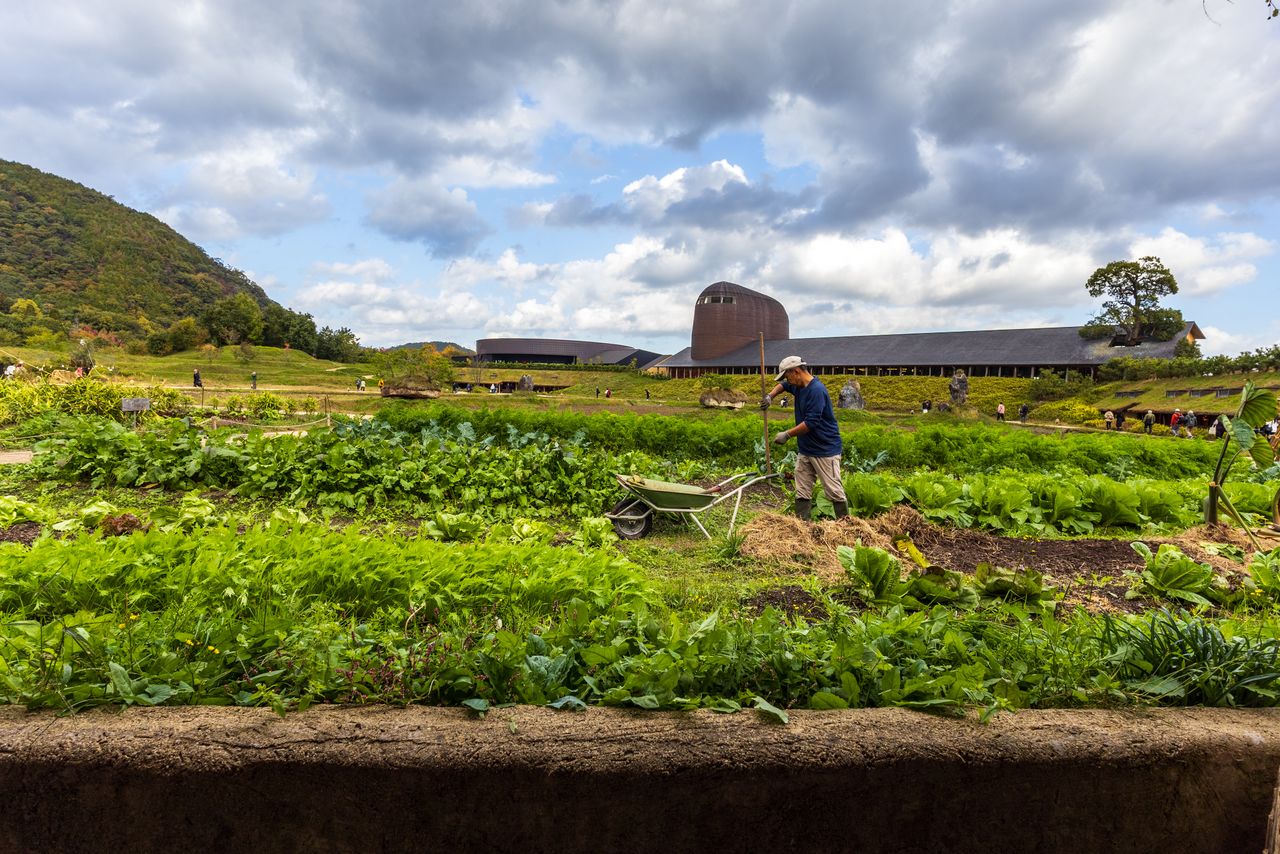
Employees harvest the crops themselves. (© Nippon.com)
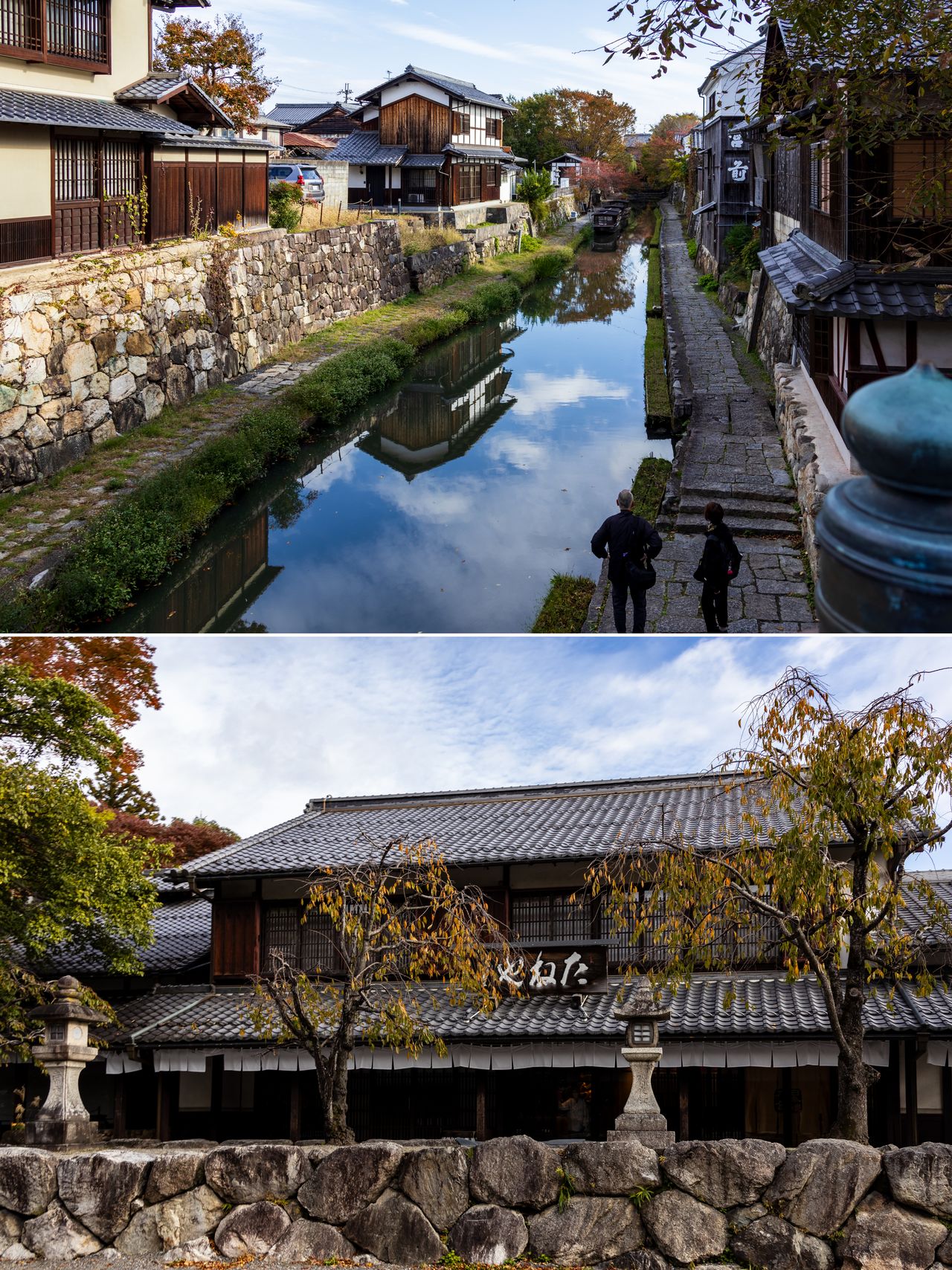
Hachiman Canal, en route to the Himure Hachiman Shrine (top) and the old, alluring Taneya Himure shop. (© Nippon.com)
La Collina Ōmihachiman
- Address: 615-1 Kitanoshō-chō, Ōmihachiman, Shiga Prefecture
- Open: 9:00 am to 6:00 pm (food court: 10:00 am to 5:00 pm)
- Closed: January 1
- Access: Approx. 10 minutes from JR Ōmihachiman Station by Ōmi Tetsudō bus to Kitanoshō La Collina bus stop
- Official website: https://taneya.jp/la_collina/
(Originally published in Japanese. Reporting, text, and photos by Nippon.com.)