A Paradise in Fukushima: The Classic Beauty of Shiramizu Amidadō
Guideto Japan
Architecture History- English
- 日本語
- 简体字
- 繁體字
- Français
- Español
- العربية
- Русский
Built in Memory
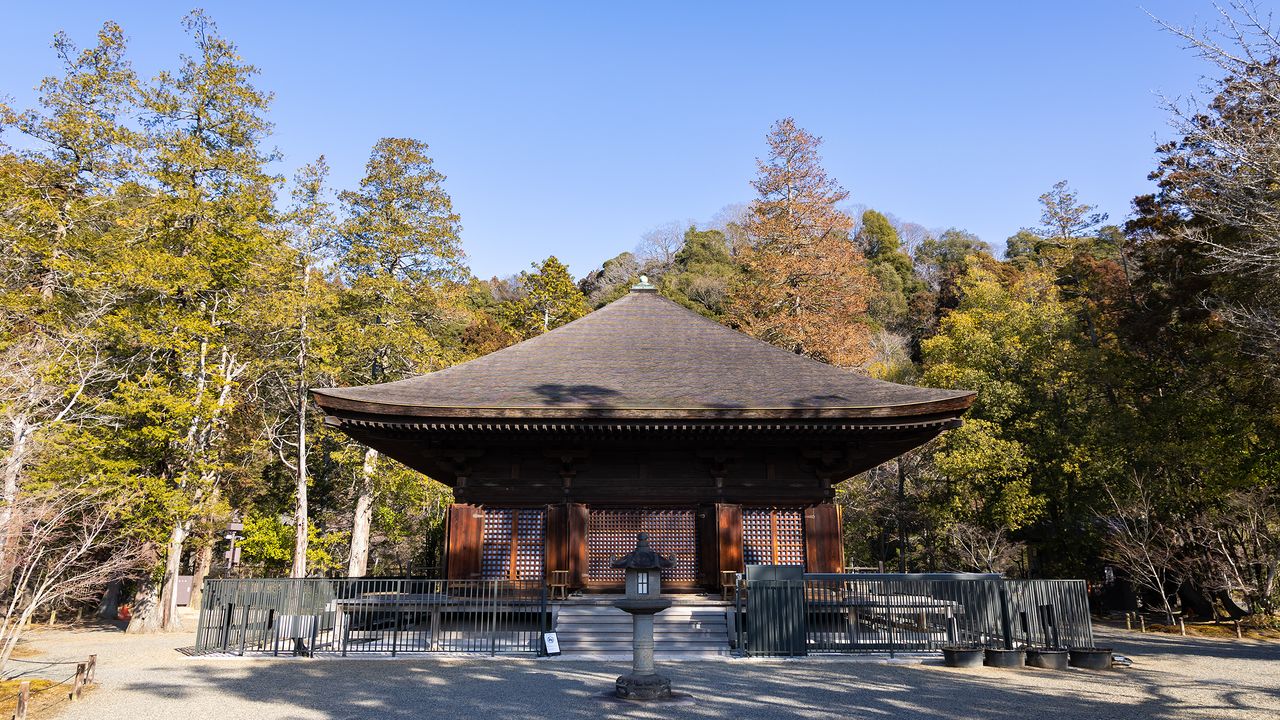
The Buddhist prayer hall Shiramizu Amidadō is one of the oldest structures in eastern Japan. Designated a national treasure, it stands in the grounds of the temple Ganjōji, in the southernmost part of Fukushima Prefecture. The hall was erected in 1160 by Tokuhime, widow of local feudal lord Iwaki Norimichi, in his memory.
The walls of the prayer hall were once adorned with vibrantly colored murals of flowers blooming in paradise. While only faint outlines of the murals remain today, the principal Buddhist image of the Amida triad, an important cultural property, occupies the space, as it has since ancient times. Paired with Aji Pond, which encircles the site to the south, east, and west, the hall constitutes a Pure Land garden representing a paradise on earth. Created in the garden style popular among the Kyoto aristocracy toward the end of the Heian period (794–1185), it is surprising to many visitors that such a splendid garden was built in Fukushima, so far away from the imperial capital.
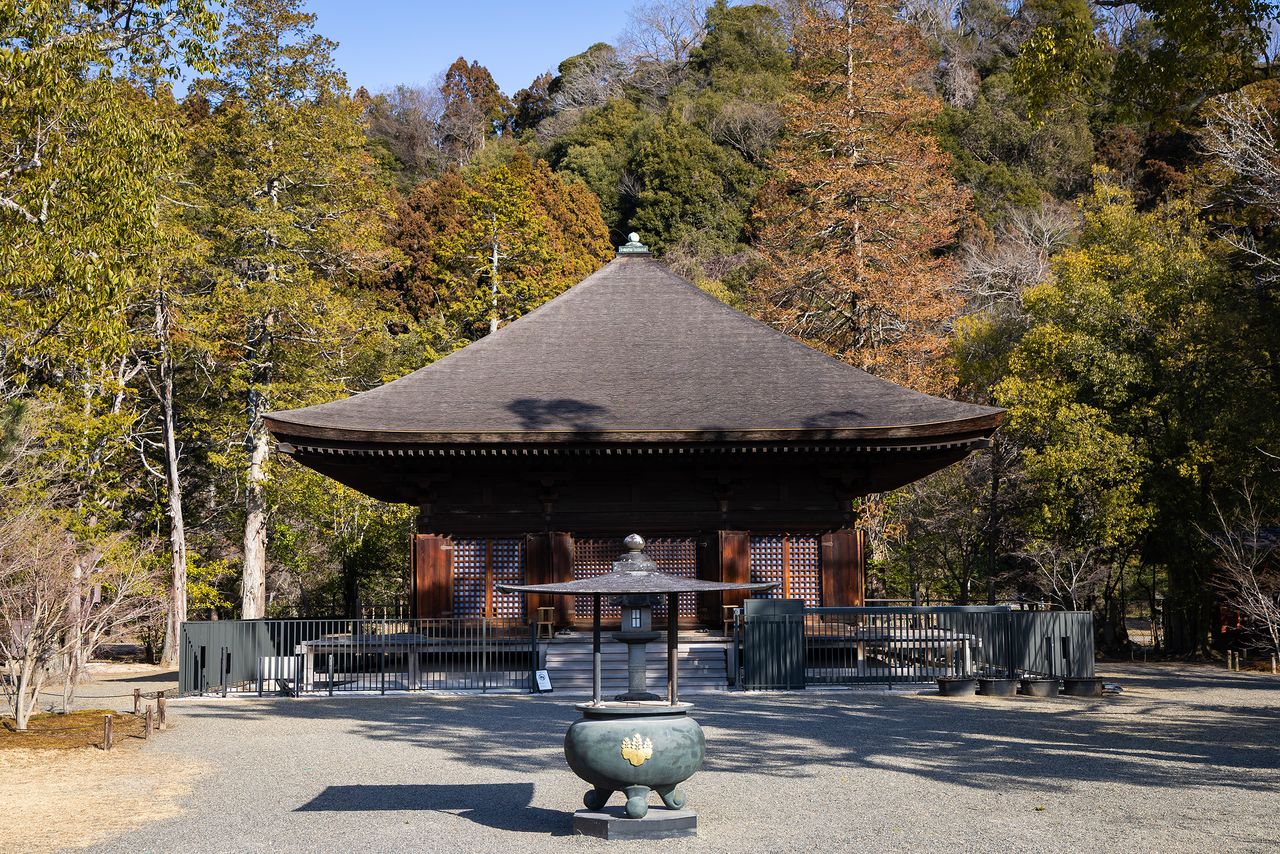
After being designated a national treasure in 1952, the Amidadō’s roof was replaced with kokerabuki, thin layers of wood shingles, which is the same material used when the structure was built. (© Nippon.com)
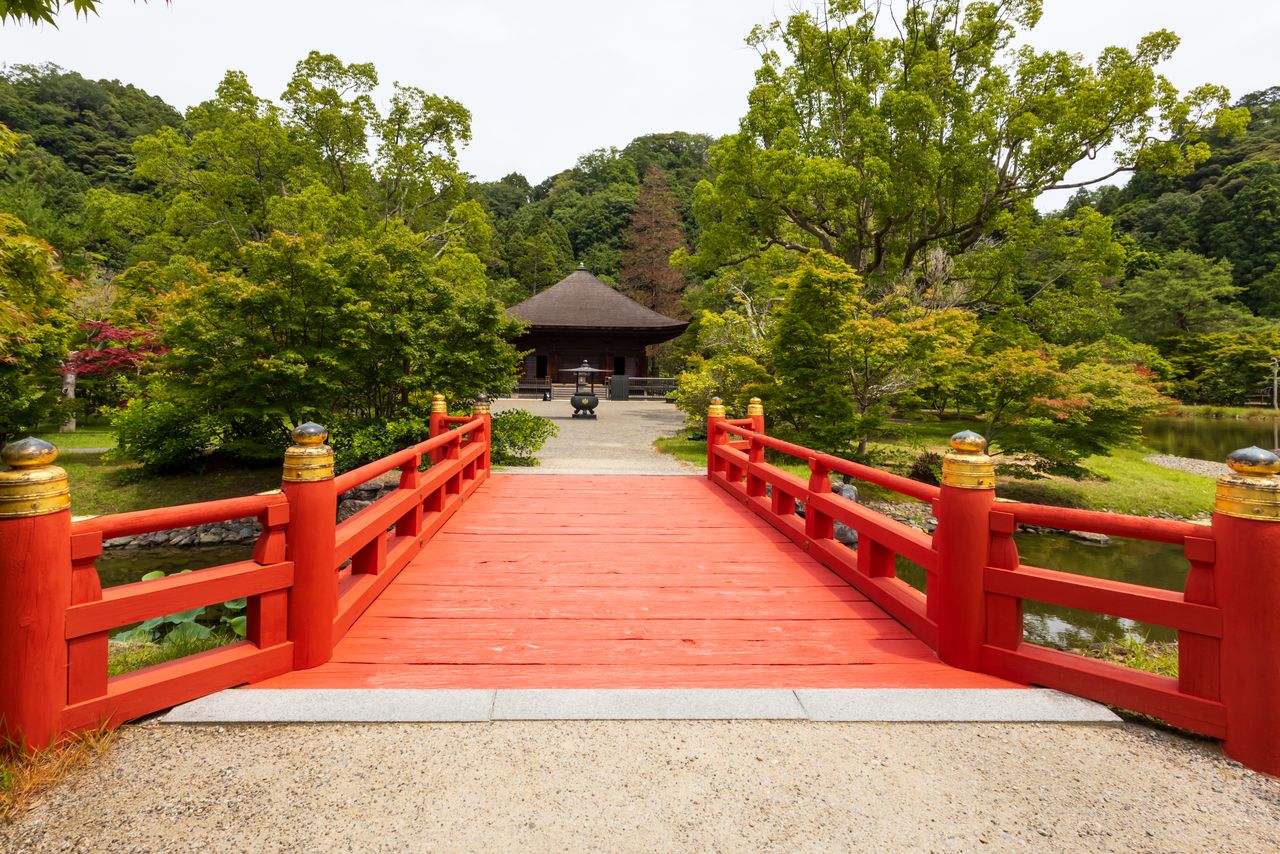
This bridge represents passing from the everyday world to the Pure Land. (© Nippon.com)
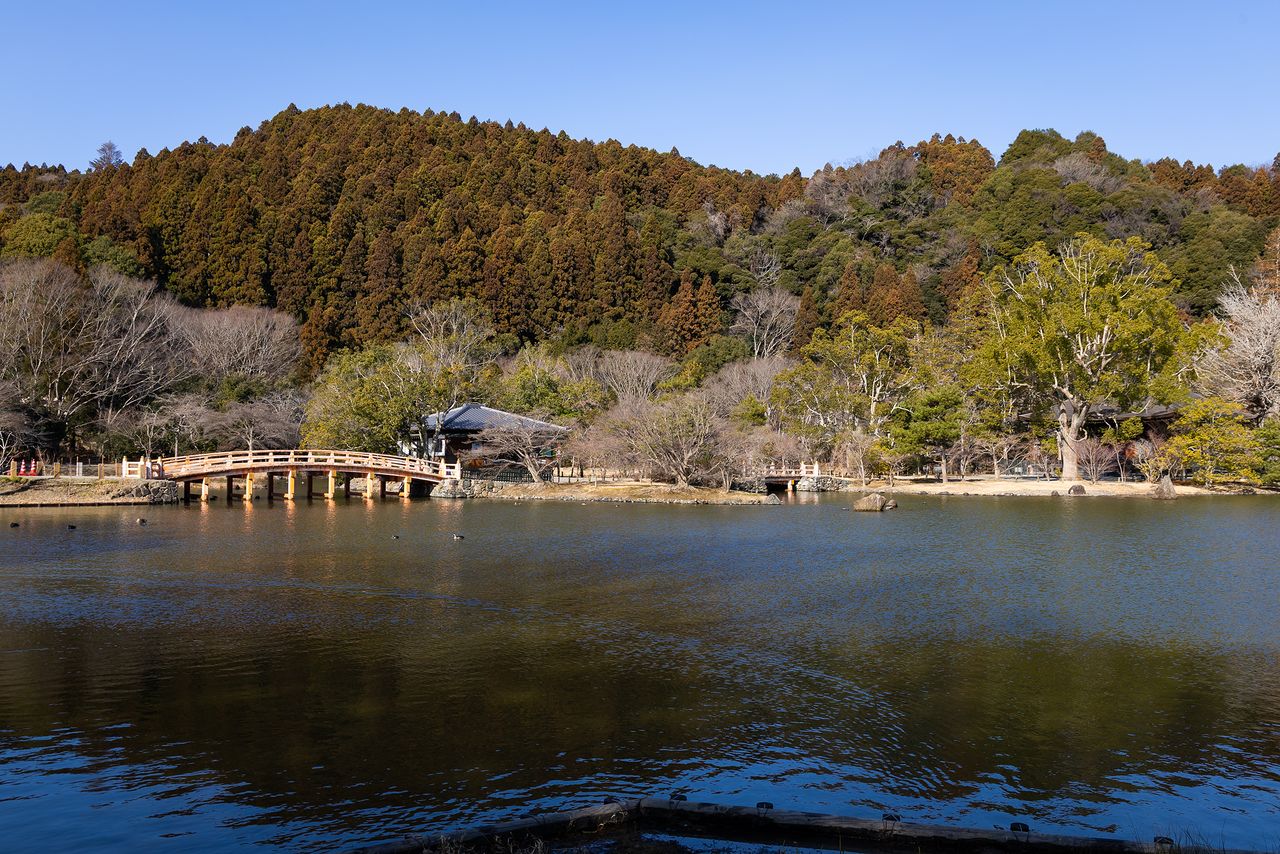
The hills rising behind the temple are an example of the shakkei “borrowed landscape” technique. (© Nippon.com)
Tōhoku is also home to Chūsonji, known for its Konjikidō Hall, and Mōtsūji, which features a magnificent Pure Land garden. These two famous twelfth-century temples, located further north in Iwate Prefecture, are recognized by Japan for their cultural and historical value and are part of the World Heritage site Hiraizumi, which was once a major regional center. Konjikidō Hall, erected by Tokuhime’s father, local ruler Fujiwara no Kiyohira, is the oldest structure in the region. The Amidadō, which Tokuhime built to remember her late husband, was likely inspired by the construction techniques and garden layout of her native Hiraizumi.
Changing in tune with the seasons, the garden is an oasis of water and greenery that refreshes the spirit of all who gaze upon it, leaving them with the memory of long-ago people who dreamed of a paradise on earth.
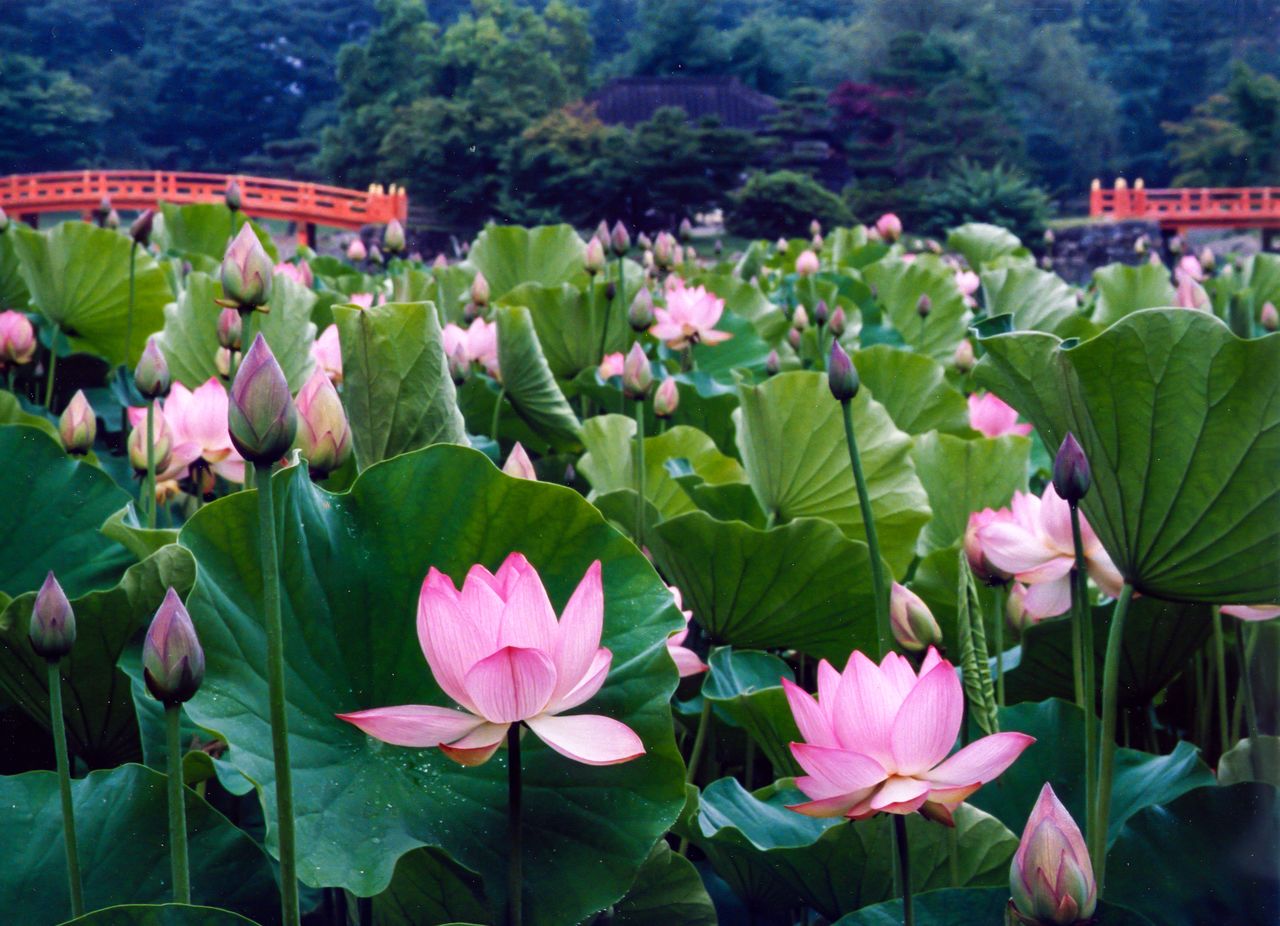
Lotus flowers blooming in high summer. (Courtesy Ganjōji)
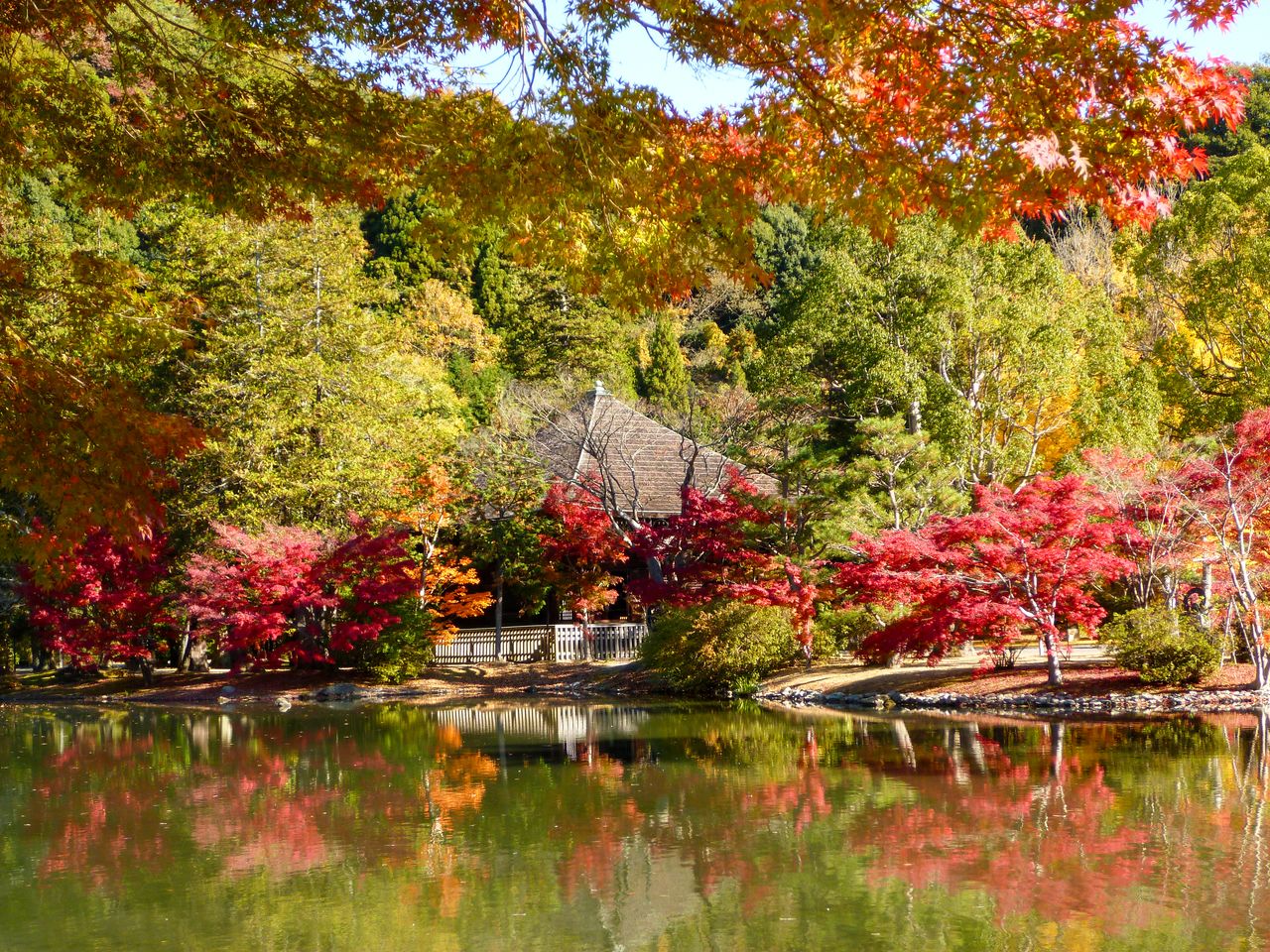
Colorful autumn foliage is reflected in Aji Pond. (Courtesy Ganjōji)
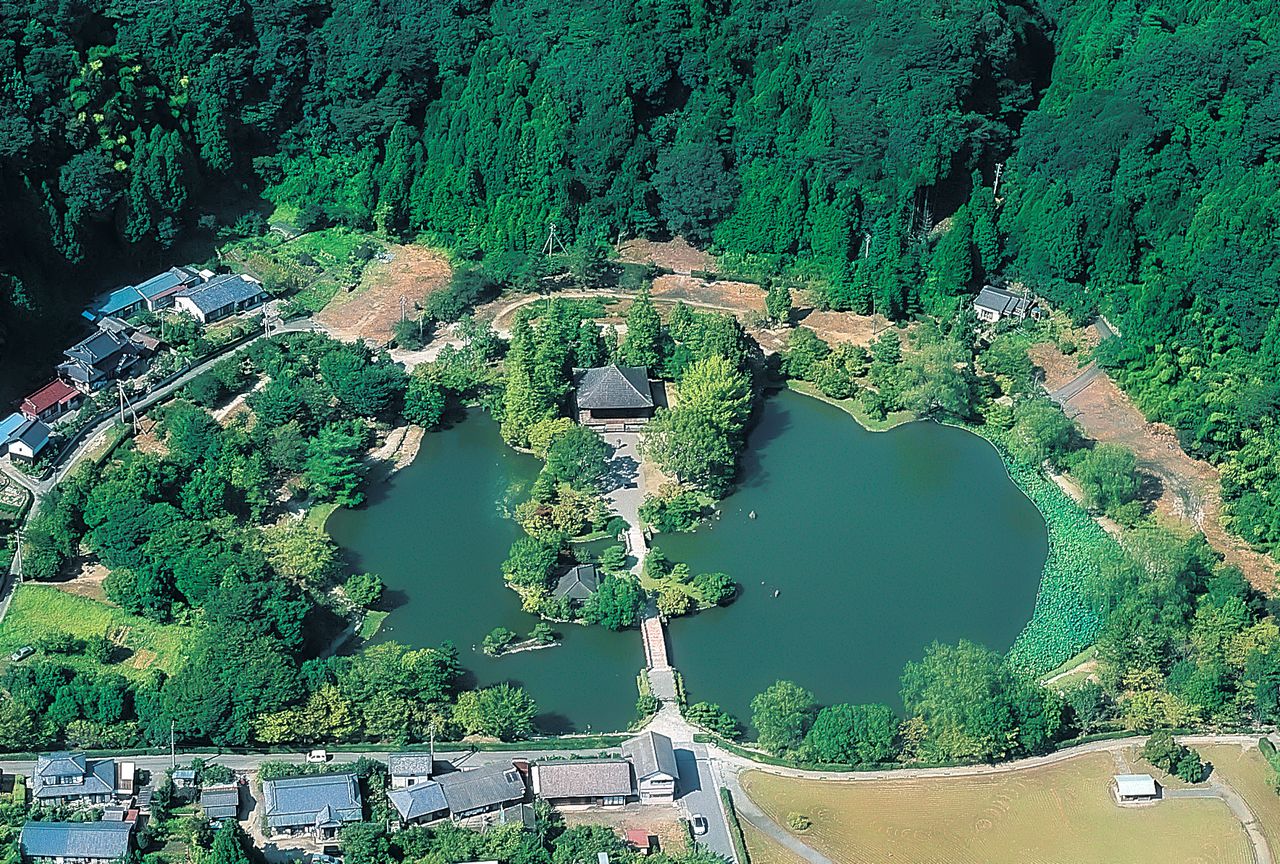
The Pure Land garden, restored in the 1970s, is a nationally designated historic site. (Courtesy Ganjōji)
Shiramizu Amidadō (Ganjōji)
- Address: 221 Hirohata, Uchigōshiramizu-machi, Iwaki, Fukushima
- Hours: 9:00 am–4:15 pm (until 3:45 pm from January through March)
Last admission is 30 minutes before closing. - Closed: Vernal and Autumnal Equinox national holidays; August 12–18; December 20–31; and occasional temporary closure days
- Admission: Adults ¥500; elementary school students ¥300
See the official website for more details: http://shiramizu-amidado.org/ (Japanese)
(Originally published in Japanese on August 23, 2026. Reporting, text, and photographs by Nippon.com. Banner photo: Shiramizu Amidadō. © Nippon.com.)