A New Stage in European Security Cooperation? Britain, France to Coordinate Nuclear Operations
Politics- English
- 日本語
- 简体字
- 繁體字
- Français
- Español
- العربية
- Русский
Declining Confidence in the US “Nuclear Umbrella”
Since the formation of NATO at the beginning of the nuclear age, Europe has traditionally relied solely on American “extended deterrence” against the Soviet, and later Russian, nuclear arsenal. European nations, however, are quickly losing confidence in the reliability of this “nuclear umbrella” and looking at other options for deterrence against nuclear threats. This is not only due to repeated Russian nuclear threats against European countries supporting Ukraine but is also an outgrowth of the lack of concern for European defense in US President Donald Trump’s second administration and its growing disregard for alliances globally.
French President Emmanuel Macron initially took the lead in pushing for a more proactive European approach to nuclear deterrence by suggesting enhanced nuclear cooperation between France and Britain. In a March 2025 address to the French nation, Macron outlined plans for enhanced security cooperation in Europe, asserting that “The future of Europe does not have to be decided in Washington or Moscow.”
President Macron also announced the possibility of France providing protection for “our allies on the European continent through our deterrence”—essentially raising the possibility of France providing its own nuclear umbrella should American extended deterrence falter. Macron initiated consultations in June, the same month British Prime Minister Keith Starmer released his government’s Strategic Defense Review, which positioned London to take on “more responsibility for European defense” based on a “NATO First” approach.
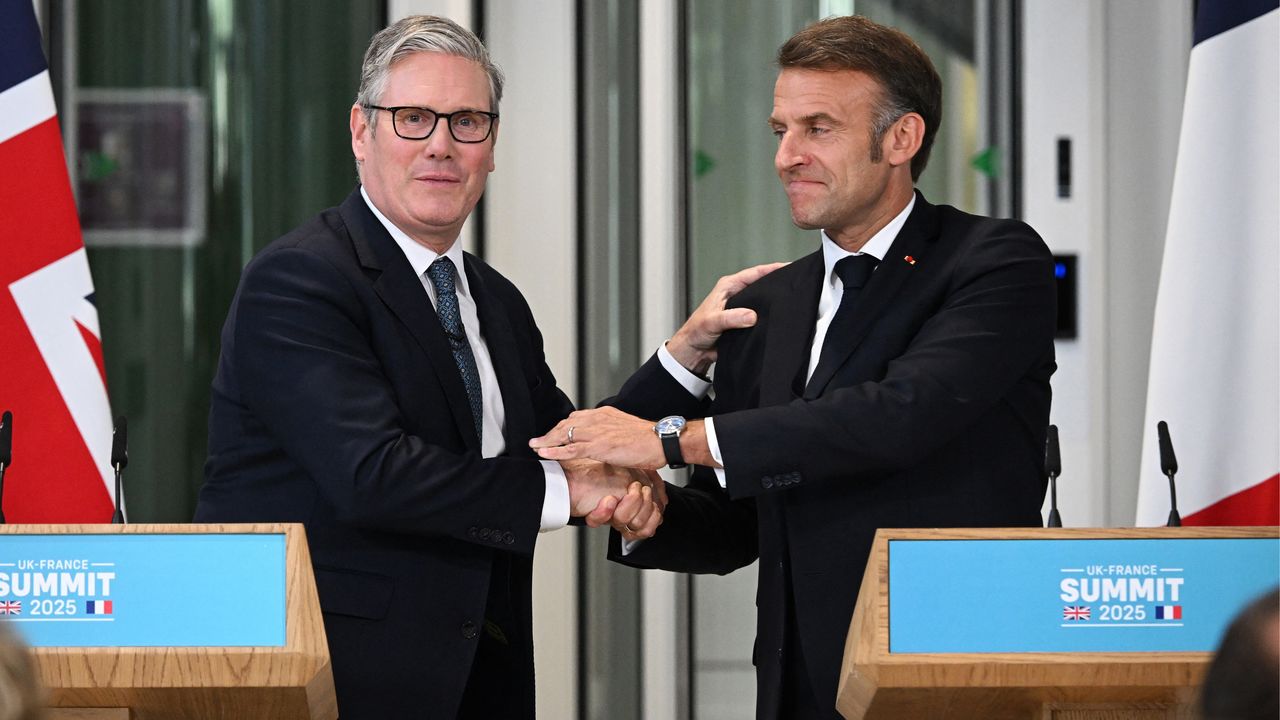
On July 10, Prime Minister Starmer met with President Macron during the latter’s visit to the Britain, and the two leaders issued the Northwood Declaration. The declaration makes clear that there is no situation where “the vital interests of either France or the United Kingdom could be threatened without the vital interest of the other also being threatened” and that “there is no extreme threat to Europe that would not prompt a response by our two nations.” The joint statement committed both sides to coordination across “nuclear policy, capabilities, and operations.”
The UK-France Nuclear Steering Group
The 2010 Lancaster House defense and security cooperation treaties first opened the door to UK-France cooperation on nuclear-related technology and research. The 2025 Northwood Declaration, however, marks the first time that both countries have committed to more than research cooperation and agreed to collaborate on nuclear operations. A UK-France Nuclear Steering Group, led by the Presidency of the French Republic and the British Cabinet Office, will be established to provide political direction with a view to deepening coordination and cooperation in the areas of nuclear operations, management, capabilities, strategy, and policy.
While both countries will retain the final say on the use of their nuclear weapons, cooperation in operations and management between London and Paris will enable the two partners to divide and deliver effective strikes against common threats, thereby enhancing deterrence.
The United Kingdom and France both operate four strategic ballistic missile submarines (SSBNs) equipped with submarine-launched ballistic missiles (SLBMs) with a range of approximately 10,000 kilometers. The United Kingdom has 225 nuclear warheads, while France possesses approximately 290. While this is fewer than the approximately 4,000 to 5,000 warheads possessed by the United States and Russia, both countries collectively could still inflict substantial damage on any adversary threatening their existence.
Although the Northwood Declaration itself avoided naming specific countries, France’s most recent National Strategic Review, released on July 14, clearly identified Russia as the main threat to European security and “the main and lasting threat to the interests of France and its allies.” This makes it clear that the nuclear focus of the enhanced UK-France alliance is Russia and the Vladimir Putin regime.
Germany’s Cooperation with Britain and France
Amidst increased dialogue on coordinating nuclear operations, Germany, a non-nuclear weapons power, is also pursuing strengthened ties with Britain and France. In May, President Macron invited German Chancellor Friedrich Merz to Paris for talks, where they confirmed their commitment to France and Germany leading greater European security independence. The two leaders also agreed to establish a French-German defense and security council tasked with coordinating operational responses to “common strategic challenges.”
Later in July, Chancellor Merz also visited Britain and signed the first bilateral defense treaty between Germany and Britain since the end of World War II. This treaty clearly commits London and Berlin to mutual security assistance should the other be attacked, while also committing both sides to enhanced trilateral cooperation with France.
During his visit to France in May, Chancellor Merz purportedly raised the issue of greater nuclear cooperation between Britain and France out of concern that the Trump administration will neglect its alliances. All three countries are leading members of NATO and are all already protected by NATO’s mutual defense obligations. However, by deliberately pledging trilateral coordination and cooperation alongside their NATO commitments, the three capitals are signaling their willingness to respond to any American security distancing from or abandonment of Europe.
Trilateral Coordination Will Remain a Challenge
If these three European powers truly take the lead in advancing a European “nuclear umbrella” concept, it would mark a historic turning point not only in Europe’s nuclear deterrence posture but in NATO’s own history. Indeed, the Putin administration has strongly opposed this coordination, calling it a serious threat.
It is important to remember that France currently does not participate in the Nuclear Planning Group, a body comprised of defense ministers that coordinates the NATO alliance’s “nuclear sharing.” This reflects France’s long-standing independent stance dating back to the Charles de Gaulle era in the 1960s. Macron himself has long advocated “European strategic autonomy” as a means of keeping France at a strategic arm’s length from the United States.
By contrast, Britain, which places great importance on its “special relationship” with the United States, has historically embraced coordination with both Washington and NATO. Germany, caught between the two, has a complex relationship with the United States based on its geopolitical importance as the host nation to the majority of American troops stationed in Europe.
Working together to contribute to European peace and stability will be challenging, however. Developing a practical plan for nuclear cooperation in the event of American abandonment of Europe will require coordinating and resolving critical differences between these three countries.
The significance of the proposed nuclear cooperation is not limited to Europe. New START, the New Strategic Arms Reduction Treaty between the United States and Russia, which came into effect in 2011, is expected to expire in February next year due to the Putin administration suspending its implementation. In addition, China’s nuclear warhead stockpile is expected to reach almost the same level as those of the United States and Russia by the 2030s due to its rapid nuclear buildup. At that time, the world will enter an era of unprecedented danger, with three major nuclear powers posing an unprecedented challenge to nuclear stability instead of two.
Ultimately, the success or failure of UK-France nuclear cooperation in the context of changing nuclear dynamics in Europe and globally could have a major impact on Japan’s own nuclear security in the coming years.
(Originally published in Japanese. Banner photo: British Prime Minister Keir Starmer, at left, and French President Emmanuel Macron at a joint press conference near London on July 10, 2025. © AFP/Jiji.)