Partnering with Africa: TICAD’s Growing Role in a Shifting Global Landscape
World Global Exchange Economy- English
- 日本語
- 简体字
- 繁體字
- Français
- Español
- العربية
- Русский
A Timely, Post–Cold War Initiative
Launched in 1993, the Tokyo International Conference on African Development has been led by the Japanese government and is now co-hosted with the United Nations, the UN Development Program, the World Bank, and the African Union Commission. Since 2013, it has been held every three years, alternating between host cities in Japan and Africa.
“At the time of launch, many Western countries were showing signs of aid fatigue toward Africa,” recalls Wakabayashi Hideki, who was first secretary in charge of official development assistance at the Japanese Embassy in Washington when TICAD began. “Japan’s decision to step in was thus seen by Africa experts in the United States as a groundbreaking and timely initiative.”
Wakabayashi later became executive director of the Japan NGO Center for International Cooperation, a network of over 100 Japanese nongovernmental organizations, and now serves as its policy advisor.
Japan’s growth had stalled following the collapse of its bubble economy, but its ODA budget continued to rise, making Japan the world’s top aid donor. With the end of the Cold War, Western aid to Africa—once a battleground for proxy conflicts between East and West—began to decline, as the continent was no longer a strategic priority.
One of Japan’s key diplomatic goals was to advance UN reform and secure a permanent seat on the Security Council, and TICAD was seen as a way of building support among African nations. “Japan was also interested in securing access to rare metals. I’m sure they sensed our intentions,” Wakabayashi acknowledges, adding that Japan’s engagement was nonetheless genuinely welcomed.
African nations largely welcomed Japan’s aid, recognizing the sincerity of its approach. Japan’s ODA is guided by a request-based principle, tailoring its cooperation to the needs expressed by partner countries. Wakabayashi contrasts this with practices by other donors that have met with criticism: “We’ve made a point of responding earnestly to local requests, rather than just following directives from Tokyo, and this has been positively received. Japan doesn’t leave countries saddled with debt, nor does it bypass local businesses and workers by sending its own people. Instead, we work to embed the necessary technologies and know-how locally. This approach has been appreciated not only in Africa but across Asia as well.”
A Key Force for a Paradigm Shift
Starting in the 1980s, the International Monetary Fund and the World Bank promoted structural adjustment programs across many African nations aimed at reducing fiscal deficits, liberalizing markets, and downsizing the public sector. But these policies often resulted in increased poverty and setbacks in education and healthcare. In response, a new international agenda began to take shape—calling for debt relief and a focus on social development, including public health, education, the environment, and gender equality.
TICAD II, held in 1998, served as one of the key multilateral platforms for serious discussion of this emerging agenda, notes Inaba Masaki, co-chair of the Africa Japan Forum, which works to bring civil society voices to TICAD. These discussions eventually paved the way for the adoption of the Millennium Development Goals by the United Nations in 2001—marking a global shift from structural adjustment toward support centered on social development. “TICAD played an important role in bringing about this shift,” Inaba says.
The growth of the African economy and the emergence of a promising market prompted an evolution in TICAD as well. The theme at TICAD V in 2013 was “Hand in Hand with a More Dynamic Africa,” signaling a shift from aid to investment. For the first time, a plenary session was held for direct engagement between African leaders and representatives of Japanese businesses. That year also saw the launch of the African Business Education Initiative for Youth (ABE Initiative), which offered 1,000 young Africans the opportunity to study at Japanese universities and gain internship experience at Japanese companies.
The Impact of Neoliberalism
Since the start of the second Donald Trump administration, the United States has scaled back its commitment to international cooperation, most notably through the dismantling of the US Agency for International Development, which had long played a central role in global aid efforts. “Public health programs targeting large, impoverished populations have low market viability and rarely generate a profit,” explains Inaba, reflecting on the shifting landscape of development assistance. “Under neoliberal frameworks, though, returns are expected to exceed investment, and that has led to the notion that aid is outdated.”
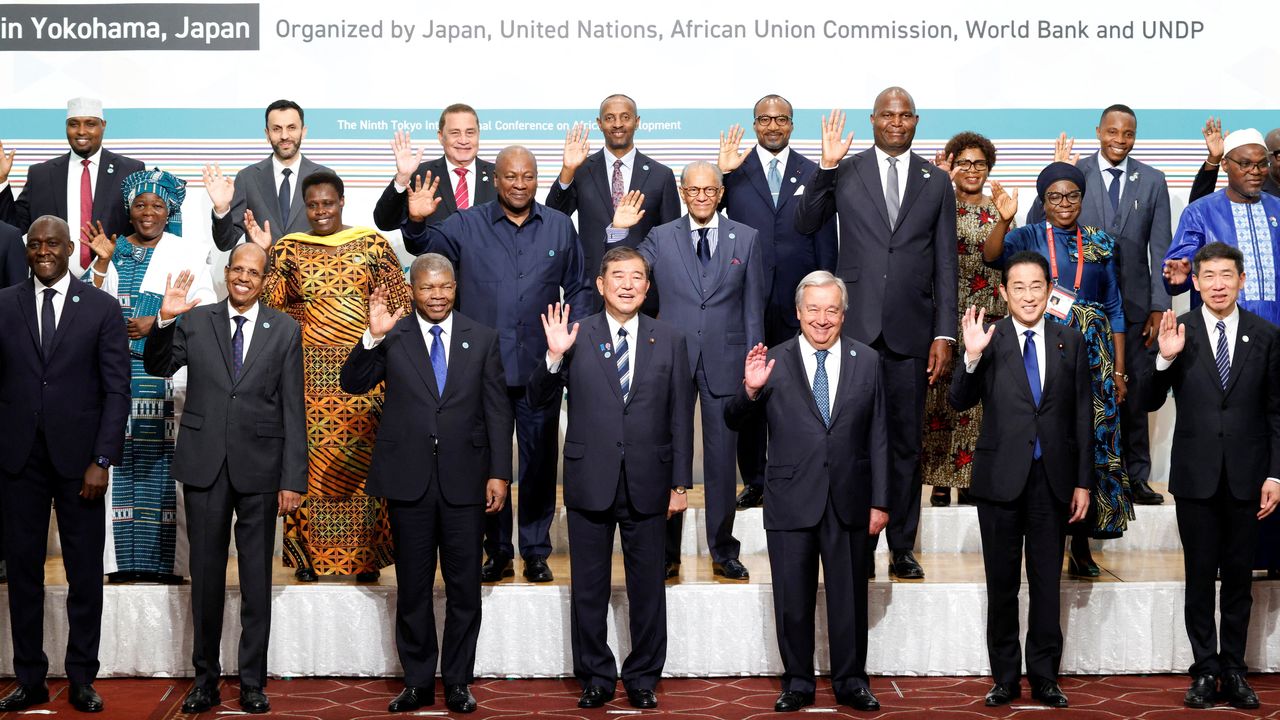
At TICAD 9, held in Yokohama in August 2025, Japan reaffirmed its longstanding emphasis on partnership with Africa and its commitment to social development. Building on its vision for a Free and Open Indo-Pacific, Japan announced the launch of the Economic Region Initiative of Indian Ocean–Africa, signaling its intent to also strengthen cooperation between African and other countries with an Indian Ocean coast.
“The United States has scaled back its involvement in international cooperation, and aid budgets in Europe are also being cut,” Wakabayashi Hideki comments. “That’s why African nations are paying close attention to Japan’s initiatives.” In the light of shifting global aid trends, the new approaches Japan is embracing in African development could once again help set the tone for the coming era.
A Surge in Youth-Led Startups
One recent trend in Japan’s international cooperation—in Africa and elsewhere—is the growing role being played by youth-led social businesses. Among them is Sunda Technology Global, a Uganda-based startup seeking to bring safe and clean water to Africa by expanding the use of a prepaid, pay-as-you-fetch water metering solution called Sunda. Founder Tsuboi Aya took a leave of absence from Panasonic in 2018 to serve as a Japan Overseas Cooperation Volunteer, working to improve well maintenance and management in Uganda.
To maintain the wells installed by aid organizations, staff went door to door to collect usage fees from each household. Some were hesitant to pay, citing concerns about how the funds were being managed and used, as well as frustration with the flat-rate system, which charged the same amount regardless of actual water usage.
Drawing on her knowledge of local conditions, Tsuboi developed a unique system that combines smart meters for remote well management with mobile-based online payment, enabling usage-based fee collection. After returning to Panasonic, she explored ways to integrate the system into the company’s business but ultimately chose to leave and launch her own venture.
Sunda Technology Global set up its own booth at TICAD for the first time during the recent meeting in Yokohama, and Tsuboi spoke at two events. “More than 200 visitors came by our booth—including ministers from across Africa, Japanese Diet members, government officials, and business representatives. More Japanese companies are beginning to enter the Ugandan market,” she notes with optimism, “and I hope this momentum will lead to greater coordination among public- and private-sector players in Japan.”
Rarely have initiatives undertaken by Japan’s Ministry of Foreign Affairs lasted more than three decades—and this, Wakabayashi Hideki notes, is what makes TICAD special: “Despite the physical distance and differences in culture, language, and ethnicity, many Japanese people are now working on the continent with a sense of affinity. We’re also seeing more visitors from Africa in Japan. In that sense, I believe TICAD has played a meaningful role in bringing Japan and African nations closer together.”
(Originally published in Japanese on September 18, 2025. Banner photo: Prime Minister Ishiba Shigeru, center in the front row, poses for a commemorative photo with the leaders of countries and organizations participating in the TICAD 9 summit, August 20, 2025, Yokohama. © Franck Robichon/Pool via Reuters.)