Takaichi’s Rise as Prime Minister Rekindles Debate on Women in the Sumō Ring
Sports Gender and Sex- English
- 日本語
- 简体字
- 繁體字
- Français
- Español
- العربية
- Русский
Aligning with Conservative Opinion
At a November 11 press conference, Chief Cabinet Secretary Kihara Minoru was asked whether Prime Minister Takaichi Sanae—the first woman to hold the office—would present the Prime Minister’s Cup at upcoming Grand Sumō tournaments.
The cup is handed to the tournament winner atop the raised ring, called the dohyō, often by a cabinet minister or deputy chief cabinet secretary. To date, no woman has ever performed the handover, owing to a Japan Sumō Association tradition that bars women from entering the ring.
Kihara said that Takaichi intends to uphold the traditions and culture of sumō, suggesting that she will not seek to enter the ring. As it turned out, the prime minister was in South Africa for the G20 summit on November 23, when the first Grand Sumō tournament of her tenure reached completion in Fukuoka. On this occasion, her advisor Inoue Takahiro presented the cup on her behalf.
Takaichi belongs to the Liberal Democratic Party’s conservative wing and has emphasized traditional values regarding gender and family. Her hint that she will not challenge the ban was likely a nod to conservative supporters. Still, she enjoys broad popularity as Japan’s first female leader and may eventually seek to lift the restriction if circumstances allow.
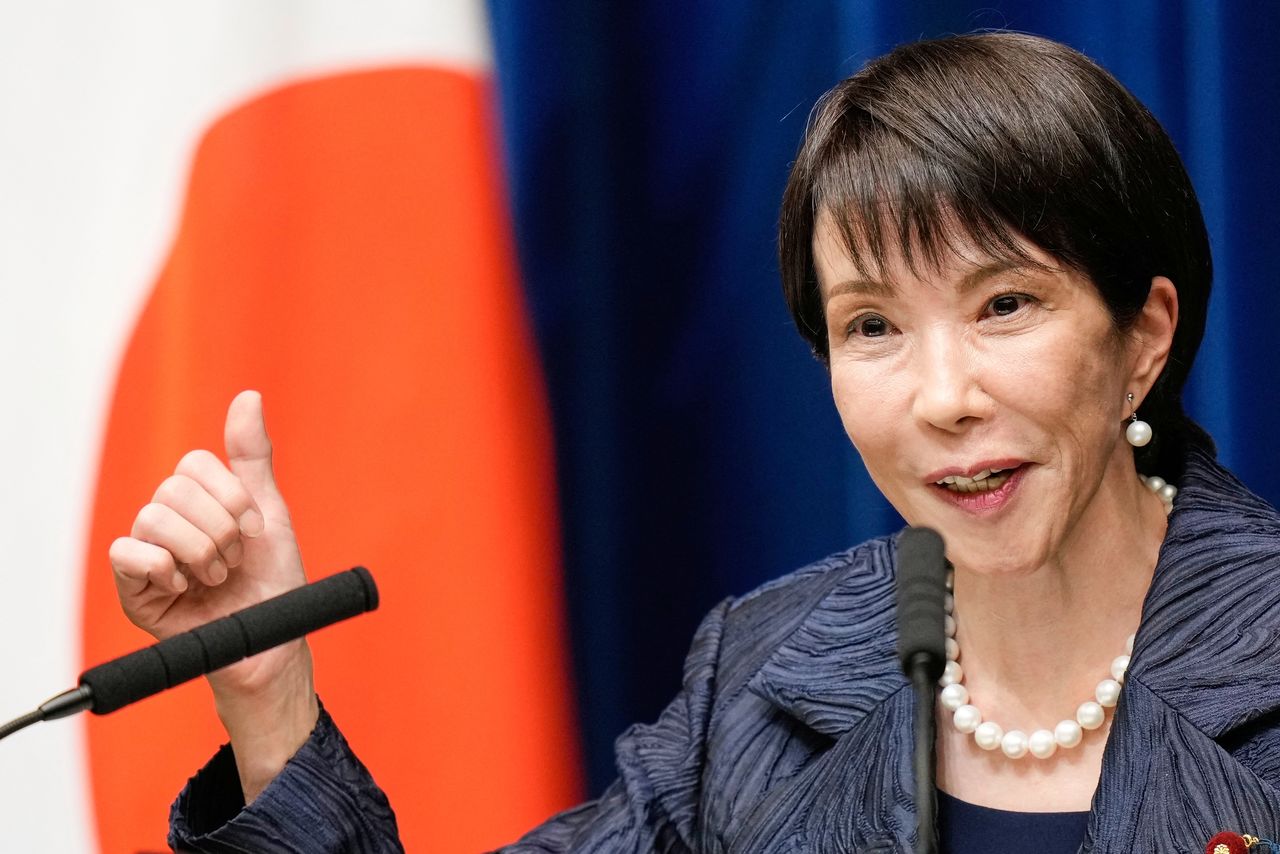
Prime Minister Takaichi at her first press conference after taking office in October 2025. (© AFP/Jiji)
The first prime minister to personally present the cup was Hashimoto Ryūtarō at the grand tournament in January 1996. Among other occasions through the years, Koizumi Jun’ichirō handed it to yokozuna Asashōryū at the November 2005 basho in Kyūshū. Most recently, Ishiba Shigeru made a presentation at the January 2025 tournament.
Decades of Controversy
The question of whether women should be allowed into the “sacred” dohyō has been debated for decades, even as Japan moves toward greater gender equality.
In 1990, Chief Cabinet Secretary Moriyama Mayumi offered to present the cup on behalf of Prime Minister Kaifu Toshiki, but her request was denied by the Japan Sumō Association. Earlier, in 1978, when Moriyama was director-general of the Women and Minors Bureau at the former Ministry of Labor, she had protested the exclusion of schoolgirls from the ring during the finals of a children’s sumō tournament, held at the JSA-owned Kuramae Kokugikan in Tokyo.
In 2000, Osaka Governor Ōta Fusae—the first woman to hold that post—was barred from presenting the Governor’s Prize atop the dohyō at the Osaka basho. Despite repeated appeals over her two terms spanning eight years, the JSA did not relent.
Perhaps the most controversial incident occurred in 2018 during a regional tour in Maizuru, Kyoto Prefecture. When Mayor Tatami Ryōzō collapsed while speaking on the dohyō, female nurses rushed to his aid, but a referee repeatedly announced over loudspeakers that women should leave the ring and that men should replace them. The public backlash was swift and fierce, forcing the JSA to apologize for its “inappropriate response to a life-threatening situation.”
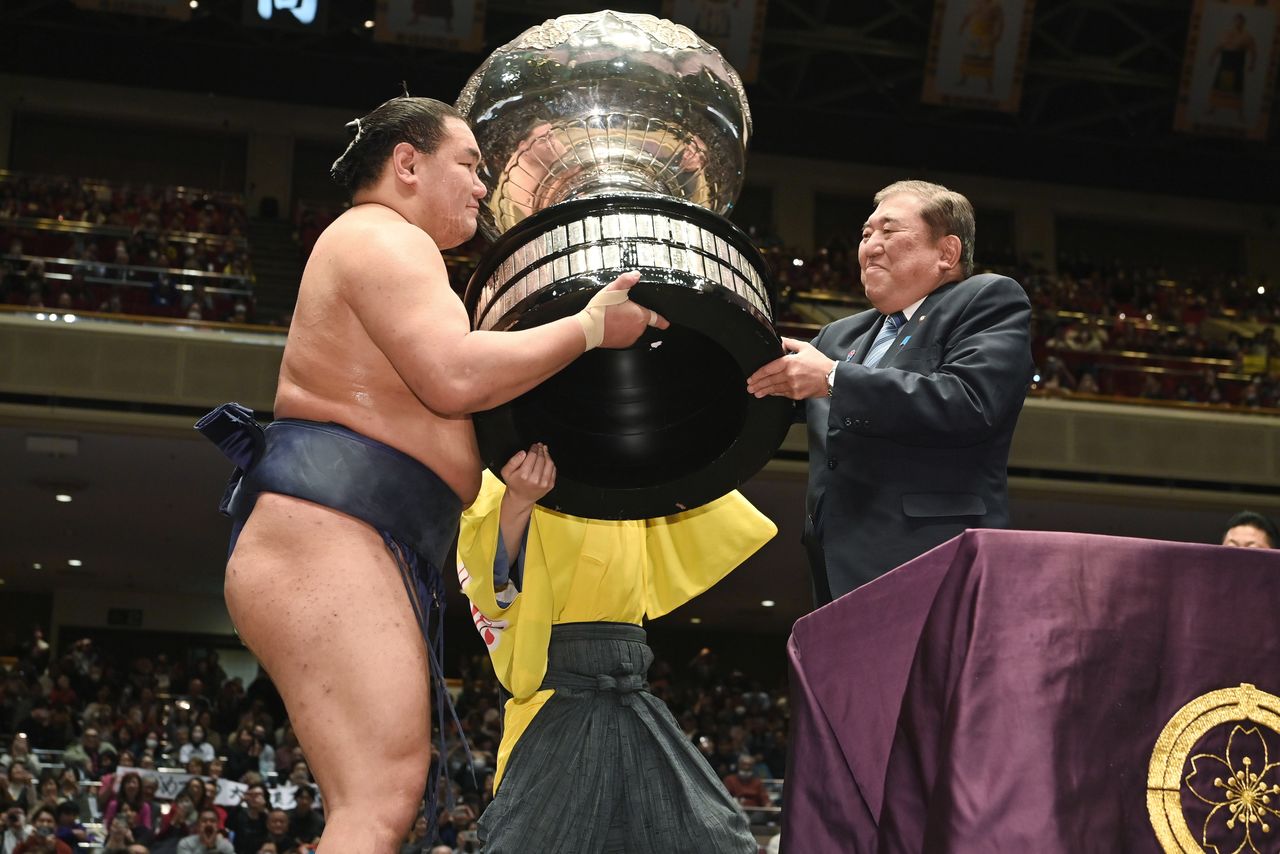
Ishiba Shigeru presents the Prime Minister’s Cup to tournament champion Hōshōryū in January 2025. (© Jiji)
The Dohyō as Sacred Ground
Sumō traces its roots back over 1,300 years to Shintō rituals praying for bountiful harvests and national peace. But why should women be barred from the ring?
Screenwriter and sumō aficionado Uchidate Makiko, in her 2006 book examining the issue, described the dohyō as a sacred space demarcated by rice straw bales. A former member of the Yokozuna Deliberation Council, Uchidate earned a master’s degree from Tōhoku University with a thesis highlighting the religious aspects of sumō and the view of the dohyō as sacred ground.
In religious contexts, holy spaces are separated from the profane by a boundary called kekkai, shielding it from ritual pollution or misfortune. At Buddhist temples, certain areas are reserved for priests, and in Japan’s mountain ascetic traditions, some peaks are off-limits to women. The dohyō, too, is considered a site of spiritual discipline, where the presence of women is thought to be a distraction for wrestlers.
Underlying this view is the ancient belief that women are “impure” due to menstruation and childbirth. Uchidate cites the Buddhist scripture known as the Blood Bowl Sutra, which teaches that women, regardless of social status, are condemned to a hell of blood unless saved through recitation of the sutra. This aversion to blood-based impurity is echoed in Shintō as well, and some argue that such beliefs have shaped sumō’s rituals.
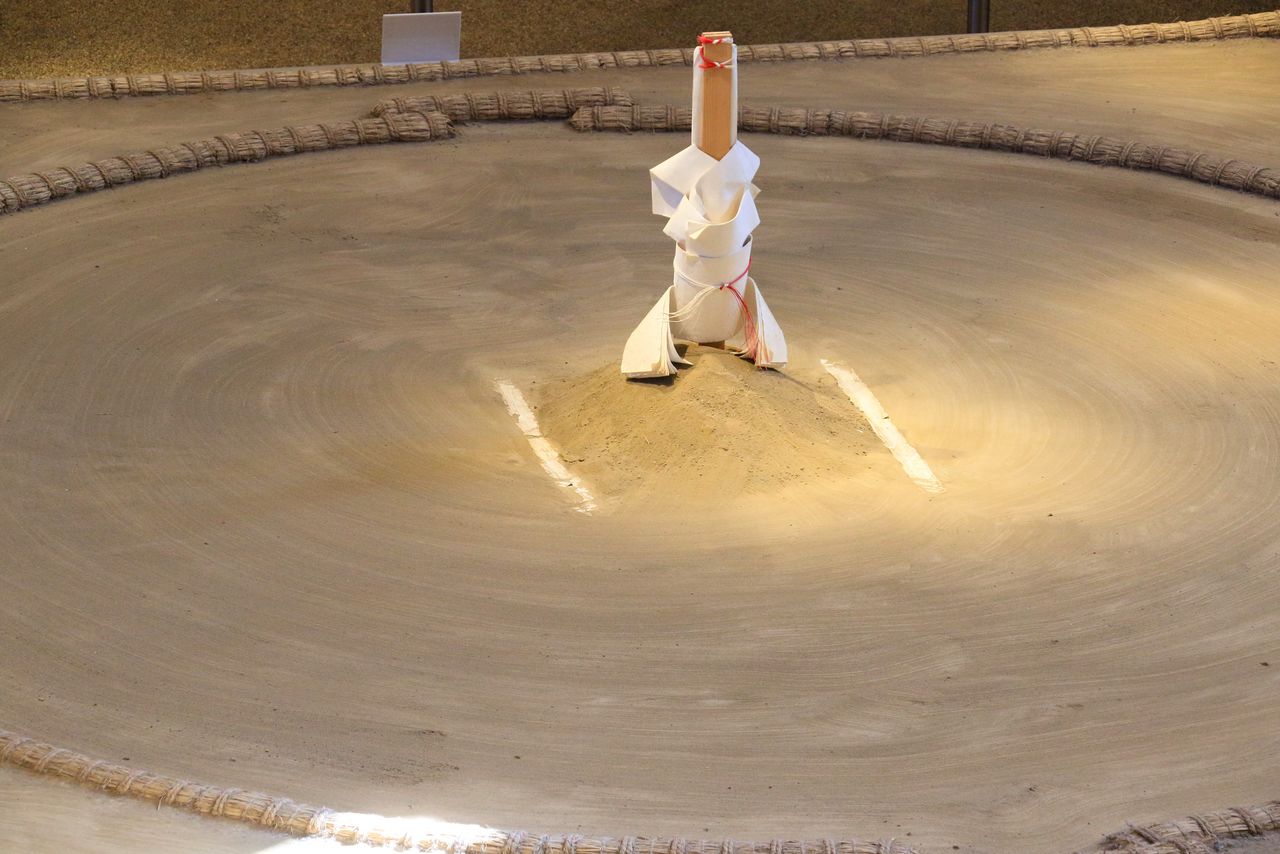
The dohyō, marked by straw bales, reflects sumō’s Shintō ritual origins. (© Pixta)
JSA Rejects “Impurity” Argument
After the 2018 Maizuru incident, JSA Chairman Hakkaku (former Yokozuna Hokutoumi) rejected the idea that women are barred due to impurity: “References to sumō as sacred ritual have led some to conclude that the association upholds ancient Shintō beliefs that view women as impure. This is a misunderstanding,” he said.
He emphasized three points: Sumō originated as a sacred ritual, the JSA seeks to preserve sumō’s traditional culture, and the dohyō is a sacred space and training ground for male wrestlers.
Before each tournament, the dohyō is consecrated in a ceremony where offerings of rice, kelp, dried squid, and chestnuts are buried in the center. After the final day’s awards ceremony, newly recruited wrestlers toss the referee into the air in a “god-sending” ritual, symbolizing the ring’s role as a temporary abode for deities during the competition.
Hakkaku added that sumō’s ritualistic elements are rooted in folk beliefs—prayers for a good harvest, for example—and that wrestlers and coaches are free to hold their own religious views. “The association is tolerant when it comes to religion,” he said.
He also quoted former JSA board member Isenoumi (former wrestler Kashiwado), who once told Moriyama: “This is not discrimination against women. If it’s being perceived that way, that’s a serious misunderstanding. The dohyō is sacred ground where wrestlers, who are naked except for a mawashi, do battle. Only men have competed in grand sumō, and this tradition merits preservation.”
In March 2019, the JSA established a committee—including outside experts—to examine the prohibition against women entering the dohyō. The decision was prompted by a request from Nakagawa Tomoko, then mayor of Takarazuka in Hyōgo Prefecture, who had been denied permission to speak from the ring during a regional tour the previous year.
Meanwhile, women compete regularly in amateur sumō and in international tournaments. Japan even has a Women’s Sumō Federation. Yet in professional sumō, women are barred from the ring—even during award ceremonies. Can such a tradition withstand scrutiny in modern society? Sumō is a spectator sport, and as a public-interest foundation, the JSA must earn public trust.
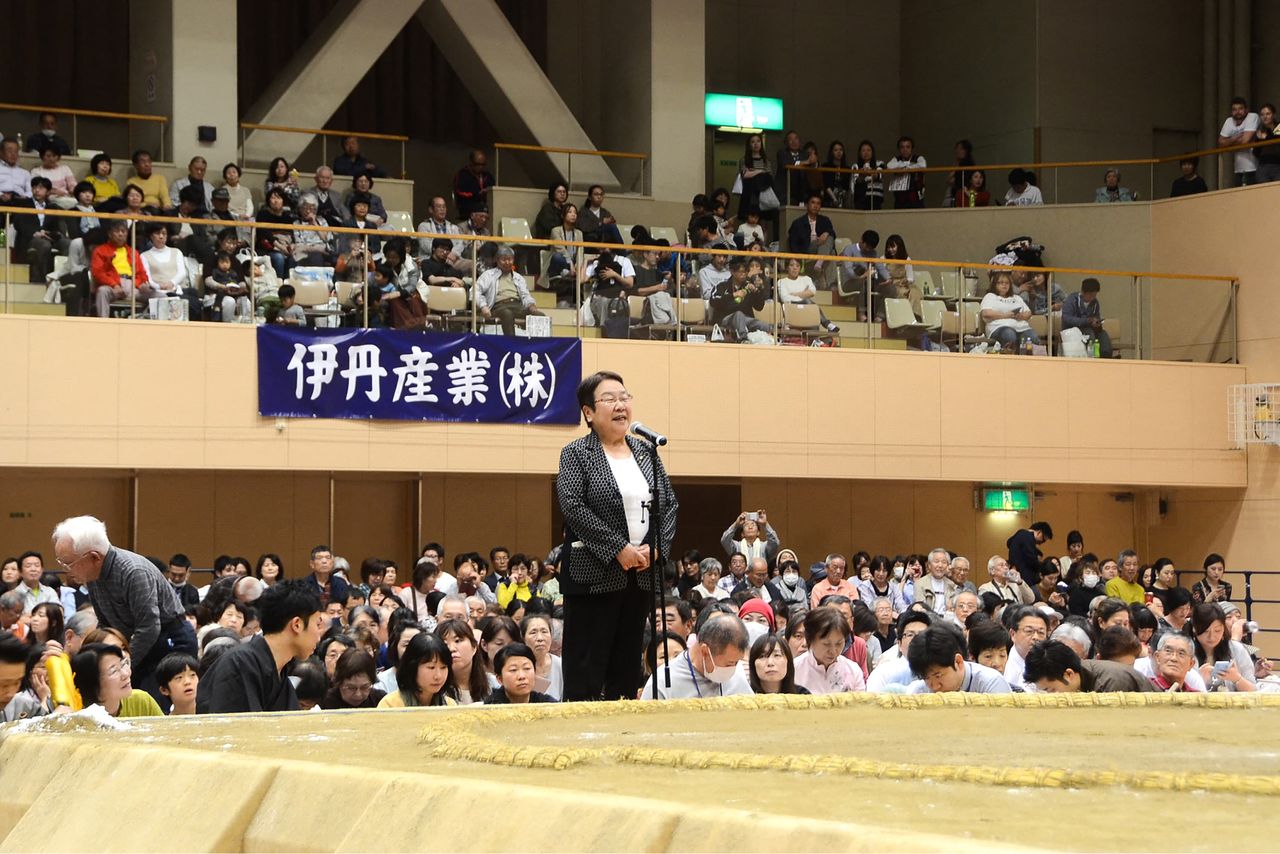
Takarazuka Mayor Nakagawa Tomoko speaks from a platform below the ring during a 2018 regional sumō tour. (© AFP/Jiji)
Parallels with Ancient Greek Games
The quadrennial Olympic Games of ancient Greece, first held in 776 BCE, were sacred festivals dedicated to Zeus. Held in Olympia, they were contested by naked male athletes, while married women were barred even from watching. Separate festivals for women, honoring Zeus’s wife Hera, were also held at Olympia at different times.
When the modern Olympics were revived in 1896, women were initially excluded from competition. Founder Pierre de Coubertin himself reportedly opposed their participation, but by 1900, women competed in tennis and golf. Gender parity was finally achieved at the 2024 Games in Paris—124 years later.
The Olympics evolved from an ancient Greek religious ritual into a global celebration of athleticism and peace. What about sumō? Is it a ritual, sport, or something in between? The debate remains unresolved, but the challenge ahead is to envision an ideal path for sumō’s evolution—one that honors its traditions while thoughtfully engaging with the realities of contemporary society.
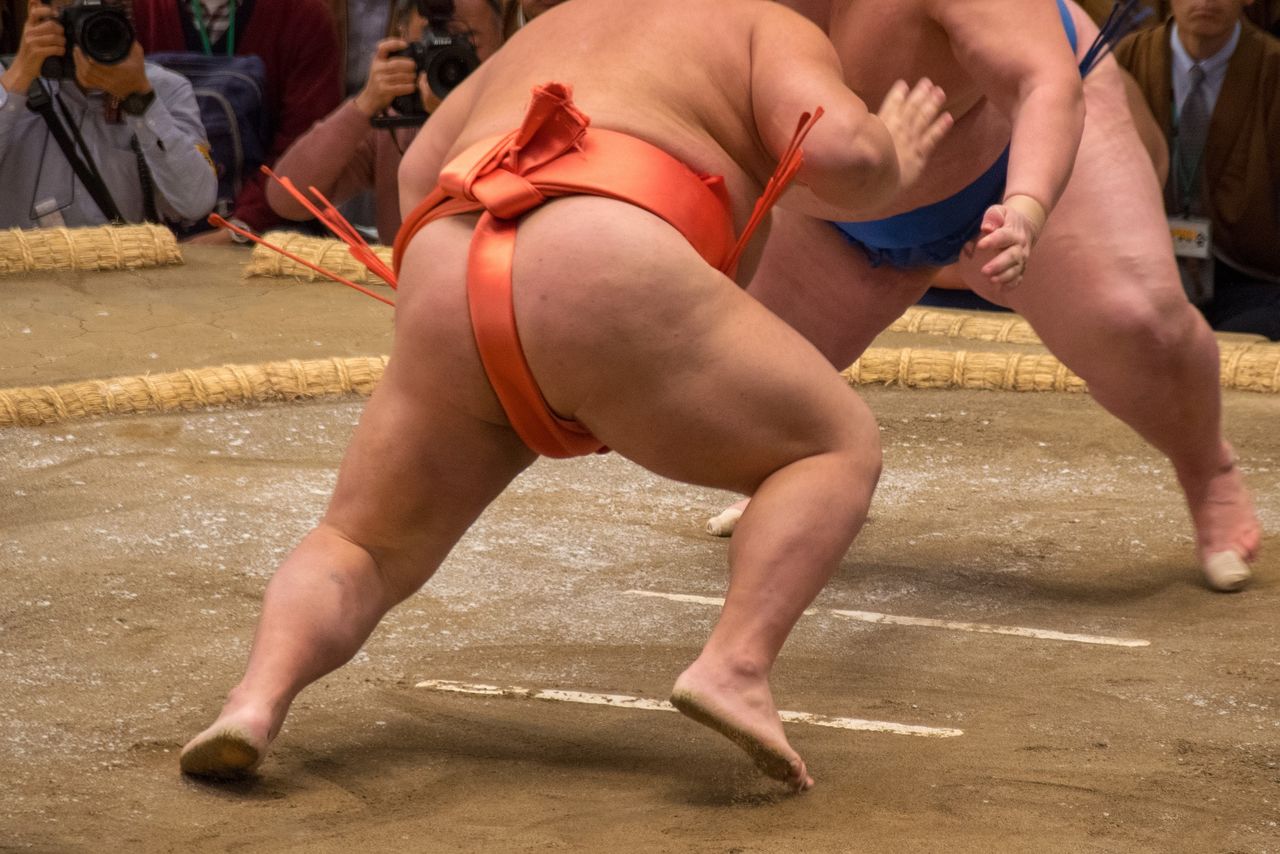
Wrestlers battle on the sacred dohyō. (© Pixta)
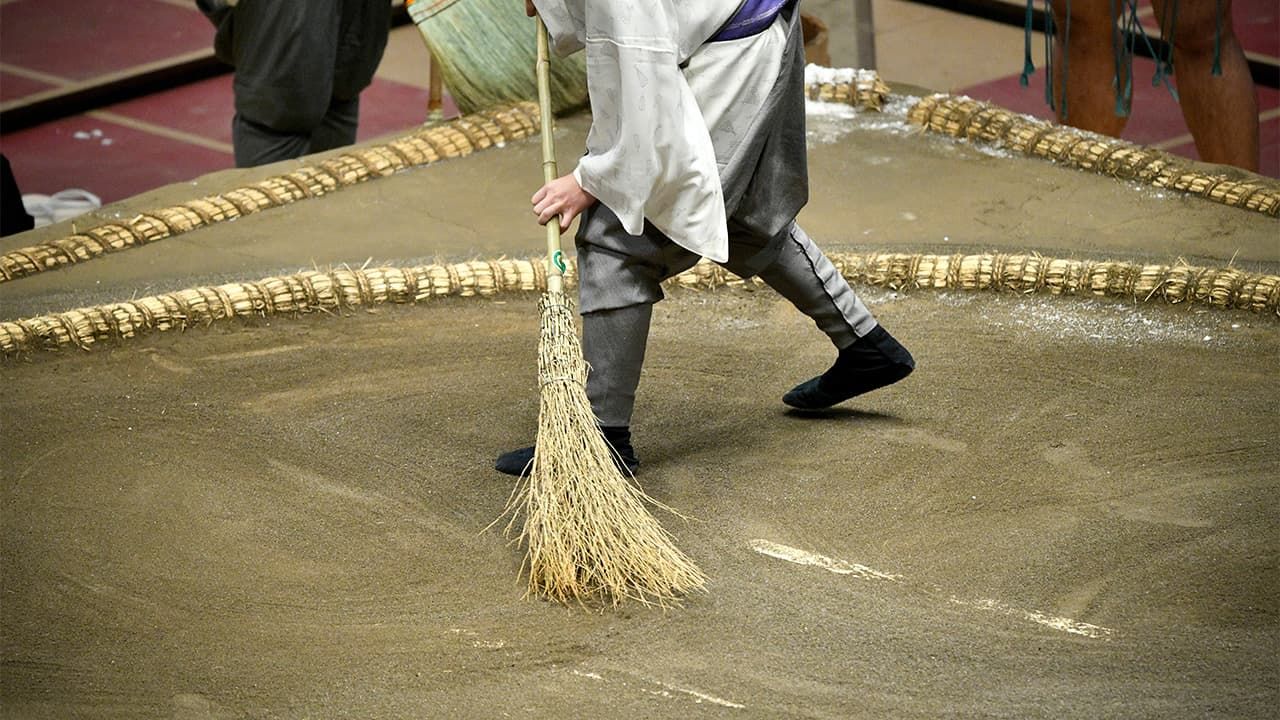
(Originally published in Japanese on November 20, 2025. Banner photo: The sumō ring is ritually purified before each bout. © Pixta.)