Diplomacy and Japan in 2026: The Year a “Plan B” is Finally Needed?
Politics- English
- 日本語
- 简体字
- 繁體字
- Français
- Español
- العربية
- Русский
The Nine Elements of Successful Diplomacy
Understanding effectiveness in Japanese diplomacy requires an appreciation of nine key elements. First, like other countries, successful diplomacy depends on finding the right balance among three “isms”: legalism, moralism, and realism. Second, skill in propagating tactical ambiguity around three “lines” is also essential: red lines, deadlines, and bottom lines. Finally, Japanese diplomacy specifically is shaped by a further three core elements that can alternatively serve as either strengths or constraints depending on global and domestic conditions: the US-Japan alliance, economic and fiscal strength, and national image. Given the ideological tensions and shifting alignments that characterized world affairs in 2025, these three elements arguably served as constraints.
For a successful 2026 on the foreign policy front, Prime Minister Takaichi Sanae will have to remain strategically sensitive to these nine elements while taking a proactive and engaging approach to summit diplomacy.
The Three “Isms” Pulling in Different Directions
Famous Cold War–era American diplomat George Kennan once described the three “isms” of diplomacy as legalism, moralism, and realism.
The notions of legalism and moralism often carry with them pejorative meanings when applied to international politics, suggesting a tendency to navel gaze—legalism implies a fixation with formal aspects of law, while moralism implies an obsession with strict adherence to ideals. However, they also point to the value placed on the “rule of law.” This entails upholding international norms and laws, the laws of war, and humanitarian law, thus clearly stating that lawlessness will not be tolerated.
In 2025, much blood was shed due to the assertion of personal interests, preconceptions, and likes and dislikes of those in power, and the precepts of realism were conspicuously deployed to justify the actions of the powerful. US President Donald Trump’s reappearance on the international stage as someone hostile to legalism and moralism, dismissing them as “flowery words,” accelerated this trend.
How countries including Japan balance these three “isms” pulling them in different directions will determine the course of global affairs. Will we head toward a world where “might makes right” or those with economic power prevail? Or can we tack back toward an international order that encourages participation by many nations and the achievement of consensus and adherence to fair rules?
The Shifting Location of “Three Lines”
In 2025, the already significant divide widened between the democratic camp, the authoritarian camp, and the Global South positioned between these two sides. Japan is in a unique position. Despite its declining trajectory, based on its population size and economic influence, it is still regarded as a major power. It is therefore notable that Japan remains committed to its historical preferences for international cooperation. Prime Minister Takaichi’s initiatives could therefore be decisive. Nevertheless, given these widening divisions, the Japanese leader’s communication skills will surely be put to the test.
All this said, being flexible and even ambiguous regarding your own nation’s “three lines”—red lines, deadlines, and bottom lines—has traditionally been considered strategic wisdom. It broadens options and avoids unnecessary conflict.
Generally speaking, major powers can use flexibility and ambiguity to their advantage, including in their pursuit of a stable environment. However, the current global situation is being shaped by powers lacking such wisdom. The Trump administration has consistently prioritized deadlines and bottom lines in its tariff policies and ceasefire negotiations surrounding international conflicts, including Russia’s invasion of Ukraine. The substance of these policies has been treated as a secondary consideration. Russian President Vladimir Putin also draws unilateral red lines, making compromise impossible.
This trend is also rearing its head in Asia. China has condemned Prime Minister Takaichi’s parliamentary remarks on whether a Taiwan contingency constituted a “survival-threatening situation” for Japan, describing them as “crossing a red line.” This has created a situation where a prolonged deterioration in Japan-China relations seems unavoidable. Suggestions by analysts that the Xi Jinping administration has a deadline for achieving unification with Taiwan by 2027 are also exacerbating regional tensions and cultivating distrust. Within Japan, hardline conservatives are also agitating for the new administration to take a tougher stance and draw Japan’s own red lines with China.
The problem is that when a line is drawn clearly for a country, it will tend to escalate the situation right up to that line, believing it is permitted to do so. It may even test the line, and if punishment is lenient and tolerable, further escalation may follow, ultimately leading to the original line being redrawn. The history of North Korea’s nuclear issue is a classic example of this dynamic: While the United States declared nuclear testing a red line, it failed to respond decisively when Pyongyang pushed forward on the program, with the long-term consequence being that North Korea is now a de facto nuclear power.
A situation where nations are all constantly drawing and redrawing lines as they seek to challenge each other does not constitute deterrence but may lead to a cycle of steady deterioration. Japan’s traditional preference for tactical ambiguity has been crucial for managing and mitigating regional tensions. It is worrying that Prime Minister Takaichi appears to be moving in the exact opposite direction in her administration’s strategic messaging.
The Significance of “Minilateralism”
The three specific core elements of Japanese diplomacy are the US-Japan alliance, economic and fiscal strength, and national image. Traditionally, these have been Japan’s diplomatic strengths. Recently, however, they appear to have become limiting factors.
The Trump administration’s isolationist and erratic behavior has enhanced calls in Japan for a “Plan B” for the US-Japan alliance. Such a plan would move Japan away from excessive dependence on the United States by deepening cooperative ties with “quasi allies” and a small number of like-minded nations through “minilateralism.” Calls for deepening this approach could grow even louder in 2026.
The view that the US-Japan alliance is the cornerstone of Japanese diplomacy and security is shared by many politicians across party lines in Japan. Precisely for this reason, designing and implementing a Plan B is essential—not just as a potentially needed alternative, but also as a way to maintain international conditions that would enable the United States to return to something like its traditional strategic regional role in the future. At the very least, hardline conservatives within the Liberal Democratic Party must recognize the limitations of their mindset that treats the US-Japan alliance as sacrosanct and how it constrains Japanese diplomatic initiatives. Thankfully, at international conferences, Prime Minister Takaichi’s energetic efforts to engage with various national leaders reflects a conscious effort to broaden Japan’s diplomatic horizons, arguably at odds with her image as a hardline conservative who prioritizes the alliance above all else.
In fiscal policy, as government spending expands through economic stimulus measures, there is a corresponding tendency to cut funds allocated to diplomacy. One example of this is changes to official development assistance disbursement, which has been one of Japan’s postwar strengths and sources of regional influence.
It was therefore notable that, on December 6, 2025, despite strained Sino-Japanese relations following Prime Minister Takaichi’s remarks on a Taiwan contingency, representatives from China unexpectedly attended an international public health conference held in Tokyo, much to the surprise of organizers. This perhaps should not have been so surprising. China’s population is arguably aging faster and its birthrate declining more quickly than is the case for Japan. Beijing appears to have a strong interest in Japan’s public health, medical care, and long-term care insurance systems. Some voices express hope that cooperation in these fields could become the source of mutual endeavor that could mitigate tensions in Sino-Japanese relations. The sobering reality is, however, that even before the inauguration of the Takaichi administration, budgets related to international organizations and conferences focused on development cooperation were being significantly cut. This is in no small part due to the weakening yen.
Japan is showing a fresh focus of fiscal resources on strengthening its defense capabilities, but of course, defense cannot be blamed directly for the diversion of resources away from diplomacy. At the same time, we need to remember that military power is one element of diplomacy. Without an appropriate balance of the different military and diplomatic elements in fiscal policy, we may ultimately undermine the objectives we are trying to achieve.
That said, in the course of strengthening Japan’s defense capabilities, we must be careful to reinforce Japan’s postwar image as a “peace-loving nation,” avoiding any messaging open to misinterpretation by neighboring countries. Japan is surrounded by actors willing to challenge its security: Russia, which invaded its neighbor; North Korea, which is now looking to strengthen its conventional capabilities following its apparent acquisition of nuclear weapons; and China, whose maritime expansion continues unabated, as symbolized by its commissioning of another aircraft carrier. Therefore, it is more crucial than ever to make the international community understand that Japan is strengthening its defense capabilities not for the purpose of waging war, but to prevent war. Authoritarian leaders should not mistakenly believe that Japan is a “soft touch.”
Stable Political Foundation Required for Strong Diplomacy
The Takaichi administration recently announced plans to revise Japan’s three core security documents in 2026 ahead of schedule: the National Security Strategy, National Defense Strategy, and Defense Buildup Progam. Prior to this, Takaichi is also planning to revise the Three Principles on Transfer of Defense Equipment and Technology. This policy currently limits approved exports of defense equipment and technology to five categories of noncombat equipment. Changing the Japanese government’s position will likely open the door to the export of lethal weapons.
The reason for choosing the current moment for this policy change is the dissolution of the LDP-Kōmeitō political partnership. Kōmeitō had previously been cautious about loosening restraints on arms exports, insisting that Japan should not become an international “weapons dealer.” Such sentiments seem to have evaporated as the LDP formed a new governing coalition with Nippon Ishin no Kai in autumn 2025.
Abolishing the restraints could allow Japan to export lethal equipment to countries like the Philippines, whose maritime security is being challenged by China. Such a move could strengthen deterrence against China and help protect the integrity of regionally vital sea lanes in the South China Sea. Japan could also send ammunition to Ukraine to help prevent Russian President Putin from achieving his objectives in that war. However, if Japan’s national image were to be damaged in the process, it could undermine its credibility as an international actor committed to peaceful resolution. Careful explanation and implementation will be necessary.
Finally, flexible yet strong diplomacy requires a stable governing foundation. The LDP and Ishin only holds a majority in the House of Representatives thanks to the support of independent lawmakers. They remain a minority ruling coalition in the House of Councillors. Precisely for this reason, both the ruling and opposition parties need to be flexible on foreign policy issues and adhere to the adage that “Politics should stop at the water’s edge.” This will be vital for Prime Minister Takaichi to assert sustained and effective political leadership to protect Japan’s interests and play an important role in international diplomacy.
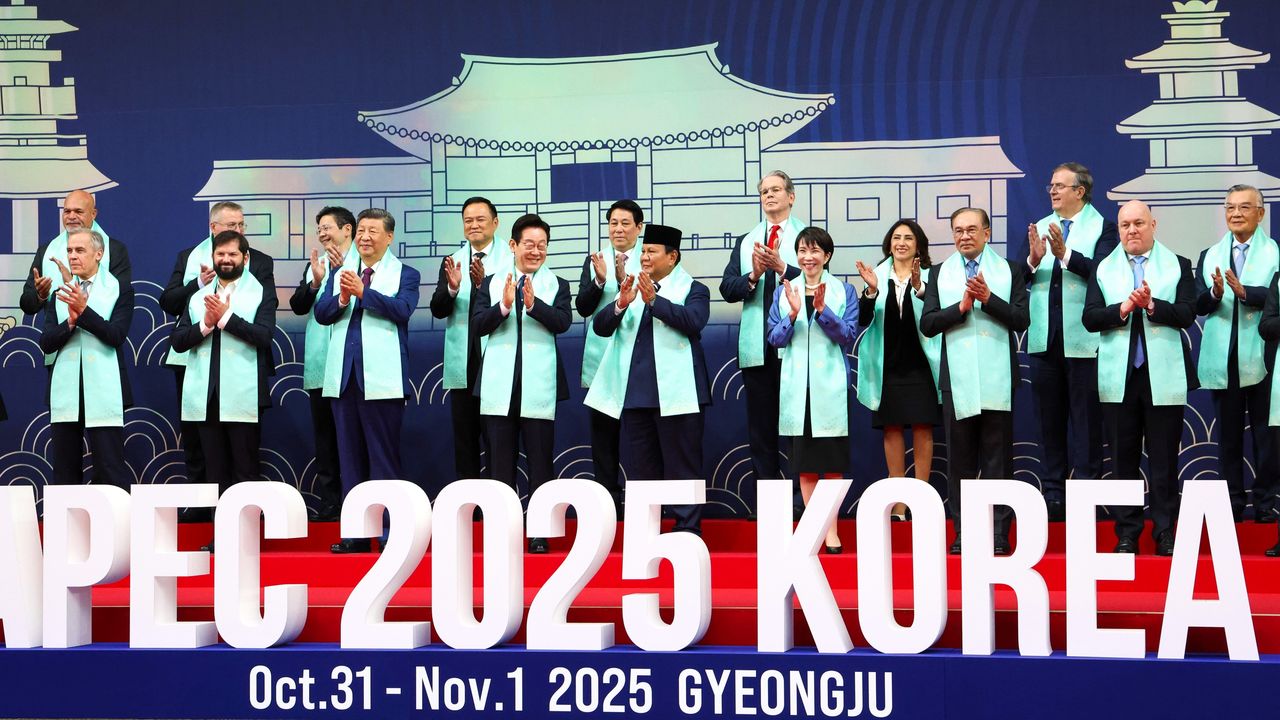
(Originally published in Japanese on January 7, 2026. Banner photo: Commemorative photo at the Asia-Pacific Economic Cooperation Summit, showing Prime Minister Takaichi Sanae [third from right in front row], South Korean President Lee Jae-myung [fifth], Chinese President Xi Jinping [sixth], and US Treasury Secretary Scott Bessent [fourth from right in back row], among others, November 1, 2025, Gyeongju, South Korea. © Jiji.)