Japanese Politics in 2026: Can Takaichi Rebuild Stable LDP Rule?
Politics- English
- 日本語
- 简体字
- 繁體字
- Français
- Español
- العربية
- Русский
Risk One: Personality
Japan’s first woman prime minister, Takaichi Sanae, heads into 2026 with the advantage of a high public approval rating, but to maintain her momentum, she must manage five key risks while gauging the best moment for a general election. With the ruling Liberal Democratic Party on the back foot, the prime minister’s actions could have profound implications for Japanese politics going forward.
In today’s political milieu, the biggest factor affecting a prime minister’s ability to remain in office and govern effectively is his or her character. Thus far, most observers have rated Prime Minister Takaichi’s character as an asset. But her leadership style also holds risks for the effectiveness and longevity of her administration.
Takaichi has a longstanding reputation as a determined and capable problem solver. The downside of this personality trait is an insistence on micromanaging, rather than delegating some of the decision making and negotiation to others.
Takaichi’s hands-on, top-down leadership powered the December 16 passage of a ¥18.3 trillion fiscal 2025 supplementary budget and the compilation of a record-breaking ¥122 trillion draft budget for fiscal 2026. But that same intensive process provided the context for her November 7, 2025, off-script statement on the implications of a possible Taiwan contingency for Japan, which led to a sharp escalation in Japan-China tensions.
This tendency has also led to worries about the prime minister’s health. Takaichi is reported to skimp on sleep and even neglect meals in her enthusiasm for the job and her appetite for hard work. Then there is the stress factor associated with the high-pressure, high-profile office of prime minister. Health maintenance and management is a constant challenge lurking in the background.
Risk Two: Teamwork
A second, related, risk is posed by the lack of an effective, smoothly functioning leadership team, including a strong stage manager capable of coordinating and building consensus among the diverse players.
This deficiency was on vivid display in late November, when Takaichi’s Liberal Democratic Party angered its new coalition partner, Nippon Ishin no Kai, by failing to consult with it before announcing that three independents previously expelled from Ishin would be joining the LDP to secure a Diet majority.
The incident epitomizes Takaichi’s “one woman” governing style, which could prove hard to sustain. “In the end, we have no choice but to bring up each and every issue directly with the prime minister so she can make the call herself,” grumbled one Ishin official.
Risk Three: Coalition Affairs
The third risk facing Takaichi’s government relates to the inherent fragility of the LDP’s partnership with Nippon Ishin no Kai. Upon assuming leadership of the LDP, Takaichi was obliged to forge a coalition with at least one of the opposition parties in order to secure a Diet majority. Ishin agreed to team up with the LDP—albeit without actually joining the cabinet—on the condition that the LDP work with Ishin to pass legislation reducing the number of lower house seats by 10%. Such legislation was duly submitted that autumn, during the extraordinary session of the Diet, but its progress was stalled amid fierce resistance from opposition forces. In the meantime, interparty tensions mounted over Ishin’s aggressive pursuit of a reform that many in the LDP view with ambivalence.
With the extraordinary session of the Diet drawing to a close in mid-December, Takaichi and Ishin leader Yoshimura Hirofumi agreed to table the bill on the understanding that they would aim for passage during the 2026 ordinary Diet session, scheduled to begin in January. Inasmuch as Yoshimura has called the bill the “linchpin of political reform,” failure to enact it in a timely fashion could imperil the coalition.
Risk Four: The Economy
From a policy standpoint, the biggest challenges facing the Takaichi administration relate to management of the economy. Of particular concern to voters is the rising cost of living and the decline in real wages.
This brings us to the fourth risk: a failure to respond adequately to the voters’ economic concerns. One of the biggest factors behind the ruling coalition’s defeat in last July’s House of Councillors election was voter dissatisfaction with the government’s economic policies.
The supplementary budget for fiscal 2025 that passed in December included measures to cushion the impact of rising prices, incorporating demands from the Constitutional Democratic Party and Kōmeitō in order to secure their support. But in the current inflationary environment, the markets reacted poorly to this fiscal activism, to be funded by new issues of government bonds. A yen selloff ensued, and long-term interest rates rose.
The Bank of Japan raised interest rates to a 30-year high on December 19, but the yen continued to weaken against the dollar, contrary to the BOJ’s expectations. The weak yen contributes to the rising cost of living by pushing up the price of fuel and other imports. Unless the government can reverse this trend, consumers—which is to say, voters—are sure to lose patience. The long-term stability of the Takaichi administration will depend heavily on whether voters feel that their household finances have improved as a result of the fiscal 2026 budget.
While the ruling bloc controls a bare majority in the House of Representatives (233 out of 465 seats), the House of Councillors is evenly divided between the ruling and opposition camps. This means that the administration must negotiate with the opposition in order to lubricate the legislative process.
In a meeting on December 18, Takaichi and Tamaki Yūichirō, leader of the DPFP, or Democratic Party for the People, agreed to raise the minimum taxable income to ¥1.78 million, something the DPFP has been campaigning for since 2022. In return, the DPFP agreed to help push the 2026 budget through the Diet before the end of the current fiscal year, defusing the most immediate risk to Takaichi’s leadership.
Risk Five: The China Question
While voter support depends mainly on the economy, the Takaichi cabinet also faces serious challenges in the area of foreign policy. Most prominent among these are the emerging risks posed by deteriorating relations with China.
On November 7, responding to a question posed in a Diet committee, Takaichi conveyed her view that a Taiwan contingency (that is, an invasion or blockade by China) could constitute an existential threat to Japan, which is the basic legal condition for Japan to engage in a military response. This elicited a furious backlash from Chinese leaders, who demanded a retraction. Beijing has since punished Japan economically by calling on Chinese citizens to refrain from traveling here. It has also ratcheted up the pressure through military intimidation, including incidents in which Chinese fighter jets locked their radar onto Japanese aircraft.
Experts are pessimistic about the prospects for a quick thaw. The longer the chill persists, the worse the impact on the tourism industry and other sectors of the Japanese economy. The current level of tension also increases the risk of an unintentional military clash.
Adding to Takaichi’s challenge is the unpredictability of US-China relations under President Donald Trump. The prime minister hopes to visit the United States ahead of Trump’s planned April visit to China to confirm Japan-US solidarity.
Popular Support and Electoral Timing
According to the mainstream media’s opinion polls, the cabinet’s public approval rating remains high, at 60%–70%, even two months into the administration. This unusual level of voter support is the Takaichi government’s greatest strength.
Support is particularly high among voters in their twenties, thirties, and forties. Takaichi has won back many of the younger voters who abandoned the LDP under Prime Ministers Kishida Fumio and Ishiba Shigeru. Most voters affiliated with the center-right DPFP and the rightwing populist Sanseitō have a favorable view of the Takaichi cabinet. The prime minister’s political style and forthright rhetoric are generally well received.
The key question is how long this popularity can last amid the risks and challenges facing the administration. The answer will largely determine the timing of the next general election. (A general election need not be held until the autumn of 2028, but the prime minister has the power to dissolve the House of Representatives for a snap election at any time.) But there are other factors to consider as well.
Some LDP politicians believe that the best option is to call a snap election as soon as possible, leveraging the prime minister’s personal popularity to win back the seats lost in the general election of 2024. Leaving time for passage of the fiscal 2026 budget, this would mean dissolving the House of Representatives during the second half of the current ordinary Diet session, scheduled to run until June 21.
Another relevant factor here is the coalition agreement concerning the reduction of lower house seats, Ishin’s pet project. In their December meeting, Takaichi and Yoshimura agreed to enact the necessary legislation during the 2026 ordinary session of the Diet. If resistance from the opposition again stymies the bill’s progress, Ishin is sure to crank up the pressure by insisting that the matter be put to the voters.
Despite the cabinet’s high approval rating, support for the LDP as a party remains low. For the LDP to regain sole control of the lower house, the “Takaichi effect” must be sufficient to win back disillusioned voters who switched to the DPFP or Sanseitō last July, while also compensating for the loss of votes resulting from the recent dissolution of the LDP-Kōmeitō coalition (see below).
An absolute majority in the lower house (233 seats) may not be necessary, however. Any substantial improvement over the LDP’s dismal 2024 performance (when it won just 191 seats) would put the government on a firmer footing and give Takaichi a reasonable chance of securing a second term in the LDP’s fall 2027 presidential election. How the prime minister juggles these considerations will shape her electoral strategy and the 2026 political agenda.
Japanese Politics in Transition
The political situation in Japan today should be seen as part of an ongoing tectonic shift that began in 2024. To understand this process, we need to place it in historical context.
In 1993, after 38 years of uninterrupted LDP rule under the so-called 1955 system, a diverse anti-LDP coalition briefly seized the reins of government (first under Prime Minister Hosokawa Morihiro and then under Prime Minister Hata Tsutomu). When this unstable alliance collapsed, the LDP forged an unlikely coalition with the Social Democratic Party and New Party Sakigake, with SDP leader Murayama Tomiichi as prime minister. This maneuver, while sending the SDP into a death spiral, allowed the LDP to reclaim leadership in 1996. With the support of the centrist Kōmeitō (associated with the Buddhist lay organization Sōka Gakkai), the LDP remained at the helm until 2009, when it was toppled by the Democratic Party of Japan.
The Liberal Democrats returned to power in December 2012, whereupon Japan entered a new era of political stability under the LDP’s unchallenged supremacy. This “neo 1955 system” of single-party dominance took a beating in October 2024, when the LDP lost its lower house majority, and it came crashing down with the party’s upper house defeat last July.
When Takaichi was elected LDP president in October 2025, Kōmeitō withdrew from the 26-year-old bipartisan coalition, and the LDP was forced to find a new partner. Ishin has stepped into that role, but its half-hearted attitude is clear from its refusal to accept a cabinet post. Nor are conditions right for an electoral alliance between the two parties. Under the circumstances, a long-lasting partnership is difficult to imagine.
Japanese politics has entered a period of realignment and transition, and the LDP-Ishin coalition should probably be viewed as a temporary arrangement, tiding things over until a stable order reemerges.
Can the LDP Land on Its Feet?
Until now, Japan’s main political battle lines have been those dividing the LDP and the collective opposition. The 2025 upper house election heralded a new configuration defined by three competing ideological camps: conservative (right wing), liberal (left wing), and centrist. Sanseitō and the Conservative Party of Japan are situated at the extreme right edge of this spectrum, followed by the LDP and Ishin. The center is represented by the center-right DPFP, Kōmeitō, and the centrist wing of the liberal Constitutional Democratic Party of Japan. At the left end of the spectrum are the left wing of the CDPJ, Reiwa Shinsengumi, and finally the Japanese Communist Party.
In the course of compiling the fiscal 2026 budget, the LDP succeeded in enlisting the cooperation of the center-right DPFP by accepting its demand for an increase in the minimum taxable income. For the LDP, this maneuver has the effect of reducing the risk of an Ishin revolt by forging what amounts to a noncabinet coalition with the DPFP. By bringing the DPFP into the fold, the LDP also reduces the possibility of a united centrist electoral challenge from the CDPJ, Kōmeitō, and DPFP. The move also robs the DPFP of a key selling feature. Strengthening its own grip on power by embracing an opposition policy is a time-honored LDP tactic.
Only time will tell if the “Takaichi effect,” combined with skillful interparty maneuvering, can produce conditions conducive to an early general election. But if Takaichi decides to go that route, the resulting realignment of governing and opposition forces could change the face of Japanese politics in 2026 and beyond.
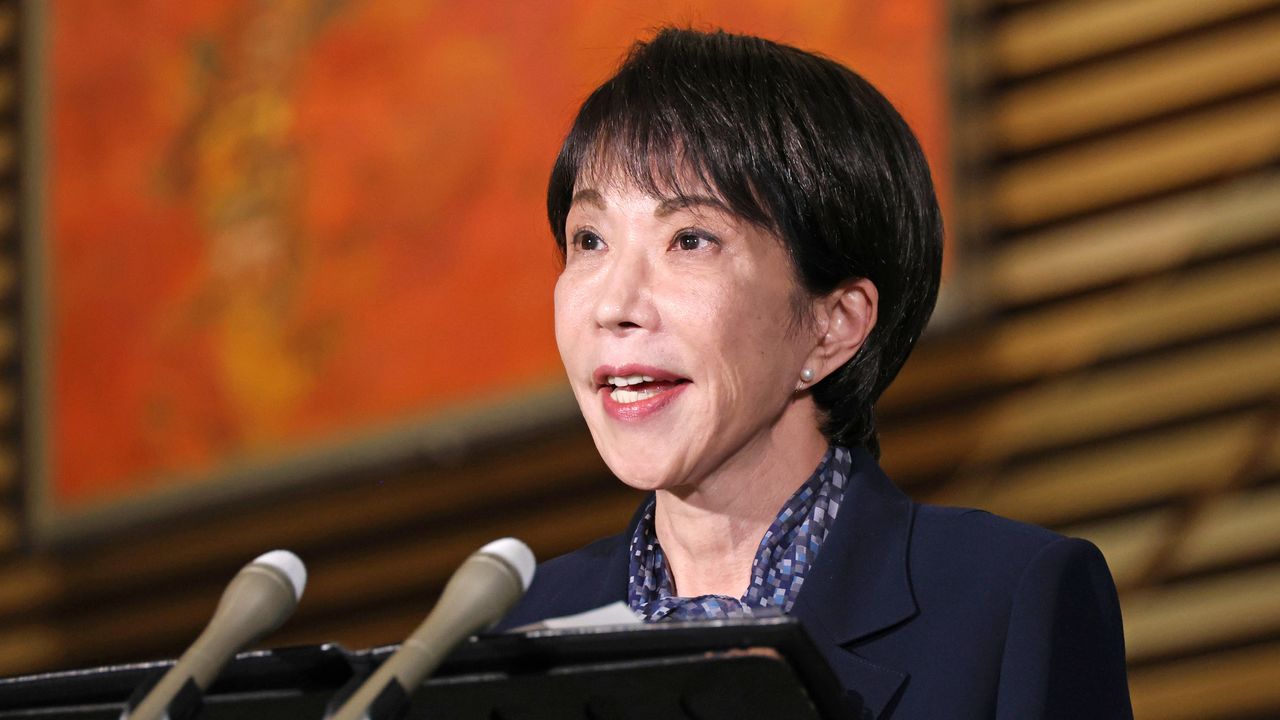
(Originally published in Japanese. Banner photo: Prime Minister Takaichi Sanae speaks to the press at the Kantei in Tokyo following cabinet approval of an initial budget bill for fiscal 2026. © Jiji.)