Behind the Latest Japan-China Blowup (Part 1 ): How Defense Outran Diplomacy
Politics- English
- 日本語
- 简体字
- 繁體字
- Français
- Español
- العربية
- Русский
Diplomacy-Defense Disconnect
For several years now, the threat of military action by China against Taiwan has been a core focus of the Japan-US alliance and Japan’s own security policy. But the language that Japanese and Chinese leaders and diplomats use to discuss Taiwan and cross-strait issues remains rooted in political understandings dating back to the 1972 Japan-China Joint Communiqué, which laid the foundation for diplomatic ties between Japan and the People’s Republic of China.
The basic problem is that diplomacy and security have not evolved at the same speed. The region’s security situation has changed drastically since the Cold War, spurring progressive upgrades in Japanese defense policy and the Japan-US security arrangements. But the diplomatic framework between Japan and China regarding Taiwan has remained outwardly unchanged, aided by deliberate ambiguity. The resulting disconnect suddenly burst into view last November, when Prime Minister Takaichi Sanae, responding to Diet questioning from a member of the opposition, suggested that the government might view certain military actions by China toward Taiwan as a “survival-threatening situation.”
The diplomatic tussle that has ensued is not the result of some new transgression by Japan. It is the inevitable consequence of the growing chasm between the region’s new security realities—thoroughly discussed and incorporated into Japan’s legal and policy frameworks, including those underpinning the Japan-US alliance—and the archaic framework of Japan-China diplomatic ties.
The Evolving Japan-US Alliance
It has been a decade since the National Diet passed legislation allowing Japan to exercise its right to collective self-defense in “survival-threatening situations” (sonritsu kiki jitai). This legal concept was the product of years of deliberation amid the changing security conditions of the post–Cold War era. It was informed by the need to ensure that the Japan-US alliance could function effectively and seamlessly in a twenty-first-century crisis. It is no accident that the concept is attracting attention again, amid rising tensions in the Taiwan Strait and elsewhere in East Asia.
During the Cold War, the focus of the Japan-US alliance was a hypothetical attack on Japan by the Soviet Union. To deter and respond to such an attack, the alliance relied on joint operations combined with a bilateral division of labor that took into account the constraints of Japan’s war-renouncing Constitution. The core of the alliance’s deterrent capability was the extended nuclear deterrence and main striking force provided by the US military (with its extensive bases in Japan). Japan assumed a larger and larger role in supporting and facilitating alliance operations through the provision of intelligence, warning and surveillance systems, patrols in surrounding waters and air space, and rear-area support. But as long as the focus was on the threat of a direct Soviet attack, Japan’s right of self-defense was generally understood as a matter of individual self-defense, exercised within the framework of the Japan-US alliance.
After the Cold War, however, the nature of the threats changed. Within the region, the alliance faced a growing number of real and potential challenges other than direct attacks on Japan, including regional disputes, the proliferation of ballistic missiles, and the possibility of war in the Taiwan Strait or on the Korean Peninsula. There was also a need to grapple with global threats, such as international terrorism and the proliferation of weapons of mass destruction, which jeopardized Japan’s security regardless of where they originated.
Introducing the Three New Conditions
Against this changing backdrop, the incongruities of the alliance became increasingly difficult to ignore. For example, if a US warship came under attack while conducting a joint Japan-US operation, would Japanese forces in the area be obliged to sit back and watch instead of taking action to defend the American vessel? When it came to missile defense, was it rational to restrict Japan’s sophisticated interception system to attacks on the archipelago? These were no longer abstract, hypothetical questions but real-world problems bearing on the alliance’s ability to function effectively.
Such were the concerns addressed in the June 2014 report of the Advisory Panel on Reconstruction of the Legal Basis for Security, established by Prime Minister Abe Shinzō. In its report, the panel argued for limited and conditional use of force for the purpose of responding to contingencies other than armed attacks on Japan that threatened the effective functioning of the alliance, such as an attack on a US vessel or a missile attack on the United States.
Acting swiftly on these recommendations, the Abe cabinet issued a landmark decision on July 1, 2014. The Cabinet Decision on Development of Seamless Security Legislation to Ensure Japan’s Survival and Protect its People overturned the government’s longstanding position that Article 9 of the Constitution permitted the use of force only for the purpose of repelling an armed attack on Japan—not for the broader purpose of “collective self-defense.” The new criteria established by the July 2014 decision allowed for the limited and conditional use of force in situations where “an armed attack against a foreign country that is in a close relationship with Japan occurs and as a result threatens Japan’s survival and poses a clear danger to fundamentally overturn people’s right to life, liberty and pursuit of happiness,” even if Japan itself was not under armed attack.
On the basis of this cabinet decision, the government issued “three new conditions” for the use of force as a means of self-defense, centered on the core legal concept of survival-threatening situations.(*1) The new framework established the foundation for expanded defense operations under the Legislation for Peace and Security, enacted in 2015.(*2)
Intentional Vagueness
Instead of stipulating in advance the specific situations that could be deemed an indirect threat to Japan’s survival, the legislation set forth basic principles by which a leader can make that judgment, taking into account such factors as the scale and nature of the attack, geographical proximity, anticipated repercussions, and the short- and long-term impact on the lives of Japanese citizens.
By the same token, although it is clear that the concept of a survival-threatening situation originally arose out of the need to ensure that the Japan-US alliance continued to function effectively, the 2015 legislation deliberately avoided specifying which foreign countries could be regarded as being “in a close relationship” with Japan. From a legal standpoint, if the government had the discretion to judge what situations were a threat to Japan’s existence, it also had the right to decide which countries fell under the law’s scope.
In the decade since the enactment of the Legislation for Peace and Security, the Taiwan problem has clearly emerged as the main focus of strategic tensions between the United States and China. During the same period, Japanese defense experts inside and outside of the government have conducted numerous analyses and simulations to determine how a Taiwan contingency might unfold and affect Japan under various scenarios. Most of these analyses have been premised on some form of US military intervention supported in some way by the Japan-US alliance and the Japan Self-Defense Forces.
In this context, policy makers extended their scope of concern beyond the immediate impact of a Taiwan crisis to consider the risks to Japan resulting from its maintenance of US bases, as well as the potentially dire ripple effects on the larger security environment. The legal underpinning for an effective, coordinated response in such situations was provided by the 2015 Legislation for Peace and Security, which expanded the scope of military action from situations directly and seriously affecting Japan to those that indirectly threatened the nation’s future survival.
The legal concept of the survival-threatening situation was formulated for the purpose of maintaining the smooth and effective functioning of the Japan-US alliance in the event of a crisis, including (though not limited to) a Taiwan contingency. Cognizant of the fact that any situation in the Taiwan Strait could progress simultaneously on multiple fronts, policy makers deliberately formulated a principle that dovetailed neatly with the US policy of strategic ambiguity, allowing for maximum decision-making flexibility.
Deterrence and Strategic Ambiguity
Japan can no longer afford to speak of a Taiwan contingency as an abstract security scenario. China’s rapidly advancing military capabilities, the growing frequency of its military exercises in the immediate region, uncertainty about US intervention, and the mounting pressures (political as well as military) facing Taipei have transformed the Taiwan Strait from a local focus of tension to the pivot on which East Asia’s security order turns.
According to the US Department of Defense’s 2025 Annual Report to Congress, China has continued to build up its military with the aim of enabling a successful invasion of Taiwan by the end of 2027—the centennial of the founding of the People’s Liberation Army. As a result, there has been much talk of a looming “2027 problem.” But the confluence of military capability and political symbolism does not in itself make a Taiwan contingency inevitable. Analysts and policy makers should realize that there is nothing predetermined in international politics and resist drawing a simple, straight line from China’s capabilities to its intentions.
A more important factor here is whether existing deterrence is sufficient to make Beijing think twice about proceeding with such a military operation. And the single biggest variable in this equation is whether we can count on full-fledged military intervention by the United States.
In this respect, deterrence is complicated by Washington’s longstanding policy of “strategic ambiguity” vis-a-vis Taiwan. By intentionally avoiding a clear commitment, the policy aims for dual deterrence. By leaving the door open to American intervention, it forces Beijing to contemplate the potentially disastrous costs of invading Taiwan. At the same time, by allowing for the possibility of nonintervention, it avoids the “moral hazard” of encouraging Taiwan to declare independence, which is likely to precipitate a cross-strait confrontation.
Strategic ambiguity is a method of managing the tradeoff between deterrence and political stability. A clearer message regarding the potential for intervention would strengthen Washington’s deterrence signaling, but it would also exacerbate political tensions with Beijing. Failure to convey either the capability or the will to intervene would ease bilateral tensions but also deprive Taiwan of a key deterrent against military action by China. Washington has chosen to walk the narrow line between these two alternatives with a policy that preserves ambiguity vis-a-vis intent while also maintaining the capability to intervene if necessary.
In recent years, there has been growing talk in the United States about the need to shift from strategic ambiguity to strategic clarity. There are two basic reasons for this trend. One is an awareness that the deterrent capability on which the policy of ambiguity is predicated has diminished, relatively speaking, as China’s military power has grown. The other is the fact that, with new military technologies and rapid joint operations compressing decision-making time, it has become more difficult to alter the enemy’s calculations through signals sent mid-crisis—another factor on which strategic ambiguity has always relied.
During the previous US administration, President Joe Biden departed from established practice by stating that the United States would (or was likely to) intervene militarily if China were to attack Taiwan. But those statements were followed quickly by assurances from the secretary of state that there had been no change to Washington’s “one China” policy. Essentially, the US government preserved its dual strategy of maintaining ambiguity regarding intent while enhancing the credibility of its capability to intervene.
Building a Stronger Alliance
In terms of capability, the emphasis has been on maintaining the ability to conduct in-theater operations and control escalation even amid China’s expanding anti-access/area denial (A2/AD) capabilities. In this context, joint operations and burden sharing with regional allies have become increasingly important, especially given the rising costs of deploying US forces in the area. A key element underpinning the credibility of America’s intervention capability is the functionality of Japan-US joint operations in a high-end conflict.
When considering various scenarios to plan for a Taiwan contingency, it is only natural to hypothesize a situation in which Japan’s Self-Defense Forces are called on to provide support for in-theater US operations. Depending on how such a scenario evolves, the government might be called on to make a judgment as to whether the situation qualifies as “survival threatening.” In the event of a Chinese blockade or limited strike against Taiwan, or of any military action blocking the sea lanes or air space around Japan’s Ryūkyū (Nansei) Islands, maintaining the functionality of the US bases in Japan would become a key operational imperative. Under such circumstances, the Japanese government might indeed judge the situation to be one bearing on the nation’s survival.
The important thing was to establish in advance the range of situations in which Japan could resort to the use of military force. This was a precondition for Japan and the United States to take defense consultations to the next level and lay the basis for planning and exercises geared to high-end conflicts, so as to maintain the credibility of the alliance’s deterrent capability. For deterrence to function in the context of strategic ambiguity, it is vital to maintain a high level of capability—while talking about it as little as possible. The concept of survival-threatening situations as a basis for Japan-US joint capacity building is one of the institutional underpinnings of this approach.
Raising the Stakes for America
However, America’s willingness to intervene, the key variable in the deterrence equation, has become increasingly questionable. Under the second administration of President Donald Trump, America’s engagement with allies hinges less on existing policies and agreements than on the president’s own political judgment at any given moment. This uncertainty tends to undermine the credibility of US intervention in a Taiwan contingency. The problem here is that the alliance’s military analysts have constructed their scenarios on the tacit assumption of US military intervention, and defense planning and training have been conducted accordingly. As things stand today, the uncertainty factor must be managed not just externally, as a deterrence strategy directed toward China, but also consciously and internally, as an intrinsic feature of the alliance itself.
The Japanese government need not accept the situation passively, however. It can leverage alliance operations to deepen American involvement in the regional crisis-management framework. Through the processes of system design, capacity building, and joint planning, Japan can hammer home the message that Japan’s security is inextricably linked to Taiwan’s, thereby raising Washington’s awareness of the potential costs of nonintervention.
With all this in mind, the Japanese government needs to embrace the principle of strategic ambiguity as a key aspect of strategic management. This means acquiring the knack of continuously upgrading its capabilities while keeping its intentions close to its vest—a skill it has not fully mastered. To be effective, strategic ambiguity requires a high level of coordinated planning and external communications, as well as a rational and agile decision-making process, particularly in times of crisis.
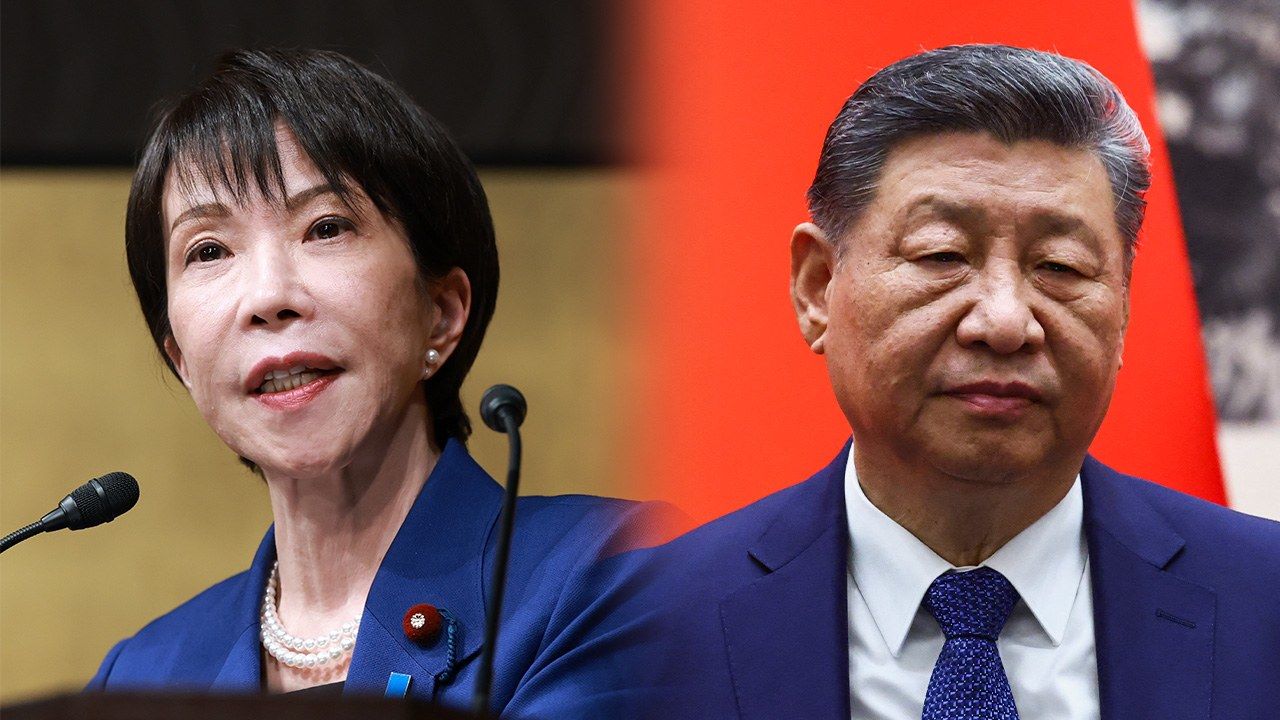
Originally Published in Japanese. Banner Photo: From left, Japanese Prime Minister Takaichi Sanae; © Jiji; Chinese Premier Xi Jinping; © AFP/Jiji.)
(*1) ^ The three conditions are (1) when an armed attack against Japan occurs or when an armed attack against a foreign country that is in a close relationship with Japan occurs and as a result threatens Japan’s survival and poses a clear danger to fundamentally overturn people’s right to life, liberty and pursuit of happiness, (2) when there is no other appropriate means available to repel the attack and ensure Japan’s survival and protects its people, and (3) use of force limited to the minimum extent necessary.—Ed.
(*2) ^ The Legislation for Peace and Security is the term commonly applied to a legislative package consisting of one new law and amendments to a number of existing statutes, including the Act on the Peace and Independence of Japan and Maintenance of the Security of the Nation and the People in Armed Attack Situations, etc. (see article 2, paragraph 4) and the Self-Defense Forces Act (see article 76, paragraph 2).—Ed.