Takaichi’s Big Win: A Potentially Historic Turning Point for Japan
Politics- English
- 日本語
- 简体字
- 繁體字
- Français
- Español
- العربية
- Русский
Takaichi’s LDP Roars Back into Power
Japan’s national elections have not been kind to the Liberal Democratic Party in recent years. In October 2024, the LDP lost its majority in the House of Representatives under Prime Minister Ishiba Shigeru, who had taken office at the beginning of that month; in July 2025, again under Ishiba, the party fell into the minority in the House of Councillors election, becoming part of the first purely minority government in Japanese parliamentary history.
This year the tables turned. In the February 8, 2026, general election, the LDP took a stunning victory, ending the voting day with more than two thirds of the seats in the lower house.
Out of the total 465 seats up for grabs in the contest, the LDP took 249 of those allotted to single-seat districts and an additional 67 in the proportional representation vote, in which electors choose a party to fill seats going beyond the smaller districts, for a total of 316. The party was in fact so successful that its full vote count, which should have landed it 81 PR seats, went well beyond the actual candidates it fielded; in the end, 14 of these seats had to be allotted to other parties.
It is difficult to pinpoint any reason for this victory beyond the simple factor of Takaichi’s popularity. Since taking office in October 2025, she has become a considerable presence on the Japanese media and social media stages. While at first this presence was ascribed to her status as Japan’s first female leader, as the months pile up it becomes clearer that she has more staying power than expected.
January 23, when Takaichi kicked off the 2026 ordinary session of the Diet by dissolving the House of Representatives and calling a snap election, marked the beginning of a storm of criticism from opposition parties and the media, describing her as “abusing the privileges of her office” by triggering an election for little more than her own political purposes. These accusations of abuse stemmed from factors like the short 16-month period from the previous general election, the timing (the election took place during a cold snap with historically high snowfall in parts of the nation), and the prime minister’s own positioning of the contest as “a public referendum on whether I should remain in charge.”
In the end, though, all these doubts evaporated in the face of Takaichi’s overwhelming charisma. Wherever she went around the country to support LDP candidates, massive crowds assembled, and there were clear signs that many voters were also selecting her party’s members as a way to support her personally.
The candidacy of Shimomura Hakubun, a former minister of education running in the Tokyo 11 district, was a case in point. This 71-year-old veteran politician, once a powerful figure in the party, lost his seat in the 2024 lower house election due to his involvement in the illicit redirecting of money from faction fundraising parties to individual members and his perceived ties to sketchy religious organizations. This time, though, he stormed back into the Diet on the strength of the Takaichi wave, with a vote total far outstripping his nearest competitor.
A Long-Lasting Administration Ahead?
With its hold on 316 seats in the House of Representatives, the LDP on its own clears the two-thirds mark of 310 seats that is required for a party to re-approve legislation that has been rejected by the House of Councillors after passage in the lower house. This two-thirds level is also required to pass proposals on constitutional amendment, although such moves would also need support from two thirds of the upper house before going to a national referendum. Be that as it may, the balance of power in the National Diet has clearly swung back to the Liberal Democrats, who now wield absolute authority in the powerful lower chamber.
Now in its seventy-first year of existence since its 1955 foundation, the LDP has seen a number of decisive victories in general elections in the past, notably the 300 seats it took under Prime Minister Nakasone Yasuhiro in 1986, when the House of Representatives had 512 seats; the 296 won out of 480 in 2005, under Prime Minister Koizumi Jun’ichirō; and the 294 out of 480 taken in 2012, when Abe Shinzō engineered his triumphant return to power after a period of Democratic Party of Japan rule. But in 2026, Takaichi Sanae rewrote the record book. This marks the first time in postwar history for a single party to hold more than two thirds of the seats in the lower house.
In her electioneering this time around, Takaichi was aided considerably by certain negative factors: the persistent stagnation of the Japanese economy, which is producing unease among the people about their livelihoods, and China’s aggressive policies toward Japan. She took on high risk in relying on things like this as she went into the election period, but it paid off in high returns indeed.
The primary return for her is the potential her administration now has to settle in for the long run. At the very least, her poor network of close supporters within the party, long considered her Achilles’ heel in political dealings, has now faded into the background as a threat to her longevity. She has likely already set her sights on the September 2027 LDP presidential election, where she can maintain her hold on party leadership, and the House of Councillors election to be held in the summer of 2028, where she will seek to restore the LDP’s primacy in that chamber as well.
Takaichi took her first run at the LDP presidency in September 2021, with the backing of former Prime Minister Abe Shinzō. At that time, a number of party heavyweights described the lineup endorsing her in the race as “the first time for all the right-wing party members to really come together.” Today, though, nobody is viewing her as an outlier. The reason for this is simple: Her party, which consecutively posted two relatively liberal members to the top in the form of Kishida Fumio in 2021 and Ishiba Shigeru in 2024, watched the upstart Sanseitō walk away with conservative votes in the 2025 House of Councillors election with its far-right populist messaging. This forced the Liberal Democrats to head rightward themselves.
The LDP maintains a famously large tent, housing views from the liberal to the conservative ends of the spectrum. This means that the party composition is not universally in tune with rightist thinking. But when confronted with a victory on the scale of what Takaichi has engineered this year, it will be difficult for party voices leaning toward the left to make themselves heard from here on out.
Tough Choices to Make in Taxation and Security
Prime Minister Takaichi, viewing these election results as a public vote of confidence in her vision for a “stronger and more prosperous” Japan, is likely to intensify her rightward shift. Her strategy rests primarily on three pillars: expansionary economic and fiscal policy, hawkish moves on the security front, and domestic legislation rooted in conservative values.
Turning first to the economy, we see Takaichi trumpeting her “responsible yet aggressive” approach to government spending. This mainly involves public investment to boost supply capacity in artificial intelligence, semiconductors, shipbuilding, and other fields presented as vital for Japan’s economic security. The market response, though, has basically been to view this all as fiscal expansionism, which drove the Nikkei average of the Tokyo Stock Exchange to an all-time high north of 57,000 on February 9, the day after the LDP’s election victory.
On the flip side, Takaichi has also pledged a two-year abolition of the 8% consumption tax applied to food products as a way to combat rising consumer prices. To be sure, this is the area of most concern for the people of Japan. If implemented, though, this would reduce tax revenues by some ¥5 trillion a year, or ¥10 trillion in total for the proposed abolition period. During these two years, Takaichi apparently aims to move to a system of tax credits accompanied by cash benefits.
But a survey of politicians carried out during the House of Representatives election period shows numerous LDP bigwigs—including former Prime Minister Ishiba Shigeru, Minister for Internal Affairs and Communications Hayashi Yoshimasa, Minister of Economy, Trade, and Industry Akazawa Ryōsei, and Onodera Itsunori, who chairs the party’s Research Commission on the Tax System—to be in favor of maintaining the present consumption tax regime. In short, the Liberal Democrats have not been won over by the concept of tax reduction. Takaichi’s idea of a temporary tax break will indeed be difficult to implement, from the perspectives of finding fiscal resources to cover the shortfall and managing the public backlash once the 8% rate is reinstated two years later. If Takaichi sets out on this course and fails to make it work, her sky-high support inside and outside the party could evaporate in short order.
Meanwhile, in the area of security policy, the main task this year will be revision of the nation’s three basic security documents—the National Security Strategy, the National Defense Strategy, and the Defense Buildup Program. In East Asia, Japan finds itself surrounded by authoritarian nuclear powers—China, Russia, and North Korea—and must enhance its own deterrent capabilities. Toward this end, Takaichi views a major boost in defense spending as a must. Another aim is to foster the domestic defense industry, enhancing its international competitiveness by relaxing the restrictions on Japanese arms exports to a considerable extent.
All of these moves are likely to be welcomed by US President Donald Trump. On February 5, just ahead of Japan’s election day, he wrote that Takaichi had “already proven to be a strong, powerful, and wise Leader [sic],” wishing her luck in the February 8 vote. In a February 8 post following the election, he saluted her victory and wished her “Great Success in passing your Conservative, Peace Through Strength Agenda [sic].” The American leader seems to be placing Prime Minister Takaichi alongside Italy’s Prime Minister Giorgia Meloni in his set of favored foreign leaders.
In the realm of domestic legislation, other tasks await Takaichi, including the establishment of a new “national intelligence bureau” to enhance Japanese intelligence capabilities, the enactment of anti-espionage legislation, and the implementation of stricter rules governing foreign residents and immigration issues. All of these are issues dear to the hearts of the conservatives supporting the prime minister.
Other legislative debates have been in play, such as the decades-long discussion on whether married couples should be allowed to have separate surnames—Japan being a rarity in the modern world for legally requiring couples to take just one. On this topic, conservatives continue to fiercely oppose any relaxation of the single-name requirement, decrying it as a measure that would harm the cohesion of the family unit. Takaichi appears to be aiming to put an end to this messy debate by expanding legal recognition for the use of different names in social and career settings. Similarly, she is also angling to shut down debate on changes to the Imperial House Law, proposed by some as a way to ensure the stable continuation of the imperial lineage through female emperors or matrilineal succession.
The Opposition Equation: One Plus One Isn’t Two
Having talked about the historic success enjoyed by the LDP in this month’s election, I turn now to the opposition—in particular, to its fatal strategic blunder leading up to the contest.
For fully 26 years up through October 2025, Kōmeitō had aligned itself with the LDP as an ally and junior coalition partner. Despite differences in political stance, the party remained by the Liberal Democrats’ side even during the long years of Abe Shinzō’s right-leaning rule. But when Takaichi stepped to the fore, it triggered considerable distrust among the members of the Sōka Gakkai religious organization forming Kōmeitō’s base, and the party walked away from the coalition, citing Takaichi’s unwillingness to root out her party’s money scandals as its reason for doing so.
The Constitutional Democratic Party of Japan, the leading opposition force at the time, saw this as an opportunity. CDPJ head Noda Yoshihiko approached the like-minded Kōmeitō leader Saitō Tetsuo, and in January this year the parties agreed to join forces under the banner of the new Centrist Reform Alliance.
The creation of the CRA was no doubt a shock to many LDP candidates in competitive districts. The Sōka Gakkai organization backing Kōmeitō has long been viewed as promising around 10,000 to 20,000 reliable votes in every single-seat district nationwide, and with those votes swinging away from the LDP-led coalition, there were real fears that even LDP politicians already in office could lose their seats where races were close.
The formal launch of the CRA came on January 22, just a day before Prime Minister Takaichi convened the ordinary session of the Diet and immediately dissolved the lower house. Noda hoped to align the policies of the CDPJ, which had leaned to the left, with those of the longtime ruling party Kōmeitō, bringing the new party squarely into the center of Japanese politics. In the end, though, there was scant time to perform such a major operation, and the hastily formed CRA suffered a brutal defeat, watching its 172 pre-election seats dwindle to less than a third, just 49 nationwide. Despite being the leading party in the opposition, it managed to win just 7 seats in single-member districts, with the remainder coming from the proportional representation vote.
The two parties forged the CRA in the hope that “one plus one could equal something more than two.” In the end, though, the equation resulted in something far less. Opinion surveys show that this new party had almost no support among younger voters, and only lukewarm support among the elderly.
Other opposition parties also fared poorly, with the Japanese Communist Party and Reiwa Shinsengumi both losing seats at the end of the day. The Japanese left seems to have very little presence on the national stage now, and the opposition will need to spend some time in the wilderness seeking ways to effectively stand up against an ascendant Takaichi Sanae.
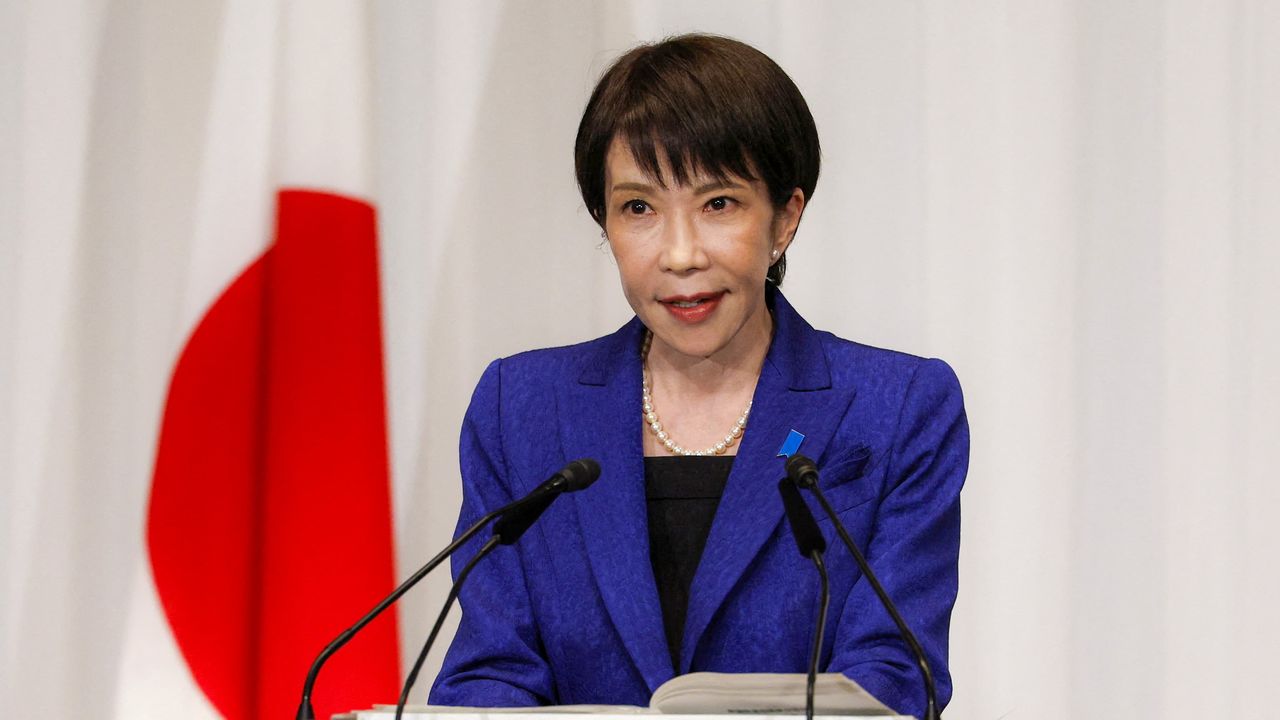
(Originally published in Japanese on February 9, 2026. Banner photo: Prime Minister Takaichi Sanae addresses reporters at LDP headquarters in Chiyoda, Tokyo, on February 9, the day after the election. Pool photo; © Franck Robichon via Reuters.)