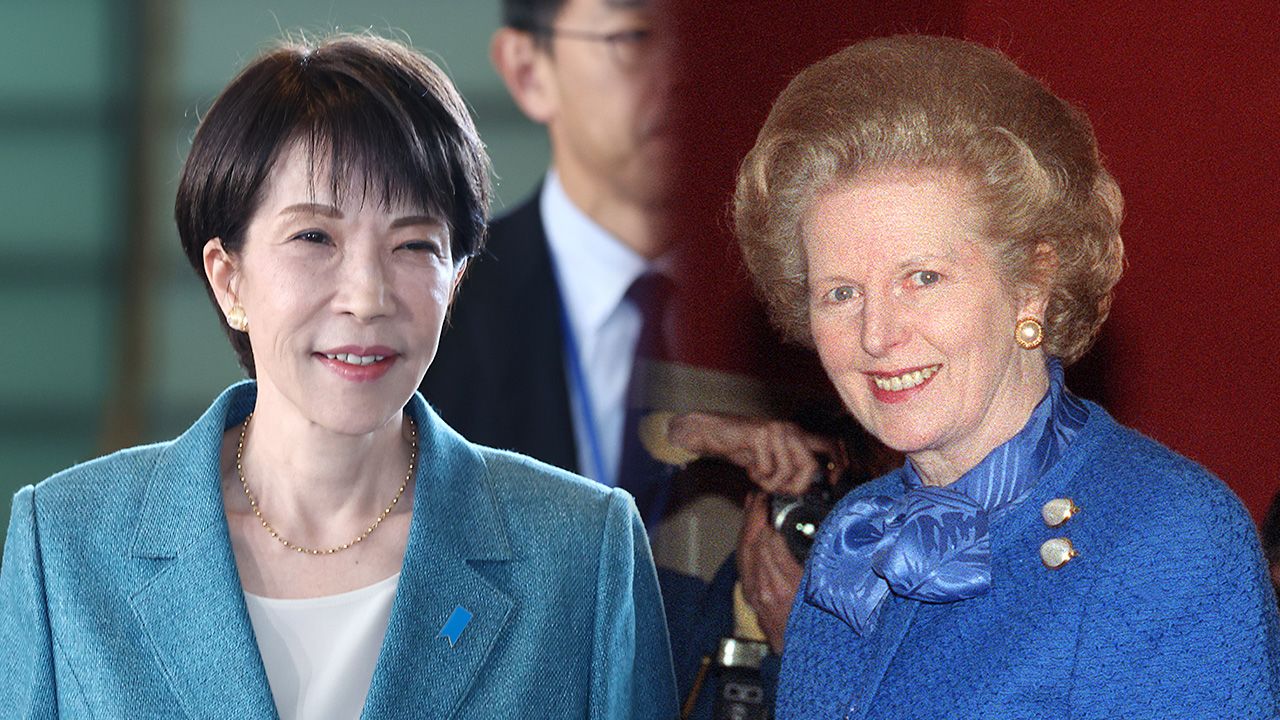
An Iron Lady in Japan? Comparing Margaret Thatcher and Takaichi Sanae
Politics
Ikemoto Daisuke
Professor of political science at Meiji Gakuin University. Born in Tokyo in 1974. After graduating from the University of Tokyo, earned his PhD in politics and international relations from Oxford University. Taught at Kansai Gaidai University before becoming an associate professor at his current school, where he took up his professorship in 2017. He specializes in Europe’s international relations and British politics, and is coauthor of books including Ōshū tōgōshi (A History of European Unification) and EU seijiron (European Union Politics). His most recent book is Satchā: “Tetsu no onna” no jitsuzō (Thatcher: A Portrait of the Iron Lady).
- English
- 日本語
- 简体字
- 繁體字
- Français
- Español
- العربية
- Русский
Echoes in History? Comparisons of Thatcher and Takaichi
INTERVIEWER It seems like we’re currently living through a time of international upheaval greater than what we saw following the end of the Cold War.
IKEMOTO DAISUKE Right. It feels like the world British Prime Minister Margaret Thatcher helped build is collapsing right before our eyes. Through the figure of Thatcher we can see recent events from two perspectives: What is being dismantled? And what new things could we build?
INTERVIEWER In October 2025 you published your book on the British leader, Satchā: “Tetsu no onna” no jitsuzō [Thatcher: A Portrait of the Iron Lady]. Was it a coincidence that it came out right when Takaichi Sanae became the first female prime minister of Japan?
IKEMOTO It was pure coincidence. We had originally planned to release the book in September, ahead of the hundredth anniversary of Thatcher’s birth on October 13, 1925. We were delayed until October 21, and that just happened to be the day of Takaichi’s inauguration as prime minister.
Margaret Hilda Thatcher (1925–2013)
Prime Minister of Britain from 1979 to 1990. Born in northern England in 1925, she became a member of Parliament in 1959 and was tapped to lead the Conservative Party in 1975. The party’s victory in the 1979 general election catapulted her into the nation’s leadership, where she remained for more than 11 years, a record for a UK leader. Known as the “Iron Lady,” she pushed forward neoliberalist economic policies and a staunch anti-Soviet stance, seeing her nation through the end of the Cold War.
INTERVIEWER It was surprising to read in the book about the considerable dissent on Thatcher’s policies in her own cabinet.
IKEMOTO We can break down her tenure into two halves: The first half saw conflict over economic policy, while the second half saw intensifying conflict over succession. It’s not uncommon in Britain to see a change of government following an election loss. Thatcher’s unexpectedly long time in office, however, created restlessness among older, influential Conservative Party figures about whether they would have the chance to lead the party and the country. I think Sir Geoffrey Howe especially regretted not running in the first ballot of the 1975 party election that saw Thatcher elected as the Tory leader. He served loyally as Thatcher’s chancellor of the exchequer and foreign secretary after she took the helm in 1979, but probably harbored thoughts the whole time that he should have been in that seat instead.
Common Ground in Their Non-Elite Backgrounds
INTERVIEWER Prime Minister Takaichi has frequently expressed her admiration for Thatcher. What similarities exist?
IKEMOTO I’m often asked to compare the two, but we need to remember that Thatcher served as prime minister for eleven years, while Takaichi has only just taken office. That said, the most obvious commonality is that they became their countries’ first female prime ministers through a politically conservative route that emphasized their toughness.
Actually, the “Iron Lady” label was originally applied to Thatcher by the Soviet media and meant to be derogatory. Thatcher herself embraced it, however, reasoning that the Soviets’ dislike for her must have been a sign of respect for her competence. However, once in office, she did not always strictly adhere to a hardline stance. Despite her rhetoric, she quickly found common ground with Mikhail Gorbachev, the last general secretary of the Soviet Communist Party, which contributed to ending the Cold War.
Similarly, former Prime Minister Abe Shinzō, whom Takaichi respects, also took actions during his second time in office that were not necessarily popular with his support base, such as working out an agreement with South Korea on the “comfort women” issue and initiating proactive policies toward accepting foreign workers. Whether Takaichi can do something similar remains to be seen, however.
Abe’s great advantage was that he had no powerful rivals or challengers to his right on the political spectrum. While Takaichi’s Liberal Democratic Party enjoyed a massive victory in the February 2026 general election, more right-leaning opposition parties also gained significant ground. Takaichi will not have the same freedom to pivot to the middle, as conservative support could shift toward these parties.
INTERVIEWER Unlike most of their political colleagues from upper class backgrounds, both Thatcher, the daughter of a grocer, and Takaichi, born into a family of salaried workers, share everyday socioeconomic backgrounds. Do you think this influences their leadership styles?
IKEMOTO Thatcher was incredibly skilled at self-promotion, constantly reinventing her image and assimilating into elite circles. For example, she consciously adopted an upper-class English accent and married a wealthy businessman who helped her train as a barrister. Thatcher was essentially a member of the “nouveau riche” cohort. However, she started emphasizing her working-class background a little before the 1975 leadership contest, adopting a more ordinary way of speaking. When she became prime minister in 1979, her voice also seemed to deepen.
Her adaptability required great effort. When she first appeared on television, she was obviously nervous, and her conservative colleagues labelled her “not camera-friendly.” She worked on this, however, training herself to win debates in parliament and to improve her television presence.
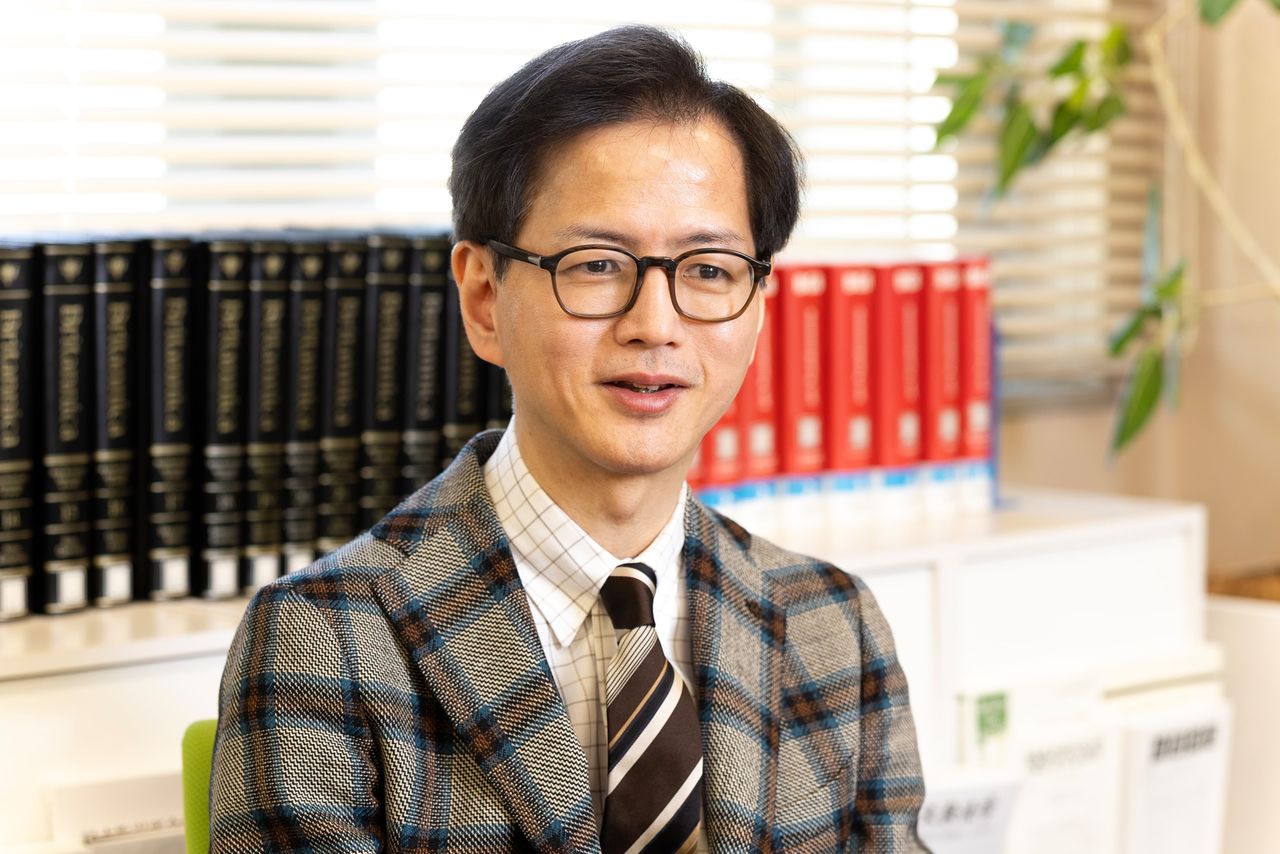
Ikemoto Daisuke during an interview on February 13, 2026. (© Kawamoto Seiya)
Takaichi the Hard Worker?
INTERVIEWER Do you think Prime Minister Takaichi’s “work, work, work” catch phrase was an imitation of Thatcher?
IKEMOTO I am really not sure, and I’d love to ask her myself! But it is a reasonable interpretation. Takaichi has done similar things that do not seem to be a coincidence, like wearing a lot of blue.
INTERVIEWER Thatcher really was a hard worker, then?
IKEMOTO Apparently even when she was young, she could get by on only three hours of sleep a day. The abundance of handwritten notes she made on released official documents also speaks to her dedication. Her secretary would use a marker to highlight what was thought to be important on policy documents from government agencies. Thatcher, however, would read every line and vigorously underline what she considered crucial, adding her own comments. She thoroughly read every paper that came in, likely building her own arguments against government policies that she disapproved of through this notetaking.
She also did not have many people that she trusted. Her male cabinet ministers often did not listen to what she had to say, and the British media at the time dismissed Thatcher as extremely stubborn. Reading these documents and her annotations show a different side.
INTERVIEWER Perhaps another commonality is that both were viewed as antifeminist, focusing little on women’s perspectives in their politics.
IKEMOTO I agree—Thatcher rarely mentioned being the first female prime minister. Her Conservative Party presented itself as the “law and order party” and had a large base of older female supporters who were not so concerned with promoting women’s advancement. So, as the leader of that party, she avoided making it as a central theme, emphasizing instead that capable, hardworking individuals would rise in society regardless of their gender.
INTERVIEWER Thatcher is often credited with radically reforming Britain’s “postwar consensus.” If Takaichi is to do something similar in Japanese politics, what is she likely to focus on?
IKEMOTO For Prime Minister Takaichi, security is probably the top priority. Things like increasing defense spending and loosening restraints on arms exports. It’s still unclear whether she will push for constitutional revision, but if she challenges postwar Japanese politics, it would be on the security front rather than in the area of the economy that Thatcher focused on.
A Comparison of Approaches
INTERVIEWER Are there any big differences?
IKEMOTO The Thatcher administration began by battling the second oil crisis and the inflation it caused worldwide. Britain was hit particularly hard, and Thatcher cut fiscal spending and the deficit while tightening monetary policy. She was determined to curb inflation, even if it meant the nation suffering through a period of high unemployment. In contrast, Prime Minister Takaichi’s monetary policies are not at all hawkish. Rather than cutting inflation itself, I suspect Takaichi is focused on mitigating and managing the symptoms of inflation through monetary policy. Fiscal policy also differs considerably, and Takaichi’s idea of “proactive fiscal policy,” even if it is “responsible,” is not like Thatcher’s approach.
INTERVIEWER So, a big difference is Thatcher’s commitment to a “small government” philosophy?
IKEMOTO Generally speaking, yes. The main impression people have of the Thatcher’s years is its focus on stimulating change in the British economy through structural reforms, deregulation, and privatization—what we’d call “Koizumi-style reforms” in Japan, after Prime Minister Koizumi Jun’ichirō [2001–5]. Interestingly, though, she presided over a real estate boom in Britain. Property prices more than tripled during her years in power, thanks in part to policies encouraging homeownership through mortgage tax breaks. She aimed to satisfy the public and voters by raising the value of their personal real estate and stock assets. In that sense, there are some elements in common with the privatization-driven reforms, or the monetary and fiscal stimulus, of Abenomics and Takaichi’s policy approach. They are not completely like oil and water. It also seems inevitable, though, that Takaichi will eventually move closer toward Thatcher’s approach through monetary policy tightening.
INTERVIEWER Was Thatcher’s support of home ownership due to her belief in personal responsibility?
IKEMOTO Her conservative principles and focus on the individual underpinned the belief that postwar dependence on state-provided public housing was undesirable, and in turn naturally saw home ownership as ideal. Residents of public housing were also an important support base for the rival Labour Party. Today, people have become weary of this self-reliance ethos, and I suspect it is creating fertile ground for blaming immigrants or external developments for societal problems that seems to be driving the global rise of populism.
(Originally published on February 19, 2026, in Japanese based on an interview by Koga Kō of Nippon.com. Banner photo: At left, Takaichi Sanae in February 2026, © Jiji; at right, Margaret Thatcher in 1988, © AFP/Jiji.)