The Second Trump Administration and the Indo-Pacific: A Japanese Perspective
Politics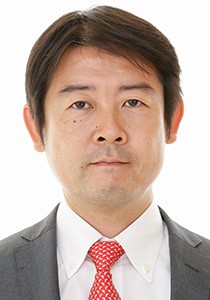
Mori Satoru
Professor at Keiō University. Specializes in international politics and contemporary U.S. foreign and defense policy and deputy director of the Keiō Center for Strategy. Born in 1972. Graduated from the University of Kyoto before earning his PhD at the University of Tokyo. He is a former official at Japan’s Ministry of Foreign Affairs and was an associate professor and a professor at Hōsei University’s Department of Global Politics before assuming his present position in 2022. His books include Vetonamu sensō to dōmei gaikō (The Vietnam War and Alliance Diplomacy) published by the University of Tokyo Press.
- English
- 日本語
- 简体字
- 繁體字
- Français
- Español
- العربية
- Русский
Defense Document Stresses Indo-Pacific
INTERVIEWER The 2026 US National Defense Strategy, released last January, articulates a policy focused on the Western Hemisphere and the Indo-Pacific. How would you assess that policy from a Japanese perspective?
MORI SATORU The new NDS prioritizes the Western Hemisphere and the Indo-Pacific, while deemphasizing on relative terms US commitments to Europe, the Middle East, and the Korean Peninsula. For Japan, the importance it places on the Indo-Pacific should be seen as generally positive.
To begin with, the strategy is predicated on the understanding that the Indo-Pacific is the global center of economic growth, and that its peace and prosperity are essential to the peace and prosperity of the United States. This is a crucial point. The notion that the United States has a significant interest in the Indo-Pacific and the strategic resolve to protect it lends credibility to the US commitment to remain engaged and defend its allies and partners in the region.
Second, the NDS clearly articulates the Trump administration’s policy of erecting a strong denial defense along the “First Island Chain,” which is something Japan should welcome. The document tells us that the United States is taking the initiative in safeguarding the status quo and preventing China from establishing a regional hegemony. This stands in sharp contrast to the way the NDS deals with Europe. How Southeast Asia figures into the strategy is unclear; Japan will need to work with Australia to keep the United States engaged throughout the region.
A third reason to welcome the current US administration’s defense policy is the funding allocated for Indo-Pacific security under the Department of Defense budget for fiscal year 2026. The programs itemized in the budget are aimed at strengthening force posture, capability, and training and exercise of the Indo-Pacific Command; boosting aid to Taiwan; and enhancing defense and security cooperation with allies and partners in the region. From Japan’s perspective, it’s all quite encouraging.
From a policy standpoint, it’s a positive thing that the United States and Japan share the strategic goals of deterring any use of force to alter the status quo in the Indo-Pacific and preventing any one country from asserting hegemony in the region. In practice as well, we’re seeing progress toward a stronger bilateral alliance as Japan builds up its defense capabilities and the United States enhances the readiness of the Indo-Pacific Command. Japan and the United States are both working to revitalize their domestic defense industries and deepen industrial cooperation, including missile co-production. While there are bound to be obstacles along the way, we’ve come to a basic understanding of what needs to be done.
Coping with Uncertainty
INTERVIEWER All that being said, Trump’s unpredictable conduct of foreign policy has generated a lot of anxiety here and around the world. Can you address those concerns?
MORI US strategic documents like the National Security Strategy and the NDS have been quite clear about prioritizing America’s regional engagement, yet now the Trump administration has embarked on a war against Iran that appears fraught with risk and uncertainty. It’s unclear at this point what impact the war might have on US engagement in the Indo-Pacific, but depending on the amount of attention and resources the conflict consumes, it could pose a problem.
Meanwhile, considerable uncertainty surrounds the “resolve” component of US deterrence in the Indo-Pacific—because no one really knows how Trump would react in the event of a crisis in the Taiwan Strait. Deterrence requires credibility, and in this case, that means convincing a certain country that the United States would not fail to intervene in the event that that country tried to alter the status quo by force. That’s a tall order for any US president.
In any case, the current challenge for frontline countries like Japan, Taiwan, and the Philippines, as well as the United States, is to boost our ability to defend the regional status quo, which entails the capacity to prevent a blitzkrieg-type attack aimed at creating a fait accompli, along with the ability and the will to keep fighting in the event of a protracted conflict. These are, in fact, the very security challenges that the Japanese government is addressing, and it’s expected to adopt a number of concrete policy measures in the latest versions of the nation’s three major security documents [the National Security Strategy, National Defense Strategy, and Defense Buildup Program]. But to build an effective deterrence by denial, Japan will have to work alongside the United States and other US allies and partners in the region.
Redistributing the Defense Burden
INTERVIEWER What’s your take on Trump’s demand that its allies shoulder a larger share of the burden?
MORI The Trump administration is calling on its allies to allocate at least 5 percent of gross domestic product as a new “global standard” for defense spending. This is not just a matter of Trump insisting that other countries pay up after enjoying a free ride at America’s expense.
The US National Security Strategy, released in December 2025, contains the section heading named “Burden-Sharing and Burden-Shifting.” There is no explicit explanation or definition of these two concepts, but this suggests that the Trump administration envisions two different approaches to redistributing the global security burden. “Burden shifting” is likely the notion of placing the primary responsibility for conventional deterrence on partners and allies deemed to possess the necessary resources to deter a hostile power that poses a direct threat. For example, Europe is seen as potentially capable of deterring Russian expansion and South Korea of deterring aggression from the North. Under “burden sharing,” the United States would continue to play the leading role, while calling on allies and partners to play a larger role in conventional deterrence.
The rationale for these approaches might resemble what was elucidated by Elbridge Colby, now undersecretary of defense for policy before he joined the administration. As Colby explained it in his 2021 work The Strategy of Denial: “The United States must be able to effectively defend its vulnerable allies in ways that it judges sufficiently correlate the costs and risks with the benefits of doing so. The costs of the fight and its results must be compatible with American resolve. This is what it means for a state to be ‘defensible’.”
He’s absolutely right. America’s commitment to its allies, i.e. its resolve, would lack credibility if it’s unable to defend those allies at an acceptable cost and risk. There’s a strategic rationale behind the demand that allies assume a greater share of the burden. The Japanese public need to understand that, by boosting this nation’s defense capabilities, we’re raising the credibility of America’s defense commitment and thereby further enhancing our own security. It is not about responding to American demands or placating Trump. It’s about strengthening deterrence.
Asia’s Security on the Bargaining Table?
INTERVIEWER What do you think Trump hopes to accomplish during his visit to China?
MORI In 2025, Trump tried to extract economic concessions from China using the “stick” of high tariffs. But instead of caving in, China responded with its own sticks in the form of retaliatory tariffs and restrictions on rare-earth exports. The US and Chinese governments are well aware that further use of such punitive measures will only compound the damage to their economies. Under the circumstances, they may instead try to reach an agreement through the exchange of “carrots.”
During his upcoming visit to China, Trump will probably try to finalize trade agreements in such high-value areas as soybeans, aircraft, and energy, while securing China’s commitment to crack down on fentanyl-related sales once again. The possibility of a deal including new Chinese business investments in the United States has also been floated, but whether that will materialize remains to be seen.
With Trump’s visit to Beijing in the offing, some in Washington have voiced concern that Taiwan might become a bargaining chip of some sort. While there’s good reason to keep a watchful eye on US-China interaction as it concerns Taiwan—not just in the coming weeks but over the next three years—it seems very unlikely that Trump would just abandon Taiwan. That said, there’s been speculation that he might agree to a delay in the sale of arms to Taiwan in exchange for economic concessions from Beijing. Such postponements can have a serious impact on Taiwan’s political climate, fueling opposition resistance to the defense increases being pushed by the ruling party. Any deal that compromised Taiwan’s security in exchange for economic concessions from China would inevitably cause serious alarm among US allies and partners.
Of course, Taiwan is at a disadvantage in that it can’t engage in its own summit diplomacy with the United States. Even so, if Washington were to bargain away Taiwan’s critical interests, it would greatly compound the distrust surrounding US foreign relations under Trump and raise serious concerns regarding the credibility of America’s security commitment in East Asia.
Advantage China
INTERVIEWER How has Trump diplomacy changed the landscape of international relations?
MORI In terms of relations among major powers, it may well have created a situation that benefits China overall. First, serious rifts have emerged between the United States and Europe. The European Union, for its part, would much prefer to avoid tensions on all three fronts—the United States, China, and Russia. But if Trump continues arbitrarily applying tariffs every time he’s unhappy about European policy or position, Europe will do as Canada has done and gradually expand economic ties with China in non-sensitive areas, accelerating the trend toward economic “de-risking” from the United States.
Second, with America’s midterm elections in the offing, President Trump would like to be able to boast of the economic deals he concluded during his trip to Beijing. In his eagerness, he might again let slip the notion of a “G2” or “Group of Two” US-China partnership.
Third, it’s been reported that the administration wants to expand economic cooperation with Russia, which would further dim prospects for a ceasefire in Ukraine. As long as the war drags on, Russia’s economic dependence on China is bound to continue.
Taking these three developments into account, it looks to Beijing as if the EU, the United States, and Russia are all knocking on its door, eager to court China economically. If President Xi Jinping believes he can reap the benefits of economic exchange with those powers even while tightening the screws on Taiwan, the Philippines, and Japan, that reduces the chances for a thaw in Japan-China relations.
When dealing with Beijing, it’s very important that Tokyo stand by its policies and positions that bear on Japanese security and not cave in to a government that adopts blatant pressure tactics to coerce another country due to inconvenience. To succumb to such pressure now would open the door to regional hegemony. Under the present circumstances, what Japan needs to do is build up its own military, strengthen the Japan-US alliance, and beef up defense cooperation with other like-minded countries.
Allies as “Strategic Assets”
INTERVIEWER What is Trump’s basic attitude toward America’s allies?
MORI President Trump’s view of what constitutes a good ally seems to differ from the understanding of previous US administrations. The Trump administration uses its own yardstick to rate America’s allies. The first basic criterion is how much a country contributes to the US economy—whether by importing US goods, thus helping correct the trade imbalance; investing in the United States, thus boosting American industry and creating jobs for American workers; or cooperating with curbs on advanced technology transfer to China, thus helping America compete with China technologically. The second criterion is whether the country poses a sufficiently low security risk to the United States—in other words, how much it contributes to conflict prevention by boosting its own defense capabilities and defense spending; whether it’s helping to shore up the US defense industry by purchasing American-made weapons; and whether it’s shouldering a big enough share of the costs of stationing US troops to make its protection worth America’s while.
We can build the Japan-US relationship into something resilient enough to withstand vicissitudes in US-China ties by fostering a recognition—within the Trump administration, its Republican and MAGA support base, and US society as a whole—that Japan is indispensable to the United States. The key issue is whether Japan and the United States can continue to find value in the partnership even in a situation where concrete economic and security interests reign supreme. In this context, Japanese investment in the United States should be approached not just as a business opportunity but also as a tool for fostering pro-Japanese feeling through job creation in the United States.
America’s Three Faces
INTERVIEWER How do we continue to deal with America in its new and much-criticized incarnation?
MORI Viewed from Japan’s perspective, the United States today presents three different aspects. There’s the “incorrect America,” as seen in the Trump administration’s aggressive behavior toward Venezuela and potentially other countries in the Western Hemisphere. There’s the “distracted America” that can’t focus on prioritized geostrategic goals and squanders its strategic attention and resources on areas outside the Indo-Pacific. And finally, there’s the “indispensable America” that, whatever its flaws, remains vital to Japan from the standpoint of our economic health and our ability to deter Chinese aggression.
As I see it, we need to deal with the United States with a clear-eyed acceptance of these three aspects, while keeping the big picture firmly in mind. From the standpoint of both security and the economy, America is an indispensable partner with whom Japan must maintain and strengthen relations. This does not mean kowtowing to Washington’s every whim, nor does it mean abandoning our commitment to a free and open international order governed by the rule of law. It seems to me, however, that we must recognize that the current age demands a dispassionate, shrewd, and realistic approach to foreign relations.
Originally published in Japanese based on a February 27 interview in Tokyo by Ishii Masato of Nippon.com. The interview was subsequently lightly edited by the interviewee in response to the US military operation in Iran.
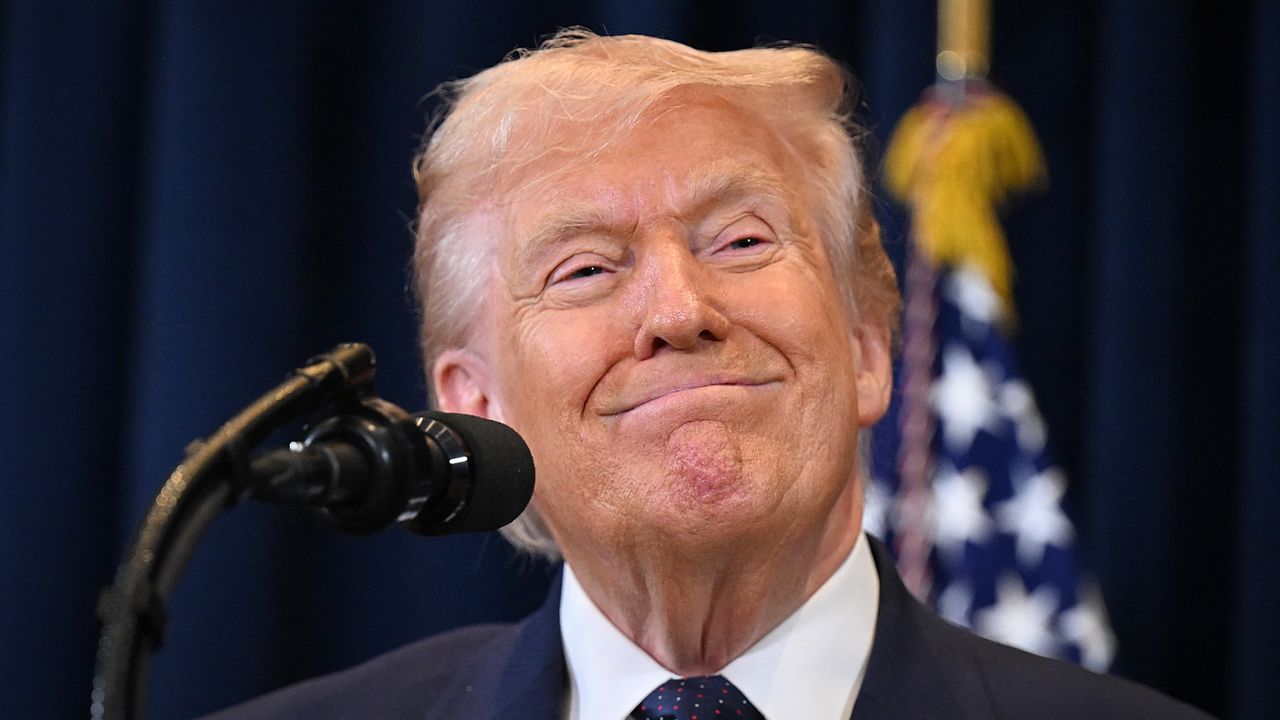
(Banner photo: US President Donald Trump explains the military operation in Iran during a news conference in Doral, Florida, March 9, 2026. © AFP/Jiji.)
United States security Asia-Pacific Iran Donald Trump defence