Japan’s PM Takaichi Rolls Up Her Sleeves: Economic Progress Key to Maintaining Popular Support
Politics- English
- 日本語
- 简体字
- 繁體字
- Français
- Español
- العربية
- Русский
Takaichi’s Successful Gambit
At a press conference in mid-December 2025, Prime Minister Takaichi Sanae told reporters she had been too busy with affairs of state since taking office the previous October to give any thought to a snap election. In fact, the timing of such an election was very much on her mind. In late November she sought the opinions of several senior Liberal Democratic Party officers, and in December she instructed her closest aides to draft a tentative timetable. By mid-January Takaichi had decided to dissolve the House of Representatives that same month—before the 2026 ordinary session of the Diet had convened—and hold a general election early in February.
Driving this timing was Takaichi’s concern that she lacked the Diet and party support needed to get things done. The LDP had suffered serious losses in the October 2024 general election, held under Prime Minister Ishiba Shigeru. After the defection of Kōmeitō, its longtime junior coalition partner, the ruling party found itself with just 199 out of 465 seats in the powerful lower house. Takaichi was able to eke out a bare majority with the help of a new coalition partner, Nippon Ishin no Kai, but that still left the administration in a precarious position in terms of pushing its policies through the Diet.
Moreover, Takaichi herself was enjoying high approval ratings. In an opinion poll conducted by NHK (Japan Broadcasting Corp.) between January 10 and 12, support for her cabinet stood at 61.9%, down just slightly from the 65.6% posted in early November, shortly after she formed her cabinet. Support for the embattled LDP had also recovered somewhat after plunging below 30% under Ishiba.
The results of the February 8 race vindicated Takaichi’s decision. The LDP came away with a supermajority of 316 seats, the highest total for a single party in the postwar era.
Takaichi’s popularity was unquestionably one factor behind the LDP’s stunning performance. In a December 2025 opinion poll by the Yomiuri Shimbun, 29% of respondents expressing support for the Takaichi cabinet cited “high policy expectations.” And in a January NHK survey, 33.2% of those approving of the cabinet cited its “ability to get things done.” The latter assessment was doubtless inspired by the whirlwind of activity that characterized Takaichi’s first two months in office. Before the year was out, she had met with US President Donald Trump, established a new Headquarters for Japan’s Growth Strategy, overseen the drafting of a major economic stimulus package, and shepherded the associated supplementary budget through the Diet.
Clear Message on “Responsible Fiscal Activism”
Another factor behind the LDP’s electoral triumph was the prime minister’s consistent and accessible messaging on the economy—specifically, her commitment to spur economic activity through a “responsible proactive fiscal policy.” The basic idea is to nurture growth driven by domestic private-sector investment—something that has been seriously lacking in Japan—through fiscal outlays targeting key strategic areas.
The specific areas targeted fall into the two categories of “crisis-management investment” and “growth investment.” The former refers to initiatives to enhance economic security and food security, while the latter involves investment in an array of innovative industries and technologies where rapid growth is anticipated. During the general election campaign, Takaichi focused heavily on this policy, often referring to specific initiatives and programs. These remarks resonated with the public and doubtless boosted voter support for LDP politicians nationwide.
A key aspect of Takaichi’s messaging on fiscal policy was her insistence she envisioned a radical departure from the austerity of previous administrations. This depiction of her predecessors’ policies was not entirely accurate. A period of fiscal expansion began in 2018, and the budget has grown substantially each year since the COVID-19 pandemic hit in 2020—mainly owing to the passage of large supplementary budgets (which has become virtually routine). It is true, however, that initial budgeting has prioritized items relating to social security and healthcare while limiting spending on growth initiatives. As a result, the government has tended to rely on the supplementary budget process to fund key policy programs. This was doubtless the real target of Takaichi’s criticism.
In the 2025 race for the House of Councillors, the rising cost of living had been a major issue, and the opposition parties had campaigned heavily for cuts in the ever-unpopular consumption tax. In the February general election as well, the new Centrist Reform Alliance sought to attract voters with a pledge to exempt food items from the consumption tax. However, this time, the LDP embraced Takaichi’s position in favor of temporarily suspending the tax on food. As a result, the opposition was unable to gain traction on this potentially volatile issue.
The Center Did Not Hold
The third big factor contributing to the LDP’s historic win was the disarray of the opposition—particularly, the disastrous electoral debut of the Centrist Reform Alliance.
On January 16, the leaders of the center-left Constitutional Democratic Party of Japan (then the largest opposition party in the Diet) and the centrist Kōmeitō (the LDP’s longtime junior coalition partner) announced their intent to form a new opposition party, dubbed the Centrist Reform Alliance. With a snap election in the offing, consolidation seemed to make sense, given the challenges facing smaller parties in the winner-take-all single-seat election system for the lower house. The CDP was doubtless hoping that votes from the Kōmeitō faithful, mostly members of the Sōka Gakkai Buddhist lay organization, would help push its own politicians over the top in toss-up districts.
During the years of the LDP-Kōmeitō coalition, the two parties had effectively coordinated their electoral strategies, and the Sōka Gakkai had indeed helped elect a number of LDP politicians running in single-member constituencies. Had those Sōka Gakkai votes shifted to the CRA in the 2026 general election, the outcome might have been very different. In the event, the CRA’s strength in the lower house plunged from 167 seats just before the election to a mere 49 after.
How do we explain the Centrists’ electoral collapse?
Disunity in the Ranks
There are three basic reasons for the CRA’s failure.
One was simply that the merger took place less than a month before the general election, leaving too little time for the new party to establish name recognition
The second reason was the manifest lack of unity on key issues surrounding security policy.
In 2015, Kōmeitō had acquiesced in the cabinet’s reinterpretation of the Constitution and the subsequent passage of controversial legislation allowing Japan to exercise the right of collective self-defense (that is, the use of force to defend allies under attack) in “survival-threatening situations”—a change that the CDP had vigorously opposed. Unable to reconcile those policy differences ahead of the February 2026 election, the CRA resorted to vague language in support of a “realistic foreign and security policy.” By skirting the fundamental issue, the new party paradoxically highlighted the deep divide within its ranks.
The Centrists also failed to coalesce around a unified policy on the replacement of US Marine Corps Air Station Futenma in Ginowan, Okinawa Prefecture, with facilities in Henoko (Nago), also in Okinawa. Questioned about the CRA’s position on the controversy, then Co-President Noda Yoshihiko could say only that the party planned to “reach a conclusion as soon as possible after the election.” Such ambiguity on security issues must have struck many left-leaning CDP supporters as an unacceptable shift to the right by politicians who had previously called for a repeal of the “unconstitutional portions” of the 2015 security legislation.
Finally, as a result of time constraints and ideological differences, the CRA ended up focusing its election campaign almost exclusively on a single proposal, namely, exemption of food items from the consumption tax. The poverty of the Centrists’ platform was all the more apparent when compared with the compelling messaging of Prime Minister Takaichi, who communicated a clear vision for Japan’s future supported by numerous concrete programs under her “responsible proactive fiscal policy.”
In the Driver’s Seat
The LDP’s electoral rout has clearly bolstered Takaichi’s leadership position within the ruling bloc. Meanwhile, the powers of the LDP president and prime minister are stronger than ever, thanks to a raft of political reforms implemented since the 1990s.
The electoral reform of 1994, which instituted single-member districts in place of the old medium-sized multi-member constituencies, boosted the power LDP presidents wield over their party by giving them a much larger say in the endorsement of candidates. Further, the reforms implemented in conjunction with the 2001 cabinet reorganization have fostered a top-down, centralized model of policy making by giving the Cabinet Secretariat—an organ directly under the prime minister—the powers and resources to formulate national policy. Finally, the 2024 dissolution of the LDP factions (with the exception of that headed by former Prime Minister Asō Tarō) has made it far more difficult for the party president’s rivals to check his or her powers with respect to policy and personnel appointments.
Whatever her concerns about her power base prior to the election, Takaichi displayed firm top-down leadership from the get-go. This was apparent in her October decision to replace national security adviser Okano Masataka—named secretary-general of the National Security Secretariat just nine months previously—with Ichikawa Keiichi (appointed ambassador to Indonesia earlier the same month). Likewise, her selection of aides clearly reflected her personal judgment, as opposed to any eagerness to build alliances within the party. She also exhibited strong leadership on the policy front, announcing her decision to move up the scheduled revision of Japan’s three key security documents and rejecting the stimulus plan initially proposed in November in favor of a more generous package.
Above all, Takaichi’s one-woman leadership style was seen in her decision to dissolve the House of Representatives, which she reached without consulting LDP Secretary General Suzuki Shin’ichi. Calling a snap election without the input of the secretary general—the party’s chief operating officer—is virtually unheard-of.
Looking Ahead to 2028
The ruling bloc (including Nippon Ishin no Kai) now controls 352 of the lower house’s 465 seats. Backed by such numbers, the prime minister will doubtless forge ahead with her “responsible proactive fiscal policy,” including budgeting reform to enable multiyear allocations in support of strategic investment. She is also expected to follow through on plans to suspend the consumption tax on food items for two years.
But one key obstacle to smooth governance remains: The ruling bloc is currently five seats short of a majority in the House of Councillors. To be sure, with more than a two-thirds majority in the more powerful House of Representatives, the LDP has the numbers to re-pass legislation that the upper house has rejected. But overriding the House of Councillors with a second lower house vote is time consuming and politically costly.
For this reason, the next House of Councillors election, in 2028, will be a major test for Takaichi and her administration. In the 2025 upper house race, the ruling party won just 39 of the 125 seats on the line, leaving it with 101 members in the 248-seat chamber. Of those LDP seats, 60 will come up for election in 2028. Unless the LDP secures at least that number, its position in the House of Councillors will weaken even further. In only three of the nine upper house races held since 2001 has the LDP captured that many seats.
This is important information in terms of predicting the current administration’s governing strategy. Although Takaichi is known for her right-leaning views on the Constitution, defense, and certain social issues, she is likely to focus heavily on the economy over the next two years with a view to maintaining a high public approval rating ahead of the 2028 upper house election.
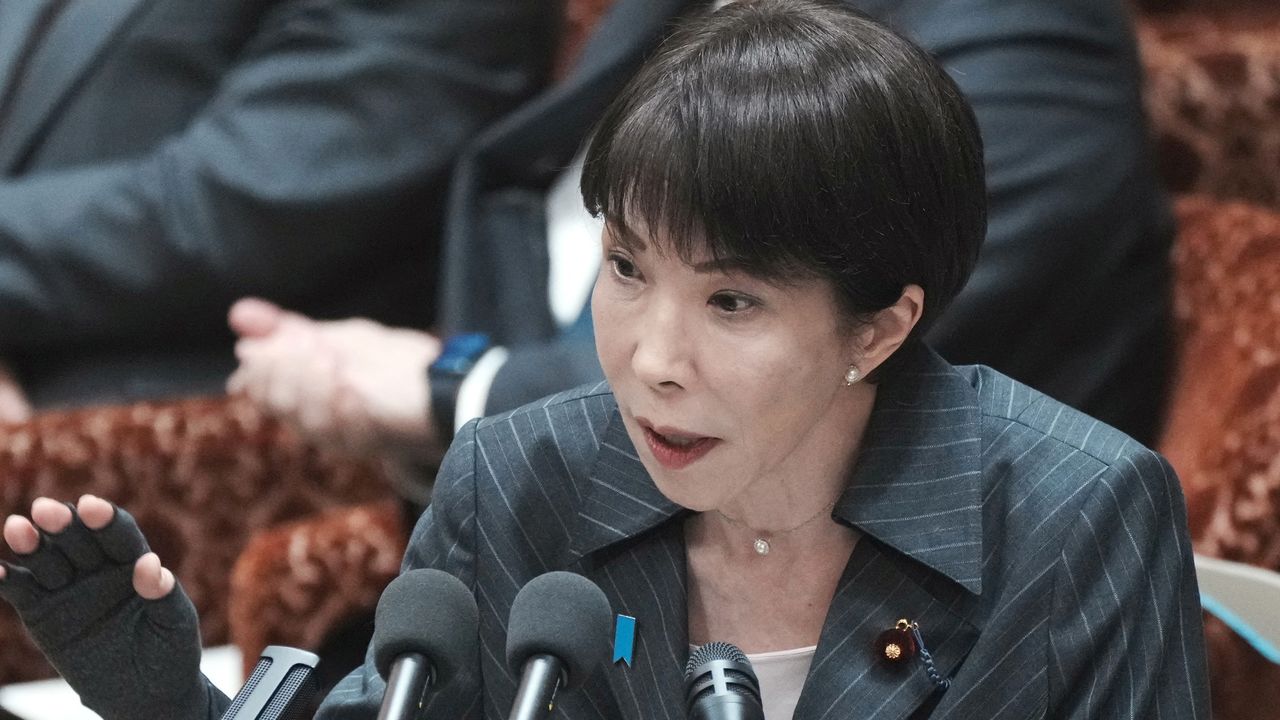
(Originally published in Japanese on March 13, 2026. Banner photo: Prime Minister Takaichi Sanae fields questions at a House of Representatives Budget Committee meeting, March 3, 2026. © Jiji.)