Honda, Hit by Massive Losses, Moves to Rethink EV Strategy
Economy Environment World- English
- 日本語
- 简体字
- 繁體字
- Français
- Español
- العربية
- Русский
Trump’s Policy Shift
On March 12, Honda announced that it would record net losses of ¥690 billion for the fiscal year ending March 2026, a reversal from its ¥835.8 billion in profit in fiscal year 2024 (ending March 2025) and its first deficit since going public. The losses are attributed to a slowdown in demand for electric vehicles.
After announcing in 2021 that it would phase out gas-powered cars, Honda accelerated its EV strategy in the United States, the main profit driver for its automobile business. In the following year, it announced a $700 million investment to turn its plant in Ohio into a hub for EV production. In 2023, it unveiled plans to invest $4.4 billion with South Korean battery giant LG Energy Solution to build a joint battery production plant in Ohio. Honda’s total EV-related investment, centering on the United States, had exceeded ¥3 trillion at this point.
However, the situation changed following the start of the second administration of US President Donald Trump in early 2025. The Trump administration scrapped EV subsidies, and the US market began to lose its momentum. As a response, Honda suspended development of some models in its 0 (Zero) Series, a key component of its EV strategy. These had been scheduled for production at the Ohio plant. Because the company had already invested in molds and production equipment, it recorded losses equivalent to ¥1.3 trillion.
For fiscal 2026, an additional ¥1.2 trillion of losses are expected, such as from compensation to suppliers. This would bring the total impact of Honda’s EV strategy overhaul to ¥2.5 trillion over a two-year period.
Then, on March 25 this year, Sony Honda Mobility, a joint venture with the Sony Group, announced it would halt its development and sales of EVs, sending further shockwaves.
Automobiles are on the trajectory of becoming more “intelligent”—think of a smartphone with wheels. Honda recognized that with the general shift toward EVs, which are well suited to smart technologies and control systems, Sony’s capabilities in smartphones, semiconductors, and entertainment would become increasingly useful. Sony, on the other hand, was keen on tapping into Honda’s expertise in vehicle manufacturing. With their strategic interests aligned, the two companies established a joint venture in 2022. The collaboration between these two major Japanese brands garnered global attention.
Sony Honda Mobility has already canceled deliveries of its Afeela EVs, for which advance orders had already been made in the US. The model, which shared components with the 0 Series and was set to be produced at Honda’s Ohio plant, was ultimately canceled as part of the strategic review.
A Course Correction That Came Too Late
What fundamentally went wrong with Honda’s EV strategy? CEO Mibe Toshihiro’s decision to phase out gas-powered cars was not inherently misguided. The real issue, in my view, was the strategy’s lack of flexibility, the slow course correction, and the gradual loss of talent that is now starting to undermine the competitiveness of company’s four-wheel vehicle business.
At the time Mibe took office, there was a strong push for the industrial sector to reduce CO2 emissions, a major driver of climate change. Meanwhile, EV manufacturers like Tesla and China’s XPeng Motors were driving the convergence of automobiles and AI, and vehicle “intelligence” was being advanced in areas including unmanned driving. These cars were termed SDVs, or software-defined vehicles. This development further pushed the shift toward EVs, as their compatibility with software control makes them well suited to promoting SDVs.
In the United States, the world’s second-largest EV market after China, the Biden administration incentivized EVs through subsidies. The US government also introduced environmental regulations requiring CO2 emissions to be halved by 2032 compared to 2026 levels. The Environmental Protection Agency estimated that if these regulations were implemented, EVs could account for up to 67% of new car sales in the United States. By comparison, EVs are estimated to have accounted for about 7.8% of new car sales in 2025.
Honda sold 1.43 million new cars in the United States in 2025. The United States accounts for 40% of the company’s global sales. In fact, Honda has the highest US sales ratio among Japan’s top three automakers, compared with 24% for Toyota and 29% for Nissan. With a strong financial position, including over ¥4 trillion in cash on hand, Honda decided to make bold investments in EVs in the United States to defend its stronghold.
American manufacturers, meanwhile, are also facing impairment losses in their EV businesses. For example, Ford announced it expects losses of $19.5 billion by 2027, while GM expects losses of $6 billion for the October–December quarter of 2025. Ford’s projected losses are even larger than Honda’s.
EVs are plateauing in Europe as well, and Germany’s Volkswagen, the world’s second-largest automaker by sales after Toyota, recorded EV-related special losses of €5.9 billion in its fiscal year ended December 2025.
As seen in these cases, automakers that proactively invested in EVs are now incurring substantial losses as they adapt to a slowing market and take impairment charges on their capital investments.
Toyota Avoids Extreme Shift
Toyota had also laid out an EV plan, stating that it would invest ¥4 trillion in EVs and other electrification initiatives by 2030, with half of that allocated to automotive batteries. In November 2025 it celebrated the opening of its battery plant in North Carolina.
The difference, however, is that Toyota did not pursue an extreme shift towards EVs. According to an executive at a battery-related company, “Toyota made a quick and detailed course correction, such as by increasing its proportion of batteries for hybrid vehicles instead of EVs at its US plants.”
The company also delayed its plan to produce electric SUVs at its Kentucky plant by about a year from the originally planned start in 2025. Furthermore, it postponed planned production of an electrified Highlander at its Indiana plant, originally scheduled for 2026, by two years, and consolidated EV production in Kentucky. Back in Japan, the construction of a battery plant in Kanda, Fukuoka, has also been delayed.
Commenting on Honda’s forecast net loss, Mibe said at a press conference that he regretted not having multiple strategic options. Compared with Toyota’s approach, it does seem that Honda lacked flexibility in its strategy.
Why did the responses of Toyota and Honda result in different outcomes? Toyota, rather than being guided mainly by government regulations in the United States, closely monitored actual customer demand in the US market, where hybrids were starting to sell better, and adjusted its EV strategy accordingly. Honda, on the other hand, appears to have been overly influenced by the change in regulations. In addition, Toyota avoided overcommitting to EVs and instead advanced the transition gradually, which helped it avoid the full impact of the market slowdown.
That said, Toyota has not moved to halt its electrification efforts. In fact, it has announced a new $1 billion investment in its US plants, which will not only strengthen production of hybrid vehicles but also support the production of new EV models.
Questions Over Mibe’s Responsibility
According to one former Tesla employee, the motto of CEO Elon Musk is “fail fast.” What this means is that even if you take on a new challenge and fail, the key is to make a quick course correction. In an era where technological innovation is advancing rapidly and the right answers are constantly changing, this kind of mindset is especially important.
Honda’s revival from here hinges on whether it can shift its trajectory swiftly. In addition to pivoting from EVs to hybrids, the company also plans to strengthen its business in India. Mibe assumed the role of “head of business reform” in April, and it appears he intends to lead the turnaround himself.
But morale within the company does not appear to be too strong. One executive notes, “It’s hard to stay motivated with the current CEO. He’s putting aside the failure of the EV strategy that he himself pushed for and is avoiding management responsibility, which doesn’t seem right.”
A mid-level engineer revealed that the initial plan has led to another problem. “The president’s declaration to move away from fuel-powered vehicles resulted in an outflow of talented engineers that work with their engines to other companies. It’s beginning to hinder our ability to make high-quality products.”
In the past 10 years or so, Honda’s four-wheel vehicle business has been low in profitability, and its two-wheel business has been the main pillar supporting the company. A major cause for the underperformance of the four-wheel segment is the lack of hit models or cars that generate strong profits. Its product competitiveness had been on the decline compared with Toyota. These structural issues remain unchanged, and I personally believe that a turnaround for Honda will not be easy.
Each year in mid-May, Honda issues a business briefing detailing its current strategy and initiatives. It will be interesting to see what kind of restructuring will be presented this year. Depending on what is announced, observers may interpret Honda’s future as signaling a “yellow light” ahead of an impending business crisis.
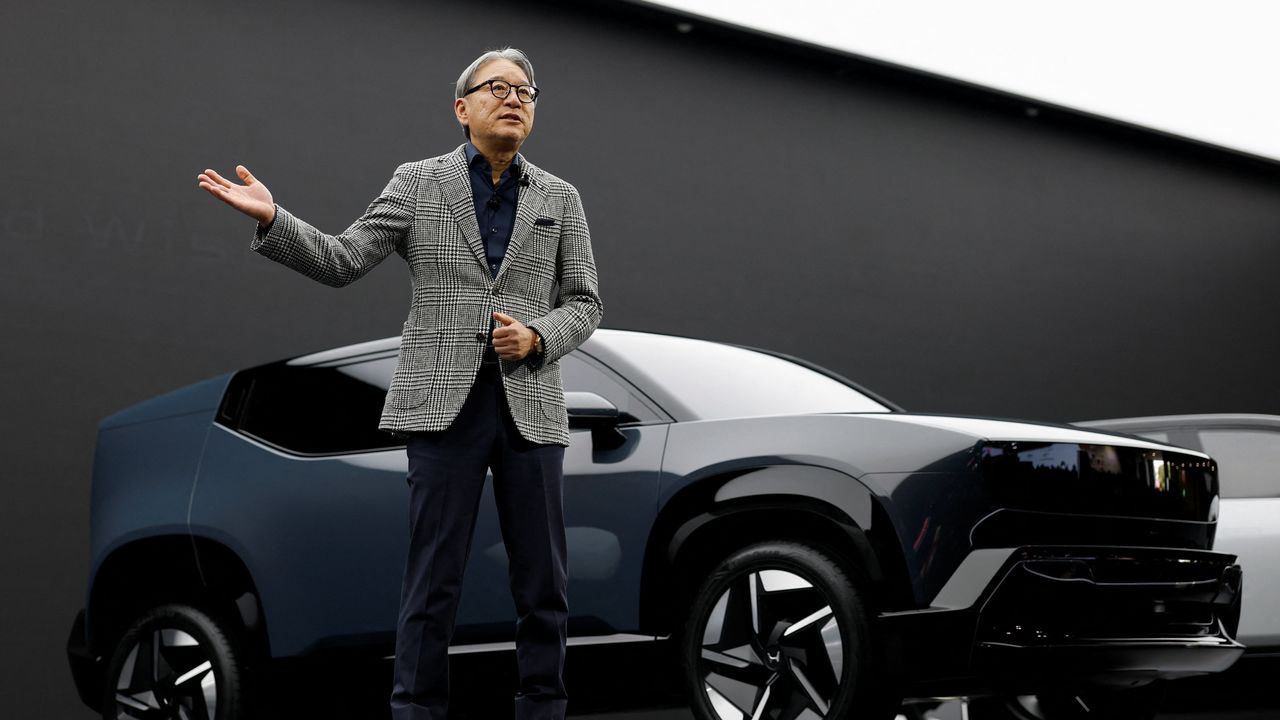
(Originally published in Japanese. Banner photo: Honda CEO Mibe Toshihiro holds an online press conference on March 12, 2026, on the company’s results for fiscal 2025, projecting its first-ever net loss since listing. © Jiji.)