Japan Engaging Like-Minded Countries to Sidestep China- and Trump-Related Risks
Politics- English
- 日本語
- 简体字
- 繁體字
- Français
- Español
- العربية
- Русский
Upgrading FOIP
In mid‑April, Prime Minister Takaichi Sanae announced an initiative called the Partnership on Wide Energy and Resource Resilience Asia (POWERR Asia) during an online meeting with leaders of key states in the Association of Southeast Asian Nations, including the Philippines and Vietnam. By providing $10 billion in financing to countries facing heightened energy insecurity due to the crisis in the Strait of Hormuz, Japan seeks to strengthen regional supply chains and deepen cooperation with ASEAN partners.
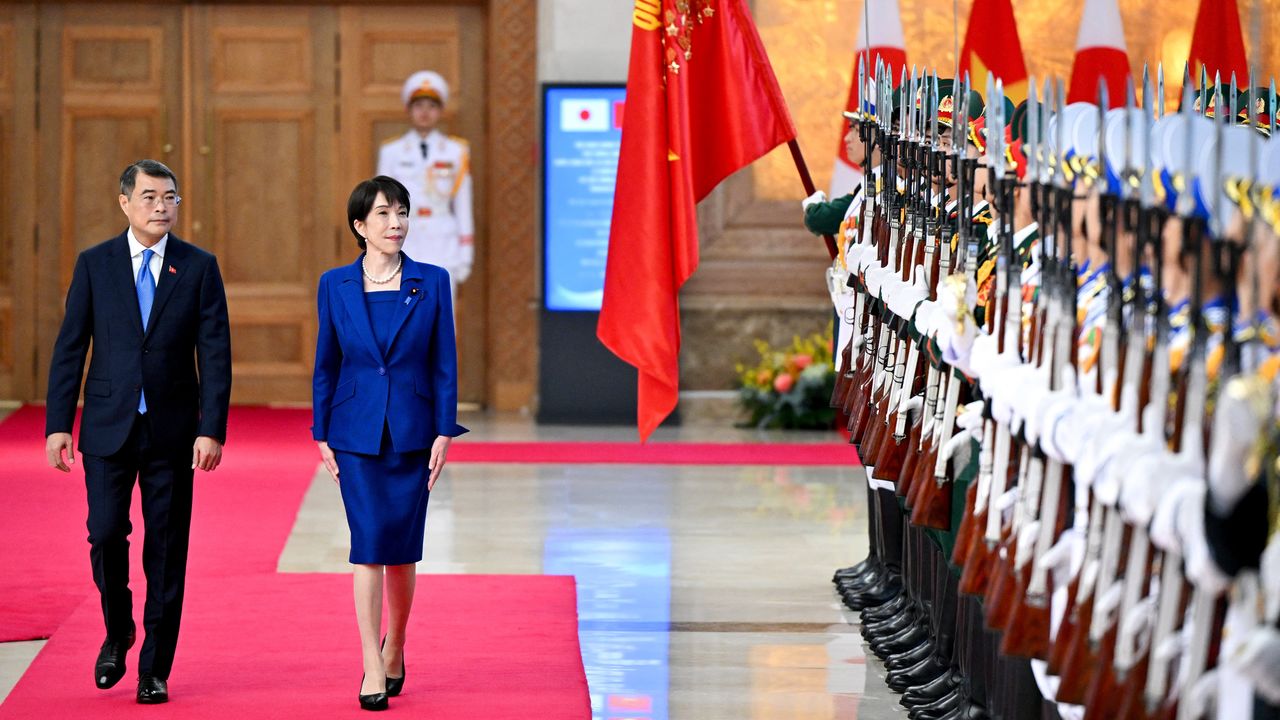
During a visit to Vietnam in early May, Takaichi delivered a speech calling for an evolution of the Free and Open Indo‑Pacific strategy, first advocated a decade ago by then Prime Minister Abe Shinzō. Emphasizing closer coordination and cooperation with like‑minded countries in Southeast Asia and beyond, she secured strong support from Vietnamese leaders for both the FOIP and POWERR Asia initiatives.
Takaichi then traveled to Australia, where she met Prime Minister Anthony Albanese on May 4. The two leaders agreed to strengthen cooperation in energy and economic security, including on coal and liquefied natural gas. They also concurred on the need to reinforce Japan-Australia coordination—clearly with China in mind—to prevent a power vacuum from emerging in the Indo‑Pacific as US attention and resources are absorbed by the war in Iran.
Australia as a Quasi-Ally
With a population of just under 28 million, Australia nonetheless plays a key role in regional security as a member of the Quad—alongside Japan, the United States, and India. For Washington, it is the principal ally representing Oceania and a core member of the Five Eyes intelligence‑sharing network. For Japan, Australia occupies a central position in cooperation among like‑minded partners and can functionally be regarded as a quasi-ally.
In recent years, however, Canberra, like many long-time US allies, has experienced strained relations with the Trump administration, and plans to procure nuclear‑powered submarines under the AUKUS framework appear to be in limbo. Against this backdrop, Prime Minister Takaichi has gone beyond boilerplate support for trilateral Japan-US-Australia cooperation, explicitly positioning Japan-Australia ties as the core of a broader network of like‑minded countries and expressing her intention for the two countries to take the lead in ensuring regional stability.
The Albanese government has already reached agreement with Japan on a joint development plan based on an upgraded version of the Maritime Self‑Defense Force’s Mogami‑class frigate. Of the 11 escort vessels Australia plans to build, 8 are slated for domestic construction. Beyond deepening economic and technological cooperation, the project is expected to enhance practical interoperability between the Japan Self‑Defense Forces and the Royal Australian Navy through standardized equipment and joint training.
Sales Pitch by Defense Minister Koizumi
Japan is also accelerating efforts to export used defense equipment. On April 21, the Takaichi cabinet approved the removal of longstanding restrictions that had limited defense exports to five noncombat categories—rescue, transport, warning, surveillance, and minesweeping—opening the door to overseas sales of weapons with lethal and destructive capabilities.
This decision marks a major shift in Japan’s security policy. It is intended to strengthen the production base of Japan’s defense industry—until now dependent almost exclusively on orders from the SDF—thereby enhancing sustainability during contingencies and improving deterrence and response capabilities.
Defense Minister Koizumi Shinjirō promptly visited Indonesia and the Philippines in early May, explaining that Japan could now export such platforms as frigates and submarines. He also stressed the growing importance and necessity of closer cooperation among countries with shared values amid an increasingly complex international environment.
Although Koizumi’s visit to Indonesia did not yield concrete commercial agreements, Jakarta reportedly expressed interest in second‑hand submarines previously operated by the MSDF. The two countries signed an arrangement to advance defense equipment and technology cooperation.
In the Philippines, Koizumi agreed to establish a working‑level group to begin concrete discussions on the export of used escort vessels. Manila has repeatedly clashed with Beijing over sovereignty claims in the South China Sea. In a joint statement issued after their talks, the two sides explicitly named China and voiced serious concern over its “coercive activities” in waters surrounding Japan and in the South China Sea.
Japan’s engagement goes beyond arms sales. On May 6, Koizumi attended the annual Balikatan US-Philippines joint military exercise on Luzon Island. For the first time, Japan was a full participant, deploying some 1,400 personnel from its Ground, Maritime, and Air forces and conducting live‑fire drills with land‑to‑ship missiles. The move was designed to underscore trilateral cooperation among Japan, the United States, and the Philippines and to signal deterrence vis‑à‑vis China.
As the Iran war forces the Trump administration to commit vast military resources to the Middle East, the risk of a weakened deterrence and crisis‑response capacity in the Indo‑Pacific cannot be dismissed. While strengthening ties with regional partners, Japan must also remain vigilant in urging Washington to uphold its commitments under the Japan-US alliance.
(Originally published in Japanese on May 12, 2026. Banner photo: Prime Minister Takaichi Sanae and Vietnamese Prime Minister Le Minh Hung at a welcoming ceremony in Hanoi, Vietnam, May 2, 2026. © AFP/Jiji.)