The Sanaenomics Shift: Going Beyond Fiscal Scale to Find a Path to Japanese Growth
Economy- English
- 日本語
- 简体字
- 繁體字
- Français
- Español
- العربية
- Русский
Rethinking What “Proactive” Fiscal Policy Means
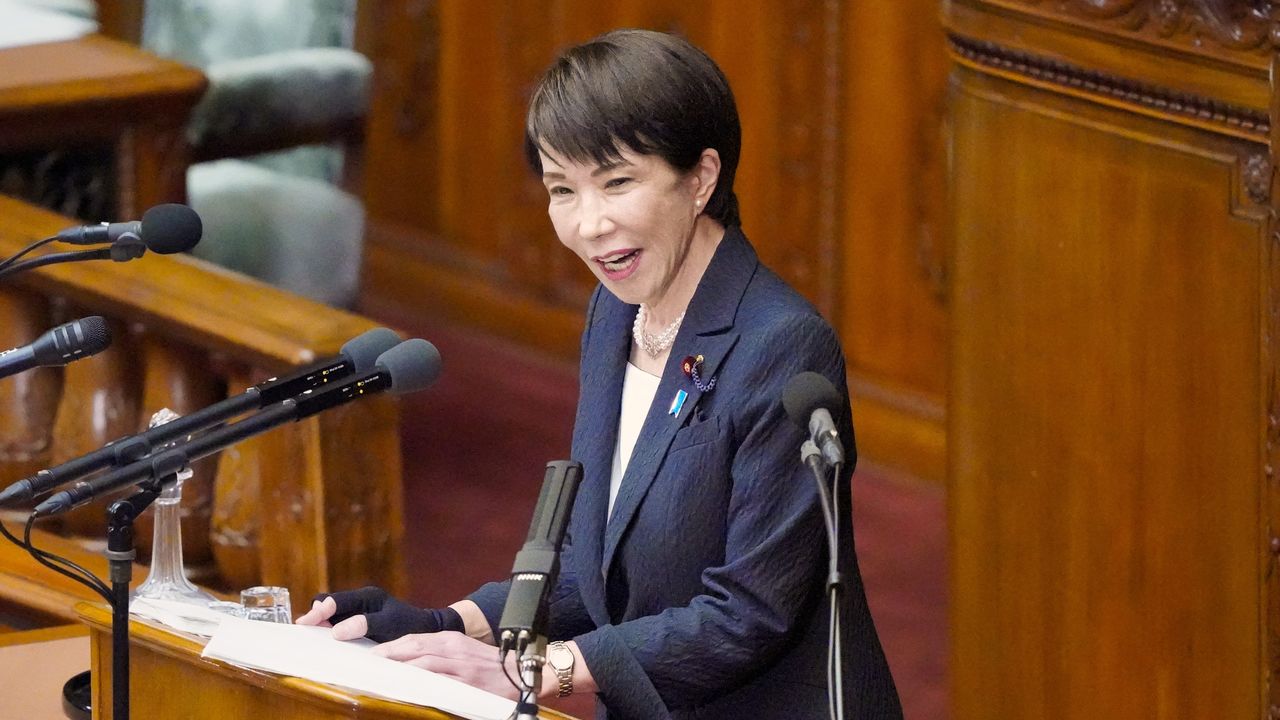
In her February 20, 2026, policy speech, Prime Minister Takaichi Sanae emphasized moving away from Japan’s longstanding reliance on supplementary budgets to stimulate economic growth and called for multiyear budgeting and long‑term funds to improve fiscal predictably. Finance Minister Katayama Satsuki reinforced the point, stressing that responsible and proactive public finances do not mean expanding the scale of spending, but rather prioritizing measures that have demonstrable impact and reexamining those with limited impact.
A proactive fiscal policy, in other words, does not necessarily mean spending more. It is about changing how the budget is used—extending the time horizon of public investment, redesigning fiscal frameworks to encourage private investment, and shifting the focus from scale to substance.
Between fiscal 2023 and 2025, overall spending—including supplementary budgets—rose by less than 5%, while tax revenues climbed 12%. This suggests a policy stance combining fiscal consolidation with targeted stimulus. The fiscal 2026 budget deficit is modest by international standards, and even a sizable supplementary budget would not push the country into high‑deficit territory. Indeed, the ratio of government debt to gross domestic product is expected to decline gradually.
Yet commentary continues to focus on fiscal and monetary viability, reflecting a kind of path dependence rooted in the 2000s (or even the 1990s), when Japan’s central macroeconomic challenge was weak demand and persistent deflation. Under those conditions, the size and effectiveness of fiscal and monetary stimulus were indeed critical.
Today, however, Japan has entered a new economic phase—some arguing the turning point came in late 2018—as supply side constraints, such as labor shortages and sluggish productivity, have become more pressing. The economic discourse has yet to catch up with this reality.
The real focus of debate regarding the administration’s economic strategy should thus be on how fiscal tools are deployed and what institutional reforms accompany them. Takaichi’s own framing is clear: in her February policy speech, she pointed to an acute shortage of capital input—that is, domestic investment—and laid out a vision centered on strategic investment for growth and crisis management.
The Theory Behind Sanaenomics
Two policy frameworks hold the key to understanding this new policy orientation. The first is the concept of a high-pressure economy, and the second is MSSE, or modern supply-side economics.
The idea of a high-pressure economy was proposed in 1973 by Arthur Okun, who suggested that productivity could be enhanced by accelerating labor reallocation. Traditional macroeconomics treated business cycles as short term demand fluctuations and potential growth as a long-term, supply-side issue determined by demographics, capital, and technology.
This dichotomy was challenged by what the world experienced following the 2008 global financial crisis. A financial shock should, in theory, be temporary and leave medium- to long-term activity unaffected. Yet even after the crisis abated, economic activity did not fully recover.
Changes in aggregate demand, it turned out, can leave lasting marks on the supply side, including long-term GDP levels. Prolonged weak demand erodes labor participation and investment, while sustained strong demand encourages labor mobility, capital formation, research and development, and labor-saving innovation, thereby raising potential GDP. When demand exceeds supply capacity and labor shortages emerge, the economy is primed for productivity gains through reallocation of labor and capital. Reacting with abrupt fiscal or monetary tightening to quell inflation risks squandering this opportunity.
At the same time, any action taken under supply constraints always involves trade-offs. High fiscal spending in a high-pressure economy can crowd out private activity by drawing workers into government projects. And subsidizing declining industries can impede productivity gains that come from labor mobility.
This is where MSSE comes in. Unlike the supply-side theories of the 1980s—associated with neoliberal tax cuts and deregulation—MSSE, articulated in 2022 by then‑US Treasury Secretary Janet Yellen, emphasizes bottom-up growth through human resources development, along with the fostering of new industries through regional industrial clusters and infrastructure improvement. It envisions government‑guided growth to harness the benefits of a high-pressure economy, not laissez‑faire. Yellen herself has written on high‑pressure economies, and as Federal Reserve chair in 2016 noted that demand can have persistent effects on supply, underscoring the compatibility of the two frameworks.
A New Look at Industrial Policy
Takaichi’s agenda for investment in growth and crisis management is, in effect, a Japanese version of MSSE. Its aim is to encourage investment through public-private collaboration by strengthening the foundations that make private investment viable. For example, an industrial cluster will not emerge simply with the construction of a new semiconductor plant; there also needs to be access to electricity, water, transport networks, suppliers, and human resources. AI and robotics adoption requires training, data infrastructure, standardization, and regulatory reform—roles the public sector must help coordinate.
This framing might invite criticism that industrial policy is making a comeback, a specter that makes many economists—myself included—somewhat uneasy. Research in the 1990s and 2000s highlighted how Japan’s industrial policy often failed to nurture high‑growth sectors and instead funneled resources into low‑growth or scale-constrained industries.
Some policies, such as the shelved 1964 bill to seminationalize the auto and steel industries, were clearly misguided. These experiences have led most economists to distrust attempts by bureaucrats—who bear no personal financial risk—to identify future growth industries.
But industrial policy has undergone a measured reassessment since the late 2010s. A more nuanced view has emerged after Washington played a role in developing the internet and strengthening cybersecurity and from case studies in South Korea and Taiwan.
A growing body of research now argues that Japan’s former industrial policy is difficult to evaluate because two contradictory aims were pursued at the same time: protecting declining industries and promoting emerging ones. Some suggest that the very act of doing both may have contributed to policy failure. Importantly, this recent reassessment does not assert that industrial policy can be trusted to produce success. On the contrary, it stresses that intervention should not be made if policymakers cannot clearly identify coordination failures, learning effects, or national‑security needs. This is a more cautious, evidence‑based view of when industrial policy may be warranted.
From Scale to Substance
The idea of a high‑pressure economy and the principles of MSSE both call for policy management that fully considers Japan’s supply‑side constraints: labor shortages and underdeveloped infrastructure. With such ceilings in view, the central question is not just how much the government spends but how and on what. In many cases, institutional reform will matter more than fiscal scale in determining effectiveness. Policymaking must therefore scrutinize whether the conditions for guided growth, as suggested by recent industrial policy research, are genuinely present.
For years, economic policy debate has revolved around quantitative dichotomies: fiscal stimulus versus consolidation and monetary easing versus tightening. But in an era defined by labor shortages and other supply constraints, the terms of debate are shifting. Rather than advancing macro-level solutions, the focus is increasingly on whether a policy fits the realities and potential of specific industries. Accurately evaluating policy choices is becoming impossible without detailed, sector-specific knowledge. This is a major challenge for economists and analysts like me, but it also presents opportunities to rethink how Japan approaches growth.
(Originally published in Japanese. Banner photo: Prime Minister Takaichi Sanae delivers a policy speech at a plenary session of the House of Representatives. © Jiji.)