Japan and South Korea Advance Strategic Coordination Amid Global Instability
Politics- English
- 日本語
- 简体字
- 繁體字
- Français
- Español
- العربية
- Русский
Tokyo and Seoul as Strategic Partners
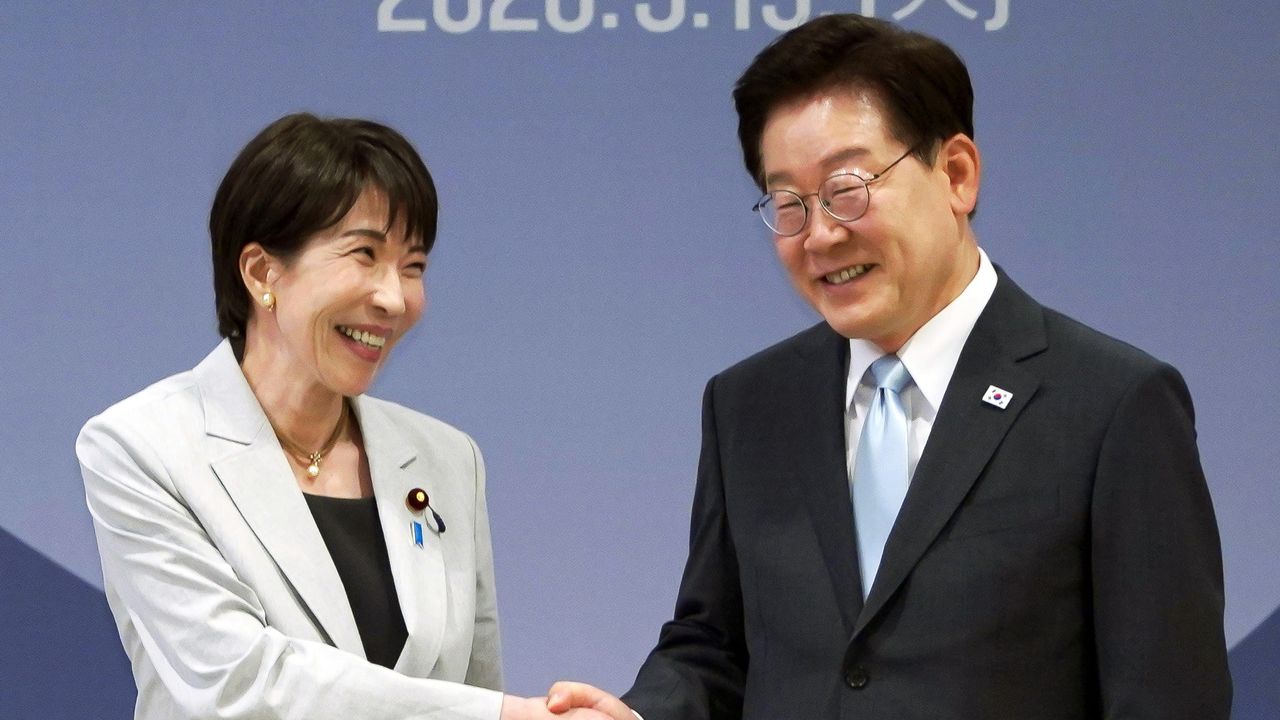
On May 19, Japanese Prime Minister Takaichi Sanae traveled to Andong in North Gyeongsang Province—the hometown of South Korean President Lee Jae‑myung—for a bilateral summit. Just a few months earlier, in January, Lee met with Takaichi in her hometown of Nara. At the joint press conference, Lee underscored the significance of this shuttle diplomacy, noting that it was the first time in history that the leaders of both countries had visited each other’s hometowns—an exceedingly rare gesture even by global standards.
For Lee, who took office in June 2025, this was already his sixth summit with a Japanese leader: three with former Prime Minister Ishiba Shigeru and three with Takaichi, or four if the informal meeting at the G20 last November is included. Such frequent, high‑level communication has undeniably helped stabilize bilateral ties.
Although Takaichi, a staunch conservative, and Lee, whose base lies in South Korea’s progressive camp, were both sharply critical of the other country before entering office, they have treated the bilateral relationship as a priority once in power. At her inaugural press conference last October, Takaichi called South Korea an important neighbor and an indispensable partner in addressing global challenges. After the latest summit, Lee described Japan and South Korea as “strategic partners” responding together to a rapidly changing international environment.
Cooperation on Energy Security
Between the Nara meeting and the latest summit in Andong, turmoil in the Middle East and the effective closure of the Strait of Hormuz escalated into a global crisis. With Japan sourcing 90% of its crude oil and South Korea 70% from the Middle East, energy security has become an urgent concern for both governments. That the two leaders agreed to deepen cooperation on crude oil and LNG procurement and mutual supply is therefore a notable achievement.
This agreement builds on the Supply Chain Partnership Arrangement signed by Japan’s Minister of Economy, Trade, and Industry Akazawa Ryōsei and South Korean Minister of Trade, Industry, and Resources Kim Jung‑kwan in March 2026. What matters is that the two leaders have reaffirmed it and pledged to drive the cooperation forward.
At the joint press conference, Takaichi identified two pillars: enhancing the resilience of energy supply chains—including regional stockpiles in the Indo‑Pacific—and strengthening bilateral energy security through mutual provision and swap arrangements for crude oil, petroleum products, and LNG. Progress on the first pillar would highlight the two countries’ capacity to provide regional public goods; progress on the second would demonstrate that bilateral cooperation yields tangible economic benefits.
President Lee has long argued that cooperation must deliver benefits people can feel in their daily lives. Joint efforts on energy procurement, in particular, could help broaden public support for closer Japan-Korea relations.
Shared Concerns Over a Reduced US Military Presence
The Andong summit came just after the US and Chinese leaders met in Beijing. According to the South Korean presidential office, Takaichi and Lee discussed the outcome of the talks between Donald Trump and Xi Jinping, though it is still unclear how Washington’s and Beijing’s pledge to pursue “constructive strategic stability” will affect Japan and South Korea.
From Tokyo’s perspective, a US administration prioritizing economic engagement with China at a time when Japan-China relations are strained is hardly reassuring. Seoul, meanwhile, generally welcomes stabler US-China relations but remains acutely aware—given its history of being caught between great powers—of the risks that a US-China compromise could come at South Korea’s expense.
Both Seoul and Tokyo, meanwhile, also share concerns that the US military presence in East Asia could further diminish as Washington demands greater burden‑sharing from allies and remains heavily engaged in the Middle East.
At a March cabinet meeting, President Lee clearly stated that Seoul opposes the removal of US air‑defense assets from the Korean Peninsula for Washington’s own operational needs. In Andong, Takaichi said she shared the view that Japan and South Korea must take proactive steps—through the Japan-US and US-ROK alliances and trilateral coordination—to maintain and strengthen deterrence and response capabilities for the peace and stability of the Indo‑Pacific. She added, strikingly, that the two leaders agreed to call each other often whenever difficulties arise, including in managing relations with other countries.
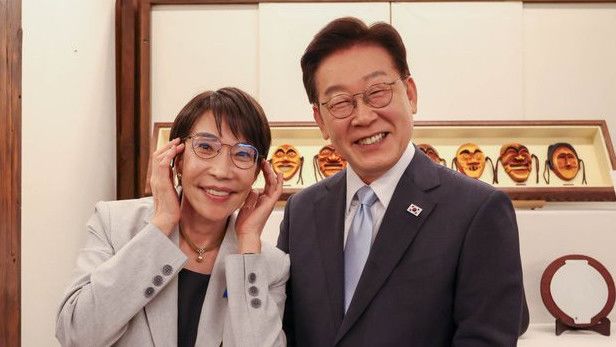
A social media photo shows Lee and Takaichi sporting eyeglass frames from Sabae, Fukui Prefecture—presented by the prime minister—during their summit in Andong. Behind them are traditional Korean masks gifted by the president. (© Jiji.)
Diverging Regional Maps
Amid what Takaichi calls a rapidly destabilizing international environment, both leaders see closer coordination—particularly in dealing with an increasingly inward‑looking United States—as essential. That shared strategic logic has become the main force stabilizing the relationship. Japan-ROK ties, long the weakest link in the Japan-US-Korea security triangle, have in fact grown stronger partly because of changes in Washington.
Even as Tokyo and Seoul agree on the big picture, their views and responses diverge once the discussion turns to specifics. Keeping those differences from undermining cooperation will require continued communication and tight policy coordination—the first major challenge for advancing the partnership.
The contrast was clear at the joint press conference: Takaichi referenced the “Indo‑Pacific” four times; Lee never used the term. He instead spoke of “Northeast Asia,” stressing that South Korea, China, and Japan must respect one another and work together in pursuit of shared interests. Takaichi, for her part, reiterated the importance of a Free and Open Indo-Pacific and the need to enhance autonomy and resilience—points she also stressed during her early May policy speech in Vietnam.
On North Korea, Lee emphasized Seoul’s goal of peaceful coexistence and shared growth between the two Koreas, whereas Takaichi focused on the nuclear and missile threat. Back in the 2000s, when cooperation was smoother, Tokyo and Seoul publicly backed each other’s policies, but that is no longer the case. Changing regional dynamics now make policy coordination between the two governments significantly more difficult.
Building and Institutionalizing Cooperation
A second major challenge is to further institutionalize Japan-Korea defense and security cooperation. Historical grievances still cast a long shadow, leaving many in South Korea—particularly within the progressive bloc that supports Lee—wary of or opposed to closer security ties with Japan. This is why most cooperation has proceeded trilaterally with the United States and why GSOMIA, the General Security of Military Information Agreement, is the only legally binding security arrangement between Tokyo and Seoul. The 2018 fire-control radar lock-on incident also severely damaged trust between the two defense establishments.
The good news is that defense-level communication is back on track. At their January meeting, the two defense ministers agreed to resume annual visits, revitalize personnel and unit‑level exchanges, and restart the long‑suspended search‑and‑rescue exercise (SAREX), dormant since 2017. The next step is to institutionalize cooperation while implementing these initiatives. This will require steadily rebuilding trust and cultivating the political space needed to finally conclude the long‑sought Acquisition and Cross‑Servicing Agreement.
The Japan-ROK security dialogue was just upgraded from director-general to vice-minister level in May, but it should be elevated to a full ministerial meeting as soon as feasible. Japan already holds 2 + 2 foreign and defense ministerial meetings with about 10 countries, including the United States, Australia, India, and several European partners.
A third challenge is to move quickly in advancing cooperation. Since the rapid thaw in Japan-ROK relations beginning in 2023, a range of government‑to‑government consultations—many frozen during the downturn—have been revived, expanded, and supplemented with new dialogue frameworks. The Andong summit saw the launch of yet another—an industrial and trade policy dialogue to advance cooperation on energy security.
But while dialogue matters, what the bilateral relationship needs now is visible, concrete action. Repeated, practical cooperation is what will ultimately make ties between Japan and South Korea stronger and more resilient over time.
(Originally published in Japanese on June 2, 2026. Banner photo: Prime Minister Takaichi and South Korean President Lee shake hands ahead of their summit in Andong, South Korea, May 19, 2026. © Jiji.)