Japan’s Naphtha Shock: Hormuz Disruption Hits Bathrooms, Chips, and Daily Life
Economy Politics Lifestyle- English
- 日本語
- 简体字
- 繁體字
- Français
- Español
- العربية
- Русский
Production Cuts, Price Hikes, and Colorless Packaging
Many Japanese consumers first heard the word naphtha this spring, when Toto—Japan’s leading home‑fixtures manufacturer—announced on April 13 that it was temporarily suspending orders for its prefabricated bathrooms. The company was having trouble sourcing the organic solvents used to bond wall films and coat artificial‑marble tubs.
Behind the disruption was the de facto closure of the Strait of Hormuz, hampering Japan’s access to crude oil and naphtha. Toto initially gave no timetable for resuming orders, but after a major public reaction, it clarified later the same day that products with confirmed delivery dates would ship as scheduled. By April 15, the company announced it was preparing to restart orders on April 20. The rapid succession of statements prompted online speculation about government pressure.
A month earlier, on March 16, petrochemical giant Shin‑Etsu Chemical announced price hikes for polyvinyl chloride (PVC), used in a variety of products from water pipes to exterior siding and auto parts. The company cited a sharp rise in the cost of ethylene—derived from naphtha—and revealed that suppliers had begun limiting volumes, forcing it to scale back production.
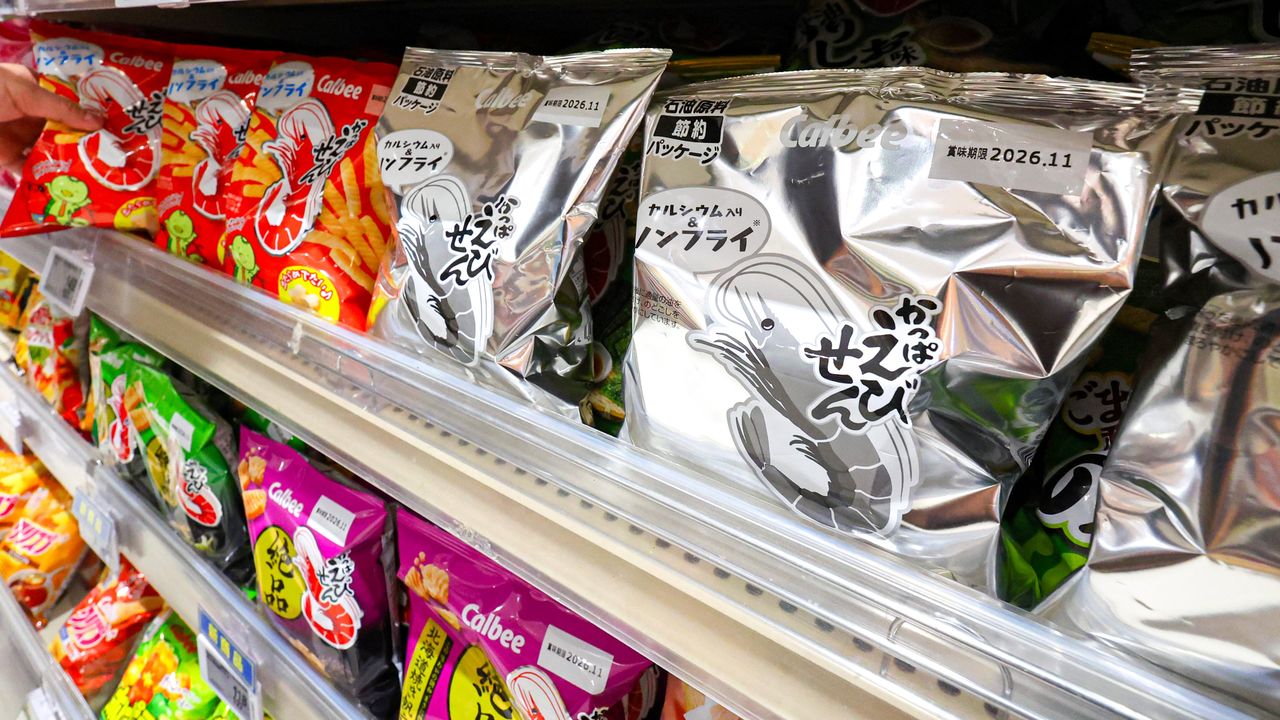
Then came the headline‑grabber: major snack maker Calbee announced on May 12 that it would cut the number of colors used on the packaging of 14 products, including its flagship brands of potato chips, down to just two, citing “the situation in the Middle East.” Packaging materials and even the inks used for printing are petrochemical products. The prospect of once‑colorful snack bags turning monochrome drove home a stark reality: the fallout from the Hormuz disruption extended far beyond simple price hikes.
A Society Built on Naphtha
Modern life is propped up by a broad range of petrochemical products. Examples include plastics in home appliances, food containers and cling wrap in our kitchens, surfactants—allowing water and oil to mix—in detergents and cosmetics, gloves and tubing in hospitals, auto parts, clothing, agricultural films, and fishing gear. Few industrial materials are as ubiquitous as those produced by the petrochemical sector.

Products derived from naphtha. (© Pixta)
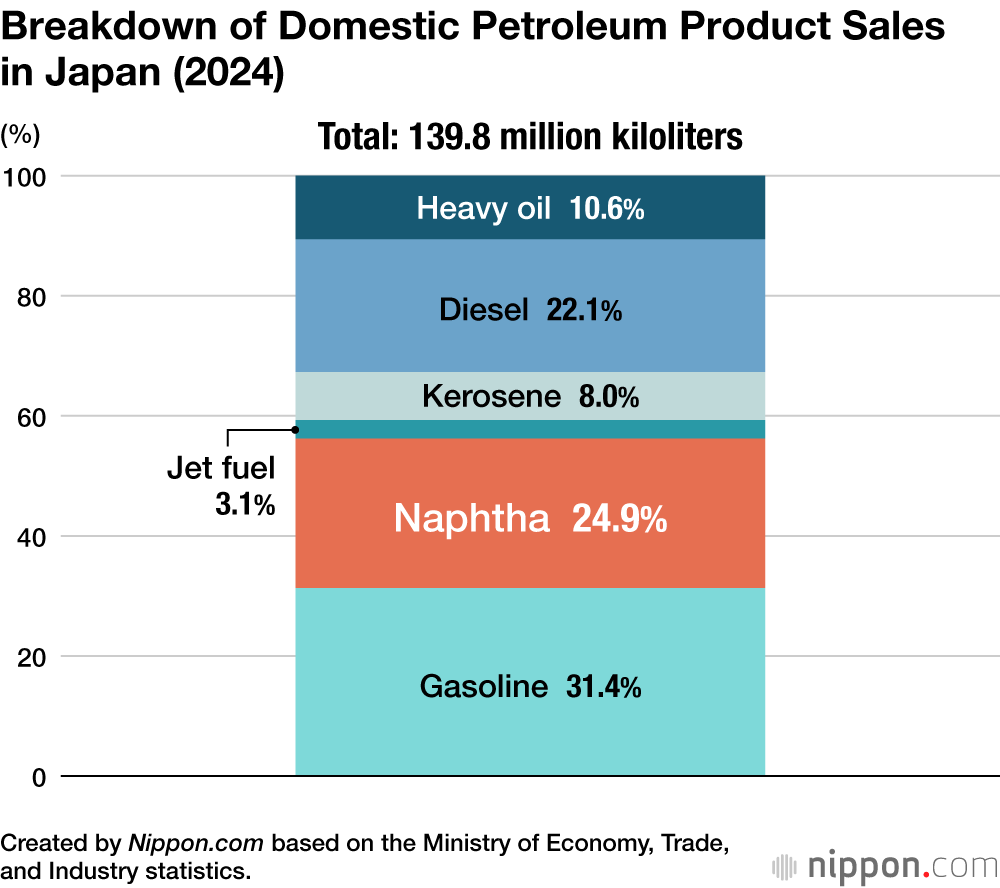
Recent developments in the Middle East have exposed just how dependent Japan’s supply chain is on shipments through the Strait of Hormuz. Imported crude oil is refined domestically into gasoline, diesel, jet fuel, and other products—one of which is naphtha. In 2024, this key feedstock accounted for nearly 10% of all refined products, according to the Petroleum Association of Japan. Naphtha is then steam cracked to produce such other basic materials as ethylene, propylene, toluene, and synthetic resins like PVC.
Shrinking Refining Capacity
Japan’s domestic refining can no longer meet industry’s naphtha needs. Gasoline demand has fallen since peaking in fiscal 2005, and refining capacity has shrunk from 4.9 million barrels per day (at 28 refineries) in March 2009 to 3.1 million barrels (at 19 refineries) in March 2025.
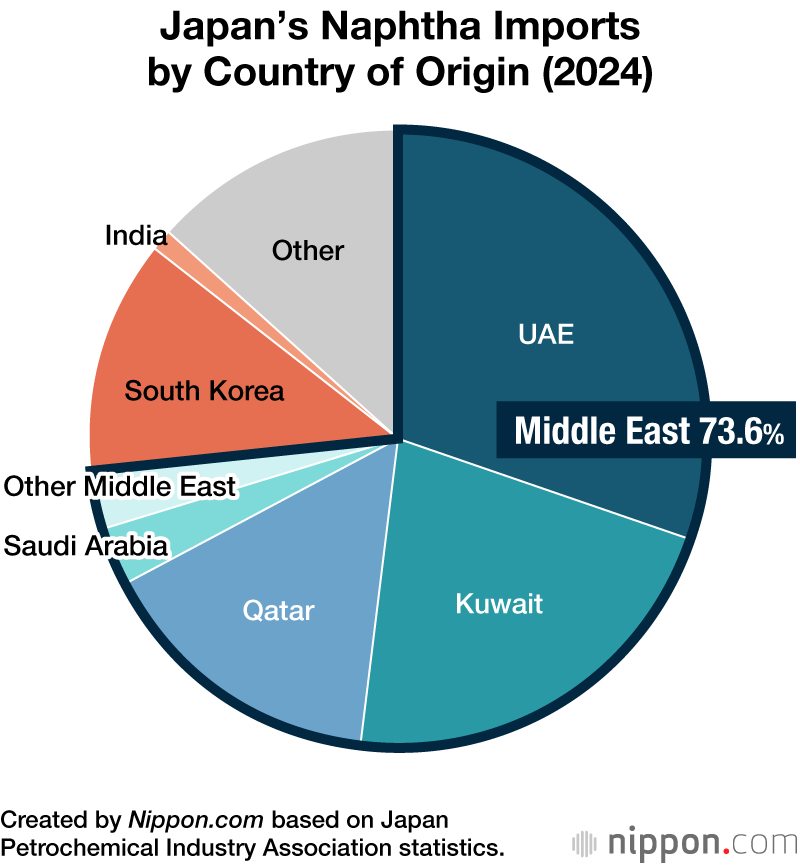
Contributing to this shift have been such factors as demographic decline, lower car ownership among young people, improvements in public transport, and enhanced vehicle fuel efficiency. As domestic output fell, Japan increasingly relied on foreign-produced naphtha. Imports accounted for 60% of supply in 2024, of which 73.6% came from Middle Eastern suppliers such as the UAE, Kuwait, Qatar, and Saudi Arabia—mostly shipping from ports inside the Persian Gulf. In other words, over 40% of Japan’s total naphtha supply is exposed to the Strait of Hormuz, as is most crude oil used for domestic refining.
Ethylene plant utilization fell to 67.3% in April, marking a second consecutive month of record lows. This prompted the Japan Petrochemical Industry Association to take the unusual step of issuing comments alongside the statistics two months in a row.
“Thanks to efforts to secure feedstocks, including naphtha, production of major petrochemical products such as polyethylene and polypropylene rose sharply from March levels,” the statement read. “While there are differences by product, overall domestic shipments remain stable.” The remarks closely echoed the government’s line, suggesting just how sensitive the industry has become to any hint of supply instability.
The government has repeatedly maintained that stockpiles and alternative procurement routes are sufficient. At a cabinet meeting on Middle East affairs on June 2, Prime Minister Takaichi Sanae projected Japan would be able to secure naphtha supplies derived from crude oil “beyond April 2027.” Officials argue that bottlenecks and industry anxiety stem mainly from information gaps and companies placing orders above normal levels.
This is plausible: when faced with volume constraints and falling utilization of refineries and ethylene‑plants, companies tend to hoard raw materials and restrict downstream shipments. Such defensive steps are rational measures to ensure business continuity.
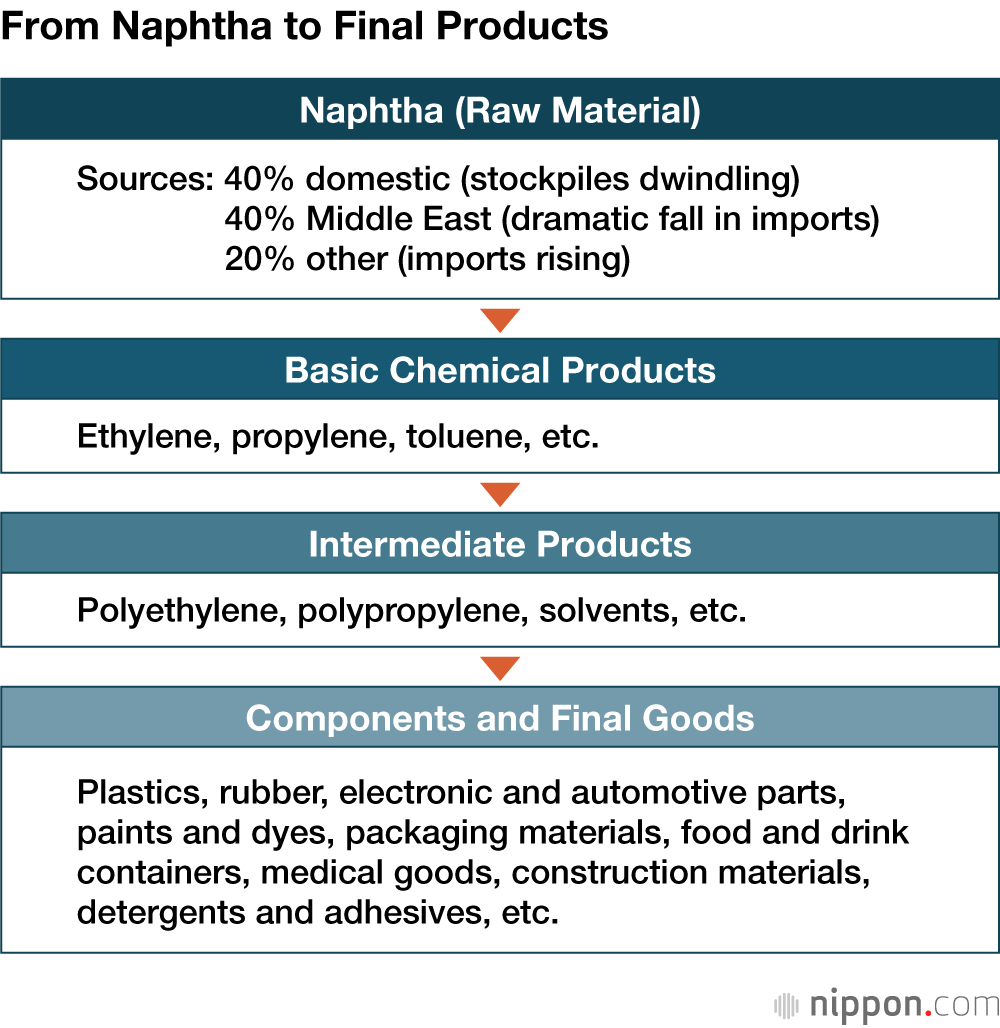
Industry observers point out that the naphtha shortages leading to issues throughout the above logistical processes are rooted not just in shortfalls of the material, but also in reduced levels of imports and moves by certain industry players to corner a rising market with higher purchase amounts.
Supply Assurances Built on Precarious Stopgaps
Takaichi argues that alternative procurement has restored supply to 85% of precrisis levels and that the remaining shortfall can be covered by drawing down inventories of intermediate goods and securing new shipments. Nomura Research Institute Executive Economist Kiuchi Takahide warns, however, that as competition for naphtha intensifies in global markets, there is no guarantee Japan can continue sourcing stable supplies, adding that substitute materials may not meet the specifications required by individual companies.
Naphtha from the United States and Malaysia, for example, is a light variety with properties different from that typically used in Japan. Large-scale imports risk distorting the balance of downstream products, making substitution far from straightforward.

Prime Minister Takaichi speaks at a cabinet meeting on Middle East affairs, April 30, 2026. To her left is Economy Minister Akazawa Ryōsei. (© Jiji)
The government is understandably eager to tamp down anxiety. Economy, Trade, and Industry Minister Akazawa Ryōsei criticized what he called “horror‑story narratives” that fuel unnecessary panic.
But the sheer variety of petrochemical products and the complexity of their distribution channels inherently limit targeted fixes to individual bottlenecks. Allaying growing fears will hinge on the success of the government’s push to secure sufficient volumes, allowing upstream utilization rates to recover and easing supply anxieties across the supply chain.
On June 8, Toto announced that it would resume normal order processing and delivery schedules that were interrupted in April. Signs of stabilization are emerging, but the situation remains precarious. Many Asian economies have minimal stockpiles; if their petrochemical operations stall, the repercussions will be felt in Japan. While naphtha prices in Asia have fallen sharply from their peak, as long as transit through Hormuz remains constrained, Japan’s will need to rely increasingly on alternative sources, intensifying global competition and pushing up freight and procurement costs.
The severity of the naphtha shock varies by country. South Korea, which is similarly dependent on the Middle East, has banned naphtha exports and moved to increase imports from Russia. Still, items like trash bags have vanished from the country’s store shelves. By contrast, the US petrochemical sector, which uses ethane derived from natural gas, has sharply ramped up its naphtha exports.
Nattō is a popular soy-based food item in Japan, typically sold in three‑pack sets for around ¥100. Major producers like Takano Foods and Mizkan, though, announced price hikes starting in June. Such increases until now had been driven by higher soybean costs, but this time soaring container and film prices were key factors. Mizkan was even forced to suspend sales of some products. A Teikoku Databank survey of 195 major food manufacturers found that as of May 29, the situation in the Middle East was cited as a reason for 22.7% of price hikes. The credit reporting company added that it expects a broad wave of increases from this summer.
Even if the Iran war subsides, restoring safe passage around Hormuz and normalizing maritime logistics will take time. The Red Sea route—disrupted for more than two years by attacks from Yemen’s Iran‑aligned Houthi forces—offers a sobering precedent.
(Originally published in Japanese on June 10, 2026. Banner photo: Calbee’s Kappa Ebisen snack displayed on a Tokyo store shelf in monochrome packaging due to ink supply concerns. © Jiji.)