Japan’s Energy Risks Persist Despite US-Iran Deal
Economy- English
- 日本語
- 简体字
- 繁體字
- Français
- Español
- العربية
- Русский
A Fragile Promise of “Safe Passage”
The US-Iran memorandum of understanding signed on June 17 states, “the Islamic Republic of Iran will make arrangements using its best efforts for the safe passage of commercial vessels with no charge for 60 days.” Following the agreement, the Japanese government confirmed that one Japan‑related vessel successfully transited the strait. [This number climbed to six as of June 30.—Ed.] But this has not led to a broader return of tanker traffic. Until mines are cleared and war‑risk insurance stabilizes, shipping companies cannot resume normal operations. No one knows, moreover, what will happen once the 60‑day window expires.
The fragility of the deal became evident almost immediately. Israel has continued its strikes in Lebanon against Hezbollah, prompting Iran—just three days after the memorandum—to warn that it might “re‑close” the strait.
US President Donald Trump’s shifting statements and repeated references to the agreement only add to the uncertainty. With no clear end to hostilities, it would be unrealistic for Japan to assume that Middle Eastern crude imports will resume as before.
Japan is an island nation with almost no natural resources, relying on imports for nearly all of its oil, coal, and liquefied natural gas. Over 90% of crude oil comes from the Middle East; roughly 80% of coal is sourced from Australia and Indonesia; and nearly 60% of LNG comes from Australia and Malaysia.
This geographic concentration leaves Japan extremely vulnerable: any disruption in these regions can immediately threaten its energy security. The Middle East remains volatile, and Japan’s energy woes are far from resolved.
Why Middle Eastern Crude Fits Japan’s Industrial Structure
Middle Eastern crude holds special significance for Japan because it aligns with the country’s industrial structure.
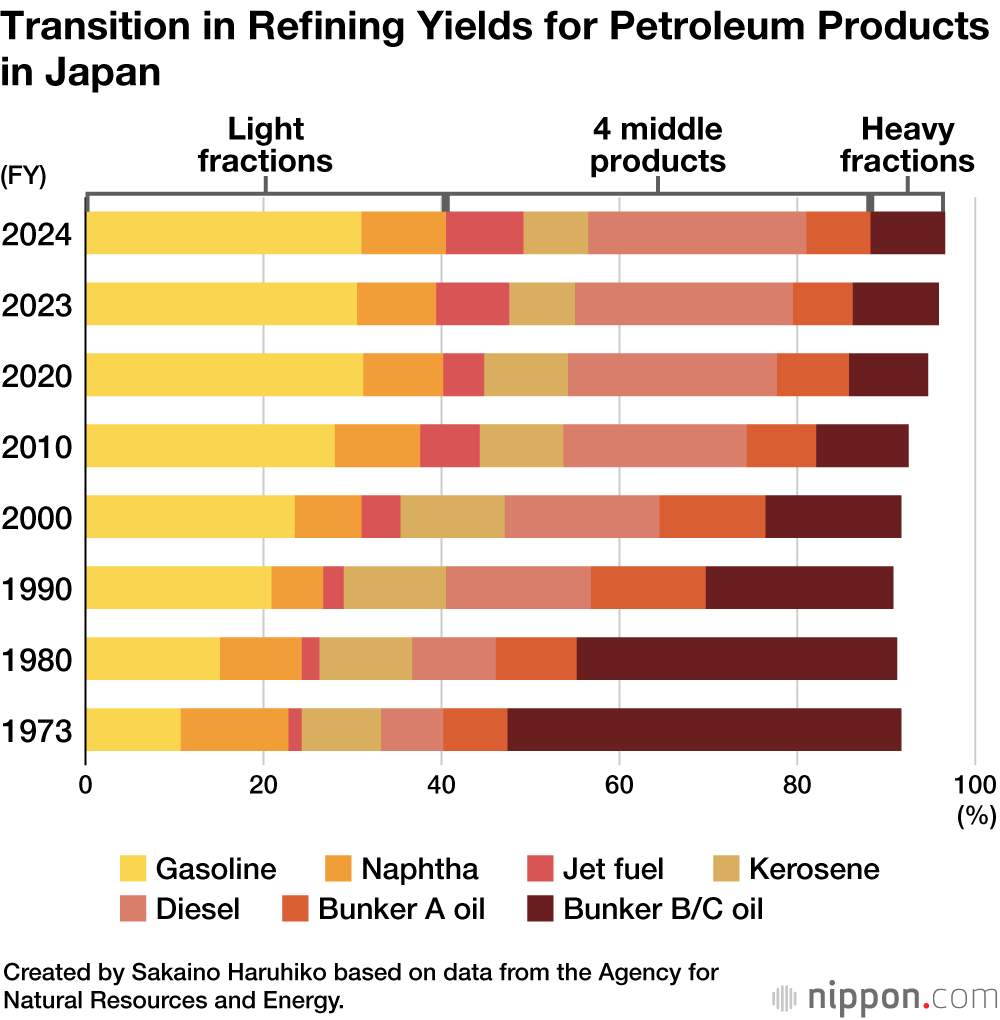
After the oil crises of the 1970s, Japan briefly diversified its suppliers. But to secure stable supplies, it deepened ties with Middle Eastern producers and adjusted its refining yields—the proportions of gasoline and other petroleum products extracted from medium‑grade Middle Eastern crude—to match shifts in domestic industrial demand.
In the refining process, crude oil is fed into an atmospheric distillation unit, which separates it into different products according to their boiling points. As the oil is heated, the heaviest fractions, such as heavy fuel oil, condense at the bottom of the column, where temperatures are highest. Further up the column, where temperatures are lower, mid‑range fractions like kerosene, diesel, and Bunker A oil condense. At the very top, where the vapors are coolest, the lightest products—liquefied petroleum gas and gasoline—are collected in fairly predictable proportions.
Medium‑grade Middle Eastern crude produces these fractions in the most balanced way, and Japan has upgraded its processing technology over the decades to take advantage of that profile. There was high demand in the early 1970s for heavy fuel oil, which was widely used for power generation. But as motorization expanded and environmental concerns mounted, demand shifted toward transportation fuels like gasoline and diesel. Processing technology evolved in step with these structural changes.
Japan introduced secondary refining units—notably catalytic cracking units—that can break down heavy fuel oil into such lighter products as gasoline and diesel. As these technologies advanced, refineries increased the yield of light and middle distillates, resulting in a slate optimized for today’s industrial structure and built around medium‑grade Middle Eastern crude.
Alternative Sources Not Sustainable
After the US and Israeli attacks on Iran effectively shut down the Strait of Hormuz, I launched a signature campaign and urged the government to focus its efforts on reopening the strait. The administration, however, has concentrated on sourcing crude outside the Middle East and publicly projecting a sense of calm.
One potential alternative supplier is the United States—now the world’s largest oil producer thanks to shale oil. But US crude is extremely light: it yields plenty of gasoline and naphtha but almost no heavy fractions. This would seriously affect the agriculture, fisheries, and shipping sectors. Naphtha poses similar challenges; without heavy Middle Eastern naphtha, Japan cannot efficiently produce benzene, toluene, and xylene—the building blocks of thinners and paints.
Middle Eastern crude and naphtha have not disappeared entirely. Imports via Fujairah in the United Arab Emirates, located outside the Persian Gulf, continue. Blending Middle Eastern and US crude can keep refineries running, but even then, the ratio must be weighted heavily toward the former—roughly four to one.
Transporting oil from the United States also costs more than twice as much as from the Middle East. Prime Minister Takaichi Sanae has claimed that 100% of crude imports will come from non‑Hormuz routes by July, but such sources are emergency, unsustainable options: farther, costlier, and less compatible with Japan’s refining system.
Even after the signing of the ceasefire deal, restoring safe passage through Hormuz will take time; experts warn that normalization could take months. Israel’s military actions—and Iran’s response—will determine whether the agreement holds.
The Politics of Reassurance
Another concern raised by the Iran war is the government’s domestic messaging. Despite a global energy crisis, Prime Minister Takaichi continues to insist that there is no need for energy conservation efforts that “go too far.” Regarding the naphtha shortage—clearly caused by a collapse in imports—the government maintains that overall supply is sufficient and that the main problem lies in distribution bottlenecks.
Such reassurances do little to solve the problem, however, since industries across Japan are facing shortages of naphtha‑derived products. What the government must prioritize instead is using every diplomatic tool available to restore safe passage through the Strait of Hormuz—the root cause of the bottleneck.
The government should be forthright in communicating the reality of the situation, sharing the severity of the crisis with key industries, establishing a timeline for restoring normal operations, and calling for public cooperation. That is what the moment demands.
A Severe Test for Japan’s Economy
Shortages, price spikes, halted construction projects, delivery delays, and production stoppages are now widespread across the economy.
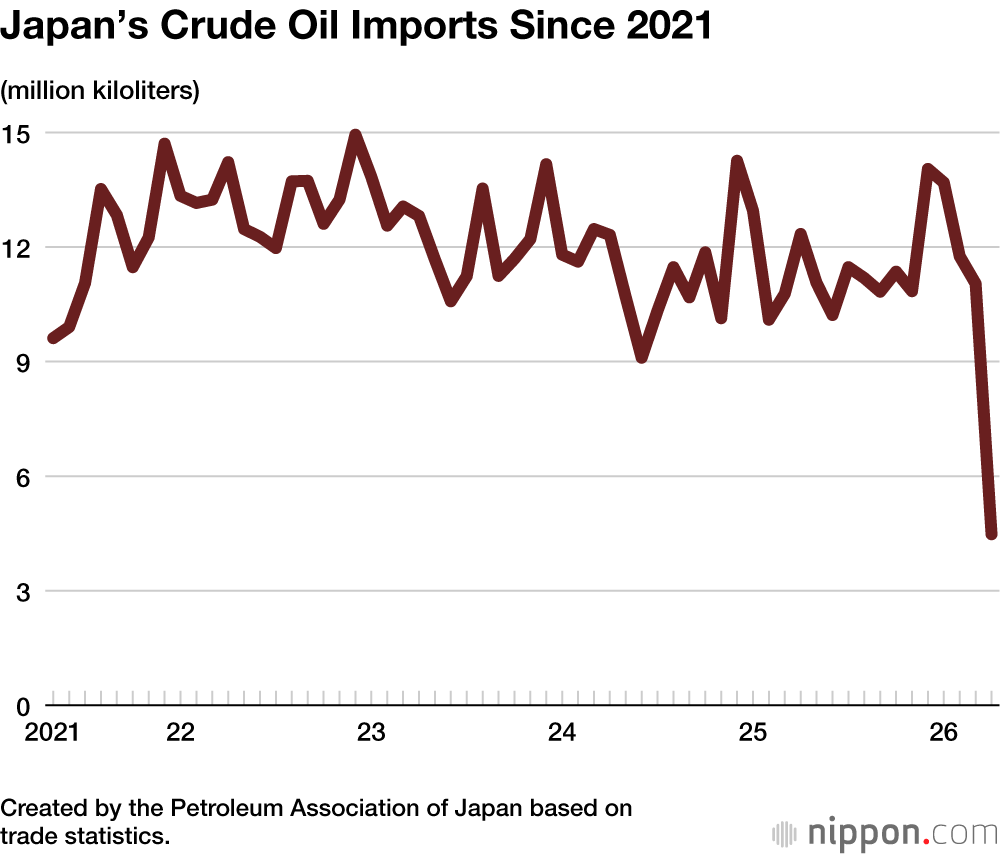
Japan imported 1.35 million kiloliters of naphtha in May, according to estimates by the Ministry of Economy, Trade, and Industry. Combined with domestic production of 1 million kiloliters, total supply reached 2.35 million kiloliters—far short of the roughly 3 million kiloliters needed by industry. The source and quality of imported naphtha remain unclear, moreover, making stable supplies of thinner‑type solvents difficult to guarantee.
As a petrochemical powerhouse, China has ample stocks of such solvents. But following Prime Minister Takaichi’s remarks on a potential Taiwan contingency, China designated toluene and xylene as controlled export items—effectively preventing their shipment to Japan. Greater diplomatic effort will be essential in stabilizing relations and protecting livelihoods.
Even so, Japanese companies are highly adaptable to shifting conditions. They can be expected to begin developing naphtha substitutes without government support. Calbee, for example, has introduced monochrome packaging for its popular snacks, and supermarkets are finding innovative ways to reduce reliance on plastic trays.
Yet Japan remains heavily dependent on naphtha, and prices will inevitably rise. Securing alternative sources of crude oil will further intensify these pressures, placing severe strain on the Japanese economy. Overcoming these challenges will require government measures grounded in economic reality, private‑sector ingenuity, and consumer cooperation. Each of us must do our part to navigate this crisis.
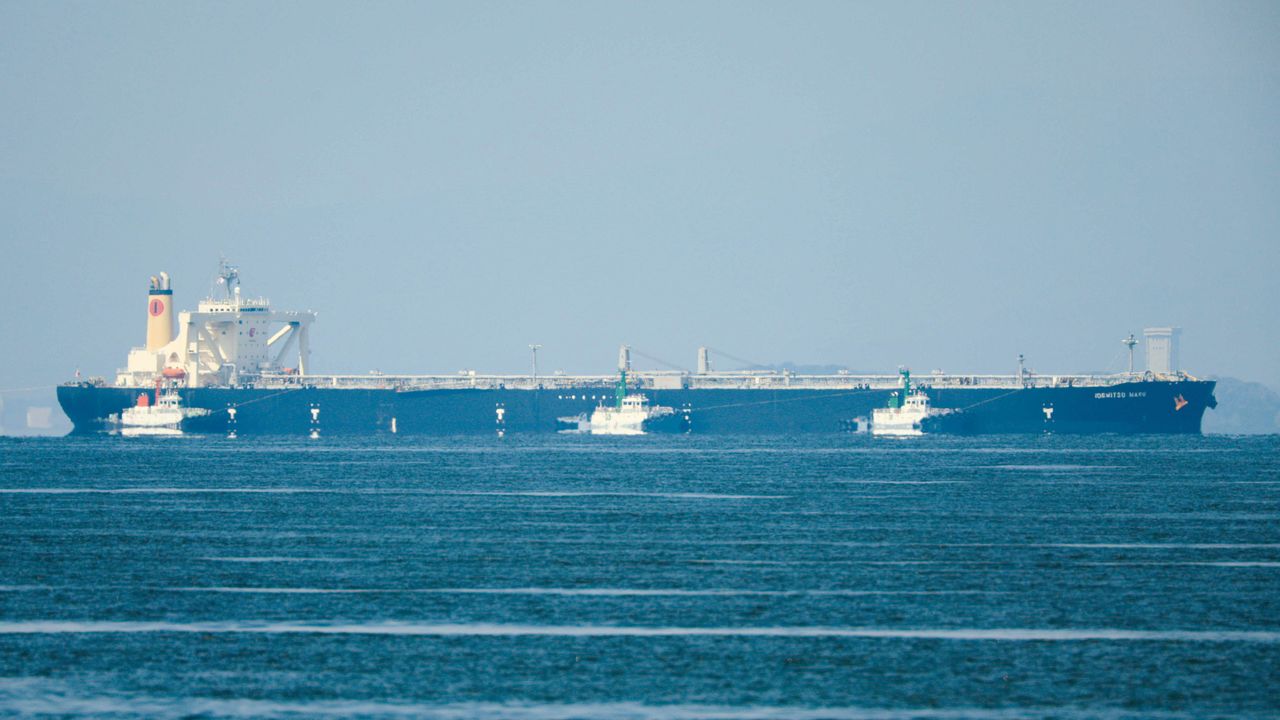
(Originally published in Japanese on June 22, 2026. Banner photo: A crude oil tanker operated by a subsidiary of Idemitsu Kōsan arriving in Ise Bay on May 25, 2026, as the first Japan‑related vessel to transit the Strait of Hormuz following the Iran attacks. © Jiji.)