Japan Moves to Centralize Intelligence amid Mounting Strategic Challenges
Politics- English
- 日本語
- 简体字
- 繁體字
- Français
- Español
- العربية
- Русский
A New Intelligence Structure
The plan to establish a national intelligence council and a supporting secretariat was first set out in the coalition agreement between the Liberal Democratic Party and Nippon Ishin no Kai, concluded just prior to the launch of the Takaichi Sanae administration in October 2025. The proposal called for upgrading the Cabinet Intelligence and Research Office (CIRO) within the Cabinet Secretariat and elevating it to a status equivalent to the National Security Secretariat (NSS), which oversees foreign and security policy. This framework has now been enacted into law with minimal modification.
Under the new system, Japan’s fragmented intelligence community—currently dispersed across such entities as CIRO, the National Police Agency’s Security Bureau, the Public Security Intelligence Agency under the Ministry of Justice, the Ministry of Foreign Affairs’ Intelligence and Analysis Service, and the Defense Intelligence Headquarters—will be unified under the new national intelligence secretariat. The body will deliberate on and coordinate responses to intelligence issues critical to national security, including countering foreign intelligence operations, and provide support for government decision-making.
The push to strengthen intelligence capabilities reflects a growing sense of urgency in the face of increasingly diverse and sophisticated threats. These include China’s export restrictions targeting Japan, influence operations and disinformation campaigns conducted via social media, and cyberattacks. Longstanding concerns about bureaucratic siloing and poor interagency coordination have also driven efforts to create a more integrated system so that policymakers receive higher-quality intelligence.
Takaichi has described the initiative as the “first step” in strengthening Japan’s intelligence capabilities. Intelligence gathering and analysis are now framed as core components of “comprehensive national power,” alongside diplomacy and defense. The council will be chaired by the prime minister and include the chief cabinet secretary; financial services minister; National Public Safety Commission chair; justice minister; foreign minister; finance minister; economy, trade, and industry minister; land, infrastructure, and transport minister; and defense minister.
Toward an Anti-Spy Law
The creation of a command center for national intelligence represents the most significant overhaul of Japan’s security apparatus since the establishment of the National Security Council (NSC) and its secretariat, the NSS, in 2014 under the Abe Shinzō administration. Modeled on the US National Security Council, Tokyo’s NSC serves as Japan’s counterpart.
With the legal foundations for a new intelligence structure now in place, the government is already looking ahead, including the possible enactment of an anti-espionage law. Prime Minister Takaichi has said she hopes to convene an expert panel to draft such legislation. In addition, the coalition agreement calls for studying the creation of a standalone foreign intelligence agency.
These efforts toward intelligence reform have been welcomed by members of the Five Eyes intelligence-sharing network—namely, the United States, Britain, Australia, Canada, and New Zealand—which have reportedly offered support. Closer cooperation with the Five Eyes would strengthen intelligence gathering and sharing vis‑à‑vis the authoritarian states around Japan—China, Russia, and North Korea—and further deepen alignment with like‑minded partners.
Ensuring Transparency and Oversight
Despite its strategic rationale, the new intelligence structure faces several operational challenges. Foremost among these is the need to ensure that intelligence gathering does not lead to undue infringements on personal information or privacy. Equally important is the establishment of systems for timely and appropriate reporting to the Diet to ensure transparency and legislative oversight.
Although these points are explicitly noted in the supplementary resolution to the establishing legislation, the Takaichi administration has not shown much enthusiasm for implementing such safeguards. A central challenge going forward will be how Japan concretely embeds transparency, oversight, and control mechanisms for intelligence activities as the new institutions are set up.
In contrast, the United States has maintained standing intelligence committees in both the House of Representatives and Senate since the 1970s to monitor unlawful activities by the Central Intelligence Agency through hearings and other tools. Similar parliamentary oversight bodies exist in Britain and Germany. Japan’s Diet currently lacks any such dedicated oversight mechanism.
Some administration officials have quietly expressed concern about placing the new intelligence secretariat on the same institutional footing as the NSS. Both the NSS, with its mandate for integrated security policy coordination, and the new intelligence framework, responsible for intelligence collection and analysis, would be empowered to request information from across ministries—potentially blurring chains of command and creating operational confusion.
Although institutional differences with Japan exist, in the United States the NSC is firmly positioned as the top strategic nerve center, with established authority to craft and advise the president on policy and strategy. The intelligence community has its own top coordinator—the director of national intelligence, a cabinet‑level official who oversees federal intelligence agencies—but even the DNI serves primarily in an advisory role within the NSC.
Given today’s increasingly challenging security environment, Japan must bolster its intelligence capabilities. But public understanding and support will be essential for any reform to succeed. As a democracy, Japan must carefully define the role and character of the national intelligence council and secretariat while ensuring effective and accountable operations.
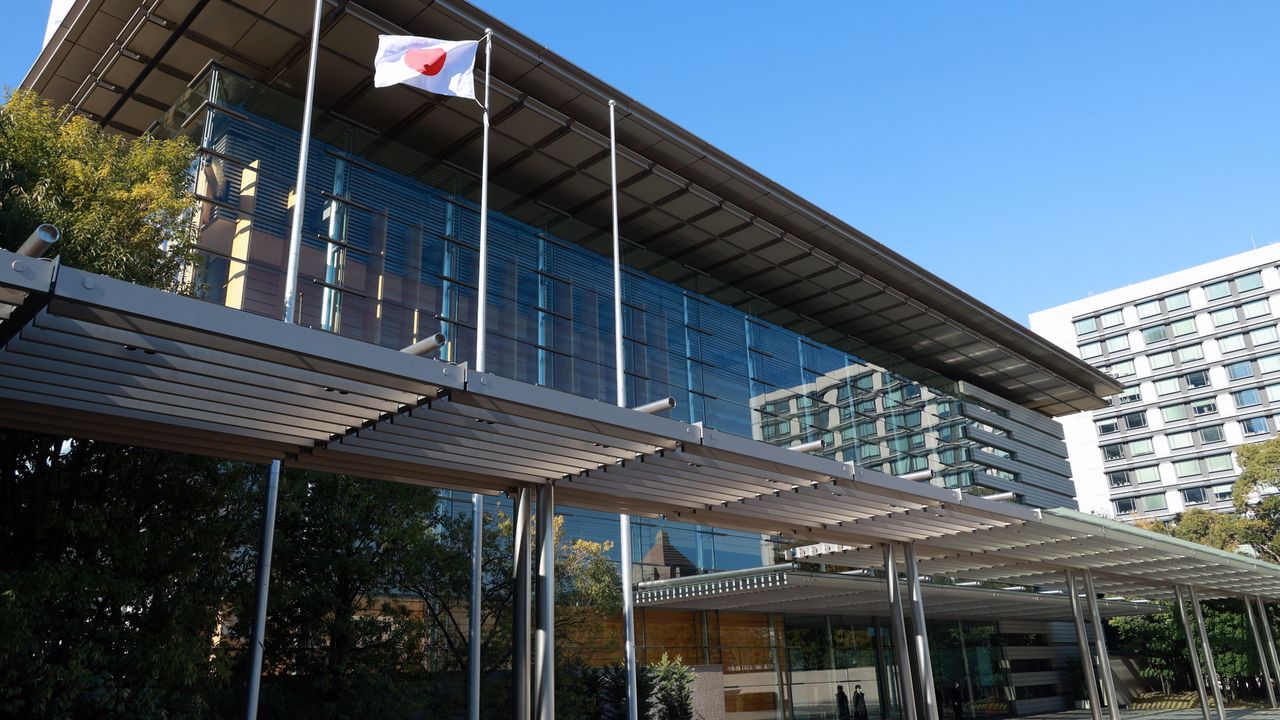
(Originally published in Japanese on June 10. Banner photo: Prime Minister’s Office, January 2023. © Jiji.)