
Can New Law End Outflow of Japanese Agricultural Brands?
Economy- English
- 日本語
- 简体字
- 繁體字
- Français
- Español
- العربية
- Русский
Japanese Citrus on Chinese Farms
This year, Japan’s Diet was moved to revise the nation’s Plant Variety Protection and Seed Act by revelations surrounding a new mikan citrus cultivar, Asuki, developed by NARO, Japan’s National Agriculture and Food Research Organization. NARO applied for official registration on this sugar-rich, flavorful mikan in 2017, with government approval in 2022. Seedlings went on sale in Japan in December 2020.
And yet, users began seeing fruit-bearing Asuki saplings on Chinese sales sites in April 2020, even before domestic approval and sales. The listings even included positive reviews citing the fruit’s sweetness. It is a mystery how this new variety left Japan before the country could even officially register it.
According to the Ministry of Agriculture, Forestry, and Fisheries, registering new produce varieties with the government offers plant breeders’ rights, a form of intellectual property right, to the registrant. That gives exclusive control of sales of the registered variety’s seeds and seedlings, harvested fruit, and designated processed goods for 30 years for fruit trees and 25 years for other products. But no breeder right can be claimed before official registration, leaving a period of legal vulnerability.
The latest revision of this act was made in light of the Asuki situation and establishes a structure to prevent export of varieties in the process of registration, before plant breeders’ rights are granted. In addition, it extends the duration of rights by 10 years.
Main varieties leaked or suspected of leaking overseas
| Citruses | Dekopon (Shiranui), Asuki, Beni Princess |
|---|---|
| Strawberries | Akihime, Red Pearl, Tochiotome |
| Benihoppe, Skyberry, Kotoka | |
| Grapes | Shine Muscat |
| Apples | Mori no Kagayaki, Fuji |
| Cherries | Benishū |
| Sweet Potatoes | Beniharuka |
Source: Compiled by the author from MAFF materials.
Some ¥20 Billion Lost to Shine Muscat Leaks
A MAFF investigation showed that a wide range of Japanese-developed grape, strawberry, apple, and citrus cultivars are already being grown in China and South Korea and are on the market across Asia. As of 2020, Shine Muscat grape cultivation in China covered 53,000 hectares, roughly 30 times the Japanese area, while South Korean acreage caught up with Japan in 2019.
MAFF figures put the losses in cultivation licensing fees for the high-end Shine Muscat cultivar, which was leaked around 2016, at around ¥20 billion. The losses when considering the foreign market, including its share captured by foreign-grown produce rather than Japanese crops, are incalculable.
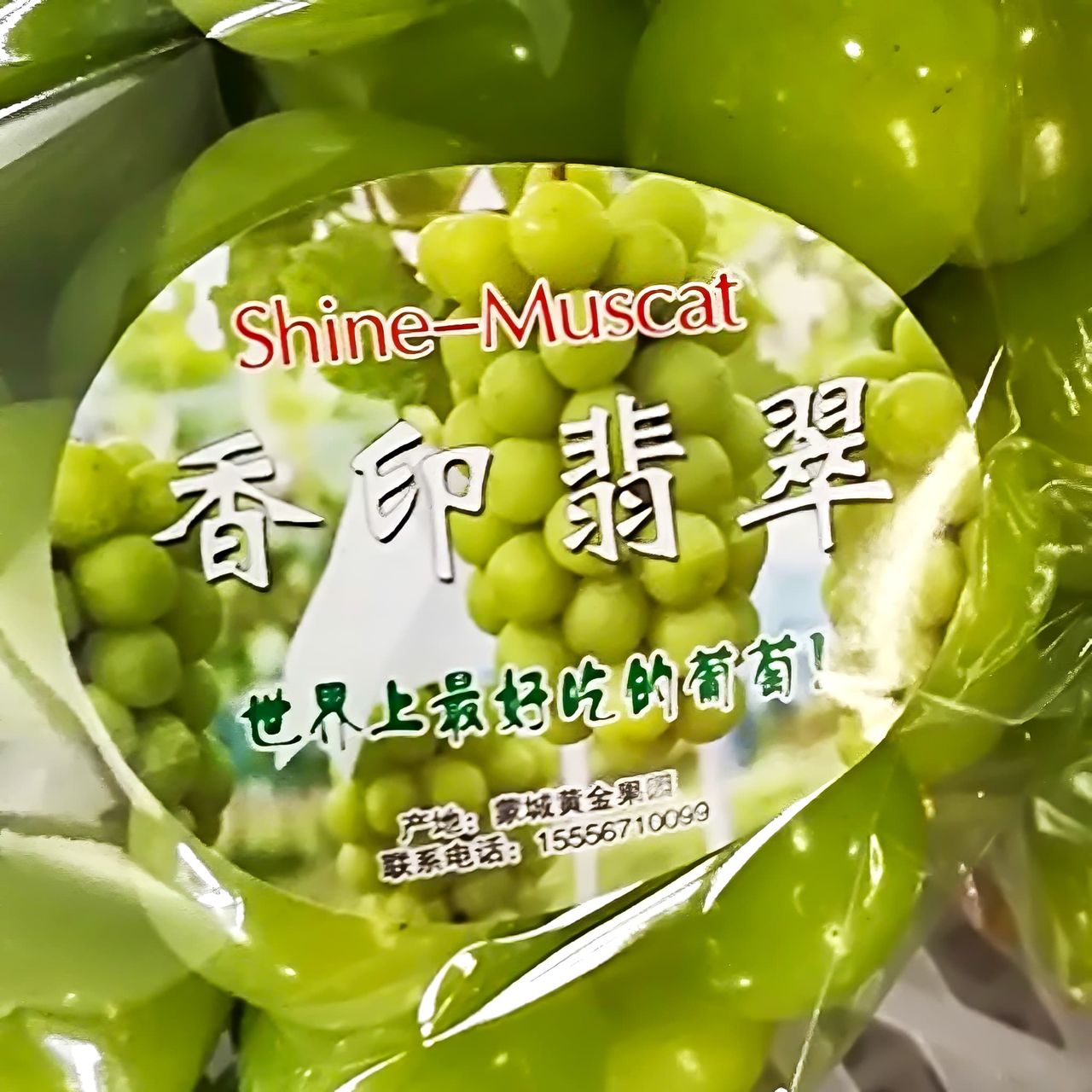
Shine Muscats grown in China. Photo courtesy of MAFF (© Jiji.)
And Shine Muscat is far from the only loss. Chinese cultivation of the popular strawberry cultivar Benihoppe reached 44,000 hectares in 2018–19, more than eight times the area farmed in Japan for this crop. In South Korea, the strawberry cultivars Akihime and Red Pearl were leaked to third parties by farmers contracted with the Japanese rights holders. Those contracted farmers then collaborated with outsiders to breed the variety Seolhyang, which now accounts for 90% of all strawberry cultivation in South Korea.
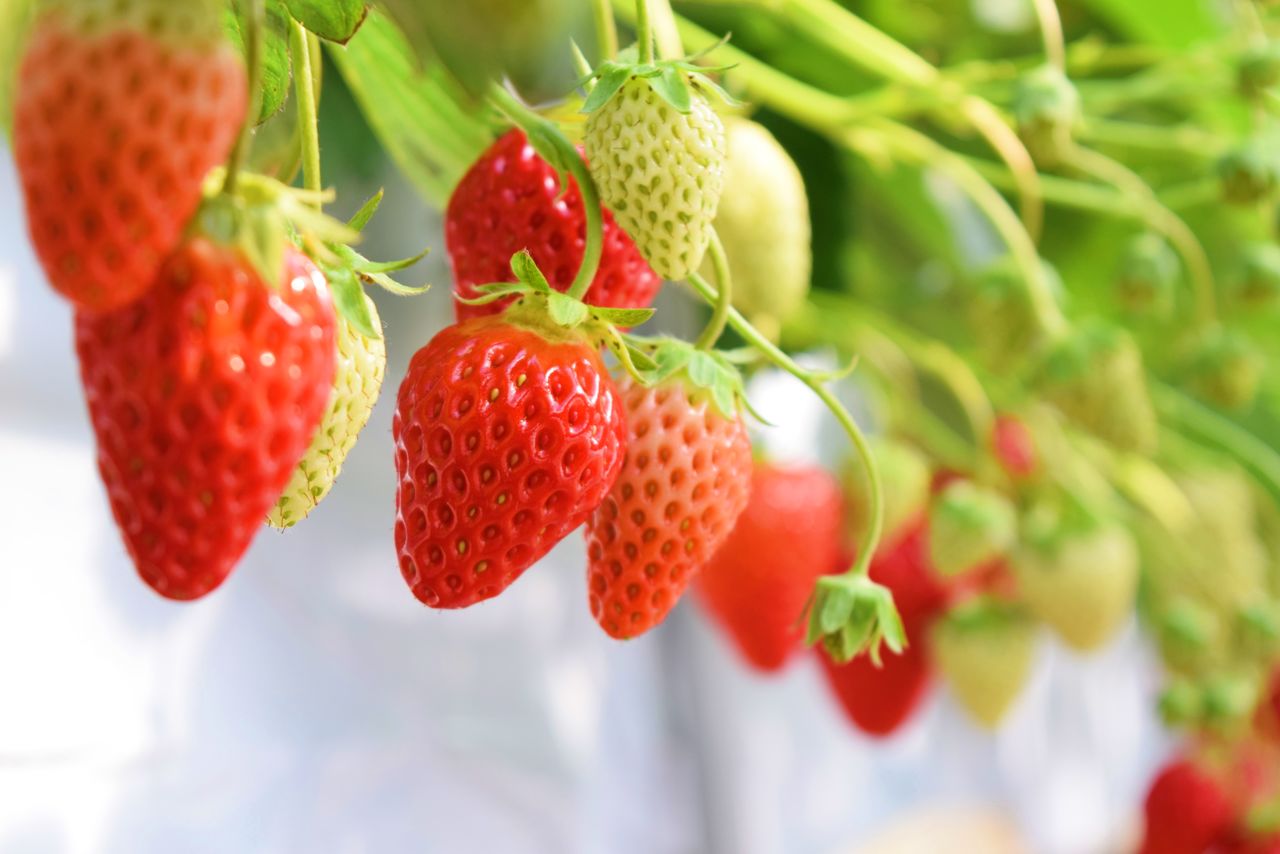
Benihoppe. (© Pixta)
Skyberry, a cultivar developed in Tochigi Prefecture, has been trademarked by a Chinese company in the domestic market under the same name, Skyberry, and the Chinese language name originally chosen by the prefecture.
Suspicions Go On After Revision
Up until the government revised the Seed law in 2020, plant breeders like NARO were unable even to stop people from purchasing seedlings at local home centers for resale overseas. Intellectual property rights include a concept called the “exhaust doctrine,” which means that the right of sale and distribution of a product stops at the first sale and includes no control for secondary sale or use.
But allowing high value-added items like plant seedlings to be taken outside Japan carries a risk of expanding foreign cultivation. The 2020 law revision adds a provision for plant breeders to extend their rights to prevent cultivation in countries or regions unintended by the breeder, even after transfer of the seeds or seedlings. Infringement includes a penalty of up to 10 years in prison or a fine of up to ¥10 million.
Even that did not stop the outflow of Japanese cultivars. Last year, MAFF carried out an investigation of Chinese and Korean sales sites and discovered around 50 types of seeds or seedlings being sold under the same or similar names as Japanese-developed cultivars. Though the methodology was different, that is 36 more than in the previous survey carried out in 2020. This recent survey found not only Shine Muscat, but Ehime Prefecture’s original citrus brand Beni Princess and Nara Prefecture’s top strawberry brand Kotoka.
The Japanese government has announced a goal of growing agricultural and fisheries exports to ¥5 trillion by 2030. As of 2025, the total export value was ¥1.7 trillion. If competitive Japanese-developed goods grown in China and South Korea flood the Asian market, Japan will further lose out on export opportunities, as well as on licensing income from proper contracts with producers overseas.
In June, Ehime Prefecture governor Nakamura Tokihiro petitioned Minister of Agriculture, Forestry, and Fisheries Suzuki Norikazu to increase awareness of the issue and to take action regarding the suspected overseas leak of the prefecture’s Beni Princess fruit. Suzuki said that the ministry would support Ehime Prefecture in any legal action it took in China, including gathering evidence, sending cease-and-desist notices, and in any possible lawsuits filed.
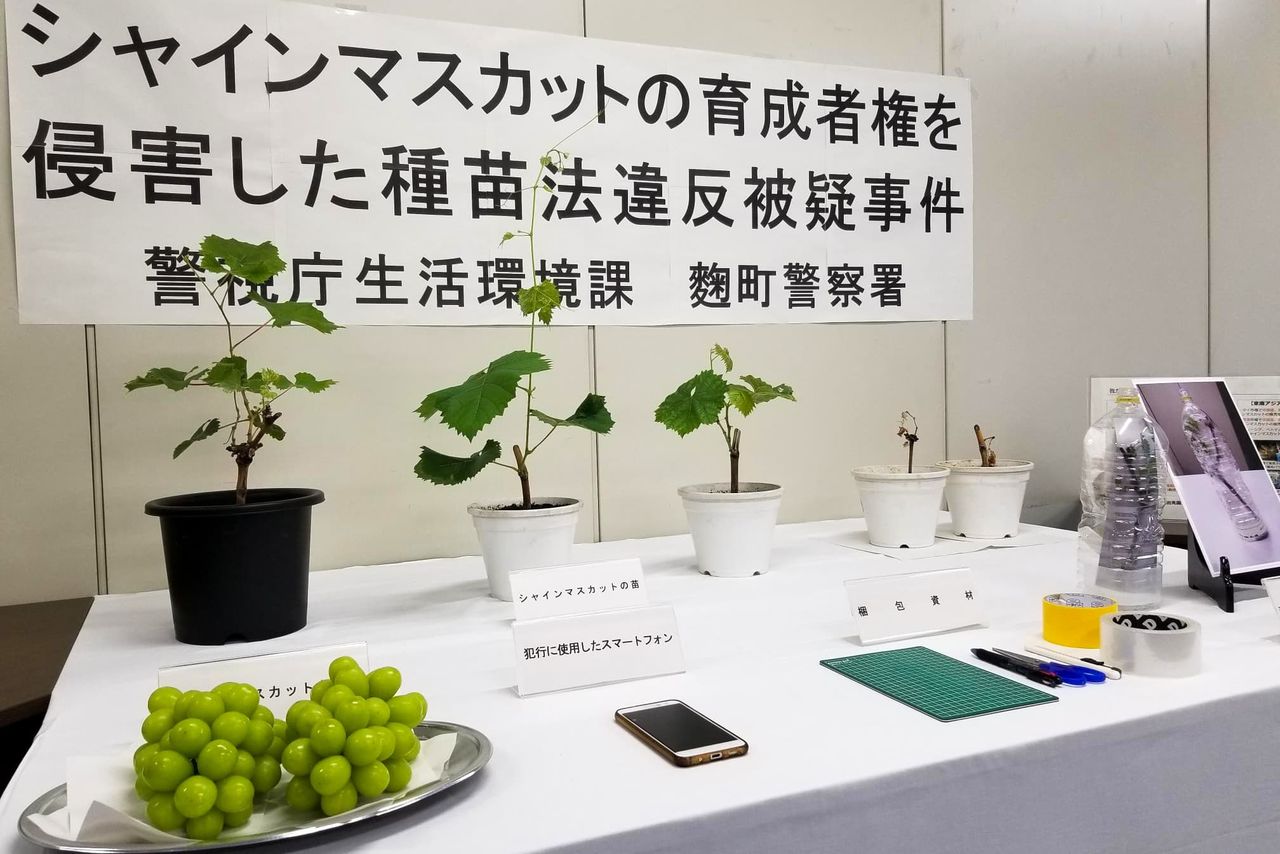
Seedlings confiscated from an unlicensed Shine Muscat growing operation in Tokyo in June 2021. (© Jiji)
Difficulty Preserving Cultivars Across Borders
International rules on preserving new plant cultivars are laid out in the UPOV 91 convention, ratified in 1991 by the International Union for the Protection of New Varieties of Plants, or UPOV, of which Japan is a member. The convention stipulates that to protect new varieties internationally, breeders must register them with each country within a given period before sales start. Shine Muscat has already missed that window, so there is nothing to be done.
To prevent recurrence of this problem, the government has begun support projects aimed at protecting agricultural intellectual property.
To increase fruit trees, all you need to do is cut off a branch and put it in soil or water. And farms tend to be large and easy to access from outside. The Japanese government’s opinion, as expressed by the MAFF Intellectual Property Division, is that rights holders should take proper action to manage seeds and seedlings.
Ehime Prefecture applied to register Beni Princess in China in 2019, but the application is still under review. It is not yet registered or protected. Even so, the cultivar is spreading throughout China. Despite the existence of international policies, the fact is that implementing appropriate systems and enforcement remains up to individual countries.
Ehime is maintaining strict control of seedlings and denying any international visits. Seedling sales are limited to licensed businesses, and mass-market retail outlets are forbidden from handling them. However, there are doubts that the seedlings sent to authorities for registration overseas have been properly handled.
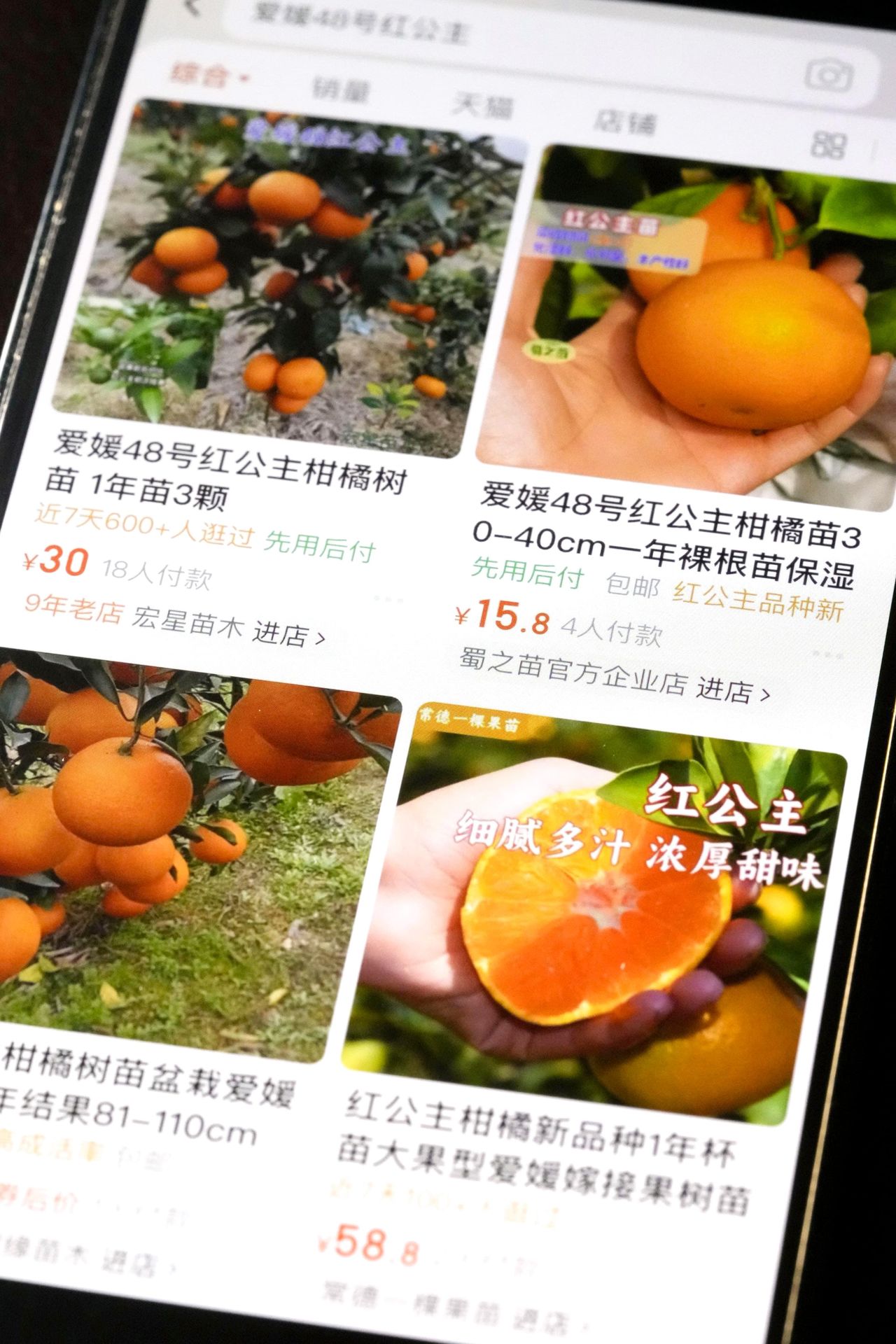
Seedlings claiming to be Beni Princess being sold on a Chinese website. (© Kyodo.)
At a June 2026 press conference, Ehime Governor Nakamura noted: “Registration in some countries requires local test cultivation. There are several actual cases where we have had to send saplings to such countries for them to carry out these procedures.”
Suzuki sees a burden in the language and legal expertise needed in executing contracts or filing lawsuits across national borders. “We want to establish a plant breeders’ rights administrative authority with expertise in managing and exercising these rights by mid-August at the latest.”
The Wagyū vs Wagyu IP Battle
Wagyū beef is also in the crosshairs for international businesses. In 2019, an individual was placed under criminal indictment for violating the Act on the Prevention of Infectious Diseases in Livestock after exporting wagyū semen and fertilized eggs to China without the required export inspections.
Wagyū, literally “Japanese cattle,” is a common name used for four varieties of Japan-bred meat cow: Japanese Black, Japanese Brown, Japanese Shorthorn, and Japanese Polled. There are a variety of regional brand names for beef from these breeds, such as Matsusaka, Ōmi, or Kobe beef. In the past, exports of wagyū semen and live cattle have led to breeding herds of so-called wagyu cattle in the United States and Australia. Now, there is Australian-grown “wagyu” on the market in South Korea and Hong Kong.
There are no international rules regarding livestock, like wagyū cattle, similar to the UPOV conventions for plants. To address that, the government enacted laws to prevent leakage in 2020 and stop export in contravention of contracts and licenses. It placed an obligation on those involved to register all transfers of semen, for example.
MAFF set up its Intellectual Property Division in 2008. Still, awareness that local brands and unique breeding methods are intellectual property on the level of new varieties or geographical indications still seems lacking at the producer level. The high added value factor of IP and the vulnerability to theft, i.e. high profitability and competitive advantage that make it attractive to rivals, are as applicable to agriculture as to the tech industry. Strategies to protect valuable IP are essential to nurturing growth in both.
(Originally published in Japanese. Banner photo: Cultivars believed to have been leaked overseas. Shine Muscat at upper left, Beni Princess at right, and Akihime at lower left. © Pixta.)