Halting the Yen’s Long Decline: Three Conditions for a Rebound
Economy Politics World- English
- 日本語
- 简体字
- 繁體字
- Français
- Español
- العربية
- Русский
The Yen’s Postpandemic Depreciation
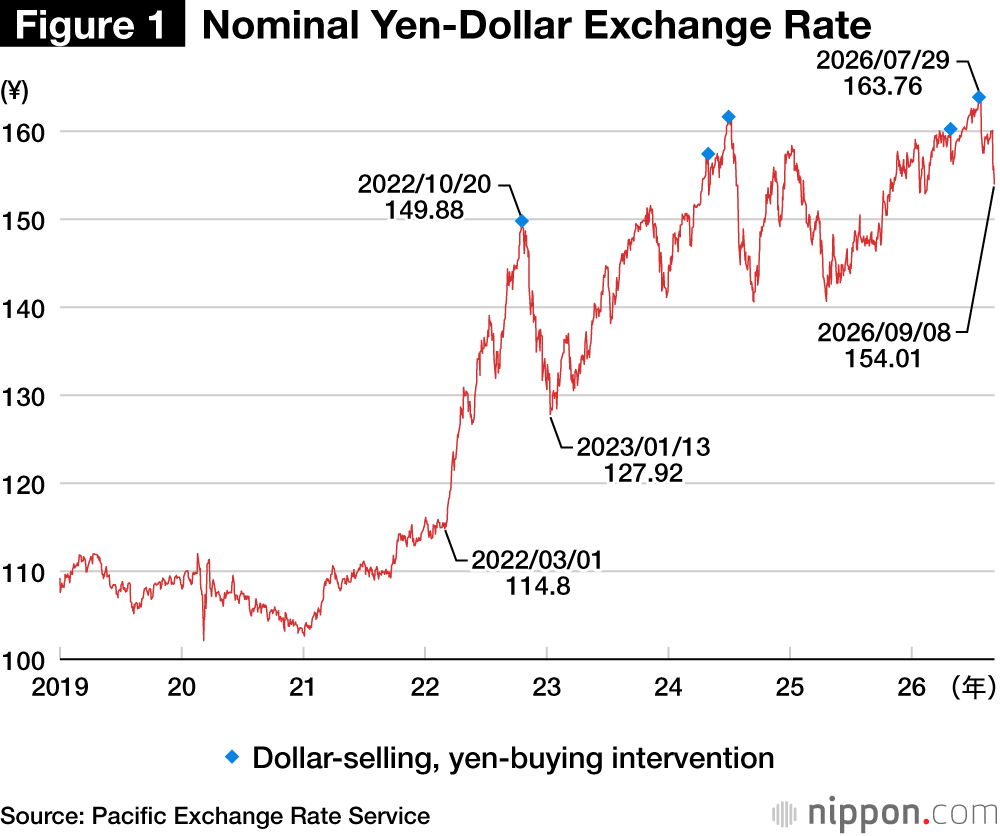
One unmistakable factor behind the yen’s sharp depreciation beginning in March 2022 (Figure 1) is the widening gap between Japanese and US interest rates as the two economies emerged from the COVID-19 pandemic.
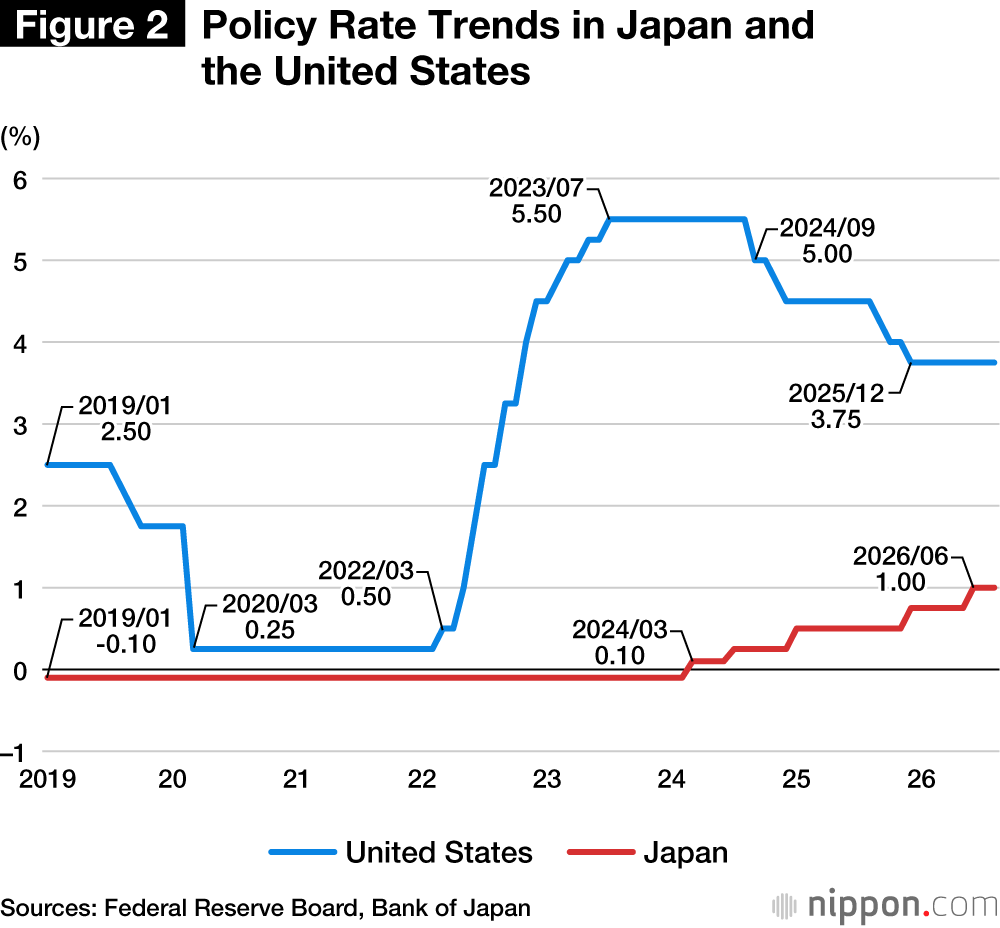
A look at policy rate trends in the two countries makes this clear (Figure 2). In March 2020, as the pandemic brought global economic activity to a halt, the US Federal Reserve cut the federal funds rate to 0.25%. This remained in place for nearly two years. But in March 2022, the Fed began raising rates—first to 0.5%, then higher in rapid succession as inflation surged worldwide.
As economies reopened, demand recovered faster than supply, pushing up global resource and energy prices. Russia’s invasion of Ukraine in February 2022 drove prices even higher. To contain inflation, many Western economies tightened monetary policy; the federal funds rate, for example, jumped to 4.50% in December 2022. Japan, meanwhile, maintained its negative interest rate policy and yield curve control, creating a stark contrast in monetary stance.
The interest rate gap is one of the most important drivers of the yen-dollar exchange rate. With the gap widening so quickly in 2022, a weaker yen became inevitable; on October 21, the yen briefly fell past ¥151 to the dollar.
The yen began to rebound after hitting a low in October 2022, strengthening to around ¥127 by January 2023, as seen in Figure 1 above. This reflected expectations that the US economy would cool under the weight of rapid rate hikes and that the Fed would soon begin cutting rates. But US economic data released throughout 2023 proved surprisingly strong. The Fed raised rates four more times, reaching 5.50% in July, while Japan stuck to negative rates and yield curve control. As the interest rate gap widened again, the yen resumed its decline. By 2024, a weak yen of around ¥150 to the dollar had become the new normal.
Policies That Prolonged the Depreciation
Two factors helped lock in this prolonged weakening. The first was Japan’s slow shift toward monetary policy normalization. The Bank of Japan did not lift negative rates and yield curve control until March 19, 2024. Even then, as Figure 2 shows, rate hikes proceeded cautiously: 0.10% at first, then 0.75% in December 2025, and finally 1.0% in June 2026—a process that took 27 months.
The United States, by contrast, lowered the federal funds rate to 5.0% in September 2024, and by December 2025 it had settled at around 3.75%. Despite the narrowing policy rate gap, the yen continued to decline. Markets remained convinced that Japan’s rate hikes were “behind the curve”—too slow to shift expectations. By early 2026, the yen appeared stuck around ¥160.
The second factor was the fiscal stance of the administration of Prime Minister Takaichi Sanae, launched in October 2025. Promising “responsible and proactive public finances,” the prime minister adopted budgets that raised concerns about fiscal discipline, and she committed to lowering the consumption tax on food and beverages to 1% for two years. The administration also signaled clear resistance to BOJ rate hikes. This combination of expansionary spending, tax cuts, and continued low interest rates naturally pushed the yen lower. By July 2026, the currency was approaching the ¥164 mark, raising fears of a slide into the upper ¥160s.
A Turning Point: Coordinated Japan-US Intervention
On July 30, 2026, the yen hovered around ¥163 until evening. But shortly after 10:30 p.m., it suddenly strengthened, briefly approaching ¥157. The trigger was a massive yen buying intervention by Japan’s Ministry of Finance, reportedly exceeding ¥6 trillion. Historically, interventions have helped prevent further depreciation when the exchange rate crosses key thresholds. The ♦ symbols in Figure 1 indicate such episodes.
Intervention alone may not reverse market trends, but it can prevent further erosion. On July 31, however, US authorities joined Japan in coordinated intervention—selling euros and buying yen. Japan appears to have intervened again on August 3, bringing the amount spent over three days to a reported ¥12 trillion to ¥13 trillion. The yen briefly strengthened to about ¥155, and both governments declared they would not hesitate to take further action. The impact eventually faded, with the yen returning to around ¥160 by late August, but markets could no longer ignore the possibility of additional intervention.
Then, on September 2, when the yen was trading near ¥160, it suddenly began rising. The next day it climbed further, almost reaching ¥155 by late night. No intervention was reported, but market sentiment had shifted dramatically after US Treasury Secretary Scott Bessent repeatedly expressed concern about the yen’s undervaluation and strong support for decisive Japanese policy action.
Bessent’s remarks—which could be seen as either pressure or cooperation—had several consequences. BOJ Governor Ueda Kazuo was in effect pushed toward additional rate hikes during his August 30 meeting with Bessent, and at the September 1 G20 press conference, he did not rule out further tightening. BOJ Policy Board member Takata Hajime added on September 2 that Japan had entered a phase of more flexible rate hikes, triggering market expectations of faster BOJ tightening. Bessent earlier alluded to potential moves not yet publicly disclosed, fueling speculation that Japan’s Government Pension Investment Fund might increase its yen-denominated holdings.
Against this backdrop, yen carry trades began to unwind on September 2. Investors who had built large yen short positions—expecting continued depreciation under an expansionary fiscal policy and low interest rates—rushed to close positions to avoid losses amid abrupt appreciation.
All Eyes on the Pace of Rate Hikes, Fiscal Discipline
Can the yen climb further and finally break out of its prolonged slump? Three factors will determine the outcome: resource prices, monetary policy, and fiscal discipline.
The first concerns the direction of resource and energy prices. As a major importer of raw materials, Japan’s trade balance deteriorates when costs rise. If crude prices remain high at around $100 per barrel, trade deficits will widen significantly. Ongoing instability in the Strait of Hormuz, driven by the Iran conflict, makes forecasting oil prices extremely difficult. Japan must avoid the vicious cycle in which higher resource prices lead to larger trade deficits and a weaker yen, which in turn drives yen-denominated import costs even higher.
A second crucial factor will be whether the BOJ continues to show an aggressive stance on rate hikes, particularly compared to the Federal Reserve Board. At its September 17–18 Monetary Policy Meeting, Japan’s central bank raised the policy rate from 1.0% to 1.25%. Following this decision, though, the yen actually weakened further against the dollar, falling from the low ¥156 range to nearly ¥158. This is likely because markets perceived a gap between the Japanese and US stances on future monetary tightening.
Following the September 15–16 meeting of the US Federal Open Market Committee, which decided to hike the federal funds rate, FRB Chair Kevin Warsh noted his proactive views on further monetary tightening aimed at curbing inflation. The Bank of Japan, by comparison, is not viewed by markets as likely to set a similar course. Indeed, at the Monetary Policy Meeting, two of the policy board’s nine members voted against raising the rate at this time. The markets may have taken this as a sign that the Takaichi administration is trying to prevent hikes in Japan’s policy rate.
Following the BOJ session, late in the evening on September 18, came a report that the bank had carried out a “rate check,” questioning market participants about exchange-rate levels. This is often a sign of upcoming currency intervention, and the market responded by pushing the yen back to 156 to the dollar; but there is no guarantee that this impact will last. Going forward, the yen market will depend heavily on whether the BOJ displays a robust stance on monetary tightening in comparison with the FRB.
Finally, the Takaichi administration must enforce stronger fiscal discipline. Bessent stated that Japan needs to “stop the reflation” introduced during the Abe Shinzō era. How much weight Takaichi gives to Washington’s opinion will be critical. Japan can use such external pressure to steer the country toward greater fiscal discipline, but if it forgoes the opportunity, the yen could easily weaken again beyond ¥160.
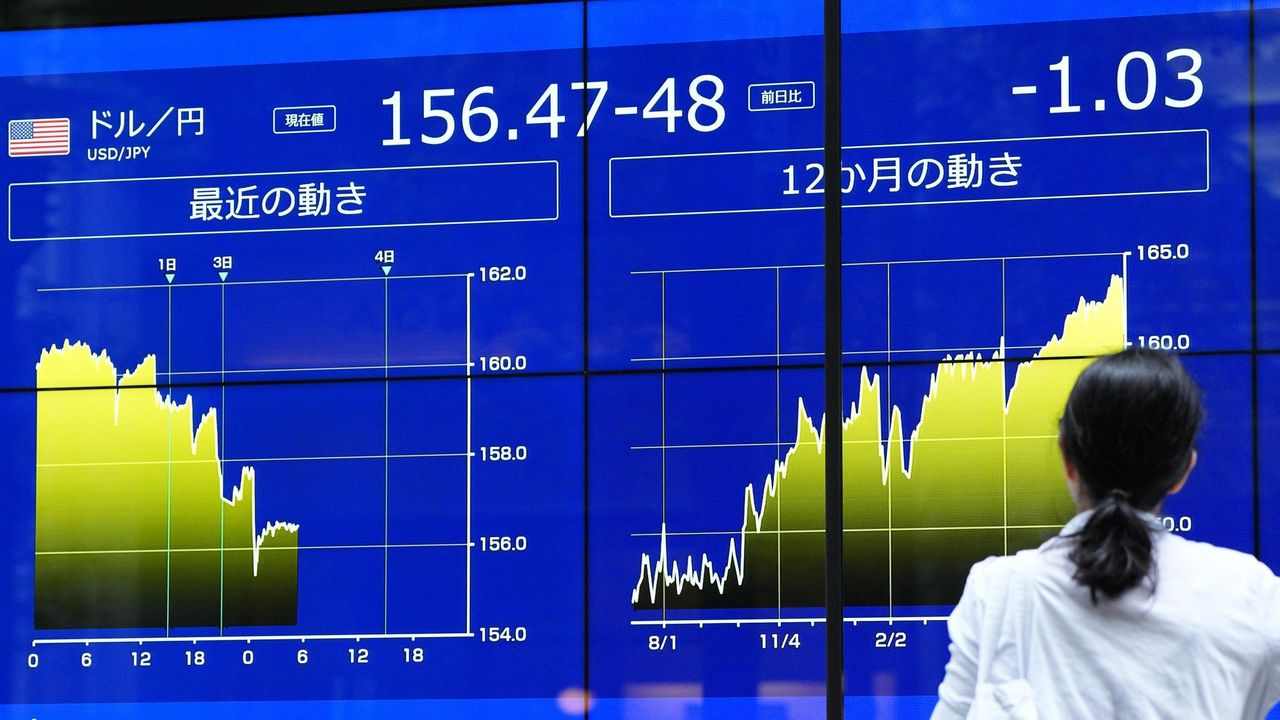
(Originally published in Japanese on September 14 2026. Banner photo: Monitors in Chiyoda, Tokyo, show the yen rising to the ¥156 to the dollar range on August 3, following coordinated Japan-US currency purchases. © Kyōdō.)