Koinobori: Japan’s Colorful Carp Streamers
History Family Culture- English
- 日本語
- 简体字
- 繁體字
- Français
- Español
- العربية
- Русский
Flying High
The Japanese tradition of flying colorful koinobori carp streamers in the late spring dates back to the Edo period (1603–1868). A Chinese legend tells of how a carp climbs a raging stream and transforms into a dragon. Like the carp in the story, the colorful windsocks are believed to instill children with the determination to succeed in life. They were originally flown for the Tango no Sekku festival on the fifth day of the fifth month of the traditional calendar, and are now associated with the Children’s Day national holiday on May 5.
Among the many banners in the illustration below from 1838 depicting a street scene in Edo (now Tokyo), there are koinobori carried by a salesman at the bottom left of the right-hand page. However, the small size of the streamers indicates their relative unimportance.
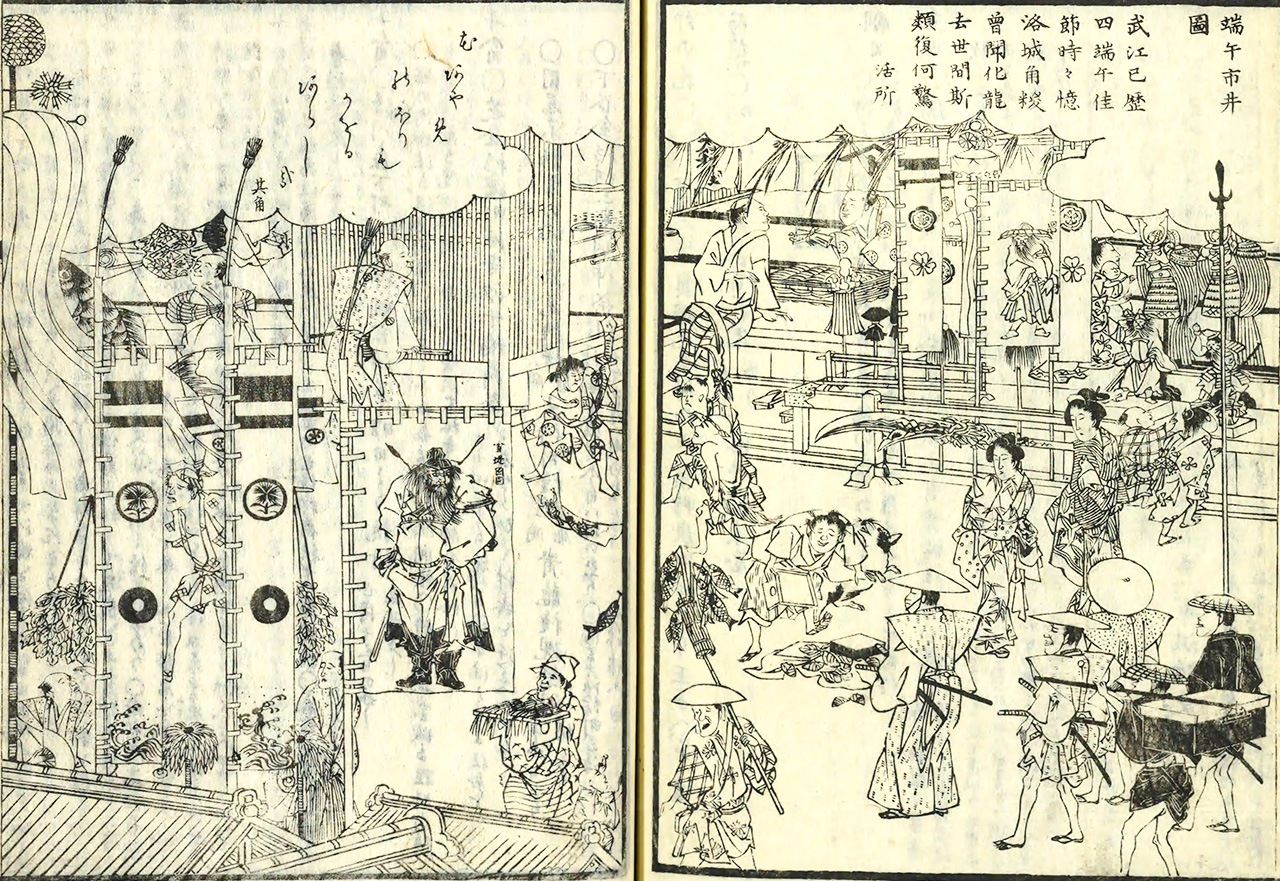
An 1838 illustration of streets at Tango no Sekku from Tōto saijiki (Annual Record of the Eastern Capital). (Courtesy the National Diet Library)
Andō Hiroshige’s One Hundred Famous Views of Edo includes a picture of a huge carp streamer, gracefully swimming in the air. Koinobori seem to have become popular from around the middle to the latter half of the nineteenth century, replacing earlier varieties of banners. At this time, they consisted of a single fish.
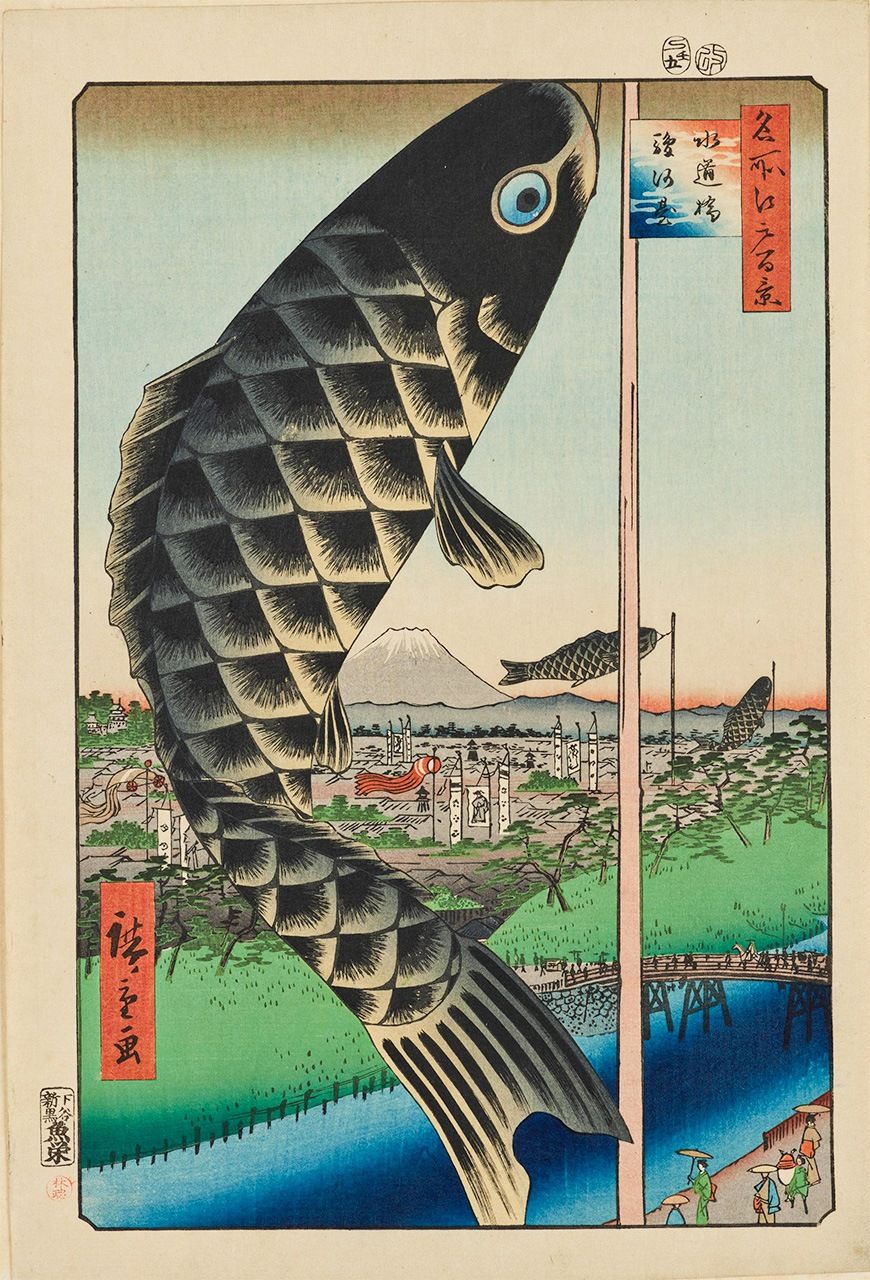
An 1857 illustration from Andō Hiroshige’s Meisho Edo hyakkei (One Hundred Famous Views of Edo). (© Colbase)
From around the end of the nineteenth century and into the twentieth, it became common to fly a pair of carp, with a black one representing the father and a red carp his son. Even in the well-known 1931 children’s song “Koinobori,” there is no mention of the mother.
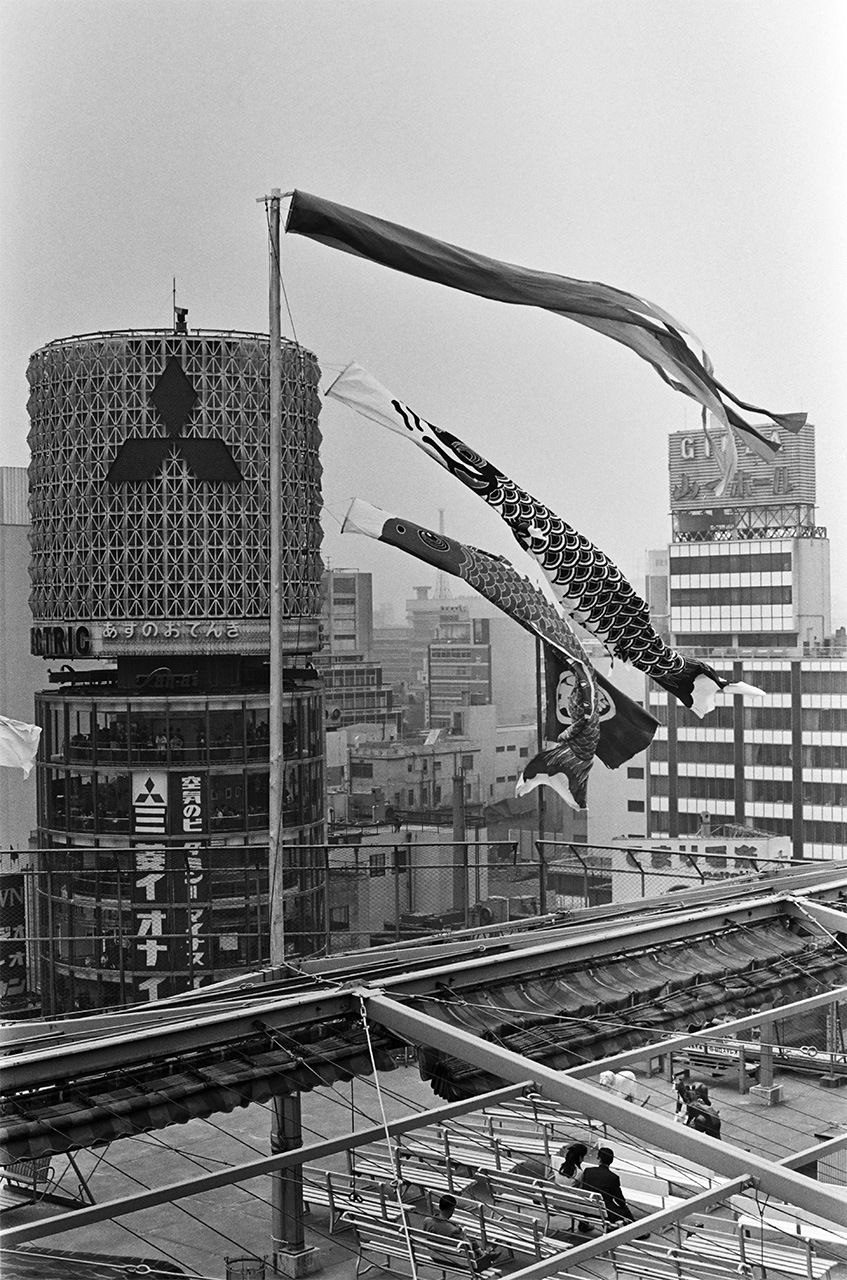
Carp streamers flying in Ginza, Tokyo, in April 1965. (© Jiji)
From the 1970s, a shift in thinking led to manufacturers adjusting their products. From this time, three carp were common. While the black fish still represented the father, the red one was now the mother, with a blue carp for children.
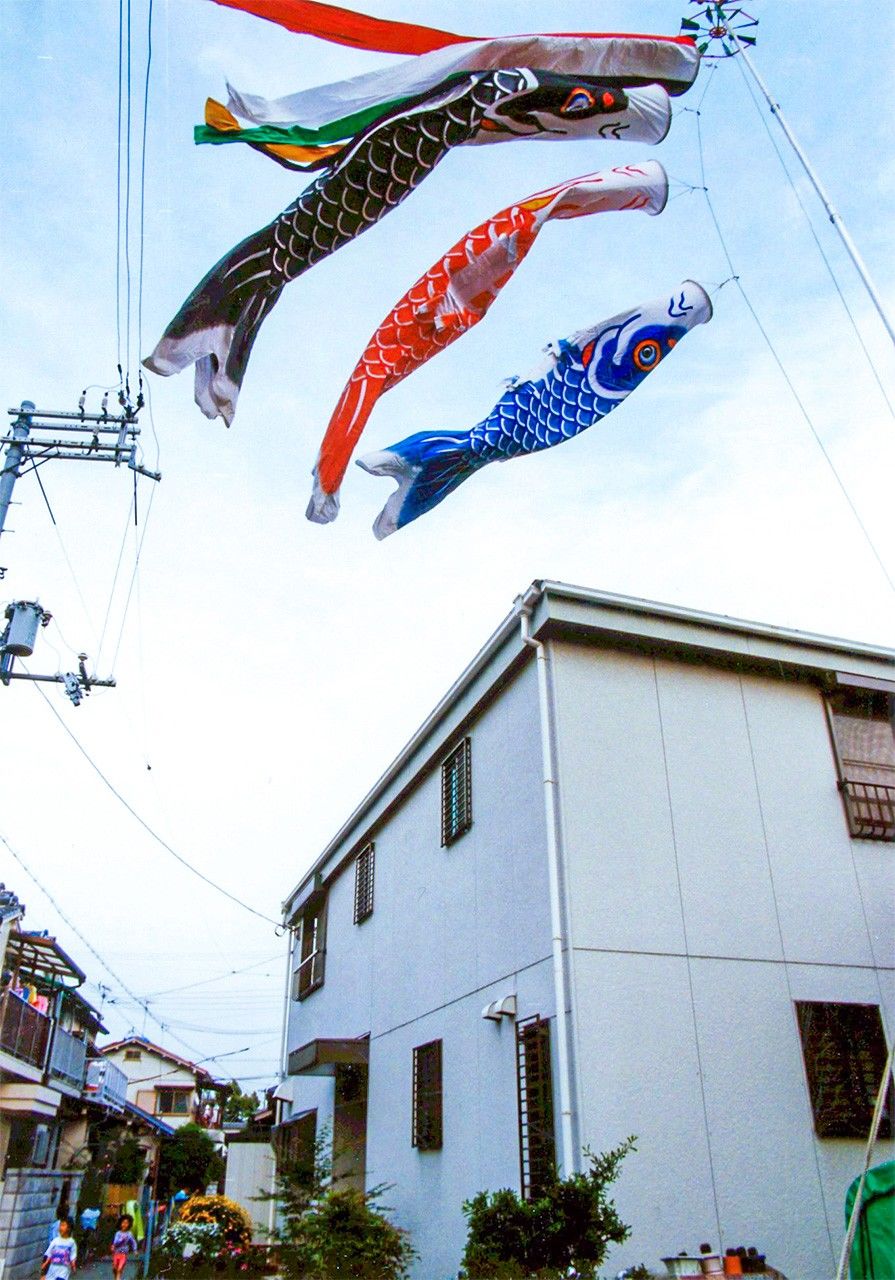
Koinobori in a residential setting. (© Pixta)
More recent developments have seen compact streamers for use on apartment balconies enter the market. At the same time, tourist sites like Tokyo Tower and Tokyo Skytree have popular displays featuring hundreds of brightly colored fish.
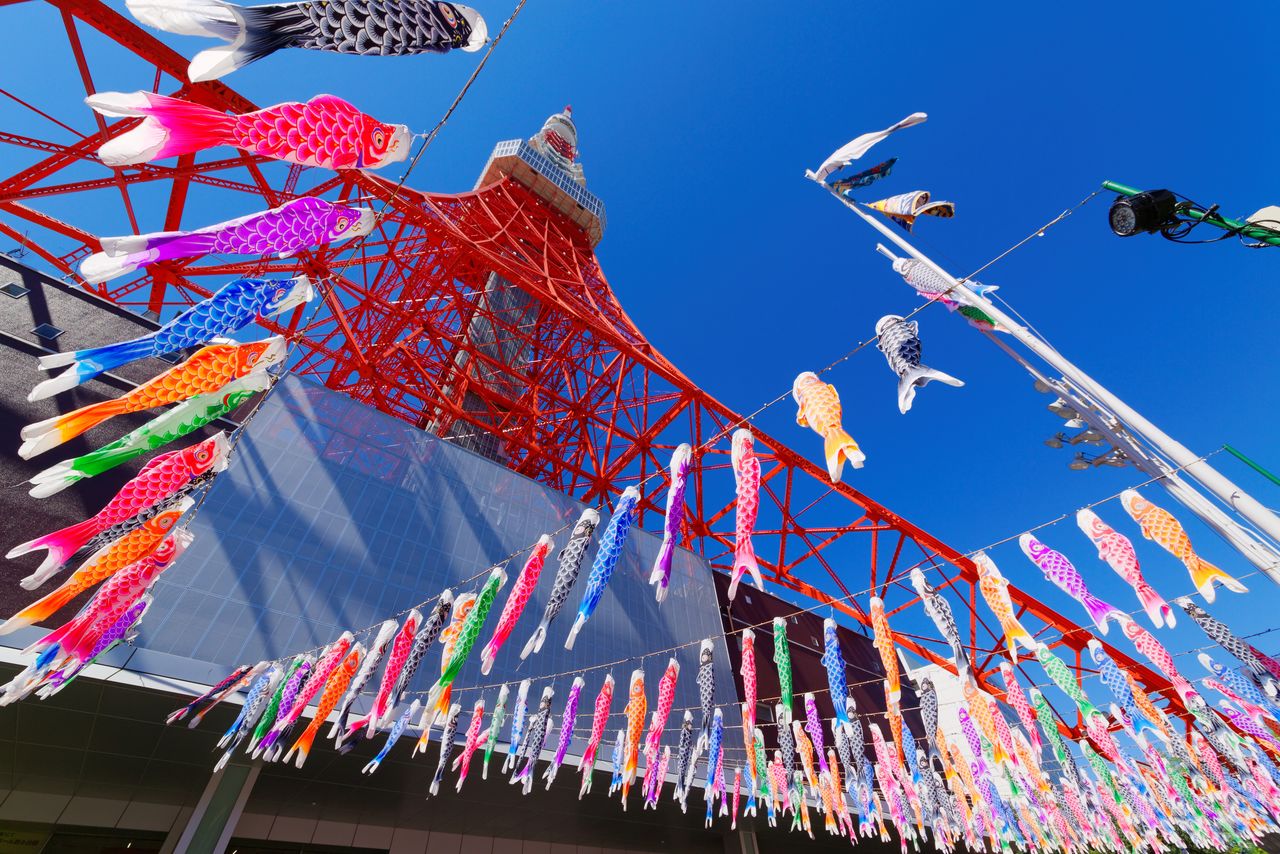
Koinobori at Tokyo Tower. (© Pixta)
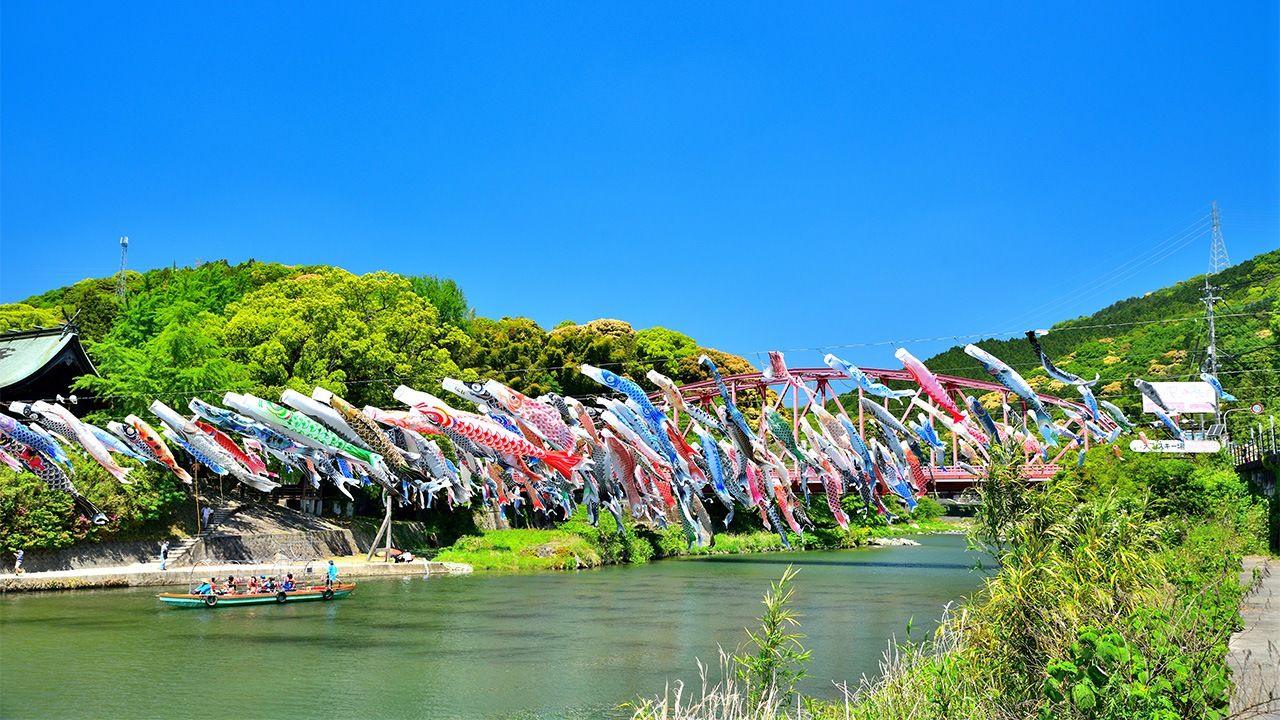
(Translated from Japanese. Banner photo: Koinobori on display at Kawakami Gorge, Saga Prefecture. © Pixta.)