
Majority of Japan’s Female Local Assembly Members Suffer Harassment
Politics Gender and Sex- English
- 日本語
- 简体字
- 繁體字
- Français
- Español
- العربية
- Русский
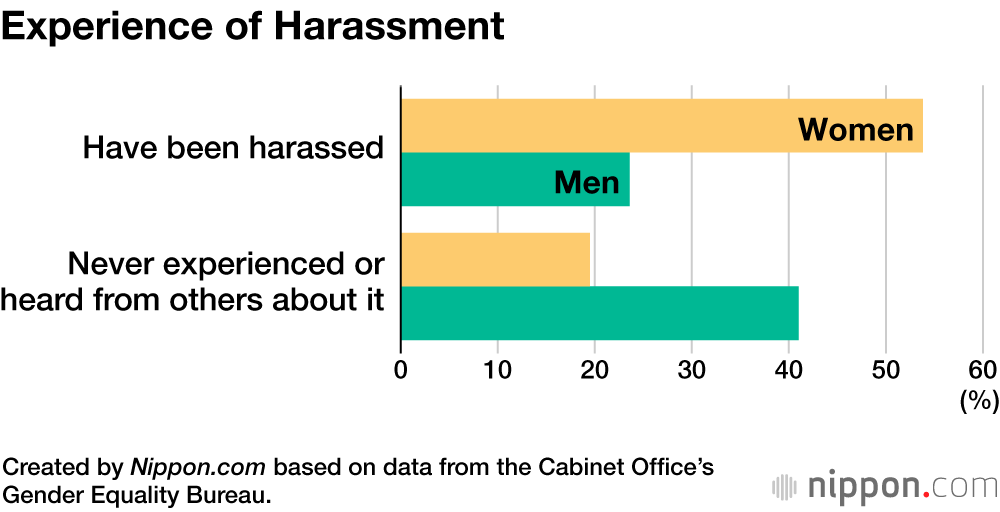
In a survey conducted by the Cabinet Office’s Gender Equality Bureau, aimed at local assembly members across Japan, 53.8% of women stated that either they, their family members, or supporters “have been harassed,” more than double the percentage of men (23.6%). Meanwhile, 41.0% of men responded that they had “never been harassed or heard from others about it,” twice that of women (19.5%). This would seem to indicate that men’s and women’s perceptions differ as to whether the same action is harassment or not.
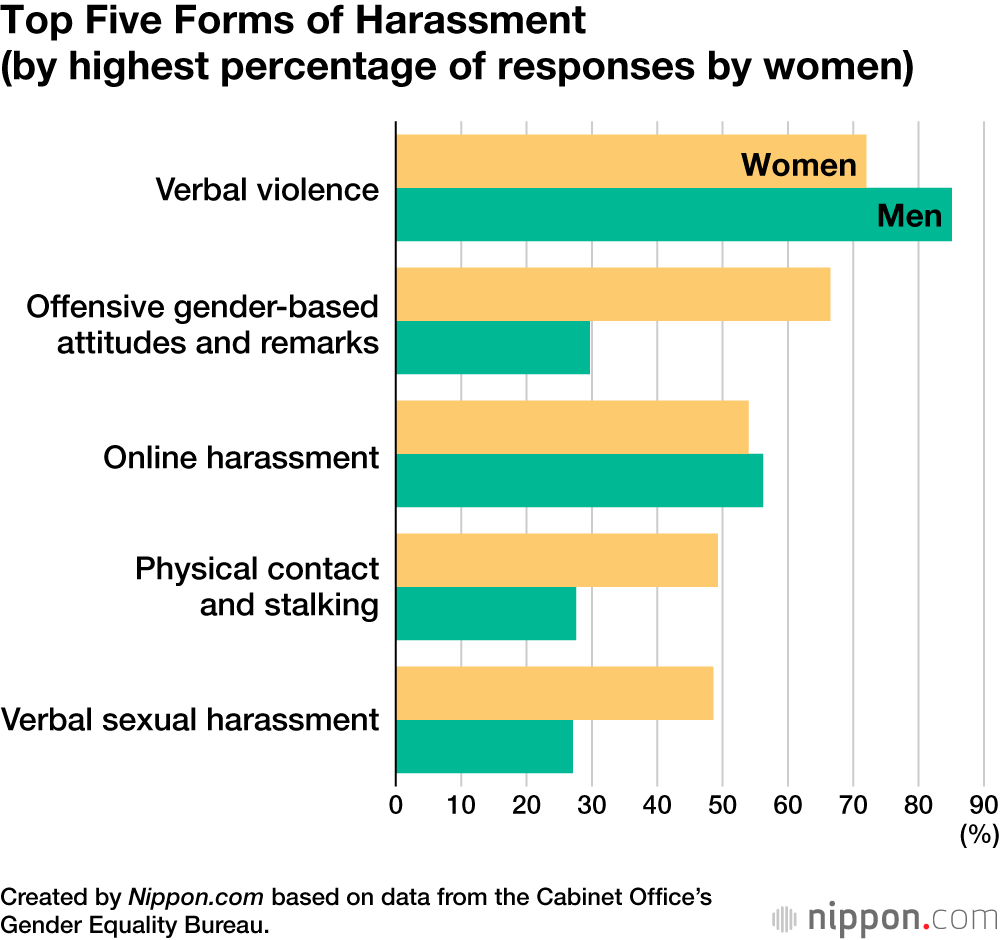
The most common specific form of harassment that assembly members themselves were subjected to was “verbal violence, including heckling,” experienced by 85.1% of men and 72.0% of women. The overwhelmingly prevalent forms that women were subjected to were “offensive gender-based attitudes and remarks,” “physical contact and stalking,” and “verbal sexual harassment.”
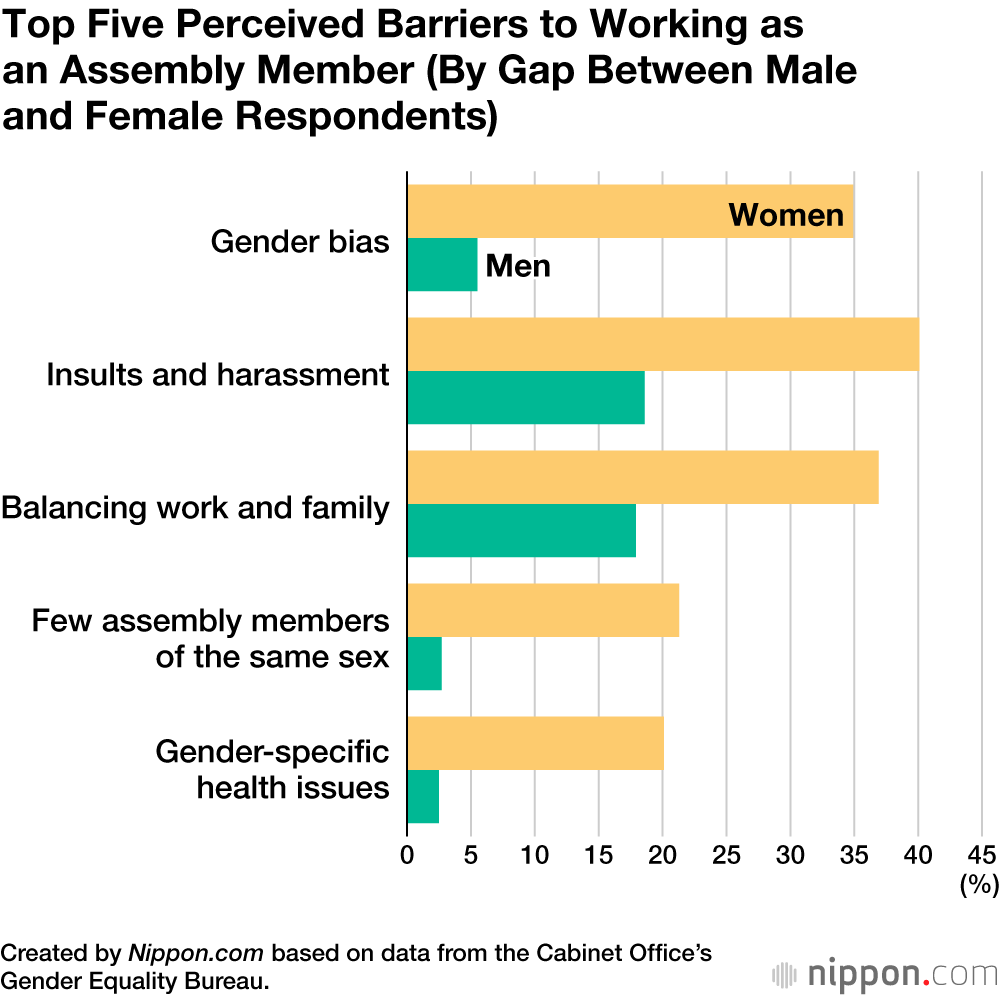
Looking at the difference in perceived barriers to working as assembly members depending on respondents’ gender, the issue that had the largest gap, by 29.4 points, was “gender bias” or the assumption that politics was a male occupation.
The nationwide survey, conducted from November to December 2024, received responses from 5,075 local assembly members. The revised Act on Promotion of Gender Equality in the Political Field, brought into effect in June 2021, included provisions to prevent harassment of assembly members and candidates. However, it has not led to a resolution of the issue of female politicians unable to concentrate on their political activities simply because they are women.
Data Sources
- Results of a survey of local assembly members (Japanese) from the Cabinet Office’s Gender Equality Bureau, 2025.
(Translated from Japanese. Banner photo © Pixta.)