
Health Ministry Panel on Cancer Care Predicts Surgeon Shortage in Japan
Health- English
- 日本語
- 简体字
- 繁體字
- Français
- Español
- العربية
- Русский
Decline in Capable Surgeons
A Japanese Ministry of Health, Labor, and Welfare expert group recently announced findings from its study on future requirements for cancer care and the ability of the medical sector to meet those needs.
The group estimates that the overall number of newly diagnosed cancer patients will increase for the time being, rising 3% from 1,025,000 today to a peak of 1,055,000 in 2040. It will then start to slowly decline, as the population continues to fall.
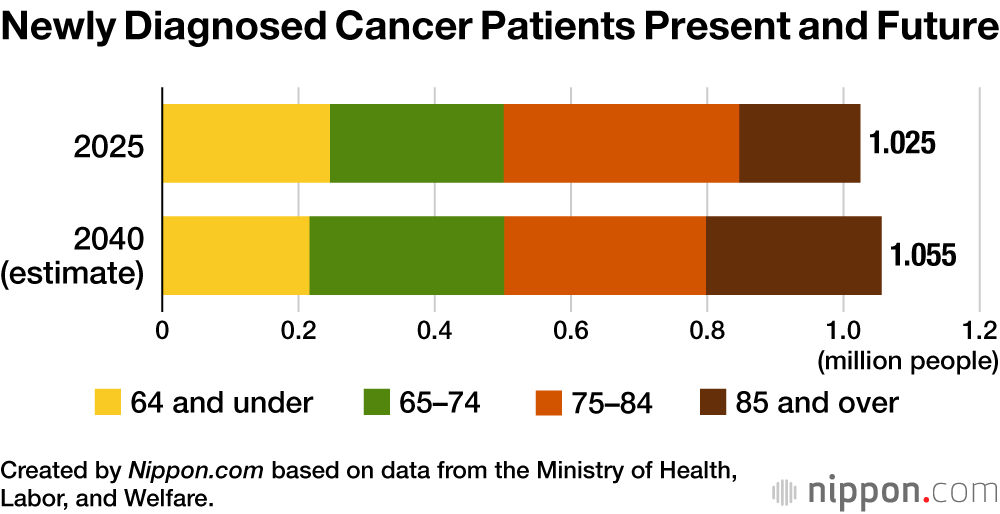
Smaller cities and depopulating areas will see the number of newly diagnosed cancer patients begin to decline before 2040, with Akita Prefecture likely to witness a decline of over 10% by that point. However, 16 prefectures with substantial urban populations will experience increases; Tokyo and Okinawa in particular are forecast to see increases of more than 10%.
Currently, cancer treatment relies on three main approaches: surgery, radiotherapy, and drug-based treatment (including chemotherapy). The study group anticipates that radiotherapy and drug-based treatments will increase in the future, while surgical treatments will decrease by 5% from 465,000 in 2025 to 440,000 by 2040. The reason cited for this decrease is the reduced proportion of surgeries performed among the working age population (15-64).
15% Fewer Young Gastrointestinal Surgeons in One Decade
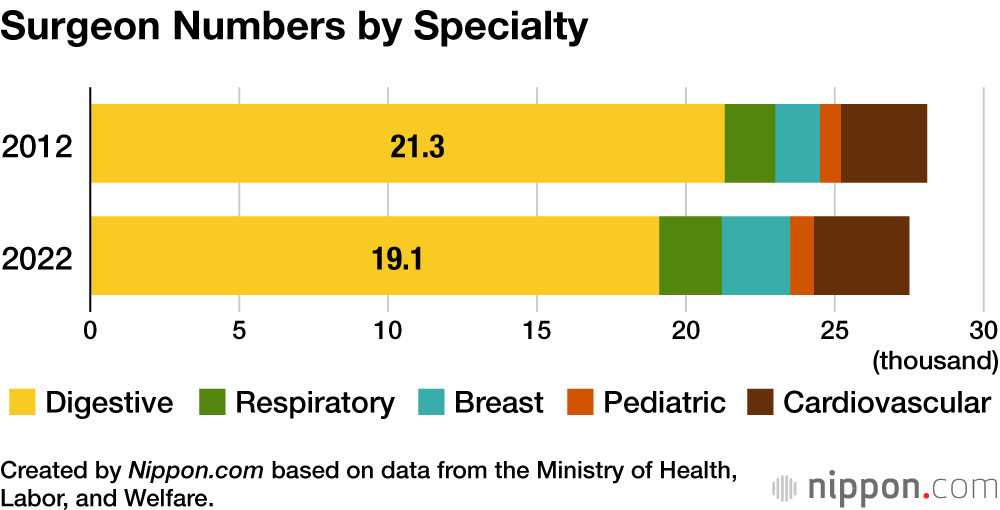
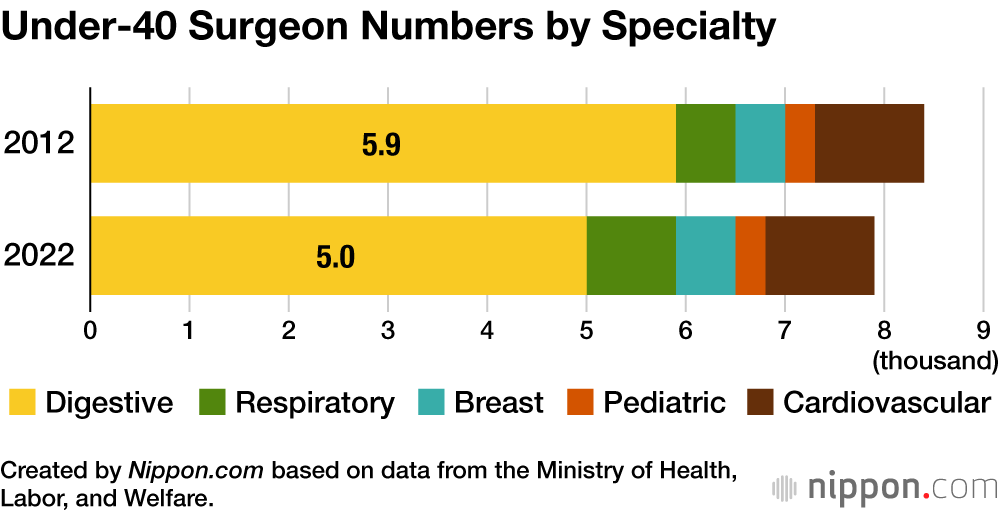
Despite the decreasing need for surgery, the number of surgeons capable of performing cancer operations will drop at an even faster rate. In particular, the number of surgeons capable of operating on the digestive system is already decreasing. Between 2012 and 2022, the number of surgical gastroenterologists witnessed a decline of 10%, to about 19,000 surgeons. As the decline in surgeons under 40 currently sits at 15%, the situation will continue to worsen. The reason cited for this development in the gastroenterology field is the demanding work conditions, including the long length of surgeries when operating on the digestive system and emergency operations during holidays and evenings.
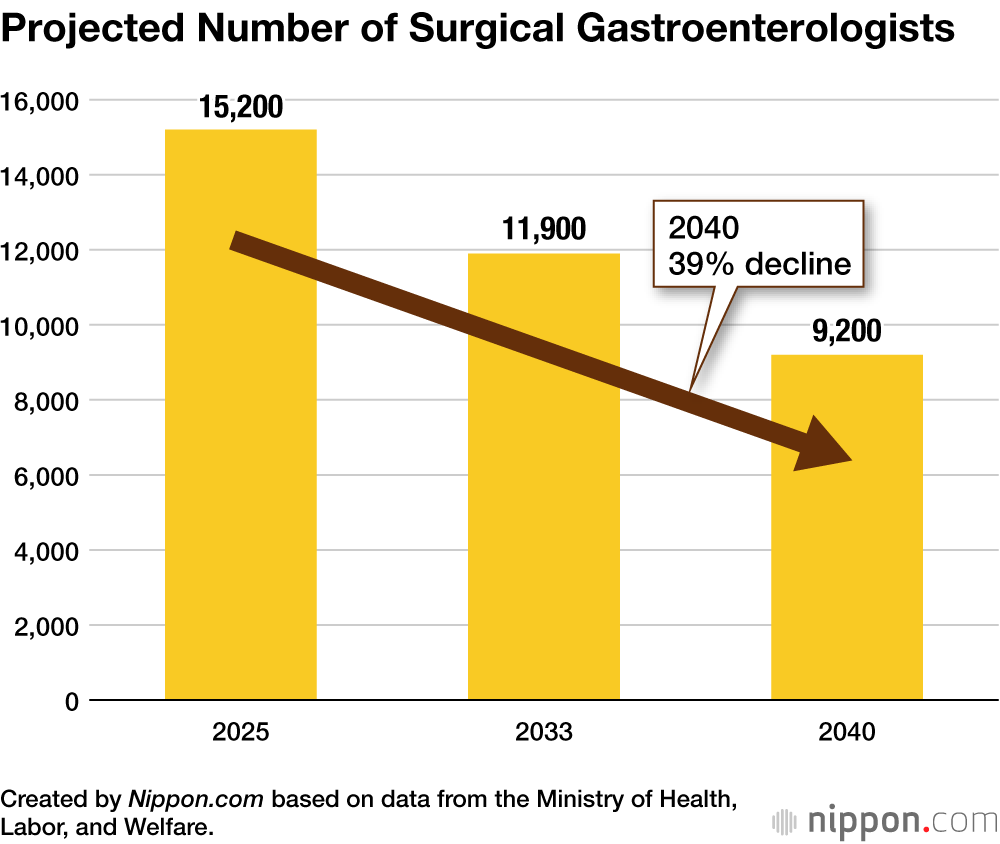
If current trends persist, the MHLW expert group projected that the number of physicians under 65 years eligible for membership of the Japanese Society of Gastroenterological Surgery will decrease from 15,200 in 2025 to 9,200 in 2040—a decline of around 39%. Even with a decreasing demand for surgery, this is expected to result in a shortage of 5,200 surgeons.
Data Sources
- Report of the study group on delivery systems for cancer care (Japanese) from the Ministry of Health, Labor, and Welfare.
(Translated from Japanese. Banner photo © Pixta.)