Japan Relies on Imports to Satisfy Craving for Matsutake Mushrooms
Economy Food and Drink- English
- 日本語
- 简体字
- 繁體字
- Français
- Español
- العربية
- Русский
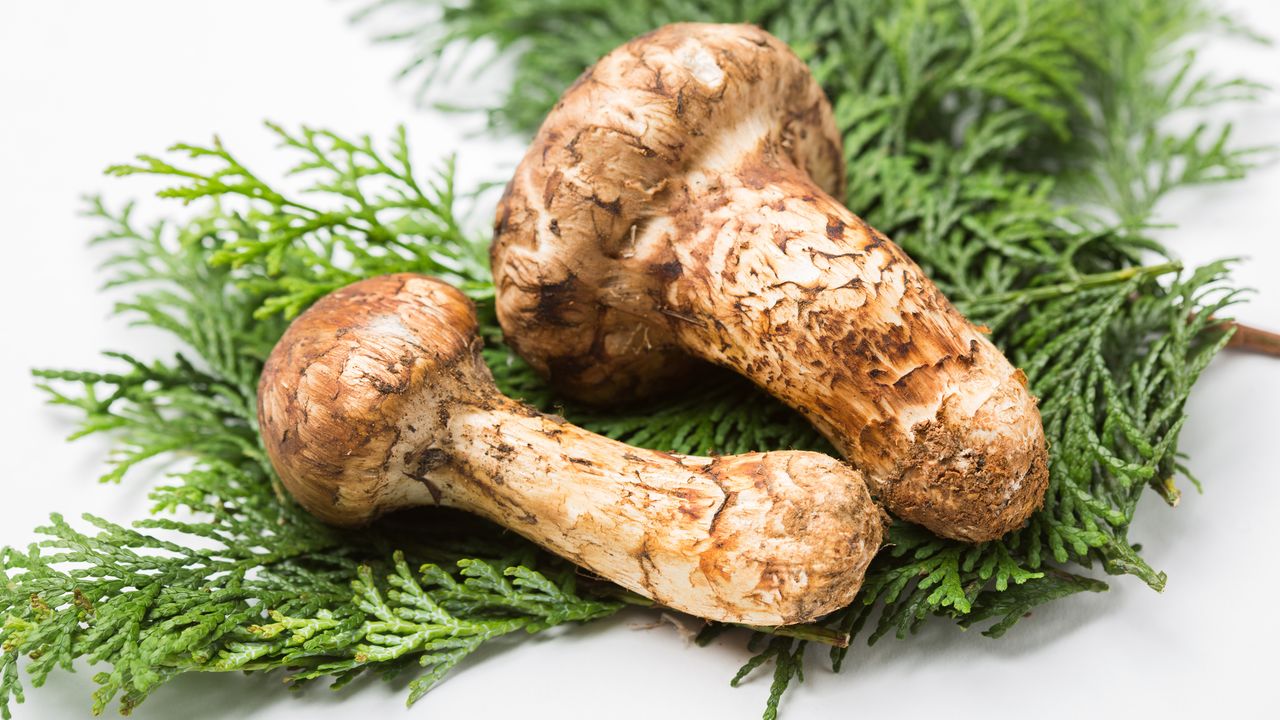
Matsutake mushrooms and rice steamed in an earthenware pot make up the quintessential autumn delicacy in Japan. However, domestic production of matsutake has steadily declined in recent years, making it necessary to rely heavily on imports.
According to the Ministry of Agriculture, Forestry, and Fisheries, domestic annual matsutake production peaked in 1941, at 12,000 tons, and by 1960 the output stood at 3,500 tons. Several factors account for the decline, including the loss of satoyama, which are the rural areas that border woodlands and arable land, as well as damage from pests and the lack of a younger generation to take over as workers. In recent years, the harvests have remained below 100 tons, apart from a crop of 140 tons in 2010. In 2019, production fell to just 14 tons, and as of 2024 stands at 45 tons. The main production areas in Japan are Nagano and Iwate Prefectures.
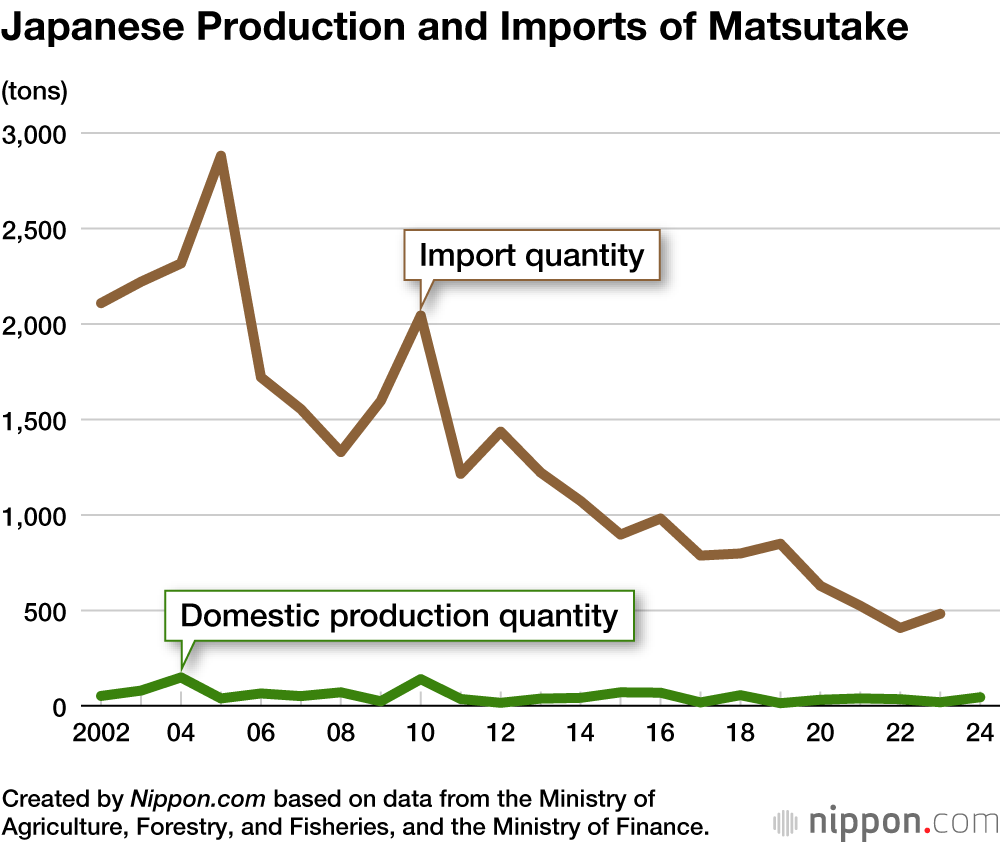
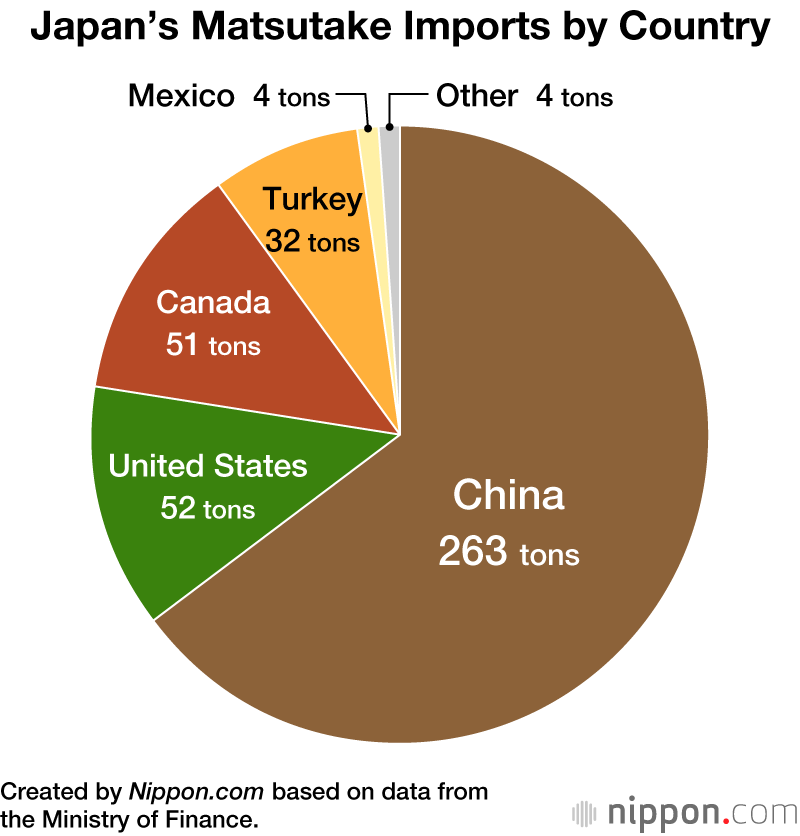
Currently, foreign-grown matsutake mushrooms account for over 90% of all the products on the market. China provides more than 60% of all these imports, but supplies from the United States and Canada have been increasing in recent years.
Techniques for cultivating matsutake are yet to be developed, so they are harvested in the wild. This makes the mushrooms highly prized, and they fetch high prices every year during the autumn harvesting season. Domestically produced matsutake are priced between ¥5,000 and ¥10,000 for 100 grams, and even imported matsutake mushrooms cost the consumer somewhere between ¥1,000 and ¥3,000.
Data Sources
- Statistics on production of special forestry products (Japanese) from the Ministry of Agriculture, Forestry, and Fisheries.
(Translated from Japanese. Banner photo © Pixta.)