From Suffrage to Prime Minister: Eight Decades of Milestones for Women in Japanese Politics
Politics Gender and Sex- English
- 日本語
- 简体字
- 繁體字
- Français
- Español
- العربية
- Русский
Timeline of Firsts and Other Milestones for Women in Japanese Politics
December 1945 Women gain the right to vote in an amendment to election legislation.
April 1946 In the first postwar general election, 39 women are elected to office, accounting for 8.37% of all 466 lawmakers.
July 1960 Nakayama Masa is appointed as minister of health and welfare by Prime Minister Ikeda Hayato, becoming the first woman included in a Japanese cabinet.
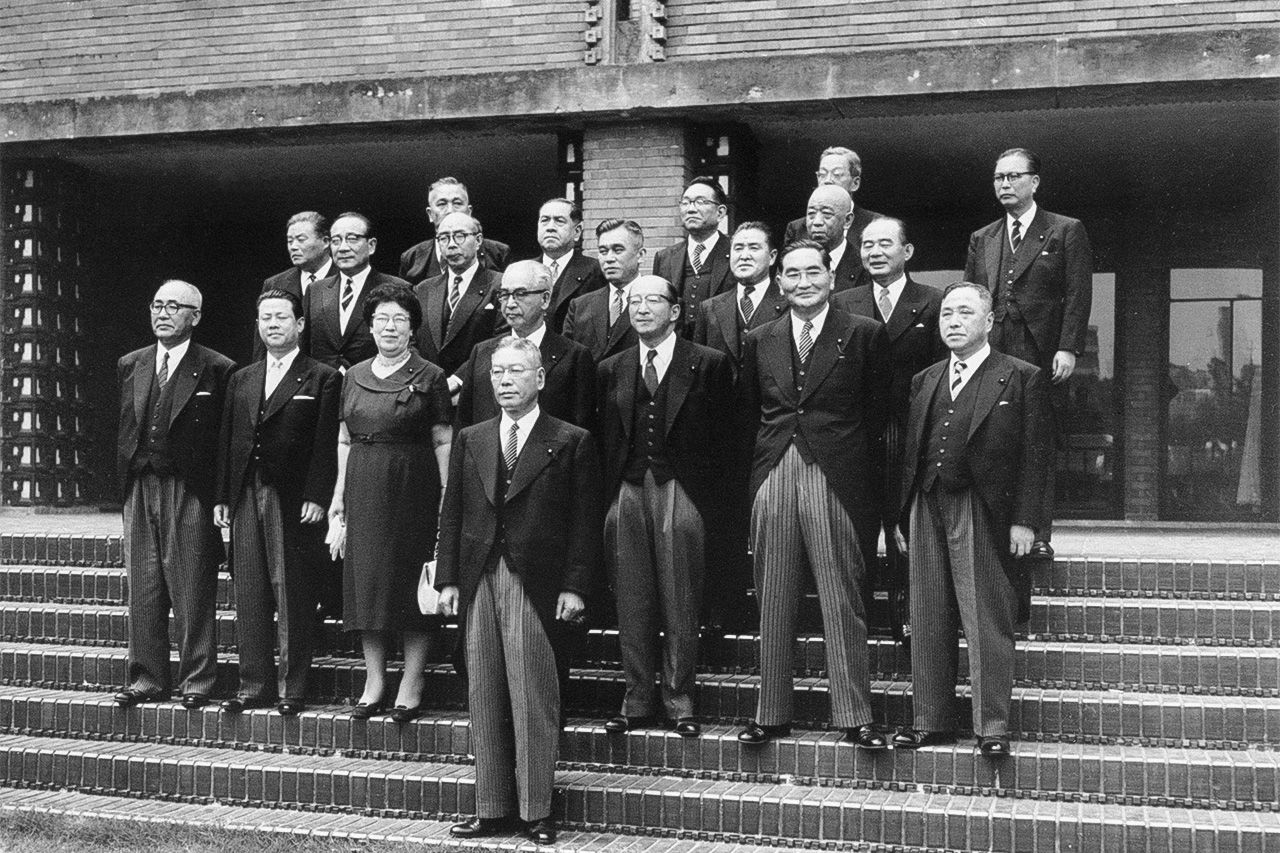
Nakayama Masa, Japan’s first female minister, appears third from left in the second row. (© Jiji)
July 1962 Kondō Tsuruyo is appointed by Ikeda as minister of state of science and technology, becoming the second woman named to a cabinet.
November 1984 After a 22-year gap, Ishimoto Shigeru becomes the third woman to serve in the cabinet, as minister of state for the environment under Prime Minister Nakasone Yasuhiro.
September 1986 Doi Takako is elected as leader of the Japan Socialist Party, becoming the first woman to head a national political party in Japan.
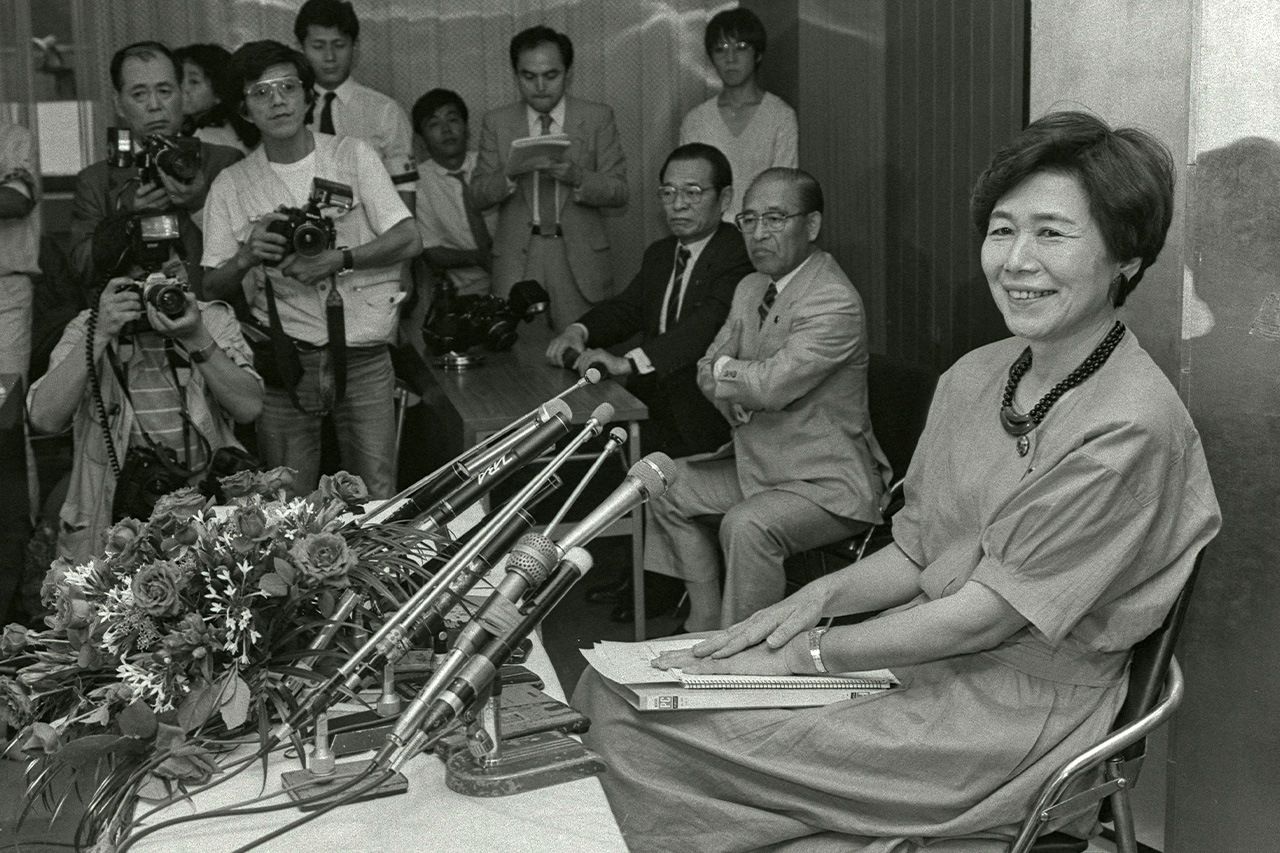
Doi Takako (right) takes questions as leader of the Japan Socialist Party. (© Reuters)
July 1989 Doi Takako’s JSP wins a major victory in the House of Councillors election.
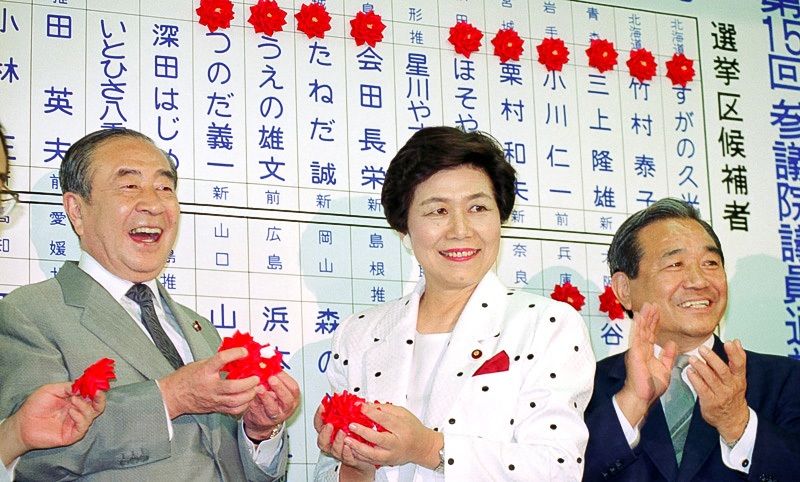
Doi Takako smiles as the JSP wins a major increase in seats at the House of Councillors election on July 23, 1989. (© Jiji)
August 1989 Kaifu Toshiki names the first cabinet with two female ministers: Takahara Sumiko as minister of state for economic planning and Moriyama Mayumi as minister of state for the environment.
August 1993 Doi Takako becomes the first female speaker of the House of Representatives.
February 2000 Ōta Fusae is elected as governor of Osaka Prefecture, becoming the first female prefectural governor.
April 2001 Tanaka Makiko is appointed by Prime Minister Koizumi Jun’ichirō as the first female minister for foreign affairs.
July 2004 Ōgi Chikage becomes the first female president of the House of Councillors.
September 2005 A general election sees 43 women elected to office. This is the first time for the total to rise above the 39 women elected in 1946.
September 2008 Koike Yuriko becomes the first woman to stand as a candidate in the Liberal Democratic Party presidential election. She finishes third out of five, as Asō Tarō comfortably wins the contest.
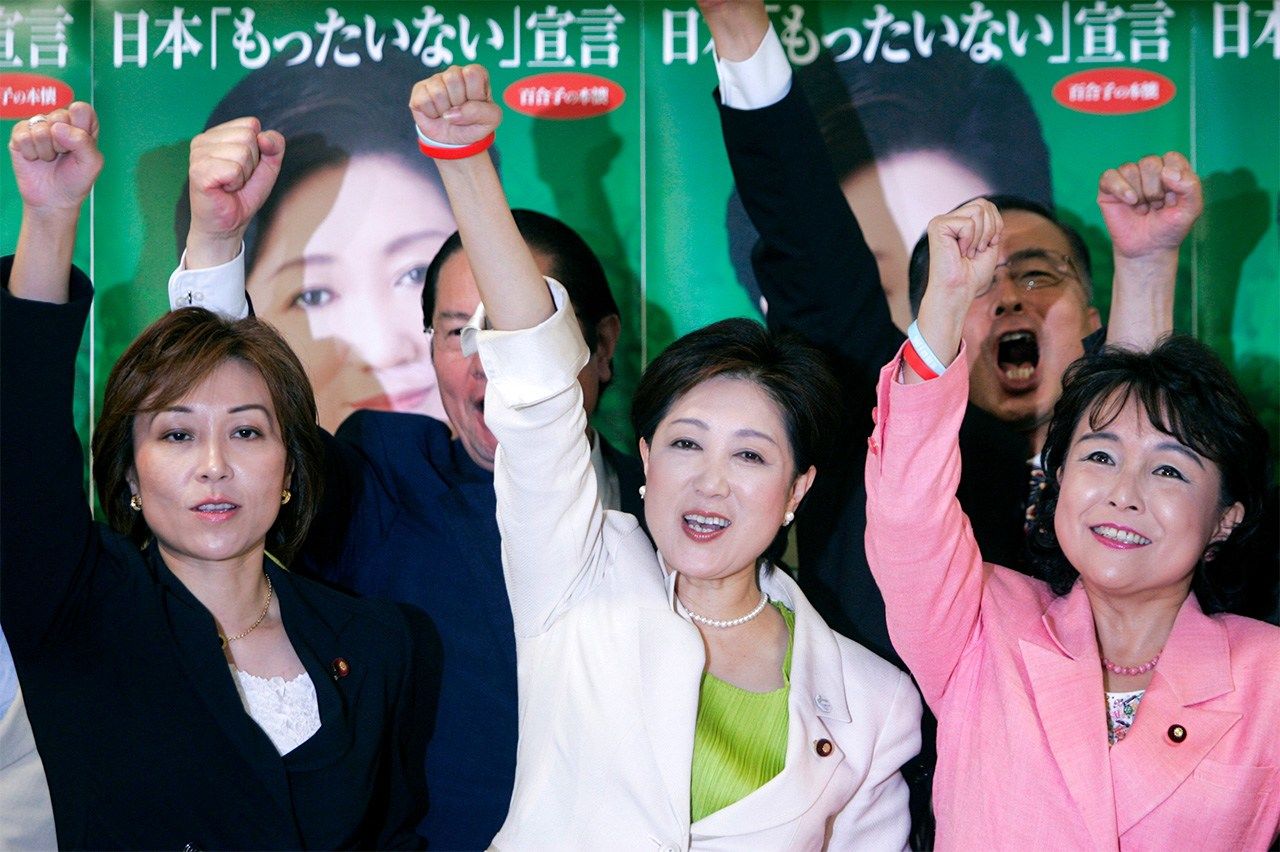
Koike Yuriko (center) campaigns to become LDP president. (© Reuters)
July 2016 Koike Yuriko is elected as Tokyo’s first female governor.
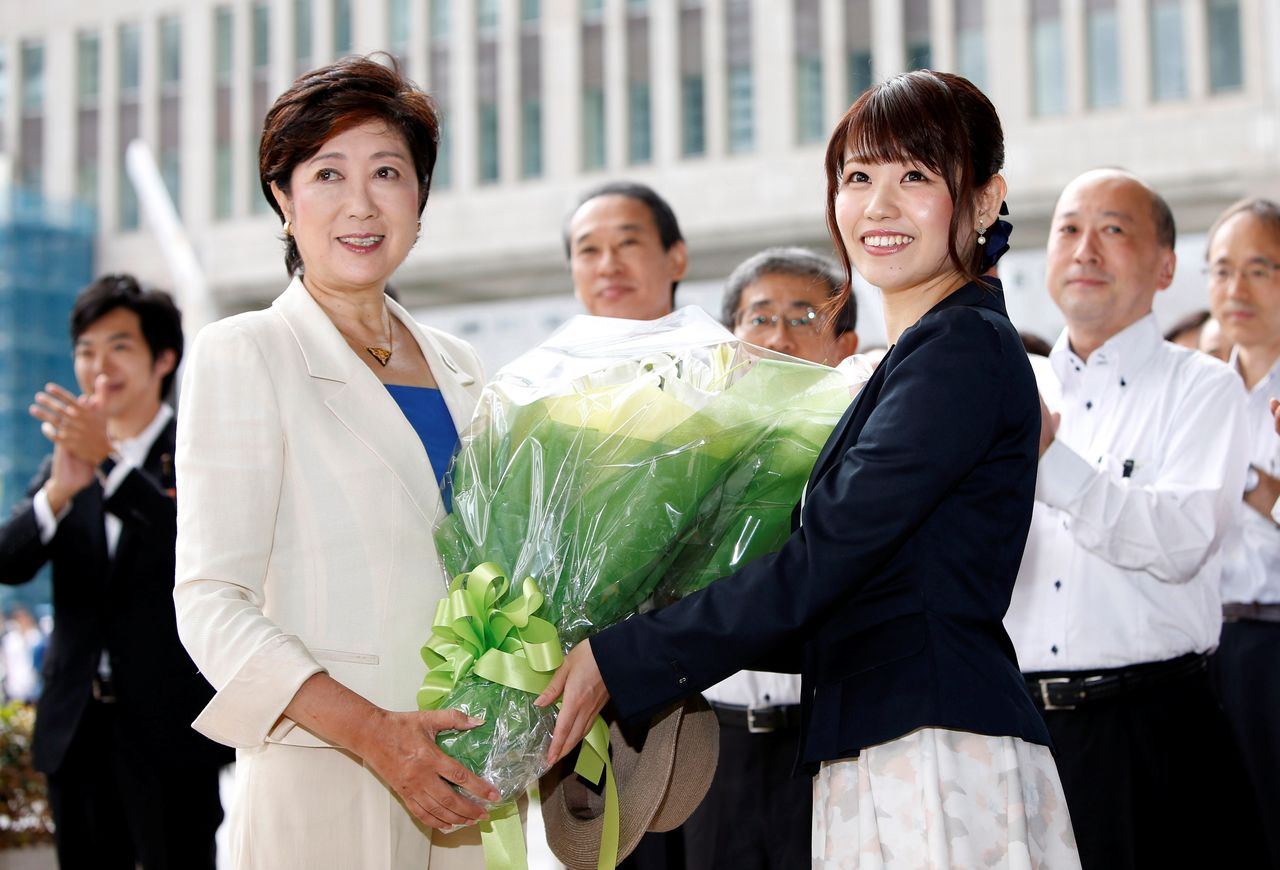
Koike Yuriko on her first day as Tokyo governor. (© Reuters)
September 2016 Renhō is elected as leader of the Democratic Party, becoming the first female leader of Japan’s largest opposition party since Doi Takako.

Renhō (center) stands between Tamaki Yūichirō (left) and Maehara Seiji (right) at a joint press conference at the Foreign Correspondents’ Club of Japan, Tokyo, by Democratic Party leadership candidates on September 14, 2016. (© Nippon.com)
May 2018 A bill requesting political parties and organizations to make every effort possible to field equal numbers of male and female candidates is approved and enacted at a meeting of the House of Councillors. It does not include any penalty provisions.
September 2021 Takaichi Sanae and Noda Seiko run as candidates in the LDP presidential election, which is won by Kishida Fumio.
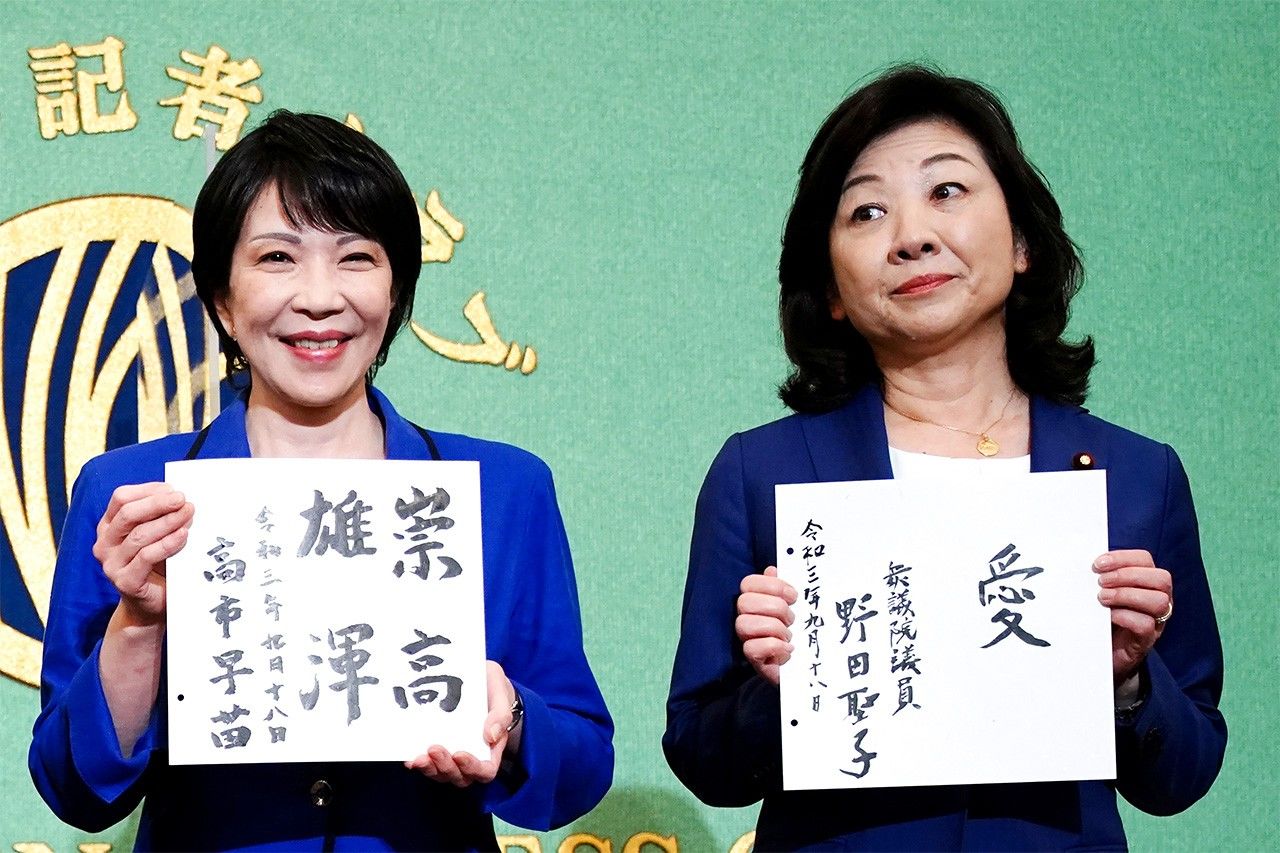
Takaichi (left) and Noda as LDP presidential candidates. (© Reuters)
September 2024 Of nine LDP presidential candidates, three are women: Takaichi Sanae, Kamikawa Yōko, and Noda Seiko. Takaichi wins the first round of voting, but loses to Ishiba Shigeru in the runoff.
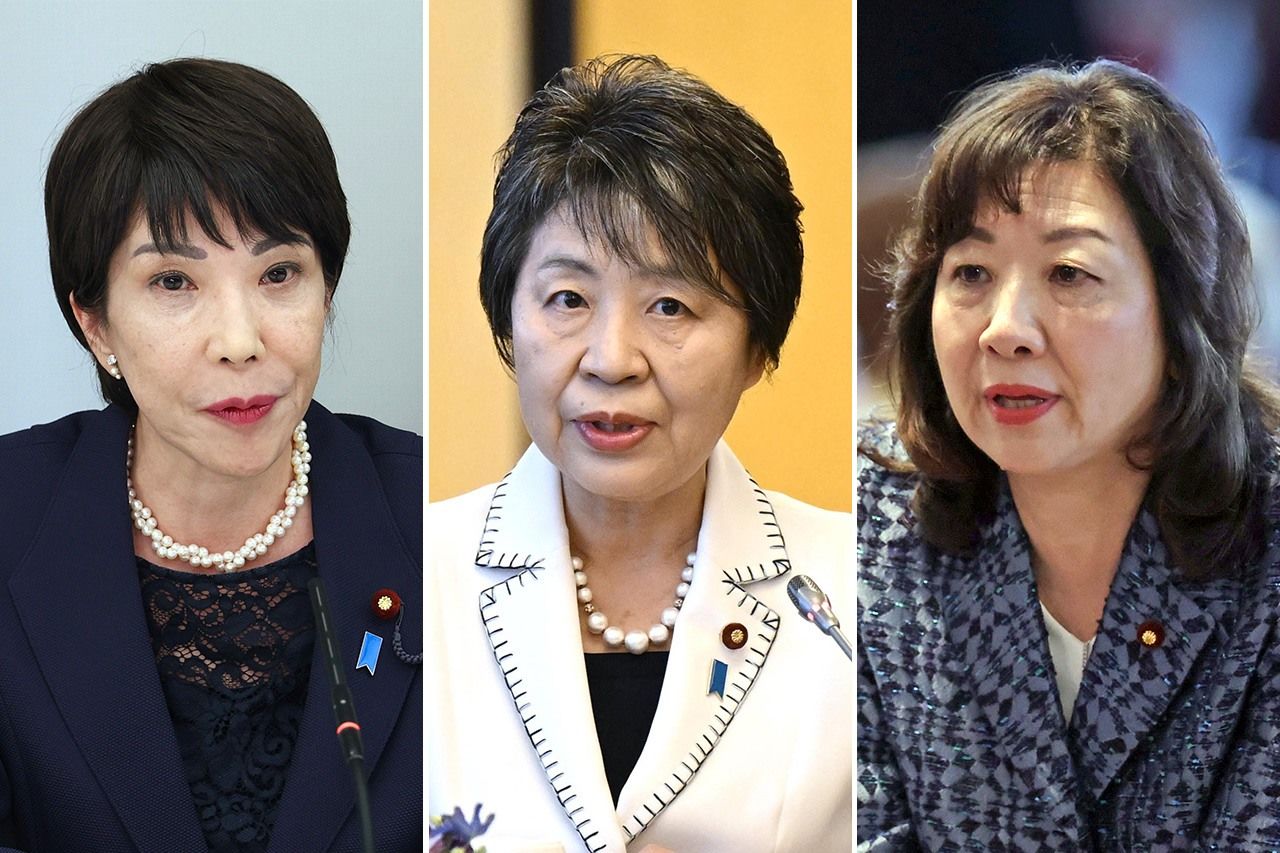
From left: Takaichi, Kamikawa, and Noda. (© Jiji)
October 4, 2025 Takaichi Sanae is elected as LDP president, becoming the party’s first female leader.
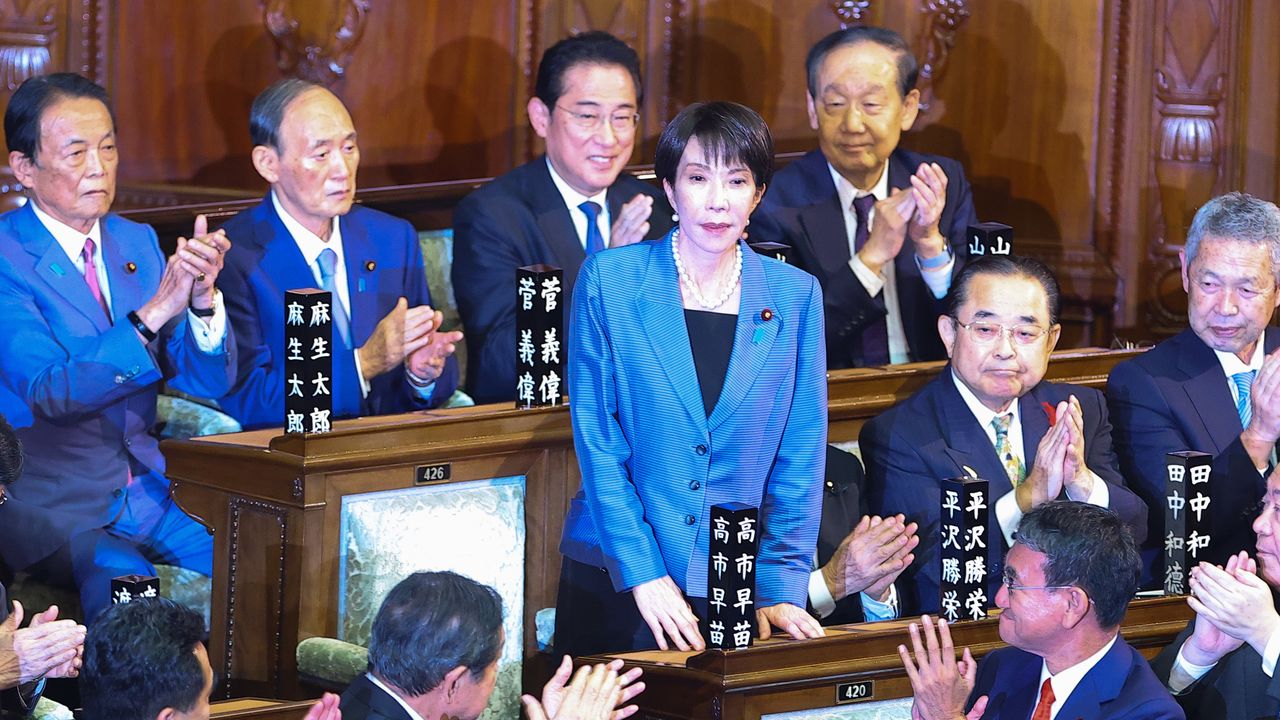
October 21, 2025 Takaichi Sanae becomes Japan’s first female prime minister after a vote in the Diet. On the same day, she selects Katayama Satsuki as the country’s first female minister of finance.
(Translated from Japanese. Banner photo: Takaichi Sanae stands at center after being elected as prime minister in the House of Representatives on October 21, 2025. © Reuters.)