
Teenagers’ Views on Japan’s First Female Prime Minister
Politics Gender and Sex- English
- 日本語
- 简体字
- 繁體字
- Français
- Español
- العربية
- Русский
Hopes and Expectations
Takaichi Sanae became Japan’s first female prime minister on October 21, 2025. The Nippon Foundation conducted a nationwide survey of 1,000 people aged 17 to 19 in early November to find out what they think about the recent change at the top, as part of its ongoing series of surveys of young people.
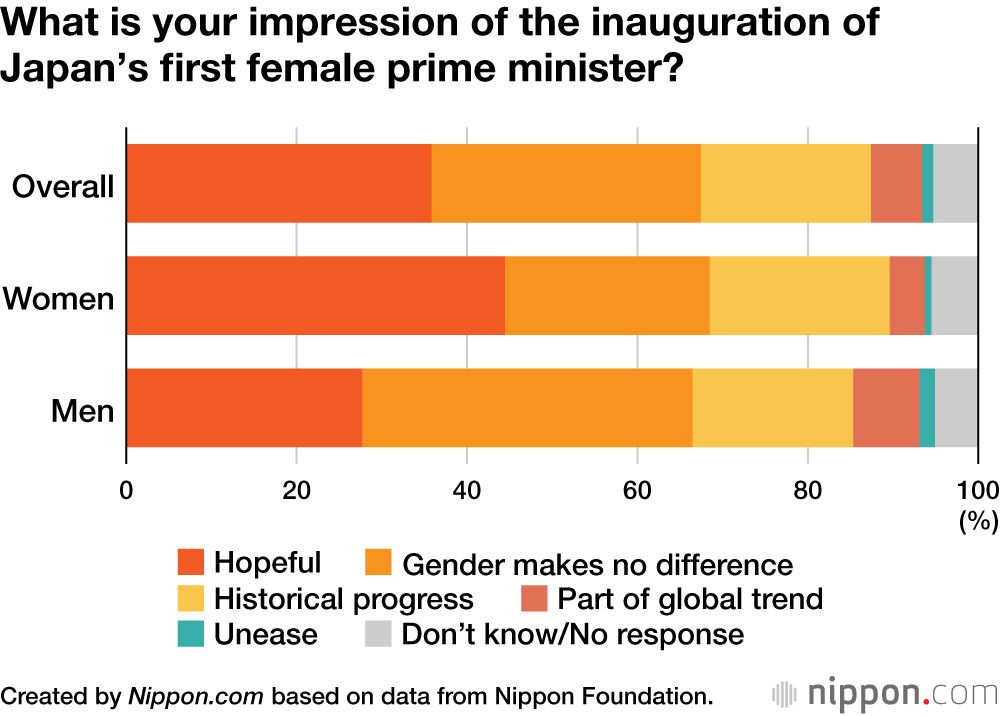
The most common view expressed regarding Japan’s first female prime minister was a sense of “new hopes and expectations,” mentioned by 35.8% of the respondents. There was a significant difference between female and male respondents, however, with 44.4% of young women expressing a sense of hope about the new prime minster, as compared to 27.7% of the young men. A look at the open-ended responses for the survey shows comments such as the following: “I had thought that changing leaders within the same party wouldn’t make a big difference, but now I have expectations because it feels like the situation has actually changed.” It seems that Prime Minister Takaichi’s meeting with US President Donald Trump soon after she took office left a strong impression among the public.
Meanwhile, a mere 1.3% of those surveyed felt “unease” about the new prime minster, suggesting that only a tiny minority has a negative view of the new prime minister because of her gender.
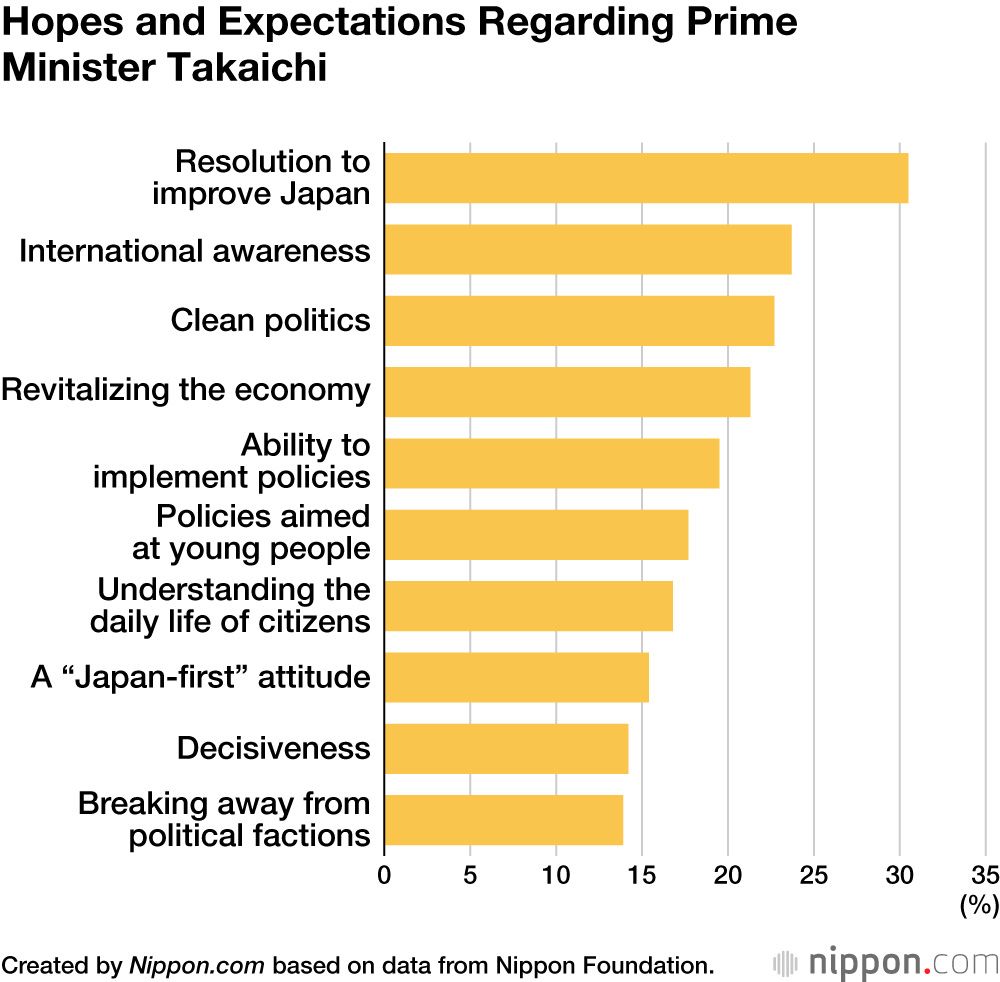
The most common expectations toward Prime Minister Takaichi was that she would be “resolved to improve Japan,” mentioned by 30.5% of the respondents, followed by the hope that she would show “international awareness” and engage in “clean politics,” at 23.7%, and 22.7%, respectively.
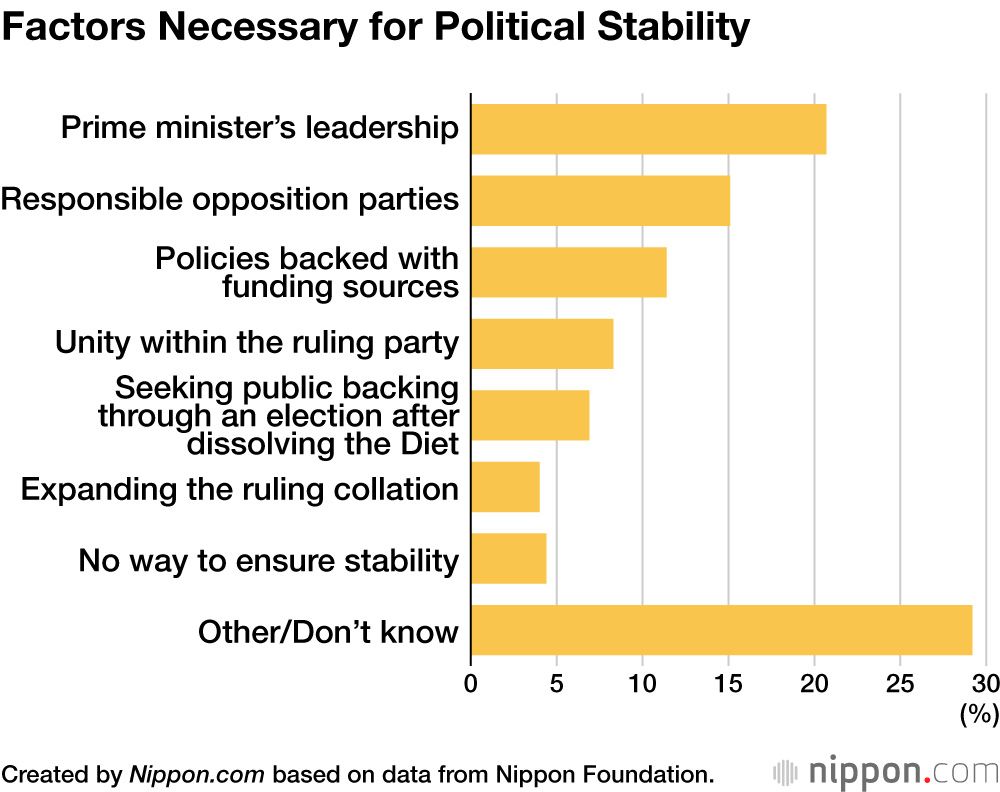
Although Nippon Ishin no Kai has formed a coalition with the Liberal Democratic Party, the two parties do not by themselves enjoy a majority in either the House of Representatives or the House of Councillors. When asked what is necessary to stabilize politics, 20.7% of the survey respondents mentioned the need for the prime minister to exercise leadership. This was followed by the 15.1% who pointed to the need for the opposition parties to be responsible by playing a constructive rather than merely oppositional role.
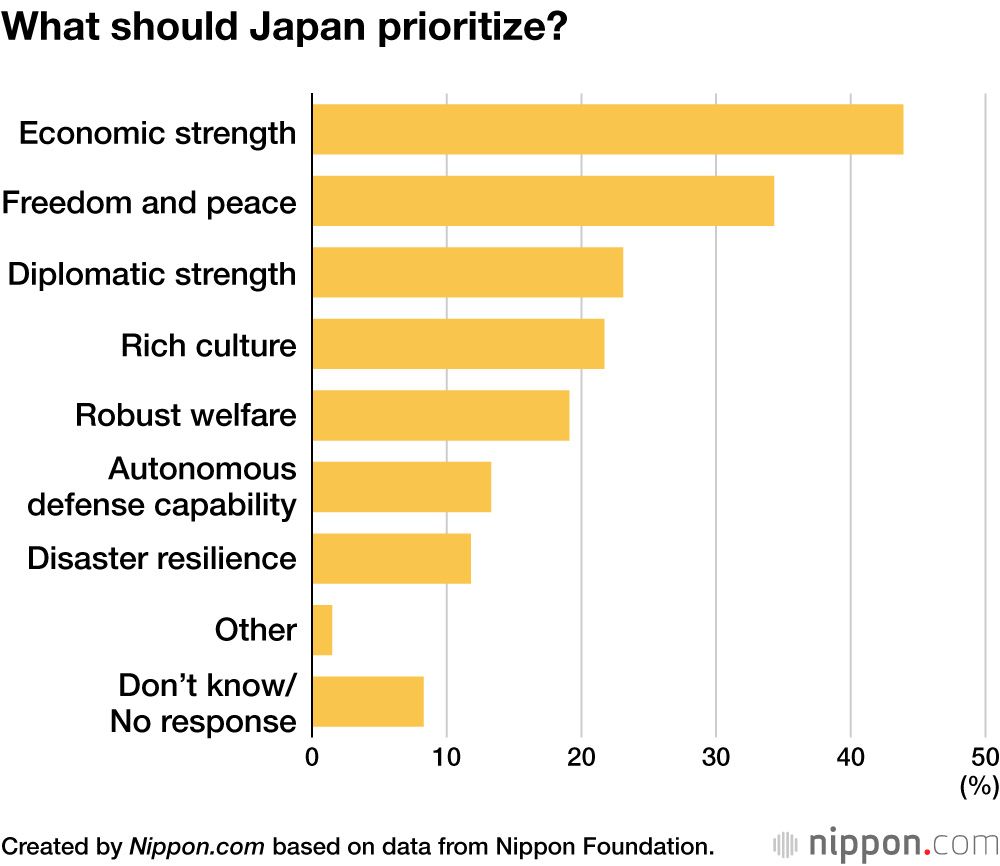
In response to a survey question on what Japan should prioritize in the future, the top response was “economic strength” at 43.9%, followed by “freedom and peace” at 34.3%. Support for the former was higher among men, while women had a higher level of support for the latter.
Data Sources
- Survey on teenagers’ views on Japan’s first female prime minister (Japanese) by the Nippon Foundation.
(Translated from Japanese. Banner photo: Prime Minister Takaichi Sanae. © Jiji.)